
For drivers, property managers, and dealership professionals, understanding the towing capacity of 1/2 ton trucks is crucial. Whether you’re hauling equipment for your property, towing a camper for a weekend getaway, or managing a fleet of vehicles, knowing how much your truck can safely tow can save time and prevent accidents. This comprehensive guide explores the nuances of 1/2 ton truck towing capacities, including factors that affect performance, comparisons between different models, essential accessories to enhance towing capabilities, and critical safety considerations. By the end, you’ll have a clearer understanding of your truck’s strengths and how to maximize its potential for your specific needs.
Realistic Limits and Practical Factors: What a 1/2‑Ton Truck Can Actually Tow
Understanding capacity beyond the label
The phrase “1/2‑ton” still appears in truck descriptions, but it no longer tells the whole story. Once a shorthand for a 1,000‑pound payload, the term now signals a vehicle class built for flexibility. Modern 1/2‑ton pickups offer a wide range of towing capability. In practice, most configurations tow between about 7,000 and 14,000 pounds. That span reflects choices you make when you buy the truck. Engine type, drivetrain, axle ratios, and optional towing packages all shift where a specific truck falls inside that range.
Towing capacity is not a single number stamped on the hood. It is a safe limit derived from engineering tests and regulatory ratings. The manufacturer calculates it by considering the vehicle’s brakes, cooling systems, frame strength, and drivetrain durability. Those numbers matter in the real world. Choosing a truck with the capability to pull your trailer matters more than the model label.
Many owners see two practical bands within the class. Base configurations with smaller engines and standard equipment commonly tow in the lower band. This is often sufficient for small travel trailers, boats, or utility loads. Trucks built with stronger engines, reinforced suspensions, and heavy‑duty cooling components sit in the upper band. With a maximum tow package, some models approach 14,000 pounds. That higher number enables towing larger campers, heavier boats, and heavier work trailers while still keeping daily drivability.
Several mechanical and regulatory factors determine where a particular truck lands.
First, engine and transmission selection have a direct effect. More torque usually means more towing capacity. Turbocharged gasoline engines and diesel options often deliver higher torque at low rpm. Transmissions tuned with dedicated tow modes and upgraded cooling also help maintain performance under load.
Second, axle ratio and final drive selection matter. Higher numerical axle ratios improve low‑end pulling strength, which helps with heavy trailers. But they can reduce highway fuel economy. The choice is a trade‑off between power at the wheels and efficiency.
Third, the drivetrain and traction system influence performance in certain conditions. Two‑wheel‑drive trucks often have slightly higher towing ratings on dry pavement. Four‑wheel drive systems add traction on rough roads or slippery surfaces, and they can be safer when launching a heavy trailer. However, the transfer case and extra components sometimes reduce headline towing numbers on manufacturer charts.
Fourth, factory or dealer towing packages change the equation. These packages typically add heavy‑duty radiators, upgraded transmission coolers, larger alternators, and reinforced suspensions. They may also include a higher‑capacity hitch receiver, wiring for trailer brakes, and integrated sway‑control settings. When present, these features raise the safe towing limit significantly.
Beyond those equipment choices, real‑world towing depends on a few key weight ratings. Gross Vehicle Weight Rating, or GVWR, caps how much the truck can weigh when loaded. Payload capacity is how much cargo and passengers the truck can carry. Gross Combined Vehicle Weight Rating, or GCWR, limits the combined weight of truck plus trailer and cargo. A safe tow calculation compares the trailer’s loaded weight to the difference between GCWR and the truck’s curb weight.
Tongue weight deserves special attention. It is the downward force the trailer places on the hitch. Most trailers apply about 10–15% of their loaded weight to the tongue. If the truck’s payload capacity cannot handle the tongue weight plus occupants and gear, the rear of the truck will sag. That condition reduces steering and braking effectiveness. Using proper weight distribution hitches can shift some tongue weight to the trailer axles. That improves balance and control for heavier loads.
Trailer brakes and sway control systems are integral to safe towing. Many jurisdictions require trailers above a certain weight to have independent brakes. A truck equipped with integrated trailer brake controllers makes compliance easier and increases safety. Modern trucks also offer electronic trailer sway control systems. These systems detect oscillation and apply selective braking to calm the trailer. They can be especially helpful when towing near the top of the truck’s rated capacity.
Another practical limit is cooling capacity. Continuous towing places sustained loads on the engine and transmission. Overheated systems can cause transmission slippage, loss of engine power, and expensive failures. Heavy‑duty radiators and transmission coolers in tow packages keep temperatures in check during long climbs and extended runs.
How owners translate a towing rating into day‑to‑day practice varies. Here are reliable steps to follow when planning a tow. First, read the owner’s manual and the door‑jamb data plate for your truck’s exact ratings. Second, weigh your trailer when it is fully loaded. Third, include the weight of passengers, cargo, and any aftermarket equipment in the truck. Fourth, confirm the trailer tongue weight and compare it to the truck’s payload. Finally, ensure the trailer has proper brakes and lighting, and that you use safety chains and a correctly rated hitch.
Choosing a truck configuration means balancing capability with comfort and efficiency. If you tow occasionally, a lower‑end configuration may suffice. If you tow regularly, or you plan to pull heavy campers or large boats, a truck with a higher tow rating and a dedicated tow package will pay dividends. Also consider axle ratios, braking systems, and suspension upgrades. These choices affect not only maximum tow numbers, but handling and braking under load.
Practical examples help ground the numbers. A truck rated for 7,000 to 8,000 pounds comfortably handles modest trailers and boats. That includes small travel trailers and light utility trailers. In contrast, trucks configured toward 12,000 to 14,000 pounds open possibilities for larger fifth‑wheel campers and heavier equipment trailers. The higher capacity narrows the gap between light‑duty and medium‑duty towing needs.
Safety remains the overriding concern. Never exceed the manufacturer’s published ratings. Overloading a truck increases stopping distance, reduces steering control, and accelerates component wear. Regular maintenance is essential. Check brakes, tires, suspension, and cooling systems before heavy towing. When in doubt, pick a truck with a higher towing margin to provide a safety buffer.
If you need model‑specific numbers or a side‑by‑side comparison, consult authoritative towing guides and make‑specific resources. For general guidance and model‑level towing charts, see this detailed towing resource: https://www.trucktowcapacity.com/half-ton-truck-towing-capacity/.
For local insights, tips about safe towing, and relevant towing operations advice, the Santa Maria Tow Truck blog offers practical articles and guidance. Visit the Santa Maria Tow Truck blog for additional reading: https://santamariatowtruck.com/blog/.
What Actually Controls a 1/2‑Ton Truck’s Tow Limit: Mechanical Roots and Real‑World Factors
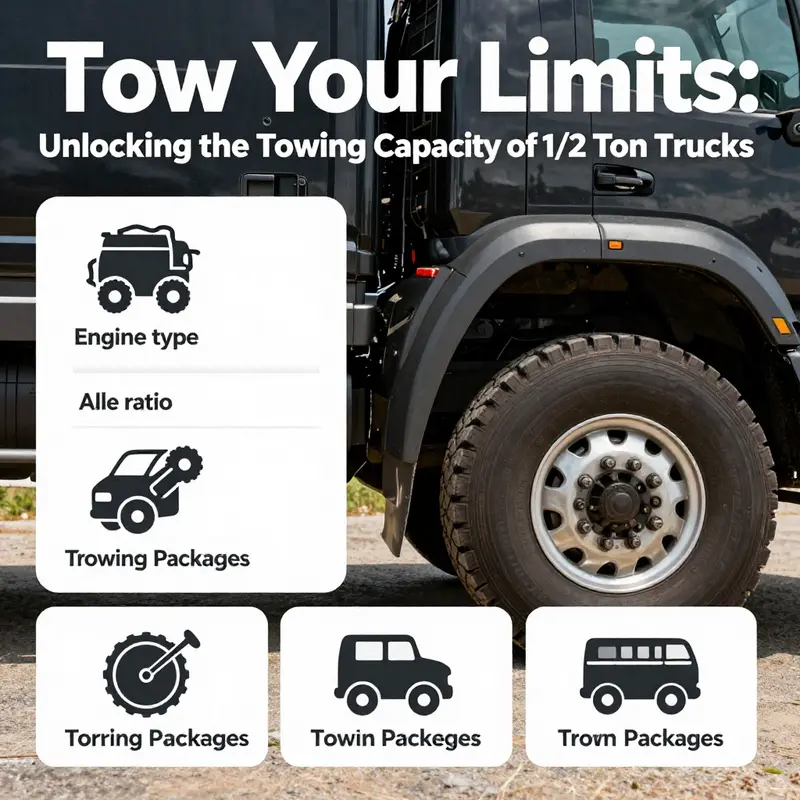
Understanding the true towing limit of a 1/2‑ton truck requires more than a single number. Manufacturers advertise a maximum figure for specific configurations, but that number is a product of many mechanical choices and real‑world conditions. Engine horsepower and torque set the baseline. Transmission gearing, axle ratios, cooling systems, suspension design, and hitch equipment all layer on top of that baseline. Even tires, road grade, and how the trailer is loaded have measurable effects. Read as a single, unified explanation of what raises and lowers a truck’s practical towing capability, and how to use that knowledge to tow safely.
Start with the powertrain. The engine’s torque curve determines how easily a truck moves heavy weight from a stop and sustains speed on inclines. Higher torque at low rpm improves hill climbing and acceleration while towing. Transmissions with multiple gears help keep the engine inside its optimal power band. A modern automatic with eight or ten speeds allows tighter spacing between ratios, reducing the need to downshift and keeping torque available. Transmission cooling, a common part of factory tow packages, prevents overheating during long climbs and repeated braking on descents. Without upgraded cooling, the transmission can overheat, reducing its effective capacity and risking failure.
Axle ratio is the next fundamental lever. A numerically higher axle ratio increases the mechanical advantage at the wheels. That advantage translates to more pulling force at the cost of highway fuel efficiency. Trucks set up to tow heavier loads typically use higher axle ratios such as 3.73 or 4.10. Those ratios let a truck maintain speed on grades and reduce strain on the engine and transmission. The differential type and strength matter too. Stronger axles and differentials designed for high torque loads resist gear wear and heat, and they influence the vehicle’s published towing limits.
The suspension behaves as more than a comfort system when towing. Heavy springs, reinforced shackles, and tuned dampers keep the truck and trailer aligned under load. A weak suspension lets the rear sag when loaded, shifting weight to the trailer and changing steering geometry. That shift can cause wandering, reduced braking effectiveness, and premature tire wear. Factory or aftermarket suspension upgrades often form part of a truck’s towing package. They increase load capacity, maintain ride height, and improve stability when towing a large camper, trailer, or boat.
Payload and Gross Combined Vehicle Weight Rating (GCVWR) bring the configuration into focus. Payload is the weight the truck can carry in the bed, crew cab, and hitch tongue while remaining within safe limits. The GCVWR is the maximum combined weight of truck, passengers, cargo, and trailer. Even if a truck’s chassis is rated to tow a particular trailer weight, exceeding payload or GCVWR is dangerous. Proper calculation requires accounting for passengers, fuel, accessories, and tongue weight. Overloading any of these components reduces safe towing capacity and increases wear on brakes, transmission, and suspension.
Hitch selection and trailer compatibility are not optional details. Hitches come in classes with specific tongue weight and gross trailer weight ratings. The correct hitch and ball size must match the trailer. An undersized hitch concentrates stress on fewer components and can fail. Many towing setups require a weight‑distribution hitch when tongue weight exceeds a certain percentage of the trailer mass. Weight distribution spreads load across axles and restores proper steering feel. Additionally, trailer brakes and a proportional or time‑based controller are essential when trailer mass rises beyond what the truck’s brakes can safely manage alone.
Tires and braking play quiet but vital roles. Tires with adequate load ratings maintain contact and heat resistance under heavy loads. Underinflated tires flex more, heat up, and can fail. Overinflated tires reduce traction and increase the chance of trailer sway. Brakes must be matched to the intended towing regime. Larger trailer weights benefit from electric or hydraulic trailer brakes. A truck’s own braking system experiences higher wear and heat when towing heavy trailers, so brake upgrades or more frequent service intervals become part of responsible ownership.
Environmental conditions change effective towing capacity. Elevation reduces air density, cutting engine power and torque. A truck that tows comfortably at sea level may struggle in mountainous terrain. Long uphill grades increase load and require lower gears and more engine cooling. Weather such as rain, snow, or mud reduces traction, meaning drivers must accept lower safe towing weights. Road surface and gradient directly influence what loads a truck can move safely and consistently.
Driver behavior and load distribution determine whether theoretical capacity translates to practical safety. Smooth acceleration, early gear selection, and controlled braking reduce stress on every component. Distributing cargo evenly, centering heavy items between axles, and ensuring proper tongue weight (typically 10 to 15 percent of trailer weight for many trailers) minimize sway and keep steering responsive. Trailer loading that concentrates weight at the rear increases the risk of oscillation and loss of control.
Factory “max tow” packages illustrate how equipment pulls the maximum figure together. These packages typically add heavy‑duty radiators and oil coolers, upgraded alternators, stronger hitches, and sometimes reinforced frames. They combine the powertrain, cooling, and suspension items required to safely achieve the manufacturer’s highest towing rating for that model. Choosing a truck with the correct factory configuration is more reliable than attempting to achieve the same capacity with piecemeal aftermarket modifications.
Safety systems and electronic aids also change the towing experience. Integrated trailer brake controllers, stability control tuned for trailer sway, and cameras that show the hitch area reduce setup time and improve safety. Electronic aids do not increase the physical capacity of the drivetrain, but they make it easier to operate near rated limits by reducing human error. They are a practical enhancement when towing heavy or bulky trailers.
Practical calculations start with the manufacturer’s towing and payload tables. Determine curb weight, payload, and the truck’s towing limit for the exact configuration. Add passengers, fluids, tools, and cargo to estimate available payload. Then calculate the trailer’s gross vehicle weight and required tongue weight. Compare the sums against the truck’s Gross Vehicle Weight Rating and GCVWR. If the combined weight exceeds those numbers, reduce cargo or choose a lighter trailer. Remember that a truck’s published maximum applies only to trucks fitted with the exact options used in testing.
Real owners frequently find their truck can tow comfortably below the published maximum for day‑to‑day use. Operating conservatively—choosing extra margin, monitoring transmission temperature, and using proper braking techniques—extends component life and reduces risk. For heavier, repeated towing jobs, select a configuration rated for the load, or consider a heavier class of vehicle. For one‑off heavier moves, a commercial rental of a vehicle designed for heavy towing can make more sense than pushing the performance envelope.
If you want model‑specific numbers and configuration options, refer to the manufacturer specifications published for each truck. These documents list towing limits for different engines, axle ratios, and packages. For practical advice and local perspectives on towing and recovery, see this tow truck blog for helpful articles and operator insights: https://santamariatowtruck.com/blog/.
For authoritative model figures and official towing charts, consult the manufacturer’s official towing information here: https://www.ford.com/trucks/.
Head-to-Head Towing: How Today’s 1/2‑Ton Trucks Stack Up for Real-World Pulling
Comparing towing capacity across 1/2‑ton trucks means looking past badges and into configurations. The half‑ton label is a historical tag, not a literal limit. Modern 1/2‑ton pickups often tow well beyond their namesake. When you compare models, the headline towing number is only the beginning. Real capability depends on engine choice, axle ratio, cab and bed layout, drivetrain, factory tow packages, hitch rating, and how the truck is loaded. Read the published maximum, but picture the full vehicle as a system designed to move mass safely.
Most current 1/2‑ton trucks advertise maximum towing numbers that range across the low thousands to the mid‑teens in pounds. At the top end, properly equipped vehicles can approach 14,000 pounds. At the lower end, a base configuration with a smaller engine and fewer towing options might sit around 7,000 pounds. That spread reflects how manufacturers tune the powertrain, cooling, and chassis to match each trim and package. A high‑output engine combined with a heavy‑duty tow package creates a far different machine from the base model with the same nameplate.
Engine selection is the single biggest driver of towing variation. Turbocharged V6 engines can deliver high torque at low rpm and sometimes match or exceed older V8 outputs. Naturally aspirated V8s provide linear power and robust towing feel. Diesel options, when offered, punch higher torque figures and better fuel economy under load. Transmission calibration matters as well. Heavy duty cooling, transmission coolers, and upgraded radiators are often part of towing packages. Vehicles with these additions sustain towing performance on long grades where heat buildup would otherwise force downshifts or reduced load capability.
Drivetrain and axle ratio determine how power turns into usable pull. Two‑wheel drive trucks generally carry a slight edge in published towing numbers. They weigh a bit less than four‑wheel drive versions and lose fewer drivetrain power losses. However, 4WD models provide superior traction on slippery surfaces and can be essential for towing in rural or off‑pavement conditions. Shorter axle ratios increase towing grunt and help with heavy trailers at the cost of some highway fuel efficiency. Manufacturers list axle ratios in spec sheets because they directly affect towing and payload ratings.
Payload capacity and towing capacity are linked but distinct. Payload is the weight the truck can carry in cab and bed. A higher payload number usually signals a stronger frame and suspension. That, in turn, allows the truck to support heavier tongue loads and carries equipment needed for towing. If you overload payload, you risk exceeding gross vehicle weight rating (GVWR) and reducing the safe towable weight. One common mistake is assuming a truck can tow its published maximum while carrying a crew and a full bed of gear. Always account for occupants, fuel, cargo, and tongue weight when planning a tow.
Factory tow packages transform a truck’s practical towing capability. These packages typically include a higher‑capacity hitch receiver, upgraded cooling, a transmission cooler, heavy‑duty alternator, integrated trailer brake controller, and sometimes reinforced suspension components. Some packages alter gearing or add a limited‑slip or locking differential. The presence or absence of a tow package can be the difference between a truck that safely pulls a heavy camper and one that struggles on a long uphill grade.
Hitch class and trailer ratings complete the system. A truck may be rated to tow a certain weight only when hitched to a weight‑carrying or weight‑distributing hitch of the proper class. The truck’s receiver and the trailer’s coupler type dictate how tongue weight is managed. Proper tongue weight distribution keeps steering and braking stable. If the hitch, ball, or coupler is undersized relative to the trailer, the entire assembly becomes the limiting factor regardless of the truck’s published rating.
Real‑world examples illustrate these points. Vehicles from different manufacturers with the same nominal class can show a wide gap in published tow numbers. One model, equipped with a high‑output turbocharged engine and full tow package, can top the mid‑teens in thousands of pounds. Another model with a smaller engine and standard trim may rate several thousand pounds lower. These differences come from distinct engine torque curves, transmission cooling, axle choices, and factory‑installed towing equipment. When shopping, compare like for like: engine, axle ratio, and towing package.
Beyond numbers, consider braking and control. Towing heavy loads demands adequate trailer brakes, a responsive controller, and a truck braking system designed to handle the extra stress. Some trucks include advanced trailer brake controllers and integrated cameras or sensors to monitor sway. Electronic aids such as trailer sway control and hill start assist are important features that improve safety when towing near a truck’s maximum rating.
Temperature and altitude affect towing capacity too. Hot weather places additional stress on cooling systems. High altitude reduces engine power, especially on normally aspirated engines. Turbocharged engines typically lose less relative power with altitude, but they still need sufficient cooling to maintain rated performance. Long grades and mountainous terrain require conservative planning; a maximum towing number is usually indicated under ideal test conditions, not on steep, sustained climbs.
Weight distribution and trailer type matter. Enclosed trailers carry more wind resistance than open flatbeds. Boat trailers have a different center of gravity and drag profile. A well‑balanced travel trailer with proper tongue weight and distribution will behave far better than an overhung, poorly balanced load. Weight distribution hitches and sway control devices can help. Brake upgrades on the tow vehicle and trailer can make a large difference in stopping distance and control.
For buyers choosing between models, prioritize intended use. If you plan regular heavy towing, opt for the configuration with the highest tow rating in the model family. Look for a package that includes a factory hitch, transmission cooler, and integrated trailer brake control. If towing is occasional or light, a moderate configuration may suffice and offer better fuel economy and ride quality. Remember that dealer‑installed or aftermarket modifications can alter safe towing capacity. Changes to suspension, axle, or engine tuning should be validated against the vehicle’s gross combined weight rating (GCWR) and manufacturer guidance.
Fleet managers and emergency response teams face additional pressures. Standardizing on a particular model and configuration reduces complexity and ensures consistent towing capability across a fleet. For guidance on fleet readiness and standardization, review resources about fleet planning and emergency operations linked here: fleet readiness and standardization. Consistency simplifies maintenance, training, and on‑scene logistics.
When verifying any specific vehicle’s tow limits, consult the manufacturer’s spec sheet and the owner’s manual. These sources state GVWR, GCWR, maximum tow rating, and required configurations. Also inspect the vehicle’s data plate on the driver’s door jamb. Manufacturers provide example configurations online and in dealer literature that clearly list the conditions under which a particular tow number applies. For model‑specific towing specifications, see the official specifications guide linked here: https://www.ford.com/trucks/f-150/specs/.
A 1/2‑ton truck’s towing label hides nuance. Compare apples to apples: engine, axle, drivetrain, hitch, tow package, and payload. Factor in terrain, weather, trailer type, and payload when planning a towing job. With the right configuration and proper setup, many modern 1/2‑ton trucks tow well into the tens of thousands of pounds, but safe towing always begins with matching the right truck configuration to the load and conditions.
Hardware and Upgrades That Let a 1/2‑Ton Truck Tow More, Safer, and Smarter
Balancing Strength and Safety
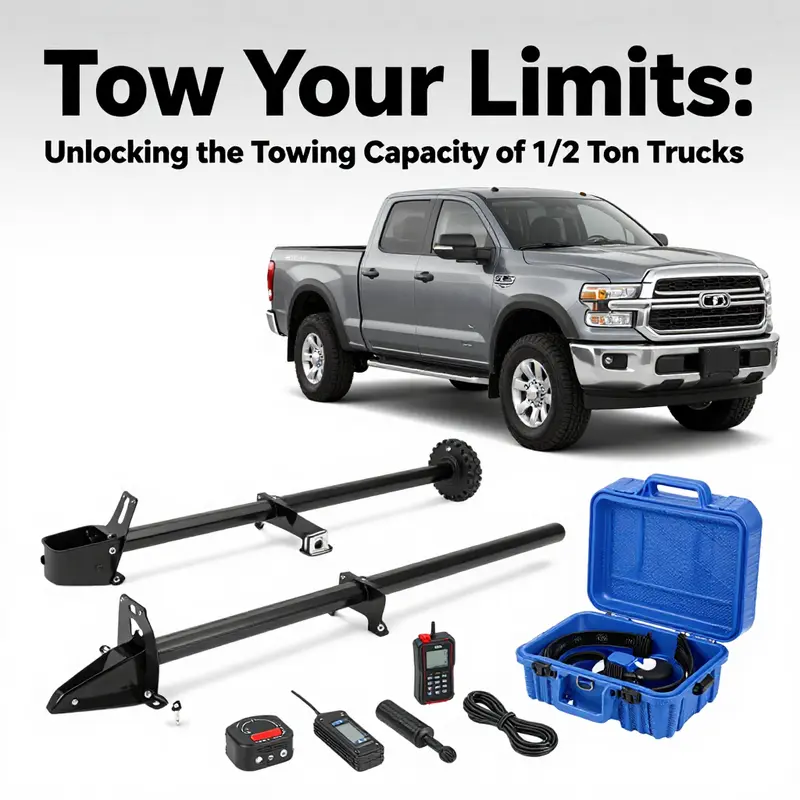
When you ask how much a 1/2‑ton truck can tow, the short answer is that factory ratings set the safe limit. But there are proven ways to improve the real-world towing performance, stability, and longevity of your truck without ignoring those limits. Upgrades and accessories don’t magically raise the manufacturer’s certified towing capacity. Instead, they optimize the truck’s systems so it performs closer to its rated capability, reduces stress on components, and boosts control when hauling heavier trailers. This chapter walks through the most effective hardware and accessory choices, explains why each matters, and highlights the trade-offs to keep your truck safe and reliable.
Start with the engine and transmission — the heart of towing performance. Engine tuning, sometimes called recalibration, can increase torque where it matters most: low RPMs. That improves acceleration from a stop and hill‑climbing ability under load. Transmission recalibration or an upgrade to a heavy‑duty transmission cooler helps the gearbox hold appropriate shift points and resist overheating during long, steep pulls. Both approaches must be done with respect for the factory powertrain; professional tuning that retains safety limits and maintains proper cooling is essential.
Exhaust and intake airflow upgrades are complementary. A higher‑flow exhaust reduces backpressure, and a better‑designed intake system improves breathing. Together they can yield modest horsepower and torque gains, and more importantly, improve throttle response while towing. Those gains pay off when merging on highways or regaining speed after downhill stretches. Keep components compatible with emissions systems and avoid modifications that disable required controls.
Cooling is frequently overlooked, yet it’s critical. Heavy loads force sustained high engine and transmission temperatures. An upgraded engine oil cooler, transmission cooler, and a stronger radiator reduce heat soak and prevent thermal degradation of fluids. Consistent operating temperatures lengthen component life and preserve performance during long hauls or repeated stop‑and‑go towing.
The suspension carries the load where it matters most. Reinforcing springs, installing progressive or heavy‑duty leaf springs, and adding load‑assist helpers or air suspension kits restore proper ride height and axle geometry under load. Air suspension has the advantage of on‑the‑fly adjustability, letting you fine‑tune ride height and stiffness for towing, daily driving, or off‑road use. Proper suspension reinforcement reduces rear sag, improves steering feel, and lowers the risk of bottoming out or premature wear on bushings and tires.
Tire choice and wheel fitment are practical upgrades with immediate benefits. Tires rated for higher load indices, with stronger sidewalls and proper tread for the conditions, maintain contact patch integrity and reduce overheating. Keeping tires inflated to the correct pressure for the loaded condition improves braking, stability, and fuel economy. Don’t forget a quality spare rated for towing loads.
Hitches and weight management gear are where safety and control intersect. A high‑quality hitch receiver, matched to the intended trailer class, is the foundation. Beyond that, equip your rig with a weight distribution system when towing heavier trailers. These systems transfer some of the trailer tongue weight forward to the truck’s front axle, restoring steering traction and leveling the rig. Combined with a sway mitigation device, a weight distribution setup drastically reduces trailer sway and improves directional stability at speed. Proper setup and regular inspection are non‑negotiable — an improperly adjusted system can introduce new handling problems.
On short‑bed trucks, specialized hitch solutions exist to maintain turning clearance and hitch geometry for larger trailers. These designs allow a safe fifth‑wheel or gooseneck fit without excessive compromise to maneuverability. Selecting the right placement and rake for such hitches preserves pin weight distribution and reduces stress on the frame.
Braking upgrades protect both truck and trailer. A heavy‑duty brake controller calibrated for the trailer’s weight improves stop consistency. Consider a proportional or inertia controller that adjusts output to the trailer brakes based on actual deceleration. For larger trailers, adding or upgrading the trailer’s hydraulic or electric brakes, and ensuring the truck’s braking system has adequate heat capacity, dramatically shortens stopping distances and keeps braking balanced. Routine brake inspections and fresh brake fluid are essential.
Electrical and lighting are frequently underestimated. A dedicated trailer wiring harness with the correct gauge and connectors prevents voltage drop and protects onboard electronics. An upgrade to the alternator or the addition of a secondary battery is sometimes necessary when operating powered trailer accessories. Backup camera systems and extended towing mirrors improve situational awareness, especially when reversing or changing lanes.
Driveline and chassis reinforcement reduce long‑term wear. Driveshafts, u‑joints, and rear differentials endure greater loads under towing. Inspect and, if necessary, upgrade these components to stronger, higher‑tolerance units. Reinforcing the frame at hitch mounting points and using properly rated fasteners and welds ensures structural integrity under sustained loads.
Software and sensor integrations tie upgrades into a cohesive towing system. Trailer brake controllers, sway mitigation systems, and tire pressure monitoring systems that communicate with in‑cab displays let drivers make informed decisions. Modern vehicles with towing assist packages offer trailer profiles, tow/haul shift logic, and integrated brake control, which simplify the towing task.
Installation quality and calibration are as important as the parts themselves. Many upgrades require factory‑level diagnostics and calibration to interact correctly with onboard safety systems. Professional installation ensures components are torqued, aligned, and tested to spec. Post‑installation road testing under controlled conditions is the best way to verify brake balance, hitch geometry, and handling.
Finally, legal and manufacturer considerations must guide any modification. Manufacturer towing and payload ratings account for chassis, suspension, brakes, cooling, and structural limits. Upgrades can improve the truck’s capability, but they do not change its certified rating. Exceeding the published gross vehicle weight rating (GVWR) or gross combined weight rating (GCWR) can void warranties and create liability risks. For commercial or fleet operations, standardization of towing setups and documented inspection protocols improve safety and regulatory compliance. For more on organizing fleet practices around towing and emergency readiness, see this resource on fleet standardization and emergency readiness: fleet standardization and emergency readiness.
When thoughtfully combined — engine and transmission cooling, tuned power delivery, stronger suspension, properly rated tires, correct hitch and weight distribution, and upgraded braking and electrical systems — these upgrades make a 1/2‑ton truck tow closer to its upper practical limits with far greater safety and control. For a practical how‑to guide covering recommended parts and installation steps, refer to this detailed upgrade resource: https://www.etrailer.com/truck-towing/upgrade-half-ton-truck
Making smart choices about gear and installation protects the truck and the people who use it. Upgrades should be selected to address weak points for the loads you intend to tow. Properly done, they transform a daily driver into a more capable towing platform while preserving reliability and safety on every trip.
Towing Smart and Safe: What Every Half‑Ton Driver Must Know
Towing Smart and Safe: What Every Half‑Ton Driver Must Know
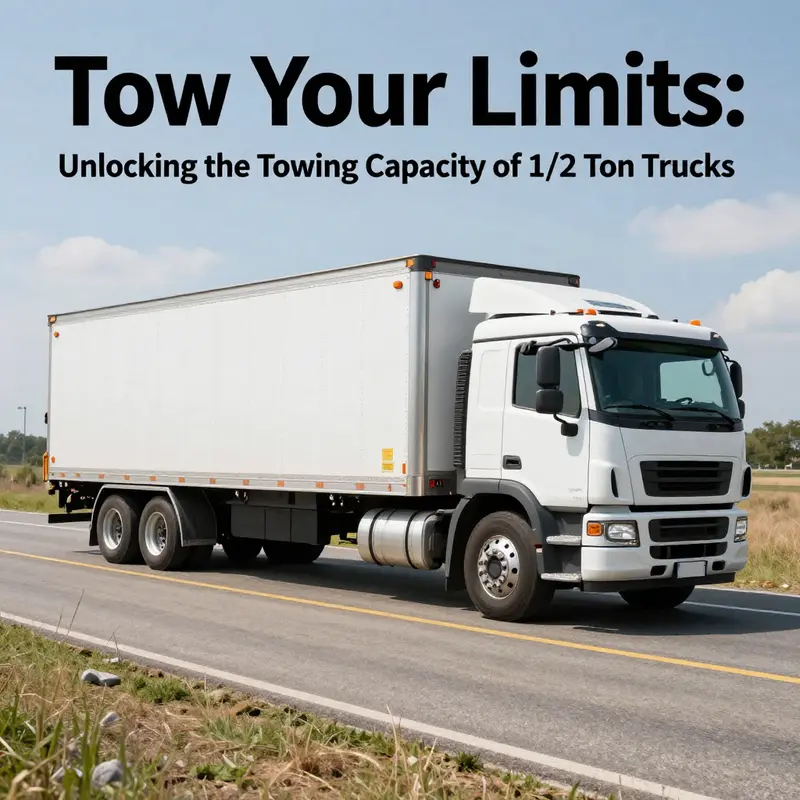
Towing with a 1/2 ton truck offers impressive versatility, but safety is the constant that determines whether a trip stays routine or becomes risky. When a trailer approaches the truck’s rated limit, small mistakes multiply. The truck’s handling changes, the brakes work harder, and the margin for error shrinks. This chapter focuses on the practical, on‑the‑road measures that keep you in control, from proper hitch selection through daily maintenance and driving technique. Read it as a single, integrated checklist you can follow before you couple, while you drive, and after you stop.
Start with how the load sits and how it connects. Proper tongue weight — the downward force the trailer applies to the truck’s hitch — should generally be 10–15% of the trailer’s gross weight. Too little tongue weight lets the trailer push the rear of the truck sideways. Too much shifts weight off the front axle and reduces steering grip. A weight distribution hitch redistributes forces across both axles and restores steering balance. It also reduces hostile trailer sway and limits excessive rear suspension sag, helping your truck reach its rated towing capacity without degrading handling.
Not all hitches and balls are created equal. Match the hitch class, ball size, and rated capacity to the trailer. Never mix components whose rated limits differ. Safety chains are not optional: cross them under the coupler so they cradle the tongue if the coupler fails. Ensure the hitch pin and clip are secure. Use a proper electrical connector for brake lights and turn signals. If the trailer exceeds a certain weight, local regulations often require an independent trailer braking system. A proportional or time‑based brake controller installed in the truck can make stopping smoother and safer by synchronizing trailer brakes with the truck’s deceleration.
Tires and tire pressure matter more when you tow. Check tire pressure on both truck and trailer before departure and after the first few miles. Underinflated tires flex more and run hotter, raising the risk of a blowout. Overinflation reduces contact patch and traction. Follow the vehicle’s placard for recommended pressures under load. Inspect tires for sidewall damage or uneven wear. Replace tires that show age‑related cracks or deep tread damage.
Cooling and braking systems deserve attention. Tow heavy loads and the engine works harder for longer. Proper cooling protects the transmission and engine from overheating. Many trucks offer factory tow packages with upgraded coolers, transmission coolers, or heavy‑duty radiators. If your truck lacks those, plan routes with more frequent rest stops to allow cooling and avoid long, sustained climbs when possible. Brakes on the truck will face extra stress as they control both vehicle and trailer mass, so ensure the truck’s brakes are in good condition well before you need maximum stopping power.
Balance the trailer load carefully. Keep most cargo forward of the trailer axle and secure it to prevent shifting. Center of gravity matters; top‑heavy loads increase roll risk. Use tie‑downs, ratchet straps, and proper blocking. If cargo can slide, it will change tongue weight and handling. Regularly check lashing points during travel, especially after the first hour, to see if something has settled or loosened.
Driving style shifts when towing. Increase following distance to allow for longer braking distances. Reduce speed, particularly on highways and through winds or in heavy rain. Sudden steering inputs and rapid lane changes invite trailer sway. Smooth inputs — gentle acceleration, gradual lane changes, soft braking — keep the tow rig stable. Use lower gears when descending long grades and apply engine braking to reduce heat build‑up in service brakes. When wind gusts occur, counter steer gradually. If sway starts, avoid slamming the brakes; instead reduce throttle and hold the steering wheel steady until sway dampens.
Practice backing and low‑speed maneuvers in a safe, open area. Backing a trailer takes coordination. Practice reversing, making tight turns, and coupling without traffic pressure. Small, deliberate steering moves produce better results than quick, large corrections. Mirrors must be adjusted to give a full view alongside the trailer and to monitor blind spots. Consider adding extended mirrors if the trailer blocks factory sightlines.
Pre‑trip inspections are not optional; they are routine. Check hitch connections, safety chains, lights, tire pressures, and visible fluid leaks. Look at suspension components and steering linkages for play or unusual wear. On long trips, stop periodically to recheck tire pressure, wheel lug nut torque, and securement straps. Pay special attention after rough roads or hard braking.
Understand the truck’s ratings and how they interact. The gross combined weight rating (GCWR), curb weight, payload, and towing capacity form a system. You cannot exceed any of these limits safely. Payload includes passengers, cargo in the truck bed, and tongue weight. When you approach a truck’s maximum tow rating, you are also calling on the chassis, suspension, brakes, cooling, and drivetrain to work at top capacity. That increases wear and requires diligent maintenance schedules.
Maintenance frequency must reflect towing habits. If you tow often, increase service intervals for brakes, transmission fluid, cooling system checks, and axle inspections. Look for early signs of wear: stretched suspension bushings, sagging springs, or recurring overheating. Replacing parts promptly is cheaper than dealing with roadside failures.
Legal and regulatory points also affect safety. Many jurisdictions require specific trailer lighting, brake systems, and safety chains. Weight limits for bridges and roads can restrict route choices. Licensing rules may apply for heavier towed loads. Secure permits where needed and verify local requirements before you travel.
Finally, plan for emergencies. Carry a basic toolkit, fire extinguisher, spare tire for both truck and trailer, jack rated for the wheel size, and a tow strap or snatch strap. Know how to safely disconnect the trailer in a breakdown and where to set up reflective triangles. Keep a list of roadside service contacts and vehicle documentation in an accessible place.
Towing close to a half‑ton truck’s upper limit is possible and practical when you follow a disciplined routine. Use a weight distribution hitch for heavy trailers. Match hitch hardware and braking systems to the load. Monitor tire pressures and cooling systems. Load and secure cargo to maintain correct tongue weight. Drive smoothly, check components frequently, and keep maintenance up to date. These habits reduce risk and help preserve the truck’s handling and mechanical integrity over time.
For practical step‑by‑step guidance on choosing and installing the right hitching system, review the Santa Maria Tow Truck blog for relevant towing posts and tips. https://santamariatowtruck.com/blog/
For more technical guidance on weight distribution and towing safely with a half‑ton truck, see the external towing guide: https://www.equalizerhitch.com/blog/how-to-tow-safely-with-a-half-ton-truck/
Final thoughts
Understanding how much a 1/2 ton truck can tow is vital for making informed decisions about which truck to buy or how to use your current vehicle effectively. By considering the specific make and model, factors influencing towing capabilities, and properly equipping your truck with essential gear, you can ensure a safe and efficient towing experience. Whether you’re a local driver needing reliable hauling options or a property manager overseeing logistics, having the right knowledge empowers you to maximize your truck’s potential and enhances your overall driving experience.