

In the world of towing operations, standardization in fleet maintenance is not merely a procedural choice; it is a vital lifeline that can significantly influence the effectiveness of emergency services. The seamless coordination of towing services is often the backbone of rapid response in critical situations, where every second counts. When towing fleets operate under standardized protocols, they ensure that vehicles are dependable, equipped, and ready to tackle the demands of emergencies.
This reliability in emergency services is paramount, as it can mean the difference between timely assistance or prolonged peril in life-and-death scenarios. In this article, we will explore how standardization fosters reliability in towing operations and its far-reaching implications for emergency response teams, particularly emphasizing the success seen in Prince George’s County Fire/EMS Department’s heavy-duty rescue apparatus.
Key Insights from Standardization Practices in Prince George’s County Fire/EMS Department
The Prince George’s County Fire/EMS Department has implemented a comprehensive standardization strategy for its heavy-duty rescue apparatus, aiming to enhance operational efficiency, reduce costs, and improve emergency response effectiveness.
Standardization Practices:
- Mechanical Consistency: By partnering with Pierce Manufacturing, the department ensures uniformity in mechanical components across its fleet. This approach simplifies maintenance, reduces diagnostic times, and allows mechanics to work more efficiently due to familiarity with consistent systems.
- Equipment Uniformity: The department standardizes emergency equipment, including hydraulic tools, stabilizers, struts, and hand tools. Consistent equipment placement across all apparatus ensures that crews can quickly locate and operate tools, even when assigned to different units.
- Cost Savings: Standardization facilitates streamlined parts procurement and inventory management, leading to reduced maintenance expenses and minimized apparatus downtime. This strategy ensures the fleet remains ready for critical emergency responses.
Response Rates:
In 2024, Rescue Squad No. 820 responded to over 1,800 emergencies, highlighting the department’s high operational tempo and the importance of maintaining a reliable and standardized fleet.
Equipment Specifics:
- Rescue Apparatus Features: The department’s heavy-duty rescue units are equipped with 15,000-pound winches and built on the Pierce Enforcer™ chassis. These features enhance the department’s capability to perform complex rescue operations efficiently.
- Apparatus Design: The department collaborates closely with Pierce Manufacturing to design apparatus that accommodate specific equipment needs, ensure proper weight distribution, and balance firefighter requirements with operational demands.
Management Insights:
Richard Riley, the Fire Apparatus Manager for the department, emphasizes the value of the partnership with Pierce Manufacturing:
“We don’t just purchase fire trucks; we entrust in the partnership and the employees at Pierce. The excellence in fabrication and finish is matched by the dedication of the Pierce team.”
This statement underscores the department’s commitment to quality and the importance of collaboration in achieving operational excellence.
Through these standardization practices, the Prince George’s County Fire/EMS Department enhances its operational readiness, ensures the safety of its personnel, and delivers effective emergency services to the community.
The Impact of Standardization on Response Times in Emergency Services
Standardization significantly enhances response times across emergency services by streamlining operations, guiding communication, and improving overall efficiency. Key insights include:
- Standardized Reporting Systems: Implemented in emergency departments, standardized reporting tools reduce patient length of stay (LOS) by providing clearer communication. For instance, one department observed a decrease in LOS from 297 minutes to 265 minutes due to such standardization practices (source).
- Lean Methodologies: By adopting Lean methodologies, which emphasize process standardization and waste reduction, emergency departments have reported reductions in waiting times by up to 50%. This improvement highlights the effectiveness of consistent processes in operational efficiency (source).
- Optimized Machine Learning Applications: Research incorporating machine learning into EMS dispatch has achieved significant reductions in response times, reportedly by as much as 30%. This demonstrates that standardizing decision-making processes through advanced technologies can enhance service delivery (source).
- Standardized Dispatch Protocols: The introduction of standardized dispatch protocols has improved response accuracy and safety, with a minimal increase in median response time (only 0.1 minutes). This allows for more effective prioritization of emergencies while ensuring safety (source).
- Clinical Note Standardization: In addition to operational aspects, the standardization of clinical note templates has led to better documentation and information sharing, further promoting efficiency within emergency departments (source).
Together, these examples show that standardization is crucial for improving emergency service performance and ensuring timely responses, ultimately leading to better patient outcomes.
Benefits of Standardization in Fleet Maintenance
Standardization in fleet maintenance offers numerous advantages that contribute to enhanced operational efficiency and reliability, particularly in towing operations. One of the most critical benefits is the reduction in downtime. When vehicles and equipment are standardized, mechanics are able to diagnose and repair issues more swiftly. Familiarity with uniform components means less time is wasted figuring out how different systems work, leading to faster turnaround when repairs are necessary.
Standardization also streamlines diagnostic processes. With consistent parts and procedures, mechanics can utilize specialized tools designed for those components, which greatly speeds up the diagnostic process. This uniformity allows for quicker troubleshooting and implementation of repairs, ensuring that the fleet remains operational and ready to respond to emergencies.
Additionally, having standardized vehicles and equipment enhances training for personnel. When all units share uniform features, new hires can learn the operational protocols and maintenance procedures more efficiently. This can lead to improved performance during high-stress situations, where familiarity with the equipment can be crucial.
Moreover, standardization allows for better inventory management, as maintenance departments can maintain a smaller selection of parts, reducing complexity and costs associated with having diverse inventory. This practice not only leads to cost savings but also enhances resource allocation efficiency, ensuring that every tool and part is readily available when needed.
In summary, the benefits of standardization in fleet maintenance encompass reduced downtime, streamlined diagnostic processes, improved training for operators, and optimized resource management. These advantages play an essential role in enhancing operational readiness and response efficacy during critical towing and emergency situations.
Comparison of Heavy-Duty Rescue Apparatus Manufacturers
| Manufacturer | Key Features | Build Quality | Customization Options | Warranty |
|---|---|---|---|---|
| Pierce Manufacturing | Robust chassis designs, 15,000-pound winches | High | Extensive | 5 years |
| Oshkosh Corporation | Advanced safety features, multi-purpose capability | Very High | Limited | 3 years |
This comparison highlights two of the key players in the heavy-duty rescue apparatus market: Pierce Manufacturing and Oshkosh Corporation. Both manufacturers offer a range of features and reliability, catered to various municipal needs. Understanding these differences can aid in deciding which apparatus meets specific operational requirements best.
Case Study: Rescue Squad No.820’s Standardization Success
The Prince George’s County Fire/EMS Department’s Rescue Squad No.820 has significantly enhanced its emergency response capabilities through a strategic partnership with Pierce Manufacturing, with a focus on fleet standardization. This collaboration has led to the development of a heavy-duty rescue apparatus tailored to meet the department’s specific operational needs, yielding notable operational improvements.
Standardizing the fleet has ensured uniformity in mechanical components and equipment layouts, allowing personnel to quickly locate and operate essential tools during emergencies. This consistency has streamlined training programs, enabling both new recruits and seasoned staff to achieve proficiency more rapidly. In 2024, Rescue Squad No.820 responded to over 1,800 incidents, demonstrating the effectiveness of these enhancements, derived from their standardized approach.
Additionally, the adoption of standardized equipment has simplified maintenance procedures and reduced diagnostic and repair times. Mechanics benefit from familiarity with uniform systems, which leads to decreased apparatus downtime and lower maintenance expenses. This has also streamlined parts procurement processes, contributing to overall cost savings for the department.
Moreover, the department’s partnership with Pierce Manufacturing exemplifies effective collaboration between emergency services and equipment manufacturers. By working closely with Pierce, they have developed apparatus that meet their specific operational requirements, thereby enhancing response capabilities and ensuring long-term alignment with fleet strategy.
In summary, the standardization efforts of Rescue Squad No.820, in collaboration with Pierce Manufacturing, have resulted in improved operational consistency, enhanced training efficiency, and reduced maintenance costs, collectively bolstering the department’s emergency response effectiveness.
In the words of Richard Riley, Fire Apparatus Manager for the Prince George’s County Fire/EMS Department, the traditional walk-in compartment design has proven its effectiveness over decades of rescue operations. He emphasizes, “For our department, protecting critical equipment combined with the ability to carry more crew made it the right choice.” This highlights not only the design’s longevity but also its critical role in operational success.
Furthermore, Riley advocates for an inclusive approach in the standardization process: “Start by evaluating manufacturers’ capabilities and past projects, then involve both engineers and frontline firefighters early in the specification process.” This strategy ultimately led to a tailored apparatus that meets equipment needs, aligns with safety goals, and addresses real-world response demands, showcasing how thoughtful design and collaboration can significantly enhance emergency service operations.
Conclusion
In conclusion, the role of standardization in fleet maintenance is crucial for ensuring reliable towing operations, particularly as highlighted by the exemplary practices of the Prince George’s County Fire/EMS Department. By embracing uniformity in mechanical components and emergency equipment, this department has achieved not only efficiency in maintenance but also significantly enhanced response capabilities. The structured approach to standardization allows for quicker diagnostics, streamlined operator training, and improved resource management, culminating in reduced downtime during critical emergency situations. As demonstrated through their partnership with Pierce Manufacturing, standardization in fleet operations has led to tangible benefits, including increased preparedness and heightened effectiveness in service delivery. Ultimately, the case of Rescue Squad No.820 serves as a testament to how thoughtful implementation of standardized practices can drive success in emergency response, ensuring that every second counts when lives are at stake.
Standardization is not just a procedural choice; it is a strategic imperative that can determine the efficacy of emergency services, reinforcing the necessity for departments to invest in this essential framework for operational success.
Key Insights from Standardization Practices in Prince George’s County Fire/EMS Department
The Prince George’s County Fire/EMS Department has implemented a standardization strategy for heavy-duty rescue apparatus. This strategy aims to enhance operational efficiency and improve emergency response effectiveness.
Standardization Practices:
- Mechanical Consistency: Uniformity in mechanical components simplifies maintenance and reduces diagnostic times. Familiar systems enhance efficiency.
- Equipment Uniformity: Standardizing emergency equipment ensures that crews can quickly locate and operate tools across different units.
- Cost Savings: Streamlined parts procurement leads to reduced maintenance expenses and minimizes downtime, ensuring the fleet is always ready.
Response Rates: In 2024, Rescue Squad No. 820 responded to over 1,800 emergencies, demonstrating the importance of maintaining a reliable fleet.
Equipment Specifics:
- Rescue Apparatus Features: The heavy-duty rescue units are equipped with 15,000-pound winches, enhancing operational capability.
- Apparatus Design: Close collaboration with Pierce Manufacturing ensures that designs meet operational needs and balance firefighter requirements.
Management Insights:
Richard Riley, Fire Apparatus Manager, emphasizes the partnership with Pierce Manufacturing:
“We don’t just purchase fire trucks; we entrust in the partnership and the employees at Pierce. The excellence in fabrication is matched by their dedication.”
These practices enhance operational readiness and ensure effective emergency services delivery.
The Impact of Standardization on Response Times in Emergency Services
Standardization significantly improves response times by streamlining operations and communication:
- Standardized Reporting Systems: Reduce patient length of stay for clearer communication source.
- Lean Methodologies: Emphasizing standard processes can reduce waiting times by up to 50% source.
- Machine Learning Applications: Incorporating technology has achieved a 30% reduction in response times source.
- Standardized Dispatch Protocols: Improved response accuracy with a minimal increase in median response time source.
- Clinical Note Standardization: Better documentation promotes efficiency source.
Benefits of Standardization in Fleet Maintenance
Standardization offers numerous advantages:
- Reduction in Downtime: Mechanics diagnose and repair issues more swiftly, minimizing emergency response delays.
- Streamlined Diagnostic Processes: Uniform parts allow specialized tools for faster troubleshooting.
- Enhanced Training for Personnel: Uniform features simplify training and improve performance in emergencies.
- Better Inventory Management: A smaller parts selection reduces complexity and costs.
In summary, standardization enhances operational readiness and response during critical situations.
In the world of towing operations, standardization in fleet maintenance is not merely a procedural choice; it is a vital lifeline that can significantly influence the effectiveness of emergency services. The seamless coordination of towing services is often the backbone of rapid response in critical situations, where every second counts. When towing fleets operate under standardized protocols, they ensure that vehicles are dependable, equipped, and ready to tackle the demands of emergencies. This reliability in emergency services is paramount, as it can mean the difference between timely assistance or prolonged peril in life-and-death scenarios.
Key Insights from Standardization Practices in Prince George’s County Fire/EMS Department
The Prince George’s County Fire/EMS Department has implemented a comprehensive standardization strategy for its heavy-duty rescue apparatus, aiming to enhance operational efficiency, reduce costs, and improve emergency response effectiveness.
Standardization Practices:
- Mechanical Consistency: By partnering with Pierce Manufacturing, the department ensures uniformity in mechanical components across its fleet. This approach simplifies maintenance, reduces diagnostic times, and allows mechanics to work more efficiently due to familiarity with consistent systems.
- Equipment Uniformity: The department standardizes emergency equipment, including hydraulic tools, stabilizers, struts, and hand tools. Consistent equipment placement across all apparatus ensures that crews can quickly locate and operate tools, even when assigned to different units.
- Cost Savings: Standardization facilitates streamlined parts procurement and inventory management, leading to reduced maintenance expenses and minimized apparatus downtime. This strategy ensures the fleet remains ready for critical emergency responses.
Response Rates: In 2024, Rescue Squad No. 820 responded to over 1,800 emergencies, highlighting the department’s high operational tempo and the importance of maintaining a reliable and standardized fleet.
Equipment Specifics:
- Rescue Apparatus Features: The department’s heavy-duty rescue units are equipped with 15,000-pound winches and built on the Pierce Enforcer™ chassis. These features enhance the department’s capability to perform complex rescue operations efficiently.
- Apparatus Design: The department collaborates closely with Pierce Manufacturing to design apparatus that accommodate specific equipment needs, ensure proper weight distribution, and balance firefighter requirements with operational demands.
Management Insights:
Richard Riley, the Fire Apparatus Manager for the department, emphasizes the value of the partnership with Pierce Manufacturing:
“We don’t just purchase fire trucks; we entrust in the partnership and the employees at Pierce. The excellence in fabrication and finish is matched by the dedication of the Pierce team.”
This statement underscores the department’s commitment to quality and the importance of collaboration in achieving operational excellence.
Through these standardization practices, the Prince George’s County Fire/EMS Department enhances its operational readiness, ensures the safety of its personnel, and delivers effective emergency services to the community.
The Impact of Standardization on Response Times in Emergency Services
Standardization significantly enhances response times across emergency services by streamlining operations, guiding communication, and improving overall efficiency. Key insights include:
- Standardized Reporting Systems: Implemented in emergency departments, standardized reporting tools reduce patient length of stay (LOS) by providing clearer communication. For instance, one department observed a decrease in LOS from 297 minutes to 265 minutes due to such standardization practices source.
- Lean Methodologies: By adopting Lean methodologies, which emphasize process standardization and waste reduction, emergency departments have reported reductions in waiting times by up to 50%. This improvement highlights the effectiveness of consistent processes in operational efficiency source.
- Optimized Machine Learning Applications: Research incorporating machine learning into EMS dispatch has achieved significant reductions in response times, reportedly by as much as 30%. This demonstrates that standardizing decision-making processes through advanced technologies can enhance service delivery source.
- Standardized Dispatch Protocols: The introduction of standardized dispatch protocols has improved response accuracy and safety, with a minimal increase in median response time (only 0.1 minutes). This allows for more effective prioritization of emergencies while ensuring safety source.
- Clinical Note Standardization: In addition to operational aspects, the standardization of clinical note templates has led to better documentation and information sharing, further promoting efficiency within emergency departments source.
Together, these examples show that standardization is crucial for improving emergency service performance and ensuring timely responses, ultimately leading to better patient outcomes.
Benefits of Standardization in Fleet Maintenance
Standardization in fleet maintenance offers numerous advantages that contribute to enhanced operational efficiency and reliability, particularly in towing operations. One of the most critical benefits is the reduction in downtime. When vehicles and equipment are standardized, mechanics are able to diagnose and repair issues more swiftly. Familiarity with uniform components means less time is wasted figuring out how different systems work, leading to faster turnaround when repairs are necessary.
Standardization also streamlines diagnostic processes. With consistent parts and procedures, mechanics can utilize specialized tools designed for those components, which greatly speeds up the diagnostic process. This uniformity allows for quicker troubleshooting and implementation of repairs, ensuring that the fleet remains operational and ready to respond to emergencies.
Additionally, having standardized vehicles and equipment enhances training for personnel. When all units share uniform features, new hires can learn the operational protocols and maintenance procedures more efficiently. This can lead to improved performance during high-stress situations, where familiarity with the equipment can be crucial.
Moreover, standardization allows for better inventory management, as maintenance departments can maintain a smaller selection of parts, reducing complexity and costs associated with having diverse inventory. This practice not only leads to cost savings but also enhances resource allocation efficiency, ensuring that every tool and part is readily available when needed.
In summary, the benefits of standardization in fleet maintenance encompass reduced downtime, streamlined diagnostic processes, improved training for operators, and optimized resource management. These advantages play an essential role in enhancing operational readiness and response efficacy during critical towing and emergency situations.
Comparison of Heavy-Duty Rescue Apparatus Manufacturers
| Manufacturer | Key Features | Build Quality | Customization Options | Warranty |
|---|---|---|---|---|
| Pierce Manufacturing | Robust chassis designs, 15,000-pound winches | High | Extensive | 5 years |
| Oshkosh Corporation | Advanced safety features, multi-purpose capability | Very High | Limited | 3 years |
This comparison highlights two of the key players in the heavy-duty rescue apparatus market: Pierce Manufacturing and Oshkosh Corporation. Both manufacturers offer a range of features and reliability, catered to various municipal needs. Understanding these differences can aid in deciding which apparatus meets specific operational requirements best.
Case Study: Rescue Squad No.820’s Standardization Success
The Prince George’s County Fire/EMS Department’s Rescue Squad No.820 has significantly enhanced its emergency response capabilities through a strategic partnership with Pierce Manufacturing, with a focus on fleet standardization. This collaboration has led to the development of a heavy-duty rescue apparatus tailored to meet the department’s specific operational needs, yielding notable operational improvements.
Standardizing the fleet has ensured uniformity in mechanical components and equipment layouts, allowing personnel to quickly locate and operate essential tools during emergencies. This consistency has streamlined training programs, enabling both new recruits and seasoned staff to achieve proficiency more rapidly. In 2024, Rescue Squad No.820 responded to over 1,800 incidents, demonstrating the effectiveness of these enhancements, derived from their standardized approach.
Additionally, the adoption of standardized equipment has simplified maintenance procedures and reduced diagnostic and repair times. Mechanics benefit from familiarity with uniform systems, which leads to decreased apparatus downtime and lower maintenance expenses. This has also streamlined parts procurement processes, contributing to overall cost savings for the department.
Moreover, the department’s partnership with Pierce Manufacturing exemplifies effective collaboration between emergency services and equipment manufacturers. By working closely with Pierce, they have developed apparatus that meet their specific operational requirements, thereby enhancing response capabilities and ensuring long-term alignment with fleet strategy.
In summary, the standardization efforts of Rescue Squad No.820, in collaboration with Pierce Manufacturing, have resulted in improved operational consistency, enhanced training efficiency, and reduced maintenance costs, collectively bolstering the department’s emergency response effectiveness.
In the words of Richard Riley, Fire Apparatus Manager for the Prince George’s County Fire/EMS Department, the traditional walk-in compartment design has proven its effectiveness over decades of rescue operations. He emphasizes, “For our department, protecting critical equipment combined with the ability to carry more crew made it the right choice.” This highlights not only the design’s longevity but also its critical role in operational success. Furthermore, Riley advocates for an inclusive approach in the standardization process: “Start by evaluating manufacturers’ capabilities and past projects, then involve both engineers and frontline firefighters early in the specification process.” This strategy ultimately led to a tailored apparatus that meets equipment needs, aligns with safety goals, and addresses real-world response demands, showcasing how thoughtful design and collaboration can significantly enhance emergency service operations.
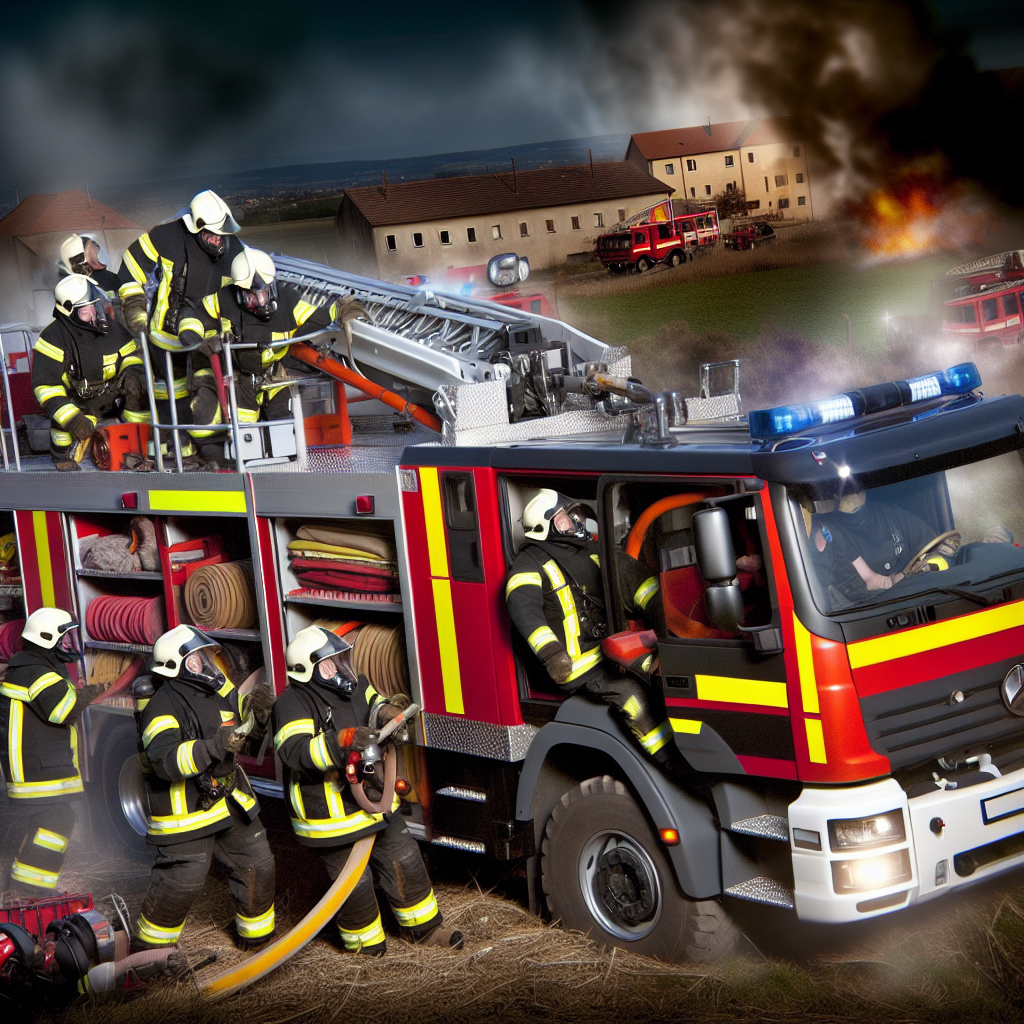
Image Representation
Conclusion
In conclusion, the role of standardization in fleet maintenance is crucial for ensuring reliable towing operations, particularly as highlighted by the exemplary practices of the Prince George’s County Fire/EMS Department. By embracing uniformity in mechanical components and emergency equipment, this department has achieved not only efficiency in maintenance but also significantly enhanced response capabilities. The structured approach to standardization allows for quicker diagnostics, streamlined operator training, and improved resource management, culminating in reduced downtime during critical emergency situations. As demonstrated through their partnership with Pierce Manufacturing, standardization in fleet operations has led to tangible benefits, including increased preparedness and heightened effectiveness in service delivery. Ultimately, the case of Rescue Squad No.820 serves as a testament to how thoughtful implementation of standardized practices can drive success in emergency response, ensuring that every second counts when lives are at stake.
Standardization is not just a procedural choice; it is a strategic imperative that can determine the efficacy of emergency services, reinforcing the necessity for departments to invest in this essential framework for operational success.
Case Study: Rescue Squad No.820’s Standardization Success
The Prince George’s County Fire/EMS Department’s Rescue Squad No.820 has significantly enhanced its emergency response capabilities through a strategic partnership with Pierce Manufacturing, focusing on fleet standardization. This collaboration has led to the development of a heavy-duty rescue apparatus that meets the department’s specific operational needs, accomplishing notable improvements in efficiency and effectiveness.
The standardization of the fleet has ensured uniformity in mechanical components and equipment layouts. This consistency allows personnel to quickly locate and operate essential tools during emergencies, thus streamlining training programs and enabling both new recruits and seasoned staff to gain proficiency more rapidly. In 2024, Rescue Squad No.820 responded to over 1,800 incidents, showcasing the effectiveness of these enhancements driven by their standardized approach.
Furthermore, standardized equipment has simplified maintenance procedures and reduced diagnostic and repair times. Mechanics benefit from familiarity with uniform systems, which leads to decreased downtime for apparatus and lowered maintenance costs. This also streamlines parts procurement processes, contributing significantly to overall cost savings for the department.
Additionally, the partnership with Pierce Manufacturing underscores the successful collaboration between emergency services and equipment manufacturers. By working closely with Pierce, they have developed apparatus that specifically meets operational requirements, enhancing response capabilities while ensuring long-term alignment with fleet strategy.
In summary, the standardization efforts of Rescue Squad No.820, in collaboration with Pierce Manufacturing, have resulted in improved operational consistency, enhanced training efficiency, and reduced maintenance costs. These factors collectively bolster the department’s emergency response effectiveness, highlighting the critical nature of standardization in modern emergency operations.
Conclusion
In conclusion, standardization in fleet maintenance is essential for ensuring reliable towing operations, particularly illustrated by the exemplary practices of the Prince George’s County Fire/EMS Department. The achievements of Rescue Squad No.820 serve as a powerful example of how adopting uniformity in mechanical components and emergency equipment can lead to enhanced operational efficiency and significantly improved response capabilities. This structured approach to standardization not only allows for quicker diagnostics but also streamlines operator training and improves resource management, which is paramount during critical emergency situations.
As demonstrated through their partnership with Pierce Manufacturing, these standardized operations yield tangible benefits, including increased preparedness and effectiveness in service delivery. Ultimately, the case of Rescue Squad No.820 emphasizes that standardization is not simply a procedural choice; it is a strategic imperative that enhances the efficacy of emergency services and reinforces the necessity for departments to invest in this essential framework for operational success.