

In the world of towing, safety and legality are paramount, yet there remains a shocking prevalence of improvised methods that put lives at risk. Consider the recent incident on a California freeway where a big rig attempted to tow another tractor using nothing more than a metal pipe and a chain. This alarming practice, which drew the ire of the California Highway Patrol, underscores the desperate lengths some will go to in order to save a buck, completely disregarding legal standards and personal safety.
Such unsafe practices not only threaten the drivers involved but also pose significant dangers to other road users. As we delve into the lessons learned from these CHP interventions, it becomes abundantly clear: improvisation in towing is not just unwise; it is outright dangerous.
It’s essential to shine a light on these issues to foster a culture of safety within the towing industry, ensuring better practices for everyone.
Understanding the Legal and Safety Risks in Heavy-Duty Towing
Heavy-duty towing, while essential for transporting large vehicles, can pose severe risks if proper safety protocols are not followed. Improvised towing methods, such as those that involve makeshift tools like metal pipes and chains, are not just unsafe—they are illegal.
Fostering a culture of towing safety requires awareness of these risks and adherence to safe towing practices. The California Highway Patrol has reiterated the importance of utilizing professional towing services that comply with legal guidelines to ensure the well-being of all road users and to highlight the significance of safe towing practices.
Supporting Evidence on Improvised Towing Risks
Improvised towing methods present serious risks that can lead to severe accidents or even fatalities. California Highway Patrol (CHP) and various experts highlight these dangers, emphasizing the necessity for adherence to safe towing practices. Here are some key findings and quotes that support the claims regarding the risks associated with improvised towing methods:
-
Industry Warnings: The National Institute for Occupational Safety and Health (NIOSH) highlights that improper hitching, such as attaching a tow chain above the tractor’s drawbar, can lead to dangerous rear rollovers, resulting in injuries or fatalities. They state, “Improperly attaching a tow chain to a point above the tractor’s drawbar can cause tractors to suddenly flip backward.” This clearly illustrates the dangers of misuse involving makeshift towing equipment.
[CDC Archive] -
Safety Risks: The National Agricultural Safety Database warns that all towing materials can be hazardous and may cause severe injury when recoiled from a stretched condition. “Most can go through tractor cabs and pickup windows,” a terrifying thought that underscores the inherent dangers.
[NASD Online] -
Legal Repercussions: Experts note that those engaging in unsafe towing can face serious legal consequences, including liability for accidents and injuries. If a towed vehicle detaches due to improper securing, the towing company may face legal actions for negligence.
[John Day Legal] -
Enforcement and Compliance: The CHP emphasizes the importance of following towing regulations. All towing equipment must comply with California Vehicle Code requirements, undergoing annual inspections to ensure safety. The use of improvised equipment like metal pipes and chains is strictly prohibited.
[California Vehicle Code] - Expert Opinion: The CHP has reiterated that “Towing another vehicle with a pipe and some chain is NOT legal or safe!” This quote encapsulates the risks and the legal implications of using makeshift towing methods, reinforcing the need for professional towing services.
The evidence gathered portrays a consistent message: improvised towing methods are fraught with risks that endanger lives, lead to severe accidents, and attract legal consequences. The CHP’s interventions underline the importance of adhering to recognized safety standards to protect all road users.
| Towing Method | Risks | Legal Consequences | Safety Measures |
|---|---|---|---|
| Legal Towing |
|
|
|
| Improvised Towing |
|
|
|
Summary of Impact on Public Safety from Unsafe Towing Methods
Improvised and unsafe towing methods pose significant risks to public safety, leading to accidents, injuries, and fatalities on the roads. Statistics reveal a troubling reality: according to the National Highway Traffic Safety Administration (NHTSA), trailer-related accidents account for an annual average of 445 deaths and 21,821 injuries in the United States. These incidents are often linked to negligent towing practices, including the use of improper hitching or defective equipment. It is estimated that annually, approximately 50,000 hitch-related accidents occur, resulting in 21,000 injuries and 450 fatalities, highlighting the verifiable consequences of unsafe towing protocols.
Incidents including improper towing practices further emphasize these dangers. For example, a fatal event in June 2018 in San Francisco occurred when a city utilities worker was killed due to a vehicle rolling off a tow truck’s platform. In another case, a police officer in Port Hueneme, California, faced critical injury when a minivan being towed detached unpredictably during a winching operation, illustrating the dire potential for harm stemming from inadequate safety measures.
In addition to the physical threats to road users, the legal ramifications of unsafe towing are substantial. Numerous jurisdictions impose strict regulations governing towing practices. For instance, in Massachusetts, violations can lead to fines or even the suspension of towing licenses, while in Florida, heavy restrictions prevent unsolicited towing trucks from approaching accident scenes without law enforcement direction.
These statistics, incidents, and legal frameworks underline the critical importance of adhering to safe towing practices. Law enforcement and regulatory agencies emphasize the necessity for trained operators, performing regular equipment inspections, and employing professional towing services. The potential consequences of ignoring these standards extend not only to legal repercussions but also place all road users at significant risk, necessitating a commitment to safety within the towing industry.
Improvised towing methods are a concerning public safety hazard that can be mitigated through education, stringent regulations, and adherence to safe practices. Ultimately, public safety is paramount, and everyone must advocate for safe towing practices to maintain safer roadways for all.
In conclusion, the alarming rise in improvised towing methods, as highlighted by the California Highway Patrol, presents undeniable risks that can lead to catastrophic consequences on the roads. The recent incident where a big rig attempted to tow another vehicle using nothing more than a metal pipe and chain clearly illustrates not only the legal ramifications but also the grave safety hazards posed by such practices. The CHP’s firm reminder that Towing another vehicle with a pipe and some chain is NOT legal or safe! echoes the call for compliance with established towing protocols that prioritize public safety.
Statistics underscore the urgency of this issue, with the National Highway Traffic Safety Administration noting an average of 445 deaths and over 21,000 injuries annually linked to trailer-related accidents, many of which stem from negligent towing practices. However, these tragedies can be mitigated through adherence to safe towing protocols, which include utilizing properly equipped vehicles operated by trained professionals. Safe towing practices are not merely guidelines; they are essential measures that protect not only those involved in towing operations but also fellow motorists and pedestrians.
It is essential for all drivers to comprehend the significance of using certified towing services that comply with legal requirements to ensure the safety of everyone on the road. By fostering awareness and advocating for stringent safety practices, we can work together to make our roadways safer. As we move forward, let us prioritize safety by rejecting improvised methods and embracing responsible towing solutions that safeguard lives and uphold the law.
Suggested Images for the Article
-
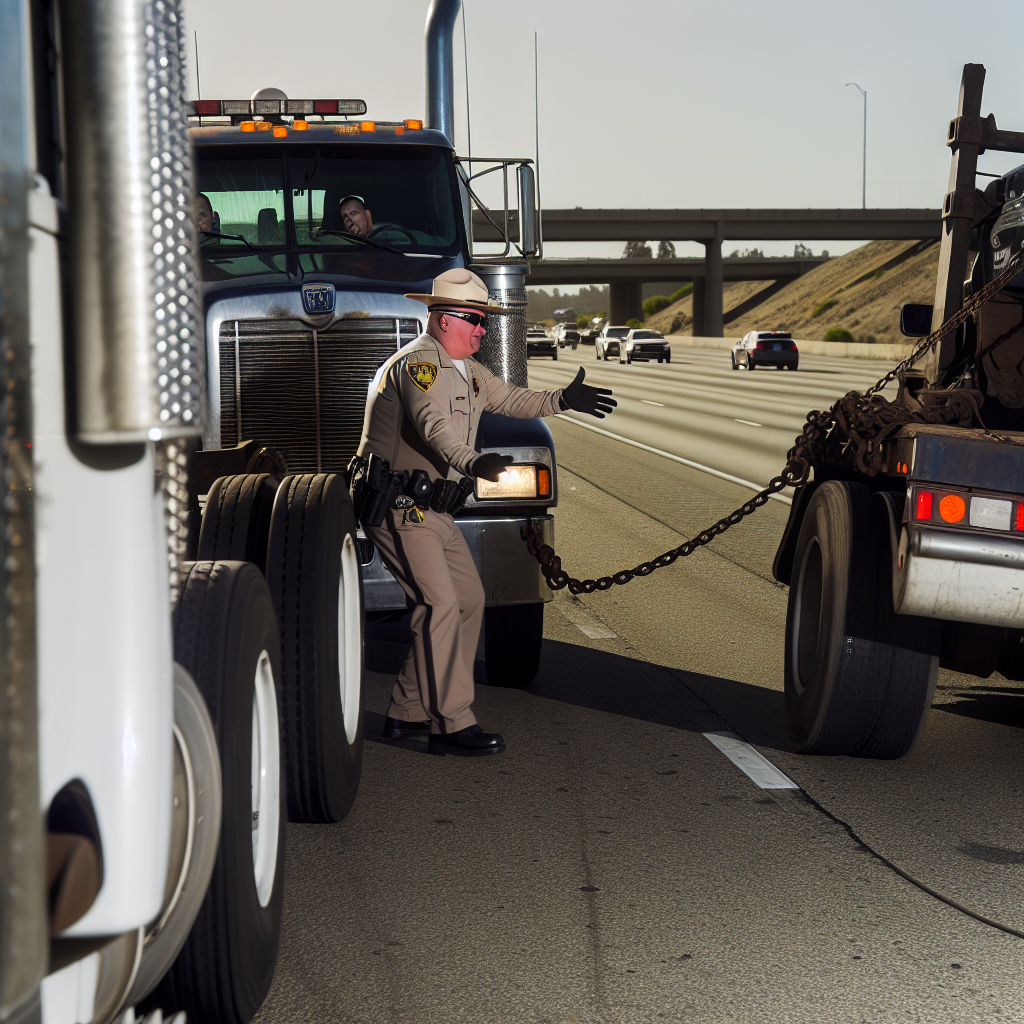
Image depicting the dangers of improvised towing methods, showing a big rig attempting to tow another vehicle using inadequate equipment like a metal pipe and chain, with a California Highway Patrol intervention. -
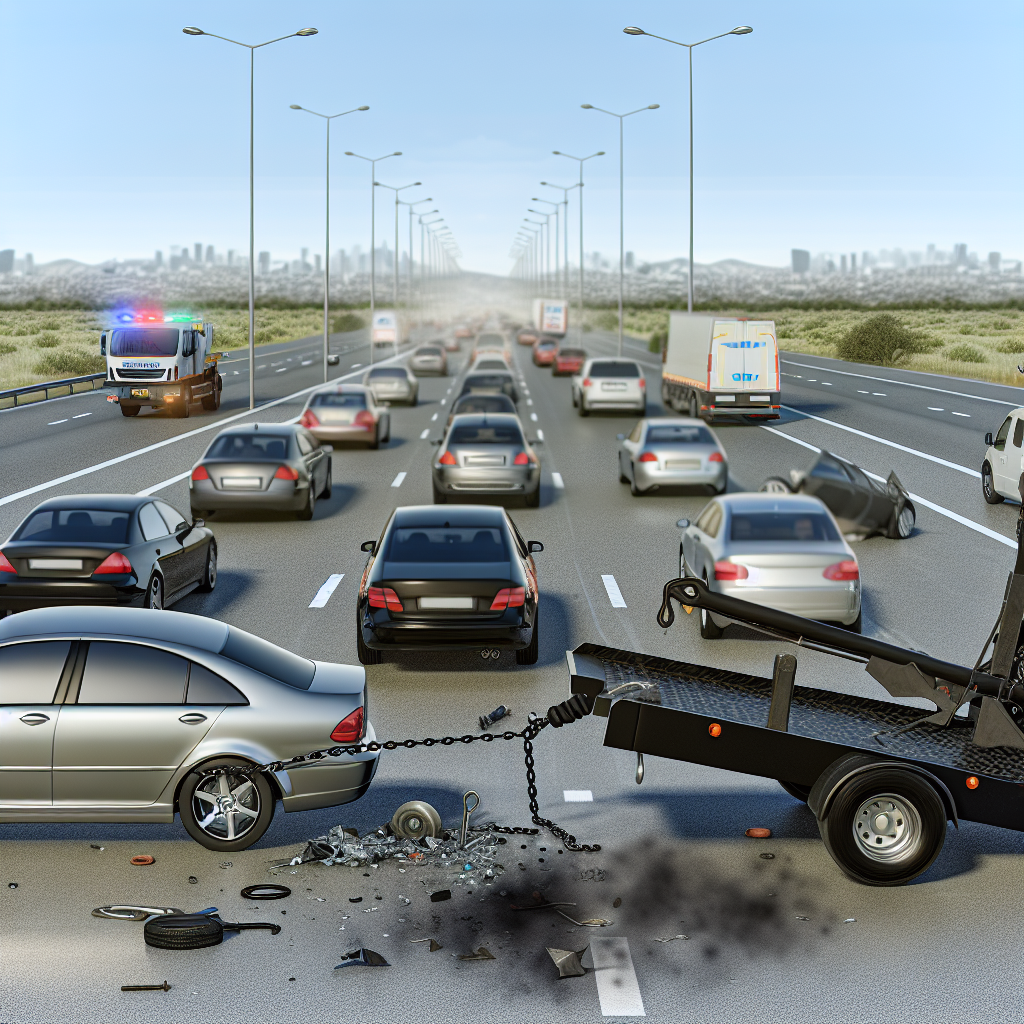
Image illustrating an unsafe towing setup on a highway, showing a vehicle detaching from a metal pipe and chain setup, with debris on the road illustrating the risks of such practices.
Key Takeaways from the Dangers of Improvised Towing Methods
- Legal Risks: Engaging in improvised towing can lead to citations and fines. This is due to non-compliance with established regulations that govern towing practices.
- Liability Exposure: Those involved may face significant financial burdens from damages or injury claims. This is particularly true if accidents result from negligent towing practices.
- Equipment Failure: Improvised setups often use unsuitable equipment. This raises the risk of mechanical failure, potentially causing severe accidents on the road.
- Increased Safety Hazards: Using methods like metal pipes and chains can lead to loss of vehicle control. This increases the chances of accidents that affect other drivers and pedestrians.
- Necessity for Certified Services: It is crucial to utilize professional towing services. These services follow legal guidelines and ensure safe, reliable operations that protect all road users.
- Public Awareness: Educating motorists on the risks of unsafe towing practices is vital. This can help foster a culture of safety and compliance within the towing industry.
“Improvised towing methods pose significant safety risks and legal consequences. According to Ed’s 24 Hour Service, using makeshift solutions like inappropriate straps or ropes can lead to disastrous outcomes. Professional towing services invest in high-quality equipment and employ techniques that ensure the safety and integrity of the towed vehicle.”
This quote solidifies the argument against improvised towing methods by emphasizing not only the safety risks involved but also the potential legal ramifications that come into play when using inadequate towing solutions.
Legal Implications Surrounding Unsafe Towing Practices
In light of our discussion on the legal implications surrounding unsafe towing practices, it is critical to integrate relevant safety regulations into the conversation for the benefit of both readers and search engines.
- California Towing Safety Regulations: To comprehend the rules governing towing operations in California, you can refer to the comprehensive guidelines on safety practices: California Vehicle Code Section 29004. This resource provides extensive information on safety chains, equipment requirements, and operational standards that must be followed to ensure public safety and compliance with the law.
- Legal Consequences of Improper Towing: Understanding the legal ramifications of engaging in unsafe towing practices is crucial. You can read more about the penalties and liabilities stemming from towing violations at FindLaw’s Overview on Towing Companies. This article addresses the fines, license repercussions for towing companies, and the necessary care to be exercised while towing a vehicle.
- Towing License Violations and Fines: To learn more about the penalties associated with towing license violations, visit CarsTrucksRoads Towing License Violations. This resource highlights potential fines and legal consequences for unauthorized towing practices, reinforcing the importance of obeying towing regulations to protect public safety.
- Virginia Towing Regulations: Furthermore, a comparative perspective on state-specific towing regulations can shed light on the varying standards across the USA. The Virginia Towing Regulations showcase the diverse, stringent policies in place, demonstrating the shared commitment to safe and responsible towing.
By integrating these outbound links, we not only add richness to the article but also enhance SEO for the topic by linking to authoritative sources that further substantiate the discussion on legal and safety aspects of towing practices. These adjustments will prove beneficial for readers seeking additional insights while simultaneously boosting the article’s search engine visibility.