
In a world where safety is a growing concern on the roads, choosing the right pickup truck requires more than just aesthetic appeal or horsepower. The importance of safety in these powerful vehicles cannot be overstated, as they often serve as family transporters, workhorses, and adventure companions. This is where the Insurance Institute for Highway Safety (IIHS) comes into play, providing consumers with crucial crash test ratings that highlight how different models stack up in real-world scenarios.
By understanding IIHS ratings, buyers can make informed decisions, ensuring they select not only the truck that meets their needs but also one that prioritizes safety for all passengers. In this article, we will delve into the safest new pickup trucks available, unraveling the innovations that make them stand out in terms of safety features and crashworthiness.
The Relevance of IIHS Ratings for Pickup Trucks
The Insurance Institute for Highway Safety (IIHS) plays a crucial role in determining vehicle safety for consumers, especially for those looking to purchase new pickup trucks. IIHS ratings are not only a benchmark of safety performance but are vital in informing buyers about which models can provide the best protection in various accident scenarios.
IIHS evaluates pickup trucks through a series of rigorous crash tests, which include moderate overlap front, side, and small overlap front tests that reflect real-world crash circumstances. Notably, due to their larger stature and design, pickup trucks often present unique challenges in these evaluations, typically resulting in poorer safety ratings compared to smaller vehicles. For instance, IIHS notes that these trucks face significant difficulties in meeting the criteria for the small overlap front test, which can be crucial in high-speed collisions.
Achieving a coveted Top Safety Pick+ award from IIHS signifies that a truck has excelled across all critical safety tests, including assessments of headlights and frontal crash prevention technologies. This designation doesn’t just showcase a vehicle’s robust safety features; it directly influences consumer behavior, as potential buyers are increasingly prioritizing these ratings when making purchasing decisions.
Moreover, IIHS ratings have prompted automakers to enhance their designs and safety features actively. Many manufacturers develop their vehicles with IIHS standards in mind, recognizing that strong ratings can be a significant marketing advantage. As a result, these ratings foster a competitive environment that encourages innovations aimed at improving passenger safety across the automotive industry.
The importance of IIHS in the broader context of vehicle safety and consumer advocacy cannot be overstated—it empowers consumers to choose trucks that not only meet their practical needs but also provide peace of mind on the road.
“Size doesn’t always equal safety, and not all pickups are created equal.”
IIHS Crash Test Evidence: A Look at the Safest Pickup Trucks
In the latest 2025 IIHS crash tests, both the Toyota Tundra and Rivian R1T emerged as frontrunners, showcasing significant advancements in safety technologies and performance. The Tundra achieved the prestigious Top Safety Pick+ rating, highlighting its capacity to safeguard occupants in diverse crash scenarios. This success is attributed to a robust design that excels in key evaluations including moderate overlap front and side impact tests. The Toyota Tundra features Toyota Safety Sense 2.5, which includes a pre-collision system equipped with pedestrian detection, lane departure alert with steering assistance, and dynamic radar cruise control, ensuring comprehensive protection for all passengers. It particularly shines in rear passenger safety tests, underscoring its well-rounded safety profile.
Similarly, the Rivian R1T earned the Top Safety Pick designation. This electric pickup truck is outfitted with an advanced safety suite comprising twelve cameras and thirty-eight sensors that enhance its crash prevention capabilities. Among its features are automatic emergency braking, blind-spot monitoring, and lane-keeping assistance, which facilitate proactive accident avoidance. The R1T also performed admirably in the IIHS crash tests, securing ‘Good’ ratings across most parameters, except for a minor ‘Acceptable’ score in rear passenger head protection during side impacts.
Notably, both models represent significant advancements in vehicle safety, particularly in the context of stricter testing standards observed in 2025. The integration of cutting-edge technologies not only bolsters crash prevention but also reflects evolving consumer expectations for vehicle safety. As manufacturers continue to innovate, the focus on enhancing occupant protection and implementing advanced camera systems underscores the industry’s commitment to safety.
Overall, the results from the 2025 IIHS crash tests reaffirm the Toyota Tundra and Rivian R1T as leading choices for consumers prioritizing safety in their pickup truck selections.
Safety Features Contributing to High IIHS Ratings for Pickup Trucks
Safety features that contribute to high IIHS ratings for pickup trucks must include a variety of advanced technologies that enhance crashworthiness and accident prevention. Key features often found in top-rated models like the Rivian R1T, Toyota Tacoma, and Hyundai Santa Cruz include:
- Advanced Camera Systems: Models like the Rivian R1T utilize multiple cameras—up to eleven—that provide a 360-degree view around the vehicle, helping in parking and collision avoidance. This extensive camera suite supports features such as adaptive cruise control, lane-keeping assistance, and blind-spot monitoring.
- Collision Avoidance Systems: Automatic emergency braking (AEB) systems are critical for reducing the severity of accidents. The Rivian R1T is equipped with such systems that react to potential collisions, often preventing accidents or minimizing their impact.
- Robust Structural Design: Vehicles that excel in crash tests, such as the Toyota Tacoma and Hyundai Santa Cruz, feature reinforced frames and enhanced crumple zones that absorb energy in the event of a collision, thus protecting occupants.
- Electronic Stability Control: This technology helps drivers maintain control when swerving or during abrupt maneuvers, ultimately preventing rollovers—a common concern in taller vehicles like pickups.
- Comprehensive Airbag Systems: High-rated pickups often include multiple airbags throughout the cabin to provide essential protection during collisions.
- Strong Performance in Crash Tests: Both the Tacoma and Hyundai Santa Cruz received high marks in IIHS evaluations for small overlap front and side crash tests, which are critical indicators of a vehicle’s ability to protect occupants during real-world crashes.
Examples of how these features play out include the Toyota Tundra achieving the Top Safety Pick+ rating, with superior structural integrity and collision avoidance systems, and the Rivian R1T demonstrating excellence in various tests due to its innovative design and technology.
Conclusion
In today’s world, where safety concerns loom large on the roads, making an informed decision when selecting a pickup truck has never been more crucial. The emphasis on safety ratings from the IIHS serves as a vital resource for consumers, guiding them toward vehicles that offer the necessary protection for both drivers and passengers. The Toyota Tundra and Rivian R1T exemplify the advancements in safety technology, showcasing that not all pickups are created equal.
As you consider your next purchase, prioritize safety ratings and look for trucks that excel in crash tests and safety features, such as advanced camera systems and collision avoidance technologies. By placing safety at the forefront of your decision-making, you can feel confident that your chosen pickup truck will not only meet your practical needs but also provide peace of mind on every journey. Remember, when it comes to the well-being of those you care about, every safety feature counts.
| Model Name | IIHS Rating | Key Safety Features |
|---|---|---|
| Toyota Tundra | Top Safety Pick+ | Toyota Safety Sense 2.5, pre-collision system, lane departure alert, dynamic radar cruise control, advanced airbag system. |
| Rivian R1T | Top Safety Pick | Advanced camera system, collision avoidance, automatic emergency braking, blind spot monitoring. |
| Hyundai Santa Cruz | Top Safety Pick | Robust structural design, collision mitigation technologies, advanced airbag systems. |
| Toyota Tacoma | Top Safety Pick | Excellent small overlap front and side crash test performance, lane keeping assistance. |
| Chevrolet Colorado | Top Safety Pick | Advanced safety technologies, strong crash test results, electronic stability control. |
| Tesla Cybertruck | Top Safety Pick+ | Enhanced structural integrity, collision avoidance tech, advanced adaptive headlights. |
| Ford F-150 | Did Not Qualify | N/A |
Future Advancements in Truck Safety Technology
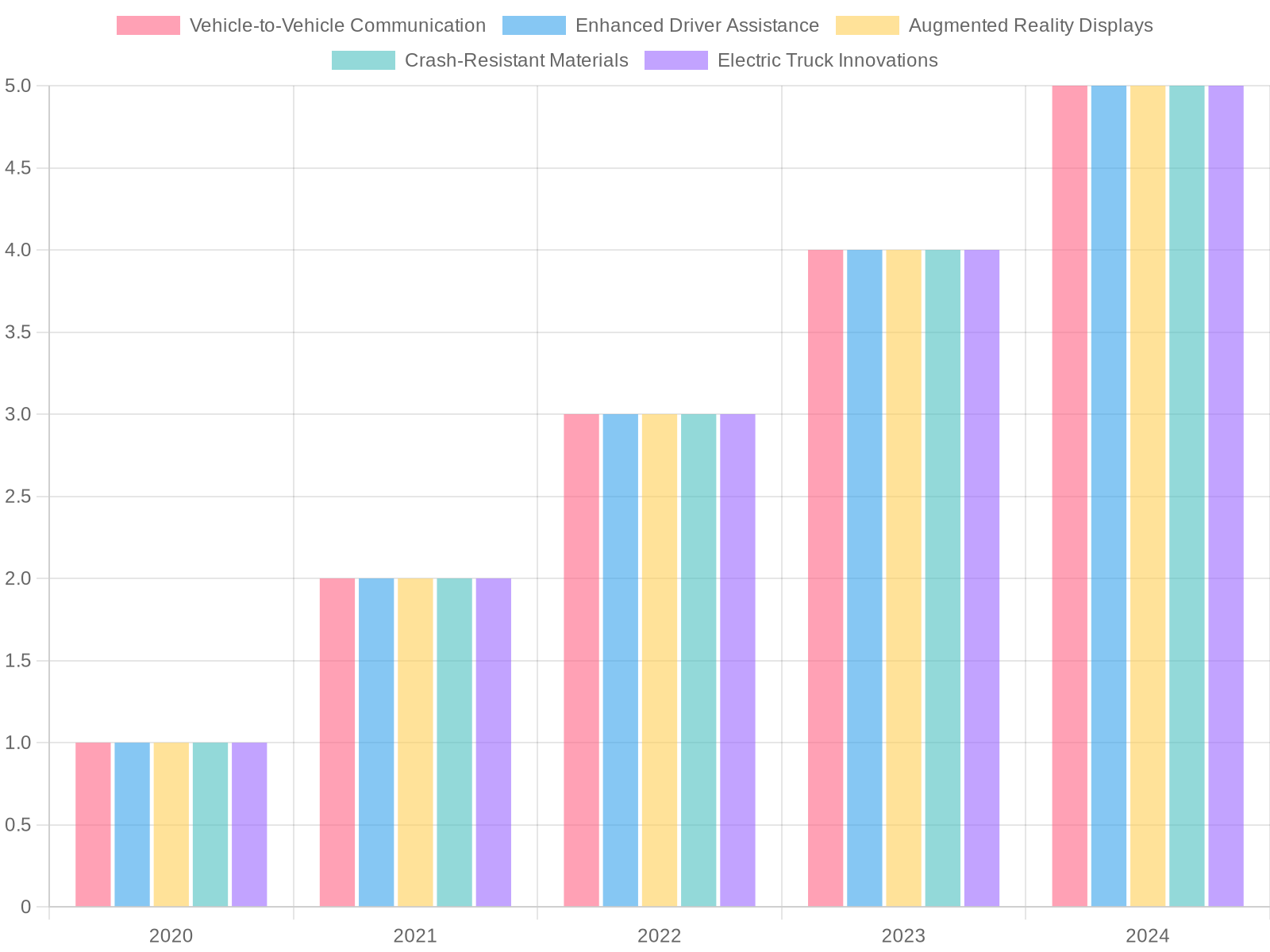
Looking ahead, the landscape of truck safety technology is poised for remarkable transformations driven by innovation and automation. As the automotive industry evolves, we can expect to see several advancements that will enhance the safety of pickup trucks further.
- Vehicle-to-Vehicle (V2V) Communication: One of the most promising developments is the implementation of V2V communication systems. This technology allows trucks to communicate with each other, exchanging information about speeds, direction, and potential hazards. For instance, if a pickup truck detects sudden braking or an obstacle on the road, it could alert nearby vehicles, providing them with real-time data to avoid collisions.
- Enhanced Driver-Assistance Features: Automatic systems are expected to further enhance existing technologies. Features such as adaptive cruise control will likely evolve to allow for more precise speed adjustments based on real-time traffic conditions. Similarly, automated lane-keeping systems may be refined to include more autonomous functions, with the capability of executing lane changes safely without driver intervention.
- Augmented Reality Displays: Imagine augmented reality (AR) displays in pickup trucks providing real-time hazard information to drivers. These interfaces could project important data onto the windshield, helping drivers navigate challenging conditions or alerting them to nearby pedestrians or cyclists. This innovative technology could significantly enhance situational awareness and decision-making on the road.
- Advanced Materials for Crash Resistance: To improve safety, manufacturers are likely to integrate cutting-edge materials designed to enhance crash resistance. New lightweight composites may provide increased durability while also improving fuel efficiency. These materials could play a key role in reducing the impact of collisions on both occupants and the vehicle itself.
- Electric Trucks Leading Innovation: As more electric trucks hit the market, we can anticipate a wave of safety innovations tailored specifically for these vehicles. With their unique weight distribution and lower center of gravity, electric pickups can be designed with improved structural integrity to minimize crash impacts. Furthermore, enhanced sensor systems can monitor the environment surrounding the truck, providing additional layers of security for drivers and passengers.
In summary, the future of truck safety technology looks promising, with advancements focusing on greater automation, enhanced communication, and smarter materials. As manufacturers invest in these innovations, consumers can expect safer and more reliable pickup trucks in the years to come.
Key Takeaways on Pickup Truck Safety
In today’s automotive market, safety is a crucial consideration for buyers of pickup trucks. The Insurance Institute for Highway Safety (IIHS) provides essential crash test ratings that guide consumers in their decision-making process. Achieving a Top Safety Pick+ rating indicates a model’s exceptional performance in various crash scenarios, which influences consumer confidence and vehicle design.
Among the safest new pickup trucks for 2025, the Toyota Tundra stands out with its Top Safety Pick+ rating, showcasing advanced safety features such as Toyota Safety Sense 2.5. The Rivian R1T also received high ratings, equipped with 12 cameras and numerous safety sensors, highlighting innovations in crash prevention.
Additionally, models like the Toyota Tacoma and Hyundai Santa Cruz excel in important crash tests, reinforcing the message that not all pickups are equal in safety. As manufacturers enhance their designs to meet IIHS standards, the focus on safety features fosters a more secure driving environment for consumers across the board.
Safety Features Contributing to High IIHS Ratings for Pickup Trucks
High IIHS ratings for pickup trucks rely on a range of safety features that improve their ability to withstand crashes and prevent accidents. Top-rated models like the Rivian R1T, Toyota Tacoma, and Hyundai Santa Cruz include several key technologies:
- Advanced Camera Systems: The Rivian R1T features multiple cameras, providing a 360-degree view around the vehicle. This helps with parking and avoiding collisions. This camera setup also supports adaptive cruise control, lane-keeping assistance, and blind-spot monitoring.
- Collision Avoidance Systems: Automatic emergency braking (AEB) is essential for reducing the impact of accidents. The Rivian R1T has an AEB system that responds to potential collisions, often preventing or lessening accidents.
- Strong Structural Design: Trucks like the Toyota Tacoma and Hyundai Santa Cruz have reinforced frames and crumple zones that absorb impact energy in collisions, providing better protection for passengers.
- Electronic Stability Control: This technology helps maintain vehicle control during sudden maneuvers, reducing the risk of rollovers, especially crucial in taller vehicles like pickups.
- Comprehensive Airbag Systems: These pickups often have multiple airbags in the cabin to protect occupants during crashes.
- Strong Performance in Crash Tests: Models like the Tacoma and Santa Cruz excelled in IIHS tests, scoring well in crucial small overlap front and side evaluations, showing their ability to protect occupants during real-world crashes.
These safety features demonstrate how these pickups, such as the Toyota Tundra and Rivian R1T, have achieved high safety ratings through advanced technology and robust designs, instilling confidence in consumers.
Learn more about the latest IIHS safety ratings and innovations in pickup trucks from the official IIHS site for in-depth evaluations and detailed reports on each model’s performance in crash tests.
Additionally, you can check out the Tesla Cybertruck’s achievement of the IIHS Top Safety Pick+ award for 2025 to understand how it outperformed other models based on safety features and crashworthiness.
For insights on how the Toyota Tundra performed in comparison, read this summary of the 2025 Top Safety Picks, including ratings and safety technology advancements.
Pickup Truck Reviews and Advanced Safety Technology
When exploring pickup truck reviews, understanding the impact of advanced safety technology is crucial. Vehicles such as the Toyota Tundra and Rivian R1T are not just recognized for their rugged designs or performance but are also leading the way due to innovations in safety features. The Insurance Institute for Highway Safety (IIHS) emphasizes how these technologies significantly influence ratings and consumer choices, guiding buyers towards options that provide safety without sacrificing utility.
Check out the recent article detailing innovative advanced safety technology in modern pickup trucks, highlighting trends like Vehicle-to-Vehicle (V2V) communication and enhanced driver-assistance features, which contribute to superior safety ratings:
- IIHS Ratings and Safety Impact on Pickup Truck Consumer Choices: Discusses how advanced safety features have become a vital factor in consumer decisions.
- Advanced Safety Technologies in Modern Pickup Trucks: Trends and Innovations: Reviews the implementation of sophisticated systems such as adaptive cruise control.
In summary, focusing on the pickup truck reviews that include advanced safety technologies can provide invaluable insights, ensuring that prospective buyers make informed choices to prioritize safety without compromising on vehicle capability. Based on the latest findings, embracing advanced safety features not only enhances consumer confidence but also aligns with growing industry standards for automotive safety.
Case Studies in Pickup Truck Safety Technologies
To enrich our discussion on pickup truck safety technologies, let’s examine notable case studies that embody the advancements and innovations of some high-performing models:
- 2023 Toyota Tundra: The Tundra received the prestigious IIHS Top Safety Pick+ award due to its outstanding safety features. Its standard front crash prevention system earned superior ratings in both vehicle-to-vehicle and vehicle-to-pedestrian tests, crucial for modern driver safety. This truck excelled in all six crashworthiness evaluations, including the updated side crash test, which has become increasingly relevant given that pickups often experience unique crash scenarios. Published findings can be reviewed in IIHS News dated February 16, 2023.
- 2024 Rivian R1T: Marking a significant milestone, the Rivian R1T earned the Top Safety Pick+ award, being the first electric pickup to achieve this honor. It secured good ratings in all six IIHS crashworthiness tests and showcased a superior front crash prevention system, which played a pivotal role in protecting occupants during potential collisions. This recognition reflects Rivian’s commitment to safety and innovation in electric vehicles, as detailed in a report from December 19, 2023 on the IIHS website.
- Ford F-150: After initially receiving a marginal rating in the updated side crash test, the 2024 Ford F-150 made significant structural improvements to enhance occupant safety. These changes were implemented following IIHS testing, showcasing the direct impact of safety evaluations on vehicle design. The updated F-150 earned a good rating in the subsequent tests, reaffirming the importance of sustained safety assessments. More details on this case study can be found here from February 21, 2024.
- Impact of Updated Side Tests: The IIHS has also introduced more rigorous side crash tests, featuring a heavier barrier and higher speed. These tests have led manufacturers to enhance their vehicle designs, particularly for models like the Ford F-150, which initially struggled under the new criteria. This pushes automakers to prioritize safety in their construction and features, demonstrating the IIHS’s significant influence on the industry. Details on this evaluation can be found in another insightful article by IIHS dated December 15, 2022.
These case studies highlight how safety technologies are evolving in response to IIHS ratings, showcasing the vital link between rigorous testing and advancements in vehicle safety. Automakers like Toyota and Rivian are setting benchmarks not only for their models but also for the industry at large, proving that innovation in safety can coexist with performance and design.