
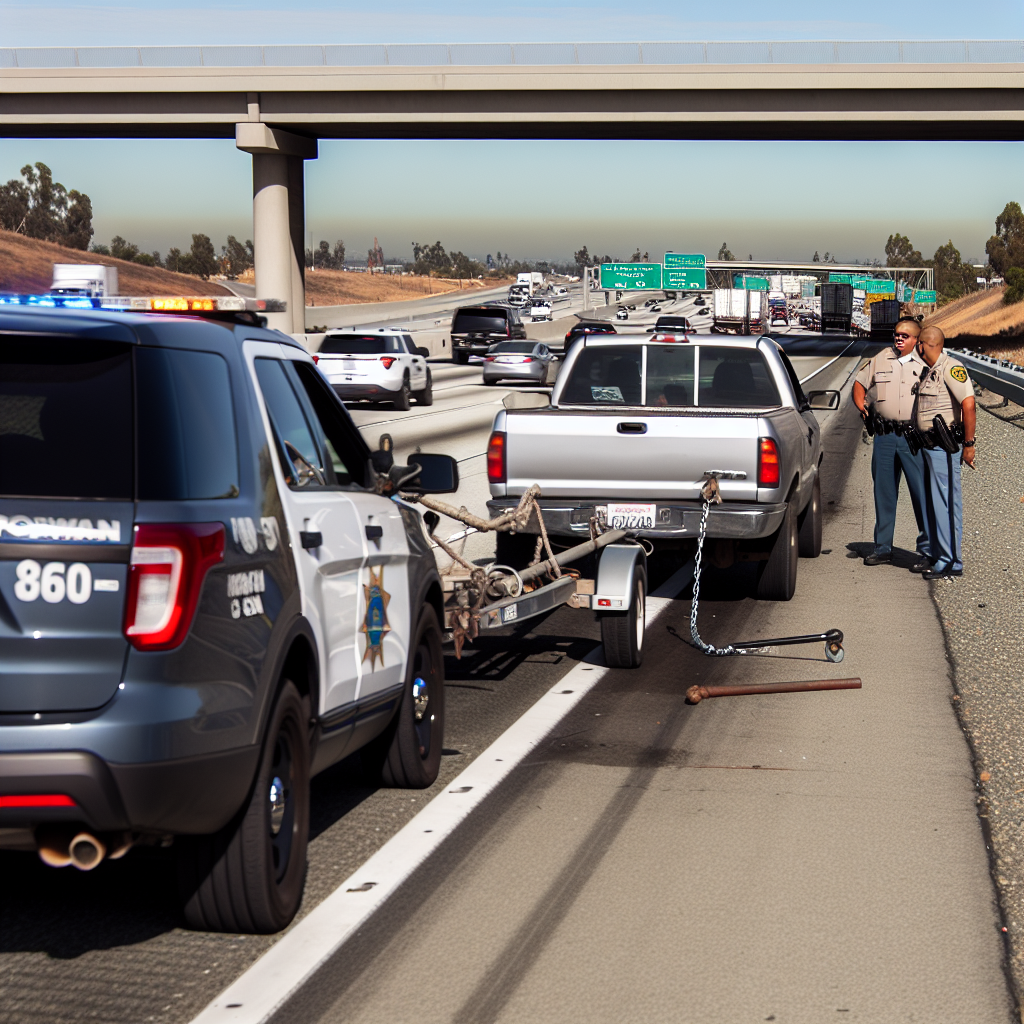
Improvised towing practices can seem like quick fixes, but they are very dangerous. A recent incident reported by the California Highway Patrol (CHP) brings attention to the serious risks of these methods. In one case, a vehicle was towed using only a metal pipe and a chain, causing the truck’s brake chambers to drag on the ground. This created a potential hazard for other drivers. Unusual and illegal towing practices continue to threaten safety on the road and violate regulations meant to protect all users.
The CHP’s findings remind us how vital it is to use proper towing vehicles and follow guidelines. Drivers should be alert and report any suspicious towing activities to authorities, as the consequences of making do can be severe. Stay informed to make our roads safer, and remember there are no shortcuts when it comes to towing.
Unsafe Towing Practices
As we delve deeper into the alarming realities of improvised towing, it is critical to acknowledge that taking shortcuts when towing can lead to tragic outcomes. The California Highway Patrol (CHP) effectively highlights this concern in their report regarding an illegal towing incident. This specific case underscored the grave potential danger posed by using insufficient equipment like a metal pipe and a chain, which compromises not only the safety of the towing driver but also everyone sharing the road.
Following the CHP’s findings, it becomes evident that improper towing practices are not merely isolated events. They point to a greater issue within the towing industry where unsafe methods often go unchecked. The incident serves as an excellent example of why drivers should be vigilant, not only for their own safety but also for the safety of others. It is imperative to understand that every time a vehicle is towed, the operators are responsible for ensuring compliance with existing towing regulations to prevent any catastrophic consequences.
Transitioning from this incident, we should also examine how such dangerous practices impact not only the towing drivers but other road users and bystanders as well. The risks extend far beyond the individual involved in the towing operation. When a vehicle is not equipped for proper towing or unfolds in an unsafe manner, the potential for accidents increases exponentially.
Lastly, as we analyze these risks, it is essential to emphasize the importance of adhering to legal and safety standards in towing practices. From following regulations to employing the right equipment, each step taken can significantly reduce the likelihood of accidents, ensuring the safety of all road users. This brings us to the next section, where we explore the statistical trends regarding towing incidents and the broader implications of illegal practices.
CHP Illegal Towing Incident: A Cautionary Tale of Improvised Towing
On September 30, 2025, the California Highway Patrol (CHP) responded to reports of an illegal towing incident on a freeway in San Francisco. The case involved a big rig towing another big rig tractor using an utterly unsafe and illegal method. The vehicle was being towed with a metal pipe and a chain, leading to serious concerns regarding road safety.
The details of the incident revealed that the towed truck’s brake chambers were dragging on the ground, heightening the potential risks associated with the vehicle’s inability to stop safely. Given the sheer weight of these commercial vehicles, this scenario posed a significant hazard not only to the driver but to all road users around them. The CHP was clear in their condemnation of such reckless behavior: “Towing another vehicle with a pipe and some chain is NOT legal or safe!” Moreover, authorities were grateful to the alert citizen who notified them about this dangerous situation before it escalated into a serious accident.
The implications of this improvised towing incident go beyond legal violations—it highlights the critical need for safe towing practices. Such makeshift towing arrangements can result in a myriad of catastrophic situations, including vehicle detachments, loss of control, and possible fatalities. This incident acts as an urgent reminder for both drivers and towing operators to adhere strictly to regulations and utilize appropriate towing apparatuses to ensure safety on the road. Proper training and equipment usage are essential in preventing these kinds of dangerous towing practices from becoming a recurring issue.
| Towing Method | Safety Implications | Legal Status |
|---|---|---|
| Using a proper tow truck | Established safety standards, controlled towing | Legal |
| Using chains and ropes | Risk of snapping, potential to detach, hazards | Often illegal |
| Using a metal pipe and chain | High risk of vehicle detachment, unsafe braking | Illegal and unsafe |
| Towing with no brakes or lights | Increased risk of accidents, no visibility to others | Illegal |
| Using designated towing equipment | Guarantees safety and compliance with towing laws | Legal |
Safety Implications of Illegal Towing Practices
The recent incident involving the California Highway Patrol (CHP) provides a sobering look at the significant dangers posed by illegal towing practices. When towing is executed poorly or in contravention of established regulations, the implications stretch far beyond legal penalties; the health and safety of all road users are at stake.
Risks to Towing Drivers
The drivers engaged in illegal towing face considerable risks as well. Utilizing makeshift methods—such as towing a vehicle with a metal pipe and chains—often lacks the structural integrity and safety features of legitimate towing equipment. Drivers may find themselves unable to control the towing process effectively, leading to accidents that can result in severe injuries or fatalities. In the bizarre CHP case, the towed truck’s brake chambers were dragging along the roadway. This ineffectiveness could have created an uncontrollable situation for the towing driver. A malfunction or an untimely reaction could spell disaster on busy highways.
Risks to Other Road Users
Moreover, the implications extend to other motorists. Improperly towed vehicles are at a high risk of detachment, which could result in dramatic crashes and unpredictable behavior on the road. Unlike legally sanctioned operations, these pricy shortcuts could lead to the driver losing control of the vehicle being towed. Such occurrences have the potential to harm not only the drivers involved but also innocent bystanders and occupants of nearby vehicles.
Risks to Bystanders
Bystanders are potentially the most vulnerable victims of illegal towing. If a towed vehicle were to detach suddenly, it could collide with pedestrians, cyclists, or even parked cars in its path, causing chaos in what should be a structured environment. The unpredictable nature of illicit towing practices adds an element of unpredictability that endangers those who are simply in the wrong place at the wrong time.
The Importance of Adherence to Towing Regulations
Given the insights gained from the CHP incident, it is clear that adherence to towing regulations is paramount. Proper equipment and training are not mere recommendations; they are essential to ensuring safety on the roads. This incident serves as a crucial reminder to both towing operators and drivers that cutting corners can lead to hazardous situations. Everyone sharing the road has a responsibility to report suspicious towing behaviors to mitigate these risks and promote safer travel for all.
By understanding the full spectrum of dangers linked with illegal towing practices, we urge all drivers to prioritize safety by using proper towing methods that comply with regulations.
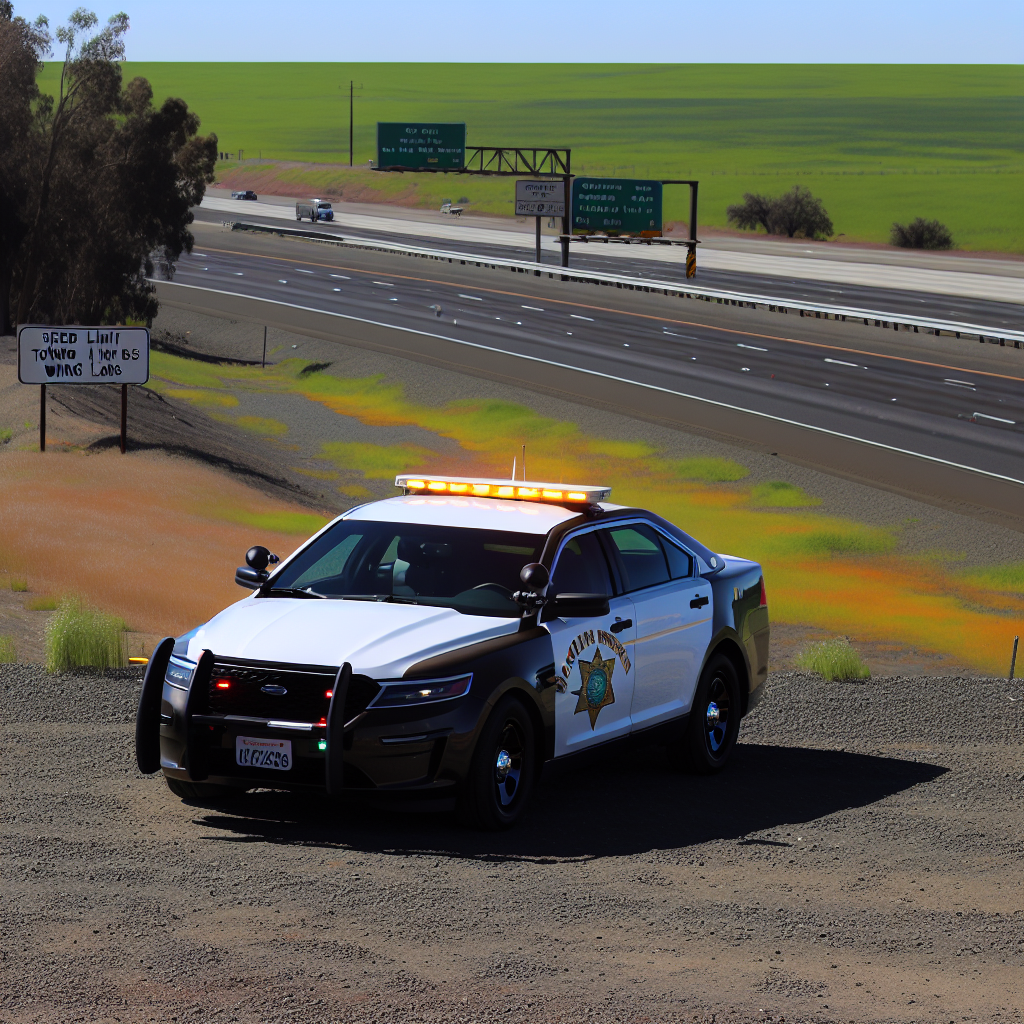
Statistics on Towing Incidents: Trends in Improvised and Illegal Practices
Recent analyses of towing statistics reveal a concerning and growing trend related to improvised towing and unsafe practices that place drivers and the public at significant risk. The National Insurance Crime Bureau (NICB) noted an alarming 89% increase in predatory towing claims between early 2022 and late 2024, indicating an escalation in financial exploitation related to improper towing practices. This spike affects motorists nationwide, including in both urban and rural areas.
A report from the American Transportation Research Institute (ATRI) highlights that 82.7% of motor carriers have faced excessive towing fees, with 29.8% of accident-related heavy truck towing invoices containing predatory billing practices. Such unscrupulous tactics can inflate the cost of towing, with invoices reaching as high as $202,000 for single recoveries.
In terms of safety, the National Highway Traffic Safety Administration (NHTSA) provides sobering statistics, revealing that trailer-related accidents average 445 deaths and over 21,000 injuries annually in the U.S. Approximately 50,000 hitch-related accidents occur each year, often stemming from negligent towing practices. In a recent case, an improvised towing method involved using a metal pipe and chain—highlighting the severe risks of inadequate equipment and training that can lead to catastrophic outcomes.
Additonally, various law enforcement agencies have uncovered organized crime rings linked to the towing industry, engaging in practices such as staging accidents for profit. Recent operations have led to numerous arrests focused on dismantling illegal towing operations.
The surge in reports of predatory towing and improvised methods underscores the need for stricter adherence to safety regulations, better enforcement of laws, and public awareness of the dangers associated with unsafe towing practices. It’s crucial for all road users to recognize these challenges and advocate for safer towing measures to prevent tragic incidents on the road.
Insights from CHP and Law Enforcement on Illegal Towing Practices
The California Highway Patrol (CHP) has issued strong warnings regarding the dangers posed by illegal towing practices, especially concerning improvised methods that compromise safety. A recent incident showcased just how perilous these tactics can be. An alert driver, witnessing a big rig attempting to tow another using a metal pipe and chain, called 9-1-1. A CHP spokesman remarked, “A big thank you to the alert driver who picked up the phone and called 9-1-1 so that we could remove this dangerous vehicle from the road before anything bad could happen.”
In discussing the incident, the CHP stated, “Towing another vehicle with a pipe and some chain is NOT legal or safe!” This incident resulted in immediate action by law enforcement, which emphasizes the potential hazards of such makeshift towing methods. Public safety must always come first, and CHP urges all drivers to avoid shortcuts that can endanger not only themselves but also other road users.
These warnings are echoed by other law enforcement agencies that have addressed the growing threat of predatory towing scams. California Insurance Commissioner, Ricardo Lara, stated, “This type of scam is preying on drivers at their most vulnerable moments—immediately after an accident—when they should be focused on their safety and next steps, not fighting to get their vehicle back.” Such statements serve as crucial reminders to the public about the importance of safe and legal towing practices.
Conclusion
In summary, the alarming rise in unsafe and illegal towing practices serves as a critical warning about the potential dangers on our roads. The California Highway Patrol’s recent findings highlight the perils presented by improvised towing methods, such as using a metal pipe and chain, which not only contravene regulations but also significantly increase the risk of accidents. Proper towing protocols are not merely suggestions; they are essential to safeguarding the lives of towing operators and all road users.
This article underscores the imperative for all drivers to understand the importance of adhering to towing regulations and utilizing suitable equipment. From minimizing the risk of vehicular detachment to ensuring stable and safe towing operations, following established guidelines protects everyone on the road.
As a final message, we urge all drivers to stay vigilant and report unsafe towing activities whenever they witness them. Promoting awareness and adherence to towing laws is a collective responsibility that helps ensure safer travel for all. Remember, safety should always come first—never cut corners when it comes to towing practices.
Summary of Towing Regulations in California: Ensuring Safety and Preventing Illegal Practices
Towing regulations in California are critical for maintaining road safety and protecting both drivers and the public from unsafe practices. These laws are governed primarily by the California Vehicle Code (CVC) and are reinforced by various state and local ordinances designed to uphold safety standards and prevent predatory towing.
1. Driver’s License Requirements
Towing practices require the appropriate driver’s licenses based on the weight of the towed vehicle. Operators need a Class A or C license, depending on their towing duties. This licensing ensures that tow truck drivers possess the necessary skills and knowledge, significantly reducing the risk of accidents caused by inexperience.
2. Towing Company Licensing
Towing companies are required to meet specific operational standards, including obtaining licenses and maintaining adequate insurance coverage. These regulations ensure that towing services are provided by qualified professionals who adhere to safety protocols, ultimately protecting consumers from negligent or unqualified operators.
3. Safety Equipment Mandates
California law mandates that all towing operations utilize safe equipment. For instance, trailers over a certain weight must have independent braking systems and safety chains. This prevents dangerous scenarios where a trailer might detach, causing accidents on the road. Additionally, all towed vehicles must have functional lights and reflectors to enhance visibility.
4. Regulations on Towing Fees
California’s AB987 legislation caps towing fees to prevent excessive charges and exploitation of motorists. For instance, if a vehicle is retrieved within the first 12 hours post-tow, fees cannot exceed 50% above the standard daily rate. This regulation aims to foster transparency and accountability in the towing industry, protecting vehicle owners from unreasonably high costs.
5. Legal Frameworks to Prevent Illegal Towing
Sections of the CVC clearly outline the legal grounds for towing vehicles and protect consumer rights. Regulations require property owners to display clear signage regarding towing policies on private property. This ensures that drivers are informed and provides protection against unauthorized towing practices.
Conclusion
These regulations play a vital role in enhancing public safety, preventing financial exploitation, and maintaining fairness within the towing industry. They protect the rights of drivers and ensure that towing practices are conducted ethically and safely, thereby fostering public trust in vehicle removal services.
Improvised towing practices can seem like quick fixes, but they are very dangerous and often illegal. A recent incident reported by the California Highway Patrol (CHP) brings attention to the serious risks of these methods that challenge towing regulations. In one case, a vehicle was towed using only a metal pipe and a chain, causing the truck’s brake chambers to drag on the ground. This created a potential hazard for other drivers.
Unusual and illegal towing practices continue to threaten safety on the road and violate laws meant to protect all users. The CHP’s findings remind us how vital it is to use proper towing vehicles and follow safety guidelines. Drivers should be alert and report any suspicious towing activities to authorities, as the consequences of making do can be severe. Stay informed to make our roads safer, and remember there are no shortcuts when it comes to towing.
This article incorporates essential keywords such as ‘predatory towing,’ ‘illegal tow,’ ‘towing scams,’ ‘towing regulations by state,’ ‘towing rights,’ ‘how to fight an illegal tow,’ ‘California towing laws,’ ‘towing fee limits,’ ‘unauthorized towing,’ and ‘safety practices.’ By understanding these key terms, readers can better navigate their rights related to unsafe towing methods and the responsibilities of towing companies. Focusing on consumer awareness and adherence to safety protocols are critical to mitigating the risks associated with dangerous towing methods.