
The act of tipping often sparks questions and discussions, especially in areas where tipping customs vary significantly. One such area is with tow truck drivers. For local drivers and car owners, auto repair shops, dealerships, and property managers, understanding the culture of tipping in the towing industry can tackle more than just a monetary gesture; it can reflect appreciation for service, knowledge of industry standards, and cultural perspectives. This article will break down the practices surrounding tipping tow truck drivers, examining the rationale behind it, the factors that may influence the choice to tip, prevailing cultural attitudes toward gratuity, and how tipping in this context compares to other service industries.
Tipping Tow Trucks: Navigating Etiquette, Exceptions, and the Road Ahead
When a tow truck pulls up to a roadside crisis, the moment can feel charged with tension, urgency, and questions that go beyond the mechanical task at hand. Among the practical concerns—whether the vehicle can be moved safely, what the fee will be, what payment methods are accepted—lurks a cultural question many drivers encounter less often in other emergency services: should I tip? The short answer is that tipping tow truck operators is not a standard practice in most parts of the United States and Canada. Fees for towing and related services are typically pre-determined by contracts, insurance terms, or local regulations, and the transaction is treated more like a paid service than a personal hospitality experience. Yet as with many facets of human interaction, the answer is not absolute, and nuance matters. A driver who arrives swiftly, communicates clearly, and remains calm under pressure may inspire appreciation that some customers choose to recognize with a small gratuity. The broader message to keep in mind is that tipping remains entirely optional and should never be expected or demanded. Understanding when it might be appropriate—and how to approach the situation with sensitivity—helps preserve a professional, respectful dynamic between customers and drivers in a context that is often stressful or uncertain for everyone involved.
To grasp the tipping landscape, it helps to ground the discussion in how tow services are priced and delivered. In most jurisdictions, the fees associated with towing are laid out by the service provider and are governed by a mix of company policy, local rules, insurance guidelines, and, in some cases, regulatory ceilings. This structure is designed to provide predictability for customers and to keep the process straightforward for drivers who may work under tight timelines, shifting weather conditions, and high-pressure scenarios. Because of this framework, tips do not form a customary part of the transaction in the same way they do for service industries that rely on personal interactions with guests over a longer period, such as dining or personal grooming. The result is a default expectation: show up, perform the service, and settle the predetermined amount. In normal circumstances, a driver would consider tipping unnecessary or even awkward, both from the customer’s perspective and from the driver’s perspective, where accepting a tip might raise questions about workplace policies or even perceived conflicts of interest.
Nevertheless, the exception to the rule is where the road is narrow and the human factor becomes prominent. The most common scenarios in which a tip may be considered include the following: a rapid response during an emergency, careful handling of the vehicle under delicate conditions, clear and calm communication that reduces anxiety for the driver and the customer, and a demonstration of professionalism that goes beyond the routine job duties. In such moments, the gesture of a small gratuity can feel meaningful, a tangible sign of appreciation for exceptional conduct when time and safety are at stake. If a driver goes out of their way to provide additional guidance—perhaps explaining the next steps to secure the vehicle, offering recommendations for nearby repair options, or ensuring the vehicle is safe to tow in a congested or hazardous environment—that extra effort can justify a tip, provided the customer and the driver are aligned on the norms and policies of the company involved.
An important caveat is that some tow companies explicitly prohibit accepting tips to avoid potential conflicts of interest or perceptions of favoritism among customers. This is more common than many people assume, given the highly regulated and compliance-heavy nature of roadside assistance workflows. Before you decide to tip, a quick, respectful check with the dispatcher or the driver—if the situation allows it—can prevent awkward moments or misunderstandings. In cases where guidance is not readily available and the policy is unclear, a prudent approach is to refrain from tipping and instead express gratitude verbally or through other forms of appreciation that carry less potential for misinterpretation.
If you decide that tipping is appropriate, keeping the amount modest is wise. A typical range could be from five to twenty dollars, depending on the level of service and the overall experience. The exact amount can reflect factors such as the time of day, the severity of the situation, and the perceived value of the driver’s assistance. The key is to calibrate the gesture to the context and to do so discreetly, so the moment remains respectful and nonintrusive. A practical method is to offer the tip once the service is completed and the final payment is settled, rather than during the process when the driver is focused on safety and logistics. Placing the tip in the driver’s hand with a simple, sincere expression of thanks—without bargaining or negotiating the fee—preserves the integrity of the interaction.
The etiquette surrounding tipping a tow operator also intersects with broader expectations about how to support roadside workers and repair ecosystems more generally. Verbal appreciation, a positive online review, or a brief note to the company can have meaningful effects if tipping is not appropriate or feasible. Acknowledge the driver’s professionalism, reliability, and clear communication. In many cases, drivers, dispatchers, and shop managers rely on feedback to refine their practices, improve response times, and enhance safety standards. When customers take the time to leave constructive feedback, it can lead to better experiences for others who find themselves in a similar situation and can bolster the overall quality of roadside assistance networks. In this light, appreciation takes multiple forms beyond the tip, all of which contribute to a culture of respect and accountability on the road.
Beyond individual acts of gratitude, the broader social and professional context matters. The towing industry operates within a web of service providers, insurers, fleets, and municipal guidelines, all of which shape practical expectations around payments and gratuities. A customer who is mindful of these dynamics may ask questions about company policies or consult industry resources to understand best practices. This informational approach reduces friction for both customers and drivers and emphasizes that the core relationship is built on trust, safety, and reliability rather than a one-off financial gesture. For example, some customers keep a small stash of cash on hand precisely for emergency situations, not as a tip but as a way to cover the core service when paid by card or third-party payors. In others, the preferred practice is to rely on digital payments and receipts that clearly document the service and the price, thereby minimizing ambiguity about whether a tip is expected.
The discussion of tipping also benefits from a practical, grounded view of how customers actually encounter tow services. Roadside incidents can be chaotic and stressful, with drivers working under time pressure to secure a vehicle, ensure safe towing routes, and manage safety hazards for everyone involved. In such contexts, a customer’s demeanor—calm, cooperative, and respectful—can matter as much as any monetary gesture. A driver who feels supported by the customer, who communicates clearly about what is being done and why, and who keeps the scene orderly can deliver a quality service that extends beyond the mechanical act of towing. The emotional contour of the interaction—frustration, fear, relief—can influence how the customer experiences the service, and the driver’s ability to maintain composure can be a form of value in itself. When gratitude is expressed in a manner that recognizes this broader contribution, it can strengthen trust and encourage a positive, ongoing relationship between customers and providers, especially in communities where roadside networks rely on repeat engagements.
For readers who want to anchor their approach to tipping in reliable industry guidance, it helps to consult professional resources that summarize norms and best practices. While these guides can vary by region and policy, they consistently emphasize the optional and situational nature of tipping in towing and roadside assistance. They also encourage customers to verify company policies before offering a tip, given the potential for conflicting rules or perceptions of bias. In this landscape, the overarching principle is simple: tipping should reflect a genuine sense of appreciation for exceptional effort, not a calculated obligation to reward routine service. The absence of a tip should never be interpreted as a rejection of the service; rather, it often aligns with professional standards and company policies designed to maintain fairness and transparency across all interactions.
From a consumer education perspective, it can be helpful to connect tipping practices to the broader ecosystem of roadside services. For instance, a customer might consider how the tow operator’s role intersects with emergency medical or police services, weather conditions, traffic patterns, and the availability of spare parts or compatible equipment. In many cases, a driver’s value extends beyond the immediate tow: they may provide crisis stabilization, quick safety assessments, or guidance on the best route to a repair facility. In those moments, appreciation can come in real-time through clear instructions, calm support, and proactive problem solving. A tip in such scenarios, when permitted, becomes a natural extension of the support provided rather than a mere financial transaction. And when things go smoothly—when the driver manages a difficult tow with minimal disruption, communicates clearly about what to expect, and leaves the scene with the customer feeling secure—those moments can be worth acknowledging through a modest gratuity, exactly as a courtesy rather than a necessity.
To illustrate how these dynamics unfold in practice, consider a few representative situations. In a busy urban corridor at night, a driver arrives quickly after a breakdown, reviews the vehicle’s condition, and explains that the tow will proceed along a safer detour to avoid a congested intersection. The driver also offers advice on what to do with the vehicle once it arrives at the shop and provides a realistic timeline for next steps. If the customer is grateful and the company’s policy allows tipping, a discreet tip of five to ten dollars could be appropriate, acknowledging the driver’s efficiency and clear communication under stressful conditions. In a rural setting during a snowstorm, the same driver might spend extra time placing reflective triangles, ensuring the vehicle is accessible to other motorists, and coordinating with an offsite facility for a timely repair. Here, a larger tip—perhaps within the ten to twenty-dollar range—might be merited for the extra effort and safety-conscious approach, provided the policy permits it. Conversely, if a driver is late, unhelpful, or dismissive, tipping would not be an appropriate signal of approval; in such cases, customer feedback to the company is a more constructive channel, aligning with professional standards and guiding improvements.
The chapter would be incomplete without acknowledging regional variation within the United States and Canada. While tipping is not a universal custom in towing, local norms can differ, and the same holds for neighboring provinces or states. In some places, the practice may be more accepted, while in others it is strongly discouraged by company policy. The variability underscores the importance of asking questions when in doubt and observing the cues that emerge on the ground. If a driver or dispatcher signals that tipping is frowned upon, or if a company policy is visibly posted in the cab or on the dispatch portal, readers should honor that guidance. If no policy is communicated, a cautious approach—opting for non-monetary expressions of thanks or a modest tip only after verifying policy—tends to be the most respectful path. Finally, given the evolving nature of the roadside services industry, readers may encounter emerging models of compensation and recognition that blend tipping with formal incentives or employee rewards. Staying informed about these developments can help customers participate in the ecosystem responsibly and thoughtfully.
In keeping with a broader commitment to responsible engagement, it is worth noting that the National Association of Roadside Services (NARS) provides guidance for consumers and professionals on tipping and related interactions. While this chapter does not attempt to override company-specific policies, it does encourage readers to consult reliable industry sources to understand the range of accepted practices. This helps ensure conversations about tipping stay grounded in professional standards and ethical considerations, rather than personal assumptions about what is fair or polite on a case-by-case basis. For readers seeking a broader frame of reference, engaging with such resources can illuminate how the industry is evolving and what customers can reasonably expect when they call for help on the road.
From a practical standpoint, a robust approach to tipping—when allowed and appropriate—also involves aligning expectations with the realities of the service. Tow operators often work through night shifts, adverse weather, and high-pressure conditions where safety and efficiency come first. Recognizing the difference between a standard service and an extraordinary display of professionalism helps clarify when a tip is warranted. A driver who navigates a treacherous stretch with difficulty, communicates clearly about the risks, and keeps the customer calm in the process might be seen as delivering above and beyond. In these conditions, the tip functions as a selective, human response to the extra mile; it signals appreciation for exceptional performance without creating an implicit contract for future favors. Yet even in exceptional cases, the customer should never feel compelled to reward a driver if the company policy forbids it or if the service is simply adequate but not outstanding.
To close the loop, consider how tipping practices intersect with the broader goal of supporting a reliable, ethical, and humane roadside assistance ecosystem. The tipping conversation is not just about a dollar amount; it is about mutual respect, clear communication, and a shared commitment to safety. It invites customers to reflect on how they engage with people who are tasked with mitigating emergencies in real time. It invites drivers to communicate their policies transparently and to treat each call as a chance to deliver value that extends beyond a single transaction. It invites fleets and insurers to design systems that reduce the need for personal tipping by standardizing fair compensation while still honoring exceptional effort when it occurs. And it invites policymakers and industry associations to articulate guidelines that protect consumers and service providers alike, maintaining the integrity of roadside assistance as a professional service rather than a social gamble. In this sense, tipping—when used thoughtfully—can be a small but meaningful thread that reinforces trust, responsibility, and excellence along the road.
For readers who want to explore concrete resources related to coordinating emergency responses and understanding best practices in the field, a related reference that many readers find useful is the internal resource on fleet and emergency-readiness workflows: Fleets Emergency Response. This page offers context about how service providers coordinate rapid responses within larger fleets, a backdrop that helps explain why tipping remains optional and situational. It also underscores how professional standards guide interactions between customers and operators in tense roadside situations. For those who wish to deepen their understanding of industry standards and consumer guidance, an external resource such as the National Association of Roadside Services can provide additional context and continuing education on best practices and ethical considerations: https://www.nars.org.
When Gratitude Meets the Road: The Complex Decision of Tipping Tow Truck Drivers
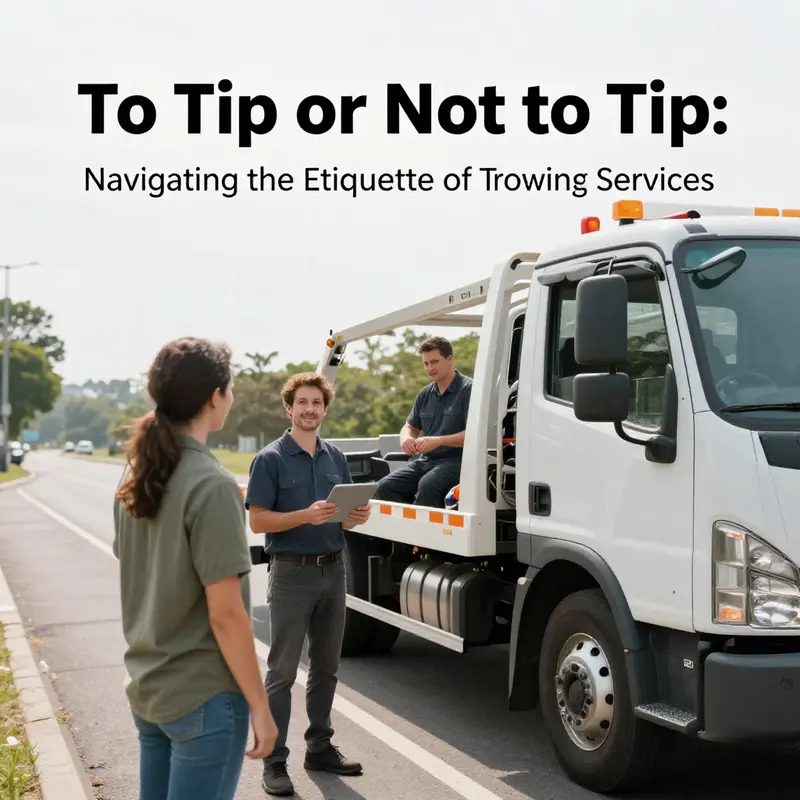
The moment you’re stranded on the side of a highway or in a dark parking lot, a tow truck driver arrives as a hinge between chaos and a possible exit. Fees for a tow are usually laid out in advance, fixed by contracts, insurance agreements, or local regulations. The decision to tip, if you make one at all, sits in a separate sphere: it is voluntary, contextual, and intensely personal. The question—do you tip tow truck drivers?—is not a simple yes or no. It is a negotiation among factors that fluctuate with the moment, the place, and the pressure you feel as you breathe through the shock of a breakdown. In that sense, tipping becomes a small moral weather vane, signaling gratitude without imposing a rule on what is already a highly variable service. The chapter that follows treats tipping not as a universal obligation but as a constellation of considerations—service quality, regional practice, the nature of the towing task, and personal finances—that together shape the choice. It explores how a driver’s professionalism, quick thinking, and careful handling of a difficult situation can tilt the balance toward a gesture of appreciation, while recognizing that such gestures remain optional and situational. For readers seeking a broader framework on how fleets and emergency responders align standards with frontline practice, there is a pathway into one of the industry-wide reference points, described here through a curated link to sources that discuss fleet standardization and emergency readiness. This optional addition can illuminate how the roadside ecosystem works together to deliver reliable service under pressure, even before any tip is exchanged.
When a tow truck pulls up in an emergency, the scene often feels like a blend of logistics, safety protocol, and calm presence in the middle of a storm. The driver’s appearance—uniformed, equipped with reflective gear, moving with a practiced economy—already signals competence. The first questions you hear in that moment are practical: What happened to your vehicle? How soon can you get to your destination? Is everyone safe? The answers you receive are typically straightforward, but they carry consequences well beyond the paperwork. The gratuity conversation, if it arises, is rarely a scripted part of that encounter. It emerges only after the immediate hazards are stabilized, the car is secured, and the driver has demonstrated that the tow is being performed with care rather than as a hurried run through a routine process. The etiquette of tipping, then, is not a rebuke of the system in which towing services operate. It is a voluntary acknowledgment of service that goes beyond simply completing a contractual obligation.
Quality of service is the first, most obvious lever in this deliberation. A driver who arrives quickly on a cold night or in the middle of a car-centered emergency immediately earns a kind of earned trust. Speed matters not as a flashy display but as a practical form of risk reduction: faster arrival can significantly shorten the window of exposure to danger for occupants, and a quick assessment sets a clear plan for moving forward. Yet speed is not the same as effectiveness. The tipping calculus pays close attention to how the driver handles the actual tow. If the driver executes a complex operation with meticulous attention to safety—protecting vehicle finishes, avoiding scraping or misalignment, securing the load properly, and communicating every step with calm, clear language—many people feel compelled to offer a gratuity. Etiquette here aligns with the sense that the driver has gone beyond the minimum to reduce risk, save time, and minimize the stress of an already anxious moment. The appreciation displayed in such moments often takes the form of a practical gesture: a cash tip, a card payment increment, or even a small amount left at the scene if safe and feasible. The key is that the gesture should reflect the level of extra effort, not the routine expectations of a service that was already negotiated or mandated by insurance coverage.
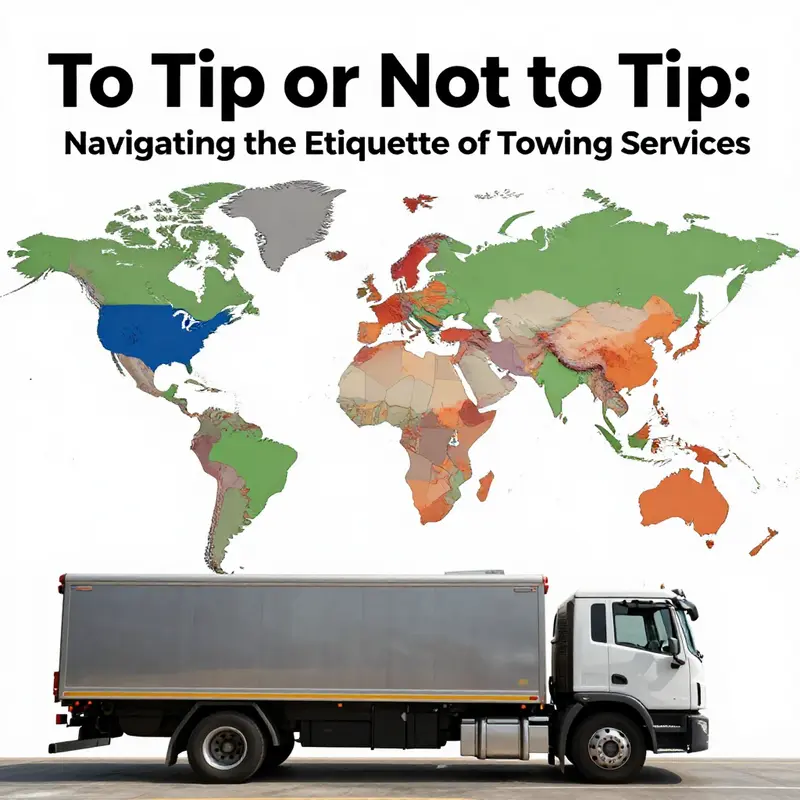
Regional customs shape the expectations surrounding tipping in more meaningful ways than most people anticipate. In some states and provinces, tipping tow truck drivers is a routine courtesy, a familiar courtesy notch in the ledger of roadside assistance. In others, it’s less common and sometimes even discouraged as a perverse incentive to chase tips rather than focusing on professional duties. The variation across regions mirrors broader differences in service norms, labor culture, and even the way roadside services are priced and billed. For instance, in certain contexts, tipping around 10–15 percent of the total service cost is mentioned as polite, particularly when the tow involves long distances or delicate handling of a vehicle. But these percentages are not universal rules, and the policies of individual companies can diverge widely from community practice. As a result, the act of tipping a tow driver becomes a negotiation that takes into account not only the driver’s performance but also the local expectations about what is appropriate in a given place at a given time. The interplay between personal beliefs about fairness and collective norms about generosity can itself become a factor in the decision. It is useful for readers to recall that guidance from credible sources, such as industry associations or consumer advocacy groups, can illuminate typical practices in specific regions. When in doubt, you can consider the sentiment that tipping is flexible and situational, not mandated by law or firm policy, and always contingent on the driver’s conduct and the context of the service.
The nature of the towing service itself also sways the tipping decision. A routine tow from a routine breakdown may not call for a tip, whereas a scenario that involves special arrangements—like jump-starting a battery in freezing weather, unlocking a trunk or a door where keys are inaccessible, or stabilizing a vehicle that’s in a precarious position—often invites a gesture of appreciation. The more a driver adds value beyond the basic tow, the more a tip becomes a meaningful sign of thanks. This is not about redressing a poor experience but about acknowledging the extra steps that contribute to safety, speed, and reassurance during a crisis. The local context matters here as well: if a technician goes above and beyond—staying late to ensure the car is moved to a secure location, providing guidance about what to do next, or offering reliable advice about roadside support options—the tipping conversation becomes a natural, humane extension of the driver’s care. On the flip side, a straightforward, uncomplicated tow may leave many people feeling that a tip would be unnecessary, excessive, or even misinterpreted as a misaligned incentive in a service environment that already has legitimate fixed costs.
Personal financial circumstances and perceptions of fairness are the final pillars that support the tipping decision. Tipping is, at its core, a voluntary gesture, and its appropriateness is filtered through each person’s budget, values, and moral framework. For some, tipping is a meaningful way to express support for someone who faces irregular hours, physically demanding work, and the hazards of roadside duties. For others, tipping is an additional expense they would rather minimize, especially when the contractual price of the service already reflects the work performed. The tension between wanting to reward excellent service and needing to manage an unpredictable cash flow is a lived experience for many people. Even when a driver has performed exceptionally, the choice to tip can be influenced by the broader culture of tipping in the household or among friends and colleagues. It can also be shaped by perceptions of fairness—whether tipping seems to reward good service in a system where some might argue that emergency work should be remunerated through steady wages and benefits rather than discretionary rewards. The conversation becomes more nuanced when readers consider the different payment modalities available. Some customers carry cash for emergencies, others rely on card payments that can be accompanied by a tip line, and still others prefer to leave a digital gratuity after receiving a receipt. In all cases, the recommended approach is to tip only what feels comfortable and appropriate given the service received and the context. A modest tip can communicate appreciation without pressuring the driver or creating an impression that a particular outcome is contingent on a gratuity.
As with many service encounters, the tipping choice benefits from a sense of clarity and honesty. The driver who has earned your trust through competence and care should not have to rely on the whim of chance or the generosity of strangers to be fairly compensated for their effort. Conversely, it is important to resist the impulse to tie gratuities to expectations, coercing drivers with tips to hurry the job, skip safety checks, or overlook long-term considerations about the vehicle’s condition. In this sense, tipping becomes a yes-or-no question only after a thorough assessment of what was delivered and how it was delivered. If a driver adheres to safety protocols, communicates clearly, and handles your vehicle with respect and skill, a tip is not a payment for services—it’s a personal token of appreciation for a job well done under duress. If the service falls short, the most constructive response may be to provide honest feedback through the appropriate channels rather than using a tip to mask dissatisfaction. And if the billing already includes a transparent, fair, and full account of the work performed, a tip remains a separate choice rather than a substitute for proper compensation.
Beyond the moment of service, there is a broader discipline of how to think about tips within the ecosystem of roadside assistance. Some people find value in expressing gratitude not just with money but with words, a friendly note, or a positive review that reinforces the driver’s reputation and helps others identify trustworthy professionals in their time of need. In an industry where reputation matters and where repeated exposures to high-pressure situations can wear on a worker, these non-monetary acknowledgments carry their own weight. For those who want a more systematic approach to understanding and navigating these norms, a wider frame can be helpful. The reference points for fleet readiness and emergency coordination—such as those described in Fleet standardization and emergency readiness—offer a lens through which to view the consistency and predictability of service. These standards are not about tipping per se, but about creating a reliable, professional baseline that can influence how customers evaluate the service and how drivers experience the job. The point here is not to prescribe a rule for tipping but to highlight that tipping operates within a broader culture of professional conduct, safety, and accountability. To touch on this broader picture, readers interested in industry-wide guidelines can explore additional materials that discuss how fleets approach emergency response and standardization of operations. This reference is intended to provide context rather than a mandate, and it invites readers to consider how universal standards might influence personal acts of generosity on the road. See the following for further reading on fleet readiness and standardization: Fleet standardization and emergency readiness.
The practical questions about how to tip—if you choose to tip at all—are simple in principle, yet nuanced in practice. A common, conservative approach is to offer a modest cash tip in a range that reflects the service’s complexity and risk, while keeping in mind the overall cost of the tow. For a long haul or particularly delicate handling, a tip in the range of a few dollars to a modest percentage can be appropriate. In a routine situation, many people choose to tip only if they feel a genuine sense of relief and gratitude after the vehicle is safely secured and the driver has gone the extra mile to ensure no damage occurred during the move. If cash is not readily available, a card-based tip or a digital gratuity can be a practical alternative, provided the driver’s preferred payment methods support this option. In all cases, it is wise to avoid tipping as a way to buy future priority or to signal that the service was not adequate without tip support. The integrity of the rating system and the fairness to workers who rely on steady wages should guide the decision to tip and the amount given.
In the end, the decision to tip a tow truck driver rests on a balance of gratitude, context, and personal circumstance. The drivers themselves understand that their work exists at the intersection of emergency response and customer service. They know that their value is not merely in the mechanics of a tow but in the way they communicate, prioritize safety, and restore a sense of control to people in distress. A tip, when given, is a human gesture that reinforces this dynamic and acknowledges the emotional labor involved in roadside assistance. At times, a simple expression of thanks, a verbal acknowledgment, and a brief note about the driver’s competence can be as meaningful as money. At other times, a tangible tip may feel like a rightful reward for exceptional care that goes beyond the expected. The key, again, is that tipping remains optional, not mandated, and should be aligned with what the service deserved and what your budget can comfortably accommodate. The roadside world is complicated enough without turning generosity into a rigid protocol; instead, it invites a discreet consideration of how best to honor the people who help you regain movement when you feel most vulnerable. That perspective makes the tipping decision a small, thoughtful act—an offering that respects both the person delivering the service and the circumstances surrounding a very human moment on the road. For readers who want to place tipping within a broader framework of professional respect and emergency readiness, the linked resource offers a lens into how fleets standardize procedures and prepare for unforeseen events, reminding us that the human act of appreciation exists within a system designed to keep roads safer and responses quicker. See Fleet standardization and emergency readiness for more on how industry practices shape frontline experiences.
External resource for broader context: https://www.aaa.com
null
null
Tow Truck Tipping in the Real World: Gratitude, Boundaries, and the Ethics of Emergency Service
When a roadside crisis arrives, the question of tipping can feel almost accidental. Do you tip a tow truck driver, and if so, when and how much? In everyday service industries, gratuities are part of a social contract. In tow operations, pricing is typically set by contracts, insurance agreements, or local regulations, and fees are presented as fixed or pre-determined charges rather than a menu of add-ons described by a tip tray. Yet real life rarely respects neat boundaries. A driver may move quickly to secure a vehicle during a dangerous halt on a highway shoulder. Another may stay on the line after dark to ensure you, your passengers, and your cargo reach a safer spot. In those moments, the impulse to show appreciation can feel both natural and appropriate. This chapter explores that impulse in a careful, practical way that aligns with the broader theme of the article: do you tip tow truck drivers, and what does that choice reveal about how we value emergency service work in a culture that often emphasizes consumer norms over professional discretion?
The distinction between tipping as a social practice and tipping as a financial expectation matters. Tow services sit at the intersection of emergency response, vehicle recovery, and sometimes insurance-driven logistics. Because the core transaction is often governed by an insurance claim or a pre-negotiated rate, tipping should not be assumed. The preface remains simple: tipping is optional, and it should never be framed as a requirement that a driver earns a livable wage or that a company is underpaid if a client declines to tip. In some regions, law and regulation further shape what a driver can or cannot accept on the spot. In others, drivers are advised to follow company policies that encourage no cash gifts for compliance or professional duty. Yet even with official guidance, the human element persists. A driver who calms a tense situation, offers precise safety instructions, or goes beyond basic assistance can leave a lasting impression that tipping might help acknowledge in that particular moment.
From the outset, it helps to anchor the discussion in real practice. Most tow operators operate within a framework of fees that customers are asked to pay after the service is delivered. Those fees cover labor, equipment use, fuel, and sometimes the administrative costs tied to dispatch and liability. Because the service model is not the same as a restaurant tab or a taxi ride, tipping culture does not automatically transfer. There is no universal standard that a driver must be tipped a certain percentage or a fixed amount. The variability across locations—from municipal ordinances governing towing to the terms of an insurer’s contract—means that gratuities, if offered, come down to personal judgment and the character of the encounter. If a driver has handled a difficult recovery, navigated a precarious setup, or provided real value beyond the call of basic duty, a discretionary tip may feel appropriate. If the driver has simply performed the tasks expected by policy, tipping would be less expected and more optional.
The nuanced question then becomes: what constitutes above-and-beyond service in the context of towing? It is not the same as hospitality service where the menu for good will is well known. Yet there are moments that clearly merit thoughtful appreciation. Picture a driver who arrives promptly to a multivehicle accident on a rain-soaked night, who communicates clearly about the risks, who coordinates with the party on scene to secure the vehicle and transfer a passenger with a mobility challenge, and who stays nearby to confirm that all parties reach a safe, well-lit location. Or consider a driver who not only retrieves a disabled vehicle but also offers practical roadside troubleshooting advice, helps manage a stranded asset in a way that reduces downstream costs for insurance or rental car arrangements, or provides a calm, respectful presence when emotions run high. In such instances, a small gratuity can function as a precise, human acknowledgment of care and competence under pressure. The key remains that the gratuity is a voluntary gesture, not a price floor or a condition for the level of service.
To understand how drivers themselves navigate this terrain, it helps to consider the practical realities of the job. Tow truck work is physically demanding and technically complex. The driver must make quick judgments about safety, traffic, and the mechanics of the vehicle being recovered. They often operate within tight windows dictated by weather, traffic, or the availability of other responders. The equipment is heavy, the road surface may be slick, and the risk of personal injury or damage to property is never far away. In such conditions, a driver’s wage structure can vary by company, contract, or region. Some drivers are paid hourly wages, others on per-job rates, and many operate with a blend of salary plus incentives tied to reliability and safety metrics. In some cases, insurance agreements or municipal contracts set the baseline charges that end users see, while the driver’s take home hinges on additional factors such as load complexity, distance, or after-hours dispatch.
This structure invites a conversation about the effect of gratuities on professional boundaries. A tip, when offered, should not be perceived as a bribe to accelerate a response or to ignore safety protocols. It would be inappropriate to use gratuity as leverage to demand faster service or to substitute for a driver’s obligation to protect the scene and follow safety standards. The ethical frame here is straightforward: tipping should reflect appreciation for exceptional, conscientious behavior, not a reward for simply fulfilling a contracted duty. The line is easy to blur when the stakes are high, the clock is ticking, and a person in distress is looking for reassurance. The best practice is to view tipping as a discrete, optional gesture that recognizes true extra effort—such as extra safety checks, clear guidance during an awkward or hazardous maneuver, or a voluntary extension of risk management beyond what is required by policy.
A helpful way to approach decisions about tipping in these situations is to think through a few practical questions before the moment arrives. First, what is the driver’s stated policy? Some companies explicitly discourage or forbid cash tips to avoid conflicts of interest, to prevent tipping from becoming interpreted as a speed multiplier, or to keep billing transparent for insurance purposes. If the driver or company communicates a no-tipping policy, that policy should be respected. Second, did the driver go beyond the call of duty in a way that genuinely helps you or your vehicle become safer and more stable? This could include staying with the vehicle’s safety setup until a more secure arrangement is secured, or taking the time to explain the options for repair, rental, or onward transportation in a calm, informative manner. Third, are there other, non-monetary ways to show appreciation? A written review, a quick note to the dispatcher, or a recommendation to friends and family about the company’s reliability can create value for the provider without introducing cash handling into a high-pressure environment.
To provide a grounded sense of how this can translate into everyday conduct, imagine a scenario in which a tow driver arrives at night after a breakdown on a quiet street. The driver surveys the scene, directs you to a safe location, secures the vehicle, and offers practical advice on whether to pursue a repair or arrange a rental car. The driver’s communication is calm, professional, and informative; they answer questions clearly, without condescension, and they ensure that you, your passengers, and any dependents are accounted for before they depart. In such a setting, a modest gratuity could be an appropriate expression of gratitude—provided the company policy allows it and the client feels that the gesture is meaningful given the level of care. If a client wishes to proceed, a discreet, cashless, or digital tip might be preferred to maintain a clean workflow and to avoid handling large sums in potentially risky environments. The exact amount is less critical than the sincerity and proportionality of the gesture relative to the effort demonstrated.
Not every encounter warrants a gratuity, and that is an important ethical boundary. It is easy to conflate thankfulness with obligation, especially when fear or distress is involved. In the rough logic of emergency services, the right approach is to separate gratitude from necessity. A driver who meets the minimum expectations—arrives on time, follows safety protocols, communicates honestly, and completes the task without incident—does not demand a tip as a condition of service. Conversely, a driver who goes beyond in ways that improve safety, efficiency, and the overall experience in a high-stress moment may deserve recognition that a standard invoice cannot fully convey. In that sense, tipping tow truck drivers resembles a discretionary act of social recognition rather than a revenue supplement; it honors a specific moment of extra effort rather than a blanket reward for performing the job.
From a broader perspective, the debate about tipping in towing reflects how a society values emergency work in its everyday economy. The literature on service tipping emphasizes its cultural variability and its dependence on local norms, company policies, and the perceived fairness of pay structures. In towing, the service is not a one-off hospitality interaction; it frequently involves risk, urgency, and technical skill performed under pressure. The decision to tip is therefore not simply about generosity; it is a conscious negotiation of expectations, a trust-based acknowledgment that the driver has contributed to a safer outcome. When a client chooses to tip, they are adding a personal signal to the professional relationship—one that communicates appreciation for competence, compassion, and calm under pressure. When a client chooses not to tip, they are signaling respect for policy and for the boundaries of what constitutes standard service. Either choice can be made wisely if it rests on careful assessment rather than reflex.
For readers who want to engage with the towing landscape beyond a single encounter, it can be helpful to explore how other drivers and operators frame their own experiences. The landscape includes safety-focused standards, emergency-readiness protocols, and the way fleets plan for winter conditions, heavy-load exigencies, and insurance-driven workflows. This broader context helps illustrate why tipping is not a universal custom in this field and why it should remain a discretionary, case-by-case decision rather than a formal expectation. To better understand the practical dynamics of the industry, consider examining the broader body of work on fleet standardization and emergency readiness, which sheds light on how operators balance safety, efficiency, and customer service in challenging conditions. For a broader look at the towing landscape and related performance standards, the Santa Maria Tow Truck blog offers resources that illuminate how professionals manage complex rescues and how standardization supports reliability in emergencies. spot illegal towing: key signs to know.
As the chapter progresses toward a more holistic view, the simplest takeaway remains both practical and nuanced: tipping tow truck drivers is not a universal rule, but a thoughtful, optional gesture that should honor exceptional effort while respecting company policies and local regulations. When in doubt, ask the driver or their company about tipping policies before a service call. When possible, consider non-monetary expressions of appreciation as well, such as sharing a positive experience with others or leaving a review that recognizes the driver’s skill and restraint under pressure. The goal is not to force generosity but to preserve the integrity of professional service, to acknowledge notable extra effort, and to maintain trust between the public and those who perform essential, often dangerous work on behalf of strangers in moments of vulnerability. The result, over time, is a nuanced culture where gratitude is recognized without eroding the standards that keep emergency towing safe, reliable, and properly regulated.
In sum, the question of tipping toward tow truck drivers is less about a universal rule and more about a careful reading of the moment. It is about distinguishing genuine extra effort from routine duty, and about honoring the professional boundaries that govern this critical service. It is also about recognizing that the economics of towing are shaped by contracts, insurance practices, and local rules, which means that the gratuity is not a wage supplement but a voluntary signal of appreciation. By maintaining clear policies, staying mindful of safety, and choosing appreciation that matches the moment, customers can engage with towing services in a way that respects both the workers and the regulation that frames their work. For readers seeking practical navigation through the broader towing landscape, the linked internal resource can offer context on how the industry handles related issues such as illegal towing and regulatory signposts, helping to balance the act of tipping with the realities of professional service on the road.
External resource: Tipping (gratuity) – Wikipedia
Final thoughts
In summary, the question of whether to tip tow truck drivers is multifaceted and varies across different circumstances and cultures. As local drivers, auto repair shops and dealerships, property managers, and HOA administrators, it’s essential to understand the context of tipping in our interactions with tow truck services. While it is not a standardized practice, recognizing when a gratuity is warranted can go a long way in showing appreciation for exemplary service. As this industry continues to evolve, so too may our understanding and practices concerning tips.