
Understanding whether to tip tow truck drivers is not always straightforward. Despite the absence of a formal tipping standard within the industry, local customs and the situations surrounding each tow can influence this decision significantly. This article engages car owners, auto repair shops, property managers, and HOA administrators in a dialogue about the etiquette of tipping tow truck drivers. The first chapter delves into general practices surrounding tipping in the towing industry, providing clarity on when a gratuity might be appreciated. The second chapter explores the factors that might sway your decision to tip, from the situational context to the driver’s level of service. Finally, the third chapter unpacks the regional variations in tipping norms, empowering you to make an informed choice that aligns with local expectations.
Tow Truck Etiquette: Navigating When to Tip, Why It Happens, and How to Show Gratitude on the Road
A roadside turn of fortune often begins with a glow of flashing lights and the hydraulic sigh of a tow truck lifting a vehicle that has chosen the wrong tire to trust. In that moment of relief, a practical question follows close behind: do I tip the tow truck driver? The answer is not a rigid rule, but a nuanced judgment shaped by local norms, company policies, and the extraordinary nature of the moment you find yourself in. In many places, tipping a tow truck driver is not expected or required for standard towing services. The fee you pay is intended to cover the labor, the equipment, the fuel, and the logistical costs that keep a tow operation moving. The driver may be paid by the job or by the hour, with those wages already baked into the service charge you see on the bill. This is not to say generosity never happens; rather, it’s a recognition that the act of tipping in this industry sits on a different plane than other service sectors where tips form a meaningful portion of a worker’s income.
The practical truth is simple: tipping, in the towing world, does not operate on a universal standard. Unlike the restaurant scene, where tips can compose a substantial portion of a server’s take home pay, towing services usually rely on a fixed-rate structure designed to fairly compensate the operator for the service rendered. That difference matters because it frames your decision in terms of value and context rather than obligation. If you are used to tipping as a reflex in other service encounters, you might be surprised to learn that a tow operator’s pay is generally designed to stand on its own without the expectation of an additional gratuity. Yet, the human impulse to show appreciation is powerful, and there are legitimate occasions when a small gratuity feels right—when the service exceeds what a standard call-out would entail and when the driver has transformed a stressful situation into a safer, more manageable one.
To navigate this terrain with practical calm, think first about what counts as exceptional. If the tow driver arrives promptly in the middle of a freezing night, when road conditions are dangerous, and then proceeds to handle a difficult recovery with skill and consideration, that is a moment that could justify a gesture of gratitude beyond the base bill. If a driver calmly explains the process, answers questions, and takes extra steps to secure your vehicle so that it travels safely without further risk, those actions build a case for appreciation. On the other hand, if the service is straightforward and performed efficiently within the scope of what you paid for, tipping remains optional and not expected. The important thread here is respect for the professional boundary: a tip should not feel like a debt, nor should it be demanded as a condition of service.
The broader landscape of norms also matters. Tipping etiquette shifts with geography, local culture, and even the policies of the company you hire. Some fleets have strict guidelines that discourage tips to avoid payroll complications or to keep practices consistent across clients. Others may welcome gratuities as a token of thanks for particularly strenuous work, such as extracting a vehicle from a ditch after a heavy storm, or coordinating a safe recovery in a tight space under adverse weather. In this sense, the reluctance to rely on tips does not imply a lack of gratitude; it reflects a professional framework that compensates drivers through contracts and service fees and that respects company policy. For a broader perspective on tipping across service industries, including towing, you can reference supporting guidance at reputable outlets that summarize these expectations for a national audience.
With that framework in mind, what should guide your choice in a real-world moment? First, assess the complexity of the job. If a driver is simply pulling your vehicle onto a flatbed after a routine breakdown and you are dropped at a safe location, the value of the service is already embedded in the quoted price. If, however, the driver goes beyond by handling a tricky loading scenario, securing cargo in uneven terrain, or coordinating with other responders to ensure everyone’s safety, a small tip can acknowledge that extra effort. A practical range often cited in discussions of tipping in towing contexts is modest: roughly five to twenty dollars, depending on the severity of the service and your own financial ability. This range is not a mandate but a flexible guide that keeps gratitude proportionate to the circumstances. If you are dealing with a long haul, a complicated recovery, or a night-time emergency that required extended engagement, you might offer closer to the upper end of the spectrum. If you are strapped for cash, a sincere verbal thanks, a written compliment to the company, or a quick online review can carry meaningful weight without financial impact.
There is also a social dimension to tipping that deserves attention. The act of tipping, when offered, should be gracious and uncomplicated. If you choose to give cash, present it discreetly in an envelope or a folded bill with a brief bow of thanks—nothing ceremonial, just a straightforward expression of appreciation. If the driver declines the tip—perhaps due to company policy or personal preference—respect that decision with grace. The same courtesy applies if you prefer not to tip; a simple acknowledgment of their skill and a positive review can still reinforce the value of good service. In all cases, the goal is to communicate respect for the professional effort and to recognize when someone has gone above and beyond while not misrepresenting what the fee already covers.
It is also useful to view tipping through the lens of the broader customer experience. The towing encounter is not just about moving a vehicle from point A to point B; it is about the safety, the emotion, and the clarity that accompany a stressful moment. A driver who takes time to explain how the tow will be conducted, what to expect during transit, and how the vehicle will be secured contributes to a sense of control at a time when control feels hard to hold onto. In those moments, a gesture of gratitude, if chosen, is not only about the tip itself but about acknowledging the driver’s commitment to a calm, professional, and safe outcome. You may also consider non-monetary forms of appreciation that align with your values and the context of the service. A quick note praising the driver to their dispatcher, or sharing a positive experience in an online review, can be a meaningful long-term compliment that helps the driver and the company maintain high standards for future calls.
In writing about tipping etiquette, it is helpful to distinguish between emergencies and routine help. The emergency scenario—an accident, a vehicle stuck in mud, a night-time breakdown on a busy highway—creates a heightened sense of vulnerability. In such moments, the driver’s actions can be truly transformative. They may perform precision maneuvers, manage traffic risks, and coordinate with other responders to prevent a bigger hazard. In that context, a small gratuity may feel appropriate as a concrete acknowledgment of the extra mile the driver went. Conversely, if the driver arrived within expected service windows, performed the tasks requested, and left you in a safe, stable situation, the gratitude may come in the form of confidence and a positive, timely review or a personal note of thanks rather than cash, especially if tipping would create an awkward moment or conflict with company standards.
There is value in being prepared for this decision. If you anticipate a roadside incident, you can equip yourself with a small amount of cash or a digital tip option, if the company supports it, so you are not scrambling at a moment of stress. Some drivers may prefer to avoid cash for payroll reasons or for personal preferences; in those cases, you can still communicate your appreciation through a clear endorsement of their skills in a public review, a recommendation to friends and family, or a note to the company that highlights the driver’s professionalism. The key is to balance practical feasibility with the genuine desire to recognize good service without creating pressure or discomfort for yourself or the driver.
The broader takeaway is clear: tipping a tow truck driver is not expected in the same way it might be in other service industries. Yet, there is room for a discretionary gratuity when the service extends beyond the ordinary. This approach respects both the professional standards that govern the industry and the personal impulse to express gratitude when a difficult moment is transformed into a safe, efficient, and respectful outcome. If you want to delve deeper into the nuances of tipping etiquette in towing specifics, a resource like the Santa Maria Tow Truck blog offers a practical, grounded discussion that situates tipping within real-world towing experiences and community norms. For a concise overview and additional perspectives, consider visiting the Santa Maria Tow Truck blog and exploring how communities balance gratitude with fair compensation in towing situations.
Ultimately, the decision to tip should feel like a personal, considerate choice rather than a rule. It should reflect the driver’s actions, the context of the service, and your own circumstances. If you choose to give a tip, do so with a straightforward expression of thanks and a sense of proportionality. If you choose not to tip, let the interaction be guided by respect for the professional task at hand, and focus instead on ensuring your vehicle is secure, that you are safe, and that the experience is documented in a way that helps you and others in the future. Either path can be appropriate when approached with thoughtfulness and courtesy.
For readers seeking a concise summary of how to approach tipping in towing scenarios, a reliable external guide provides helpful context and examples that align with the kind of decision-making described here. Accessing a broader, industry-wide perspective can reinforce your understanding as you navigate various calls, regions, and company policies during the road ahead.
External reference for further reading: https://www.usnews.com/news/health-news/articles/2023-11-14/tipping-etiquette-in-towing-services
null
null
null
null
Final thoughts
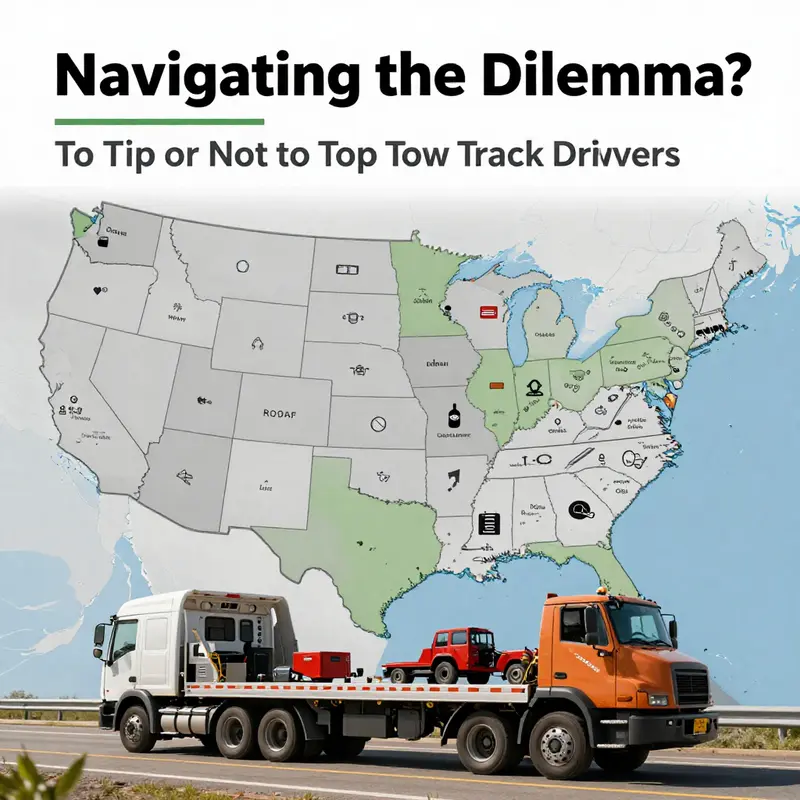
Deciding whether to tip a tow truck driver often comes down to personal judgment based on the service received and local customs. While there might not be a formal tipping expectation in the towing industry, recognizing exceptional service with a gratuity can enhance the overall experience, especially in trying circumstances. Appreciate the nuances of this decision with insight into situational factors and regional etiquette, allowing drivers and businesses alike to foster a culture of respect and gratitude.