

Starting a tow truck business can be a rewarding endeavor, especially for those passionate about helping others during emergencies. As a local driver, car owner, or property manager, you may often find yourself faced with the challenge of towing inefficiently managed or improperly parked vehicles. By launching your own towing service, you’re setting yourself up to provide essential assistance while tapping into a thriving market. This guide outlines the critical phases of establishing a secure foothold in the towing industry. In our first chapter, we will explore effective research and planning strategies to assess your local market. Next, we’ll delve into the legal requirements you need to comply with, ensuring a smooth start. Following that, we’ll discuss the acquisition of necessary equipment to support your business operations efficiently. Finally, we’ll look at marketing strategies tailored for the towing sector to boost your customer acquisition and retention efforts.
Laying the Groundwork: Market Insight, Regulations, and a Plan for Launching Your Tow Truck Startup
Launching a tow truck business begins long before the first call comes in. It starts with disciplined research and a plan that translates ambition into a scalable, compliant operation. The road from idea to asphalt is paved with practical questions about who will need your services, where you will operate, and how you will deliver reliable value in a highly competitive field. When done well, this groundwork minimizes risk and creates a roadmap that stakeholders can understand and trust.
Begin with market insight. The demand for towing and related services is not uniform across geographies. A thorough market view asks you to look at population density, traffic volume, and local accident rates, all of which influence call frequency. It also requires a clear-eyed assessment of the competitive landscape: how many operators serve the same area, what service niches they emphasize, and how customers perceive their reliability and responsiveness. Data can come from city planning documents, traffic studies, and local business registries. A practical outcome is a well-defined target customer profile: will you focus on emergency roadside assistance, partner with repair shops, or carve a niche in high-value or unusual loads?
A crucial companion to market analysis is a robust understanding of local regulations. Each state and municipality can impose licensing requirements, insurance mandates, and operational restrictions on towing operations. Compliance is ongoing; you should plan for a general business license, a commercial driver’s license for operating a tow truck, and any specific permits that govern towing in your jurisdiction. Insurance is foundational; it protects assets, customers, and your ability to bid for contracts. Because regulatory landscapes change, establish a routine to stay current with local authorities and insurers, so you can operate with confidence.
With market and regulatory clarity, determine your niche. Differentiation matters in a crowded field where response time, safety, and trust matter as much as price. Your niche might center on emergency roadside assistance, auto repair shop dispatches, rental car recovery, or specialized transport for high-value cargo. A clear niche helps you articulate a value proposition to customers and partners and informs your pricing strategy to reflect costs, risk, and expertise.
All of this feeds into a practical business plan, a living management tool that guides startup decisions and communications with lenders, partners, and early customers. A solid plan typically covers goals, projected expenses, revenue models, and a marketing framework. Startup costs include vehicle purchase or lease, equipment, licenses, and insurance premiums. In many markets, initial vehicle costs and insurance can be substantial, so consider starting with a single vehicle and a phased growth approach to manage risk.
Technology is a core driver of planning. Even at the startup stage, outline how dispatch, routing, and customer communications will flow through your operations. GPS dispatch, route optimization, and status updates can improve response times and utilization. A customer-friendly interface helps convert inquiries to booked jobs and supports coordination with partners and fleets. Choose technology with an eye toward integration across the ecosystem you plan to serve, so data can flow securely between stakeholders while preserving privacy.
The synthesis of market intelligence, regulatory awareness, a clear niche, and a practical plan creates a launch posture that balances ambition with accountability. You will be prepared to secure licenses, choose appropriate equipment, set pricing, and align your startup budget with expected cash flow. In the chapters that follow, you will see how these decisions connect with the legal and insurance considerations that support a compliant, resilient business.
Navigating the Law: A Practical Roadmap to Compliance as You Launch a Tow Truck Business
Compliance is not an afterthought when you start a tow truck business. It is the steady backbone that supports every move from day one. The legal landscape for towing is broad and locally nuanced, but there are core pillars that cut across jurisdictions: licensing, vehicle standards, registration and insurance, business formation and taxation, zoning and storage, and the people you hire. When you approach these elements with foresight, you reduce risk, protect your customers, and position your company for sustainable growth. As you map out your plans, visualize the regulatory path as a series of practical checkpoints rather than roadblocks. The aim is to bind reliability, safety, and transparency into the DNA of your operation, so customers feel confident entrusting you with their moment of need and so that the authorities recognize your business as part of a lawful, well-run transportation ecosystem. In this light, the law becomes a partner in your startup story rather than a maze to be navigated with anxiety or urgency alone. The path starts with the most visible and enforceable obligations—vehicle licensing and technical standards—and then expands to the administrative seat of your business: registration, permits, and insurance. Each element influences the others. For instance, the type of license you need can affect the insurance you must carry, which in turn can inform your pricing strategy and the way you schedule maintenance. Understanding these interdependencies helps you build a foundation that not only keeps you compliant but also elevates your professional credibility with customers and lenders alike. To keep this chapter grounded and actionable, let’s follow a natural progression that mirrors the actual workflow of launching a tow operation, while weaving in practical considerations that often surface only after you’ve started moving. The first touchpoint is the new vehicle code and the technical standards that govern tow trucks. In recent years, many regions have tightened the requirements to ensure high safety and reliability levels on public roads. As of late 2022, new regulations mandate that tow trucks meet updated safety and equipment inspections before a vehicle license can be granted. This means your fleet cannot operate legally unless each unit passes a defined safety check. The inspections typically cover a range of features: lighting, signaling, braking systems, load-securement devices, proper hitching mechanisms, and the integrity of wheel-lift or flatbed configurations depending on the towing modality you choose. The emphasis on maintenance is explicit as well. It is not enough to meet the standards at the moment of licensing; ongoing upkeep is essential. A routine maintenance mindset helps you avoid violations that can lead to fines, operational restrictions, or even revocation of permits. In practice, this translates to a schedule of periodic inspections, timely replacement of worn parts, and a documented maintenance log that you can present to inspectors or customers if needed. When you communicate with customers about safety, you do more than comply with the letter of the law—you establish trust. Technically compliant equipment is the first line of defense in accidents and in customer satisfaction. The second pillar is registration and insurance. Tow trucks are asset-intensive and operate in complex risk environments, so the business must ensure that each vehicle is properly registered in the business’s name. This may seem straightforward, but it carries important implications for liability and tax treatment. Simultaneously, the insurance strategy should align with the nature of towing work, including liability coverage that reflects the potential for property damage, bodily injury, and cargo exposure when you’re moving a vehicle or recovering a car from a roadside scenario. Liability limits should be realistic for the markets you serve and the value of the vehicles you tow. Some operators also consider additional coverage such as cargo protection when transporting vehicles, particularly high-value or specialty cars. The aim is to construct a safety net that supports the business’s day-to-day operations and potential risk scenarios. The realm of business licensing and tax registration follows closely. Depending on your location, you may need a Commercial Vehicle Operator’s Permit or a similar credential that authorizes heavy-duty driving or commercial vehicle operations. A general business license is typically a baseline requirement to operate legally, alongside state and local tax registrations. These registrations ensure you are contributing to the systems that support road safety, infrastructure funding, and local governance. The accounting and tax side may demand careful attention from the outset. You may need to elect a business structure—sole proprietorship, partnership, or limited liability company—each with distinct implications for taxes, liability, and personal risk. An LLC is commonly recommended for liability protection, but the right choice depends on your circumstances, risk tolerance, and long-term plans. Once your entity is established, you’ll align state and federal tax registrations, employer obligations if you hire staff, and any sales or excise taxes that apply to services or equipment related to towing. The legal framework also extends to where you operate and how you house your fleet. Zoning laws are not merely about where you park a tow truck. They can govern the location of dispatch operations, storage of heavy equipment, and the impact of your business on neighboring properties. Some jurisdictions restrict overnight storage, require specific setbacks, or impose noise and lighting limits for operations at certain hours. If you intend to run a 24/7 service, you’ll want to preempt these concerns by selecting a site that meets the zoning criteria and by implementing operations that minimize disruption to the surrounding community. In parallel, prepare a robust hiring framework. If your plan includes roadside assistance or after-accident recovery, you will need to hire drivers who hold appropriate licenses and demonstrate hands-on competence with towing procedures. Beyond licensing, focus on training, safety procedures, and customer service. A well-designed onboarding program reduces the chance of mishandling equipment and helps you build a brand grounded in professionalism. Background checks are a critical element of public safety and trust. They can prevent regrettable incidents and protect your customers and your employees. Integrating a compliant hiring process reinforces a culture of responsibility that pays dividends in reliability and service quality. While the exact requirements vary, the overarching message is clear: build a governance layer around your operations that anticipates risks rather than reacts to incidents. In practice, this means documenting policies and procedures, maintaining records of licenses and inspections, and establishing clear accountability for fleet maintenance, driver training, and incident reporting. The value of such a framework becomes evident when dealing with regulators, insurance providers, or customers who demand proof of responsible business practices. It also reduces the cognitive load on you as the owner. When issues arise—such as a vehicle breakdown, a customer dispute, or a regulatory audit—you have a ready set of records, a coherent chain of custody for assets, and a clear demonstration of compliance. Of course, one of the most practical steps you can take is to stay informed through credible sources that summarize regulatory changes and translate them into actionable steps for operators. A reliable starting point is santamariatowtruck.com/blog, which consolidates industry guidance and regulatory updates in a format that is accessible to new operators and seasoned professionals alike. This resource can help you stay current on shifts in licensing, inspection expectations, and local permitting requirements without overloading your day with scattered information. As your business grows, you will also benefit from cultivating relationships with legal professionals who specialize in transportation and commercial vehicle regulations in your jurisdiction. The value of professional counsel goes beyond avoiding fines; it helps you navigate ambiguous rules, interpret permit conditions, and anticipate regulatory changes before they impact your operations. A qualified attorney or industry expert can help you draft compliant policies, review rental or lease agreements for fleet use, and ensure that your contracts with drivers and clients reflect current legal standards. In practice, this means scheduling periodic reviews of your compliance program, especially if you expand to new counties, add more trucks, or modify the services you provide. The landscape is dynamic: new safety standards, changes in bridge and road tolling regimes, and evolving definitions of “commercial” in some locales can alter your obligations overnight. Keeping a proactive stance—documenting safety checks, maintaining insurance certificates, retaining licensing renewal reminders, and tracking regulatory correspondence—positions you to adapt smoothly rather than scramble under pressure. The central takeaway is that legality is a lifestyle for a tow operation, not a one-time checklist. Every decision—from fleet configuration and maintenance cadence to driver onboarding and site selection—should be evaluated through the lens of compliance. When you treat legal requirements as a continuous, integrated discipline, you reduce risk, improve customer confidence, and establish a foundation that supports sustainable growth. This approach also helps you connect more effectively with markets and potential partners who value professionalism and safety. By aligning your business from the outset with the regulatory framework, you create a resilient operation capable of weathering audits, inspections, and the unpredictable ebbs and flows of the towing market. As you prepare for the next phase of your journey—whether it is expanding the fleet, entering new service areas, or adopting operational technologies—keep the core message in view: compliance is not a barrier to entry; it is a competitive advantage that protects people, assets, and reputation. For ongoing guidance, consider continuing to follow credible sources and industry updates, and remember that a well-documented compliance program is as essential as any piece of equipment in your shop. External resources can provide deeper context on specific rules and enforcement trends, helping you tailor your practices to your exact location and service model. In the chapters that follow, you’ll translate these legal fundamentals into practical strategies for launching and scaling a tow truck business—strategies that honor both the letter of the law and the expectations of the communities you serve. External reference: https://www.sbdcblog.com/new-regulations-for-the-tow-truck-industry/.
Equipping the Tow Truck Startup: Practical Pathways to a Safe, Reliable, and Profitable Fleet
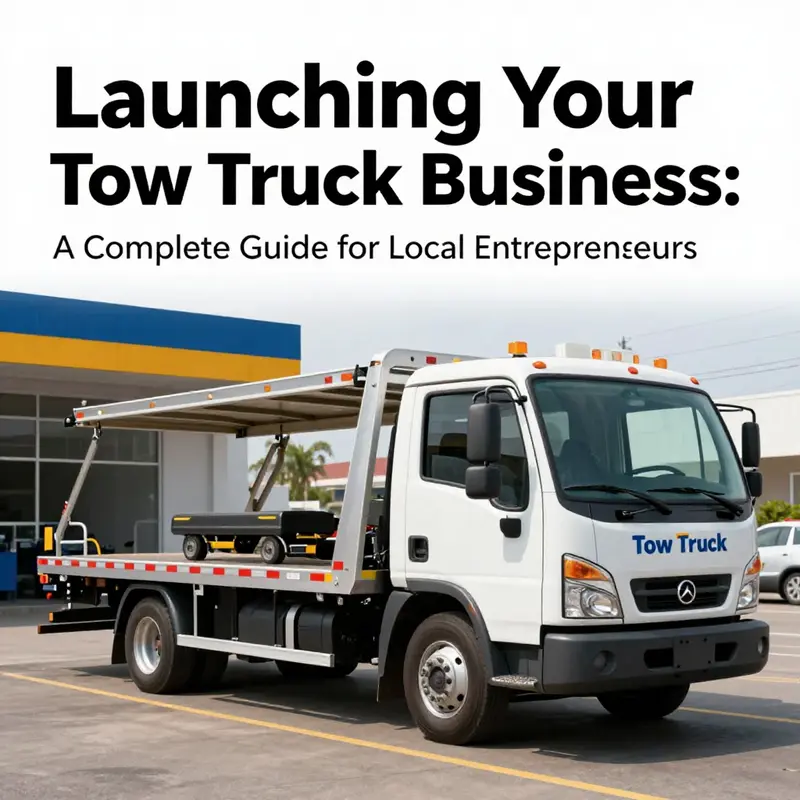
Acquiring the right equipment is not just a startup expense; it’s the backbone of a tow truck business. The trucks you own, the tools you carry, and the safety systems you install all converge to determine how quickly you can respond, how safely you work, and how consistently you can win repeat business. The market you serve—local shops, roadside assistance, insurance-tendered recoveries, or independent stranded drivers—helps dictate not only the type of tow truck you should invest in but also the surrounding gear and processes that support efficient operations. In planning equipment, you begin with the fundamental decision about the vehicle: purchase new, buy used, lease, or even build a bespoke unit if you have a very specific niche. Each route has its merits and its risks, and a balanced approach often yields the best long-term return. A new truck offers modern safety features, lower maintenance surprises in the early years, and a longer horizon of depreciation advantages. It commands the highest upfront cost, yet it minimizes downtime and can reduce insurance premiums in the short term. A used truck, by comparison, can dramatically lower initial outlay, letting a startup deploy multiple units sooner. The caveat is you must invest time and money in a meticulous inspection, due diligence on maintenance history, and a realistic plan for mid-life upgrades or overhauls. Leasing is another practical option, spreading out capital expenditure while preserving cash flow. It can also allow you to scale quickly as demand shifts, but you will want to scrutinize mileage limits, end-of-lease terms, and maintenance responsibilities to avoid hidden costs that erode margins. Whichever path you choose, the underlying principle is the same: the equipment must align with your service scope, be reliable enough to stand up to non-stop dispatch cycles, and be adaptable as your business grows. When you think about the core vehicle, you should clearly define the types of towing you expect to perform. Flatbeds, wheel-lift units, and hook-and-chain configurations each carry different strengths and constraints. Flatbed tow trucks, for example, minimize vehicle damage during transport and are favored for accident recovery and high-value vehicle handling. Wheel-lift units offer speed and versatility for light to mid-range towing, particularly in urban environments with space constraints. Hook-and-chain configurations, while less common today, can still serve certain fleet needs where rapid loading is essential and the recovered vehicles present fewer security risks. Your local demand profile and the constellations of partners you intend to serve will guide this choice. A careful cost-benefit analysis should accompany every purchase decision, factoring in not only the price tag but also long-term maintenance costs, fuel efficiency, parts availability, and the residual value of the vehicle in five to seven years. Beyond the truck itself, the rest of the equipment you accumulate forms a second, equally critical layer of readiness. Essential tools and safety equipment should be viewed as investments in uptime and in provider reputation. Start with the basics: a robust winch system that can control vehicle recovery without compromising safety, a set of recovery straps and chains that meet industry load ratings, wheel lifts or adapters that fit your fleet and the range of vehicles you expect to encounter, and hydraulic jacks with appropriate lifting capacities. These components must be sourced to withstand frequent use, wet weather, and the vibrations of high-speed road travel. Carry a comprehensive assortment of tie-downs, binders, and protective rubber mats to protect both the recovered vehicle and your own equipment. Maintenance supplies—spares, lubricants, and standard repair parts—should be kept on hand to reduce downtime when routine maintenance reveals an unexpected need. When you’re choosing trucks and accessories, you should also consider the safety ecosystem around the fleet. High-visibility safety gear for crew members, clearly marked traffic control devices such as cones and barriers, warning lights designed for emergency roadside contexts, and a well-stocked first-aid kit are not optional extras; they are requirements in many jurisdictions and are essential for protecting your team and your customers. It’s prudent to include redundant lighting for night operations, as well as digital or analogue communications devices that keep your crew connected with dispatch and with each other. Two-way radios can dramatically improve coordination during multi-vehicle recoveries or when you must reroute to a second incident while a tow is underway. A GPS-based fleet management system—without naming specific brands—helps you monitor the exact location and status of each unit, optimizes dispatch, and improves customer transparency. The value of such systems rises as you grow, because faster response times and accurate ETA updates translate into higher customer satisfaction and better utilization of your fleet’s capacity. In evaluating equipment, a careful approach to sourcing is essential. The right supplier network will keep your trucks on the road rather than in a shop. When you consider sourcing beyond your local market, you may encounter wide price ranges and varying levels of after-sales support. A practical approach is to work with reputable suppliers who offer comprehensive service networks, access to legitimate parts, and transparent warranty terms. For specialized equipment—such as flatbeds—the selection process should emphasize load ratings, hydraulic efficiency, and the ease with which the bed can be serviced or upgraded as your needs evolve. You will want to verify the truck’s payload capacity against the actual demands you expect to face. If you intend to perform heavy-duty recoveries or operate in regions with larger vehicle profiles, you may need higher torque engines, stronger chassis frames, and more robust hydraulic systems. If your market skews toward lighter-duty towing, you can balance cost with reliability by prioritizing a lighter truck with efficient fuel consumption, simpler maintenance, and easier maneuverability in tight spaces. Either path demands a disciplined budgeting process that accounts for the total cost of ownership—purchase price, financing terms, insurance, ongoing maintenance, and periodic depreciation. You should also budget for safety and compliance expenses, including training for drivers on safe towing procedures, proper vehicle securing, and the handling of emergencies. Training is an often overlooked but decisive factor. A well-prepared team reduces the likelihood of costly incidents and enhances customer confidence. As you prepare for launch, map out a staged equipment procurement plan. Start with one reliable core unit that represents your initial service niche. Complement it with a second unit that covers an alternate capability, such as a flatbed if your first truck is wheel-lift focused. By staging purchases, you preserve cash flow while building operational resilience. Even in the earliest days, you can design your equipment inventory to scale. You will want to consider spare parts and service agreements with trusted providers so that your fleet can absorb routine wear and tear without interrupting service. A practical approach is to set aside a modest reserve for unexpected repair costs and to establish routine inspection cadences that catch signs of wear before they become failures. The end goal is to create a cohesive ecosystem where the vehicle, the tools, and the people operate in harmony. The trucks carry loads, but they also carry procedures that protect employees and customers alike. For example, a flatbed unit benefits from a standardized loading sequence that reduces the risk of shifting cargo and bed damage during transport. A wheel-lift setup benefits from modular attachments that allow rapid adaptation to different vehicle profiles, such as sports cars versus compact sedans. A hook-and-chain configuration—where still applicable—demands careful tie-down management and additional attention to vehicle compatibility to avoid damage. A unified approach to equipment also invites the concept of standardization across your fleet. This is where the idea of fleet standardization and emergency readiness becomes powerful. By aligning tires, hydraulics, winches, and safety gear across units, you streamline maintenance, simplify driver training, and accelerate deployment in emergencies. When you simplify the equipment ecosystem, you also simplify the dispatch process. Dispatchers can quickly identify the right unit for a given scenario, communicate clear instructions to the driver, and anticipate the required cargo securement and route requirements. This alignment reduces turnaround times at roadside scenes and increases the likelihood of a vehicle being recovered in a single, safe operation. If you are navigating a market with a broad set of needs, you may also consider secondary support equipment that enhances your capability without overextending your capital. Portable lighting, additional tool cabinets, and lightweight crash recovery kits can widen the scope of services without forcing you to chase premium, high-cost units for every scenario. The procurement strategy should therefore emphasize flexibility, reliability, and a clear path to scale. It should also incorporate a disciplined vendor evaluation framework. Vet suppliers on manufacturing stability, after-sales service, spare parts availability, and the consistency of delivery timelines. In some cases, collaborating with regional dealers who understand the local road conditions and vehicle fleets can reduce lead times and improve predictability. Access to a robust network of service technicians who can perform routine maintenance and urgent repairs is almost as important as the trucks themselves. The best plans marry financial discipline with operational clarity. Before you sign a financing agreement or place an order, work through a simple but rigorous checklist: does the vehicle meet my service profile, can I train my staff to operate it safely, is maintenance and parts readily available in my region, what is the total cost of ownership over five years, and do I have a risk plan for parts shortages or supplier disruptions? Once you have answered these questions, embed your equipment choices within your broader business plan so they support your revenue targets rather than drive them from behind. A thoughtful approach to acquisition will be evident in how you document specifications, how you verify condition, and how you sequence onboarding. The narrative you build around your equipment—how you assess risk, how you prepare drivers, how you communicate with customers—will become part of the trust you establish with clients, insurers, and partners. In terms of external guidance on sourcing and quality assurance for larger purchases, you may find value in sourcing discussions that emphasize manufacturing facilities, scalable production capacity, and long-term support. A well-vetted supply chain can help you sleep better at night, knowing you have a reliable path to replacement parts, service, and upgrades as your fleet ages. For those exploring international avenues, literature and industry guides note the importance of due diligence and supplier verification in negotiating with overseas manufacturers. Regardless of where your equipment comes from, your ultimate objective remains constant: to deliver fast, safe, and professional service every time you answer a call. The equipment you buy is the framework that makes this possible. It supports your drivers, protects your customers’ property, and sustains your business through the inevitable ups and downs of demand. If you want a concrete example of where skilled equipment selection intersects with operational readiness, consider how a well-integrated fleet can respond to a region-wide emergency with multiple incidents. A single, well-maintained fleet can shift between incident sites without sacrificing service quality, because the vehicles share common components, the same securement protocols, and the same safety culture. As you finalize your procurement plan, remember that equipment is not a one-and-done decision. It is part of an evolving system that grows alongside your brand, your staff, and your market. Your investment today will pay dividends in faster response, safer recoveries, and stronger trust with customers who count on you in their time of need. For further reading on sourcing practices, some operators explore international supplier guides that outline production capacity and quality assurance expectations. To complement your internal planning, you may also wish to explore related content that discusses fleet readiness and emergency response planning, which can help you align hardware decisions with practical field procedures. External resources can provide a broader perspective on how equipment choices impact performance in real-world scenarios, including considerations for keeping a small, efficient fleet ready for action over the long term. For readers who want to dive deeper into global sourcing realities, an external guide offers practical insight into flatbed truck procurement and the challenges of coordinating across borders, including factory certification practices, inspection routines, and logistics planning. External resource: https://www.b2b-china-supplier.com/flatbed-tow-truck-supplier-guide-sourcing-from-china-for-b2b-buyers. As you proceed, keep the lines of communication open with your advisory team, mentors, and potential lenders. They can help you refine your equipment specifications, validate your financial model, and ensure your fleet is positioned for sustainable growth rather than a temporary boost at launch. The equipment acquisition phase is not merely about buying hardware; it is about embedding reliability into your daily operations, building a culture of safety, and creating a scalable backbone that supports every tow, every mile, and every customer experience. In this way, the gears you choose and the routines you implement become the quiet force behind a tow truck business that responds promptly, delivers professional service, and earns lasting trust in the communities you serve. You can begin applying these principles even as you research specific trucks and suppliers, knowing that the right combination of vehicle type, tools, safety infrastructure, and management systems will set the pace for your first year and beyond. The journey from a single truck to a thriving fleet starts with disciplined choices about acquisition, a clear view of how the equipment will meet real-world needs, and a commitment to maintaining that equipment as a steady competitive advantage. For more on aligning equipment with operational standards and emergency readiness, you can explore the related regional resources that offer insights into best practices for fleet standardization and readiness planning, helping you translate hardware decisions into practical field success.
Driving Growth on the Road: A Cohesive Marketing Blueprint for Launching a Tow Truck Startup
Marketing can feel like a side road to the core work of starting a tow truck business, but in truth it is the fuel that keeps you moving once the fleet is ready and the first calls arrive. A tow operation thrives or stalls based on how reliably customers can find you, trust you, and choose you over familiar providers. The path from a parked truck to steady revenue runs through thoughtful positioning, consistent branding, and an always-on conversation with the communities you serve. This chapter weaves together the threads that turn a practical business plan into a growth engine, emphasizing how a marketer’s mindset should thread through all stages of launching a tow truck startup. It begins with understanding who you serve and what they value, then translates those insights into a brand that signals dependability, a digital presence that makes it easy to reach you, and partnerships that expand your reach without sacrificing your standards. The core idea is simple: you must be visible where customers are looking for help, you must sound trustworthy when they find you, and you must deliver an experience that compels them to return and to tell others.
To begin, define your target market with precision and purpose. Tow services touch different worlds: a stranded driver needing immediate roadside assistance, a local repair shop that relies on a dependable partner to move a vehicle to safety or a shop for a quick towing to a preferred lot, a fleet manager who needs predictable service for a growing or emergency-maintenance schedule, and even insurance providers seeking trusted networks. These segments are not just numbers; they carry distinct expectations around response times, communication, pricing clarity, and professionalism. A local market study helps you map where these opportunities concentrate and how your unique strengths can solve real problems better than the competition. Perhaps you can offer rapid response hours for a busy corridor, or create predictable dispatch windows for commercial fleets that value scheduling certainty. Your marketing plan should reflect those realities, translating them into concrete offerings and messaging that resonate with each segment.
Brand identity is not cosmetic—it is a promise you make with every bright wheel cover, every uniform, and every call handled with calm competence. The branding you choose should convey reliability, speed, and care. From the name you choose to the colors on your trucks and the tone of your communications, consistency is the anchor that builds recognition. When a driver sees a logo on a red curbside vest or a roadside sign, they should feel a sense of familiarity and safety. That trust translates into perceived value. Take care to align your branding with the service experience you intend to deliver. A clean, well-maintained fleet, neatly labeled vehicles, and courteous, clearly uniformed staff are visual assurances that your business is serious and capable. Customers who know what to expect are more likely to contact you again and to share their positive experiences with others.
Your website is the door through which most customers first form an impression. A user-friendly site that clearly describes your services—emergency towing, flatbed recovery, light machinery transport, and vehicle storage options—becomes a hub for trust. Pricing transparency matters, even for a service that often involves on-site assessments and quotes. If you can’t publish precise rates, publish a transparent process for obtaining a quote, including what factors influence price and typical timeframes. Provide a straightforward contact method, whether through a form, a phone line that you answer promptly, or a simple chat widget that connects with a real person. The best sites are not merely digital billboards; they function as operational tools that help customers initiate service with confidence. They showcase service areas, expected response times, and what customers should prepare in advance to speed the process. A well-crafted website also serves as a credible anchor for your local search presence, which is a critical channel for most tow businesses.
Local visibility is the backbone of a tow truck company’s early growth. Customers in urgent need of help often start with a local search, and your business should appear in the top results for relevant queries. Local search optimization begins with a claim and optimization of your Google Business Profile, but it extends to consistent name, address, and phone information across listings and a steady stream of authentic reviews. Encourage satisfied customers to leave reviews and respond to them professionally, whether the feedback is praise or a learning moment. Each review is a data point: it confirms your strengths and highlights areas you can improve. In this market, speed of response to inquiries, clarity of dispatch communication, and visible indicators of reliability are frequently cited as differentiators. By actively shaping your local presence, you become a go-to option for both individuals and businesses who experience the stress of vehicle issues or risky roadside situations.
Partnerships form a multiplier for your marketing efforts. Relationships with local auto repair shops, gas stations, and car dealerships create a network where referrals become a natural outcome of trust and proven performance. A partnership strategy is not about one-off favors; it is about a consistent value exchange. You can support partners with reliable service, predictable turnaround times, and straightforward invoicing that respects their own customer experiences. Community involvement—sponsoring a local event, participating in a charity drive, or hosting a safety workshop—humanizes your brand and expands word-of-mouth channels. These activities position you as a dependable participant in the neighborhood’s everyday life, not just as a service provider waiting for phone calls. In turn, those community connections become valuable sources of referrals and brand ambassadors who speak to your reliability and professional approach.
In the realm of social media, authenticity and accessibility beat glossy brochures every time. A steady cadence of real-time updates about service availability, safety tips, and behind-the-scenes demonstrations of how your crew handles delicate recoveries can demystify towing work and earn public trust. Social channels offer a compelling opportunity to highlight the people behind the service—your drivers, dispatchers, and maintenance staff. When you feature team members and explain the care you take with each tow, you invite potential customers to view your business as approachable and competent. The content should always reinforce the core brand promise: you show up, you act professionally, you communicate clearly, and you protect the customer’s property as if it were your own. Engaging stories, quick responder anecdotes, and educational clips about what to do if you’re involved in a breakdown or accident build helpful, shareable value that can extend well beyond immediate service needs.
A practical marketing blueprint for a tow startup balances customer acquisition with customer retention. Incentives can jump-start initial growth without compromising long-term value. A thoughtful referral program rewards customers who bring in others, and introductory offers can help first-time customers take the plunge, especially in a market where trust takes time to develop. But incentives must be transparent and fair. Avoid hidden fees and ensure that any discounts or promotions are easy to understand and clearly communicated on your site and in your agreements. The pricing narrative should align with the brand’s emphasis on reliability, not on bargain-basement prices that undermine perceived value. Clear terms protect both your integrity and your relationships with customers, partners, and insurers.
Beyond organic growth, invest in targeted digital advertising with a disciplined approach. Geographic targeting ensures you appear where your next call will come from, and every campaign should be paired with measurable outcomes. Track inquiries, quote requests, and service conversions to understand what messaging, images, or offers resonate most with your audience. Use data to refine your approach over time, testing headlines, calls to action, and visual cues that reinforce your brand. This data-driven discipline helps you maximize return on investment while maintaining a high standard of customer experience. A well-sequenced marketing plan does not rely solely on one channel; it harmonizes search visibility, paid outreach, and earned media from reviews and word-of-mouth into a coherent growth engine. The goal is not to win every click but to convert the right ones into loyal customers who become advocates.
As you weave these elements together, make sure your operations support the promises you make in your marketing. Great marketing without dependable service is a recipe for short-term gains and long-term damage to your reputation. Training every driver and dispatcher to communicate clearly, manage expectations, and handle difficult situations with calm, professional demeanor is essential. Your crew should understand how to explain pricing, what to do if a customer is anxious after an incident, and how to document the vehicle’s status and the tow’s progress in a way that reassures owners and drivers alike. The most effective marketing rarely exists in a silo; it lives in the consistency of your everyday work—the way you show up on the roadside, the accuracy of your dispatch updates, and the respect you show toward every customer’s property. When those daily touchpoints align with the promises of your brand and the clarity of your messaging, growth follows as a natural outcome of trust earned and reputation spread.
If you want a practical touchpoint to deepen your industry context without leaving your current plan, a visit to industry-focused resources can offer case studies, templates, and community perspectives. For example, the Santa Maria Tow Truck blog provides ongoing industry insights that can inform your approach to branding, operations, and community engagement. This resource can complement your internal planning by offering real-world examples and a sense of what works in varied local contexts. By integrating such perspectives with your own market data, you can craft a marketing narrative that speaks to your community’s distinct needs and opportunities. In time, your brand becomes a recognizable partner rather than just a service gate, and your growth becomes less about chasing every lead and more about delivering a consistently excellent experience that earns enduring trust.
In closing, remember that marketing for a tow startup is a continuous discipline, not a one-time push. It requires clarity about who you serve, a consistent and credible brand, a digital footprint that makes it easy to reach you, and a network of partners who believe in your reliability. It is about turning every interaction—on the phone, online, or in person—into proof of your value. When you align your marketing with the realities of the roadside and the expectations of the businesses that rely on you, you create a sustainable growth loop. The road ahead will present peaks and valleys, but with a strategic blend of targeted messaging, local visibility, and dependable service, your tow startup can become a trusted fixture in your community and a growth story others will want to imitate. For those navigating the early stages of launch, keep the focus on consistency, clarity, and care, and let every tow be a stepping stone toward a stronger reputation and a steadier stream of calls.
External resource: https://www.bbb.org/business-reviews/towing-and-transportation/tow-truck-services-in-dallas-tx/01025893?page=1
Final thoughts
Embarking on the journey to start your own tow truck business is an exciting prospect that promises both challenges and rewards. By executing careful research and planning, obeying legal requirements, investing in the right equipment, and applying effective marketing strategies, you position your business for success in a competitive market. As you advance, remember that each step you take brings you closer to providing valuable service to your community while building a sustainable livelihood. Embrace the opportunity and let your new venture make a meaningful impact in your locality.