
As a truck owner or fleet manager, knowing how much your truck can tow is crucial for safety, efficiency, and planning. This capacity is not just a number; it’s influenced by various elements, from your specific make and model to its configuration. The following chapters will break down the different aspects of towing capacity: understanding how model and configuration play a role, the factors that influence overall towing power, and key safety considerations to prevent damage and ensure peace of mind while towing.
Tow Truths: Decoding How Model, Configuration, and Reality Shape Your Truck’s Hauling Capacity
The question
how much can my truck tow?
doesn’t have a single, universal answer. It hinges on the exact vehicle you own, how it’s equipped, and the circumstances under which you’re towing. In practical terms, the maximum you can pull is dictated by a package of specifications that the manufacturer designs to work in harmony: the engine, the transmission, the chassis and braking systems, the suspension, and the axle design all play a role. These elements come together to determine not just the number printed in a brochure, but the real-world performance you can expect in everyday towing tasks. It’s tempting to search for a single magic figure, but that approach can be dangerous. The safe answer emerges only when you consider the total system your truck represents, along with the trailer and the road you’re about to traverse.
To understand why the numbers vary so much from one scenario to the next, it helps to start with the way manufacturers establish towing capacity. The maximum towing capacity is not a fixed, one-size-fits-all limit but a rating derived from how the vehicle was engineered to handle load. The crucial ideas here are that the engine has to deliver enough power without overheating, the cooling system must manage the extra heat generated by towing, the drivetrain must transmit torque reliably, and the braking system and suspension must keep the whole rig under control on grades and in curves. The chassis itself has to be strong enough to resist flex and fatigue when a trailer is applied. When any one of these elements is marginal, the permitted towing weight begins to shrink, sometimes dramatically. This is why a truck’s rated capacity can look generous on paper but feel conservative in practice if you’re operating in demanding conditions or with a trailer that carries heavy cargo.
A helpful mental model is to think in terms of three layers: the truck’s rated towing capacity, the trailer’s own weight and payload, and the combined weight you’re actually hauling at any moment. The manufacturer’s rating answers the first layer—how much the truck, by design, can pull safely under ideal testing conditions. The trailer contributes its own curb weight plus cargo, which is the second layer. The sum of these two, plus any passengers and gear in the cab, must stay within the vehicle’s Gross Combined Weight Rating (GCWR). If you blow past GCWR, you’re not just risking a ticket—you’re compromising braking efficiency, steering response, and tire load, which can translate into reduced control and increased wear on critical components. Real-world towing hinges on staying within these limits, and it also means recognizing that factors like the length and weight distribution of the trailer, the weight of its cargo, and even the weather and road grade will alter how much you can safely tow at any given moment.
What sets the number in the manufacturer’s catalog is an intricate balance of capabilities. Engine power matters because torque has to be available at the wheels during acceleration, especially when starting a heavy load from a stop or climbing a hill. A stronger engine can sustain towing without overheating and can keep RPMs in a range where the power band remains helpful. Transmission design matters because gear selection, shifts, and torque multiplication influence drivability and efficiency when towing. The chassis and suspension are engineered to resist bending, twisting, and sagging under load while maintaining tire contact with the road. The braking system has to dissipate the extra kinetic energy of a loaded trailer, not just the truck. Axle ratios influence the way power is delivered to the wheels and how the vehicle behaves when towing heavy loads or going downhill. When these pieces are tuned to work in concert, the published maximum towing capacity makes sense as a safe upper limit.
Across the spectrum, general towing capacities vary in recognizable bands. Light-duty pickups—vehicles designed for everyday use and moderate work tasks—tend to land in the roughly 5,000 to 12,000-pound range. This span reflects the wide variety of trims, drivetrain options, and towing packages that manufacturers offer to balance everyday usability with occasional hauling. A typical, properly equipped full-size pickup might approach the mid-range of that band, around 10,000 pounds, if you’ve invested in the components that help with towing. Think of it as a baseline: a robust set of features and a compliant engine, coupled with a hitch and cooling system suited for heavier work. But even within this band, you’ll see substantial variation from one configuration to the next. The weight limit can shift by thousands of pounds just because the cab is larger or smaller, the bed length is longer or shorter, or the drivetrain is two-wheel drive instead of four-wheel drive. Even a small change in the trailer’s design or in how its weight is distributed can move the practical towing capacity a surprising amount.
For heavier-duty work, the story changes. Medium-duty trucks can tow higher ranges, often cited around the 10,000 to 18,000-pound window, and specialized heavy-duty configurations can push even higher. These are the trucks used for more demanding tasks where the loads are consistently heavier and where the vehicle’s systems are designed for repeated, strenuous use. In those cases, the differences become less a matter of whim and more a deliberate engineering choice—engine tuning, strengthened driveline components, heavier-duty cooling, reinforced suspensions, and upgraded braking and steering mechanisms. The more you lean into this class of vehicles, the more critical it becomes to verify exact numbers against the specific configuration you’re considering, because the same model line can have multiple options that dramatically affect the real-world towing limit.
It’s essential to rely on the official, model-specific data rather than a general estimate. Vehicle owners’ manuals and online databases published by the manufacturer provide the exact numbers for your particular truck. These sources reflect the testing done by the manufacturer and the safety margins baked into the rating. They also account for variations that can occur in the aftermarket, such as different hitch classes, cooling packages, or electronic trailer stabilization features. If you’re evaluating a vehicle for a specific job, this is where you’ll find the precise maximum towing capacity for your exact configuration, not just a ballpark figure. In practice, that means checking the owner’s manual, the manufacturer’s website, or VIN-specific data through a certified dealer. It also means understanding that the maximum rating is a ceiling—the safe operation often calls for towing well below that ceiling, depending on conditions and intent.
A few big ideas come through when you study the official ratings and the logic behind them. First, a higher towing number almost always accompanies a broader package of capabilities: a more capable engine, upgraded cooling, a stronger hitch, a more robust transmission, and a suspension tuned for stability under load. Second, the trailer itself matters. You don’t just add the trailer’s dry weight to the truck’s curb weight; you add the trailer’s cargo, which can include any equipment, gear, or people that occupy the trailer. The total must stay within GCWR, because that rating captures the way the entire hauling system behaves under load. Third, the road and environment matter. A rating achieved on a test track with ideal conditions will not hold if you’re towing on a steep grade in high heat, with a strong crosswind, on a road crowned for drainage, or with a trailer that has an unusual tongue weight. A safe rule of thumb is to operate below the published maximum when you expect the real world to be less than ideal. This practice preserves braking efficiency, steering responsiveness, tire life, and overall stability.
To locate your truck’s exact towing capacity, start with the official documentation that came with the vehicle. The owner’s manual will spell out the engine and axle configuration, the maximum trailer weight, and the GCWR for your specific build. If you don’t have the manual handy, most manufacturers publish this information online in a model- and year-specific format. You can also obtain VIN-specific data by contacting a certified dealer or using the manufacturer’s online VIN lookup tools. These steps may seem meticulous, but they pay off by giving you the precise numbers you need to plan safely and with confidence. In this regard, the process mirrors how professionals in the field verify capacity before they even begin a tow task, ensuring they respect both the vehicle’s limits and the road’s demands.
Alongside the official numbers, there are practical checks you can perform to gauge whether you’ll be comfortable towing a particular load in typical conditions. Start with the trailer’s hitch setup. A heavy-duty hitch, a well-matched hitch ball, and proper weight distribution help ensure the truck’s axles and tires deal with the added load without being overstressed. Next, assess the cooling system. Towing imposes extra heat on the engine and transmission, so upgraded cooling or a tow package that includes enhanced radiator capacity can be a decisive factor in the vehicle’s ability to sustain a load over a long incline or during sustained highway towing. A careful look at the braking system is equally important. The added weight of a trailer translates into more kinetic energy that has to be dissipated by the truck’s brakes. Without adequate braking performance, you can experience longer stopping distances and degraded control. The suspension also plays a role because it must manage the dynamic load and keep tires in contact with the road under uneven terrain or in a dip and rise sequence typical of hilly routes. And so the combined effect of engine, transmission, chassis, brakes, suspension, and axles is what allows the official numbers to be translated into real-world performance that you can rely on day in and day out.
A practical approach to planning a tow starts with setting expectations. If your job involves regularly moving heavy trailers, you may need a heavier-duty configuration or even a different class of vehicle. If the task is occasional and moderate in weight, you can lean on a lighter setup while still maintaining a healthy safety margin. Either way, always factor in the trailer’s payload; remember that a trailer’s payload is not just its own weight but its cargo as well. The sum of the truck’s own weight, the trailer’s weight, and all cargo in both the truck and the trailer must stay below the GCWR. In planning for a trip, you’ll also want to consider how the load is distributed. A well-balanced trailer with proper tongue weight helps keep steering predictable and prevents unnecessary trailer sway, particularly in gusty conditions or on uneven roads. These considerations are part of the broader question of how much you can tow safely, which means focusing not just on one maximum number but on a safe operating envelope that reflects your everyday needs.
Finding your truck’s exact towing capacity is a straightforward, though sometimes meticulous, process. Start with the official manufacturer documentation for your specific year and configuration. Use online resources provided by the manufacturer to verify the numbers, and if in doubt, consult a certified dealer who can access VIN-specific data. This due diligence pays off in safer tows, better fuel planning, and fewer surprises on the road. If you’re looking for a quick mental safety check while you plan a tow, there are resources aimed at helping drivers recognize when a setup may be pushing the limits. For a quick safety-read on towing setup and to spot potential issues in real-world towing, see spot illegal towing key signs to know. That resource focuses on practical signs to watch for during field checks and can be a helpful companion when you’re aligning your load with your truck’s capabilities.
As you become more familiar with the process of matching loads to your vehicle’s abilities, you’ll also gain a deeper sense of when to back off. The limitations built into your truck aren’t just constraints; they’re guardrails designed to keep you, your passengers, other road users, and the vehicle itself safe. The safest approach when approaching a significant tow is to plan for conditions that reduce performance, such as heat, wind, hills, or longer journeys. In those situations, err on the side of a lighter load, distribute weight evenly, and allow extra time for braking and maneuvering. The more you rely on the precise numbers from your manual and the official data, the more confidently you can plan. And that confidence translates into smoother, safer tows and less wear on the truck’s systems over the long term.
In the end, your truck’s towing capacity is not a single line on a chart but a map of how the vehicle was designed to perform under load. The path from engine torque to respectable stopping power, from the chassis’s rigidity to the tires’ grip, and from the trailer’s weight to the road’s grade is a chain of interdependent factors. When you align all of these pieces correctly and respect the published limits, you’re not merely obeying numbers—you are preserving the integrity of the vehicle, ensuring predictable handling, and maintaining safety for everyone on the road. If you’re ever unsure, the prudent choice is to verify with the manufacturer’s documentation and, when needed, seek guidance from a qualified dealer who can provide VIN-specific confirmation. By staying grounded in the official data, you can approach every tow with clarity, minimize risk, and keep your journey on track, whether you’re moving household goods, hauling equipment, or taking a trailer to a distant job site.
External resource for additional guidance on towing safety and best practices can be found here: https://www.nhtsa.gov/vehicle-safety/towing
Tow Truths: How Power, Proportion, and Precision Define Your Truck’s Safe Pull
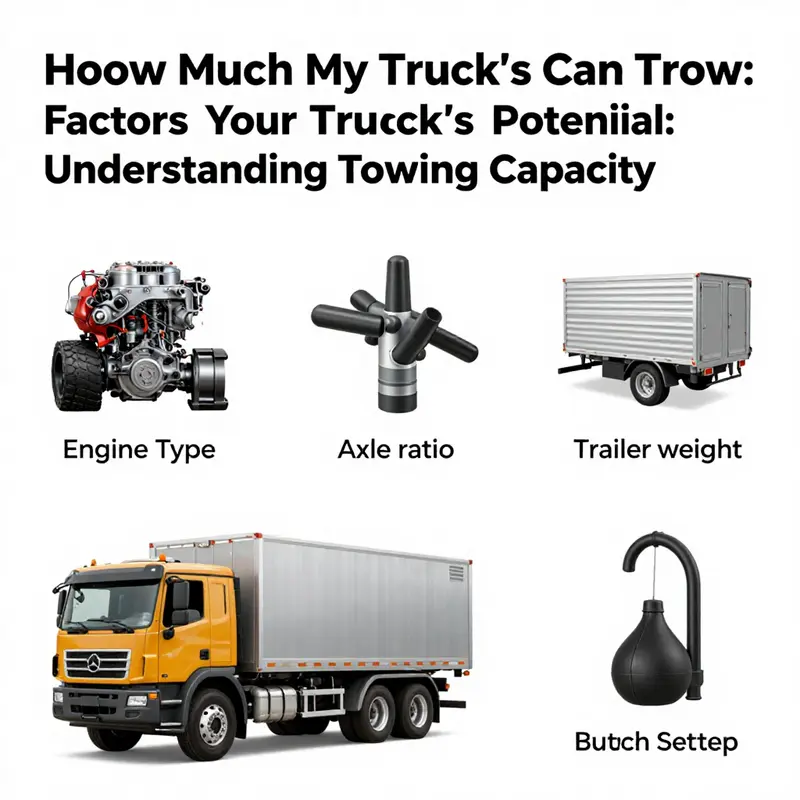
When you ask, “how much can my truck tow?” you’re really asking about a system, not a single number. Towing capacity is the product of engineering limits and real-world conditions working in concert. It starts with the vehicle’s own specs and ends with how fuel, brakes, tires, and even weather cooperate with a trailer behind you. The short answer—there isn’t one universal figure for all trucks. The longer, practical answer lies in understanding the core constraints the manufacturer sets and how your choices as a driver interact with those constraints. A responsible approach begins with the owner’s manual and the manufacturer’s specification labels, which live on the driver’s door jamb or in the vehicle’s digital interface. These numbers are not decorative; they are safety ceilings designed to keep the truck stable, the hitch secure, and the road predictable as you pull away from a standstill, climb a grade, or brake for a curve. Exceeding these limits invites not just inefficiency but risk—underrated tires, overheated brakes, uneven weight distribution, and the kind of dynamic instability that can turn a routine tow into a dangerous situation. The guidance here aligns with the core idea that the precise maximum towing weight is, in fact, a function of several interlocking factors rather than a single, static figure.
The first and most fundamental factor is the GVWR, the gross vehicle weight rating. This number represents the maximum total weight the truck can safely carry, including its own curb weight, passengers, cargo, fuel, and anything mounted or attached—trailer included—while remaining within the vehicle’s engineered limits. In practical terms, the GVWR sets a cap on payload, and the payload reduces the amount of weight that can be added to a trailer before you reach the roof of what the truck can handle. The towing specification you’ll see published by manufacturers often derives from how the GVWR intersects with other ratings, such as the GCWR, the gross combined weight rating. The GCWR marks the maximum weight of the vehicle plus a trailer when the tow is fully loaded. In many cases, the maximum trailer weight you can tow is the difference between the GCWR and the GVWR, but the exact math varies by model year and configuration and sometimes hinges on the installed hitch, axles, and cooling capacity. This relationship underscores a simple reality: your truck’s towing capability is not a power ceiling alone. It is a balance of how much you can put behind the hitch without compromising the vehicle’s primary safety envelope.
Beyond the labels and numbers, the powertrain—the engine and transmission—plays a decisive role. A truck with a more capable engine, especially one that delivers high torque at low RPMs, will feel more confident pulling heavier loads, particularly when starting from a stop on an incline or when climbing with a trailer over mixed terrain. Equally important is the transmission and its gearing. Automatic transmissions with robust torque-converting capability, appropriate gear sets, and effective cooling systems are designed to maintain performance when a trailer imposes sustained load. A well-tuned cooling system prevents heat soak, which can otherwise degrade efficiency and threaten transmission longevity during long highway pulls or steep grades. The takeaway here is nuanced: horsepower tells you how fast you can accelerate, but torque and a transmission’s ability to sustain that power under load define how well you can hold a grade, maintain speed, and stop within a reasonable distance while towing.
The axle ratio and the differential design further shape towing behavior. The axle ratio is the number of driveshaft revolutions required for each wheel turn. A higher numerical ratio increases torque at the wheels, rendering better initial pull and hill performance, but it costs you fuel economy on level roads. For a tow-heavy duty, that trade-off often makes sense. The differential type matters as well: limited-slip differentials improve traction when a heavy trailer reduces wheel spin, especially in slick conditions or uneven terrain. If you frequently tow over long grades or in challenging weather, a system designed to optimize traction during acceleration and maintaining grip can noticeably affect the practical ceiling of what you can tow with confidence.
A truck’s suspension is more than a ride quality feature. It is the framework that maintains control when weight is transferred from the vehicle to the trailer and back again. Factory-rated heavy-duty suspensions are engineered to keep the chassis aligned with the road under load, preserving steering feel and reducing sway. Upgrades or aftermarket components can add stiffness or adjust ride height, which alters the center of gravity and the dynamic response of the vehicle during towing. The stability of a tow is as much about how weight is managed across the axles as it is about raw towing power. A well-tuned suspension helps the truck absorb road irregularities, especially when the trailer adds a fraction of extra mass that shifts the ride geometry. In practical terms, if your configuration includes an upgraded suspension, you may enjoy more composed handling under load, but you must ensure the rest of the drivetrain and braking system are compatible with those changes to avoid creating new imbalances.
Braking cannot be treated as an afterthought. Tow loads demand more stopping power, and the braking system must be capable of arresting the combined weight of the truck and trailer. In many jurisdictions, when towing beyond a specific weight, trailers require their own braking system linked to the tow vehicle’s brakes. The partnership between trailer brakes and tow vehicle brakes reduces stopping distances and improves control, especially in emergency deceleration or downhill descents. The hitch alone cannot guarantee safe stopping; the entire stopping system—including the trailer’s braking and the vehicle’s own ability to dissipate heat through the rotors and pads—must be up to the task. This is why many manufacturers emphasize compatible brake components and why professional inspection is often recommended when planning heavier tows.
Tire load rating and size are the little but mighty media through which all the braking, steering, and suspension systems exercise their authority. The tires carry the combined load of the truck and payload, plus the draw of the trailer through dynamic maneuvers. If the tires’ load rating is insufficient for the total weight, the risk of overheating, rapid wear, or even a catastrophic failure increases. Proper inflation is equally critical; underinflated tires generate excess heat and a higher rolling resistance, which compounds wear and reduces responsiveness. Even if your truck’s structural components can handle a heavy tow, undersized tires or marginally rated tires can nullify those capabilities in a single highway pull or a sudden stop.
The hitch and coupler are the mechanical interface between truck and trailer. The hitch must be rated to handle at least the gross trailer weight you intend to tow, and the trailer’s coupler must match the hitch receiver size and weight capacity. A mismatch here is more than a nuisance; it is a safety risk that can lead to hitch failure or trailer detachment under load. This is why the installation quality and compatibility checks are part of any responsible towing plan. The rule of thumb is simple: respect the ratings, ensure compatibility, and verify connections before you depart. The gateways to safe towing—weights, power delivery, traction, braking, tires, and hitch integrity—are a system, not a single component.
No towing discussion would be complete without acknowledging the vehicle’s condition and any modifications. Engine health, transmission fluid levels, cooling system efficiency, and even the alignment of steering components influence towing performance. Modifications, including lift kits or larger tires, alter the vehicle’s center of gravity and overall dynamics. While such changes may improve appearance or off-road capability, they can complicate weight distribution and handling on the highway. If you’ve altered suspension geometry or added bulky tires without reconsidering the tow setup, you may reduce the truck’s effective towing capacity and increase the risk of sway or instability. The connective thread across all these considerations is honesty about what your truck can do while remaining within the safety margins engineered by the manufacturer.
So how do you translate all this into a practical number, when you stand at the hitch with a trailer attached and a mouthful of questions? Start with the manufacturer’s official ratings and your vehicle’s weight. The GVWR tells you how much weight you can carry in the truck, which is crucial because payload reduces how much you can safely add to the trailer’s weight. The GCWR, or gross combined weight rating, anchors the upper bound of what the vehicle and trailer together can weigh before the risk of overloading the drivetrain or brakes becomes unacceptable. The actual tow rating—the practical maximum trailer weight—emerges from the difference between GCWR and the combined weight of the vehicle in its current configuration (including passengers and cargo). In many cases, drivers manage this by reserving a portion of the GCWR for contingencies and considering the trailer’s weight separately, especially when the load is heavy or the trip includes grades, headwinds, or long descents.
To make sense of these numbers in your day-to-day planning, you can perform a straightforward check. Begin with the GVWR and curb weight from the door jamb sticker or the manufacturer’s site. Subtract the curb weight from the GVWR to estimate the maximum payload you can safely carry inside the truck. Then, add up the trailer’s gross weight and compare it to the GCWR. If your numbers come close, you’re approaching the practical limit where efficiency may decline and control may become more sensitive to wind, slope, or road texture. In reality, many drivers operate with a margin of safety—leaving some headroom between the actual load and the published caps—to account for weather, road conditions, and the trailer’s load distribution. This margin matters, especially when towing on unfamiliar routes or during long trips where temperature, altitude, and haul stress can erode performance.
The conversation about towing capacity would be incomplete without acknowledging the value of professional guidance and real-world checks. A trustworthy rule is to verify the exact figures for your specific year, make, and model, as the numbers can shift with design changes, transmission options, and even slight chassis adjustments across generations. If you want to delve deeper into model-specific capacity, a well-regarded automotive reference offers detailed specifications by year, make, and model, which can be a time-saver when you’re planning a heavier tow. Additionally, keeping an eye on safety communities and towing-focused resources—the kinds of places where experienced operators share what truly works in practice—can give you practical insights that the static numbers don’t capture. For a broader discussion of towing realities and to connect with a community of tow operators, you can visit the Santa Maria Tow Truck blog. It can provide context on how professionals interpret towing numbers in the field and how they manage weight distribution and safety during challenging pulls. Santa Maria Tow Truck blog.
Beyond personal planning, the responsibilities surrounding towing safety extend to how you prepare the vehicle, the trailer, and the route you choose. Start with a thorough inspection: tires, brakes, lights, hitch connections, and the trailer’s own braking and electrical systems should be tested and confirmed before departure. Load distribution matters if the trailer is heavy or long; heavier cargo toward the trailer’s tongue improves stability, while excessive weight toward the rear can cause trailer sway. This often means rechecking your tongue weight and ensuring it remains within the recommended range for the hitch you are using. The road’s surface can demand more from your suspension and brakes when towing, so anticipate longer stopping distances and smoother acceleration to keep the vehicle balanced.
Another practical dimension is the condition of the trailer itself. A trailer that is not properly loaded or secured can transfer loads unpredictably to the towing vehicle. Strapping down loose cargo, ensuring secure tie-downs, and checking the trailer’s brakes and wiring are all essential. A trailer with worn or inadequate brakes can place disproportionate strain on the truck’s braking system, and a trailer with binding or misaligned wheels can introduce unwanted drag and sway. The goal is to maintain consistent control through a combination of correct weight distribution, reliable brakes, properly inflated tires, and well-maintained hitch connections.
As you internalize these ideas, you may wonder how to translate them into a concrete, safe plan for a specific trip. The process is roughly this: identify the GCWR and GVWR for your exact configuration; know your curb weight and payload; determine the trailer’s gross vehicle weight under load; and ensure that the sum of the truck and trailer weights does not approach the safety boundaries. Then apply common-sense planning: anticipate terrain, weather, and traffic; maintain a conservative speed that matches the visibility and road conditions; and factor in additional braking time. If you are in a region with stricter towing requirements, or if you are operating a heavier combination for commercial purposes, you will likely need to follow additional regulations and use equipment designed to meet those requirements, including brakes on the trailer and possibly a weight-distributing hitch that helps maintain steering control and even weight distribution.
In the end, the question isn’t only “how much can I tow?” but “how safely and efficiently can I tow, given my vehicle’s real-world configuration and the conditions I face?” Understanding the factors discussed here—the GVWR and GCWR; the engine’s torque and the transmission’s ability to sustain load; the axle ratio and differential behavior; the suspension’s capacity; the braking system; the tires and their load ratings; the hitch and trailer compatibility; and the vehicle’s current condition and any modifications—provides a solid framework for answering that question with confidence. It also cultivates a mindset oriented toward safety, legality, and longevity: tow within the limits, plan for contingencies, and treat the data as a map rather than a fixed destiny. For further exploration of the towing landscape and to compare model-specific parameters, consult industry references that break down capacity by year and configuration. And when you’re ready to branch out into broader towing topics, the Santa Maria Tow Truck blog offers additional perspectives on how professionals approach the realities of towing in diverse settings. Santa Maria Tow Truck blog.
If you prefer a detailed, model-specific anchor to guide your planning, consider reviewing external expertise that aggregates and analyzes towing capacities across a wide range of trucks and configurations. A comprehensive guide from a leading automotive publication lays out the mechanisms behind towing capacity and clarifies how GCWR, GVWR, engine torque, and drivetrain design interact in practical scenarios. This resource can help you translate the numbers you find in your manual into actionable decisions on the road. Car and Driver guide.
Tow with Confidence: Reading Your Truck’s Limits to Protect Power, Brakes, and the Road
Every journey that involves towing or hauling begins with a quiet, almost unspoken agreement between the vehicle and the driver: the truck will do what it was built to do, provided the load stays within carefully engineered limits. Those limits are not arbitrary numbers designed to complicate a day on the road. They are the result of countless hours of testing and engineering. They reflect how the engine breathes, how the transmission shifts, how the brakes grab, how the suspension soaks up bumps, and how the chassis behaves when weight shifts under acceleration, braking, or turns. In practical terms, the towing capacity of a truck is the ceiling—not a target—and crossing that ceiling invites a cascade of risks that can surprise even seasoned drivers. If you want to tow safely and avoid damage, you have to understand where that ceiling comes from and how to stay beneath it in every situation on the road, on the highway, and in the driveway where you hitch up.
The first and most important truth is simple: there is no universal number that fits every truck. Even among vehicles that look similar, the exact towing capacity can vary by model year, engine choice, transmission type, axle ratio, braking system, suspension components, and the type of hitch you use. A typical light-duty pickup, for instance, sits in a broad range—from roughly seven thousand to twelve thousand pounds of tow capacity. A medium-duty truck commonly lands between ten thousand and eighteen thousand pounds. Heavy-duty and some commercial configurations push well beyond twenty thousand pounds. But those are rough brackets, not guarantees. The published figure is a manufacturer-defined ceiling, derived from the combination of engine torque, transmission robustness, braking efficiency, suspension durability, and chassis architecture. Exceeding that ceiling can create a chain reaction of failures and hazards that may not be immediately obvious until the moment of crisis.
To use the right number you must consult the manual, the labels on the door jamb of the driver’s seat, or the manufacturer’s official site with the specific year, make, and model. The moment you rely on anecdotal capacity or a guess about a “similar” truck is the moment you start walking a tightrope. The owner’s manual isn’t a relic; it’s a safety document. This is why the simple act of verifying the exact towing limit before you hitch up is a critical habit for any towing plan. The numbers themselves are the starting point, not the endpoint. They represent the maximum load the vehicle was designed to haul under prescribed conditions. The reality on the road is more nuanced. Real-world conditions—air temperature, road grade, wind, tire pressure, even the height at which you carry the load—can all influence how close you come to that ceiling during any given trip.
Understanding the difference between towing capacity and related ratings helps prevent misinterpretation and misapplication. Towing capacity is not the same as payload capacity or gross combined weight rating (GCWR). Payload is the weight the truck can carry in the cabin, bed, and hitch payload area, while GCWR represents the total limit of the tow vehicle plus the trailer and its cargo combined. A trailer can weigh a substantial portion of that limit, and the tongue weight—the portion of the trailer’s weight that rests on the hitch—also factors into the overall math. When you plan a tow, you should consider all three measurements together to avoid inadvertently loading the system beyond what the truck can safely handle. It is easy to fixate on the trailer’s advertised weight and forget how the hitch, the trailer’s suspension, and the truck’s own systems respond to that load in motion.
The practical discipline is to start with the published towing limit and then work through a series of checks before you ever turn the key toward the highway. First, know the exact gross trailer weight—the weight of the empty trailer plus its cargo. Then determine tongue weight—the downward force the trailer exerts on the hitch. A widely accepted rule of thumb is that tongue weight should be in the neighborhood of about 10 to 15 percent of the trailer’s gross weight, depending on whether you’re using a standard hitch or a weight-distributing setup. The distribution system itself can alter how weight is felt by the truck, improving steering and stability when used correctly, but it also demands careful setup and maintenance. Using a hitch that isn’t properly matched to the trailer can distort load distribution and degrade handling in ways that are easy to overlook when you’re parked in a driveway but dangerous once you’re rolling.
The moment you combine the numbers—the trailer’s weight, tongue weight, hitch configuration, and the truck’s specific capacity—you’ll have a clearer view of whether a given tow is within the safe zone. Beyond the numbers, the vehicle’s braking and cooling systems play starring roles. Braking performance is not simply about stopping power in a straight line; it’s about how the brakes perform under sustained use while a load is behind you. When you tow, you introduce additional inertia that your brakes must manage. If the roll rate of the trailer adds heat to the system faster than the brakes can dissipate it, you risk brake fade, longer stopping distances, and, in severe cases, loss of control. That is why many manufacturers specify a higher heat tolerance or even a separate trailer brake system to augment the truck’s brakes on heavy-to-tow configurations. If you’re towing in hilly terrain, at altitude, or in hot weather, pay extra attention to how long you’ve been on the brakes and whether you need a brake controller on the trailer to share the load more evenly between vehicle and trailer.
A thoughtful towing plan also involves the gearbox and engine cooling. The tug-of-war between engine torque, transmission gearing, and the load behind you creates heat and stress in the drivetrain. A load that sits near the ceiling of capacity may be acceptable for a short pull on level ground, but it can push the transmission into a higher gear range for longer periods, lifting temperatures and accelerating wear. When towing near the rated limit, it becomes prudent to monitor engine temperature and transmission fluid temperature and to be mindful of prolonged climbs or steep grades where the margins narrow quickly. In many driving contexts, slow, steady throttle application with progressive braking at descents preserves both control and component health. It’s not about “thrilling power”; it’s about predictable, repeatable performance without exposing the drivetrain to unnecessary stress.
These safety realities become even more practical when you consider the numbers behind ordinary road usage. A standard pickup truck in everyday configuration might have an official maximum tow around ten thousand pounds; that same vehicle’s daily tasks—hauling a large equipment trailer, a sizable camping or travel trailer, or a car trailer—often involve weights that push close to, or slightly over, that ceiling. The difference between a weight you can calmly tow in a straight, level stretch and a weight that challenges every part of your truck’s system can come down to a handful of factors: how well you’ve distributed the weight, whether your tires are correctly inflated for the load, whether you’ve connected and tuned the hitch properly, and how familiar you are with how your truck behaves when the load shifts, braking pressure increases, or wind gusts buffet the trailer. These aren’t abstract concerns. They translate into real, measurable differences in acceleration, steering response, braking distance, and the risk of component failure if you push beyond what the machine can safely handle.
There is a practical benefit to treating towing as a careful optimization problem rather than a test of bravado. Before you ever attach a trailer, step back and run a quick but comprehensive check. Confirm each tire on the truck and trailer is within its rated cold pressure and that you’re using tires appropriate for the load. Check the hitch and ball for wear and proper size; ensure the safety chains are correctly configured and that lights and the brake signals operate in sync between truck and trailer. If your trailer has brakes, verify the controller’s settings and the responsiveness of the electrical connections. If you own a vehicle that can use a weight-distributing hitch, ensure it’s correctly adjusted for the trailer’s weight and that the spring bars, shank position, and wheelbase are appropriate for your setup. These details matter because even a slight misalignment between the truck and trailer can alter handling, braking, and the overall safety envelope of the tow.
In this careful calculus of weight, a single misstep can propagate. For example, if the total weight you’re pulling draws your tongue weight toward the lower end of the recommended range, the trailer may feel lighter in the hitch but the overall stability can suffer in crosswinds or on uneven pavement. Conversely, if tongue weight is too high, steering response may become heavier, rear axle loading increases, and maneuverability diminishes. The sweet spot—where stability, control, and braking performance align with the vehicle’s design—depends on a precise balance of trailer weight, tongue weight, hitch type, and the truck’s handling characteristics. This is why the guidelines emphasize verifying the manufacturer’s published limits and why you should consider a conservative approach, especially when weather, road conditions, or long trips are involved.
The chain of safety does not end at the moment you hitch up. Driving with a heavy load demands a measured, anticipatory approach. Avoid abrupt acceleration and harsh braking, which can shock the drivetrain and escalate heat in the brakes and transmission. Maintain steady speeds on level stretches and be prepared to adjust in response to grades, curves, or changing wind. Allow extra stopping distance and anticipate longer distances to come to a complete stop when a trailer is part of the equation. In addition, maintain a vigilant awareness of tire wear, tread depth, and wheel bearings on both truck and trailer. A load can reveal weaknesses in materials that were otherwise latent when the vehicle rode empty. Regular inspection of these components—before you hit the road and during trips that demand extended towing—helps prevent small problems from becoming costly and dangerous failures later.
A practical mindset that aligns with safety is to view towing as a collaborative effort between the truck and trailer, with the driver as the conductor. The conductor reads the conditions, interprets the numbers, and adjusts behavior to keep the performance within safe limits. It is not a one-time calculation but an ongoing discipline that informs every highway merge, every passing maneuver, and every descent or climb. This approach becomes a habit—one that grows from a respectful appreciation for the truck’s capabilities and a responsibility to preserve its longevity. When you approach towing with that mindset, you reduce the odds of overheating components, of losing control due to unexpected weight transfer, or of breaking important parts that cost you time, money, and safety. It also pays off in peace of mind: you know you are operating within the designed boundaries and that your equipment is more likely to perform reliably when you need it most.
For readers seeking a structured path to safety, consider using the published towing capacities as a starting point, then corroborate with a series of checks before departure. If you are new to towing or encountering a more complex load, you are not obliged to rely on guesswork. There are trusted resources that guide you through the nuances of weight, balance, and stability. For instance, many drivers find it helpful to read practical, experience-based guidance on professional blogs and safety guides. A good example of a broad, practical reference is available at the Santa Maria Tow Truck blog, which offers insights into towing safety checks, recommended procedures, and how to assess whether a given load is within safe limits for your vehicle. This kind of resource complements the owner’s manual and the evaluator’s eye you bring to the situation, helping you translate raw numbers into actionable steps. Santa Maria Tow Truck blog
In the final analysis, the question of how much your truck can tow safely is answered by a careful combination of the manufacturer’s rating and disciplined, proactive verification of the actual load you plan to move. The numbers exist as guardrails. The real-world practice—the habit of checking weights, ensuring proper hitching and braking support, and maintaining tires and brakes—turns that number into a safe, predictable, and repeatable experience. If you approach every tow with that mindset, you’re exercising not just a mechanical capability but a deliberate, safety-first approach to moving people and cargo on the roads.
External resource: For a thorough, current guide to towing capacities, see https://www.edmunds.com/truck-towing-guide/
Final thoughts
Understanding your truck’s towing capacity isn’t just about numbers; it’s about safety, reliability, and performance. Equipped with knowledge about how different models and configurations influence towing limits, the factors that affect capacity, and essential safety measures, you can ensure that every towing experience is secure and efficient. Always consult your owner’s manual for precise information and adhere strictly to the limits set by your manufacturer to keep both you and your goods safe.