
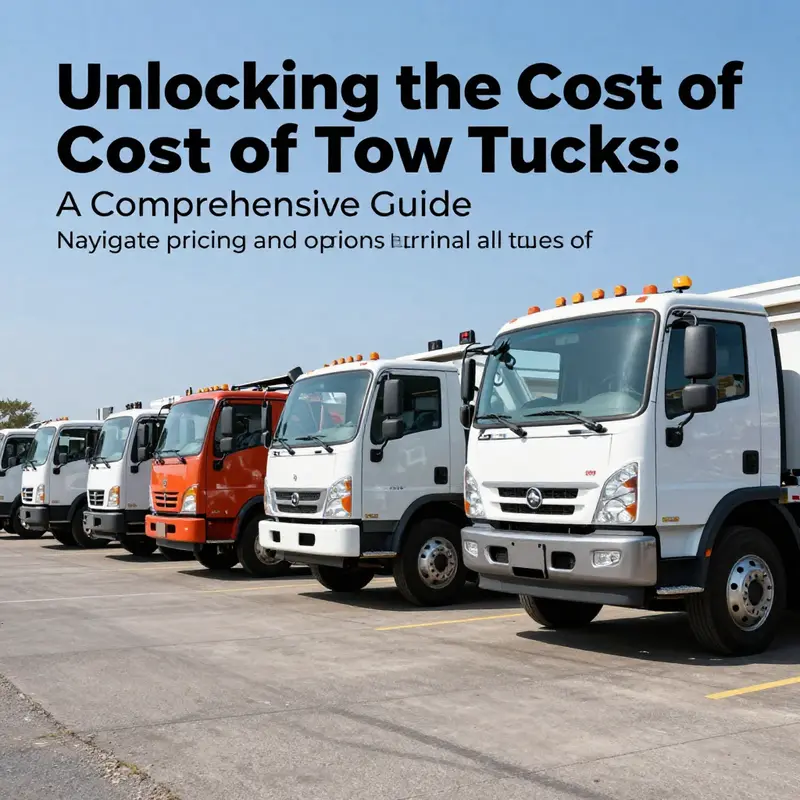
Understanding the cost of tow trucks is essential for local drivers, auto repair shops, property managers, and dealerships. From light-duty trucks used for everyday vehicles to heavy-duty specialized models, prices can vary significantly based on the type, size, and capabilities of the truck. This comprehensive guide delves into the specifics of light-duty, medium-duty, and heavy-duty tow trucks, while also addressing ongoing costs and considerations that affect ownership and operation. By the end, you will have a clear framework for evaluating tow truck options in your context and making informed financial decisions.
The Price Tag on Light-Duty Tow Trucks: Balancing初 Costs with Long-Term Value
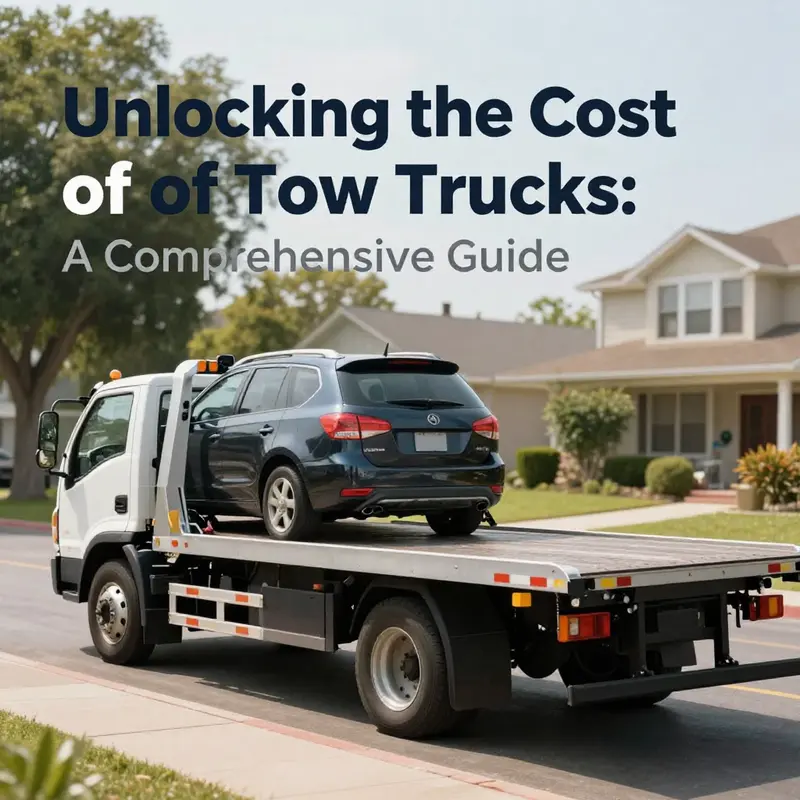
Light-duty tow trucks occupy a practical middle ground in the towing ecosystem. They are the common workhorses used for pickup and small SUV recoveries, as well as transport tasks that require a compact, maneuverable platform. When you look at what they cost, the spectrum is surprisingly wide, and the spread matters a lot for budgeting, financing, and planning. The upfront price you pay for a basic light-duty flatbed or rollback can begin in the low thousands, but that figure is often a ceiling if you only scan for the absolute cheapest option. In practical terms, the base price you encounter for a very entry-level unit can be around four thousand dollars. That figure is usually associated with minimal equipment, perhaps a non-standard configuration or a model built to a lower spec. It is important to understand that such a price often signals trade-offs in build quality, reliability, or long-term maintenance costs. The same decision framework that governs a car purchase applies here: you can buy cheap, or you can buy smart, and the gap between those two choices will show up in uptime, fuel efficiency, and the vehicle’s ability to handle genuine recovery scenarios with confidence.
Beyond that bare-bones threshold, more robust options begin to appear in the market. A compact, purpose-built recovery vehicle, designed for road rescue tasks and capable of handling a wider range of surface conditions and vehicle sizes, generally carries a price in the neighborhood of the mid-to-high teens. In many cases, you will see base pricing quoted around seventeen to eighteen thousand dollars per unit for a compact platform with a recoverable load capacity in the single-digit ton range. These figures reflect the vehicle’s base cost and do not include the additional hardware that makes a tow operation effective—things like wheel lifts, winches, bed mechanisms, and safety equipment. In other words, the sticker price on the chassis is only part of the financial picture.
To translate that into more concrete terms, picture a 6-ton flatbed design that can be configured for a broad set of roadside tasks. A unit of this caliber might be described as a four-by-two platform with a solid engine option and a tilt-deck tray, making it a credible tool for routine road recovery. The base cost for such a configuration tends to sit somewhere in the mid-range of the spectrum, reflecting a balance between comfort, capability, and cost. It is still not a luxury item, but it does come with a reliable platform that can deliver consistent performance in daily operations. The engine performance, while not defined as top-tier, is sufficient for towing and carrying operations where the vehicle size and weight are manageable within an operator’s standard workload. Importantly, even these mid-range options acknowledge the reality that a light-duty tow truck is designed to be on the road a lot more often than it sits idle, and the cost structure should account for that reality.
A practical takeaway for buyers is that the base cost never tells the full story. The quoted figure typically covers only the vehicle itself, excluding a broad set of essential accessories and systems that enable safe, compliant, and efficient work. The typical suite of add-ons includes a winch or winch-related hardware, wheel-lifting devices, towing dollies, and a set of straps and chains of various configurations. Safety equipment—cones, reflective vests, flares—also sits high on the list of mandatory purchases, especially for operators who take on roadside work in changing light and weather conditions. Communication gear and fleet-management software are increasingly common, and such systems can significantly affect the total expense. When you tally all of these components, the real purchase cost becomes a multi-line item rather than a single price tag.
For readers seeking more in-depth context on broader market dynamics and practical implications, a visit to a vehicle-focused industry blog can provide useful background. The Santa Maria Tow Truck blog, for instance, offers ongoing coverage of operations, maintenance, and readiness practices that help illuminate how a light-duty platform performs in real fleets. This resource can be a helpful complement to the numbers above, offering scenarios that ground the generic price ranges in real-world experience. Santa Maria Tow Truck blog.
Of course, the base price is only one dimension of the purchasing decision. Shipping, delivery times, and the logistics of outfitting a chassis with the right equipment vary widely by seller and region. Some buyers may face additional costs for installation, on-site delivery, or specialized configurations designed to meet local regulatory requirements. These factors can add several thousand dollars to the initial investment, underscoring the importance of a well-structured procurement plan that accounts for all charges up front rather than encountering them as surprise line items after the purchase is made.
Ongoing operational costs follow a complementary logic. Fuel economy for tow trucks is modest at best, particularly when the vehicle is loaded and in dense urban traffic or on recovery assignments that require substantial time on the road. Typical fuel efficiency falls in the six to ten miles per gallon range under load, with idle time during active recoveries further eroding fuel economy. In practical budgeting terms, that means fuel cost volatility is a steady feature of operating a light-duty tow fleet, and operators tend to implement route optimization, scheduling discipline, and maintenance planning to mitigate the impact. The fleet manager who emphasizes data-driven routing can shave miles off daily itineraries, extend the engine’s life, and reduce unscheduled downtime, which becomes as important as the purchase price itself.
Maintenance is the other steady thread in the cost tapestry. Regular inspection and service—oil changes, brake checks, hydraulic system maintenance, and suspension care—are essential for uptime. The hydraulic systems that drive the bed and winch require particular attention because failures here can quickly cascade into expensive downtime. Insurance and licensing costs also accumulate, aligning with the broader regulatory framework that governs commercial towing operations. Liability coverage is standard, and many operators carry additional policy components to address cargo, roadside assistance, and on-call response commitments. Licensing costs vary by jurisdiction but tend to be predictable enough to factor into annual operating budgets, especially for fleets with multiple vehicles.
Specialized equipment represents another category that can tilt the cost balance in meaningful ways. A light-duty tow truck’s usefulness rests on the reliability and versatility of its add-ons: robust winch capacity, reliable wheel-lift hardware, secure towing dollies, and a comprehensive set of soft goods and safety aids. The cost of these components grows with the complexity of the job you expect to handle. If a fleet’s focus shifts toward more frequent roadside assistance in urban environments, for example, light bars, sirens, and communications systems become de facto requirements and their purchase price plus ongoing maintenance should be reflected in the total cost of ownership. In contrast, a fleet anchored in routine flatbed recoveries may place greater emphasis on winch endurance, deck length, and bed strength rather than flashy signaling equipment. Either way, the practical takeaway is consistent: a light-duty unit’s price is a starting point, not the final number you must budget for.
When buyers stretch toward the upper end of the light-duty market—toward higher-end configurations with more robust materials, improved load handling, and tighter tolerances—the line between “affordable” and “investable” can blur. The market tends to reward reliability and uptime more than the sheer allure of new features. Buyers who invest in a well-provisioned platform often benefit from lower maintenance headaches, greater durability under frequent use, and faster recovery times, all of which translate into cost savings over the life of the vehicle. Conversely, a budget-first approach that compromises on critical components risks higher repair bills, more frequent downtime, and a shorter total operational life. The balancing act, then, is not simply about the sticker price but about aligning the vehicle’s capabilities with the operator’s workload, geography, and risk tolerance.
A broader perspective reveals why light-duty tow trucks matter in the grand scheme of a towing operation. The lower upfront cost is a compelling argument for small businesses, new fleets, or independent contractors seeking to expand service offerings quickly. Yet the same decision requires disciplined attention to the full cost of ownership, including fuel, maintenance, insurance, and the cost of essential accessories. For operators who expect to scale, the choice often shifts toward platforms that can absorb heavier use without sacrificing reliability. The economics of scale become visible only when the fleet expands enough to amortize training, maintenance scheduling, and safety program investments across more units. In short, the math isn’t only about dollars at purchase; it’s about the long view—how a light-duty platform supports consistent, compliant, and productive service over years of operation.
Ultimately, readers should approach light-duty tow truck pricing as a spectrum rather than a single figure. The low end captures ultra-budget configurations that may serve as temporary stops on the way to a more capable setup. The mid-range reflects practical, durable platforms designed for steady daily work. The higher end signals a step toward greater resilience and versatility, with the associated but predictable uptick in total cost of ownership. As with any investment, the key is to align price with purpose: define the task, estimate the mileage and duty cycle, and then price the vehicle in the context of a full operational plan rather than as an isolated purchase. The goal is not to chase the cheapest option but to secure a platform that reliably delivers uptime and safety, reduces downtime costs, and composes a cost profile balanced against revenue opportunities over time.
For those building a narrative around the financial side of tow operations, the chapter on light-duty costs serves as a bridge between initial acquisition and long-term sustainability. It anchors the conversation in real-world figures while acknowledging the intangible values of reliability, faster response times, and compliant, safety-forward practice. As a final note, any buyer should seek quotes that include not only the vehicle but also a clear breakdown of shipping, installation, and setup costs, and should request a tailored breakdown of ongoing expenses based on local fuel prices, insurance needs, and regulatory requirements. This approach yields a more accurate forecast and a more confident path from an initial price tag to a viable, profitable fleet over time. For more practical insights on industry readiness and standardization, the linked internal reference above can illuminate how fleets structure fuel efficiency, maintenance schedules, and emergency readiness in real-world settings. And for a broader understand of tow equipment costs beyond the light-duty segment, an external overview provides historical context and market dynamics that help situate where light-duty pricing fits within the larger ecosystem of vehicle recovery solutions: https://en.wikipedia.org/wiki/Tow_truck
Sizing Up the Middle Ground: The Real Costs and Considerations for Medium-Duty Tow Trucks
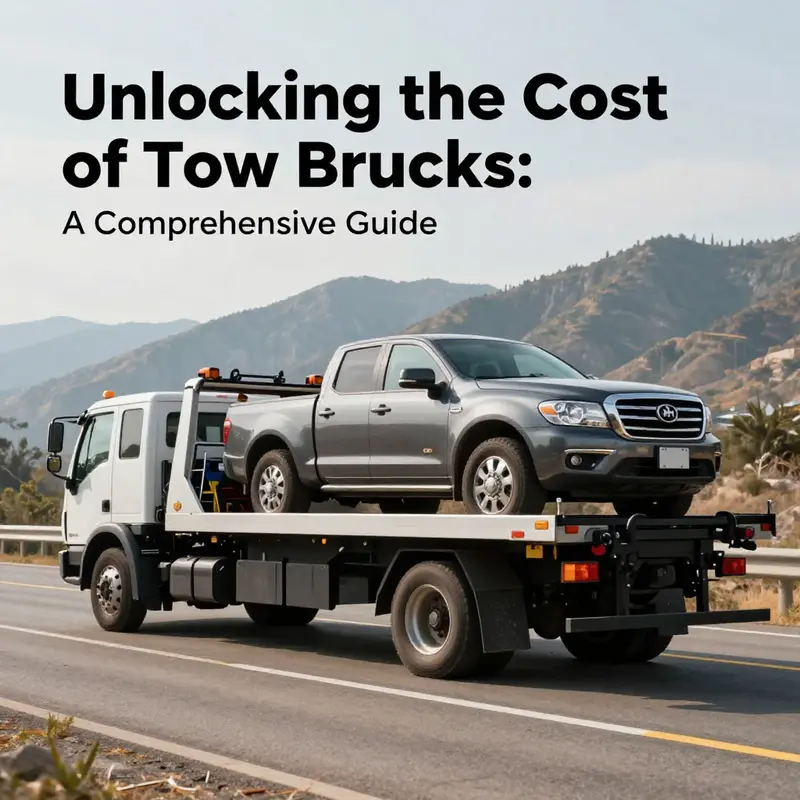
Medium-duty tow trucks sit between light-duty and heavy-duty workhorses, offering a balance of payload, maneuverability, and reliability for fleets with diverse needs. They can tow larger pickups and many commercial vehicles while still fitting into urban garages; the true cost, however, comes from long-term ownership: winch power, bed length, hydraulic system durability, maintenance cycles, and the availability of parts and service. Fleets typically start with mid-range configurations around 5 to 8 tons, with options that push toward heavier recoveries when the workload demands it. Higher-capacity variants, such as 8×4 or similar setups, bring increased lifting and longer reach but carry higher upfront prices and ongoing maintenance considerations. For many operators, the optimal choice is a well-scoped spec that aligns with actual duty cycles and a plan for total cost of ownership, not simply headline price. In practice, thoughtful procurement, preventive maintenance, and flexible financing options help ensure uptime and rapid response without overspending.
Decoding the Costs of Heavy-Duty and Specialized Tow Trucks
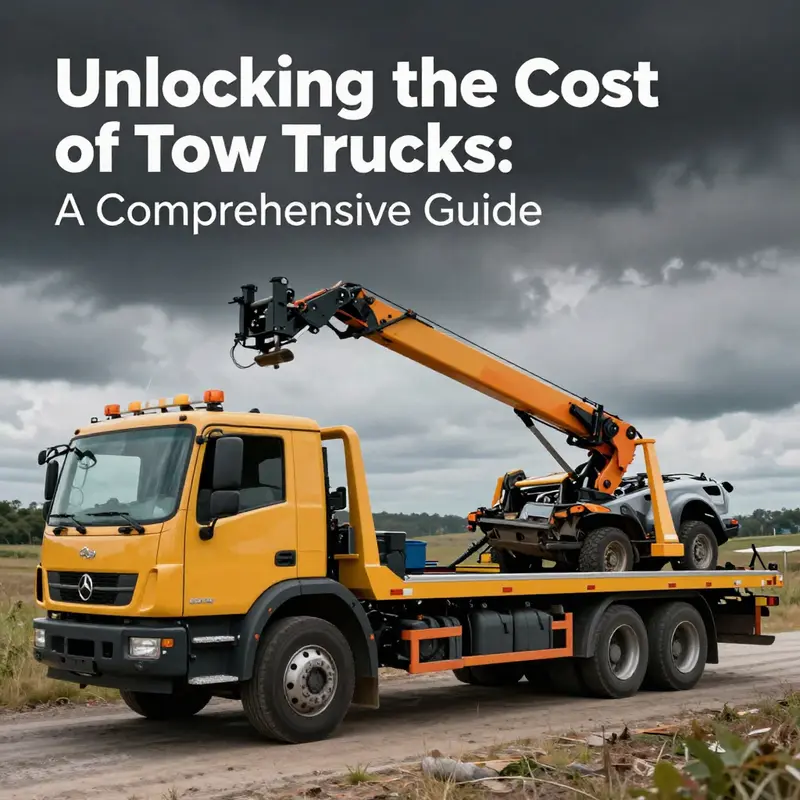
When a fleet is tasked with maintaining road safety, clearing wreckage, or conducting rapid on-scene recovery, heavy-duty and specialized tow trucks function as mission-critical assets whose price reflects more than lift capacity alone. The cost conversation begins with capability: how much crane reach, how much hoist weight, and how often the vehicle must operate in off-road, uneven, or adverse conditions. It then expands to maintenance, downtime, and the long tail of ownership that follows a purchase. In this chapter we explore the spectrum of costs in this category, from economical niche configurations to the upper tiers of capability, while keeping a clear eye on how those numbers translate into real-world performance, readiness, and resilience for operators of all sizes.
At the heart of the pricing landscape is capacity. A 50-ton heavy-duty wrecker sits in a price range that can span from roughly forty thousand to seventy thousand dollars per unit, depending on design and option packages. That spread captures differences in chassis geometry and strength, the hydraulic architecture that powers the winch and crane, bed and stabilizer materials, and the sophistication of control systems that keep operations precise under load. A unit in this class must be able to pick up large vehicles and reposition them with predictable handling, even when the surface is challenging. The engineering burden is significant: a reinforced frame, durable outriggers, a robust winch and a crane designed to hold both itself and the payload steady in adverse conditions. The price reflects not only raw capability but the assurance of reliability across the calls that test a fleet’s readiness and a technician’s skill. For many buyers, this price range marks the minimum threshold where a department or company can begin to expect a meaningful return on investment through reduced downtime and the ability to respond swiftly to incidents of varying scale.
Moving up in capacity and specialization introduces a premium tier with rotator and off-road configurations. A 6×6 heavy-duty off-road wrecker, especially one equipped with a rotator crane capable of lifting twenty to twenty-five tons, commonly appears in market listings with a price ladder that starts near the upper end of the lower category and rises toward the mid six figures in some markets. Realistic figures for such a unit often land between roughly seventy-seven thousand eight hundred and one hundred five thousand dollars. The rotator is not merely more powerful; it enables freedom of movement in challenging terrain, stabilization of overturned vehicles, and manipulation of loads from awkward angles. The higher price reflects the broader operating envelope: agile positioning on uneven ground, a full 360-degree rotation, and the ability to execute complex recoveries that would be impractical or unsafe with a conventional wrecker. In jurisdictions with remote scenes, maritime or forested environments, or high-value fleets, the strategic value of this capability can far exceed the initial outlay.
Within this tier also sits a range of configurations that balance reach, maneuverability, and budget. A 12-ton wrecker is a common intermediate option for municipalities or utilities that need dependable roadside support without the scale or cost of larger machines. Market data show that the price for a unit in this class can be notably lower—often in the single-digit tens of thousands, with variations based on bed length, crane size, and added features. A figure around sixteen thousand five hundred dollars is not unusual for certain 12-ton platforms configured for standard recovery work with a baseline set of accessories. Yet the price tag remains a meaningful investment because the machine inherits the same core requirements: a robust hydraulic system, dependable steering and braking for safe transport, and a crane capable of reaching and lifting with confidence. For buyers such as local utilities, school districts, or smaller municipalities, this tier can deliver essential capability without pushing the budget beyond reasonable limits, particularly when the asset serves a steady schedule of routine recoveries rather than sporadic large-scale incidents.
In the upper echelons of the market, machines advertised at thirty to sixty tons and beyond emphasize calibrated, repeatable performance across varied scenarios. Pricing details for these larger platforms are not always published in full, and buyers are usually steered toward direct supplier engagement to understand exact configuration, after-sales support, and delivery terms. The premium extends beyond raw lifting capability to engineering redundancy, bigger drivetrains, longer booms, and more sophisticated stabilization systems. The sale is framed around factory pricing with an emphasis on a broad parts and service network that can support a fleet over years of high duty operation. The buyer weighs how often a 30-ton, 40-ton, or 60-ton platform will be called upon against the cost of ownership, and whether the incremental capability translates into a measurable reduction in incident times and improved safety outcomes on the scene.
Across all classes, the total cost of ownership matters. The sticker price captures only a slice of the financial picture. Ongoing costs—the wear on winches and straps, the need for wheel lifts and dollies, safety gear, and the communications backbone that coordinates complex recoveries—accumulate over the asset’s life. Fleet managers must also account for maintenance cycles, hydraulic wear, and the possible need for specialist service technicians. Insurance premiums rise with asset value and exposure, and training expenses accompany new models or configurations. The most thoughtful budgeting approach treats these machines as systems rather than standalone purchases: each component interacts with the rest to determine uptime, reliability, and the speed at which a department can restore normal traffic flow after a disruption.
In practical terms, the choice between new, used, or refurbished units hinges on risk tolerance, expected utilization, and demand volatility. New models bring the strongest assurances of reliability, the longest warranties, and the latest safety and control technologies, but require the largest upfront investment. Used or refurbished equipment offers tighter initial cash outlay and a quicker path to a ready fleet, at the cost of potentially higher maintenance risk and shorter remaining service life. The decision is rarely about a single unit but about a portfolio strategy: how many heavy machines are needed, how they will be deployed across shifts and weather conditions, and what service and spare parts arrangements can be secured. A robust procurement plan may include multi-unit discounts, extended warranties, and service contracts that stabilize maintenance expenditures and minimize unscheduled downtime. This mindset ensures capability aligns with capacity, so a call can be answered promptly and with confidence.
Beyond the purchase and maintenance calculus lies the operational discipline that determines value. A fleet that standardizes interfaces across different units—cranes, control consoles, or hydraulic systems—reduces training time and lowers the risk of human error under pressure. It can also simplify the parts supply chain, preventive maintenance scheduling, and repair coordination after heavy use. The broader objective is to link readiness with standardization, ensuring equipment meets the letter of a contract and harmonizes with a resilient emergency response framework. This is where the practical experience of managers, mechanics, and operators converges with budgeting and policy. The result is a more predictable cost trajectory, a higher likelihood of rapid return to service after incidents, and better alignment with community safety expectations.
For readers seeking practical context, external benchmarks can illustrate how specifications translate into real-world performance. Prospective buyers should pose targeted questions about crane capacity and reach, the quality and longevity of hydraulic systems, stabilization performance, and the integration of winches and control software. Requesting warranty terms, service plans, and historical downtime data for similar fleets can illuminate the true cost of ownership beyond the sticker price, guiding a purchase that aligns with strategic readiness and fiscal stewardship.
For readers who want to explore further, look to external resources that catalog the diversity of heavy-duty recovery equipment. Internal discussions at the organizational level should consider fleet readiness and standardization as a strategic priority; the link between readiness, standardization, and procurement policy can shape capital budgeting and response planning. The broader resource on vendor scale and the kinds of detailed specifications that drive price help decision makers calibrate what level of capability is appropriate for their risk profile and operating environment.
Beyond the Sticker Price: Navigating Hidden Costs in Tow Truck Pricing
When buyers look at the price of a tow truck, they often stop at the first figure presented in a brochure or online quote. Yet price is only the starting point in a lengthy calculation. The true cost of owning and operating a tow truck stretches across months or years and depends on a mix of factors that can sway the bottom line in ways that surprise even experienced operators. A practical approach to pricing recognizes that the base cost of purchase is only the opening chapter in a longer story about reliability, uptime, safety, and long-term efficiency. The chapter that follows examines the most consequential of these factors, showing how shipping, service, customization, efficiency, compliance, and ongoing expenses shape what a unit really costs over its working life. It is a narrative about lifecycle value, not merely sticker price, and it matters whether the vehicle is destined for light daily recovery or heavy, high-stakes rescues in challenging terrain.
Shipping and import duties mark the doorway to the total cost. For buyers purchasing from overseas manufacturers, the freight bill can be one of the largest single price levers. Heavy-duty tow trucks can weigh tens of tons, and shipping them across oceans involves complex logistics, insurance, and careful handling to prevent damage in transit. The exact quote often depends on the destination, chosen logistics provider, and whether the seller is aligned with a particular freight forwarder. Beyond freight, import tariffs and value-added taxes or other duties can significantly alter the landed cost. Some platforms require buyers to request formal freight estimates and delivery timetables directly from sellers, which means the initial price is rarely the final price. In practice, a destination country’s customs rules, documentation requirements, and tax treatment can add tens of thousands of dollars to the bill when the vehicle arrives, especially for multi-axle, all-wheel-drive, or rotator configurations designed for complex recovery work. For operators who rely on predictable budgeting, this volatility makes early requests for shipping and tariff estimates essential. They should also plan for potential delays caused by logistics backlogs, port holds, or domestic transportation within the buyer’s region.
While shipping can be the lead cost, after-sales service and maintenance form a shadow that continually influences the economics over the vehicle’s life. Some manufacturers advertise robust service networks and around-the-clock support, which can dramatically cut downtime and accelerate repairs after an incident. Yet the availability of spare parts, the geographic reach of trained technicians, and the cost of on-site service can vary widely. Rotator tow trucks, with their 360-degree booms and specialized control systems, demand even more intense technical expertise. The initial price may not reflect the complexity of maintenance, nor the time required to source parts for a non-standard configuration. Buyers should factor in a realistic maintenance horizon: how long parts will be available, how quickly technicians can respond, and whether the seller offers training for on-site personnel. Training costs can accumulate if operators must become proficient in handling high-capacity winches, rotators, or bespoke recovery gear. In many cases, the ability to minimize downtime is itself a financial driver, reducing revenue loss during repairs and preserving the vehicle’s value over time.
Customization and modifications often shape the final cost to a degree that dwarfs the base price. Standard configurations can be tailored to specific hauling needs or regional regulations, but each modification introduces a new layer of expense. Upgrades such as higher-capacity winches, altered chassis layouts, or specialized bodywork for particular recovery scenarios can push the price well beyond the original quote and extend lead times. Customization also interacts with warranty terms: a non-standard setup may come with different coverage constraints or require baseline training for the crew that will operate it. For fleets that anticipate recurring needs—like multiple vehicles with similar duties—standardizing certain elements through customization can yield long-run savings, even if the upfront cost is higher. The key is to balance immediate requirements with the anticipated workload and to demand transparent, itemized quotes that distinguish standard equipment from optional add-ons.
Operational efficiency and fuel economy play starring roles in the lifecycle cost of tow trucks. Heavier-duty machines with powerful engines provide the torque needed for demanding tasks but consume more fuel during routine patrols, standby duty, and longer tows. The difference in fuel efficiency between a high-horsepower model and a lighter configuration becomes meaningful over the course of thousands of operating hours. Operators should examine official fuel economy data and model how usage patterns translate into annual fuel costs. Beyond fuel, there are background costs associated with idling, maintenance cycles, and the frequency of use. A vehicle that remains in service for longer periods between deployments may seem frugal, but if it consumes disproportionately high amounts of fuel when active or requires frequent, costly servicing, the lifecycle cost tilts unfavorably. Careful profiling of expected duty cycles—how many tows, what kinds of loads, average distance per call, and typical terrain—helps identify the option that delivers the most favorable balance of power, efficiency, and reliability over time.
Regulatory compliance and certification form a critical, non-negotiable layer in the cost calculus. Tow trucks must meet local safety standards, emission requirements, and roadworthiness rules. Some regions demand specific certifications or modifications to operate legally, particularly for specialized equipment like rotators and heavy-duty recovery units. Non-compliance can lead to fines, mandatory recalls, or restricted operation, all of which carry hidden costs in the form of downtime and potential reputational risk. Prospective buyers should map out the regulatory landscape they will operate in, identify any required inspections or certifications, and verify that the chosen configuration can be adjusted to meet evolving standards. This due diligence becomes more pressing in jurisdictions with aggressive emissions regimes or frequent regulatory updates, where a model that looks perfect on paper may require ongoing conformity work that adds both time and money.
Beyond these core categories, several ancillary costs quietly shape the final figure. Insurance premiums can reflect the nature of the operation, the driver training required, and the truck’s risk profile in heavy-duty recovery scenarios. Financing and loan terms are another layer; interest rates, down payments, and repayment schedules all influence the end price over the life of the vehicle. Storage and registration costs can bite in regions with high annual fees or complex administrative processes. There are also recurring expenditures tied to safety and readiness, such as cones, safety vests, and flares for road work, plus the costs of communication systems, GPS fleet management software, and diagnostic tools that help keep a fleet running smoothly. Even seemingly minor items, like the availability of towing dollies, wheel lifts, and straps in the correct configurations, accumulate over time and depend on how frequently the fleet is deployed. A comprehensive cost forecast therefore considers not only what the truck costs to purchase but also what it costs to keep it prepared, compliant, and ready for service.
The practical takeaway for buyers is straightforward: demand clarity in every quote and forecast the total cost of ownership with a disciplined, long-range view. A candid procurement process should include a breakdown of shipping estimates, anticipated duties, and timelines for delivery, followed by a transparent map of after-sales support, including response times and parts availability. When a customization is requested, the supplier should present a line-by-line cost analysis that isolates hardware changes, labor, and any potential impact on warranties or training. Operators should request a maintenance plan that outlines routine service intervals, what is included in warranty, and the expected lead times for parts. They should also obtain a realistic operating cost model that estimates fuel, routine maintenance, and potential downtime across the vehicle’s expected life, then compare this against a more straightforward, lower-cost option that may appear attractive at first glance but could incur higher overheads in service or downtime.
For fleets weighing the decision of multiple trucks, the per-unit cost must be evaluated in the context of standardization. A standardized fleet configuration can streamline maintenance, reduce spare parts inventories, and shorten driver training, all of which contribute to lower life-cycle costs. A shared specification minimizes the risk of incompatible parts and missing tools after a breakdown, and it supports faster, more efficient response during emergencies. This sort of strategic planning, which matches equipment design to anticipated tasks and workflows, often yields the most substantial long-term savings, even if the immediate purchase price is higher. The concept of standardization is explored across fleet management resources, and it can dramatically influence how a department or company budgets for assurance and readiness. To learn more about how standardization intersects with emergency readiness and equipment planning, readers can explore related discussions on fleet planning and readiness at this resource: fleet standardization and emergency readiness.
As readers consider these dimensions, they should remain mindful of the broader ecosystem in which a tow truck operates. A well-priced unit is not merely a single vehicle; it is part of a coordinated system that includes driver training, maintenance schedules, parts logistics, and interdependent equipment like winches, wheel lifts, and towing dollies. The value of a vehicle is thus inseparable from the systems that keep it ready to respond when a call comes in. The real art of budgeting for tow trucks lies in balancing upfront affordability with durable, predictable performance. It is about choosing a configuration that delivers dependable uptime, compliant operation, and scalable capability as the organization grows or the incident landscape evolves. Where possible, buyers should push for quantified assurances—service response times, fixed-fee maintenance programs, clear warranty terms, and documented upgrade paths that preserve value over time.
For those navigating the sourcing maze, direct supplier quotes remain essential. It is wise to compare apples to apples by ensuring that each quote includes equivalent service levels, part availability, and training provisions. In addition, buyers should verify claims through third-party assessments when possible, and seek references from other fleets with similar needs. The goal is a transparent picture of the total cost of ownership rather than a single price that loses its meaning once logistics and regulatory considerations come into play. To support ongoing reference, a fleet manager can anchor decision-making in established practice and emphasize the need for a predictable, defendable budgeting framework. The result is a smarter, more resilient investment in equipment that underpins rapid and reliable response when every second counts on the road.
From a practical standpoint, readers who want to ground these considerations in a real-world workflow can consider how standardization can help drive down the hidden costs described here. By aligning procurement with a consistent set of specifications across vehicles, the organization reduces the complexity that drives downtime and miscommunication. A standardized approach minimizes the number of spare parts needed, simplifies driver training, and accelerates the rotation of units in and out of service when repairs or upgrades are required. In short, while the sticker price is the gateway, the road to value runs through the maintenance bay, the training room, and the planning desk. The best decisions acknowledge that total cost of ownership is a composite measure, built from many small, often hidden, costs that accumulate over months and years. They reward foresight, disciplined sourcing, and a willingness to invest in reliability from day one.
For readers seeking a deeper dive into the lifecycle costs associated with heavy-duty tow trucks, including sensitive considerations around shipping, customization, and after-sales service, a broader source on global sourcing and due diligence provides additional context and tools for rigorous evaluation. The guide highlights how to assess supplier claims, verify warranties, and plan for long-term commitments when ordering sophisticated recovery equipment. This external reference supports the core idea that price is only one piece of a much larger puzzle. fleet standardization and emergency readiness offers a practical angle on how harmonizing specifications across a fleet can translate into real-world cost savings and faster, more reliable response times on the job.
In summary, the cost of a tow truck is a moving target shaped by logistics, service, customization, efficiency, compliance, and the way a fleet organizes its buying and operation. The initial price tag is only the page one headline. A holistic view requires forecasting the maintenance footprint, considering the impact of upgrades, and aligning procurement with a deliberate strategy for readiness and standardization. When buyers adopt this broader lens, they gain clarity about which configuration and which supplier best deliver sustained value, even when the upfront cost is not the lowest. The end result is not merely a machine purchased, but a reliable instrument of service that can keep roads clear, emergencies contained, and fleets prepared for whatever the shift brings next.
External resource for broader context on pricing dynamics and due diligence in heavy-duty sourcing: Global Sourcing, Pricing & Due Diligence Guide for 30-Ton Tow Trucks. https://www.made-in-china.com/products-detail/SinotrukHOWO6X6AllWheelDriveTowTruckPrice_189872493.html
Final thoughts
Navigating the costs associated with tow trucks is crucial for making informed decisions as a vehicle owner, shop manager, or property administrator. From the initial purchasing price to ongoing operational expenses, understanding every aspect of tow truck costs empowers you to choose the right equipment for your needs. It’s not just about the price; it’s about the long-term value and reliability a tow truck can bring to your services or personal needs. Equip yourself with the knowledge to invest wisely in your towing solutions.