

Understanding the cost of a tow truck is essential for local drivers, auto repair shops, dealerships, and property managers. Whether you’re in need of a reliable vehicle for roadside assistance or considering an investment for your business, knowing the price range can save you time and resources. Tow trucks are not one-size-fits-all; they vary significantly in price depending on their type, size, and features. In the chapters ahead, we will explore the costs associated with light, medium, and heavy-duty tow trucks, provide a market comparison by region, examine specifications that impact pricing, weigh the financial considerations of buying versus leasing, and look at future trends in the towing market.
The True Price of Roadside Recovery: Decoding Tow Truck Costs by Type
When people ask, how much is a tow truck, the instinct is to reach for a single number. In practice, the answer is a spectrum shaped by how the vehicle is built, what it is expected to haul, and how it will be operated day to day. A tow truck is not a homogeneous tool but a fleet of purpose-built machines whose prices reflect not only their size and lifting capacity but also the engineering choices that govern reliability, speed, and the ability to recover a variety of vehicles in real-world conditions. To understand the cost, you have to map the service you intend to provide onto the physical realities of the machines that perform the work. The same logic applies whether you are outfitting a small roadside rescue operation, expanding a local fleet for a municipal contract, or building a specialized unit capable of multi-vehicle recoveries at accident scenes. The price ladder starts with broad categories—light, medium, and heavy duty—yet the actual sticker price for a given truck hinges on the precise configuration, the chassis, the lifting mechanism, and the safety systems that accompany the rig. In the market as of early 2026, the ranges are wide enough to reflect both new and used options, as well as the push and pull of different financing environments, emission standards, and customization requests. The fundamental takeaway is that cost scales with capability, but the gap between a basic, entry-level machine and a fully loaded, mission-ready unit is not just a couple of thousand dollars—it’s a severalfold difference that can redefine a business’s service footprint and its return on investment.
The simplest way to frame the discussion is to start with the three broad service profiles most tow operators encounter: light-duty, medium-duty, and heavy-duty. Each profile aligns with typical vehicles, road conditions, and geographic realities, and each has its own price envelope. Light-duty tow trucks are the smallest category with the lowest upfront price. They are designed to handle passenger cars, compact vans, and light pickups. The price range for these units tends to run from roughly $11,000 up to $22,500 in many markets, with some configurations featuring a modestly higher price tag when additional equipment or enhanced durability is added. In the broader market, a light-duty chassis can transform into a versatile tool with a variety of bed designs, including under-lift or compact flatbeds, which can push the price upward toward the mid-twenties or beyond in specialized setups. In turn, these light-duty machines form the backbone of many roadside assistance fleets, offering dependable performance at a relatively modest entry point.
As the service footprint expands to include larger vehicles and more demanding job sites, the price ladder climbs into the mid-range category. Medium-duty tow trucks, typically built on larger chassis and approaching 10 to 15 tons of lifting capacity, are priced in the neighborhood of $24,000 to $35,000. This band captures a wide mix of wheel-lift configurations and basic wreckers that can handle delivery trucks, mid-sized buses, and construction vehicles that exceed the capacity of light-duty units. The enhanced lifting gear and more robust hydraulic systems required for mid-range operations contribute to the higher end of this band, even when the truck is still relatively simple in its electronic systems or lacks the extended reach of a true recovery crane. The decision here is often driven by the expected mix of jobs: frequent urban calls that require quick wheel-lift deployments, or occasional highway incidents that demand a more muscular, yet still cost-conscious, recovery option.
Beyond the mid-range lies heavy-duty territory, where the price curve bends toward substantial investments in engineering and training. Heavy-duty tow trucks, including the larger 50-ton capacity units, can span a gamut from roughly $36,000 to as high as $98,000. The wide span reflects a spectrum of chassis configurations, crane options, and the overall robustness of the drivetrain and suspension systems that must endure long hours and challenging environments. Hefty tenders and high-capacity platforms are not merely larger; they require more precise manufacturing tolerances, better materials, and more rigorous maintenance plans. In many cases, the heavy-duty tier also implies a reliance on specialized operators and longer setup times at incident scenes, all of which factor into total ownership costs and amortization schedules.
To a large extent, the cost picture within each category is also shaped by the bed or lifting mechanism attached to the chassis. Flatbeds, sometimes called rollback or slide-bed trucks, are among the most versatile and widely used because they allow the disabled vehicle to be loaded with minimal risk to tires and suspension. A basic flatbed toward the lower end of the market can sit near the $50,000 mark, but premium or larger-bed models with advanced hydraulics, larger reach, and enhanced safety systems routinely push past $100,000. The hydraulic bed on a flatbed is a major determinant of price, because it governs how smoothly and safely the vehicle is loaded or recovered, how quickly the operator can perform the maneuver, and the bed’s ability to handle heavier cars or luxury vehicles without damage. The premium aspect grows when wheel-lift integrations, wheel clamps, remote operation, or anti-corrosion treatments are included. Flatbeds thus embody the paradox of cost: they are more expensive upfront but can deliver broader capabilities and lower risk during vehicle loading, which translates into savings over time in terms of fewer tires or suspension repairs on client vehicles.
Wheel-lift tow trucks, another common configuration, offer a different balance of cost and capability. They sit in a price range of roughly $35,000 to $70,000 and are favored for their straightforward operation, rapid deployment, and lower initial investment. The main drivers of price here are the chassis and the crane’s lifting capacity, typically in the 3 to 5-ton range. Wheel-lift units excel in quick turnarounds and short-distance tows where the objective is speed and efficiency. They are often the workhorses of urban areas and roadside assistance fleets that prioritize rapid response over heavy-duty recovery. The lower maintenance footprint and the relative simplicity of the system contribute to their appeal for smaller operators or new entrants to the business, though long-term costs may rise if the work increasingly involves larger trailers or multi-vehicle incidents.
Recovery trucks, or breakdown cranes, represent the high end of capability and price. These are the big, multi-functional machines designed for complex pulls, vehicle rotation, and challenging recoveries where a boom and crane capacity are essential. The cost range for recovery trucks typically starts around $80,000 and can exceed $200,000 with higher lifting capacities, longer booms, and more robust operator cabins. The price premium here reflects not only the crane hardware itself but also the necessary training, certification, and safety protocols that accompany heavy recoveries. The operational realities—longer setup times, stricter safety standards, specialized weather protection, and the need for skilled operators—are part of the ongoing cost of ownership. In jurisdictions and incident scenes where multi-vehicle recoveries or off-road scenarios are regular, that higher upfront investment often translates into improved outcomes and greater incident-handling efficiency.
When these category-level differences are layered with the specifics of the chassis and the engine and emission standards, a more nuanced picture emerges. The same category can carry a broad price range depending on the chosen engine options, transmission type, and whether the truck is built to comply with stricter emissions standards. Add-ons—winches, extra lighting, advanced anti-theft systems, wheel lifts with higher capacity, rotisseries, or extended reach booms—can all push price upward. The result is that two trucks that look similar from a distance can diverge by tens of thousands of dollars once you factor in the tail of the configuration and the operating scenario. The upshot for buyers is that a thoughtful specification that aligns with realistic workload, geographic conditions, and expected recovery types is the most valuable form of cost control. A plan that looks robust on paper may still overreach if it assumes a workload mix that never materializes, while a lean plan risks under-resourcing critical response needs during peak demand.
Choosing between new or used is another central axis in the cost equation. A brand-new machine offers the latest safety features, extended warranty coverage, better fuel efficiency, and the confidence of a fresh start with a clean maintenance history. A used unit, however, can deliver immediate capability at a fraction of the new-vehicle price, provided a thorough inspection accompanies the purchase and the service history is solid. The decision hinges on risk tolerance, the reliability of service intervals, and the capacity to absorb unexpected repair costs. For fleets with tight cash flow or those entering the market for the first time, a carefully selected used unit can be a prudent steppingstone, with planned upgrades as the operation stabilizes and demands evolve. In all cases, the total cost of ownership must include insurance costs, routine maintenance, tires, depreciation, licensing, and periodic recalibration of load-sensing equipment. The math is not just what you pay upfront but what you spend each year to keep the machine ready for duty, hour after hour, across a broad spectrum of road conditions and incident complexities.
Operational economics also hinge on the broader context in which a tow fleet operates. A unit operating in a high-traffic urban area experiences higher wear and tear, more frequent dispatches, and greater exposure to risk of damage, which translates into higher insurance premiums and more frequent maintenance cycles. A rural or suburban operation may enjoy longer intervals between calls but may require longer-range capability or heavier-duty tools in a few peak periods, which can justify a strategic purchase of a mid-to-heavy capacity unit. The decision for a given operator is rarely about a single factor but about aligning the equipment’s capabilities with the anticipated workload and the service levels promised to clients. The economics of the fleet then become a balancing act: you want enough capacity to cover peak demand without overleveraging your budget on a machine that sits idle for the majority of the year. In this calculus, the relative price premium for robust safety features and durable construction often proves its value over time, especially in markets where reputations and reliability are the currency of business.
To translate these generalities into actionable guidance, many operators pair cost awareness with a pragmatic procurement approach. Start by mapping the expected mix of incidents and the typical vehicle profiles you will encounter. If most work involves small cars and standard vans, a light- to mid-range wheel-lift configuration may be the most cost-effective, with a plan to add a flatbed later as the fleet scales. If the business regularly handles heavy trucks, buses, or multi-vehicle recoveries, investing in a recovery crane or a high-capacity flatbed early can reduce downtime and increase dispatched capability, which often yields a better return over a five-year horizon. Then, translate the anticipated workload into a total cost of ownership projection that includes not only the purchase price but maintenance, insurance, fuel, and the depreciation curve. The numbers speak for themselves when modeled across typical daily dispatch patterns, peak-season surges, and the likelihood of emergency responses that demand rapid, reliable performance.
As you weigh different quotes and configurations, it is useful to anchor the conversation with a broader strategy that aligns with your fleet’s operating philosophy. A good rule of thumb is to prioritize durability and reliability in the scenarios you expect most often, even if it means accepting a higher upfront cost. In other words, the cheapest option may end up costing more in downtime, missed calls, and client dissatisfaction. Conversely, the most robust, feature-rich configuration may deliver savings in a longer horizon by reducing repair downtime and enabling a broader scope of work. This is where the idea of fleet standardization and emergency readiness enters the conversation, a concept that helps ensure that every vehicle in the fleet, regardless of its role, shares common parts, maintenance workflows, and safety protocols. By aligning the capabilities of new acquisitions with broader fleet standards, operators can simplify training, expedite maintenance, and reduce the total cost of ownership across the lifecycle. For readers looking to explore this broader strategy in greater depth, a related discussion on fleet standardization and emergency readiness offers practical guidance and case studies you can apply to your procurement planning. fleet standardization and emergency readiness.
Beyond the numbers, the chapter on tow truck costs by type is ultimately about reliability, resilience, and service level. It is about choosing a tool that fits the job, not simply chasing the lowest sticker price. It is about understanding that the right truck for a given operation is the one that can be trusted to perform when it matters most, whether that is in the middle of a long highway stretch at night, under harsh weather conditions, or at a busy urban intersection where a single incident cascades into a wave of dispatches. It is also about recognizing that the market offers a spectrum of configurations, and that the best choice is the one that harmonizes with your service commitments, your financial planning, and your long-term growth strategy. For practitioners, the practical takeaway is to build a procurement framework that acknowledges the price bands, weighs the cost of ownership, and incorporates a plan for ongoing skills development, safety training, and fleet-wide maintenance practices that keep the units ready for duty. In this sense, the question is less about a single price tag and more about the intelligent orchestration of equipment, people, and processes that underwrite dependable road recovery.
External reference for a broad, general overview of tow truck types and capabilities can be found here: https://en.wikipedia.org/wiki/Tow_truck.
Tow Truck Prices Across Regions: A Buyer’s Compass for Global Costs
When a shop foreman, a small fleet manager, or a roadside-service operator asks how much a tow truck costs, the response is less a single number than a map. Pricing follows a pattern shaped by vehicle class, regional demand, and the scale of operations that buyers intend to support. The spectrum runs from compact light-duty units intended for quick in-town recoveries to heavy-duty wreckers engineered to haul away buses, construction equipment, or multiple vehicles after a major incident. Across these segments, price is driven by three intertwined factors: the chassis category and its payload capability, the level of equipment that accompanies the truck (such as winches, booms, and cranes), and the broader economic and regulatory environment that governs purchase costs, maintenance, and resale value. As of early 2026, credible market snapshots place light-duty options in the low tens of thousands of dollars, while heavy-duty configurations can stretch into the upper tens of thousands or even six figures when fully configured for demanding operations. Yet this general framework hides a complex regional tapestry that shifts the buyer’s expectations in meaningful ways when they move from one continent to another and from a city with a robust service network to an emerging market where capital, parts, and skilled labor arrive in shorter supply. A buyer who wants a precise figure will need to navigate not just the sticker price but the total package of ownership, support, and the regulatory steerage that guides what is permissible on the road and how a unit will perform when it is called upon to recover a stalled vehicle, a rolled-over bus, or a stranded fleet tractor in the middle of a rainstorm or a holiday rush.
In North America, the size and maturity of the roadside-assistance ecosystem put the region at the center of the global market, making its price dynamics especially influential for buyers elsewhere. The region commands a substantial share of demand as fleets expand and maintenance cycles lengthen, with a market that has grown to substantial sizes despite occasional macroeconomic headwinds. Within this landscape, buyers typically encounter a broad price band that reflects differences in load capacity, crane strength, and the inclusion of auxiliary recovery tools. A basic factory-built flatbed wrecker with an integrated crane can begin in a relatively modest range, yet once a unit is equipped to handle heavy lifts, roll-back capabilities, or multi-vehicle hoists, the price climbs quickly. In the United States, the cost floor for a sturdy, crane-equipped flatbed unit can be around the lower end of a six-figure range when the configuration pushes toward the extremes of capacity, durability, and on-board systems. A more typical middle-of-the-road specification, well-suited to daily urban towing and some highway operations, sits in a broad mid-range, where buyers weigh the benefits of automatic versus manual transmissions, the choice of hydraulic systems, and the sophistication of electronic controls that monitor payload, stability, and boom height. The spectrum is widened by ongoing emission standard considerations, with engines and exhaust-control systems that satisfy increasingly stringent rules, and by the availability of options such as additional winches, remote-control systems, or modular booms that can be upgraded without replacing the entire chassis. The most important takeaway for a North American buyer is that sticker price is just the starting point. The total cost of ownership—maintenance, insurance, parts supply, and the dealer or service-network coverage—often determines the long-run value of the purchase and the unit’s reliability in the field.
In Asia, and particularly in the world’s manufacturing hubs, price dynamics tilt toward cost efficiency without sacrificing essential capability. Chinese and regional manufacturers have introduced a broader family of tow trucks designed to meet both domestic needs and growing export demand. The advantage here is a sharper price-to-capability ratio. A basic four-wheel-drive recovery tooling package may be packaged in a way that delivers essential performance at a price well below Western equivalents, making these units highly attractive in markets that prioritize affordability and practicality over the most feature-rich configurations. The result is a continuum where buyers can choose between lean, purpose-built workhorses and more robust, higher-spec machines, with price differences reflecting not only capacity and features but also the efficiency of the local automotive ecosystem, including labor, parts availability, and the scale of production. For buyers evaluating Asia-based options, the question often becomes how much extra performance is needed to keep pace with demand in a growing urban or semi-urban environment, and whether the cost savings at purchase can be translated into faster return on investment through lower operating costs and shorter downtime.
In Southeast Asia, including markets such as the Philippines, the story moves toward affordability and practicality. Here, the market remains more development-focused, and buyers frequently weigh how a vehicle’s size, drive configuration, and payload align with local road conditions, fleet sizes, and the types of incidents most common on regional roads. Some tow-truck configurations that are viable in denser, more developed regions may not be as effective in areas where road networks, weight restrictions, or all-wheel-drive demands shape the optimal equipment mix. The pricing approach mirrors this reality: buyers often favor versatile, reliable platforms that deliver steady performance at a price point that reflects local purchasing power. The emphasis on value, serviceability, and ease of maintenance becomes a central consideration as operators seek to minimize downtime and ensure the availability of spare parts and skilled technicians within reasonable reach. In these markets, the appeal of lower upfront costs is tempered by the need for dependable after-sales support, simpler maintenance routines, and the ability to source common components from regional suppliers rather than importing them at premium cost.
Beyond regional differences, the broader purchasing landscape shapes what a buyer pays and what they get for that payment. Across the globe, a tow truck is not merely a chassis with a hoist and a winch; it is a deployed asset that becomes part of a service ecosystem. The price tag can include pre-delivery inspections, quality certifications, and compliance with local emission standards. It can reflect the availability of spare parts, access to skilled technicians, and the ease with which a fleet can standardize maintenance across multiple units. For buyers who are exploring international suppliers, the decision often involves balancing the desire for lower purchase prices with the realities of long lead times, customs duties, and after-sales service that might be more challenging to secure from overseas sources. The aggregate result is a nuanced calculus in which buyers weather exchange-rate fluctuations, freight costs, and the risk of market volatility that can affect both the initial investment and ongoing maintenance spending.
As a practical step in this decision-making process, many buyers turn to international trade platforms or attend trade shows to obtain quotes and observe the latest configurations first-hand. While specific product names and model figures can be helpful, the core buyer concern remains consistent: how to secure a dependable, legally compliant, and serviceable unit at a price that fits the fleet’s finances. A useful way to anchor conversations is to consider the category of the truck and the essential tools that the operation requires. For example, if the incident mix involves frequent heavy-lift recoveries or multi-vehicle scenes, investing in a heavier chassis with higher lift capacity and a more capable crane can reduce the number of hires or the time spent on roadside recovery, which translates into higher upfront costs but lower downtime. If, on the other hand, the fleet’s work is primarily urban and pedestrian-heavy, a lighter yet well-engineered unit with reliable hydraulics and a compact footprint may yield the best return on investment due to lower operating costs and less fuel consumption across busy shifts. These considerations, anchored in regional realities, guide buyers toward the price range that makes sense for their business model while also ensuring that the asset remains adaptable to evolving regulatory requirements and service expectations.
For readers seeking further context about how markets differ and why price signals vary so widely from one region to another, the Santamaria Tow Truck blog offers in-depth commentary and case studies that illustrate how fleets calibrate their procurement strategies to local conditions. Santamaria Tow Truck blog.
Ultimately, the global marketplace for tow trucks is not a single price point but a continuum shaped by region, capacity, and the breadth of features a buyer wants. The structural pattern is clear: light-duty units follow the least expensive end of the spectrum, with price climbing as capacity, versatility, and automation increase. In mature regions with robust service networks, buyers often pay a premium for higher reliability, advanced diagnostics, and quicker spare-parts access. In developing regions, the emphasis is on cost efficiency and essential reliability, with price reflecting both the local production ecosystem and the willingness of suppliers to tailor configurations to regional needs. The net effect for buyers is that the question “how much for a tow truck?” becomes a matter of aligning a chosen price band with strategic objectives: how quickly a unit can be deployed after a breakdown, how often it will need maintenance, and how much downtime a fleet can tolerate before Hindering operations.
To place these regional dynamics in a broader market context, a comprehensive external reference offers additional scale. The global tow truck market has been assessed at around 2.3 billion USD in 2023 and is projected to grow to about 3.9 billion USD by 2033, with North America remaining a major contributor to that trajectory. This trajectory reflects not only the expansion of roadside assistance demand but also the ongoing modernization of fleets and the adoption of more capable recovery technologies that can handle a growing mix of vehicles and payloads across the economic spectrum. The price people pay for a tow truck, then, is a reflection of both current capabilities and future expectations—how quickly a unit can be mobilized when a call comes in, how reliably it can perform across a range of incident types, and how easily it can be maintained and upgraded as regulatory and operational demands evolve. For striking a balance between cost and capability, buyers should weigh not only the sticker price but the entire spectrum of ownership, including parts availability, service networks, and the potential for modular upgrades that extend the useful life of the asset over many years.
External resource: For a broader market outlook, see MarketsandMarkets’ analysis of the tow truck market: https://www.marketsandmarkets.com/Market-Reports/tow-truck-market-15678.html.
Tow Truck Economics: What Drives Price and What It Means for Your Fleet
Prices for tow trucks are not a single sticker price but a spectrum shaped by capabilities, size, and the work environment. Light-duty rigs emphasize ease of maintenance and daily reliability, while medium-duty models balance payload with versatility, and rotators extend reach at a premium. In practice, a fleet evaluates total cost of ownership, not just the upfront price, considering fuel, maintenance, downtime, and resale value. A flatbed offering safe transport and drivetrain protection may cost roughly $100,000 to $200,000 depending on bed length and features, while integrated designs in urban fleets often range from $80,000 to $150,000. Rotators can start around $300,000 and climb well beyond that for higher capacity and faster recoveries. The choice depends on workload patterns, service level expectations, and training commitments. Regional pricing variants reflect supply chains, local taxes, and customization needs, so the best fit is the option that aligns with how your fleet operates, not just the lowest upfront number.
The Purchase-or-Lease Dilemma: Balancing Cash Flow, Ownership, and Flexibility in Tow Truck Investments
Choosing how to acquire a tow truck sits at the intersection of strategic cash flow planning and field readiness. The market offers a spectrum of options defined by vehicle type, capacity, and configuration, with price bands that reflect the vehicle’s ability to haul light cars, move mid-sized fleets, or recover heavy machinery after multi-vehicle incidents. In broad terms, light-duty tow options sit in a lower price zone, roughly between eleven thousand and twenty-two and a half thousand dollars for basic configurations. Medium-duty units, capable of handling larger vans or delivery trucks, tend to fall in the twenty-four to thirty-five thousand dollar range. For heavy-duty work—where the equipment must lift, rotate, and secure heavy loads—prices can stretch from the mid-thirties up to nearly a hundred thousand dollars. These ranges illustrate the significant scale differences buyers encounter when building or upgrading a tow fleet.
Beyond these general bands, the actual sticker price depends on how a truck is equipped. A basic flatbed may be more affordable than a high-spec rotation unit, and additional features such as winches, hydraulics, boom lifts, or custom restraints can tip the total upward. The insistence of buyers on upgrade paths is not merely about raw lifting power; it is about reliability, uptime, and the ability to respond to a wider mix of incidents. Emission standards and engine options further complicate the math. Some buyers flex their choices toward configurations that meet newer environmental rules, while others weigh the potential long-term savings of a simpler, less taxed engine against the upfront cost. Each choice affects not just the price tag but the ongoing maintenance and operating expenses that follow for years.
In this landscape, deciding between purchasing and leasing becomes less about a single price and more about lifetime cost, control, and the tempo of business. A purchase might seem straightforward when the fleet plan calls for a stable, long-term asset that will accrue value with steady use. Yet a purchase also commits capital that could otherwise be deployed to growth opportunities, training, or a broader fleet reform. Leasing, by contrast, is a tool for cash-flow management. It lowers initial outlay, shifts some maintenance risk to the lessor, and preserves flexibility to adjust capacity as demand fluctuates. However, leases come with restrictions—often limited mileage, wear-and-tear rules, and, at term end, no ownership stake. The net effect is a longer-term cost profile that may exceed the purchase price if the vehicle is kept beyond the lease term or if utilization remains consistently high.
The core calculation, then, hinges on how a business plans to use the asset. If a shop handles a steady stream of routine recoveries, with predictable demand and a stable geographic footprint, ownership can translate into meaningful long-term savings and equity. If, however, the operation experiences seasonal spikes, a rapidly changing service mix, or a strategy to scale and reallocate capital quickly, leasing offers a measurable advantage in flexibility and risk management. The choice also interacts with nearby strategic concerns because a tow fleet rarely operates in isolation. Maintenance schedules, technician availability, and readiness for emergency responses all feed into how a vehicle should be funded and managed. A fleet that aims for rapid response across a region, standardization of equipment, and a ready reserve for peak events must weigh not just the price of a single truck but the consistency of service across the entire operation. For companies aiming to standardize their equipment and prepare for emergencies, the link between financing and readiness matters deeply, and the decision must be anchored in a broader plan of fleet standardization and emergency readiness.
To make this more concrete, consider the simplest case: a shop evaluating a single unit for replacement or expansion. A basic flatbed unit, the workhorse for many everyday calls, may cost about fifty thousand dollars new. A rotator, designed to lift and rotate vehicles for complex recoveries, can push past the one-hundred-thousand-dollar mark. These figures set the floor for any financing discussion and underscore why even modest price gaps can drive very different financial outcomes when multiplied across a fleet. If a shop faces a decision to acquire three or four replacement units within a short window, the capital requirement grows quickly and so does the importance of choosing the right funding method. The burden is not simply payment timing; it is the impact on credit lines, insurance costs, and the ability to invest in training and equipment upgrades that keep the fleet reliable.
When a business considers leasing, a number of practical benefits come into view. The reduced upfront cost means capital remains available for other priorities, such as updating facilities, investing in fleet-wide standardization, or expanding service areas. Leases frequently bundle maintenance and service packages, lowering the chance of surprise repair bills and simplifying budgeting. This predictability can be especially valuable for small businesses navigating fluctuating demand or uncertain credit conditions. Leasing, however, has a known and often overlooked downside: over the long horizon, cumulative payments can exceed the purchase price by a wide margin, and the asset is not owned at the end of the term. End-of-lease options may offer a renewal, a purchase, or a return, but each path carries its own costs and constraints. For a business that intends to stay lean and flexible, these tradeoffs can be attractive. For one that seeks asset ownership and potential equity, leasing might feel like paying rent on a machine that ultimately benefits someone else.
A critical dimension of any decision is the broader cost of ownership beyond the sticker price. The tax and accounting treatment of a tow truck can tilt the scales toward one approach or the other. Depreciation allowances, depreciation schedules, and potential deductions reduce the annual carrying cost of a vehicle. In many jurisdictions, accelerated depreciation schemes provide an incentive to treat a purchase as a performance boost for capital investments. Tax considerations will vary by location, and the optimal path often depends on a business’s overall tax posture and profitability. A disciplined finance plan should incorporate these benefits, as well as ongoing costs such as insurance, registration, licensing, and the inevitable maintenance and repair needs that arise with any heavy-use vehicle. While a purchase might offer a line-of-sight path to tax relief over several years, a lease can convert a portion of the expense into a predictable monthly operating cost, aiding cash flow planning. The decision thus becomes a matter of aligning tax strategy with a cash-flow plan, rather than choosing based on price alone.
Beyond the numbers, operability and readiness define value. The decision to own or lease is tightly linked to how quickly a shop must respond to incidents and how it equips its fleet for reliable service. A fleet built around standard components can simplify maintenance, reduce training time for technicians, and enable faster replacements when a unit needs repair. The alignment of financing with fleet policy—how often equipment is refreshed, how upgrades are rolled out, and how spare units are allocated—plays a meaningful role in service levels during peak demand. In practice, this means parsing the cost of ownership alongside the cost of downtime. A single late-night breakdown can ripple through scheduling, delay critical rescues, and erode customer trust. The resilience of a tow operation rests on both the mechanical reliability of the trucks and the financial flexibility to keep them on the road. For teams pursuing a coherent strategy, the question is how to marry capital discipline with the operational tempo of emergency response.
Given these considerations, a structured, scenario-based approach often yields the clearest guidance. Start with a precise usage forecast: expected annual miles, recovery mix, time to repair, and the likelihood of surge demand. Translate those inputs into two parallel financial models—one for ownership and one for leasing. For ownership, incorporate the upfront price, financing terms, insurance, maintenance, and projected residual value. For leasing, outline the monthly payments, contract length, maintenance inclusions, mileage thresholds, andend-of-term options. Compare the total cost of each path over the same horizon, such as five years, while accounting for any tax benefits or incentives. A robust comparison also should layer in qualitative factors like fleet standardization and emergency readiness. Those considerations inform not only the price tag but the readiness of the operation to respond to incidents across a service region. As you refine your models, be mindful of the practical implications: credit availability, interest rates, administrative complexity, and the potential to upgrade to newer configurations without heavy capital commitments. The bottom line is that the most economical choice often depends on how the business plans to deploy the asset, how it balances risk with opportunity, and how it envisions growth in the coming years. For organizations aiming to align equipment standards with emergency-readiness protocols, the choice becomes part of a broader strategic framework, not a stand-alone financial decision, and the linked concepts of fleet standardization and emergency readiness provide a helpful lens through which to view the financing path. fleet standardization and emergency readiness
In evaluating real-world options, a practical heuristic emerges: treat each truck as a multi-year system investment rather than a single purchase. The initial sticker price is only the most visible portion of the total cost, and the true price tag includes financing charges, insurance premiums, maintenance plans, potential downtime, and even the opportunity cost of capital tied up in a large upfront payment. A decision to purchase may be vindicated by a long useful life and a stable workload, especially if the business operates in a market where demand is predictable and margins are solid. A decision to lease may win out when capital is tight, when the service area is expanding rapidly, or when the business anticipates significant changes in technology or process over the next several years. The choice is rarely binary; many operators pursue a hybrid strategy, funding some units through purchase while leasing others to cover temporary spikes or test newer configurations before committing to a full fleet upgrade.
For readers seeking a structured route to financial clarity, the next section of this article offers a concise framework: gather accurate usage data, model ownership versus lease costs under consistent assumptions, and integrate the results with a larger fleet strategy that emphasizes standardization and readiness. The model should also accommodate non-monetary benefits, such as reliability, technician training time, and the ability to meet regulatory requirements. In short, the most sensible approach balances cash flow, ownership benefits, and the strategic role of the fleet within the business. It is about building a fleet that is not only capable but also adaptable—ready to respond, with cost structures that reflect the realities of the market and the needs of customers. External resources can provide additional perspectives on financing options and how other tow operations have navigated the same decision. For a deeper dive into financial options for towing businesses, buy vs lease, see https://www.towtrucks.com/finance-options-for-towing-businesses-buy-vs-lease/.
Tow Trucks in a Shifting Market: Prices, Technology, and the Road Ahead
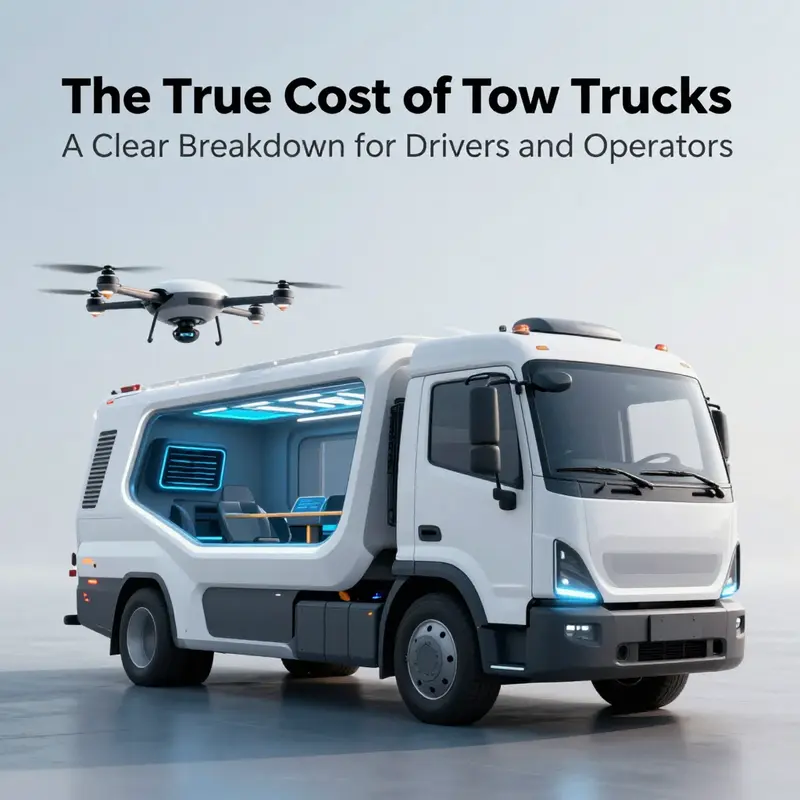
When people ask how much a tow truck costs, they are really asking for a snapshot of a shifting landscape. Price is not a simple line item; it threads through what the machine is capable of, the duties it is asked to perform, and the conditions under which it will operate. The starting points are straightforward: light-duty models with basic recovery capability, mid-range vehicles built to handle larger vans and delivery trucks, and heavy-duty rigs designed for multi-vehicle incidents and the movement of heavy machinery. Even within those broad bands, the price depends on choices that resemble a puzzle more than a fixed price tag. A light-duty tow truck may run around ten to twenty thousand dollars when bought new, but can broaden to higher ranges when options such as a heavy-duty under-lift, a reinforced flatbed, or a more robust winch are added. Medium-duty machines typically land in the twenty-four to thirty-five thousand dollar range, yet the presence of a powerful engine, a sophisticated hydraulic system, or a longer wheelbase to improve stability can nudge the figure upward. Heavy-duty wrecker variants, which are built to endure the rigors of heavy roadside recovery, can stretch from the lower end near thirty-six thousand to well past eighty thousand dollars depending on the chassis, transmission, and the sophistication of the control systems. These are not merely numbers; they are signals about the role the vehicle will play on the road and the return an operator expects over the life of the asset.
The practical buyer soon learns that the sticker price is only part of the story. The total cost of ownership includes freight, taxes, import duties if a unit is sourced from abroad, maintenance, insurance, fuel consumption, and depreciation. A unit with a larger engine, Euro 5 or Euro 6 compliant emission systems, or automatic transmission will usually command a premium, but it also reduces maintenance downtime and improves reliability in demanding service windows. Additional features can shift the price decisively: a high-capacity hydraulic system, a longer reach on the boom, an integrated GPS and telematics package, or safety enhancements such as rollover protection and collision avoidance sensors. Even seemingly small choices—like a lighter weight alloy wheelset versus steel wheels, or a more fuel-efficient transmission—can add to the upfront expenditure while trimming operating costs over time. In practice, a fleet manager must look at a spectrum of life-cycle costs, not a single sale price, to understand the true value of a tow truck in a given context.
From the street level, the price math becomes more intricate because the market itself is expanding. The global tow truck market is projected to reach about USD 11.12 billion by 2035, a figure that reflects both rising demand and the ongoing need to replace aging equipment. Several forces push that expansion forward. Infrastructure development in growing urban and peri-urban areas increases the need for reliable recovery services, because more roads and more vehicles mean more potential incidents. At the same time, rising vehicle ownership expands the base of potential customers for towing and roadside assistance. Operators are not just buying trucks; they are investing in service networks. That means capacity matters as much as capability. Having a fleet with the right mix of light, medium, and heavy duty units, backed by trained operators, becomes a competitive differentiator in markets where response time and safety are critical.
Technology interlocks with this dynamic in two important ways. First, automation and intelligent systems are redefining what a tow truck can do in a single shift. Modern recovery operations increasingly rely on automated or semi-automated assists, which can reduce manual labor, improve precision, and enhance safety for operators. The integration of GPS tracking, real-time communication, and diagnostic feedback helps dispatchers coordinate complex scenes and minimize downtime. Second, the emphasis on safety is not optional. Access to heavier loads, tighter maneuvering in constrained spaces, and the need to protect workers on high-traffic stretches all push buyers toward trucks that come with more elaborate safety systems. These features are not mere luxuries. They are often tied to regulatory expectations and safety standards that may become mandatory as authorities respond to rising incident rates and the high stakes of heavy-duty recovery.
With these forces in play, manufacturers and operators are rethinking what constitutes a fair price. It is not just the sticker price, but the return on investment over typical service life cycles. A unit that reduces unscheduled downtime, lowers fuel consumption, and minimizes the risk of on-scene injuries can deliver significant savings that counteract a higher initial price. Conversely, a bare-bones setup may seem inexpensive at purchase but can impose hidden costs in maintenance, warranty coverage, and reliability in the field. In this light, buyers often pursue a balanced approach: they seek the most reliable performance within a sound financial envelope, then calibrate a procurement plan to support a fleet that can scale with demand.
The market trajectory also shapes financing and procurement strategies. As demand grows and technology becomes more embedded in standard configurations, lenders and leasing companies increasingly favor equipment with measurable performance data and robust service agreements. The availability of flexible financing terms, longer warranties, and maintenance packages can make premium-equipped trucks more accessible, especially for small to mid-sized operators who must align capital expenditures with cash flow. Even the resale environment matters. The market for used tow trucks remains active, as operators upgrade fleets to meet stricter safety criteria or to adopt automation features. A gently used mid-range or heavy-duty unit can present a compelling value proposition when its ownership history is well documented and it has benefitted from regular, certified maintenance. In this context, the decision to buy new or used hinges on total cost of ownership, plan for fleet expansion, and the operator’s appetite for risk.
Although the future promises more advanced systems, the pricing reality today favors a careful, needs-based assessment. Buyers must consider function first. What kind of incidents do we handle most often? How many units do we need on the road during peak hours? Do we require a heavy lift for multi-vehicle recoveries, or will a well-equipped light- or medium-duty truck suffice? These questions guide the selection of chassis, lifting and braking systems, and safety features. Then comes the cost estimation: base price plus the cost of optional equipment, the premium for advanced safety and automation packages, and the anticipated maintenance expenditure for the life of the vehicle. A conservative forecast might factor in the need for periodic software updates, sensor recalibration, and potential battery or hydraulic components replacement. In other words, the price of a tow truck is anchored in the expected reliability and uptime of the vehicle, not merely in its capacity to move a payload.
The buyer’s journey is also shaped by access to information and the process of obtaining quotes. Rather than relying on a single vendor, many operators engage multiple suppliers and request detailed proposals that compare not only initial costs but also service agreements, training offerings, and after-sales support. In this environment, the value proposition of a given unit grows more complex. A straightforward price quote may reveal fewer hidden costs than a quote that bundles maintenance, parts, and response-time guarantees. Operators also increasingly seek standardized equipment configurations that facilitate rapid deployment, easier maintenance, and smoother integration with their dispatch and safety protocols. This is where the practical realities of the market meet strategic planning: a well-documented, scalable standardization plan can translate into lower total cost per incident and better outcomes for both drivers and customers.
To illustrate the price reality in context, consider how prices vary by region and by the specifics of the build. Engine options, such as more powerful units designed to recover large trucks or off-road vehicles, can move price up by tens of thousands of dollars. Transmission choice, whether manual or automatic, often correlates with the overall cost and the ease of use in high-pressure scenarios where on-scene time matters. Emission standards, from older to newer regimes, influence both the base price and ongoing operating costs, including fuel efficiency and potential tax incentives. Then there are add-ons: fixed or hydraulic winches with higher line pull, under-lift systems, boom lengths, and hook lift configurations all contribute to the final figure. Even lighting, cab comfort, and visibility features can become priced differentiators for fleets disciplined by long shifts and night-time operations.
In a market that rewards both capability and reliability, the buying decision is as much a strategic investment as a purchase. Operators who anticipate growth, sector diversification, or more frequent multi-vehicle recoveries will naturally look toward higher-capability units with automated features and enhanced safety packages. Those who prioritize low upfront risk or a tighter cash cycle may opt for more modest configurations, with the understanding that maintenance costs and downtime will be managed through careful planning and a robust service network. The balance between upfront price and long-term value is the compass for a market that values uptime as much as payload capacity.
As the market evolves, it is helpful to connect the price question with practical steps for buyers. A thoughtful approach begins with a clear definition of use cases and service expectations. Then, a structured comparison of configurations helps avoid the trap of “one size fits all.” Buyers should also build a cost model that includes depreciation schedules, insurance premiums, maintenance contracts, and potential financing costs. The pricing picture also benefits from a broader view of the service ecosystem—availability of skilled technicians, parts supply chains, and the speed at which a vendor can support a fleet during peak demand. In this sense, the question “how much for a tow truck?” becomes a question about value delivery under real operating conditions rather than a pure price inquiry.
For readers who want a deeper look at market dynamics and forecasts, a broader industry analysis is available through industry reporting that aggregates market size, growth drivers, and regional variations. These analyses help frame price expectations and strategic decisions within a credible context. If you are exploring the topic further, the discussion of market growth and the integration of automation in tow trucks provides a useful backdrop for understanding why pricing shifts in the years ahead. It is not only about the cost of hardware; it is about the evolving infrastructure, service networks, and the safety culture that will shape how fleets operate and invest.
To keep the narrative grounded in practical value, consider this: as a fleet operator plans for future needs, it makes sense to reference established resources that discuss standardization and emergency readiness. These resources can offer guidance on how a well-prepared fleet aligns its hardware investments with its safety and response objectives. This alignment matters because a vehicle that aligns with standard procedures and emergency readiness is more likely to deliver consistent performance across scenarios and over time. For a broader view on related topics, see the resource on fleet standardization and emergency readiness.
In closing, the price of a tow truck is a doorway into a broader conversation about capability, reliability, and the reliability of a service network. The industry is moving toward more sophisticated, automated, and safety-conscious equipment, and this shift is most visible in the proportion of operators who couple high-end features with rigorous maintenance and training programs. The result is a market that rewards not only the upfront price but the overall value delivered in uptime, safety, and service quality. As the sector grows toward the projected 2035 horizon, the pricing narrative will continue to reflect a balance between investment in advanced technology and the practical realities of day-to-day operation. For readers who want to explore related topics and practical guidance in one place, the linked resource above offers a foundation for understanding how these dynamics translate into real-world decisions.
External resource: https://www.marketsandmarkets.com/Market-Reports/tow-truck-market-47985565.html
Final thoughts
Navigating the cost of a tow truck can seem daunting, but being informed about the different options available can empower you to make the right choice for your needs. By considering the type, specifications, and whether to purchase or lease, you can better prepare for your investment. As the towing industry evolves, remaining aware of market trends and innovative technologies will also play a critical role in your decision-making process. Whether you’re a driver in need of emergency services or a business owner looking for a reliable heavy-duty vehicle, knowing how much to expect can lead to smarter choices.