

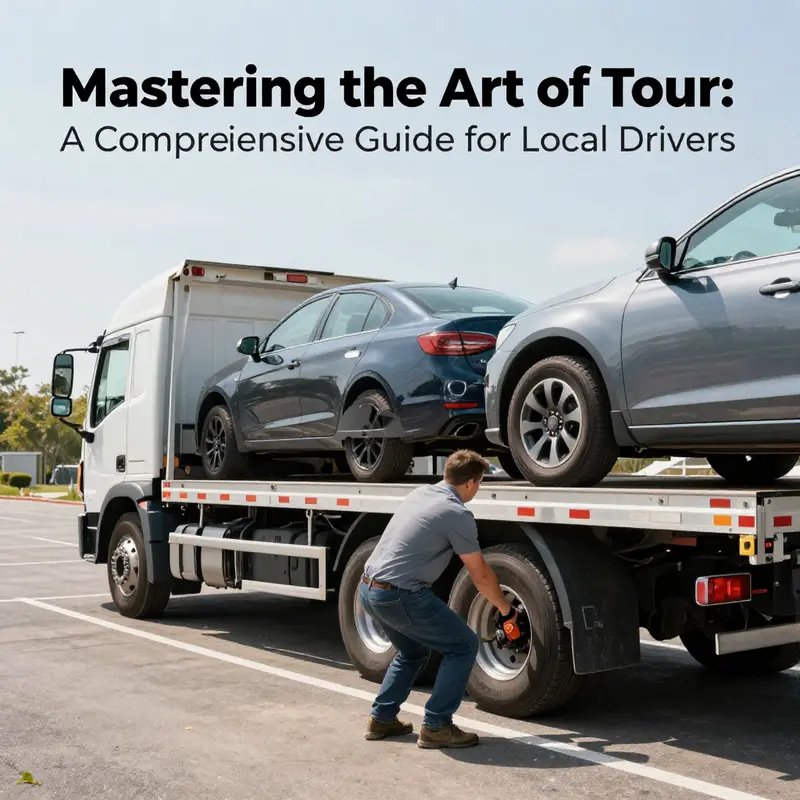
Towing a car with a truck can seem daunting; however, with the right knowledge, preparation, and safety measures, it can be a seamless process. Whether you’re a local driver handling emergencies or a property manager coordinating vehicle removals, understanding how to securely tow a car is crucial for everyone involved. This guide will dive into four pivotal aspects: preparation, choosing the right equipment, safe connection techniques, and driving safely while towing. By the end, you’ll have the insights needed to tow effectively and confidently, minimizing risks to every road user.
null
null
Gear That Guides the Move: Selecting the Right Equipment When Towing a Car Behind a Truck
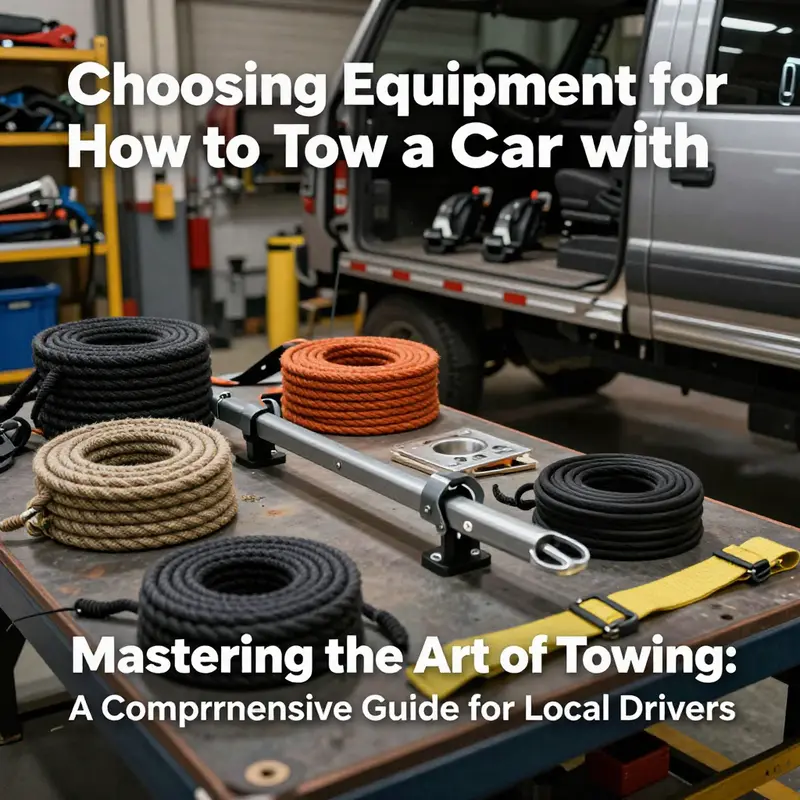
Choosing the right equipment for towing a car with a truck is not a mere shopping decision; it is a safety decision that shapes how smoothly the move unfolds and how well the vehicles and their passengers endure the experience. The equipment you choose should be guided by the vehicle’s condition, the distance you must cover, and the drivetrain realities that accompany modern cars. A truck pulling a car is not a single-handed operation but a coordinated act that requires compatible gear, proper attachment points, and clear, continuous communication between drivers. When you start from a place of informed selection, you reduce the risk of drivetrain damage, tire failure, steering instability, and the kind of surprise that turns a routine tow into a roadside emergency. The path from choice to execution is a line that runs through the weight ratings of equipment, the specifics of drivetrains, and the realities of road conditions, so the best-equipped tow can still be slowed by a sudden rain squall or a patch of slick asphalt if careless choices were made at the outset.
At the heart of equipment choice is a simple truth: there is no one-size-fits-all solution. Short moves of a functional car on level ground may be accomplished with a tow strap or chain, provided the towed vehicle has working brakes and steering and you are prepared to move slowly and steadily. But once the distance increases, or the towed car presents any drivetrain or braking issues, the safer, more controlled options come into play. Wheel dollies, which lift a set of wheels off the ground, protect the transmission and reduce drag on the drivetrain, are a common choice for front-wheel-drive and all-wheel-drive vehicles when longer tows are necessary. For vehicles that are inoperable or for those moves that require maximum protection, a flatbed tow truck offers a deck that carries the entire vehicle, leaving all four wheels off the ground and removing drivetrain concerns from the equation entirely. For long hauls or delicate, high-value vehicles, even a professional service using a full flatbed or a dedicated auto transport trailer may be the best path. Each method has its own prerequisites, and understanding those prerequisites is the first step toward a successful tow.
Beyond the method itself, the equipment must fit the car’s weight, the truck’s capacity, and the safest linkage to connect the two. Tow straps, often marketed as heavy-duty rope alternatives, sound simple: wrap the strap around secure bumper points and connect to the truck’s hitch or tow hook. The reality, however, is more nuanced. Tow straps are best reserved for short distances and for vehicles with functioning steering and brakes. They demand careful handling because any sudden stretch, jerk, or misalignment can send the towed car out of control or cause the strap to snap or slip. This is why securing points matter; the towed vehicle must have robust, manufacturer-approved tie-down points, and the strap must be designed for heavy-duty towing with appropriate locking connectors. A double-loop knot, or a dedicated tow strap connector, is not merely a stylistic flourish but a safety measure. Slippage is the enemy of a controlled tow, and a reliable connector helps ensure the strap or chain stays where it belongs, aligned with the vehicle’s center of gravity and the towing point.
In contrast, wheel dollies address a different set of concerns. They are designed to lift and stabilize the vehicle in a way that minimizes drivetrain load during movement. For front-wheel-drive cars, elevating the front wheels eliminates the drivetrain connection to the road, reducing the risk of transmission heat and mechanical wear during longer tows. For all-wheel-drive vehicles, the configuration often requires lifting either the front or the rear wheels, depending on the system and the expected route. The key with dollies is to select equipment rated for the vehicle’s weight, secure the dollies to the towing truck with safety chains, and ensure the towed car is restrained in a way that prevents wheel lift from shifting mid-tow or causing the vehicle to wander toward the rear. The benefit of dollies is stability and protection, but their use depends on a careful assessment of weight distribution, the tow path, and the need for smooth, behind-the-scenes steering input from the truck driver.
Then there is the flatbed approach, the option that many professionals regard as the gold standard for safety and vehicle preservation, especially for longer moves or higher-value cars. A flatbed tow truck uses a hydraulically tilting platform that lowers to the ground, allowing the entire vehicle to be rolled or winched onto the deck. Once secured, the car travels with all four wheels off the ground, removing tire wear, brake lock-up risk, and drivetrain stress entirely. The advantages are clear: a flatbed eliminates many of the variables that can cause damage during a tow, such as jumpy accelerations, poor alignment at pull-off points, or unanticipated wheel movement on uneven surfaces. The downsides are equally clear: flatbeds require more time to load and unload, demand appropriate space, and typically come with higher costs. For those moving a luxury, classic, or inoperable vehicle, the flatbed becomes not just a preference but a prudent choice that protects the investment and reduces the risk of post-tow surprises.
When the distance becomes substantial, or the vehicle is not drivable, a trailer-based option—either a traditional auto transport trailer or a tow trailer offered by rental services—can be a practical solution. Open or enclosed trailers have different protective benefits. An open trailer is often sufficient for many moves, but an enclosed trailer adds a layer of weatherproof protection and can shield the vehicle from road debris. A trailer allows you to carry a vehicle in a stable, controlled environment, but it also introduces new responsibilities: proper loading ramps, secure tie-downs at multiple points, and an awareness of trailer sway and deceleration dynamics. Driving a trailer with a loaded vehicle requires additional skill and often a longer stopping distance, so this method should be reserved for experienced operators or supervised by professional services.
Beyond the mechanics of the equipment itself, there are essential decision-making criteria that guide which gear to deploy in a given scenario. The condition of the towed car is paramount: if the car can steer and brake, and if its transmission remains intact, a lighter, simpler method may suffice for short moves. If the vehicle cannot steer or brake, or if the transmission is compromised, a more protective approach—such as wheel dollies or a flatbed—should be adopted sooner rather than later. The transmission type matters as well: automatic transmissions are particularly sensitive to improper towing, and many manufacturers advise against long flat-tow or dolly-tow procedures unless the vehicle is specifically rated for it. In some cases, the vehicle’s manual includes a “Tow Mode” or a special procedure for towing that can expand the feasible options, though these allowances can vary widely among makes and models. The drivetrain layout—front-wheel drive, rear-wheel drive, all-wheel drive, or four-wheel drive—also weighs in. For AWD or 4WD vehicles, hauling with all wheels on the ground can quickly harm the transfer case or differentials, pushing toward a flatbed or a dolly solution that isolates the vehicle’s wheels from the tow path.
The practicalities of space, distance, and traffic further shape the equipment choice. In urban areas with tight streets, a compact, nimble approach with a tow strap or a dolly may be workable for short hops between curb cuts, especially if the route remains on well-paved roads. In open highways with longer stretches between towns, a flatbed option or a trailer becomes more sensible, even if it demands more planning and coordination with a towing provider. It is also worth weighing the cost-benefit equation: while a hazardous or high-value vehicle may justify the higher expense of a flatbed, a routine, low-stakes move may be accomplished safely with a properly secured dolly or strapping method. The decision, in essence, is a balance among protection, practicality, and price, with the overarching priority being the safety of people on the road and the integrity of the vehicle being moved.
Attachment quality is the unsung hero of any tow. The tow hooks or attachment points on both vehicles must be robust and appropriate for the chosen method. The lock pins or locking mechanisms on dollies and bars must be fully engaged, and there must be no play or excessive slack in the connection. After securing, guide the towed car gently to verify that the connection remains tight under light tension. A test pull, executed at a slow crawl, confirms that the setup can withstand the initial load without introducing any dangerous vibrations or misalignment. The basics—checking anchors, ensuring the equipment is rated for the vehicle’s weight, and confirming the secure fit of all connectors—are not mere formality; they are the core safety steps that keep the tow from becoming a roadside incident. The importance of these steps often becomes apparent only after a close call has been avoided by proper preparation.
A final component of equipment selection concerns the human factor—the skill, discipline, and communication that accompany the hardware. A tow is never a solo performance. The driver of the towing truck must maintain steady, predictable control, signaling clearly to the driver of the towed car, and maintaining constant observation of the towed vehicle’s behavior in the mirrors. The towed car driver must stay fully focused on the road and avoid multitasking that could distract from the delicate balance of the move. Clear communication protocols—two-way radios, agreed hand signals, or simple honks for slow or stop—help synchronize actions and reduce the likelihood of missteps. As this chapter progresses from tool to technique, it becomes evident that choosing equipment is only the beginning. The real art lies in matching the gear to the car, the road, and the moment, while preserving a calm, methodical rhythm that keeps both vehicles aligned and moving forward safely.
For mental reference and practical validation, the broader towing community emphasizes a cautious, stepwise approach: assess the car’s condition, then select equipment that minimizes drivetrain involvement, verify all connections, and execute movements with deliberate, restrained speed. In cases where the car’s condition or the route would test the limits of a basic strap-and-pull approach, the consensus tips toward a dollies-and-flatbed strategy. It is also a reminder to consult vehicle manufacturer guidelines, because some makes require specific procedures or outright prohibit certain tow configurations. The overarching aim is consistent: preserve control, minimize risk, and deliver the vehicle to its destination without transforming a routine tow into a hazard.
As you consider the gear that will carry your tow from point A to point B, you can also lean on practical resources and communities that regularly navigate these scenarios. For deeper, real-world guidance, the Santa Maria Tow Truck blog offers practical insights and examples that illuminate the day-to-day realities of towing work, including the nuances of equipment choice and attachment protocols. See more at the Santa Maria Tow Truck blog for ongoing discussion and examples: Santa Maria Tow Truck blog.
In addition to internal insights, trusted external guidance from official safety sources provides a global standard for how to think about towing safely. The National Highway Traffic Safety Administration (NHTSA) offers comprehensive guidelines on vehicle towing safety, including legal requirements and safety tips for different vehicle types. Their resources emphasize prepared equipment, appropriate attachment points, controlled speeds, and the importance of manufacturer-specific instructions. Access their guidance at the NHTSA towing safety page: https://www.nhtsa.gov/vehicle-towing-safety. This external reference complements the chapter’s focus on practical gear selection with authoritative safety principles that apply across the range of towing scenarios described here.
In sum, the chapter on choosing equipment frames a towing operation as a sequence of deliberate, safety-minded decisions rather than a quick fix. The right gear—whether a simple, short-distance strap, a wheel dolly for drivetrain protection, a sturdy flatbed for high-stakes moves, or a trailer for long hauls—depends on the vehicle’s condition and the journey ahead. The choice informs not only how you connect the two vehicles but how you communicate, how you manage speed and distance, and how you safeguard everyone on the road. With careful assessment, compatible equipment, and disciplined execution, towing a car with a truck becomes a controlled, professional task that prioritizes safety without compromising efficiency. The road ahead, for once, is less about force and more about the right fit between vehicle, gear, and purpose, a fit that makes the tow as predictable as it is possible to be on demanding terrain and in changing conditions.
Securing the Link: Safe Connection Techniques for Towing a Car Behind a Truck
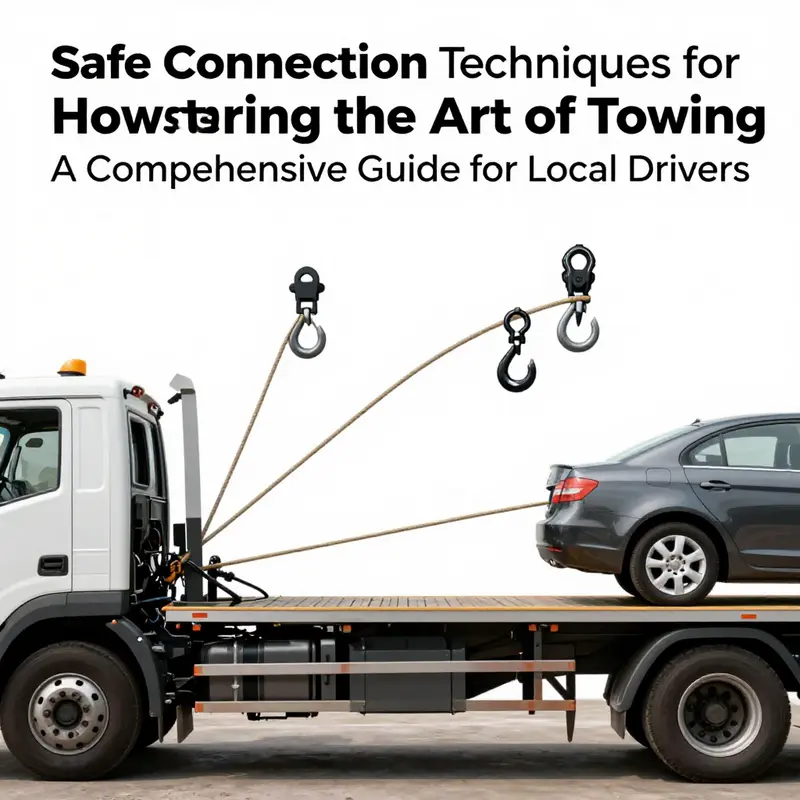
Linking a parked car to a moving truck is not a matter of luck but of deliberate preparation, precise equipment choices, and disciplined execution. The safety of everyone on the road hinges on a single, dependable connection that behaves predictably under load. When a tow seems straightforward, it still demands a practiced ritual of steps that begins long before the two vehicles come into contact and continues after the destination is reached. In the following narrative, the focus is on building and maintaining a safe link between the truck and the towed car, integrating the practical details from established guidelines with the realities of road conditions, weather, and driver attention. The core idea is simple: select sturdy, rated gear; verify both vehicles are ready; secure the connection with proper hardware; communicate clearly; drive with caution; and finally disconnect with care, checking for damage as part of routine post-tow checks. This approach reduces sway, avoids sudden loads, and minimizes the risk of rips, tears, or unintended moves that could end in a collision or a roadside emergency.
Equipment choice matters as much as technique. A tow rope or a rigid tow bar must be appropriate for the vehicles involved and must be free from signs of wear. The rating should comfortably exceed the combined weight of the tow and the vehicle being towed because dynamic forces—such as a gust of wind, a hill crest, or a quick stop—can momentarily lift the load in unexpected ways. Visibility adds another layer of safety; brightly colored gear or reflective strips help other drivers notice the suspended linkage, especially in low light or poor weather. If the setup includes a braking system on the tow bar, ensure it is installed correctly and tested before any movement. The rule is simple: better gear, better margins of safety, less stress on the towed vehicle’s drivetrain. Throughout the practical steps, the emphasis stays on preventing sudden changes in tension that could create a dangerous jerk or stress the towing vehicle’s hitch.
Preparation extends to both vehicles. The towed car must be in a neutral state or parked in automatic transmission models, with the parking brake fully released and the ignition in the ON position to keep steering and lights functional. The truck must be prepared as well: tires properly inflated, brakes working, lights and signals reliable, and the hitch or tow bar solidly connected to the frame or designated towing points. Checking the brake lights on the towed vehicle is not merely a courtesy; it is a legal and safety requirement, because following traffic relies on those signals to anticipate the towed unit’s behavior. A critical detail is to confirm that the connection points on both vehicles can accommodate the towing apparatus without fouling panels, exhaust, or suspension components. The position of the steering wheel in the towed car should be free and unblocked, and the driver in the tow vehicle should ensure that the tow gear does not interfere with the vehicle’s tires or exhaust gas.
With both vehicles on a flat, stable surface, the attachment begins. The tow rope or tow bar is connected to the towing vehicle’s hitch or tow ball and the other end to the towed car’s designated tow hook or attachment point. Tightness matters, but so does alignment; the bar should sit square, and the rope should run straight with minimal slack. Locking mechanisms, safety clips, or bolts must be engaged as designed, and any braking or supplemental systems on the tow bar must be tested before moving. The objective is a connection that resists sway and maintains alignment through modest curves or gentle changes in speed. After the hardware is fastened, perform a gentle test by inching the tow vehicle forward a short distance to verify that the tow remains stable and that there is no binding or unusual noise. Never attempt to drive away with a loose or partially attached setup; a momentary tug can reveal hidden weaknesses and prevent a catastrophe on a busy street or highway ramp.
Communication between drivers is the invisible thread that ties the sequence together. Before moving, agree on signals and a clear plan for turns, stopping, and lane changes. Simple, reliable cues—such as a single short honk to slow, a longer signal to stop, and agreed hand gestures—work well if both drivers stay attentive. In busy traffic or poor visibility, a two-way radio or a smartphone app kept in a hands-free mode can provide real-time coordination. The towed car driver must remain focused, resisting the urge to adjust equipment or check navigation during the tow. Even a moment of distraction can alter the angle of the tow bar, change tension in the line, or delay a stop in hazardous conditions. The practice is about remaining calm, maintaining a steady pace, and anticipating the actions of other road users. It also invites a moment of respect for the burden placed on the towed vehicle, which relies on the towing vehicle for guidance, speed, and stability.
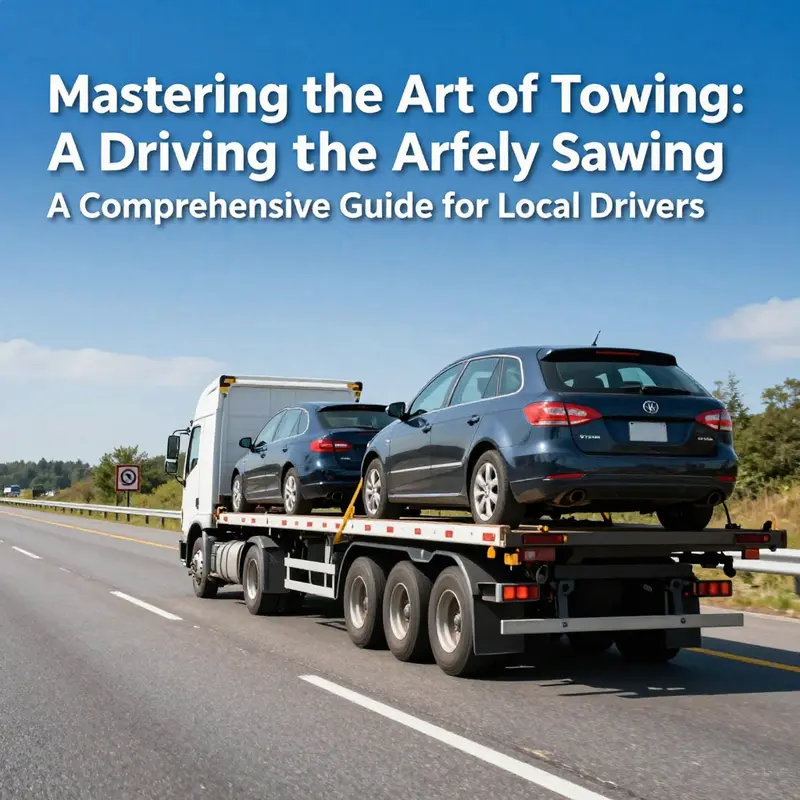
Driving with a tow requires restraint and discipline. The recommended pace is conservative: most rules point to speeds well under typical highway limits. In practical terms, staying around 30 km/h keeps the line taut without creating excessive drag or wind resistance, and it provides time to react to sudden changes in traffic. On longer stretches where conditions permit, some operators allow speeds up to 60 km/h, but only with careful judgment of the tow’s soundness and the road’s geometry. The key is smoothness: gradual acceleration, gradual deceleration, and avoidance of any abrupt load changes. Sudden braking should be avoided; anticipate stops early and signal far in advance to prevent last‑second surprises to following drivers. Maintain a generous following distance and keep the tow vehicle’s mirrors trained on the towed car to catch even the smallest drift or shimmy. If the roadway presents curves, intersections, or merges, slow early, give extra space, and take wider turns to avoid applying sharp steering that could push the towed unit into a dangerous angle. In adverse conditions, reduce speed further, increase stopping distance, and consider postponing the tow if visibility or traction is compromised by rain, snow, or fog.
Some situations demand extra caution. For automatic transmission cars, the guideline is not to tow long distances with the towed vehicle behind the truck unless there is a defined ‘Tow Mode’ or the distance is short enough to stay within safe limits; for extended distances, a flatbed trailer may be the safer option. Four‑wheel drive or all‑wheel drive vehicles require special attention: towing all wheels on the ground can damage the transfer case, so best practice is to use a flatbed or a tow dolly that lifts at least the drive wheels. Night towing introduces a lighting burden: both vehicles should have side marker lights and tail lights on, and hazard lighting should be used as needed to alert other drivers of the unconventional configuration. Weather changes—from rain to sleet, fog to wind—also alter the equation: slow further, leave more space, and consider postponing if conditions degrade traction, visibility, or road surfaces. These adjustments are not optional extras but essential safeguards that help the system behave as a single, predictable unit rather than two separate machines pressing toward the same destination with competing agendas.
At the destination, the process reverses with the same attention to safety. Stop smoothly, bring the moving pieces to a complete halt, and then disconnect only after you are sure both vehicles are immobilized and the area is safe. The towed vehicle’s ignition can stay in the ON position to preserve lights during the approach, but before detaching, turn it off to avoid any unintended steering wheel input when the connection is released. Detach the tow bar or rope, remove all hardware, and store the equipment in a secure location. The post‑tow step is as important as the pre‑tow step: inspect both vehicles for signs of damage or loose components, looking for scrapes, bent hooks, or misaligned panels that could indicate hidden stresses. If anything seems off, stop and reassess before resuming any travel. The objective is not merely to move a car but to move it safely while preserving the integrity of the towing gear and the vehicles involved.
Awareness of potential hazards is part of responsible towing. If you suspect something is off or you encounter signs of improper setup, consult resources that flag illegal towing practices and explain what to look for on the road—Spot Illegal Towing—Key Signs to Know.
Beyond practical steps, consult official safety guidance that frames towing as a safety discipline rather than a quick fix. The National Highway Traffic Safety Administration offers detailed towing safety tips that cover legal requirements, equipment considerations, and situational best practices. You can review these guidelines here: NHTSA Towing Safety Tips.
null
null
Final thoughts
Towing a car with a truck is not just a task but a responsibility that requires proper preparation, equipment, and driving practices. Each crucial step—from safety inspections to choosing the right gear and maintaining safe driving behavior—plays a vital role in protecting yourself, other road users, and the towed vehicle itself. By adhering to the outlined steps and recommendations, you can ensure a smooth towing experience tailored for local drivers, businesses, and property managers alike, enhancing community safety and compliance on the roads.