
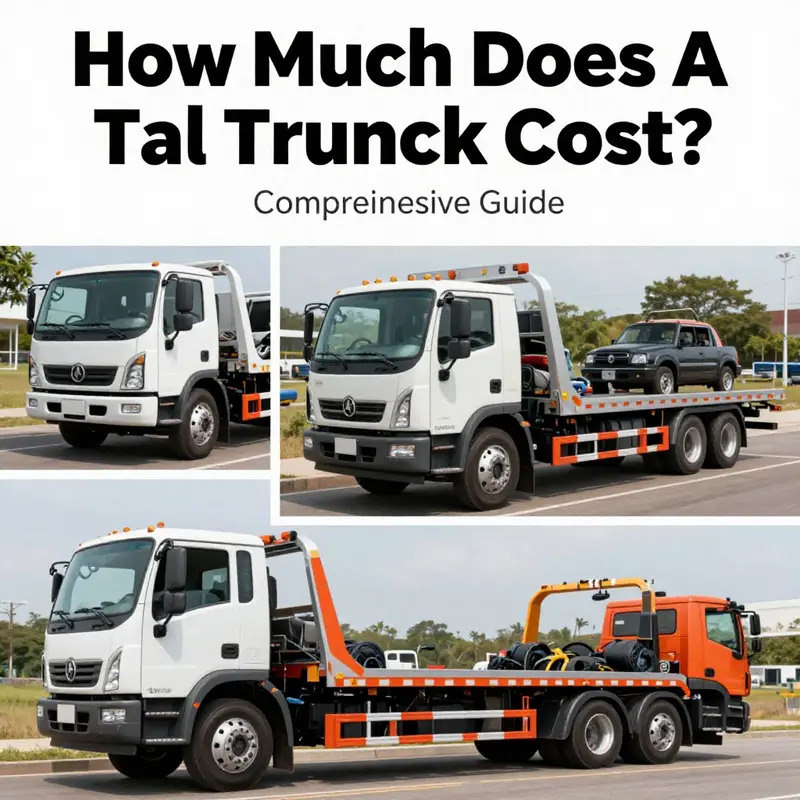
Understanding the cost of a towing truck can empower drivers, auto repair shops, dealerships, and property managers. Whether you’re a local driver needing quick assistance, an auto shop looking to invest in towing equipment, or a property manager ensuring your community’s safety, knowing what each category of towing trucks costs can significantly impact your decisions. This guide will clarify the costs associated with light-duty, medium-duty, and heavy-duty towing trucks, highlighting crucial features and pricing options to help you make informed choices.
Cost Signals on the Street: Estimating Light-Duty Towing Truck Prices Without the Guesswork
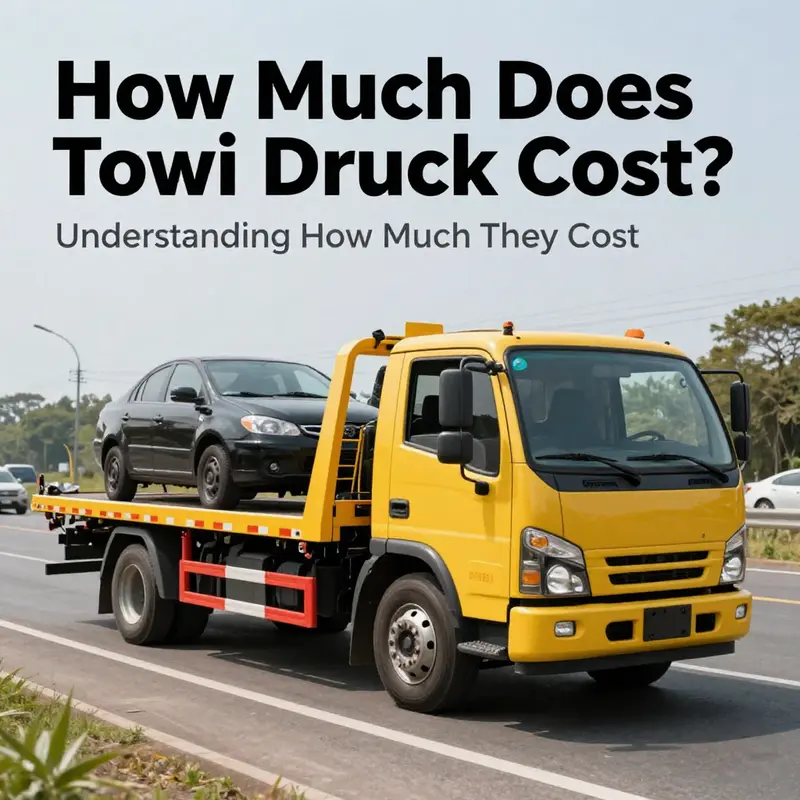
Prices for light-duty towing trucks are the practical heartbeat of fleet planning in urban logistics, roadside recovery, and last-mile operations. These machines sit at a sweet spot: small enough to maneuver through tight city blocks, but sturdy enough to lift and haul everyday vehicles. They also come with a wide range of configurations and options, which makes pricing vary as much as the vehicles themselves vary in capability. To understand what buyers actually pay, it helps to see how the price bands are shaped. Light-duty tow trucks are generally in the 3 to 7 tonne gross vehicle weight range. Within that band, a buyer can choose from compact rollback flatbeds, basic car carriers, and more capable 4×2 or 4×4 platform wreckers. The result is a spectrum that stretches from lean entry-level units to well-equipped machines designed for higher-volume roadside service. The variability in price mirrors the market’s reality: capacity, engine power, transmission type, bed length, and built-in recovery features all push or pull the cost. It is not simply the sticker price that matters; the total cost of ownership will depend on usage patterns, maintenance, and how the vehicle fits into a fleet’s long-term strategy. In practical terms, builders and buyers often focus on three core drivers: capacity and performance, the complexity of the drivetrain and payload system, and the level of customization required for export or specialized operation. The first driver is straightforward: as capacity increases or as a platform becomes more robust, the price tends to rise. A 4-ton rollback, designed primarily for sedans and compact SUVs, will usually be priced in a different range than a 4×2 road recovery vehicle with a higher duty cycle and more capable winches or bed configurations. The second driver reflects how the machine actually works on the job. A basic flatbed might rely on a simple winch and hydraulic system, while a more sophisticated unit can include upgraded winch capacity, hoists, stabilization systems, integrated lighting, and more extensive electrical systems to support heavy usage and longer shifts. Each added feature tends to push the price up, sometimes by a small margin, sometimes by a noticeable amount, depending on the supplier and the engineering required. The third driver—customization and export readiness—often has the most dramatic impact on price, especially for buyers who require right-hand drive configurations, specific emission standards, or certifications that facilitate import and operation in another country. Export-friendly features, packaging for shipping, and compliance with local regulations can all add to the total bill, even when the base chassis remains the same. To anchor this discussion in concrete numbers, look at representative price bands that buyers commonly encounter when shopping for light-duty units. A typical light-duty, 4-ton car-carrier rollback flatbed wrecker might cost somewhere in the range of roughly 18,500 to 26,500 per unit. That spread captures a broad market, including different manufacturers, varying levels of equipment, and the inclusion or exclusion of certain transport-ready features. It is also worth noting that many buyers will consider the option of volume discounts. For buyers who purchase multiple units, suppliers may offer price reductions that reflect bulk ordering, leading to a lower per-unit cost when a fleet expands from a single truck to a small or mid-sized posse of tow vehicles. The same price-conscious approach often appears in the form of tiered pricing based on quantity; the more units you order, the better the unit economics become. In the same neighborhood of light-duty capacity, another generic option tends to appear in the market: a 4×2 platform towing truck on the lower end of the spectrum, priced around 17,000 to 18,000 for bulk orders, with a stated capacity around 15 tons for towing. This kind of listing illustrates how buyers may encounter differing figure points even when the basic chassis class is similar. It is not unusual to see occasional listings that push the price down even further, sometimes through the entry-level or second-hand market. For example, entries that emphasize a manual transmission and a basic body configuration—often aligned with Euro 3 emission standards—can be found for roughly 10,357, illustrating how used or entry-level inventory can dramatically lower the upfront cost. These lower-cost options often come with trade-offs in efficiency, comfort, and durability, but they are compelling for fleets testing a low-volume operation or seeking to deploy a small squad of trucks without a large capital outlay. The price spread in light-duty wreckers underscores a broader truth in the towing business: price is a signal of capability and reliability, but not a guarantee of performance on the road. A vehicle priced toward the lower end may suit a limited daily duty cycle or serve as a backup unit, but heavy or high-frequency use will typically demand a more robust setup, which in turn justifies a higher purchase price or a longer-term financing plan. The buyer who wants more than the basics commonly looks at several layers of options. Right-hand drive configurations, for instance, are favored by fleets servicing markets with left-hand traffic patterns, and they can command a premium because they require modifications to the steering system, dashboard layout, and sometimes the electrical architecture to meet export standards. The same is true for multi-capacity configurations, where trucks are offered with interchangeable or adjustable bed lengths and winch packages. The more flexible the platform, the more versatile it becomes on the street, and the more valuable it is in a fleet’s line-up. These customization and export-ready features are not merely about appearance or compliance; they tie directly into fleet reliability and uptime. When a vehicle is easy to service across borders or geographies, a fleet reduces downtime and keeps a service network cohesive. In the real world, owners calculate the value of these upgrades by weighing the cost against the potential savings from faster responses, less vehicle downtime, and greater efficiency across shifts. The ecological and regulatory context adds another layer to the conversation about price. Emission standards influence both the selection and the cost of light-duty wreckers. A Euro 3 compliant configuration might be sufficient for some markets, while others may demand Euro 5 or newer standards, which require more advanced engine technology and after-treatment systems. The result is a price delta that can be substantial. Buyers who plan for long-term operation in regions with evolving regulatory requirements tend to factor in the potential cost of upgrading or retrofitting engines or exhaust after-treatment equipment. This is part of the reason why some buyers allocate a larger initial budget in exchange for a more advanced platform that remains compliant over a longer horizon. Currency movements and sourcing geography also explain price variations. Many light-duty wreckers in global markets are listed with FOB pricing, meaning the price covers the unit itself but excludes shipping, insurance, taxes, and duties. Freight costs can vary widely based on destination, port handling, and insurance terms, and these costs can materially affect the total landed price. The distinction between FOB and delivered pricing is not trivial. It matters not just for the initial purchase but also for budgeting, tax planning, and cash flow, especially for fleets that are expanding or consolidating multiple suppliers across regions. The practical implication for procurement teams is clear: when comparing quotes, ensure apples-to-apples comparisons—compare the same base configuration, same warranty terms, and the same inclusions, and always account for shipping and duties. This careful approach prevents mispricing and helps a fleet avoid overpaying for features it may not need. In a broader sense, the light-duty market is shaped by competition among manufacturers and the economies of scale they achieve. The market tends to reward basic, reliable platforms that can be produced at scale with standard components, and it punishes bespoke builds that require specialized parts or longer lead times. Buyers looking for straightforward, dependable equipment often gravitate toward models that share core components with other commercial workhorses—easier maintenance, more widely available parts, and a repair ecosystem that can translate into lower life-cycle costs. Conversely, for fleets seeking top-tier performance, advanced handling, or full export capability, the premium is justified by improved uptime, better fuel efficiency, and lower risk of downtime on critical assignments. The reality on the ground is that many buyers balance cost against a broader spectrum of considerations: the cost of ownership, reliability in service, and the speed with which a workshop can source replacement parts or get a technician on the job. The decision calculus often ends up in a two-step process: first, select a baseline light-duty platform that meets the core need—adequate lifting capacity, safe and stable bed configuration, and a proven recovery system. Second, layer in the features that will genuinely improve urban performance and maintenance efficiency—features that can pay for themselves through faster calls, reduced wear and tear, and easier compliance with local regulations. It is here that the value proposition of the light-duty class becomes most tangible. In practice, fleets frequently begin with a cautious, cost-focused purchase and then expand as service demand grows. For buyers who anticipate recurring demand across a city or a dense urban area, two or more light-duty wreckers might deliver better uptime, lower overtime costs, and more flexible scheduling than a single heavier unit. The price signals then become a guide for the scale of investment rather than a ceiling on capability. For buyers who want to ground their strategy in real-world data, it helps to engage with suppliers who can provide current quotes and clear terms. Many platforms and manufacturers advertise real-time pricing or bulk-buy discounts, and the best suppliers offer transparent quotes that distinguish base price from optional upgrades and from international shipping charges. To navigate these choices, buyers often turn to a procurement workflow that begins with a clear specification: vehicle weight class, bed length, winch capacity, and any required export features or compliance packages. The next steps involve requesting quotes from multiple suppliers, evaluating the total landed cost, and verifying the supplier’s export readiness and warranty provisions. In this context, it is useful to remember the broader context of fleet readiness. As operations expand or contract, decisions about light-duty equipment affect not just the cost per unit but also the ability of the fleet to respond to emergencies, maintain service levels, and protect drivers. A fleet that maintains a well-considered balance of cost, reliability, and serviceability tends to achieve a higher uptime and a more predictable maintenance budget over time. For readers who want a sense of how to bridge price information with practical decisions, a helpful resource is to review industry guidance on fleet standardization and emergency readiness, where the emphasis is on interoperability, training, and logistics planning for a seamless response. This guidance can illuminate the trade-offs between buying new versus used, between basic configurations and feature-rich setups, and between domestic purchases and imports. For ongoing market dynamics, it can also help correlate price signals with the total cost of ownership over a multi-year horizon. If you are evaluating a bid or shopping in a busy market, consider the value of a two-pronged approach: start with a baseline unit that meets essential requirements and then identify a couple of must-have upgrades that will deliver tangible uptime benefits. This approach reduces the risk of overpaying for fancy features that will sit idle on the lot while ensuring you still acquire a platform capable of handling the critical demands of urban towing. When the procurement window closes, the decision should reflect not just the sticker price but the probability of reliability and the ease of maintenance in the day-to-day operations. In short, the price of light-duty towing trucks reveals more about the job they are asked to do than about the trucks themselves. It is a signal that the market understands: small, nimble, well-supported equipment can deliver outsized value in dense urban environments, while the wrong mix of capacity, features, and export readiness can lead to higher life-cycle costs and missed response windows. For price-conscious buyers, a careful evaluation of baseline capacity and essential features, combined with an awareness of how export and customization affect the quote, can translate into a sound investment that pays for itself through reliability, speed, and uptime. The path from budget to buy is not a straight line, but it becomes clearer once buyers separate the core needs from the nice-to-haves and stay grounded in the practical realities of urban tow operations. As a practical next step, buyers should seek real-time quotes from multiple suppliers, compare landed costs, and consider not just the upfront price but the long-term cost of ownership. For those who want to explore broader fleet considerations, a related discussion on standardization and emergency readiness offers perspective on how light-duty purchases fit into a broader, more resilient roadside operation. Fleet Standardization and Emergency Readiness The market for light-duty wreckers is dynamic, and price is only part of the story. The most successful buyers blend careful budgeting with a pragmatic view of uptime, maintenance, and the value of a flexible platform that can adapt to changing cityscapes and service demands. Those who do so are not simply buying a tool; they are investing in the reliability of everyday roadside assistance and the efficiency of last-mile logistics. As always, buyers should ensure that they account for shipping and import duties when comparing FOB prices, and they should verify that the chosen model meets any local regulatory or emission requirements before committing to a purchase. External reference: https://www.alibaba.com/product-detail/Light-Duty-4t-Car-Carrier-Rollback-Flatbed_1600527987891.html
Balancing Value and Capability: Cost Realities and Choices in Medium-Duty Towing Trucks
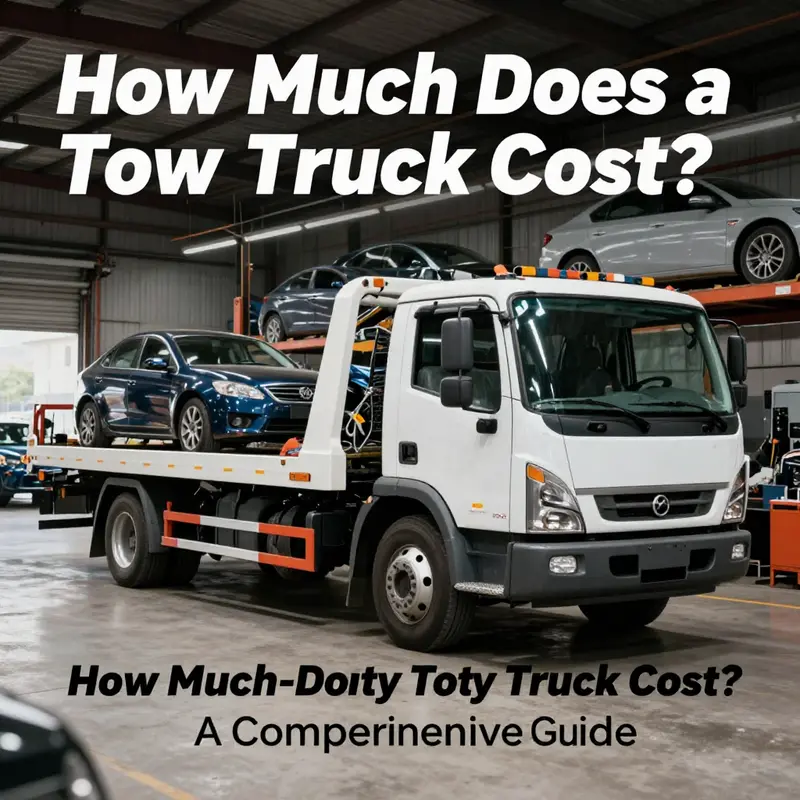
Medium-duty towing trucks sit in a practical middle ground within the towing ecosystem. They are designed to handle more than light sedans and compact crossovers while avoiding the sheer scale and expense of heavy-duty wreckers. In operational terms, these machines typically manage payloads in the 2.4 to 4.2 tonne range, translating to common jobs like towing mid-size sedans, compact SUVs, light vans, and small commercial vehicles. The design intent is clear: a balance between aggressive capability and cost efficiency. A well-built medium-duty wrecker needs to offer reliable lifting power, responsive wheel-lift or tow-arm operation, and a control system that can be used by operators across shifts, without demanding heavy maintenance that would eat into margins. Fleet managers who rely on steady turnaround times, predictable maintenance costs, and minimal downtime find this segment attractive precisely because it sits between affordability and practical capability. The market reflects that demand with a wide spectrum of configurations that share a common goal: to deliver dependable service without locking the operator into a higher price band that may not be justified by the daily workload.
Prices in this segment reveal a market that is as varied as the jobs these trucks are asked to perform. A basic unit from a major Chinese manufacturer offering a 4-10 ton capacity can appear in listings around $10,500, a number that has become a reference point for buyers seeking low upfront cost. Observing the figure in isolation, one might conclude that medium-duty wreckers are inexpensive workhorses; yet buyers quickly learn that the headline price is just the opening line of the total cost of ownership. Freight, insurance, import duties, and taxes are frequently not included in the base price and may add a sizable premium once the transaction crosses borders. Shipping costs are as variable as the weather, and buyers must negotiate these costs with the supplier, factoring in destination, port handling, inland transfer, and potential brokerage fees. The pricing landscape expands further when you consider feature sets that go beyond the bare minimum: more robust hydraulic systems, higher lifting capacities, more capable winches, longer booms, auxiliary lighting, improved safety features, and upgraded electronics for diagnostics and control. Each enhancement pushes the initial price higher, but it can also translate into shorter job cycles, reduced downtime, and greater reliability under a heavy-use regime.
Within the same family of medium-duty wreckers, price is often tiered or negotiated based on order quantity and the inclusion of value-added terms. It is common for suppliers to offer lower per-unit prices for larger orders, or to publish a higher price for single-unit purchases while offering substantial discounts for bulk purchases. This tiered approach is not just a marketing tactic; it reflects the economics of manufacturing, inventory, and after-sales support. A ring-fenced budget for fleet expansion will inevitably compare a low upfront price against a longer-term value proposition. When a fleet evaluates an increase in capacity or coverage, the calculus shifts from the sticker price to the overall cost of ownership, including maintenance, parts availability, fuel efficiency, and resale value. Maintenance costs, in particular, can make the difference between a project that breaks even in a few years and one that delivers a solid return over the vehicle’s lifecycle. A medium-duty unit that is rugged, easy to service, and backed by a dealer network tends to carry a higher upfront price but offers the prospect of lower maintenance expenses and less downtime, which, over time, translates into better utilization of the equipment and higher fleet availability.
The market’s price tapestry is further influenced by the chassis and pulling system that a buyer selects. Some configurations rely on wheel-lift mechanisms paired with a hydraulic winch, while others emphasize a combination of boom reach, dual-line winches, or integrated towing frames. These technical choices affect not only the initial cost but also ongoing operational costs. A more capable hydraulic system, for example, can deliver smoother operation, reduce cycle times, and minimize the wear on tires and suspensions during longer transports. On the flip side, a simpler chain-and-hook approach, while cheaper upfront, tends to drive higher wear and tear across a fleet, potentially increasing tire maintenance, reducing efficiency on longer road legs, and elevating the risk of loading damages if not operated carefully. In practice, the decision often comes down to a fleet’s typical workload: frequent, rapid turnovers in a dense urban area can justify a higher upfront investment in reliability and ease of use, while a lower-volume operation may tolerate a leaner, more economical setup with a longer maintenance horizon between major overhauls.
Another practical factor shaping medium-duty pricing is the broader logistics context in which buyers operate. The initial price quote is typically FOB, meaning Free On Board from the supplier’s facility, with freight charges and insurance added later and governed by the buyer’s destination, routing, and preferred carriers. Import duties and taxes can further complicate the economics, particularly for fleets located far from the manufacturers’ base regions. Currency exchange rates can swing the relative affordability of these machines from quarter to quarter, reinforcing the need for a careful, scenario-based total-cost-of-ownership analysis rather than a single-point sticker price. In this sense, the cost conversation is not merely about what a unit costs today but about how well the machine will function in the field, how readily spare parts can be sourced, and how quickly a technician can diagnose and repair issues when the truck is needed most.
To illustrate the practical implications of these pricing dynamics, consider how fleet buyers often weigh older technology against modern alternatives. Chain-and-hook systems continue to be a viable option for a subset of medium-duty tasks where budget constraints are tight. The appeal here is obvious: low upfront expenditure can enable a smaller operator to acquire capacity quickly. But there are trade-offs. Chain-and-hook setups tend to generate more tire wear on longer transports and can complicate the process of securing a broader range of vehicle types without specialized adapters. In fleets that chase high utilization and rapid turnaround, those trade-offs can accumulate into a measurable drag on productivity and maintenance costs. By contrast, modern medium-duty removers that employ hydraulic-assisted wheel lifts, synchronized control systems, and adjustable boom geometry generally offer better control, easier immobilization, and safer handling of a broader mix of vehicles. The upfront premium is often justified by reduced downtime and a longer service life in a busy operation, where the value of uptime translates directly into revenue protection.
From a buyer’s perspective, the central decision factors in medium-duty pricing extend beyond the initial charge. Initial purchase price remains important, but ongoing maintenance costs, spare parts availability, and fuel efficiency weigh heavily in the comparison. A unit that consumes less fuel over its duty cycle reduces operating costs and lowers the price per mile for the fleet. Resale value matters, too; a reputation for reliability and a robust service network can cushion the price difference during resale and extend the effective life of the investment. Mid-tier brands—which tend to strike a balance between cost and capability—often present an appealing compromise for operations that require steady performance without the premium attached to the most established, high-cost models. The reliability envelope of these options, their compatibility with existing fleet designs, and their integration with the operator’s maintenance program become central levers in the overall cost-benefit equation.
In this pricing landscape, buyers are encouraged to press for transparent quotes that separate the base unit price from freight, insurance, and after-sales support. They should request clear specifications for payload capacity, lifting height, winch line speed, hydraulic system duty cycle, and the reach of the boom. A functional comparison, boiled down to a few core metrics, can illuminate why a seemingly similar machine costs more or less than another. It also helps prevent the temptation to chase the lowest price at the expense of future reliability and service access. For those who intend to grow or standardize their fleets, the price signal can also reflect the opportunity to implement a standardized platform that supports multi-role use, whether as a tow vehicle on a city street or as part of a broader return-to-service program in an emergency response framework. In some fleets, this standardization is not merely about vehicle mechanics but about aligning with broader operations policies—maintenance scheduling, parts stocking, operator training, and safety procedures—that ultimately impact the cost of ownership. For readers seeking more on how such standardization integrates with fleet operations, see this resource on standardization in heavy-duty rescue operations.
With these considerations in mind, buyers should approach medium-duty towing trucks with a disciplined, long-horizon lens. The initial price is just the entrance fee to a larger conversation about uptime, serviceability, and operational readiness. While a basic, lower-cost unit may satisfy lean, occasional use, a higher-quality, better-supported model can deliver superior performance in the field, reduce the risk of unplanned downtime, and improve the overall efficiency of the fleet. The optimal choice is rarely the cheapest option nor the most expensive, but rather the configuration that aligns with the company’s workload profile, the geographic spread of the fleet, and the availability of skilled technicians. In this sense, the cost conversation mirrors the broader strategic question at the heart of any fleet expansion: how much value must be built into each asset to ensure sustained, predictable returns across its service life? For readers who want a more technical perspective on the specs that underpin these considerations, a foundational engineering reference offers a structured view of tow truck standards and capabilities. See the external resource for a technical framework you can apply when dissecting product sheets and service agreements: https://www.engineeringtoolbox.com/tow-trucks-d_1368.html.
For those who are planning to scale or standardize their approach across multiple units, it can be helpful to frame the decision around a few practical steps. First, define the typical job profile: the types of vehicles you tow most often, the average weight, the typical road distances, and the urban or rural split of operations. Second, map out the maintenance footprint: what parts are most likely to require replacement, how often the system will be serviced, and what the nearest qualified technicians can offer in terms of response times and diagnostics. Third, assess the total cost of ownership by running scenarios that include not just purchase price but also freight, duties, insurance, spare parts, and labor. Finally, evaluate the impact of downtime on revenue. If a unit is off the road for an extended period due to a component failure, how long would it take to complete the jobs lost in that window, and what would that mean to the fleet’s service level and customer satisfaction? In the end, medium-duty towing trucks become a story of balancing immediate affordability against longer-term reliability, safety, and productivity. The buyers who navigate this balance most effectively are those who view the purchase as an investment in dependable service delivery rather than a single asset with a price tag.
To connect these reflections with broader fleet practice, consider how standardization and alignment with emergency-readiness guidelines influence both the technical and financial aspects of medium-duty towing trucks. A uniform fleet can simplify training, streamline maintenance planning, and improve response times when every unit shares compatible interfaces and service routines. This practical alignment between technology choices and organizational policy helps ensure that the fleet can respond consistently to incidents, with predictable performance across different operators and conditions. For readers who want to explore that alignment further, a detailed discussion is available at the internal resource on standardization in heavy-duty rescue operations: standardization in heavy-duty rescue operations.
In sum, the cost implications for medium-duty towing trucks are not a single number but a spectrum shaped by payload demands, job mix, and the orchestration of maintenance and logistics. Buyers must weigh a spectrum of factors—from the base unit price and freight to the long-term savings from enhanced reliability and lower downtime. The best-fit choice emerges where the upfront investment is justified by consistent, productive performance across the fleet’s varied assignments. As the market continues to evolve with new hydraulic technologies, smarter control systems, and more robust service networks, the line between affordability and capability shifts gradually in favor of solutions that deliver measurable value over the long term. This is the core message for anyone evaluating medium-duty towing trucks: cost is important, but cost in context—how it translates into uptime, efficiency, and service quality—matters most.
Pricing the Heavy-Duty Tow Workhorse: Capacity, Configurations, and the Real Cost of Big-Recovery
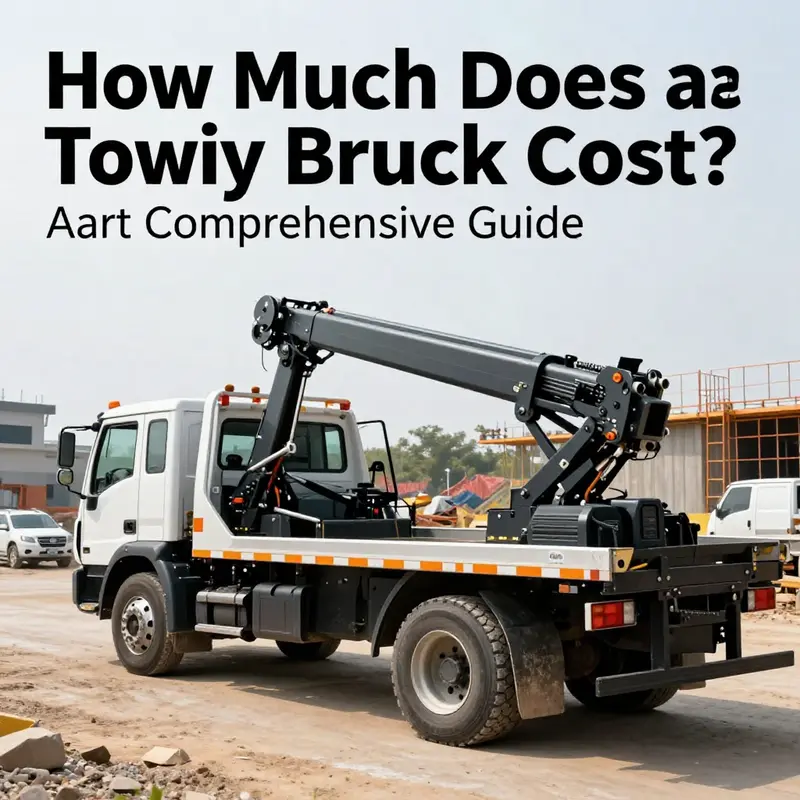
Heavy-duty towing trucks stand as the specialized workforces of road recovery, lifting the heaviest burdens and restoring access after incidents that disrupt traffic, commerce, and safety. These machines are not a single prototype but a family of configurations built around three core modes of operation: rotator wrecker trucks, flatbed tow trucks, and rollback models. Each configuration speaks to a distinct recovery scenario and a distinct set of technical demands, and together they form a spectrum that stretches from 20 tons of lifting capacity to well beyond 50 tons. The pricing that operators encounter along that spectrum is not a single line but a function of several interacting variables: the core lifting capacity, the mechanical architecture supporting that lift, the presence of specialized recovery gear, the overall vehicle footprint, and the sophistication of the control systems that manage hydraulics, winches, and the boom’s maneuverability. In this landscape, price becomes a reflection of capability, reliability, and the readiness to engage in the most demanding recoveries with efficiency and safety.
To understand how these trucks are priced, it helps to set the frame first with capacity and configuration. Heavy-duty rotator wreckers, designed for complex extrications and multi-directional lifting, sit at the high end of the capacity spectrum. They are built to manipulate vehicles in constrained spaces, often with a rotating boom that can reorient loads without repositioning the entire truck. This level of versatility comes with a price tag that corresponds to the added complexity, the strength of hydraulics, the precision of the winch, and the durability required for frequent, heavy-duty use. In practical terms, a high-capacity rotator may be positioned in a range that sits above many standard heavy-duty options, reflecting the premium for flexibility in rescue operations. Meanwhile, flatbeds offer reliability and safety when the goal is to transport a vehicle after it has been stabilized or recovered. Rollbacks add efficiency to the loading process where gravity can assist, especially in environments with uneven terrain or when loading a vehicle with limited access. Each configuration reduces or increases the burden on different subsystems—hydraulic circuits, chassis reinforcement, and control interfaces—so the sticker price adjusts to the expected service profile.
From a market perspective, price is also shaped by the lift capacity band that operators require. A common set of options includes 20-ton to 60-ton class units that may feature engines with substantial power—up to roughly 371 horsepower in some configurations—to meet the demands of lifting large loads quickly and safely. The practical takeaway is simple: higher capacity and more advanced recovery features tend to pull the price upward, while more modest, task-specific builds can be more affordable for smaller fleets or regional service providers. Even within the same capacity tier, the presence or absence of rotator functionality can shift the cost substantially, because rotators embody additional hydraulic megastructures, precision controls, and structural reinforcements that carry real value for operators who frequently face complex recoveries.
In this context, certain price anchors recur across reputable suppliers. A high-capacity rotator, designed for demanding rescue operations and featuring a robust hydraulic system and a heavy-duty boom, can command a price around the mid-to-high five figures per unit, with minimum order quantities for single-piece purchases often noted. This reflects the premium associated with multidirectional recovery capability and the readiness to tackle the most challenging scenes without the need for additional equipment or multiple vehicles. At the other end of the spectrum, lighter heavy-duty variants—those sized for 20-ton to 60-ton operations and equipped with engine options up to a strong but compact power output—appear on the market at a distinctly more accessible level. These models typically start well below the rotator tier, in a range that makes them viable for smaller fleets or regional operators seeking to expand their service footprint without absorbing the heavier financial burden of top-tier recovery capacity.
Putting a concrete framework around these ranges, the market often presents new heavy-duty towing trucks in a broad band that, in aggregate, reflects the diversity of use cases. A typical new-truck price envelope for the heavier end of the spectrum places many units between roughly 35,000 and 60,000 in local currency—an interval that encompasses models with substantial lifting capability, reinforced chassis, and a suite of recovery features. For those seeking the lower-cost entry into heavier recoveries, the market can show newer units in a lower sub-40,000 range, depending on the configuration, without the rotator mechanism, and with more standard equipment suited to straightforward lifting and transport tasks. It is also common to see the market provide used heavy-duty tow options in a lower range, where price often reflects wear, mileage, and the degree of refurbishment required to meet the operator’s climate and duty-cycle demands. In general, the used market can offer compelling value for fleets that need reliable capacity without the immediate heavy investment in new technology, while new units justify their premium through longer service life, full warranties, and the reassurance of the latest safety and control systems.
Beyond capacity and configuration, another critical driver of price is the engineering philosophy behind the chassis and recovery suite. The structural frame must endure repeated, high-load cycles, while the hydraulic system must deliver precise, responsive performance under demanding conditions. The winch arrangements—whether a heavy, continuous-duty winch or a modular assembly designed for rapid engagement and retraction—contribute not only to performance but also to maintenance costs over the vehicle’s lifespan. Operators weigh the value of added features, such as integrated weight-on-hook sensors, load monitoring, stability controls, and the sophistication of the boom’s rotation and extension geographies. In parallel, some buyers place emphasis on pre-assembled tools and standardized mounting points for additional hardware, which can simplify resale and field customization but may marginally adjust the initial price upward through bundled configurations.
With these considerations in mind, it is instructive to survey the price tendencies that characterize heavy-duty towing trucks in real-world procurement scenarios. A clearly defined, high-capacity rotator model, specialized for heavy recovery tasks, tends to sit at a premium, reflecting the complexity of the equipment and the mission-critical nature of the work. The price can be anchored around the mid- to upper-$40,000s to $46,500 per unit for a single-piece order, depending on the exact specification and the supplier’s terms. This bracket reinforces the message that rotator capability translates into a concentrated premium, even when the base chassis and essential hydraulic framework remain similar to other heavy-duty options. On the other side of the spectrum, there are 20- to 60-ton variants with robust but more streamlined configurations. These options, often engineered to deliver reliable performance with fewer bells and whistles, commonly begin in a substantially lower tier—illustrating how the market segments equipment by capability and the anticipated intensity of use. The starting points for these trucks can fall into the broad range of a few thousand dollars up to the mid-range of the tens of thousands, depending on the powertrain, the number of hydraulic circuits, and the level of standard safety features installed.
To give a practical sense of the scale and how operators translate this into fleet planning, consider also the total cost picture that is implicit in any purchase. The price tag, while critical, does not tell the whole story. Shipping, import duties, taxes, and insurance are typically excluded from the FOB price presented by suppliers, especially when the trucks are manufactured overseas. Freight costs, serviceability, parts availability, and lead times all shape the true landed cost of ownership. An operator needs to factor in these add-ons when budgeting. The geographic destination, the chosen logistics path, and the destination port all influence the final landed cost and the timing of deployment. In many cases, the cost of maintenance for heavy-duty equipment—spare parts, specialized fluids, and scheduled service intervals—adds a further layer to the lifecycle cost that can exceed the sticker price over the vehicle’s first several years of operation. In short, price is a snapshot, not a warranty; it is the start of a conversation about total cost of ownership that encompasses performance, reliability, and the ability to maintain readiness for heavy-duty recoveries over time.
When operators plan for procurement, there is a distinct value in aligning purchase decisions with broader standards and best practices in the field. The path to procurement often intersects with guidance on fleet readiness, emergency response coordination, and standard operating procedures. For those who want to explore how standardization in heavy-duty rescue operations informs equipment choices and crew training, there is a resource that dives into that topic with a focus on disciplined, repeatable practices. This contextual reference helps fleets balance the lure of cutting-edge features with the steadiness of proven, interoperable configurations that support predictable maintenance and response times. For a concise look at those considerations, see the discussion on Standardization in Heavy-Duty Rescue Operations. It emphasizes how fleets can align their equipment and training programs to support consistent performance across scenarios, which in turn helps justify the investment in higher-capacity or more capable rotable systems when the mission demands reliability and speed in recovery.
The pricing story for heavy-duty towing trucks is not merely about sticker numbers. It is about the match between the vehicle’s capabilities and the operator’s operational profile. A fleet with a high volume of complex recoveries, frequent multi-vehicle incidents, and limited space for maneuvering in tight urban or industrial sites may justify the premium of a rotator or a high-capacity setup. In contrast, a regional service provider with a steadier demand profile and a focus on safety and efficiency might optimize value by investing in robust, reliable, easily maintained flats and rollbacks that deliver steady performance without the added complexity of rotator systems. The decision becomes a balancing act between the anticipated recovery scenarios, the crew’s training and readiness, and the long-term costs of ownership, including maintenance cycles, parts supply, and the potential resale value of the unit when operator needs evolve.
Finally, it is helpful to anchor these reflections in a practical snapshot of the market as it currently presents itself. A wide range of heavy-duty tow trucks is available, with new units often priced between 35,000 and 60,000 in local currency, reflecting capacity and feature sets that respond to the most common heavy-duty recovery tasks. For fleets seeking to mobilize quickly or test their service footprint, entry-level heavy-duty options in the lower portion of this range can deliver essential capabilities without overextending initial budgets. For buyers who must confront high-stakes recoveries, investment in high-capacity rotators and fully integrated recovery systems becomes a strategic decision about service levels, response times, and safety of crews and equipment. In either case, the overarching principle is that the cost of a heavy-duty tow truck is tied to the job it is expected to perform—and to the confidence operators want in their ability to perform that job under pressure, day after day, and across a spectrum of challenging environments.
For operators examining current configurations and pricing in real time, it is common to encounter listings that mirror these dynamics, with indicative price bands and quantity-based discounts that reflect the scale of operation. The market also tends to highlight the practicality of combining core lifting capacity with essential recovery features and a manageable maintenance footprint. In this sense, the price is not just a number but a reflection of how a fleet envisions its role in the broader ecosystem of road safety, emergency response, and commercial logistics. The more an operator values predictability, uptime, and crew safety, the more the decision tends toward configurations that deliver these outcomes, even if it means absorbing a higher upfront cost.
For readers who want to connect these price dynamics to hands-on practice, consider the broader framework of fleet readiness and emergency response planning. A chapter on this topic discusses how heavy-duty rescue operations benefit from standardized equipment layouts, common training curricula, and interoperable procedures that reduce downtime and improve coordination on the scene. The linked resource delves into standardization in heavy-duty rescue operations and can serve as a practical companion when evaluating whether to pursue a more capable, higher-cost recovery platform or a more modest, reliable workhorse that fits a regional service profile. This approach ensures that the financial decision harmonizes with operational excellence, safety, and the long-term agility of the fleet.
For those seeking a tangible data point from the global market, a representative listing of heavy-duty configurations illustrates the established price ranges and options. This external reference highlights how a high-capacity rotator with the most demanding capabilities tends to anchor the higher end of the spectrum, while more streamlined, robust heavy-duty options populate the mid-range and entry-level segments. Keeping an eye on such listings helps operators calibrate expectations for delivery times, service support, and the availability of essential components in the regions where the fleet operates. It also reinforces the idea that while price is a critical criterion, it sits alongside serviceability, operator training, and the readiness to respond rapidly to incidents that require heavy lifting, meticulous rigging, and careful, professional handling of vehicles and wreckage.
External resource for further reference on representative configurations and pricing: https://www.alibaba.com/product-detail/Heavy-Duty-Sinotruk-HOWO-8X4-30t-40t-50t_1600818989455.html?spm=a2700.139001.0.0.4a5e6c8dYRvKZg
In sum, the cost of a heavy-duty tow truck is a multidimensional question. It hinges on lifting capacity, the sophistication of the recovery system, the presence of rotator mechanics, and the overall design philosophy that governs durability and ease of maintenance. It also hinges on how fleets plan to deploy these machines: whether as a cornerstone of a high-demand, multi-incident response operation or as a reliable, steady workhorse that can be dispatched quickly to a wide range of scenarios. The numbers provide a compass—new options often occupy a broad band between 35,000 and 60,000, while specialized high-capacity ROTATORs can command premium pricing. Used units can offer attractive value, with more modest price points reflecting wear and refurbishment needs. The decision, then, becomes not only about what price is acceptable today but what level of availability, safety, and resilience the fleet must guarantee for the years ahead. And as operators weigh these choices, they do well to consider how standardization and best practices in heavy-duty rescue operations can align equipment selection with training, maintenance, and unified response protocols, ensuring that the investment translates into reliable, repeatable outcomes when every minute counts on the road.
Final thoughts
Selecting the right towing truck depends greatly on your specific needs, whether for local driving, automotive repair, or property management. Understanding the various costs associated with light-duty, medium-duty, and heavy-duty towing options will allow you to prioritize investment based on your unique requirements. Clear, transparent pricing enables savvy decisions that can improve your services and ensure satisfaction for those you serve. Take time to assess your options and engage with knowledgeable vendors, ensuring the best fit for your operational demands.