
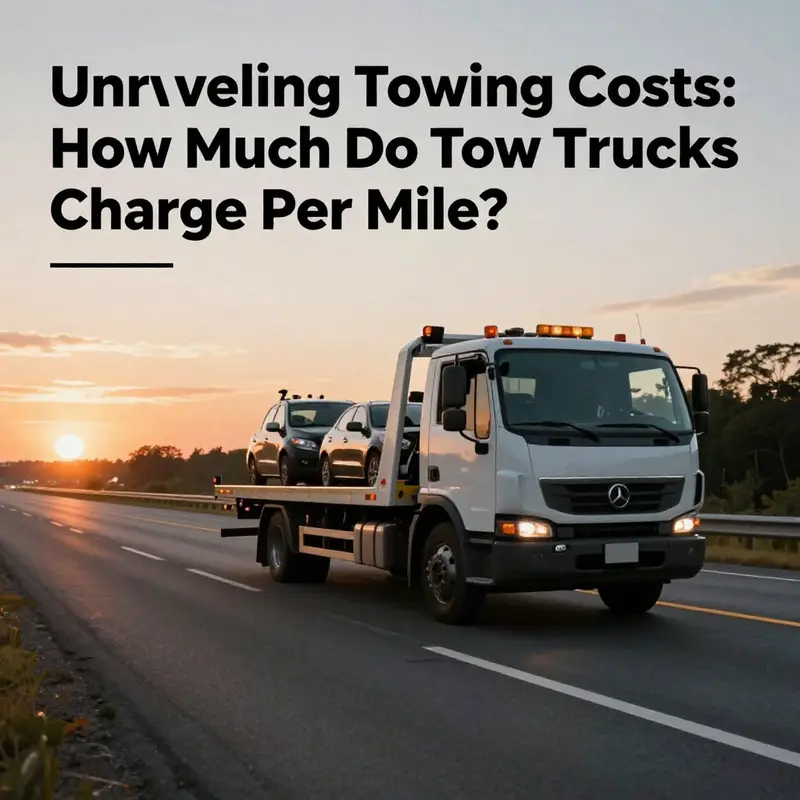
Understanding the costs associated with towing is crucial for local drivers, auto repair businesses, property managers, and more. Tow truck charging models can be complex, with significant variations in fees influenced by a multitude of factors such as location, vehicle type, and time of day. This article equips you with valuable insights into the pricing structures, so you can make informed decisions. From a breakdown of different pricing models to an exploration of urban versus rural costs and the importance of transparency, each chapter contributes to a clearer picture of how much tow trucks charge per mile.
Tow-Per-Mile Truths: Reading the Price Tag on a Tow, from Base Fees to the Fine Print
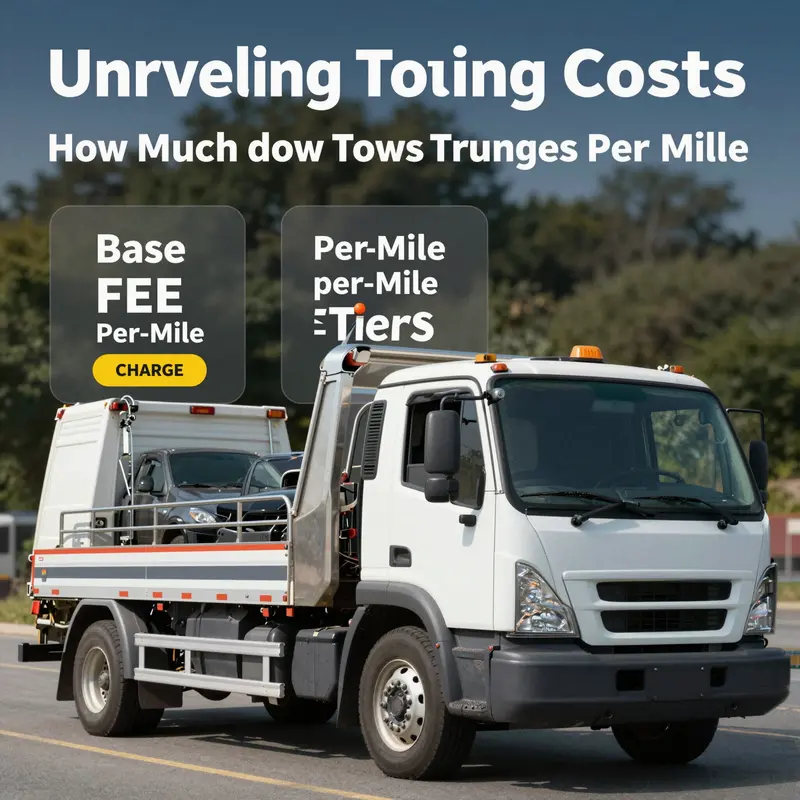
Tow charges per mile are not a single, simple line item. They sit at the intersection of geography, time, vehicle type, and the pricing philosophy of the service provider. What customers often want is a straight answer—how much will this tow cost per mile, and how much will the total bill be? The reality is a bit messier, though still predictable enough to plan for. The most common pricing framework you’ll encounter combines a base hook-up or dispatch fee with a per-mile rate for the distance traveled after the vehicle is hooked up. In late 2025, industry data showed a typical per-mile range of roughly $1.75 to $3.00 once the tow begins to move. But the full price usually includes more than those two numbers, and the final tally can rise quickly if you’re not prepared for the extras that often accompany a tow job.
A starting point that many readers recognize is the flat or base rate. This base fee covers the labor of getting your car into a position where the tow truck can begin to move it. Depending on the market and the company, that base can sit around $50 to $100 for the hook-up, sometimes less for shorter or routine calls, sometimes more for complex access, steep driveways, or difficult recoveries. The base is not optional; it serves as the minimum charge you’ll see even if the distance towed is brief. Following that is the mileage component. The per-mile rate is what most people fixate on when projecting the cost of a tow. In urban cores, where traffic, restrictions, and limited parking complicate every move, the per-mile charge is often higher on the clock due to time pressures and the added difficulty of maneuvering in tight spaces. In rural areas, the miles accrue more predictably, but the distance can be longer and the hourly costs higher due to fuel, travel time, and the economics of serving areas with fewer providers.
Some operators employ a flat-rate scheme for short tows—say, up to 10 miles—followed by a per-mile charge beyond that distance. Others use tiered pricing that reduces the per-mile rate for the first several miles, then steps up beyond a certain distance bracket. Either approach is designed to balance the upfront convenience for a customer with the realities of fuel, labor, and vehicle wear. The literature also notes that many tow services add time-based charges, particularly when the tow takes longer than expected. Waiting time for the driver, labor-intensive winching, or extra labor in securing a vehicle can all contribute to a higher bill, independent of mileage. This is especially true when on-site management or extra crew involvement is needed to safely attach a vehicle, navigate obstacles, or negotiate a tricky pickup.
Beyond the base and mileage, there are a few additional costs that frequently appear on the final invoice. Fuel surcharges have become a common feature as fuel prices swing up and down. Toll fees may be passed through when a route crosses a toll road, bridge, or tunnel that isn’t included in the dispatch quote. After-hours or weekend premiums can be significant, reflecting the demand for service when other professionals are unavailable and the costs of keeping teams ready off-peak. Special equipment fees can apply when heavy-duty frames, long-reach winches, wheel-lift configurations, or other specialized gear is necessary to move a specific vehicle. The total can also rise with environmental or regulatory considerations that influence pricing in certain markets. The effect is most visible in places where congestion, demand spikes, or logistical constraints intensify the costs of delivering service.
Price variability is the name of the game, and location matters. Urban centers with high operating costs routinely push base fees and per-mile rates higher than rural areas. A tow from a downtown area can be more expensive than one from a rural county, even if the distance traveled is similar, because the urban environment can complicate pickup, slow down the tow, and invite more delays. Conversely, rural tows can involve long travel times between providers and customers and, in some cases, fewer alternatives, which can inflate the price in the absence of competition. For customers, this means that a single quoted price can conceal a handful of potential add-ons, making a detailed estimate essential before service begins.
When customers request quotes, the most valuable practice is to ask for a detailed breakdown. A reliable quote should itemize the base hook-up fee, the per-mile rate, the estimated number of miles, and every potential surcharge or ancillary charge. Asking for the price under different scenarios—such as a typical urban tow versus a longer rural tow—helps reveal where the price may diverge. It’s also prudent to confirm whether the quote includes tolls, fuel surcharges, and after-hours premiums. The goal is to avoid surprises, especially given how quickly the total can grow once all variables are stacked together.
The global dimension of towing pricing adds another layer of complexity. In markets that require compliance with CE marking, Euro 5/6 emissions standards, and ISO 9001 quality management, the cost structure for equipment can reflect regulatory overhead. Suppliers serving international markets must ensure that tow trucks meet rigorous safety and environmental benchmarks, a process that can influence manufacturing costs and, ultimately, the final price to customers. Customization options—such as right-hand drive configurations, modular superstructures, or compatibility with third-party chassis—introduce engineering complexity and sourcing challenges. Such factors can be reflected in upfront pricing, especially for fleets that demand specific configurations or certifications. Buyers should verify supplier documentation for EN 16719 (road assistance equipment) and emission certifications to ensure full regulatory alignment and avoid hidden costs or legal risks in target markets.
Across all these considerations, the instruction remains clear: secure multiple detailed estimates and compare the line-by-line inclusions. When evaluating, customers should also consider the quality and reliability of the provider. A higher price may reflect better equipment, more skilled crew, and tighter adherence to safety protocols and timing. It’s not always about chasing the lowest price; it’s about clarity, accountability, and the likelihood of a smooth, transparent recovery when it matters most. For readers who want broader context on industry standards and readiness, the Santa Maria Tow Truck Blog can offer insights into how fleets prepare for emergencies, standardize operations, and manage the realities of on-demand service while maintaining reliability. Santa Maria Tow Truck Blog.
From a policy perspective, the pricing conversation also intersects with how providers present their services to customers. A well-structured quote that separates base fees, mileage, time, and surcharges helps customers understand what they are paying for and why. It also reduces the risk of miscommunication during peak hours or in the middle of a stressful event. In this sense, the mechanics of pricing become part of the quality of service itself. The ability to offer transparent, itemized estimates speaks to professional standards and to the overall trust customers place in tow operators when they most need help. While the optimal price for a tow will depend on location, distance, and timing, the most important element for customers is clarity: knowing what is included in the bill, what is not, and what conditions could alter the final number before the tow begins.
As readers move toward planning and budgeting for potential roadside incidents, the practical takeaway is to treat price as a spectrum rather than a single figure. The right price is not merely the lowest number; it is a fair number that reflects distance, risk, time, and the resources required to complete a safe, compliant tow. For those who operate fleets or work in regions with rigorous regulatory expectations, recognizing how compliance and customization influence pricing helps set realistic expectations for customers and aligns service capabilities with market requirements. The broader takeaway is that while a per-mile figure provides a useful north star, the value of the service lies in the total package: a transparent quote, safe handling, and dependable response when every mile counts.
External resources can offer additional context for those seeking a deeper dive into cross-border considerations and the kinds of compliance that can influence pricing on international projects. For a comprehensive look at compliance, customization, and pricing in Euro markets, consult the Euro-Compliant Tow Trucks Supplier Guide – Pricing, Compliance & Customization Options.
External resource: https://www.eurocomplianttowtrucks.com/supplier-guide-pricing-compliance-customization
Per Mile, a Patchwork of Price: How Location, Timing, and Vehicle Size Shape Tow-Toll Realities
On the shoulder of a highway or in a winter-fogged lane, a simple question often turns into a far more complex calculation: how much will this tow cost per mile? The answer isn’t a single number. It unfolds as a blend of location, the hour of the day, and the size and weight of the vehicle needing to be moved. Tow charges frequently operate on a base fee plus a per-mile rate, but the market’s actual numbers aren’t fixed. The price spectrum you’ll encounter typically lands in a range around $1.75 to $3.00 for each mile of distance traveled after the initial hook-up fee. Yet even within that range, the final bill can swing based on factors that are easy to overlook when you’re in a stressful roadside moment. A careful, tell-me-everything estimate before agreeing to service is your best hedge against surprises.
The most immediate driver of cost is location. Geographic differences aren’t just about how far a tow truck must travel to reach you; they also reflect the local cost of doing business, the density of providers, and the logistical realities of the terrain. Urban centers tend to push up the base fee due to higher operating costs and the potential for traffic delays that extend service time. Rural areas, in contrast, can push total costs upward on the distance side, simply because longer drives are necessary to reach you and to return to a base of operations. Some regions rely on jurisdiction-specific rate structures tied to roads or weight classes, which can add another layer of complexity to the per-mile calculation. A clear example of this dynamic appears in publicly regulated schemes where heavier components of a vehicle trigger higher charges, not just for the distance but for the equipment and labor required to handle them.
Vehicle size and weight are the mirror image of location in the pricing equation. Heavier vehicles demand heavier tow trucks and more robust winches, longer rigging, and additional crew effort. The industry’s financial realities reflect this with weight-based differentials. A truck or SUV is not simply another mile; it is a mile of extra wear and tear on specialized equipment, an increased risk profile for the operator, and the need to deploy gear that can safely manage the load. The explicit differentiation by GVWR—the gross vehicle weight rating—seen in some official schedules illustrates precisely why a 10,000-pound pickup or a commercial vehicle can cost more per mile than a compact car. When a tow company faces a highway rescue or a heavy-duty recovery, the same distance now carries heavier labor costs and requires equipment that is costly to operate, maintain, and transport to a scene.
Time of day and day of week introduce a separate, predictable layer of premium pricing. The logic here is straightforward: off-hours typically feature fewer nearby providers, longer response times, and higher staffing needs to ensure emergency readiness. Late nights, weekends, and holidays can bring what operators call surge or premium fees. These surcharges compensate crews for working when most people are at home, plus they cover the additional fuel burn and vehicle wear that come with operating during times that are less efficient for a towing business. A tow billed at night may look like it has a higher per-mile rate, but the longer hours and faster response are part of the same pricing strategy aimed at maintaining service levels when demand spikes and alternatives are scarce.
Against that backdrop, a simple distance calculation becomes a little more nuanced. Consider the scenario of a rural tows over longer distances: the per-mile rate may be at the lower end of the common range, but the total miles accumulate quickly, and fuel costs can be a meaningful contributor to the final bill. Conversely, urban tows may cover shorter distances but encounter traffic-induced delays that translate into higher labor charges and potential wait-time fees. Some providers attach a time component to the price, so if you’re stuck in a gridlock or a forgotten alley, you could see charges that aren’t tied to miles alone. This is why, for many drivers, the best practice is to request an itemized estimate that discloses a hook-up fee, a per-mile rate, any time-of-day surcharges, and any other line items such as wait time or after-hours labor.
In certain regulated contexts, the precise formula becomes even more explicit. The New York State Thruway Authority, for example, differentiates charges based on GVWR, aligning weight with the required equipment and the risk profile of handling heavier vehicles. For fleet operators and individuals facing commercial-sized tows, this structure demonstrates a direct tie between the vehicle’s size and the mile-by-mile cost. It’s not mere metaphor to say that a bigger truck needs bigger tools; it’s a pricing principle that translates weight into cost via per-mile incentives, additional labor, and the resource intensity of the tow.
Understanding these variables helps drivers anticipate the likely total well before a tow is arranged. The hook-up fee serves as an entry price for the service—often in the $50 to $100 range in many markets—covering the initial response, assessment, and the act of securely attaching the vehicle. The miles then begin to accumulate at a rate that reflects location, time, and vehicle weight. In practice, the combination of a fixed base fee and a scalable per-mile charge means that a short, urban tow could end up costing more in time and effort than a longer rural tow if traffic delays or specialized equipment are involved. For a driver, this translates into a practical rule of thumb: a higher base fee paired with a modest per-mile rate may feel more predictable than a low base with a steep, distance-heavy multiplier in a congested city.
For those who want to see how these variables play out in real numbers, the best approach is to request a detailed, line-by-line estimate before approving the service. Ask for an explicit base fee, the exact per-mile charge after hookup, any minimum charge that applies if the distance is short, and any applicable surcharges for after-hours service or holidays. It can also be worth asking whether the company applies a flat rate for nearby tows within a few miles and whether there are tiered rates for longer distances. Some scenarios may include a separate fuel surcharge or an overnight premium, especially when the tow truck must travel a long way to reach a site or to return to its base.
If you want to explore broader industry context as you read through this, you can visit the Santa Maria Tow Truck blog, which discusses how pricing surfaces in everyday operations and what customers should expect when pricing conversations begin. Santa Maria Tow Truck blog. This resource helps connect the numbers discussed here to practical, on-the-ground realities—how a dispatcher calculates the starting hook, how crews estimate miles while en route, and how some companies balance rapid response with fair pricing in busy or hazardous conditions.
Even with a solid understanding of the pricing framework, there remains a practical caveat: the most accurate quote will come from the company that will perform the service. Prices can vary widely by locale and by the specific company’s policies, which may include regional price floors or caps, loyalty discounts, or seasonal adjustments. The safest course of action when you’re stranded is to request an itemized estimate that clearly outlines all charges. If a company can’t provide this before you commit, consider calling another provider to compare. Having a few quotes gives you a real-world sense of the base fee, the mile rate, and any unusual surcharges that might apply to your particular situation.
Another important piece of guidance is to ask about flexibility in pricing for certain scenarios. For instance, if a tow requires delivering the vehicle to a nearby repair shop rather than a distant location, some providers may offer a shorter-haul option at a reduced rate. In metropolitan areas with dense networks, competition can help keep per-mile rates lower, but you may still encounter premium fees for after-hours service. In more isolated locales, you may find longer wait times and higher travel costs that push the total beyond what a quick, in-town tow would cost. The balancing act between distance, time, and weight remains at the heart of the pricing conversation, and a well-informed customer can navigate toward a fair estimate by defining needs up front and understanding what each line item represents.
To close the loop, think of the per-mile price as part of a larger conversation about reliability, timing, and safety. The distance matters, but so does the efficiency with which a provider can reach you, secure the vehicle, and transport it to a destination where it can be serviced. When a crew arrives promptly, attaches the vehicle securely, and completes the tow without added complications, the cost per mile may justify itself through the service’s overall value. When delays or miscommunications occur, the same per-mile rate can feel punitive, even if the miles traveled remain the same. That is why the expectations you set in advance—clear estimates, itemized charges, and a transparent discussion of any potential surcharges—are essential to turning a stressful roadside moment into a manageable, informed decision.
For readers seeking further official detail, consider reviewing formal rate schedules that illustrate how weight and distance interact in regulated contexts. The New York State Thruway Authority’s Towing Rate Schedule provides a concrete example of how weight categories map to charges and why the per-mile figure varies with vehicle size. This kind of document helps demystify the numbers you encounter when a tow arrives on the scene and reinforces the idea that pricing, at its core, is about aligning resources with the complexity of the job. External reference: https://www.thruway.ny.gov/traffic/towing-rates.html.
Mile by Mile: Urban Hubs and Rural Highways Shape Tow Truck Pricing
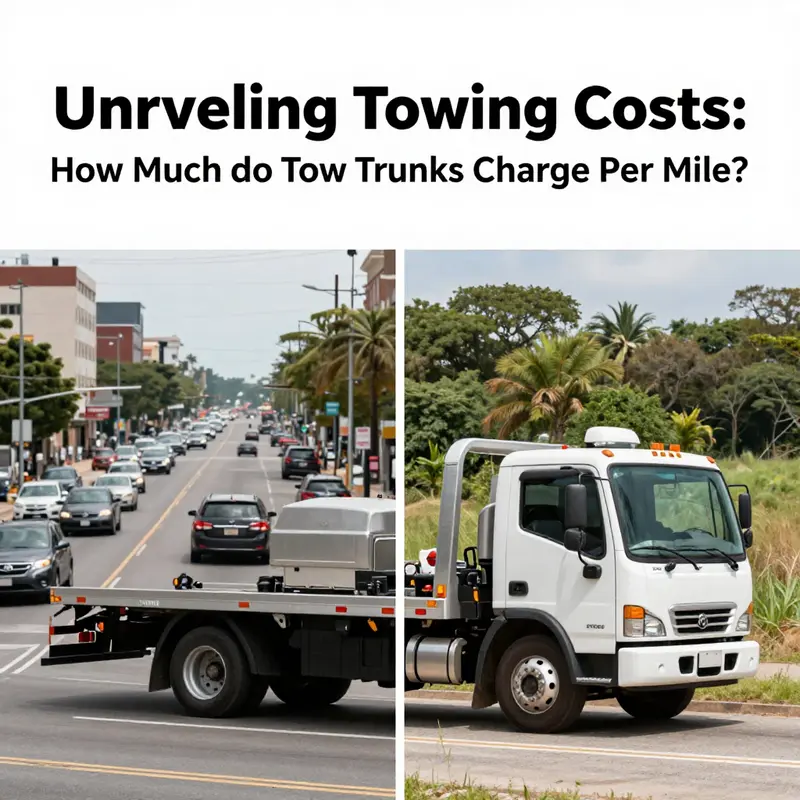
When a tow arrives, the price sheet reads like a map of where you are and how far the vehicle must travel. The distance on the odometer is only part of the story. Rates come from a mix of base fees, mileage charges, and situational factors tied to location, time, and vehicle type. Across markets the same framework of hook up costs plus per mile charges drives the typical bill, but urban experiences and rural journeys can feel like different pricing ecosystems.
In urban markets the base fee tends to be higher to cover the logistics of dense streets, rapid response expectations, and the need for equipment ready to operate in tight spaces. The initial charge commonly lands around 75 to 125 dollars for the first 10 miles. That range reflects the speed and reliability demanded by city drivers, the competitive landscape, and the ability to reach a vehicle quickly through congested networks. As a result the upfront figure can be higher in the city even if the subsequent mileage looks similar.
Beyond the baseline distance, miles are often charged at a rate about 1.75 to 3.00 dollars per mile. The exact tier depends on the company, vehicle weight, and whether the tow is a simple hook up or a more complex recovery. In practice this means a six or eight mile city tow can stay within the base, while longer runs cross the threshold and incur per mile charges. Some operators offer flat rate options for short distances or tiered pricing for the first several miles.
In rural settings the initial price for the first 10 miles is often around 100 dollars or more, reflecting longer travel times and the greater likelihood of mileage across sparsely populated terrain. This pricing acknowledges higher fuel use and longer service times while maintaining safety and equipment standards. Beyond that initial distance, additional fees commonly fall in the range of 2 to 4 dollars per mile, and a distance surcharge is a recurring feature to offset extended travel time.
What drives these regional differences beyond base and mile lines? A mix of demand patterns, accessibility challenges, and cost structures that differ with density. Urban environments typically offer more towing providers, shorter average response times, and more predictable traffic, which can push the base up but reduce the per mile premium for the initial portion. Rural markets face longer travel times, fewer nearby providers, and higher fuel costs, so the distance surcharge appears as a necessary adjustment.
For consumers the practical upshot is that price transparency matters more than a single number. The same average per mile rate can be misleading if the base and included distance differ from market to market. In urban areas the base may be higher but the included distance keeps the total closer to rural quotes that start higher. The recommended approach is a written itemized estimate that breaks out the base, the included miles, and the per mile charges for any distance beyond the included threshold. Ask about distance surcharges, after hours premiums, and weights or equipment charges.
Regionally minded readers can triangulate pricing with local context. Local knowledge helps set expectations and frames conversations with providers. Some areas show aggressive base rates with modest per mile costs, others show higher bases with softer mile rates. For Santa Maria area readers, local blogs and operator pages offer practical context about pricing norms and expectations.
In sum urban and rural tow pricing share a common skeleton hook up fees plus distance based charges, but the flesh differs by place. Urban pricing emphasizes speed and crowd dynamics, rural pricing reflects long drives and higher fuel use. The best defense is clarity and a written estimate that separates base, included distance, and miles beyond the threshold. Look for any surcharges and whether price includes equipment or winch usage. The distance between city bustle and countryside quiet becomes a guide to fair pricing.
For further context you can explore the AAA Towing Cost Report which aggregates regional variances and offers a benchmark. Readers may also find value in resources such as the Santa Maria Tow Truck Blog to hear firsthand how pricing looks in nearby communities and how operators balance base fees, distance charges, and customer expectations. External readers can consult the AAA resource for a national frame of reference at https://www.aaa.com/autorepair/towing-costs.
Mileage Math: Navigating Base Fees, Per‑Mile Rates, and Hidden Charges in Tow Truck Pricing
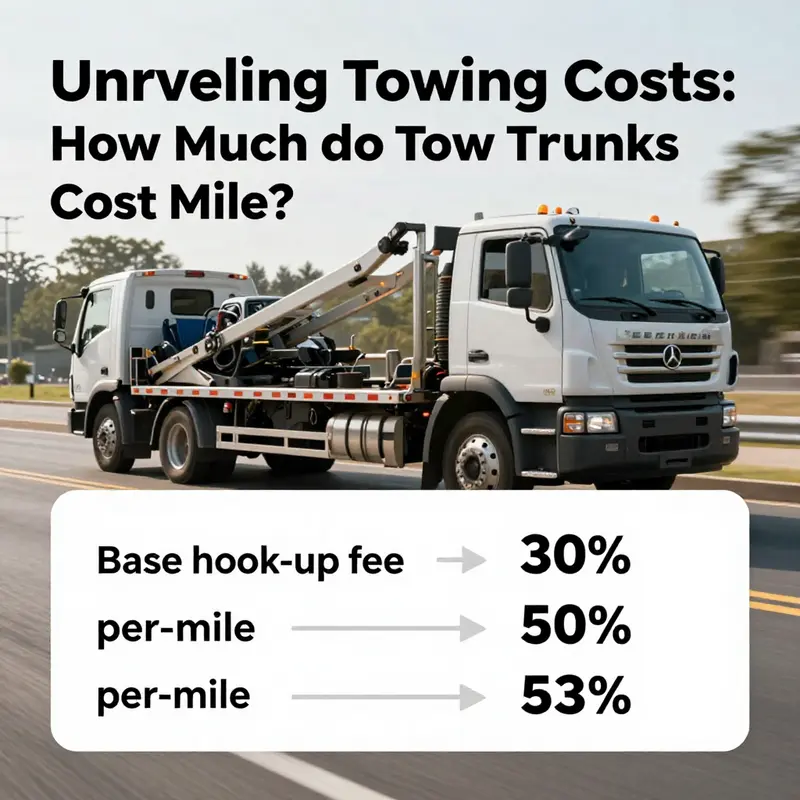
Pricing for tow services almost always starts with a straightforward formula: a fixed hook-up or base fee, followed by a per-mile charge for the distance the tow truck travels with your vehicle in tow. Yet that simple equation sits inside a larger ecosystem of variables that can tilt the final bill in ways that catch the unprepared driver off guard. Location, time of day, vehicle type, and the pricing structure a company uses all shape the math. In rural stretches, long-distance tows can feel like a premium hunt for the right truck, while in urban cores, shorter hauls may come with higher hourly or after-hours surcharges that push costs up even when the miles are limited. The result is a price landscape that feels inconsistent until you understand the levers a carrier can pull. As you consider what to expect, it helps to keep a few core ideas in view: most shops balance a base fee with a per-mile component, the distance matters most, and a handful of add-on fees can transform a modest tow into a larger bill than anticipated.
The dominant pricing model in today’s market is indeed a base fee plus a per-mile rate for the miles towed after the hook-up. Some operators still use a flat or fixed rate for short distances, especially within city limits, while others implement tiered pricing that scales with distance brackets. The hook-up or base fee typically covers the time and equipment required to attach the vehicle safely, secure it, and prepare the tow line or dollies. After that, the odometer runs for the miles the tow truck actually travels with your vehicle in tow. In practical terms, that means a short push-and-roll or “mini” tow can be quite affordable, while a longer, interstate-style haul tends toward the upper end of the spectrum.
Across the industry, the base fee commonly lands somewhere in the range of fifty to a hundred dollars. That spread accounts for the basic labor, the truck and crew readiness, and sometimes the initial preparation for a tow that may include lockout services, flat tire work, or minor stabilizing tasks before the ride begins. The mileage portion, however, is where the most variability emerges. The current data landscape, which reflects late-2025 market observations, generally places the per-mile charge in a corridor from about $1.75 to $3.00 for the actual distance towed after hook-up. The exact figure within that band depends on the carrier’s cost structure, regional competition, and whether the tow is treated as a standard law-abiding roadside request or part of a longer, more complex operation.
To illustrate how these elements come together in real life, imagine two tidy examples. A compact sedan towed over five miles might fall near the lower end of the spectrum, perhaps around seventy-five dollars, when a minimal base fee is coupled with a modest per-mile charge. A longer haul, say fifty miles, will naturally accumulate more miles at the posted rate, and depending on the carrier, could easily approach or exceed three hundred dollars. These numbers aren’t promises, but they reflect common benchmarks that drivers often encounter. The variability is not just a factor of distance; it also reflects whether the provider uses a “hook and roll” model—where a fixed hookup fee is charged first, then a set rate per mile—or a more continuous per-mile structure with fewer upfront charges.
Distance is the most powerful driver of price. Rural areas tend to present longer trips because there are fewer repair shops, storage facilities, or local towing options, which raises fuel burn, time, and crew availability. A 60- or 70-mile tow through sparsely populated terrain may incur higher total costs than an urban hop of the same distance simply because the provider must account for travel time to reach the scene, possible overnight accommodations for the crew, and fuel surcharges that reflect longer lines on the fuel gauge. Conversely, urban tows are often shorter in mileage but subject to traffic, metered time on the clock, and higher base rates to cover the cost of rapid on-call service within crowded corridors. The result is a pricing dynamic where the same mile can cost differently depending on the operating environment, demand patterns, and the company’s service model.
Another compelling factor is the vehicle type and weight. A compact car requires less equipment, lighter dollies, and fewer crew resources than a full-size pickup or a heavy-duty work van. Heavyweights demand larger trucks, specialized gear, and more fuel, all of which push both the hook-up effort and the per-mile charge higher. In some cases, carriers separate pricing by vehicle class to reflect these realities, while others embed the weight considerations into the base and per-mile rates. The end effect for the consumer is a clear reminder: the final price isn’t just a function of miles; it’s a function of the vehicle’s difficulty to move and the associated operational cost.
Beyond the core base and mileage charges, several add-ons routinely appear on the final bill. After-hours service is a common driver of premium pricing, since late-night calls require crews to operate outside regular hours and potentially in less favorable conditions. Weekend or holiday towing can trigger additional surcharges, reflecting limited staffing or higher demand. Winching, which involves pulling a vehicle out of a ditch, snowbank, or another tricky position, typically commands a separate fee due to the extra labor and equipment involved. Storage fees can accrue if a vehicle is held at a lot, awaiting repair or release, and even fuel surcharges may apply when the price of gasoline or diesel has spiked. Some companies impose a minimum fee regardless of distance, ensuring the operation remains economically viable even on very short calls. The net effect is clear: even a short tow can carry a surprising price tag if several add-ons stack up, particularly in times of peak demand.
Tiered pricing and distance brackets offer a way to negotiate and understand these costs. Some providers present discounted per-mile rates for the first ten miles, followed by higher rates beyond that threshold, while others fold distance into a single all-inclusive rate that caps certain charges for shorter distances. The practical implication for customers is straightforward: ask for a breakdown of the estimate, not just the total. A transparent quote should itemize the base fee, the per-mile charge, any minimum charges, and all potential add-on fees. If a discount or tiered structure exists, request the exact miles at which the rate changes and the precise rate at each tier. A written estimate mentioning all conceivable fees helps prevent surprise bills and gives you leverage if a quoted figure seems out of line with typical pricing.
To navigate this landscape with confidence, it helps to approach towing charges like a careful shopper would approach medical or mechanical services. Request an estimate in advance, ideally in writing, that includes the base fee, the per-mile rate, an estimated total distance, and any anticipated add-ons. If you’re unsure whether a call will involve extra hours or a longer drive for the driver to reach you, ask specifically about after-hours charges and the possibility of a higher rate in urban traffic. A good provider will also explain what constitutes the toll of “distance” in the quote—whether it reflects miles from the pickup to the destination, any miles spent repositioning the vehicle, or the miles traveled to reach a repair facility or impound lot.
The broader pricing picture also benefits from a wider perspective on market trends. Industry reviews and cost analyses provide a national frame for what you might see in your own town. The Zebra’s comprehensive overview of towing costs across the United States is a valuable external resource for context. It helps illustrate how base fees, per-mile charges, and regional differences cohere into a national mosaic of pricing, making it easier to identify when a quote is aligned with typical expectations or unusually high. For readers seeking a structured, data-backed lens on how prices vary by location and service type, this guide offers a helpful benchmark. (External reference: https://www.thezebra.com/insurance/towing-costs/)
A helpful touchpoint for understanding the pricing ecosystem within a specific locale is to consult a local towing operator’s online presence or blog, which often explains their pricing philosophy and service options. For instance, a regional industry blog discusses how pricing structures are built around operational realities, how base fees are set to cover crew readiness, and how miles are priced in a way that reflects both efficiency and safety. Using a trusted local reference like this can make the differences between nearby providers easier to grasp, especially when you compare written estimates side by side. If you want a sense of how pricing threads through an organization’s broader approach to readiness and response, you can also explore related material on fleet standards and emergency-readiness practices. A relevant local resource can be found at the following link: industry blog on towing economics.
In the end, understanding how much tow trucks charge per mile means recognizing that the miles are only part of the story. The base fee, the weight and complexity of the vehicle, the time of day, the distance, and a spectrum of add-ons all converge to create the final bill. By asking for a detailed, written estimate up front and by comparing quotes with an eye for both the mileage rate and the line items that can escalate costs, you place yourself in a stronger position to budget accurately and avoid sticker shock. This careful approach aligns with a broader ethos in roadside recovery: preparedness and clarity reduce friction when a breakdown or a lockout interrupts a journey. It also aligns with a practical understanding that pricing in this field is as much about the network of factors behind the miles as it is about the miles themselves.
Through this lens, the chapter on price variation becomes a connective tissue for the larger discussion of how towing services operate in the real world. It informs not only what to expect when a tow is needed, but also how to plan for the inevitable moments when an unplanned expense becomes part of a travel itinerary. The insights extend to the following chapters, which explore how tow operators coordinate with fleets for emergency response, how standardization in heavy-duty rescue operations can influence service reliability, and how to assess the safety and legality of towing practices in different jurisdictions. In this way, the seemingly narrow question of per-mile charges unfolds into a broader understanding of how the towing industry balances efficiency, fairness, and safety in a market that continually tests drivers and providers alike.
null
null
Final thoughts
In conclusion, understanding how much tow trucks charge per mile is essential for anyone involved in automotive services, whether as a driver or a business owner. By grasping the various pricing models, the factors affecting costs, and the significance of transparency, you can navigate towing services much more effectively. Empower yourself with this knowledge to ensure fair pricing and avoid unexpected expenses in towing situations.