
Owning a tow truck can be a rewarding venture, but it comes with complex financial responsibilities that must be understood before taking the plunge. Whether you’re a local driver needing roadside support, an auto repair shop looking for service vehicles, or a property manager overseeing parking compliance, understanding the full scope of costs associated with tow truck ownership is essential. This guide breaks down the upfront purchase costs, ongoing operational expenses, insurance costs, maintenance and repairs, and the financial implications of leasing versus buying a tow truck, empowering you to make informed decisions and avoid potential pitfalls along the way.
Counting the Cost of Tow Truck Ownership: A Practical Budgeting Guide
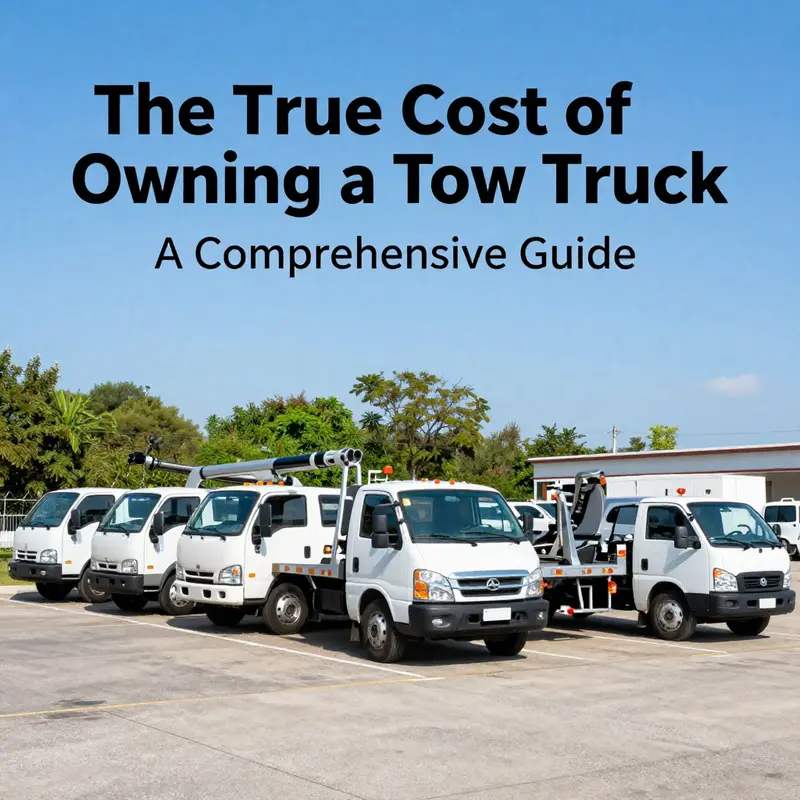
Owning a tow truck is a durable investment, not a single payment. The question of how much it costs to own a tow truck extends beyond the sticker price at the lot and into a web of ongoing expenses that compound over the life of the vehicle. The decision to buy—whether new, used, or somewhere in between—shapes every subsequent financial step, from monthly cash flow to maintenance schedules and insurance premiums. When you look at ownership this way, the answer isn’t a single figure but a spectrum defined by the type of recovery equipment, the vehicle’s condition, and how intensively you plan to operate. In practice, this means weighing upfront costs against expected hours on the road, the likelihood of heavy-duty recoveries, and the regulatory environment you must navigate. The pathway from purchase to profitability is paved with careful budgeting, a clear service plan, and a readiness to adapt as your fleet grows or the market shifts. The numbers below offer a framework to begin mapping that path without overpromising on any one outcome.\n\nThe upfront purchase cost to enter tow work varies widely because the equipment itself is the primary driver of expenditure. At the high end sits the most advanced class of recovery units, built to handle complex, heavy, or dangerous recoveries. A new, powerful rotating unit can exceed six figures, with some models pushing into the range of $150,000 to $300,000 or more. These machines offer capabilities like a 360-degree rotation and an extended boom, which translate into the ability to lift vehicles from difficult angles, manage overturned loads, and respond rapidly in highway emergencies. The upside is clear: expanded service offerings, faster turnaround on demanding jobs, and a potential competitive edge in markets with frequent large-vehicle incidents. The downsides are equally clear: the upfront cash requirement is substantial, the maintenance demands are higher, and the operating costs—fuel use, specialized training, and insurance—tend to be greater. For operators who expect a steady stream of heavy recoveries or who want to be positioned for high-severity incidents, the value proposition can justify the price.\n\nFlatbed models, by comparison, sit lower on the price ladder but still demand a sizable investment when purchased new. A new flatbed tow truck typically lands in the range of roughly $70,000 to $150,000, depending on the size of the bed, the hydraulic systems, and the mounting hardware. Flatbeds are favored for their versatility and the way they minimize damage to the vehicles being transported. They are especially well suited for all-wheel-drive and low-clearance vehicles, and their design reduces contact with the towed vehicle during loading and unloading. In many markets, the lower risk of wheel and undercarriage damage translates into lower insurance costs and fewer disputes with customers over claim damage. Yet even within this class, the day-to-day reality is that heavier payloads and longer service hours increase wear on hydraulics, tires, and the electrical system, so ongoing maintenance remains a meaningful line item.\n\nUsed tow trucks offer another practical path to market entry, with prices typically in the vicinity of $20,000 to $50,000 for older or mid-range units. Used equipment can be a smart move for startups testing the waters, building a client base, or entering a non-metropolitan market where demand is steady but volume isn’t explosive. The appeal is obvious: lower initial outlay means faster cash breakeven if you secure consistent work. The caveats, however, are real and worth planning for. Older units often carry higher fuel consumption, more frequent maintenance, and a greater risk of hidden problems that can bite you with unexpected repair bills. The reliability of a used truck hinges on previous usage, maintenance history, and how thoroughly you assess its current condition. A careful inspection, a realistic maintenance forecast, and a contingency fund for repairs can help ensure that the lower purchase price does not become a money pit in year one or two. The story here isn’t simply about price; it’s about risk, reliability, and how quickly you need to scale your operation.\n\nAs you refine your plan, remember that additional upfront considerations accompany the sticker price of the chassis and the lifting system. Although the numbers can be daunting, there are practical moves to manage them. Financing options often blend a combination of a down payment, a loan, and a service plan that aligns with your expected utilization. Leasing—especially for high-end equipment—can be a compelling approach for new or small operators. Leasing reduces upfront capital needs and provides access to current equipment with predictable monthly costs, which can help stabilize cash flow during the early growth phase. The philosophy here is straightforward: preserve liquidity for core operations, marketing, and ramping up service capacity while still maintaining access to reliable machinery. A well-structured lease may also include maintenance coverage, reducing surprise repair costs and allowing you to forecast expenses with greater accuracy. For those exploring this path, the balance between monthly payments and long-term ownership must be considered in light of the business plan, the expected job mix, and the anticipated geographic area of operations.\n\nWithin this landscape of options, it helps to view the purchase decision as part of a broader fleet readiness strategy. An effective approach starts with a close look at expected demand, incident types, and the tail risk associated with peak seasons or weather events. If your market sees frequent high-severity calls, investing in more capable equipment may pay off through a higher rate of successful recoveries and a shorter time on each job. If demand scales gradually, a staged approach—beginning with a solid used or mid-range new unit and expanding with leases or additional purchases as revenue grows—can minimize risk while still enabling growth. In either case, consider tying your purchase plan to a formal budgeting process that includes depreciation schedules, a realistic maintenance reserve, and a staged training program for operators. Training is not optional; it’s part of the ownership cost that ensures the equipment is used correctly and safely, preserving the asset and protecting the business from avoidable liabilities. Advanced equipment—especially that which requires specialized handling—often demands certification and ongoing training, and these costs must be embedded in the lifetime cost of ownership from day one. If you are seeking a framework for how to approach these decisions, a practical starting point is to map each major cost category against your anticipated utilization, incident mix, and revenue per job.\n\nWhen you look at the whole picture, a concise way to think about the cost of ownership is to separate the capital expense from the operating life of the asset. The capital expense captures the initial price tag, the down payment, and any financing charges, while the operating life reflects fuel, maintenance, insurance, licensing, permits, depreciation, and training. The arithmetic gets more nuanced as you factor in fleet size, job mix, and local regulations, but the core idea remains: upfront cost is just the beginning. A robust, well-funded maintenance plan can dramatically extend the useful life of the vehicle and reduce the probability of costly downtime that erodes profitability. That is why some operators align their strategy around the total cost of ownership rather than the upfront sticker price. It’s a more truthful lens for evaluating options, especially when you consider the potential for leasing to cover high-end equipment while preserving capital for core business needs.\n\nAs you connect the dots, you may find it useful to consult related resources on fleet standardization and readiness. Practical guidance on how fleets are prepared for emergency responses can complement the financial planning needed for ownership. External resources like these can help you refine your decision matrix and avoid over-committing to a configuration that might prove ill-suited for your local demand patterns or service-model goals.\n\nBy integrating upfront costs, financing options, ongoing expenses, and strategic considerations into a single, coherent plan, you create a foundation that supports sustainable growth. The goal is not to pick the cheapest option but to choose the option that aligns with your business model, your market, and your capacity to service debt and maintain an aging asset. With this approach, you transform the ownership cost from a blunt barrier into a calculable parameter within a larger, disciplined financial strategy. In practice, that means selecting a configuration that matches anticipated call volume, choosing a financing or leasing arrangement that preserves working capital, and allocating a predictable maintenance baseline that minimizes the risk of unwelcome downtime. This is the kind of planning that translates into reliable service, satisfied customers, and steady profitability over the life of the fleet.\n\nThe overall budgeting exercise is best anchored in realistic expectations and a disciplined review cadence. Align depreciation assumptions with local tax rules, set aside a maintenance reserve based on the age and mileage of your equipment, and establish quarterly check-ins to adjust plans as usage data comes in. When procurement, training, and maintenance decisions are tied to a clear forecasting model, you gain greater control over cash flow and profitability.
The Ongoing Burden: Navigating Fuel, Insurance, and Tech Costs in Tow Truck Ownership
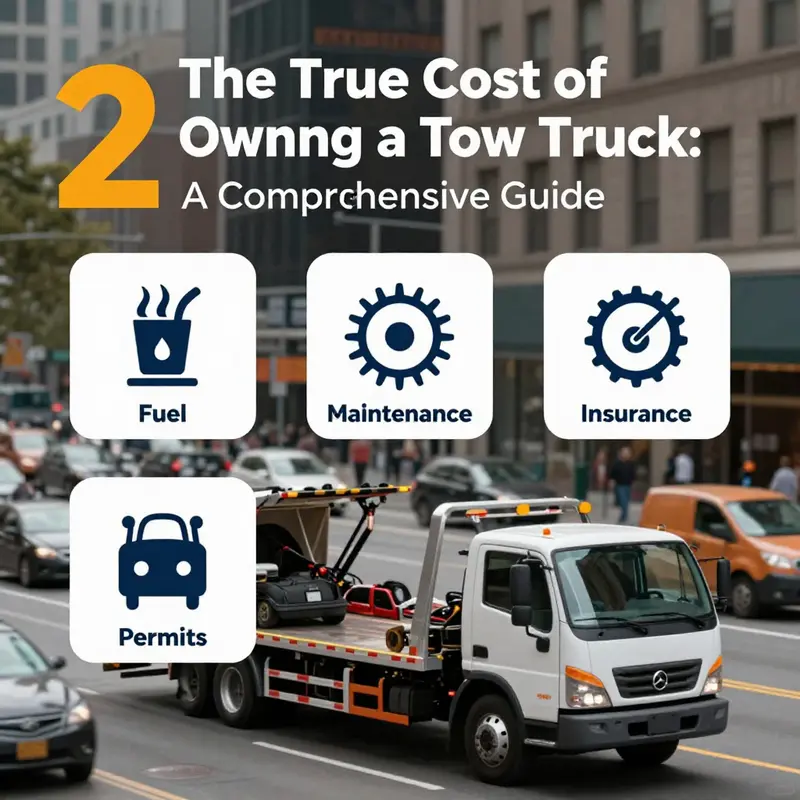
Owning a tow truck involves more than the sticker price on the lot or the terms of a financing agreement. The true cost of ownership hinges on a steady stream of ongoing expenses that can shape profitability as much as the initial purchase. In practice, the day-to-day economics of running a single vehicle or a small fleet revolve around several core categories: fuel, maintenance, insurance, licensing, labor, and the technology that keeps operations efficient. Taken together, these recurring costs define how sustainable and scalable a tuning-in to demand, response times, and service quality can be. For any operator, the conversation should begin with a realistic budgeting framework that treats these variables not as afterthoughts but as the central discipline of the business plan. In this light, the cost picture becomes a landscape of choices, where each decision about a truck type, a driver roster, or a dispatch system shifts the balance between risk, reliability, and profit in measurable ways.
Fuel costs stand at the top of the recurring expense spectrum for most tow operations. The larger and more capable the machine, the more fuel it will burn in a given hour of work, especially on rotator-capable setups or heavy flatbeds that routinely haul high-weight or high-distance recoveries. Diesel engines may offer better efficiency in sustained operations, but even then monthly fuel bills can stretch into the thousands for a single vehicle depending on demand and geography. The variability of towing assignments—urban versus highway, long-distance tow vs local dispatch, night versus day traffic—means fuel budgeting must be flexible. Operators often track miles per gallon and fuel price trends, adjusting dispatch patterns to optimize consumption without sacrificing response times. This is where disciplined fleet management delivers measurable value, turning fuel into a controllable cost rather than a constant unknown.
Maintenance and repairs form the second pillar of ongoing costs. Regular maintenance keeps a tow truck reliable and safe, but the complexity of specialized equipment means service intervals are more frequent and more expensive than those for standard trucks. Routine services like oil changes, filter replacements, brake inspections, and tire care are the predictable baseline. Yet rotor arms, hydraulic systems, and winches add layers of potential repair needs, particularly as the vehicle ages or endures heavy-use cycles in challenging environments. The cost trajectory for maintenance is not linear; it accelerates when a truck accumulates higher mileage or faces harsh operating conditions that wear components faster. Savvy operators budget for preventative maintenance in advance, setting aside reserves for anticipated replacements and for unexpected failures that can otherwise disrupt a response capability and erode margins.
Insurance is another nontrivial line item that reflects the risk profile of towing work. Commercial towing insurance typically includes liability, physical damage, and cargo coverage. Because a tow operator handles other people’s property and operates in potentially hazardous settings, premiums tend to be substantial. The frequency and severity of incidents, crew readiness, vehicle age, and the geographic mix of calls all feed into the final premium. A well-structured insurance program not only protects the business but can also enable more aggressive growth by providing a safety net that supports larger fleet goals.
Licensing and permits add a regulatory yet recurring cost layer that varies by jurisdiction. Local and state requirements cover business licensing, operator credentials, and often specific permits tied to towing and roadside operations. While these costs are typically predictable year to year, they can rise with licensing changes or shifts in regulatory policy. For a small operator aiming to keep overhead lean, it helps to monitor regulatory calendars and to align vehicle tenure and renewal cycles with anticipated price changes.
Labor, whether in the form of drivers or dispatch personnel, represents a significant ongoing outlay. Wages vary by market, but the cost of skilled operators who can safely manage a heavy-duty recovery, coordinate dispatch, and maintain professional customer interactions can be substantial. In growth scenarios with multiple trucks, payroll becomes a core driver of profitability. Beyond base pay, there are benefits, overtime, and training investments that compound over time but are essential to sustaining service quality and legal compliance. Training itself has a dual purpose: it heightens safety and reduces the likelihood of costly on-road errors, while also expanding the range of jobs an operator can handle.
Technology and software subscriptions increasingly sit alongside the mechanical and regulatory costs as a necessity rather than a luxury. Modern tow operations rely on telematics to monitor vehicle performance and driver behavior, GPS for efficient dispatching and routing, and customer relationship management or service-management software to streamline requests and invoicing. These tools typically operate on monthly or annual subscription models, and their costs can scale with fleet size and feature sets. The cost of software is often justified by gains in utilization, faster response, better asset protection, and a higher rate of successful recoveries. Investing in robust technology can also reduce wear and tear, improve fuel efficiency, and provide data that informs maintenance planning and pricing strategies.
Beyond these explicit line items, depreciation and financing shape the long view of ownership. Tow trucks, like any heavy asset, depreciate as they age and accumulate mileage. The accounting treatment matters for taxes and cash flow. Financing terms, down payments, and loan interest contribute to the total cost of ownership by affecting monthly cash requirements and the opportunity cost of capital tied up in a vehicle. Recognizing depreciation and financing effects helps operators price services in a way that sustains investments in newer equipment without eroding profitability.
An evolving insight in this space is the potential value of leasing high-end equipment, particularly for new entrants or smaller operators. Leasing reduces upfront capital needs and provides access to newer, more reliable equipment without tying up a large amount of cash. It also offers flexibility to upgrade as technology and regulatory expectations advance, aligning asset quality with service commitments. This approach can be attractive when market demand is uncertain or when the operator wants to defer the heavier exposure of ownership while building a customer base. The strategic choice between owning and leasing should be driven by a careful comparison of total cost of ownership, financing costs, maintenance risk, and the ability to scale operations efficiently over time.
For operators seeking practical guidance on balancing readiness with cost discipline, the literature on fleet standards and emergency readiness offers useful perspectives. A solid reference point is available through the fleet standardization and emergency readiness resources, which emphasize how standardized equipment, trained personnel, and coordinated response protocols can reduce downtime and expenses in high-pressure recoveries. See the resource linked here for deeper guidance on aligning asset quality with service reliability: fleet standardization and emergency readiness.
In summary, the ongoing costs of tow truck ownership are not a fixed set of numbers but a dynamic mix that shifts with vehicle type, usage patterns, regulatory requirements, and market demand. The same truck that delivers rapid, high-quality service today might demand more frequent maintenance tomorrow or require enhanced insurance coverage next quarter if risk exposure grows. A disciplined budgeting approach that accounts for fuel, maintenance, insurance, licensing, labor, and technology—and that leverages strategic options like leasing when appropriate—positions a operator to sustain service levels while navigating the inevitable fluctuations of the towing business. When these elements are understood and managed together, the cost picture becomes a roadmap for growth rather than a barrier to entry. For readers who want a snapshot of practical budgeting ranges, this chapter aligns with industry guidance that places annual operating costs for a single truck in a broad band and highlights the leasing option as a viable way to move forward without overcommitting capital. External resources also provide more detailed cost estimates and scenario planning for prospective owners who seek a deeper dive into ownership economics.
External resource: https://www.towtruck.com/ownership-costs-guide
Insurance as the Keystone: How Premiums Shape the True Cost of Owning a Tow Truck

Insurance is the often underappreciated hinge on which the entire equation of tow truck ownership rotates. When prospective operators tally the price of entry, the sticker price on a rotator, flatbed, or used truck grabs attention. But the steady drumbeat of annual premiums, policy limits, deductibles, and coverage varieties can dwarf the upfront outlay over the life of the business. In this chapter, we peel back the layers of insurance costs, showing how the specific choices an owner makes, such as vehicle type, use, driver qualifications, and region translate into real ongoing financial exposure. The aim is not to frighten but to illuminate, so operators can budget with precision, negotiate confidently, and build a resilient operation that can weather the inevitable twists of the road.
At the core, insurance premiums for tow trucks are a reflection of risk. The premium base depends on the truck’s make and model, the intended use, and the operator’s risk profile. A heavy duty diesel tow truck designed for commercial recovery or highway incidents carries a higher premium than a light duty roadside assist unit. The reason is straightforward: heavier vehicles under more demanding workloads encounter more severe incidents, carry greater payloads, and navigate higher stakes environments. The premium responds to those exposures. Likewise, the intended use matters: a local, steady rotation of routine towing with predictable routes presents different risk dynamics than round the clock recovery in high traffic corridors or specialized services such as heavy duty winching. In practice, insurers assess collision risk, exposure to wrap around losses, and the potential for expensive claims when evaluating a policy. As a result, a fleet focusing on consistent, low variance operations may attract lower rates than one handling unpredictable, high stress recoveries.
Driver experience and record are another essential lever. A driver with a clean, long standing record will typically push premiums downward, while a history punctuated by accidents or frequent claims can lift costs quickly. This is particularly consequential in tow operations, where one incident can involve complex liability scenarios, salvage considerations, and multiple parties. Region matters too. Different states or municipalities impose varying regulatory environments, accident frequencies, and legal frameworks for towing. Insurers price those regional risk differentials into premiums. The same truck with the same usage can carry markedly different annual costs simply because it operates in another state or city with different risk profiles or regulatory climates.
Coverage types are where many operators start to see a larger portion of the ongoing expense come into focus. Most tow business policies bundle several core coverages. Liability insurance protects other people and vehicles if the tow operator is at fault in an incident. Physical damage coverage safeguards the tow truck itself against collisions, theft, and vandalism. Cargo coverage covers the items being towed, which can be especially important if you frequently move high value or sensitive loads. Non owned auto liability extends protection when you operate or assist on trucks not owned by the company but used in the business. Each layer adds cost, but each layer also closes a potential gap that could otherwise threaten the business’s stability in the event of a claim. The balance is to tailor limits and endorsements to the business’s real risk, not simply to chase the maximum protection.
The cost implications rise when you consider deductibles and limits. Higher deductibles typically translate into lower annual premiums, which can be attractive to smaller operators or startups managing tight cash flows. Yet higher deductibles also mean greater out of pocket costs at claim time. A careful calculation must weigh the likelihood and size of potential losses against cash reserves and access to capital. Operators with a mix of rotators and flatbeds might choose layered coverage strategies: robust liability with moderate physical damage limits, supplemented by cargo protection for high value loads. These choices, while financially prudent in risk management terms, directly shape the bottom line as much as any maintenance schedule or fuel cost.
The data from recent industry analyses illustrate the scale of typical insurance budgets. Across a broad spectrum of tow operations, average annual premiums for commercial tow vehicles commonly fall in the 3500 to 10000 range or higher, depending on the factors already described. For those running heavier duty fleets or specialized recovery services, premiums can stretch upward beyond this range. Conversely, operators who begin with smaller, less complex rigs and a narrower scope of work may find premiums on the lower end, especially when they combine disciplined driver training with evidence based risk controls. It is important to translate these figures into a practical budgeting plan rather than treating them as abstract numbers. Insurance is not just a line item; it is a forward facing mechanism that can influence service capacity, response times, and customer trust.
Risk management is the practical between the lines strategy that can meaningfully bend the premium curve over time. Investing in robust driver training covering proper loading, safe rigging, and recognized braking and control techniques demonstrates to underwriters a commitment to reducing incidents. The use of telematics and fleet monitoring can provide verifiable data showing safer driving patterns, idling reductions, and efficient routing. When insurers see measurable risk reductions, premium renewals can reflect those improvements, sometimes resulting in more favorable terms or more favorable deductibles. A clean driving record, achieved through ongoing coaching and performance monitoring, is perhaps the most reliable way to temper costs year after year. It is not a one and done effort; it requires ongoing reinforcement and a culture that treats safety as a core business value rather than a compliance checkbox.
Another practical lever is how you structure your policy and how you talk to your insurer. Working with a carrier experienced in commercial vehicle policies who understands the nuances of tow operations can make a substantial difference. Those who acquire quotes in the 12 month cycle, air dropped with modifications to reflect seasonal demand (for example, storm seasons or peak retrieval periods), often secure more accurate pricing and better terms. It is also wise to consider bundling policies property, general liability, workers’ compensation, and auto to exploit multi policy discounts where available. A competent broker can help map the interaction between coverage lines, so one area does not over insure another, and so the overall risk posture aligns with the business model and cash flows. The key is not to stretch coverage indiscriminately but to align policy features with actual exposure, while maintaining the flexibility to adjust as operations scale up or down.
There is also a strategic financial decision that can influence insurance economics over the life of the business: leasing vs. owning. Leasing high end equipment, including rotators, may include insurers that set premium structures around the asset’s depreciation life and usage pattern, potentially smoothing year to year costs. This can be a practical bridge for new or small operators who want access to modern, reliable equipment without a heavy upfront capital commitment. It also provides a built in mechanism for equipment refresh, which can, in turn, support stronger risk profiles and more favorable underwriting terms. While leasing shifts the balance of risk and capital, the insurance implications remain central: you still need comprehensive coverage, with a keen eye on deductibles, liability limits, and cargo protection that reflect the leased fleet’s operations. The relationship between leasing, maintenance discipline, and underwriting results deserves careful consideration as part of a broader business plan.
To tie these threads together, consider the following practical approach for budgeting insurance as part of total cost of ownership. Start with a baseline of expected premiums by vehicle type and region, recognizing the wide variation across the industry. Then overlay your operating plan: the scope of services, typical routes, and average payloads. Add driver training and telematics into the plan as savings levers, estimating how much premiums might decline over two to three years with demonstrable risk reductions. Include a contingency line for unexpected claims that might spike premiums in renewal cycles. Finally, evaluate the total cost of ownership by aggregating the ongoing insurance payments with maintenance, fuel, training, and licensing costs. When you view insurance as a critical dimension of risk management rather than a mere expense, you unlock the ability to price services more accurately, structure offerings that reflect true risk, and build a business that can endure through downtime, repair cycles, and the unpredictable nature of roadside emergencies.
For readers seeking a practical touchstone, a curated resource like the Santamaria Tow Truck Blog can offer industry perspectives, case studies, and updates that help operators benchmark their practices against peers. See: Santamaria Tow Truck Blog. For those who want a broader national frame on commercial vehicle insurance trends, the National Association of Insurance Commissioners provides a comprehensive reference, offering deeper statistics and guidance on how premiums and coverage are evolving across the sector. This context matters because, while individual policy quotes are grounded in your specific risk profile, the macro-trends influence availability, pricing pressure, and the tools insurers use to assess risk year after year. Keeping a finger on both the local and national tape helps you plan not just for today, but for the insurance costs you’ll encounter two, three, or five years down the road.
External resource: NAIC’s Commercial Vehicle Insurance Trends Report (2026) provides a comprehensive overview of how premiums, coverage options, and risk management strategies are evolving for commercial towing and recovery operations. https://www.naic.org/documents/cip2026commercialvehicleinsurance_trends.pdf
The Hidden Cost Engine: Maintenance and Repairs That Define Tow Truck Ownership
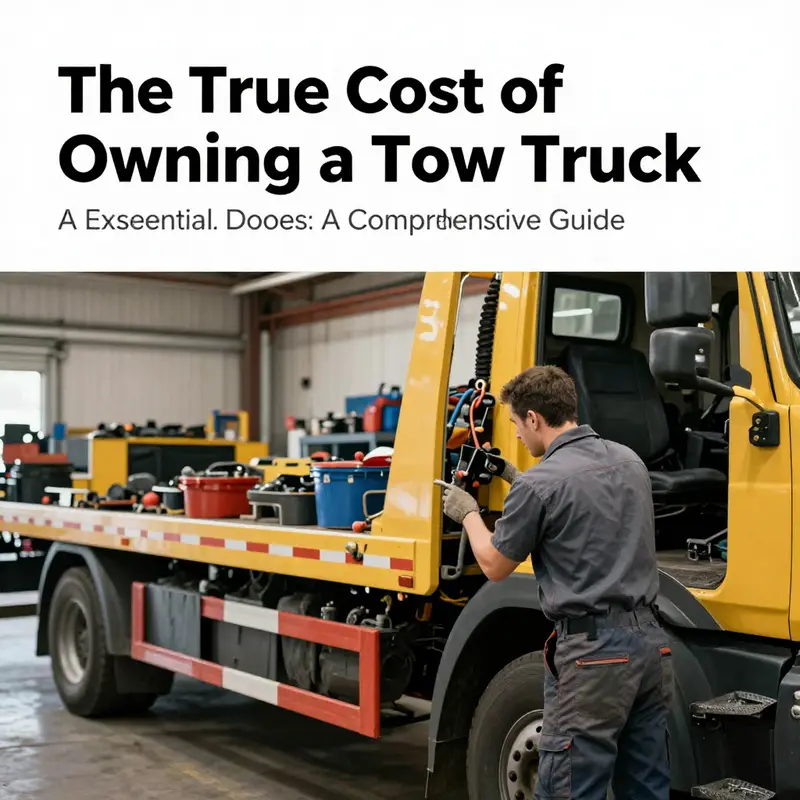
Maintenance and repairs are the quiet backbone of tow truck ownership. The sticker price of a new or used rig is only part of the story. The ongoing costs of keeping a heavy duty recovery vehicle reliable, compliant, and ready to roll determine how quickly a fleet pays back its investment. A well-run maintenance program doesn’t just extend life; it preserves revenue—uptime is the backbone of a productive towing operation. When owners understand what maintenance really costs and how to manage it, they gain a practical edge over competitors who underestimate recurring expenses that come with heavy equipment.
At the core, maintenance for a tow truck is a blend of routine services and vigilant monitoring of high-stress systems. Routine services—oil changes, brake inspections, tire rotations, and steady fluid checks—form the first line of defense against unexpected failures. These tasks may seem mundane, but in a unit that treats inches and seconds as currencies, they are strategic. The oil in a heavy-duty engine not only lubricates but also carries away particulates generated by demanding starts, cold starts, and long idling periods common in dispatch-driven workloads. Skipping an oil change or delaying a brake inspection can cascade into more serious issues, ultimately forcing a tow truck out of service for days or weeks while components are rebuilt or replaced. Tire wear should be monitored with the same rigor, because a premature failure or uneven wear can compromise stability, braking performance, and payload handling. Rotations and alignments aren’t vanity maintenance; they are safety-critical components that protect the vehicle operator and the customer’s equipment.
Beyond the basics, maintenance for tow trucks increasingly centers on the high-stress subsystems that make heavy lifting and rapid deployments possible. Winches and hydraulic systems are the heart of most recovery operations. These components endure repeated cycles of tension and compression, transmitting enormous forces through hoses, seals, and pistons. Regular inspection of hydraulic lines for wear, leaks, and abrasions can prevent sudden failures that leave a truck immobilized and a crew waiting for a rescue. Likewise, the rotator mechanism—if the fleet uses one of the more advanced recovery configurations—depends on precise calibration and robust hydraulic support. Any lag in rotation, jerky movement, or noise during operation is a signal that parts need attention, and often it’s a cue to schedule service before a breakdown occurs. The chassis and reinforcement structures must also be scrutinized, especially in fleets that routinely handle awkward loads or operate in challenging terrains. Stress concentration at mounting points, welds, and braces can gradually degrade without immediate notice, culminating in unsafe operation if ignored.
The cost of maintenance rarely stays constant. It hinges on the truck’s age, the intensity of use, the environment, and the quality of parts and labor. A newer, low-mileage rig will typically demand smaller, more predictable maintenance bills in the initial years, while a high-mileage machine or a rotator with heavy daily utilization will accumulate larger, more complex repair bills. Labor is a significant portion of these costs; skilled technicians with specialized knowledge of hydraulic systems, rotator math, and chassis integrity command premium rates. Parts costs can also be surprisingly volatile. Hydraulic seals, winch drums, and wear plates can have long lead times or require sourcing from specialized suppliers. When a fleet operates in remote locations, the cost to transport parts or bring technicians to a site adds another layer to the budgeting equation.
An often overlooked but essential consideration is the downtime associated with maintenance. While a scheduled service is planned, unscheduled repairs are the real revenue killer. A minor hydraulic hose leak might extend a maintenance window into an all-day delay, especially if the unit is needed for back-to-back calls. More expensive failures—such as transmission issues, engine overhauls, or a failed winch motor—can require overnight repairs or heavy towing of the truck to a service center. Each hour a tow truck remains unavailable translates into lost calls or the need to subcontract work, which erodes profit margins. Forward-thinking operators account for this by building a maintenance buffer into their schedules and finances, ensuring that a failure doesn’t propagate into a service gap that affects customers and cash flow.
Practical budgeting begins with a preventive maintenance framework that aligns with the vehicle’s duty cycle. A disciplined program typically includes a service calendar that specifies intervals for oil and filter changes, brake inspections, fluid checks, and tire care, tailored to the exact engine type, hydraulic system configuration, and load profile. In addition, technicians should perform periodic inspections of critical components such as the winch cables or chains, hydraulic pumps, reservoir levels, and system pressures. Documentation matters as much as the service itself. A meticulous service log helps the operator spot patterns that might indicate creeping wear or emerging risk factors. For example, recurring low-pressure readings in a hydraulic system could point to a worn pump seal, while repeated brake pad wear ahead of expectations might signal misalignment or heavier-than-anticipated loads.
Another layer to consider is the choice between OEM parts, aftermarket equivalents, or remanufactured components. OEM parts carry assurance of compatibility and often a longer warranty, but they can come at a premium. Aftermarket parts may offer cost savings, yet reliability and fit can vary. Remanufactured components offer a middle path, balancing cost and performance, but require diligence in supplier quality and warranty terms. The decision should reflect the fleet’s risk appetite, the criticality of uptime, and the nature of the loads most frequently handled. For operators who manage multiple trucks, standardizing maintenance across the fleet can yield savings in bulk purchases, easier scheduling, and consistent downtime windows. This is where the broader discipline of fleet standardization and emergency readiness intersects with maintenance—the less variance between units, the easier it is to predict costs and keep every truck in service when a spike in demand arrives. A good reference point for aligning maintenance with readiness can be found in guidance on fleet readiness practices.
In practical terms, a proactive operator treats maintenance as an investment rather than a recurring expense. The willingness to allocate funds for preventive care pays off through higher uptime, lower emergency repair rates, and more predictable cash flows. A conservative yet effective approach is to reserve a maintenance contingency fund—an amount proportional to the fleet size and duty cycle. This fund covers unexpected parts, overtime labor, or emergency roadside repairs that standard insurance often does not fully address. The exact figure will vary, but many operators weight it toward several thousand dollars per truck per year, plus a larger reserve for rotators and other high-stress platforms. The cost of insurance, towing, and potential downtime should be weighed against the anticipated savings from reduced failure rates and faster turnaround times. The goal is to keep the fleet in a state of high readiness, able to respond rapidly to incidents while preserving the vehicle’s long-term value.
For operators who want a more structured path, formal maintenance standards and safety guidelines offer a blueprint. The U.S. Department of Transportation’s Federal Motor Carrier Safety Administration (FMCSA) provides resources on vehicle maintenance standards and safety requirements that help owners understand the baseline practices that keep their fleets compliant and safe. Access to official information is available at the FMCSA site, which can guide the establishment of maintenance policies, inspection routines, and record-keeping practices that meet regulatory expectations. As with any regulated industry, staying within these guidelines reduces penalties and downtime while supporting a professional, compliant operation. This alignment with regulatory expectations then harmonizes with internal practices, ensuring that what you do on the shop floor translates into reliable performance on the road.
Leasing or Owning: Navigating the Real Costs Behind Tow Truck Ownership
Choosing how to acquire a tow truck sits at the heart of a balancing act between cash flow, long-term value, and the ability to respond on demand. For a new or growing towing operation, the decision to lease or buy is not just about the sticker price. It shapes the speed at which a fleet can scale, how resilient a business can be during lean periods, and how much risk a operator is willing to shoulder in exchange for potential upside. The financial implications extend far beyond the initial outlay, weaving through every mile driven, every call answered, and every hour spent in maintenance bays. To understand the true cost of ownership, it helps to thread together the direct price tags with the more elusive, ongoing economics that govern profitability over time.
Leasing a tow truck often feels like a smart move when cash flow is tight or when the market is uncertain. The appeal is immediate: lower upfront capital, a predictable monthly expense, and the chance to access newer equipment without tying up a large portion of working capital. For many operators, this can translate into more agile growth, better scheduling options, and the ability to upgrade without taking on a second loan. But a lease is not ownership. The monthly payments accrue over the term without building equity, and there are always strings attached—limits on mileage and usage, depreciation of the asset’s value, and potential charges for excess wear. End-of-lease options may include purchase at a set price, but in many cases the operator simply returns the truck and swaps into another lease, forever paying for access rather than ownership. Leasing can also influence maintenance decisions. Some leases bundle maintenance, which reduces maintenance uncertainty but may also dampen incentives to control costs as aggressively as an owner who pays the bill out of pocket. The total cost of leasing, when tallied over a typical multi-year period, can be substantial, even if it preserves cash today. The monthly figure often cited in industry discussions ranges roughly from $1,500 to $5,000, depending on the truck’s capacity, the features included in the lease, and whether maintenance is bundled. The economic logic is straightforward: lower upfront cash, steadier monthly commitments, and the flexibility to pivot to different equipment as the business needs evolve. Yet this comes at the cost of never owning an asset that can be resold or used as collateral in future financing. In other words, leasing is a rental with a billing plan that compounds over time without creating equity.
Buying a tow truck, by contrast, positions the operator for longer-term control and potential wealth creation, but only if the business can bear the upfront and ongoing costs. When you buy, you own the asset outright or you own it through financing. The upfront capital required is the clearest hurdle: for many operators, especially those starting small or entering with a used model, the price can be manageable. Research into market data shows a mid-range frame for a new medium-duty tow truck around $60,000 to $120,000, with used units commonly priced between $30,000 and $80,000 depending on mileage and condition. These ranges reflect the core tension in ownership decisions: a higher upfront investment can yield long-term depreciation, resale value, and the ability to leverage the truck as collateral or to refinance in lean years. When financing is involved, the cost of ownership shifts from a single large payment to a stream of loan payments that extend over years. If the loan is structured over five years at a reasonable interest rate, the total cash outlay over the life of the loan will exceed the sticker price, but equity accumulates as payments are made and the asset slowly loses value. The allure is clear: once the loan is paid off, the operator has a depreciating yet still usable asset and, importantly, no recurring loan payment to service. The asset can still generate revenue that exceeds ongoing costs, turning ownership into a powerful lever for growth, expansion, or even collateral for future financing. The key is to ensure the operation’s revenue stream can reliably cover not just the loan but also the inevitable operating costs that accompany ownership.
Ongoing operational expenses weigh heavily in both scenarios, but they come into sharper focus when ownership is decided. Fuel and maintenance demand careful budgeting. Rotators and large flatbeds consume more fuel and require more frequent hydraulic system servicing, tire replacements, and wear items. Insurance for commercial towing is substantial because of the high-risk environment—liability, physical damage, and cargo coverage all factor into the annual cost. Licensing and permits are not mere formalities; they are recurring costs that align with local regulations and the scope of work. Depreciation is another important consideration. Tow trucks lose value as they age, particularly when technology and safety standards advance or when mileage climbs. Training and certification are ongoing commitments, especially for operators who handle specialized equipment like rotators. These elements become the backbone of a budgeting approach that is less about a single purchase and more about the lifecycle of the asset.
A framework for decision-making helps translate these costs into a defensible business choice. Leasing may be the better route if the business anticipates rapid scaling, needs high flexibility, or must preserve capital for urgent marketing and customer acquisition. Buying tends to favor operators with a longer horizon, steady revenue projections, and the ability to absorb the fixed costs of ownership, including maintenance and insurance and the risk of depreciation. Industry perspectives offer a useful anchor: even when financing terms vary, the practical value of an owned tow truck tends to manifest through operational use and revenue generation, rather than through the romance of favorable financing alone. In this sense, the asset is profitable if it can be put to work consistently enough to cover depreciation, fuel, maintenance, insurance, and loan payments, with surplus revenue contributing to profit. This aligns with the broader industry observation that ownership, when used effectively, remains a net profitable strategy, particularly when the operator can deploy the truck to maximize utilization.
To illustrate how these figures come alive in a real business decision, consider a hypothetical small operator weighing a used tow truck purchase versus a modest, five-year lease. A used truck priced at around $50,000 could be financed at a rate typical for small businesses, say around 5-7 percent, over five years. Monthly payments would approximate several hundred to under a thousand dollars, depending on the exact terms. Add annual operating costs—insurance, fuel, maintenance, tires, and licensing—and the annual running total could realistically range from $20,000 to $60,000. If the business-at-hand can reliably secure a steady stream of calls that yields gross revenue well above this baseline, ownership begins to resemble a forced saving plan: payments reduce debt while the cargo and service capability retain value and offer a platform for growth. Leasing, while keeping monthly costs predictable, would convert the same asset into a serviceable expense with fewer opportunities to build equity, and the economics would hinge more on uptime and utilization than on asset appreciation or resale value.
Practical planning, however, is about more than numbers. It’s about aligning financing with a defined business model and a clear service strategy. Leasing can preserve liquidity for unexpected repair costs or fleet standardization efforts that improve emergency readiness. It can also provide a path to modernizing a fleet in step with demand cycles, while minimizing the credit risk borne by the business during periods of volatility. On the other hand, owning an asset that can be deployed across a broader range of service scenarios can amplify revenue potential, particularly when the operator develops efficient maintenance routines, reduces downtime, and builds a predictable maintenance calendar that preserves uptime. In this sense, acquisition strategy should be paired with a disciplined plan for utilization. A well-rented or well-owned fleet is only as valuable as its ability to secure calls and convert them into paid work, a truth echoed in broader industry analyses that assert ownership becomes financially advantageous when the asset is consistently put to work.
A coherent path forward will also consider the strategic value of fleet standardization and emergency readiness. Consolidating equipment, standardizing maintenance practices, and training operators to handle specialized gear all contribute to lower operational risk and higher service reliability. This is a thread worth exploring in more depth as you map out your capital plan and asset management. For further reading, a practical discussion on these topics can be found in related resources, including an exploration of fleet standardization and emergency readiness. fleet standardization and emergency readiness.
When weighing leasing against buying, remember that the numbers tell a story, but the narrative is driven by utilization. The more consistently a tow truck is on the road, the more its ownership economics tilt toward profitability. If the business model anticipates sustained demand, reliable revenue, and controlled maintenance costs, buying can be the smarter long-term move. If growth hinges on agility, controlled risk, and preserving capital for marketing or diversification, leasing may be the prudent choice. Either path can yield positive returns if the operator builds a disciplined operating plan that aligns asset cost with revenue potential, maintains a robust maintenance program to reduce downtime, and anchors financing decisions in realistic utilization projections.
For those seeking more granular cost benchmarks, external resources offer deeper data on ownership costs, depreciation schedules, and long-term profitability implications. External reference: https://www.ntra.org/ownership-costs. This kind of data helps convert abstract price ranges into actionable budgeting scenarios, supporting a decision that balances upfront affordability with long-term value. The best approach is to model multiple scenarios: one that leans into leasing as a bridge to growth, and another that prioritizes ownership to build equity and collateral for future expansion. In practice, the wisest path often lies in a hybrid strategy—start with a sound lease on newer equipment to steady revenue generation, then progressively transition to owned assets as the business scales and the cash flow strength solidifies. This allows new entrants to test the market without overcommitting, while still laying the groundwork for a future ownership posture that can sustain profitability through the full lifecycle of the vehicle. The goal is not to choose one path forever but to engineer a capital plan that matches your service strategy, service quality, and the predictable demand that underpins a tow truck operation. For many successful operators, that means an evolving combination of lease and ownership, paired with rigorous maintenance regimes, smart insurance, and disciplined budgeting that anticipates both the open road and the road ahead.
Final thoughts
Understanding the total cost to own a tow truck is crucial for anyone considering entering the towing business or owning a tow truck for personal use. By comprehending the upfront costs, continuous operational expenses, necessary insurance, and maintenance implications, you can make educated financial decisions. Ultimately, whether you choose to buy or lease, careful planning and awareness of all aspects of tow truck ownership will ensure your investment is sound and profitable.