

Understanding how much a tow truck driver earns is crucial for local drivers, auto repair shops, and property managers alike. This article dives deep into salary variations for tow truck drivers in Canada and the United States, highlighting regional differences that affect earning potential. From bustling metro areas to smaller communities, salaries can fluctuate wildly due to local demand, competition, and cost of living. Throughout this exploration, we will unravel the complexities of tow truck driver salaries and provide actionable insights for those in need of towing services or considering a career in this field.
Tow by Tow: A Realistic Look at What Tow Truck Drivers Earn Across Canada and Beyond

Pay is not a single number you can pin to a job title like tow truck driver; it’s a landscape shaped by location, demand, time on the road, and the increasingly specialized tasks a driver handles. When you ask how much a tow truck driver makes, you’re really asking how long the piece of string is and where you’re standing when you measure it. Across Canada and the United States, the numbers show a broad spectrum. In Canada, the average hourly rate hovers near the mid-teens to the low twenties, but with sharp accelerations in certain cities and for drivers who can handle heavy-duty or emergency response work. The United States tends to tilt a bit higher on the hourly scale, reflecting regional cost-of-living differences and market demands. Yet even within one country, the range is wide enough to remind us that a paycheck for tow work is as much about where you work as how you work. And like any skilled trade, those who invest in training, certifications, and a reliable client network can push earnings well beyond the baseline.
To begin with, the Canadian picture is a mosaic of averages and outliers. The typical take-home figure, when you translate the common hourly rate into an annual salary based on full-time hours, lands near the mid-$60,000 range. The most widely cited benchmark places the national average at about $17.75 per hour, which, when multiplied across a 40-hour week for a full year, aligns with roughly $60,000 to $61,000 before taxes and benefits. That said, several factors pull the line up or down. In provinces where traffic density, weather volatility, and infrastructure span a larger footprint, the hourly rate can be notably higher. In Canada’s broader market, the range is wide enough to carry annual earnings from roughly $40,000 at the lower end to close to $100,000 for those in specialized roles or premium markets who can consistently secure heavy-duty work or high-demand shifts.
The provincial story is where the pay map becomes particularly meaningful. Alberta, a province with a strong freight and road-rescue ecosystem, presents a nuanced picture: the average drops slightly toward $16.01 per hour, but this hides pockets where drivers can earn significantly more. In major centers like Calgary, drivers may find wages reaching into the high teens or low twenties per hour, and in some niches or with seniority, the pay can crest around $28.50 per hour. Edmonton shows a somewhat higher baseline in the data, with rates around $24.05 per hour in certain postings, illustrating how urban demand and employer competition can lift the scale independently of provincial averages. The Ontario landscape adds another layer of variation. Ontario posts often indicate annual compensation bands for full-time positions that can stretch from roughly $50,000 to $80,000 per year, reflecting a combination of province-wide demand, union presence in some fleets, and the region’s larger population driving call volume. In smaller markets, the gap between the top earners and the rest can be more pronounced, while larger urban centers deliver a steadier drumbeat of assignments that keeps drivers moving and earning through longer shifts or weekend work.
In British Columbia and the Maritime provinces, the pay picture frequently fluctuates with the tempo of incidents and the level of service a driver can offer. In British Columbia, the overall average hovers near the provincial mean, but certain cities push well above that baseline. Richmond, for example, has in practice delivered hourly rates well above the provincial average, signaling a market where high demand and competitive bidding among towing services create premium compensation for experienced drivers who can handle complex calls. The Maritime provinces offer a different rhythm: in Halifax, a driver can see a noticeably higher rate on certain shifts, with hourly earnings that climb toward the upper twenties in high-demand periods. In nearby communities with smaller populations, the rate can dip but often remains competitive relative to broader national figures. What matters most in this regional tapestry is not merely the listed rate, but how a driver’s schedule aligns with peak demand, road hazards, and the cadence of emergencies that never adhere to a predictable clock.
Nova Scotia’s coastal dynamics illustrate the point vividly. Dartmouth’s average sits around $15.70 per hour, a reminder that some markets lag the national benchmark. Yet in Halifax itself, drivers can command $27.39 per hour under certain conditions, and even nearby Hammonds Plains can offer higher-than-average rates, such as $22.68 per hour. This contrast underscores a simple reality: proximity to larger service networks, the frequency of severe weather events, and the proximity of fleet bases all tilt the pay scale. It’s not merely about a city’s headline wage but how often drivers are called to respond during high-demand windows, including nights, weekends, and holidays when services are most needed.
If you zoom out to the general Canadian market, the pattern becomes clearer. The top-paying cities in the dataset show how dispersed earnings can be. Thunder Bay, Ontario sits near the top of the country’s pay ladder, with hourly rates that reflect a market where long-haul towing, accident response, and specialized vehicle recovery are more common. Halifax and Richmond also emerge as notable outliers on the higher end, where concentrated populations, dense road networks, and the near-constant need for roadside assistance elevate opportunities for drivers who can work efficiently under pressure. Across the broader landscape, some specialized or more seasoned drivers can earn notably more — there are credible reports of rates approaching the $39 per hour mark in certain markets, with some roles in heavy-duty or high-demand sectors commanding such premiums. This isn’t a universal rule, but it highlights a critical truth: specialization and reliability translate directly into higher hourly compensation where the market values experienced, dependable tow operators.
All of these provincial and city-level dynamics feed into a single central idea: earnings for tow truck drivers are as much about where you work as about the base rate listed in a job posting. The average wage figure is a valuable compass, but it’s not a guarantee. The literal cash in your pocket can be shaped by the size of the fleet you work with, the hours you take on, the kinds of calls you routinely handle, and your readiness to accept overtime during peak demand or after-hours emergencies. In this sense, the job resembles other on-the-road trades that thrive on variability: the more often you’re called to respond to non-standard situations, the more value you deliver, and the more your compensation tends to reflect that value. The data paints a realistic picture: most drivers can expect an annual range that sits somewhere in the mid-range to high range, with established earners in the right markets reaching toward the upper end of the spectrum, particularly when overtime and heavy-duty work are part of the regular mix.
A closer look at the mechanics behind these numbers reveals why the same title can carry very different price tags in different places. Hourly wages are the easiest to compare at a glance, but they tell only part of the story. If your hours fluctuate with the weather, road conditions, or the volume of road incidents, you may accumulate more hours in a given week than a typical 40-hour schedule would imply. In a high-demand market, a driver who picks up late-night calls, oversees complex recoveries, or travels across metro areas to assist multiple fleets can stack a week with substantial overtime. Conversely, a driver in a smaller town with fewer fleets and a steadier flow of calls may enjoy a lighter schedule, even if their base hourly rate is in the same ballpark. The math behind an annual salary then becomes a function of three variables: hours worked, the rate paid for the hour, and the premium associated with specialized or heavy-duty tasks. The first two are straightforward. The third is where the choices of the employer, the driver’s certifications, and the market’s appetite for reliable, capable responders produce meaningful differences in what ends up in the bank.
A useful lens to apply here is the distinction between general towing versus specialized emergency work. General towing — which often includes vehicle recovery from parking lots, minor accident scenes, or roadside assistance calls — may come with a steady but modest hourly rate. In contrast, specialized operations or heavy-duty recovery — tasks like vehicle extraction from difficult terrain, crane-assisted recoveries, or multi-vehicle incidents on major corridors — tend to command higher hourly rates and more predictable demand in certain markets. In some markets, this specialization can push an individual driver’s earnings toward the higher end of the spectrum, with premium calls requiring advanced training, heavier equipment, and a reputation for safe and efficient service. The contrast between these modes of work helps explain why two drivers in neighboring towns can earn markedly different annual totals even if their base wages appear similar on a one-hour basis.
For those planning a career in tow work, this variability is not a warning but a map. It suggests two practical approaches to maximize earnings. First, aim for markets with dense fleets and high call volumes. Second, invest in certification and experience that unlock access to heavy-duty or emergency-response work. These two pivots often translate into higher hourly rates and more consistent overtime opportunities, which in turn lift annual earnings beyond the baseline. The data also reinforces the value of mobility. The most lucrative routes aren’t always the shortest; they are the ones that align a driver with a steady stream of high-demand calls, a reliable employer network, and the wherewithal to handle complex recoveries under pressure.
From a career-planning angle, the numbers also invite a broader reflection on what drivers value beyond the paycheck. Wages are, after all, one piece of the employment puzzle. Job stability, safety, benefits, training opportunities, and work-life balance all exert a powerful pull. For some, a higher hourly rate in a demanding market may come with longer or more irregular hours. For others, a slightly lower rate in a more predictable schedule may offer the better overall package, especially when benefits and retirement contributions are factored in. Those choices matter when you compare offers in different regions or when you’re weighing the immediate need for cash against longer-term career development. The bottom line remains simple: the pay you see on a job ad is a snapshot, not a forecast. The real earnings you’ll experience depend on how you navigate the market, invest in your skills, and align your schedule with the market’s busy windows. This is the practical contour of pay in a field built on mobility, resilience, and quick, decisive action on the road.
For readers seeking a more expansive data point, industry insights can be found in the Santa Maria Tow Truck blog, where broader discussions on fleet operations and emergency-readiness touch on the labor market in ways that illuminate the pay picture. See the discussion here: Santa Maria Tow Truck blog. That resource connects the pay landscape to the realities of fleet management, driver training, and the episodic demands that define tow work across different regions. The connection between pay and practice becomes clearer when you read how fleets standardize procedures, plan for emergencies, and recruit drivers who can meet a broad spectrum of service levels. The blog’s broader perspective helps frame why certain markets reward specific skills more than others and why some employers invest in the kinds of training that translate into higher effective rates for drivers who can deliver complex recoveries efficiently.
With these patterns in mind, it is also useful to consider the practical, day-to-day implications of pay data for someone contemplating a move into tow truck work or seeking to optimize earnings within an existing role. A practical starting point is to map out a personal financial plan that aligns with the expected schedule. If you are entering a market with a higher hourly rate but more demanding hours, you may want to budget for irregular income and the possibility of longer stretches away from home. Conversely, if you are targeting a market with a steadier schedule and a lower base rate, you may seek advancement opportunities, additional certifications, or even a move into fleet management or supervisor roles where leadership responsibilities are tied to higher compensation. In both scenarios, the key is to translate the abstract numbers into real-world planning: how many hours can you realistically work, how much overtime is sustainable, and how does the local demand align with your personal goals and family needs?
It is also worth acknowledging the broader labor-market trends that influence wages beyond the specifics of a city or province. As road networks expand, weather patterns become more extreme in certain regions, and the number of vehicles on the road climbs, the demand for dependable tow services grows. This dynamic tends to favor drivers who are flexible, willing to work nights and weekends, and capable of performing complex recoveries in challenging environments. While not every day will be high-wage, the structural demand for towing services sustains a baseline of earnings and, in the strongest markets, supports a ladder of higher earning opportunities for those who pursue skill progression and excellence in service.
If you want a quick comparator to the Canadian picture, the United States, while diverse by state, shows a similar logic: the average hourly wage sits higher on average, at around $21.13 per hour, reflecting both regional cost-of-living differences and market dynamics. The U.S. pay story reinforces the central idea that pay is highly contextual. A driver trained in a major metropolitan area with a high volume of incidents and a fleet that handles heavy-duty recoveries can earn substantially more than a counterpart in a smaller town with a lighter workload, even when both operate under the same job title. The comparison underscores a broader truth about the trade: your earning potential is anchored in the surrounding ecosystem of demand, infrastructure, and opportunity as much as in the job description itself.
The data also highlights the practical range you can expect in a Canadian context when you consider annual compensation. In a typical setting, a driver might earn somewhere around the mid-range of the spectrum, with many roles offering $50,000 to $80,000 per year for full-time arrangements, particularly in Ontario and Alberta. For a broader perspective, a few roles in specialized or high-demand markets may push earnings toward the higher end, potentially approaching or surpassing the $90,000 to $100,000 mark for seasoned drivers with a strong track record and a willingness to work long hours during peak seasons. This range captures the reality that pay is not a single fixed line but a tapestry woven from hours, market conditions, and the strategic choices a driver makes about where and how to work. It also points to a practical takeaway for anyone considering this path: latitude matters. Mobility—whether that means relocating to a city with more fleets, taking on heavier-duty assignments, or pursuing targeted certifications—often translates directly into higher compensation.
For readers who want to ground these numbers in a broader data source, a comprehensive external reference is available at Indeed, which aggregates nationwide and regional data on tow-truck-driver salaries. This source helps illuminate how the market assigns value to a driver’s skills across different contexts and over time. External data: https://www.indeed.ca/salaries/tow-truck-driver-salaries.
In sum, the question of how much tow truck drivers make is answered not by a single figure but by a spectrum. The Canadian average sits around the mid-$60,000s in annual terms, with significant variation by province and city. Higher pay exists where demand is concentrated, weather and road conditions are demanding, and fleets rely on experienced operators to perform complex recoveries. The pay story in the United States mirrors this pattern, with a higher national average reflecting different market dynamics. The most reliable conclusion is that earnings are highly actionable for those who combine practical experience with strategic choices: pursuing markets with robust call volumes, investing in certifications that unlock heavy-duty and emergency-response work, and maintaining flexibility to work during peak periods. In a field defined by mobility and rapid response, the way you deploy your hours and your skills often determines the scale of your paycheck more than the headline rate alone. For anyone charting a path into tow work, this is a reminder that the real pay comes from how you live on the road, how you rise to the demands of the job, and how consistently you deliver dependable, professional service when every mile and every minute counts.
External resource: https://www.indeed.ca/salaries/tow-truck-driver-salaries
Tow Lines and Paychecks: A Closer Look at How Much U.S. Tow Truck Drivers Earn

Tow truck driver earnings reflect more than a single wage. In the United States, the typical pay hovers in the low $20s per hour, with variations by location, job type, and hours worked. On average, drivers may earn around $21 per hour, translating to roughly $1,700 per week and about $90,000 per year for full-time work, depending on overtime and shift patterns. Pay can be higher in urban centers and for heavy-duty or high-demand work, while rural areas may offer lower base rates. Overtime, on-call premiums, and weekends often boost take-home pay, but the schedule can be irregular. Experience matters; seasoned drivers often command higher rates due to efficiency and safety. Some drivers work as independent contractors, which can change how earnings are calculated and whether benefits are included. Beyond wages, benefits, per-diem allowances, and bonuses can contribute to total compensation. The compensation picture also intersects with regional cost of living and the local market for towing services. In sum, tow truck earnings vary widely, but the pay landscape tends to reward reliability, safety, and availability, particularly in busy markets.
Geography, Demand, and Pay: Regional Differences in Tow Truck Driver Salaries and What They Mean for Earnings
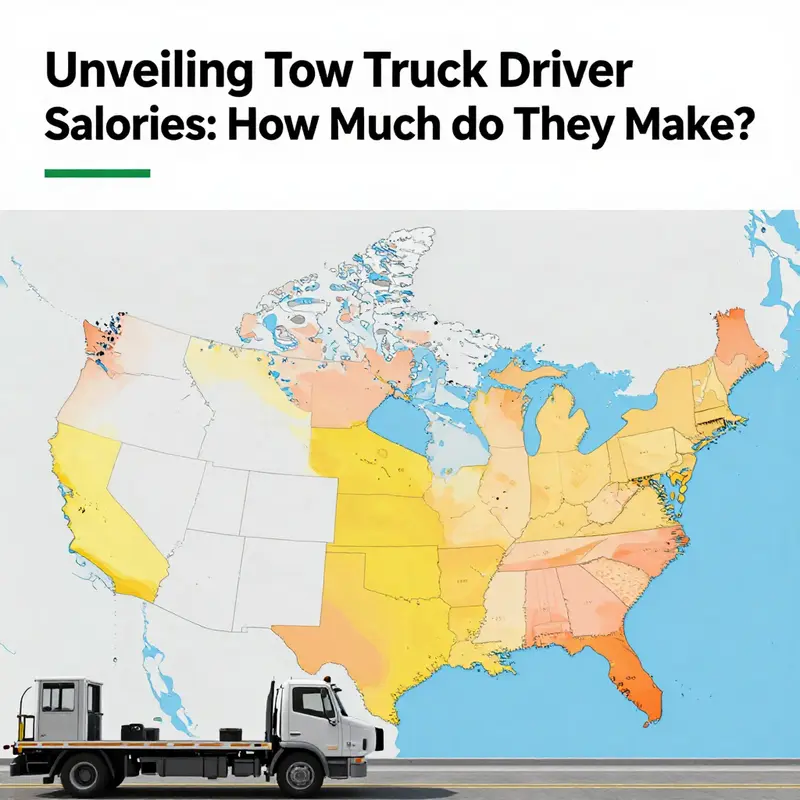
Payday in the tow truck world is not a single number you can pin down with a single formula. It travels with you, carried by the geography of the road you drive, the density of traffic you clear, and the kind of tow work your fleet needs you to perform. Across Canada, the United States, and even distant markets like Australia, pay reflects a layered reality: local cost of living, seasonal demand, regulation, and the specialization that operators require. When we look at the numbers together, a clear pattern emerges. Earnings are not uniform; they rise and fall with place, purpose, and the pace of urban life. In Canada, the story begins with a national average that sits at a modest level by global standards. An hourly wage around the mid-teens, roughly $17.75, underscores a market that balances low to mid-range pay with a spectrum of regional variations. Yet this is not the full picture. Province by province, the board shifts. In some cities, the draw of tow and recovery work surges—creating pockets where drivers can earn substantially more per hour. Consider Richmond in British Columbia, a market that stands out by paying around $24.06 per hour. That figure is a solid 36 percent above the Canadian national average, signaling how urban density, congestion, and the volume of incidents can trumpet earnings even when the base rate remains relatively modest. In Alberta, the picture is more nuanced. The provincial average sits around $16.01 per hour, a touch below the national Canadian average, yet the same province houses pockets where specialized services command far higher rates. In Edmonton, Alberta, drivers report roughly $24.05 per hour, while Calgary’s market hovers near $17.75 per hour. The spread inside a single province mirrors the broader national reality: urban centers with high demand and specialized capabilities can outpace more general, routine towing work. Ontario presents its own strong case for regional variation and the promise of a higher ceiling. Across cities in Ontario, full‑time tow drivers often report annual earnings in the range of $50,000 to $80,000. That range reflects both the cost structure of living in populous regions and the demand for round‑the‑clock recovery services, especially in metro corridors and major highways with higher incident rates. The variability within Ontario is telling: a Whitby or suburban Ontario wage scale can sit close to the national averages, while larger metropolitan centers can push annual income upward when drivers accumulate hours in night shifts, heavy loads, or complex recoveries. The data also bring attention to standout numbers in specific communities. Thunder Bay, Ontario, sits at one end of the spectrum with a rate of about $26.53 per hour, which translates into a meaningful lift in annual earnings for those who work a full course of shifts. Nova Scotia contributes its own twist to the regional tapestry. In Dartmouth, the average hourly wage dips to around $15.70, roughly 12 percent below the Canadian national average, illustrating how more rural or lower‑density markets can pull wages downward. Yet nearby Halifax diverges markedly from the rural outliers, offering a striking example of how proximity to large urban markets and the volume of tow requests can elevate pay. In Halifax, drivers report roughly $27.39 per hour, and Hammonds Plains shows responsive rates around $22.68 per hour. The contrast within a single region is an important reminder that distance from the city core, access to highway corridors, and the concentration of fleets all shape what a driver can take home each week. Across British Columbia in general, the statewide average sits near $17.85 per hour, aligning closely with the Canadian average. But the same rule that applies in Ontario and Nova Scotia—urban density and specialized services commanding higher pay—also applies here. The highest earning opportunities in BC tend to cluster in metropolitan pockets and in operations that require additional skills, such as heavy towing, winching, or roadside rescues that demand very rapid response and complex equipment handling. The landscape becomes even more varied when the focus shifts to specialized roles. Across Canada, certain employers and regions offer top end wages that exceed $39 per hour. In Ontario and Alberta, experienced drivers with specialized equipment or high‑volume, time‑sensitive work can cross that threshold, sometimes approaching or surpassing $39 per hour in well‑staffed fleets that emphasize emergency response, heavy duty towing, or light tows with complex vehicle recoveries. While an hourly rate is a useful gauge, it does not always fully describe the earning potential, and annual compensation can provide a richer picture. Many positions in Ontario and Alberta translate to annual incomes in the $50,000 to $80,000 range once benefits, overtime, and shift differentials are considered. The Canadian story, then, is not a single arc but a constellation: the baseline wage is modest, but the pay rises in urban cores, with specialized capabilities, and with fleets that operate around the clock to meet demand. If we widen the lens and cross the ocean to Australia, the pattern becomes even more instructive about how geography and market structure shape compensation. In Sunbury, Victoria, the average annual salary is an eye‑catcher: roughly $122,535. That figure is an astonishing 56 percent above the Australian national average, signaling a market where high demand, geographic factors, and perhaps limited competition combine to lift earnings. Sunbury’s cutting‑edge pay is not simply a function of a higher hourly rate; it reflects a concentration of operations, traffic patterns, and the operational costs of servicing a suburban and semi‑urban zone with intensive road recovery needs. The takeaway from this Australian example is that regional disparities can be dramatic, and location can turn a standard tow driver into a high‑earning professional if the market conditions align. On the other side of the ledger, the Canadian and US comparisons remain instructive. The York Regional data point in Ontario—an average weekly pay around $1,141—illustrates how even a mature market can show a weekly income that sits about 8 percent below a national average, suggesting that local cost conditions, competition, and operating expenses temper what could appear, at a glance, as an otherwise robust earning potential. Taken together, these regional snapshots reveal a fundamental truth: earnings in towing are as much about where you work as what you do. High‑volume urban corridors with abundant incidents and fleets that can move quickly tend to create pay premiums. Fleets that operate around the clock, with skilled personnel who can handle complex recoveries, tend to reward experience with higher rates. And markets with denser populations, larger vehicle fleets, and tougher traffic environments often translate into more opportunities to work and more hours logged, which in turn elevates annual earnings. Yet the flip side is equally important. Regions with lower demand, longer distances between calls, or fewer incidents per shift tend to keep both hourly rates and weekly hours lower. In such places, the same driver might earn less even when the hourly wage is respectable. This regional mosaic is not a mere curiosity; it is a practical map for anyone considering a towing career. If earning potential is a major driver of your career choice, the geography of your work matters as much as the road conditions you face. That means prospective drivers should not just compare hourly rates; they should assess how many hours are realistically available, what kinds of tasks are prioritized by local fleets, and how much premium work exists for specialized towing. It also means that the decision to relocate for work, or to focus on a particular niche—such as heavy rescue, winching, or highway callouts—can have a meaningful impact on take‑home pay. The landscape is further clarified when we consider what these numbers imply for the everyday decisions a driver makes. If you aim for a higher hourly wage in an urban hub, you should expect a higher cost of living and a more demanding schedule. If you prefer steadier, more predictable shifts in a lower‑demand region, a moderate hourly rate may still yield a solid annual income due to the sheer volume of hours you can work over the year. The choice of region, then, becomes a strategic element of career planning, not merely a backdrop. It influences how you negotiate pay, how you structure your shifts, and how you balance the demands of night work, weekends, and holiday coverage. For those weighing the balance of personal life and professional earning, this regional tapestry offers guidance: the highest income opportunities tend to cluster in dense, high‑volume markets with sophisticated fleets and a strong emphasis on emergency and heavy‑duty towing. In those settings, ongoing training, certifications, and a willingness to work irregular hours often translate to the greatest financial return. Yet even in smaller markets there is potential, particularly if a driver aligns with a fleet that emphasizes reliability, rapid response, and customer‑facing service. The numbers also remind us that the job is skilled work that combines mechanical aptitude with situational judgment. A driver’s earning capacity is tethered to their capacity to manage complex recoveries, operate heavy equipment safely, and navigate the regulations and licensing requirements that can differ between provinces or states. Professionals who actively pursue additional certifications—heavy‑duty towing, winching, roadside rescue, and related technical competencies—tend to widen the gap between their compensation and that of less specialized peers. The practical implications are not abstract. They show up in the calendar of shifts, the pull of overtime, and the decision to accept high‑demand routes or to specialize in particular kinds of work that command premium rates. And the data, including the striking example from Sunbury, Victoria, remind us that even within a single country, the earning terrain can be dramatically reshaped by location. For individuals mapping a career in towing, these regional differences should be treated as a map of opportunity rather than a single destination. If a driver wants to optimize earnings, the path may involve moving toward urban centers with dense fleets, taking on specialized tasks that justify higher rates, and building a track record of reliability and speed in incident response. The message for readers—whether you are new to the trade or a seasoned driver exploring mobility across markets—is that pay is a function of geography as well as of skill. It is a call to assess the local economy, the demand for tow services, and the specific needs of the communities you serve. And it is a reminder that the modern tow truck operator is part technician, part logistics planner, and part customer service professional, whose earnings—and career trajectory—are shaped as much by where you work as by what you can do behind the wheel. For further context on industry standards and daily operations in this broader landscape, you may consult a practical resource that dives into the everyday realities of towing work, including fleet considerations and service standards: santamariatowtruck.com/blog/. The regional numbers presented here, however, are anchored in verifiable data from labor reports and salary aggregators, and they illuminate a landscape where choice and consequence intertwine. If you want to expand your understanding with quantitative perspectives from other markets, PayScale’s data offer a useful reference point for international comparisons and the way pay differences play out in practice in a specific market: https://www.payscale.com/research/AU/Job=TowTruckDriver/Salary.
Final thoughts
The earnings of tow truck drivers are shaped by various factors, including geography, experience, and market demand. Whether you’re a local driver, an auto repair shop owner, or a property manager, understanding these salary dynamics is essential for making informed decisions. As the towing industry evolves and adapts to new challenges, staying updated on these figures can lead to better business strategies, improved financial planning, and a deeper respect for the critical services that tow truck drivers provide daily.