

When your vehicle breaks down unexpectedly, understanding towing costs can significantly ease the stress of the situation. The price of towing per mile typically ranges from $2 to $5 for standard vehicles, but various factors can change these figures drastically. For local drivers, auto repair shops, and property managers, knowing how these costs are calculated is essential for effective budgeting and decision-making. This article delves into understanding towing costs per mile, explores the factors that influence charges, offers a nationwide comparison, and provides actionable tips for reducing expenses associated with towing services. By equipping yourself with this knowledge, you will be better prepared to navigate any towing situation that may arise.
Tow Costs by the Mile: Decoding the Real Price of a Tow Truck Ride
When you find yourself stranded or blocked by a disabled vehicle, the last thing you want to guess is how much the tow will cost. Yet in the moment of need, the price often comes down to two core items: a base dispatch fee and a per-mile charge. This pairing is the standard in many markets, and it governs most invoices you’ll encounter. The base fee covers the transport request itself—the wrenching, dispatch, and the logistics of dialing up the right equipment and driver. The per-mile portion then scales with the distance, turning a short tow into a compact travel bill and a long tow into a sizable one. In practice, most operators place a base charge somewhere in the low to mid hundreds of dollars or a smaller, more modest amount that still covers the truck, labor, and response time. The per-mile rate threads through the remainder, accumulating weight as the tow distance lengthens. Across the United States, this per-mile component typically ranges from about $1.50 to $3.50, with actual prices shading toward the higher end in busy urban centers or when special needs arise. Some industry estimates put the upper bound even higher, but the common ground is clear: the longer the distance, the greater the total, and the base fee never vanishes as a fixed starting point. To anchor this with real-world intuition, consider a short five-mile tow. A widely cited example shows a total around $75, a figure that often reflects a modest base fee paired with a few miles of transport at a reasonable per-mile rate. Move to longer distances, and the math compounds quickly. A fifty-mile haul can easily push past $300, especially if the vehicle is heavy, requires a specialized apparatus, or if the tow crosses into rural regions where alternative options are sparse. These general ranges are not universal, and the way a given shop calculates the bill can shift depending on vehicle type, equipment needs, and local market dynamics. Yet the framework remains helpful: plan for a fixed starting cost, then anticipate a distance-driven increment that scales with the miles traveled and the complexity of the job. For readers who want to see how this plays out in practice, the Santa Maria Tow Truck blog offers a number of case reviews and price breakdowns that illustrate how regional factors shape totals. You can explore their insights here: Santa Maria Tow Truck blog.
Beyond the basic structure of base plus per mile, several interlocking factors tune the final number you’ll see on the invoice. Distance traveled is the primary driver. Short tows, such as a five-mile pull to a nearby workshop, may resemble something like a lightly seasoned appetizer—simple, quick, and relatively affordable. The vehicle’s weight and type then determine the equipment load and the crew’s required expertise. Heavier vehicles—SUVs, pickup trucks, commercial vans, or specialty machinery—demand stronger tow rigs, more robust winches, longer cables, and sometimes additional crew members to secure and maneuver the load safely. This equipment intensity translates into higher per-mile charges and occasionally a higher base fee to reflect the extra labor and fuel consumption involved. For a standard sedan, the per-mile charge may sit closer to the lower end of the range; for a heavy-duty unit or a multi-axle trailer, the rate climbs, and the overall ticket swells accordingly.
The choice of tow truck also ripples through the cost structure. A flatbed tow truck is widely recognized for its ability to transport vehicles with all four wheels off the ground, preserving drivetrain integrity and reducing the risk of damage during transport. This approach is often preferred for vehicles with low-ground clearance, vehicles with certain tire configurations, or units that might incur damage if towed with a traditional wheel-lift. Flatbeds require more specialized equipment and fuel, and their operation can be relatively more expensive than wheel-lift solutions. The added capability comes with a price, particularly when every mile on the bed counts. A standard wheel-lift tow, while typically cheaper per mile and faster for certain light loads, may impose limits on the types of vehicles that can be safely towed and could lead to additional labor if the vehicle needs special securing or winching. Those distinctions matter because they influence both the base fee and the mileage rate, especially as the distance grows or as the job presents unusual handling requirements. The overall picture is one of a complex balance: safety, vehicle protection, time, and the practical realities of roadwork in a given market.
Time of day and location further modulate pricing in meaningful ways. Emergency tows, late-night calls, or services during holidays face premium rates driven by demand and the scarcity of available drivers and trucks. The same tow in daytime hours in a busy urban center can be simply more expensive due to higher labor costs and congestion, whereas rural areas may offer more favorable rates if supply outstrips demand. These timing and geographic variables create a spectrum in which the same basic service looks different from town to town and hour to hour. When you add the possibility of storage or impound transfer fees, the picture becomes even richer—and more important to understand before saying yes. Storage charges, if your vehicle must be held in a lot after a tow, can accumulate daily and alter the total cost dramatically, especially if the car travels through a few days of administrative processing before a release or pickup. Some operators also charge for “hook and roll” or set-up fees, recognizing that the process of attaching the vehicle and securing it for transport involves real time and technical steps that deserve compensation. The key takeaway is pragmatic: ask for a written estimate before service, demand a detailed breakdown that separates base fees, per-mile charges, and any potential ancillary costs, and confirm whether the rate applies to the exact location and the expected terrain of the journey.
For those who crave clarity about regional pricing and operational realities, the broader picture includes how the industry consolidates and standardizes equipment across fleets, how emergency readiness shapes response, and how regulatory frameworks shape allowable practices and pricing corridors. In the field, a lot of the variability stems from the mix of vehicle weight, miles, truck type, and the local competitive environment. That is why two nearby tow services can produce two very different totals for what looks like the same job on the surface. A thoughtful approach to budgeting for a tow is to anticipate a base figure that covers dispatch and readiness, then estimate a mileage charge that reasonably aligns with the anticipated distance and the vehicle’s characteristics. And because every tow has its own unique contours, sometimes the simplest way to ensure you’re not surprised is to request a full, line-by-line estimate that includes all possible fees for long-distance towing, storage, or after-hours service. This approach turns a potentially opaque bill into a transparent agreement and makes it easier to compare quotes from different providers.
In this sense, the per-mile cost is both a blunt instrument and a precise indicator. It is blunt because it aggregates distance into a linear metric that can be readily compared across shops, markets, and vehicle categories. It is precise because, when coupled with a detailed base fee and a clear accounting of any surcharges, it provides an auditable blueprint of where your money goes. The per-mile figure is not simply a line on a bill; it is a narrative about distance, risk management, and the logistics of moving a vehicle from point A to point B under varying road conditions and regulatory contexts. When you approach towing with this frame of reference, you are better prepared to interpret the numbers you receive and to ask the right questions before you commit to service.
The practical upshot for a consumer facing this decision is straightforward: know the base fee, know the per-mile rate, and ask for a detailed estimate that includes all potential add-ons. If a shop quotes a single lump sum, press for a breakdown so you can see how much miles contribute to the total and how much is tied to the complexity of handling a heavy, possibly immobilized vehicle. If you are unsure how a given quote should be interpreted, reference materials or industry guides that shed light on the typical pricing landscape and the common drivers behind price variation. The goal is not to chase the cheapest option in every case but to secure a fair price for a service that safeguards your vehicle and keeps you on track with minimal disruption. The broader knowledge base also encourages smarter decision-making when you are choosing between a soon-to-be-expected emergency tow and a scheduled, precautionary transport to a preferred shop. It invites you to weigh the value of speed, reliability, and vehicle protection against cost, especially when time-sensitive constraints are in play.
For readers who want ongoing context about pricing, regional standards, and the interplay of fleet preparedness with response readiness, the Santa Maria Tow Truck blog provides practical perspectives on pricing structures, regional variations, and the operational realities behind the numbers. See their ongoing coverage here: Santa Maria Tow Truck blog.
In closing, the price you pay per mile for a tow is not a solitary figure but a reflection of a system—one that blends a fixed dispatch effort with a distance-dependent transport cost, modulated by vehicle type, lift method, timing, and local conditions. Understanding that system helps you move from fear of the unknown to informed budgeting. It empowers you to request the right kind of equipment for your vehicle, to anticipate the need for extra services when appropriate, and to engage with providers who offer transparent, itemized estimates. The lesson is practical and repeatable: when you call for a tow, ask for a written estimate that breaks out the base fee, the per-mile rate, and any additional charges tied to distance, service type, or storage. With that knowledge in hand, you can navigate the road with a clearer sense of the economics of getting your vehicle to safety and service.
External resource for further reading: https://en.wikipedia.org/wiki/Towing
Tow Mile by Mile: How Distance, Vehicle, and Conditions Shape the Real Cost of a Tow
The cost of a tow, expressed as per-mile charges, rarely exists as a single fixed number. Instead, it unfolds as a careful balance of distance, vehicle type, timing, location, road conditions, and the array of services a customer might need. For anyone who has ever watched a meter run as a tow truck pulls away, the math behind that meter is more than simple multiplication. It is a mosaic of factors that can push a simple 5-mile pull into a noticeably higher bill, while a long cross-town haul for a heavy vehicle can stretch far beyond expectations. The basic idea is straightforward: most towing companies charge either a flat rate per mile or a base fee plus a per-mile rate. Yet those two modes sit atop a broader framework of charges, each layer adding nuance to the total price. In general terms, however, you can expect a range that begins around the low two dollars per mile and climbs toward the high single digits for standard passenger cars on ordinary routes. The typical range is often cited as roughly $2 to $5 per mile, a figure that is useful as a starting point but hardly the final word when you factor in real-world conditions. A short, five-mile tow might land around $75 under ordinary circumstances. A longer, fifty-mile tow can easily push past $300, particularly if the vehicle is heavy or requires specialized equipment or handling. Those examples illustrate how distance interacts with vehicle weight and service requirements to shape a final number that reflects both time and resources consumed on the road.
What makes the per-mile calculation so much more than a simple distance metric is that the per-mile rate is rarely applied in a vacuum. Most providers operate with a structure that combines a base fee with mileage charges. The base fee covers the cost of dispatch, arrival, basic labor, and the use of the tow rig and driver for an initial segment of the trip. From there, mileage adds on as the vehicle is transported to the destination. The variation in per-mile pricing therefore often tracks with the underlying factors that complicate even a straightforward tow. And when you see a price that seems either too good to be true or unexpectedly high, the first questions should be about the elements that go into that total, not just the per-mile figure itself.
Vehicle type and size stand as a primary determinant of the final cost. A standard passenger car demands far less from a tow rig than a full-size SUV, a pickup, or a commercial van. The equipment required to safely secure, lift, and haul a heavier vehicle demands more power, more specialized gear, and greater operator expertise. The result is a higher per-mile charge, sometimes dramatically higher in certain regions. In some contexts—where heavy-duty operations are routine—the per-mile charge for a loaded, large vehicle may rise to as high as twenty dollars per mile. While such a premium does not apply to every job, the logic is clear: a heavier load translates into more wear and tear on the rig, longer rigging times, and more careful maneuvering to avoid damage to the vehicle, the tow truck, and nearby property. By comparison, an empty, large vehicle or a standard passenger car can fall toward the lower end of the per-mile spectrum, but even within that range there can be noticeable variation depending on other conditions.
Time of service and the setting in which a tow occurs add another layer of pricing pressure. Night shifts, weekends, holidays, and emergencies all carry a premium. A common pattern across the industry is a surcharge for after-hours service, typically ranging from roughly 30 percent to 50 percent above the standard rate. The logic is practical: drivers, dispatchers, and tow crews face higher labor costs and more operational risk at night and during off-peak times. The same logic applies to urgent tows that must be handled quickly, when demand for service is high and availability is more constrained. The specifics—the exact percentage, whether it is a flat hourly premium or a multiplier on the overall bill—can vary by company and region, but the underlying principle remains: off-hours service costs more, and customers should plan accordingly.
Location and region play a crucial role in shaping the total price. The cost of living, wages, insurance, and gross business expenses differ markedly from city to city and between metropolitan centers and rural corridors. In major metropolitan areas or on the coasts, labor and overhead can push prices 15 to 25 percent above a national average. Rural areas may offer somewhat lower base rates, though the distance to repair shops or impound lots can drive longer trips and more time in transit, which, in turn, increases the mileage cost that gets tacked onto the bill. Regional pricing patterns reflect not only the expenses faced by towing companies but also the practical realities of what is available to customers in a given area. If you live in a region where repair shops are far apart or where the roads impose unique challenges, your per-mile rates and any associated fees will reflect those local conditions.
A tow through difficult road conditions or terrain compounds the complexity of the job. Mountainous routes, steep grades, construction zones, and high-traffic urban corridors demand more than just a straightforward drive from point A to point B. The tow truck operator must navigate extra hazards, potentially stage the vehicle to avoid load shift, and use longer, more intricate rigging to secure cargo safely. When that complexity is present, many providers apply a “difficulty fee” that can range from 50 percent to 100 percent or more above the base rate. This isn’t just a way to cover extra time; it’s compensation for additional risk, specialized equipment usage, and the skill required to manage a challenging highway or rural byway. To the customer, that means a price that reflects the challenge presented by the specific route and environment, not a single distance metric alone.
Beyond distance and terrain, the array of additional services available on site or as a separate charge can push the final price higher still. Emergency or urgent requests, for example, are commonly associated with expedited service. The need for on-site transport of a disabled or inoperable vehicle to a repair facility, a secure storage yard, or an impound lot often incurs transfer charges in addition to the standard mileage. Some firms offer specialized rescue services, such as water recoveries or other high-risk scenarios, which can add substantial costs—sometimes 100 percent or more over the base. Long-distance or cross-state towing frequently involves fixed service fees complementary to mileage charges, especially when a vehicle needs to travel across state lines where regulatory and logistical requirements multiply. On-site repairs, should the provider offer them, add another layer of expense, as the labor and parts costs for a quick fix at the roadside are billed separately from the towing service.
In summary, there is no universal price per mile that applies across all customers or all trips. The final price is a complex calculation anchored by the vehicle’s characteristics and the trip’s basic geography, then modulated by timing, location, road difficulty, and any extra services required. The per-mile figure is a part of the equation, but not the whole story. The best practice for customers is to recognize that distance is only one of several moving parts in the total. A five-mile tow could be relatively inexpensive if it occurs during regular hours in a low-demand region with a standard car. A longer haul of a heavy vehicle during a premium time or through difficult terrain can easily push the total well beyond what a simple per-mile rate would suggest.
To minimize surprises, it is wise to request an estimated total cost before agreeing to service. A reputable provider will outline both the base fee and the per-mile charges, and will itemize potential add-ons such as after-hours surcharges, highway or construction tolls, or impound transfer fees. If there is any doubt about potential charges, ask for a written estimate that includes the anticipated mileage, the estimated weight class of the vehicle, any anticipated elevation or terrain challenges, and a clear statement about which fees are optional versus required for the service being requested. This approach helps protect the customer from unexpected add-ons when the tow is complete and the bill is presented.
The numbers you’ll see in real life—roughly $2 to $5 per mile for standard tows, with higher rates for heavier or loaded vehicles, longer distances, night or holiday service, and difficult roads—serve as a general guide. They are not a fixed rule but rather a snapshot of how the market translates distance and difficulty into dollars. Different operators will structure their pricing in nuanced ways. Some may quote a flat rate per mile for the bulk of the trip and a separate base fee for dispatch and arrival; others may employ a base fee with mileage in addition, plus an explicit “distance multiplier” for tougher segments of the journey. The variation is not arbitrary. It mirrors the real costs of maintaining a fleet, deploying skilled drivers, maintaining and fueling heavy equipment, and absorbing the risk of roadside operations.
For readers seeking further context on how pricing is framed within the broader field of tow operations, the industry’s online resources offer a broad landscape of considerations. The Santa Maria Tow Truck blog provides a window into the practicalities of emergency readiness, fleet standardization, and the realities of roadside service—topics that illuminate why pricing can look different from one call to the next. To explore a general resource for ongoing discussion about pricing logic, you can visit the blog here: Santa Maria Tow Truck blog.
In practice, the careful reader will also consider how regional norms and local regulations shape the price structure. A city with high demand for quick response, limited shop availability, and stringent safety requirements will likely see higher base fees and more pronounced mileage adjustments. Conversely, in areas with dense service networks, multiple competing operators, and a larger pool of drivers, the competitive pressure can keep per-mile costs steadier, even if occasional surcharges still apply for after-hours or heavy-duty jobs. The key is transparency: the more information a customer has about the specific call, the better they can evaluate whether the quoted price accurately reflects the expected work and the resources needed to complete the job safely and efficiently. Planning ahead, asking for a written estimate, and clarifying what constitutes the total will help reduce surprises when the bill arrives.
Finally, while the numbers provide guidance, the narrative behind them matters as well. Tow operators work in a business where precision and safety go hand in hand. The cost per mile is not merely a line item; it is a reflection of the equipment used, the risk carried, and the complexity faced as the crew navigates highways, back roads, weather, and time constraints to bring a vehicle to a repair facility or a safe location. The real story is about how those miles accumulate under real-world conditions: the weight of the vehicle, the precision of the rigging, the decisions made in response to traffic and weather, and the contingencies that can arise along the way. It is this dynamic dance of distance and difficulty that renders the per-mile figure meaningful, not as a simple digit, but as a window into the physics and logistics of roadside assistance.
For readers who want to explore related discussions about how heavy-duty operations and road readiness impact pricing, there are deeper dives in industry-focused discussions and policy-oriented analyses that touch on the broader ecosystem of towing, dispatch, and emergency response. If you’d like to situate this discussion within a wider context of industry standards and preparedness, you can consult general resources on vehicle recovery, fleet standardization, and emergency-readiness initiatives, which illuminate how service providers prepare for diverse scenarios and how those preparations influence pricing structures over time. Additionally, for a broad overview of the nature of tow services and their place in transportation infrastructure, consider a general reference on tow trucks. This external resource offers a broad schematic of how tow operations are structured and what they aim to achieve in everyday and crisis scenarios: https://en.wikipedia.org/wiki/Tow_truck
From Mile Markers to Price Tags: Demystifying Tow Costs Per Mile Across the United States
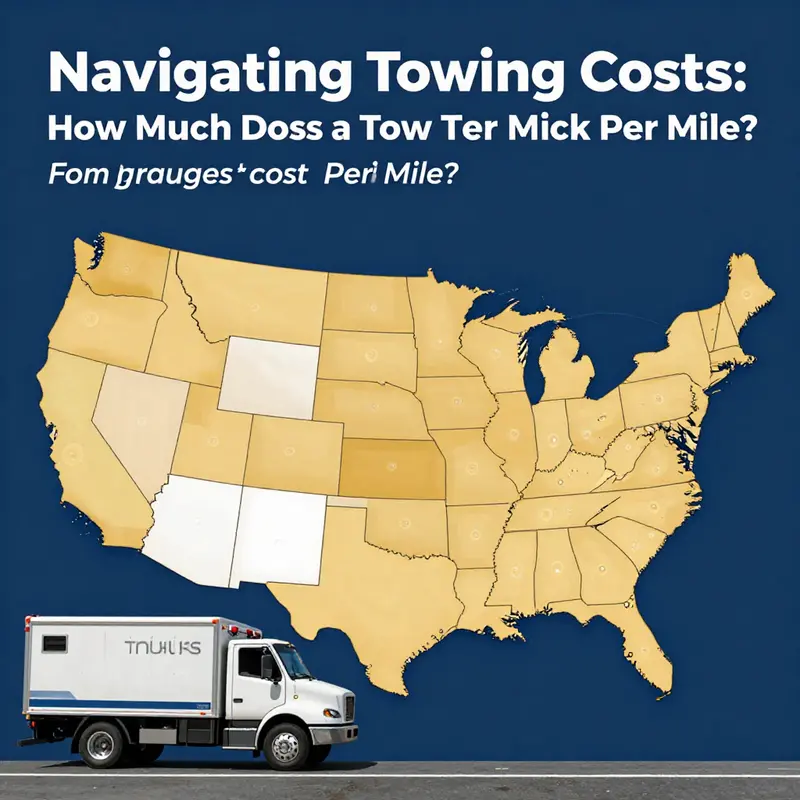
When a tow arrives, the moment of truth is less about the distance on the odometer and more about the arithmetic that sits behind it. The question of how much a tow costs per mile is tempting in its simplicity, but the answer is layered. Across the nation, pricing is a conversation between base fees and distance, with a dozen moving parts tucked into every quote. It helps to think of a tow as a bundle of decisions rather than a single travel price. The core framework usually looks like this: a base fee to cover dispatch, truck mobilization, and the immediate labor, plus a per-mile rate that scales with the distance you need to travel to reach a repair facility, a storage lot, or a destination of your choosing. But the way these components combine varies dramatically by region, vehicle type, time of day, and the specific circumstances of the tow.
null
null
Final thoughts
Understanding how much a tow truck costs per mile is crucial for drivers and businesses alike. By exploring the factors that influence these costs, from vehicle types to emergency situations, as well as considering how pricing compares across the country, you can make informed decisions. Implementing the tips provided can further help reduce towing expenses. The next time you find yourself in need of towing services, this knowledge will empower you to navigate the process confidently and economically.