
When your vehicle faces an unexpected issue on the road, a tow truck driver becomes your lifeline, often appearing out of nowhere to assist you during stressful times. This raises the question: should you tip them? Tipping practices can vary widely, influenced by cultural norms, individual experiences, and service expectations. In this article, we will explore the norms surrounding tipping tow truck drivers, factors influencing your decision, common misconceptions, and provide clear guidelines on how much to tip. Through this comprehensive examination, you’ll understand the significant role tipping plays in acknowledging the hard work of tow truck drivers and how it fosters a respectful driver-community relationship.
null
null
Reading the Road: When, Why, and How Much to Tip a Tow Truck Driver
Tipping a tow truck driver is one of those small gestures that sits at the edge of everyday courtesy, not because the industry demands it but because the act reinforces a shared code of respect for labor done under pressure. The decision to tip is not a universal rule, and it rarely appears on a standard invoice the way a restaurant bill might. Yet when the driver arrives in the dead of night, in rain or snow, when a roadside emergency has you grappling with fear, confusion, or irritation, a tip can become a practical and humane acknowledgment of a job well done. The question, therefore, becomes less about obligation and more about judgment—an assessment of service quality, circumstance, and local norms, tempered by an honest read of one simple principle: did the driver ease the situation by acting professionally, safely, and with care?
Quality of service sits at the center of this decision. A tow truck driver may appear to perform tasks that look routine from the outside—hooking up a vehicle, securing it for transport, navigating traffic. But the best responders often combine technical skill with clear communication, patience, and a calm demeanor that helps you regain some sense of control amid chaos. If the driver arrives promptly and handles your car with care, if they explain the process before they begin and check in about any special needs you might have, if they take the time to explain insurance steps or help you think through the next practical moves after the tow, these moments merit recognition. A small tip in this case is not compensation for a job done; it is a sincere nod to the extra effort that reduced your stress and increased your safety. When a driver goes beyond—sharing a quick piece of practical advice, helping you contact your insurer, offering a bottle of water on a hot day, or suggesting a secure waiting area—that tip becomes not just a reward but a signal that you noticed and appreciated the extra mile. In a service culture that prizes reliability, that recognition can reinforce professional standards across the board.
The nature of the service and the conditions under which it unfolds are equally important. A tow from a highway shoulder during a winter storm carries a weight that goes beyond the mechanics of lifting a car. The driver is balancing vehicle weight, road glare, and the risk of other drivers while managing traffic control and their own fatigue. The physical labor involved in winching a vehicle from a difficult position or maneuvering around mud, ditch edges, or broken pavement can be exhausting and hazardous. In such moments, the tip becomes a practical acknowledgment of the risk assumed and the expertise displayed. If the tow was straightforward but carried a time crunch—perhaps you were in a hurry to get to a critical appointment—the value of service can still be measured by how efficiently the driver mitigated risk while maintaining care for your vehicle. Conversely, if the service feels routine to you because it was, in your view, standard procedure, you might still find a modest gesture appropriate if the driver’s demeanor remained professional and the process was smooth and transparent.
Local customs and regional norms also shape what feels appropriate. Tipping culture in roadside services varies by area, and in some communities it is widely expected, while in others it is less common or even discouraged in certain corporate contexts. The social script in a busy urban center may encourage patrons to tip as a matter of routine when the service meets or exceeds expectations, whereas in areas with stronger price transparency and fewer tipping norms, a tip might be seen more as an optional courtesy rather than an obligation. Being aware of these regional differences helps prevent misinterpretation. If you are new to a city or region, a quick, neutral inquiry at the point of service—asking whether gratuity is customary or whether a tip is included in the fee—can avoid awkwardness later. Even within the same region, company policies vary. Some towing outfits include a gratuity in the bill, and in those cases a response to the line item can be guided by the wording on the receipt. If you have concerns about tipping policies, a short conversation with the dispatcher or a note on the receipt can clarify expectations without diminishing the professionalism of the driver who has just completed the work.
The broader context of the service also matters. Tow operations are, by their nature, service sectors that intersect with the critical moment of crisis. The driver may have helped you coordinate with your insurer, assisted you toward a safe waiting area, or provided information that helps you decide the next steps after a breakdown or accident. In these situations, a tip can be a courteous form of feedback—an explicit sign that you valued the driver’s role in stabilizing a difficult situation. A modest tip in the range of ten to twenty dollars generally aligns with common practice and is proportionate to the effort and the time spent. If the tow covers a long distance, involves a difficult retrieval, or requires special handling of the vehicle, a larger tip can be warranted. It is important to emphasize that no one should feel pressured to tip; the choice remains voluntary, and a fair, reasonable amount should reflect your satisfaction with the service, not guilt or social coercion.
From a practical standpoint, the method and timing of tipping can influence how the gesture is received. If you are paying by card, you can add the gratuity to the card payment if the company’s system accommodates it, or you can offer cash directly to the driver when the work is complete. Some drivers may prefer cash when the transaction is concluded, as tips paid in cash can be easier to account for in real time. A clean, quiet exchange tends to be the most effective. You can express your thanks succinctly and then present the tip, or you can say a few words about what you appreciated before handing over the gratuity. The key is to be respectful and unobtrusive; tipping should feel like a personal thank you rather than a display. If the driver offered to help with insurance forms or provided special guidance, you can reflect that appreciation in your feedback after the service as well. In some cases, a short note to the company or a positive online review can accompany or follow the tip, reinforcing the value of good roadside assistance for others in the future.
Attentive practices around tipping also touch on the question of whether the service was satisfactory. A tip is not a verdict on every outcome, but it is a tangible signal that the driver’s handling of the situation matched or exceeded expectations. If the service was disappointing—perhaps the arrival felt late, or the communication was unclear, or the vehicle was not handled with the care you expected—it is reasonable to withhold a tip and instead address the issue through the proper channels. You can speak with the dispatcher or the local office to provide constructive feedback. Documentation, including the receipt and a short description of what went wrong, can help the company address the problem and prevent recurrence. This approach preserves your agency as a consumer while preserving the dignity and safety of the driver, who is still doing difficult work under challenging conditions.
When you consider the final balance between service and tip, it helps to keep a simple mental framework. The tip should reflect the value you perceive, not a fixed rule. Acknowledge the quality of service, the safety and complexity of the operation, and the climate in which the driving occurred. If the tow was quick, safe, and courteous, a tip in the lower end of the suggested range often suffices. If the driver faced a demanding scenario—pulling a car from mud, a ditch, or a crowded or hazardous area—the tip should be correspondingly generous. If you are in a region where tipping is less common, a small tip may still be appropriate if you felt the service was professional and helpful. And if the fee is clearly separate from gratuity, a thoughtful extra gesture can still convey appreciation and encouragement for high standards of service.
In this sense, the decision to tip becomes part of a broader ethos of roadside responsibility. Towing services sit at the intersection of customer care and public safety. The drivers are often first responders in the sense that they physically intervene when a vehicle cannot move under its own power. They must manage heavy equipment, navigate traffic conditions, and communicate effectively with customers who may be stressed or upset. An informed reader will recognize tipping as a nuanced practice rather than a blanket rule. It is a way to acknowledge professional execution and human decency in a landscape that can feel cold and impersonal. If you want to explore this topic further within the wider conversation about roadside service, you can find ongoing discussions on the blog that tracks practical tips and scenarios for tow work at santamariatowtruck.com/blog/. The page offers a space to reflect on common questions about service standards, pricing norms, and expectations in different contexts, helping readers calibrate their responses in real time.
A good rule of thumb, then, is simple: tip when the service elevates the encounter, especially in tough conditions or when the driver goes beyond the basics to offer guidance or support. The recommended range of ten to twenty dollars can be adjusted up or down based on the specifics of the tow, the length of the trip, the complexity of the extraction, and the climate in which you found yourself. If a driver performed exceptionally well—calmly managed risk, provided clear and proactive guidance, or assisted with steps that eased the path forward—consider a higher amount as a direct, tangible thank you. If the service was routine and the driver maintained professionalism without extra effort, a modest tip remains appropriate. And if the experience was disappointing, it is entirely reasonable to forgo a tip while still offering constructive feedback and seeking resolution through the company’s customer service channels. In all cases, the tipping decision should be a reflection of the service quality and the conditions, not a reflexive habit.
For readers seeking a broader, formal outline of tipping etiquette in roadside assistance, the literature provides clear guidance. An external resource that consolidates these ideas emphasizes that tipping is a gesture of appreciation rather than a duty, and it notes the variability of expectations across different regions and service contexts. The guidance suggests sticking to practical amounts, considering whether a fee includes gratuity, and recognizing when the service merits more emphasis because of difficulty or danger. While each scene on the roadside is unique, the underlying principle remains steady: acknowledge effort, value professional conduct, and adapt your gesture to the situation while respecting local norms and company policies. In all cases, the aim is to support reliable, high-quality help on the road and to foster a culture where skilled drivers feel valued for the essential service they provide. If you want to read a concise external reference that summarizes these points, you can consult this reputable guide at https://www.thebalancesmb.com/should-you-tip-a-tow-truck-driver-4173598.
Ultimately, tipping a tow truck driver is an act of practical gratitude rather than a ritual of entitlement. It is a small but meaningful way to acknowledge the courage, skill, and care required to move a stranded vehicle from danger toward safety. It is a gesture that reinforces a shared value: the road can be unforgiving, but the people who help us through it deserve recognition when they meet, or exceed, our expectations. The decision to tip should flow from a careful reading of the moment—how well the driver performed, how difficult the task was, and what local norms suggest—rather than from a preconceived rule. In that sense, tipping becomes part of a larger commitment to respectful, responsible, and humane roadside assistance that benefits drivers, passengers, and the broader driving public alike.
Beyond the Meter: Debunking Myths About Tow Truck Tipping
When you’re stranded on the shoulder, a tow truck arrives as a lifeline – the person behind the wheel carries you through a stressful moment. Tipping often arrives with that moment, balancing practicality and propriety. Tipping tow truck drivers is not a universal expectation, but a thoughtful gesture when the service stands out for professionalism, care, and efficiency.
A common misconception is that tipping is always optional and always small. Tipping is discretionary; towing is often transactional, but the driver’s effort can be substantial – heavy lifting, navigating traffic, and sometimes difficult terrain. A tip acknowledges that extra effort, not just the end result.
Another myth is that tipping guarantees faster or better care in the future. Drivers’ priorities are safety and company policy; a tip cannot compel risky behavior. A tip can reward clear communication and careful handling.
Do not confuse tipping with the bill’s gratuity. Some services include a tip on the invoice; others do not. If you’re unsure, review the bill and consider tipping if you felt the service deserved it.
Tips can be given in cash or digitally; the form matters less than the gesture. Timing matters: give the tip at the end of the interaction, after the driver has stabilized your situation.
If in doubt about policy, ask the dispatcher or check the service terms. In some cases, company policies discourage tips or pool gratuities; respect those rules.
Ultimately, tipping is a human gesture recognizing skill, effort, and risk in a stressful moment. There is no universal rule, so tip what feels fair and appropriate given the service and local norms.
For broader etiquette, you can refer to general tipping guidelines from reputable organizations. https://www.aaa.com
Towing Etiquette: A Practical Guide to When How and Why to Tip a Tow Truck Driver
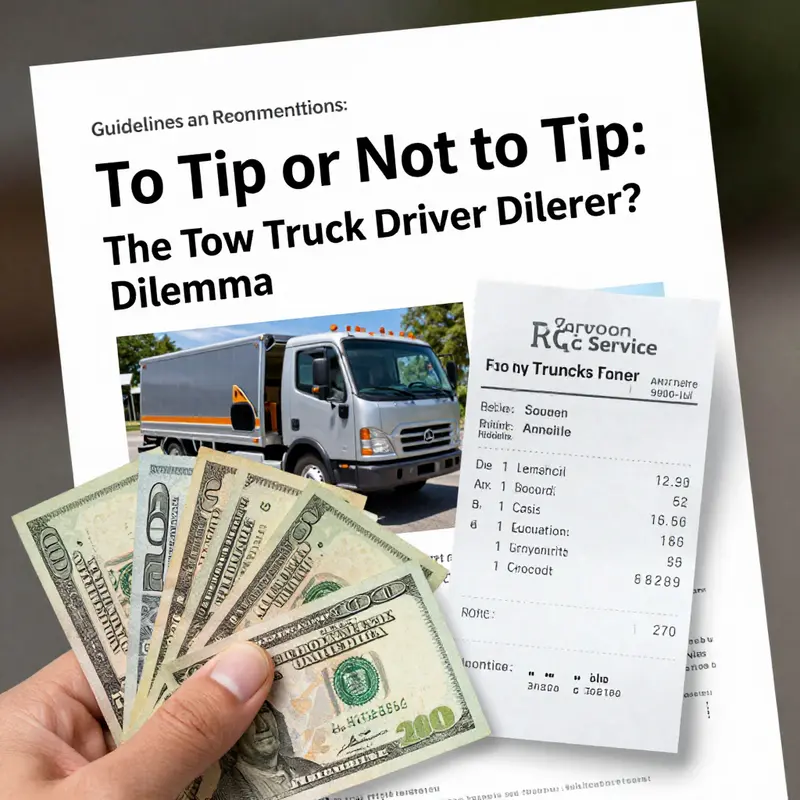
When you are stranded, a tow truck driver arrives to help in difficult conditions. They work under stress in the dark or bad weather and with skill to move and secure a vehicle safely. A tip is a voluntary gesture of appreciation for good service. The amount and timing depend on the situation and your budget. Typical ranges fall around twenty to fifty dollars, but more may be appropriate for long or difficult recoveries, dangerous locations, or overnight hours. If the service was prompt, careful, and professional, consider tipping toward the higher end. If the service was routine or you cannot tip, clear and respectful communication still shows appreciation. Remember to verify if gratuity is included on the bill, since some companies incorporate a service charge. Cash is often the easiest method on scene, but alternative methods can be acceptable if discussed with the dispatcher. In any case, a brief thank you or a positive note later can recognize good work. Tipping is not mandatory, but it can encourage safe handling and courteous service over time.
Final thoughts
Tipping tow truck drivers is not merely a transactional gesture; it’s an expression of gratitude and recognition of their hard work amid challenging circumstances. By understanding the norms, weighing the influencing factors, and debunking misconceptions, you can make informed decisions that honor their services. Remember, whether you tip or not, it’s essential to recognize their crucial role in your vehicle’s health and safety on the road. The next time you find yourself in need of a tow, consider how a small tip can make a significant impact on someone who has gone out of their way to help you.