
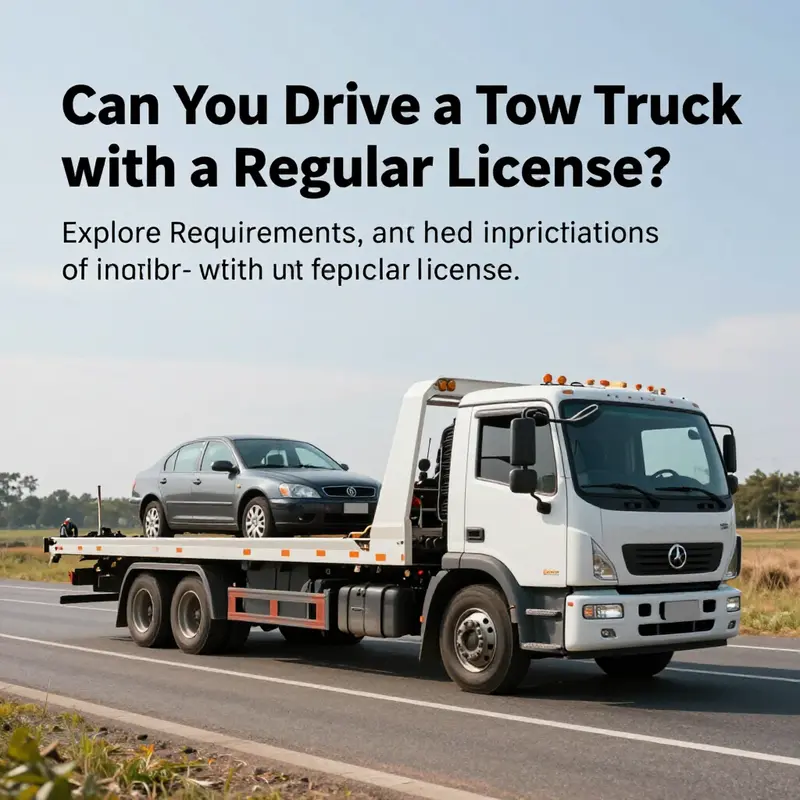
Navigating the world of towing services can be daunting, especially when it comes to licensing and regulations. Whether you are a local driver needing assistance, an auto repair shop looking to expand your services, or a property manager managing vehicle compliance, understanding if you can legally operate a tow truck with a regular driver’s license is crucial. This article will delve into the federal and state regulations regarding driving a tow truck, the impact of weight classifications, the varying licensing requirements across states, and insurance considerations. By the end, you’ll possess a comprehensive understanding of the legal framework that governs towing operations and how it affects your everyday vehicle activities.
null
null
Weight Matters on the Road: How Vehicle Classifications Determine Whether a Regular License Can Tow
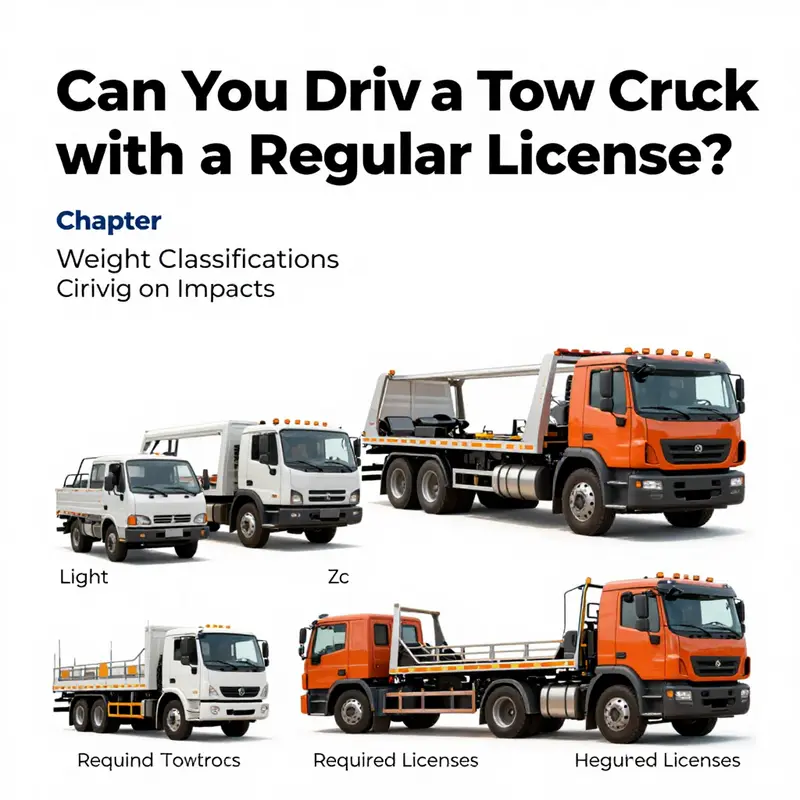
The question, can I drive a tow truck with a regular license, begins with a simple truth and quickly reveals a web of regulations that vary by place, vehicle weight, and the precise tasks a driver is expected to perform. In many regions, the answer is not a single yes or no, but a careful assessment of the vehicle’s weight classification and the corresponding license framework. In the United States, for example, the critical threshold often centers on the Gross Vehicle Weight Rating, or GVWR, of the towing vehicle and any attached trailer. When a tow truck swings into the realm of heavier equipment—those that push past certain GVWR marks—the traditional, ordinary driver’s license becomes insufficient for legal operation. A concrete illustration cited in practical guidance from places like New York shows that a vehicle used as a car carrier, which can be treated operationally as a heavy tow truck, typically requires a commercial license in a Class B category if the GVWR exceeds roughly 26,000 pounds. The implication is straightforward and sobering: a standard, non-commercial license, no matter how skilled the driver, does not automatically authorize you to operate heavy-duty towing equipment. It is a reminder that licensing is not merely a formality tied to a ticket, but a safeguard rooted in public safety, vehicle performance, and the complex dynamics of road sharing. If you truly intend to tow for a living or in a professional capacity, the prudent path is to verify your state’s regulations and seek the proper commercial endorsement or license classification that aligns with the vehicle’s weight and the tasks required. In this sense, the question becomes a gateway to a broader, more precise inquiry about the intersection of weight, license, and responsibility on the road. For readers who want a sense of how this plays out in the field, the broader discussion often points toward the practical realities documented in industry resources, including long-running blogs that explain how weight classifications shape everyday decisions for tow operators. See, for instance, the insights offered in the Santa Maria Tow Truck Blog, which delves into the practical implications of licensing and vehicle choice in real-world towing scenarios. Santa Maria Tow Truck Blog.
Turning from the United States to other common-law systems, it is useful to consider how weight classifications influence licensing in other jurisdictions, especially where vehicles are engineered and regulated under different standards. In Australia, for example, the framework is built around gross vehicle mass rather than GVWR as the central determinant of licensing needs. Here the key distinction lies between light and heavy tow-capable operations. If a towing vehicle has a gross vehicle mass (GVM) of less than eight tonnes, a driver with a standard or near-standard license may legally operate such vehicles, provided the truck’s design adheres to certain safety standards and local rules. This category is typically described as light tow vehicles, and drivers with licenses in the C class or its local equivalents may be permitted, depending on the jurisdiction, to operate them under ordinary conditions. The moment a tow truck tipping the scales beyond eight tonnes enters the picture, the rules tighten dramatically. Heavier tow trucks—especially those with significant traction power or specialized lifting gear—usually require a higher-class license, such as D or D1, and sometimes additional endorsements or training. The consequence is unambiguous: attempting to drive a heavy tow vehicle without the appropriate license is not just a breach of administrative rules; it is a risk to road safety and could carry substantial penalties, including fines, license suspension, or more serious legal consequences. The clarity of this division—light under eight tonnes with more permissive licensing, and heavy over eight tonnes demanding advanced licensing—provides a straightforward framework for drivers and fleet managers alike to assess what they can and cannot operate legally.
The Australian perspective, presented in official guidance and state regulations, reinforces a pragmatic approach to licensing: identify the vehicle’s weight category, confirm the corresponding license class, and then match the operator’s credentials to that classification. It is a reminder that tow trucks, by their very nature, sit at the intersection of mechanical capability and legal permission. In practical terms, this means that a tow operator must take time to verify the vehicle’s mass and ensure that the licensed driver holds the appropriate endorsement or license class for the task. The intention behind these rules is not to complicate work for the sake of bureaucracy, but to ensure that the operator possesses the training to manage heavy loads, stabilize vehicles during towing, and perform required operations without compromising safety. This is especially true when towing involves more than simply pulling a vehicle; many tow trucks carry winching equipment, heavy-duty ramps, and stabilization gear that demand a higher level of skill and judgment. The result is a licensing landscape that rewards clarity: know the weight, know the license, and you know what you’re legally allowed to do.
The legal and safety implications of misalignment between vehicle capability and licensing go beyond a mere paperwork issue. If an operator drives a vehicle beyond the scope of their license, the consequences can ripple through the entire road network. Fines are common, but more serious penalties can include suspension or revocation of driving privileges, and in some jurisdictions, criminal liability if unlawful operation results in an accident or injury. Even when none of the above occurs, the cost of non-compliance can be borne by the operator in insurance when coverage is contested, or by the fleet in terms of liability exposure and the reputational impact on a business dedicated to roadside assistance and critical rescue operations. This is why the licensing landscape, in both the US and Australia and in other regions with comparable systems, emphasizes a process of due diligence: confirm the vehicle’s mass, check the licensing category, and ensure that the operator’s credentials align with those requirements before hitting the road.
Given the diversity of regulatory schemes, the practical takeaway for drivers and fleet managers alike is to treat weight classification as the primary determinant of licensing needs. When a tow vehicle sits near or above the boundary between light and heavy, the margin for error narrows. In such cases, the safest course is to err on the side of obtaining the appropriate commercial endorsement rather than gambling on permission granted by a non-commercial license. This principle protects not only the operator but the public, other road users, and the fleet’s long-term viability. It also serves as a reminder that licensing is layered with responsibilities that extend beyond the cab: risk assessments, maintenance standards, and the continuous training required to handle complex towing operations.
In practice, operators facing these questions often approach licensing as a structured progression. Start with a clear inventory of the vehicles in the fleet and their GVWR or GVM figures. Then map each weight category to the corresponding license class in your jurisdiction. If your operation involves heavy tows, plan a path to the appropriate commercial endorsement and the associated training. In many regions, this may involve a combination of written comprehension, practical behind-the-wheel evaluation, and, in some cases, periodic recertification to keep skills aligned with evolving vehicle technology and safety standards. Keeping this process transparent and well-documented protects the driver, the fleet, and the public, and it aligns with best practices for professional towing operations.
Readers looking for practical nuance and field-tested examples can turn to industry writings that explore the day-to-day implications of these rules. The Santa Maria Tow Truck Blog, already referenced, offers a window into how weight classifications and licensing realities shape decisions on the ground. It provides a sense of how operators assess the mass of a vehicle, the equipment installed on the truck, and the licensing required to perform specific kinds of tow work safely and legally. By connecting policy with practice, such resources help bridge the gap between regulatory language and the realities of roadside recovery. This is not merely an abstract exercise; it is a core part of ensuring that when a tow truck is needed, it arrives with the right equipment, the right training, and the right paperwork in place. The alignment of weight, license, and capability is the backbone of responsible towing.
External considerations, such as integration with other regulatory requirements, also come into play. Some jurisdictions require extra endorsements for specialized towing operations, such as those involving heavy rescue, lifting devices, or long-distance movement that crosses state or regional boundaries. In those cases, the operator might need additional certifications or specialist training to ensure that all procedures—from coupling and braking to load stability and vehicle recovery—are performed in strict accordance with the rules. The overarching aim is clear: to minimize risk, maximize safety, and ensure that professional tow operators can perform their duties with competence across a range of scenarios while maintaining accountability for every mile traveled.
As you decide how to proceed, a simple, actionable framework helps. First, locate the GVWR or GVM plate on the tow vehicle and any trailer involved. Second, consult your state or national licensing guide to determine the corresponding license class and any endorsements. Third, confirm with the licensing authority whether additional training is required for the specific type of towing operation you intend to perform. Fourth, if the operation involves multiple vehicles or trailers, verify whether a combination vehicle license or a specific endorsement applies to your fleet’s typical configurations. Fifth, document everything and ensure that every driver in the fleet operates within their licensed scope. By following these steps, you align practical capability with legal permission, creating a safer, more reliable towing operation that can respond to emergencies and everyday needs alike.
For readers who want to explore these ideas further in the context of real-world practice, the referenced blog provides a useful lens into how rules about weight and licensing intersect with the daily realities of tow work. The overarching message remains consistent across regions: weight classifications matter, licensing follows weight, and safety depends on keeping those two elements in proper alignment. By grounding decisions in clear mass measurements and certified credentials, tow operators can fulfill their duty to assist others while honoring the boundaries that keep roads safer for everyone.
External resource: For a broader regulatory backdrop on heavy-vehicle licensing and the interplay with weight classifications in a major Australian jurisdiction, you can consult the official guidance at https://www.transport.nsw.gov.au. The material there helps illuminate how jurisdictional authorities translate vehicle mass into licensing requirements and training standards, reinforcing the practical mindset described in this chapter.
Tow Trucks and the License You Really Need: How State Rules Dictate When a Regular Driver’s License Falls Short
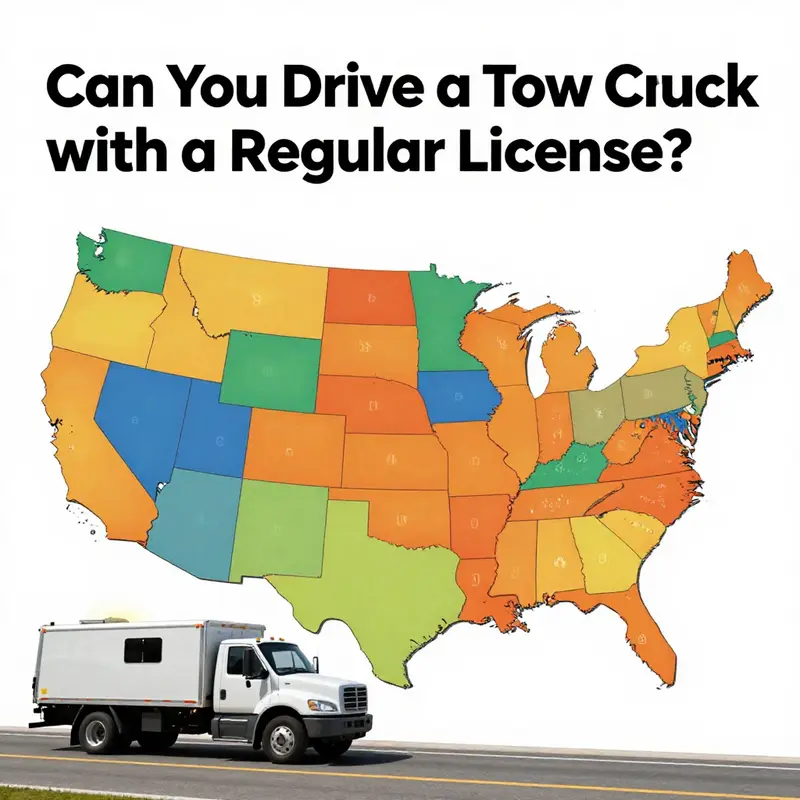
Tow trucks sit at the intersection of everyday driving and specialized operation.
A regular driver’s license typically covers passenger vehicles, but heavier tow units require weight-based licensing and endorsements.
Many states use the GVWR threshold (often around 26,000 pounds) to determine when a CDL is required, and some demand a Class B CDL with a T endorsement for towing operations.
In California, a CDL with T is often required along with state-approved training; other states have similar but variable rules. The exact ladder depends on vehicle weight, configuration, and the work environment, so check your state’s DMV or DOT for precise language.
This approach helps ensure legal operation, insurance compatibility, and road safety for operators and the public.
Tow Truck Licensing: Requirements, Liability, and Practical Realities
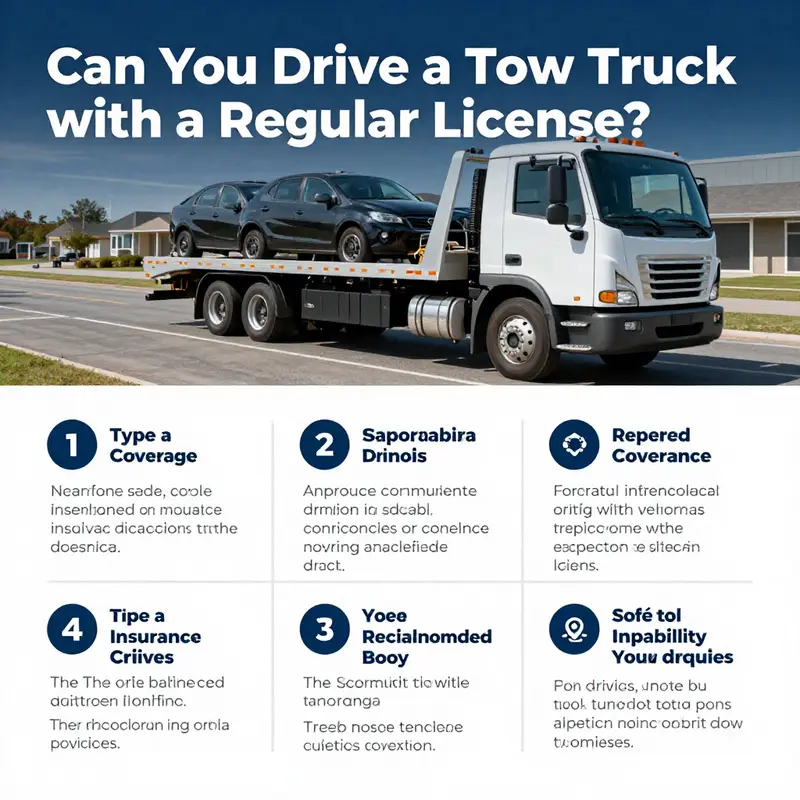
Owning or operating a tow truck isn’t just about a bigger vehicle. Licensing depends on weight, use, and regulation. In many places, heavy-duty towing requires a commercial driver’s license (CDL) with specific endorsements rather than a standard driver’s license. For example, vehicle classifications and GVWR thresholds determine when a CDL is needed and what endorsements apply. Always verify the rules with the state’s DMV because requirements vary by location and can change over time.\n\nThe licensing framework is rooted in safety and accountability. Tow trucks move heavy loads, often in busy traffic, on uneven terrain, or at accident scenes. This justifies the need for a commercial license with a towing endorsement in many jurisdictions. The endorsement, typically a ‘T’ on a Class B CDL, indicates trained capability to perform towing tasks safely. Without it, a driver may be restricted to lighter, non-commercial operations.\n\nInsurance matters reinforce licensing decisions. Personal auto policies usually exclude commercial towing, and operating without proper credentials can void coverage or trigger denial of claims. Commercial towing policies should explicitly cover third-party property damage, bodily injury, and damage to the towed vehicle. Proper licensing and coverage protect the business and its customers.\n\nCompliance goes beyond paperwork. Operators must use proper equipment, follow load-securement procedures, and maintain records. Training that accompanies CDL licensing covers securing loads, braking under load, and controlling the vehicle during tow operations. Medical certification or fitness requirements further support safe operation over long shifts and challenging conditions.\n\nA practical plan starts with a detailed inventory: determine each vehicle’s GVWR, the intended duties, and the necessary license class and endorsements. Keep training records, vehicle inspections, and incident reports. Check insurance terms to ensure commercial coverage aligns with towing activities. Because enforcement and rules differ by state, seek guidance from the DMV or a qualified compliance professional to confirm the exact requirements for your location.\n\nFinally, cultivate a culture of safety and accountability. Regular training, clear job roles, and consistent maintenance are not bureaucratic fluff—they support reliable service and protect workers and customers. For those expanding into towing, plan for licensing, insurance, and documentation from day one to avoid gaps that could threaten operations.\n\nIf you want a broader view of how licensing interfaces with real-world towing operations, many industry resources discuss training, safety standards, and emergency readiness. A practical path forward is to stay current with regulatory changes, maintain up-to-date credentials for all operators, and document everything so your business can adapt quickly to rule changes without losing momentum on the road.\n\nFor a practical reference, see https://www.dmv.org/vehicle-towing/tow-truck-licensing.php
Final thoughts
Understanding if you can drive a tow truck with a regular license involves navigating a complex web of regulations and requirements. As outlined in this article, federal and state regulations, vehicle weight classifications, and specific licensing requirements differ significantly across jurisdictions. Additionally, insurance and liability considerations play a critical role in ensuring both safety and compliance in the towing industry. Whether you’re a local driver, a property manager, or a dealership, grasping these concepts is essential for legal and safe towing practices. Always consult your local Department of Motor Vehicles or a legal expert for the most accurate and personalized advice.