

Understanding how much your truck can tow is crucial for safety and effectiveness in your daily driving or even during leisure activities. As a local driver or a business owner, knowing your truck’s towing capacity not only aligns with manufacturer specifications but also ensures you make informed decisions regarding heavy loads. In this comprehensive guide, we will explore three key chapters: first, we’ll delve into how to evaluate your truck’s towing capacity through manufacturer specifications; next, we’ll harness the power of technology with apps designed for precise calculations; and finally, we’ll discuss the real-world implications of towing and best practices that keep you safe and efficient on the road.
Reading the Sticker and the Scale: How Manufacturer Specifications Reveal Your Truck’s True Towing Limit
When you set out to tow, the first and most reliable source of truth is not a memory of what you think your truck can do, but the numbers the manufacturer publishes for your exact model and year. These numbers are not arbitrary; they are the product of engineering limits, safety margins, and warranty safeguards crafted to keep you, your vehicle, and everyone around you out of harm’s way. The heart of the conversation is a single concept with a few moving parts: the GCWR, or gross combined weight rating. This figure represents the maximum allowable weight of the truck itself, including passengers, cargo, fuel, and any added equipment, when it is pulling a trailer. The GCWR is the ceiling you must operate under. But to understand what that ceiling means in practical terms, you need to know how it interacts with your truck’s own weight when empty and how much payload you carry. From there, the important downstream number is the towing capacity, sometimes called the maximum towing capacity, which is derived by subtracting the curb weight of the truck from its GCWR. This is the definition that many owners manuals present, and it is the value that most people truly need when they are planning to tow a trailer, a camper, or a car dolly. The essential formula is straightforward, but it carries a lot of nuance in practice: Towing Capacity equals GCWR minus Curb Weight. The curb weight is the factory weight of the vehicle as built, with its standard equipment, a full tank of fuel, and no passengers or cargo. It is the baseline—the piece of the puzzle that shifts as soon as you add people, gear, or fuel. When you examine your own vehicle, you may see GCWR and curb weight listed on the door tag, in the owner’s manual, and on the manufacturer’s website. These are not casual numbers; they are the frame of safety and the guardrails that keep you from exceeding an intended design limit. While the math is simple, the practical implications demand careful attention to detail. A small miscalculation in what you carry can push you past the safe envelope, even if you are within the raw towing capacity shown on a chart. The reason is that towing is not merely about the ability to pull a trailer up a hill. It is about how the entire system—truck, trailer, road grade, wind, and speed—interacts under load. There is a real difference between “can pull” and “should pull,” and the manufacturer’s specs are designed to guide you toward the latter. When you read the numbers, you should treat them as a set of guardrails rather than a loose target. You will often hear people talk loosely about “towing capacity” as if it were a single, universal number. In truth, there are layers: the vehicle’s own payload capacity—what you can carry in the cab and bed without pushing the curb weight past the GVWR, and the towing capacity at the hitch after accounting for passengers, cargo, and fuel in the truck. The GCWR is the cap on the combined weight; the curb weight plus payload plus the weight of the trailer must never exceed that cap. This is why the door jamb sticker, the owner’s manual, and the official configurator or specification sheet from the manufacturer are such important tools. They ensure you know the exact numbers that apply to your exact truck, down to the year and trim. The process of finding these numbers is not mysterious. Look for the GCWR first, usually listed together with the GVWR and sometimes the gross axle weight ratings on the same page. The Towing Capacity, or Maximum Towing Capacity, follows the method described above. In some vehicles, you may also see separate figures for tongue weight, trailer weight distribution, and gross vehicle weight on the hitch. All of these pieces contribute to a full understanding of how much you can tow safely. It is worth noting that not every owner’s manual or manufacturer site presents the figures in the same layout, but the underlying relationships remain constant. If you have access to the compliance label on the driver’s side door jamb, that label can be a quick, on-the-ground reference. It is a compact summary of the same concepts: GCWR, GVWR, axle weights, and sometimes even the recommended tire pressure ranges for different weights. The door tag is a reliable quick-check that you can use before you head out for a tow, especially if you are inspecting a used truck or a new configuration that includes optional equipment. To illustrate the concept with a practical, relatable example, imagine a truck that shows a GCWR of 30,000 pounds and a curb weight of 6,500 pounds. In this case, the maximum towing capacity—under the standard, straightforward calculation—would be 30,000 minus 6,500, which equals 23,500 pounds. This is the theoretical weight of the trailer plus its load that the truck could pull without exceeding the gross combined limit, assuming ideal conditions and no other complicating factors. The reality, however, is rarely that simple. The actual safe towing limit can be lower once you add people in the cab, cargo in the bed, extra fuel, or equipment such as winches or tool chests that may be installed by the dealer or a previous owner. The same holds true for any additional compliance or warranty considerations that apply to your vehicle. The reason this distinction matters is safety. Exceeding the GCWR or the stated towing capacity can jeopardize braking performance, steering control, and overall vehicle dynamics. Brakes may fade prematurely; the suspension can overstress springs and shocks; the engine, transmission, and cooling system must work harder, raising the risk of overheating and component wear. Also, many regions require certain licenses or endorsements to operate vehicles that exceed a specific gross vehicle weight rating or trailer weight. In this sense, the numbers are not only about performance but about legality and responsibility on the road. When you plan to tow, you will want to incorporate not only the vehicle’s own capacities but also the load that will be behind the hitch. If you intend to carry a heavy trailer with a full payload, consider whether you will need to reduce payload in the cab or reduce fuel load to maintain the proper dynamic balance. A practical rule of thumb—though it should not replace manufacturer specifications—is to think in terms of tongue weight, which is the downward force that the trailer exerts on the hitch. A commonly cited guideline suggests that tongue weight should approximate about 10 to 15 percent of the trailer’s total weight. This is a starting point for arranging weight distribution, configuring a hitch, and evaluating how the trailer will respond to braking, steering, and crosswinds. It is important to understand that tongue weight is a distinct constraint from the overall towing capacity. Even if your trailer’s total weight is within the maximum tipping point, a poorly distributed tongue weight can undermine control and braking efficiency. The interaction of tongue weight with the vehicle’s own weight and suspension is part of what makes towing a root-cause activity for understanding the aerodynamic, mechanical, and dynamic limitations of your setup. Another layer of complexity comes from the equipment you add to the truck or trailer. Hitches, weight-distribution systems, upgraded springs, air bags, or other aftermarket components can alter how weight is distributed and how much capacity remains at the hitch. Before modifying a vehicle for towing, it is wise to review the impact of those modifications on the GCWR and the towing capacity. This is often a reason why buyers consult official configurators or the vehicle’s owner’s manual rather than relying on general estimates from brochures or third-party sites. The configurator can reflect which options affect weight, axle ratios, engine choice, and even tire load ratings. It will tell you whether a particular combination remains within safe, legal limits. The lack of alignment between expectations and the official figures is a recurring source of frustration for many tow planners. A person might assume their truck can tow a certain trailer based on a generic capacity number, only to realize that the actual safe limit is lower once the stated curb weight and payload are included. Conversely, another owner may discover a higher available capacity after accounting for a lighter equipment set or a minimal payload. This variability underscores why sticking to the manufacturer’s published numbers is so important. It also highlights the value of taking a careful, methodical approach to planning a tow. Where a casual calculation might suffice for a light, short trip, a serious towing project—such as moving a large RV or hauling a heavy construction trailer—calls for a more precise, individualized assessment. In long-range planning, many people turn to tools that estimate towing capacity based on the vehicle’s manufacturer safety guidelines and warranty requirements. These tools often provide both a beginner mode—guiding you through the steps, checks, and inputs in a user-friendly way—and an expert mode—offering a streamlined calculator for those who want speed and precision. The idea is to help you stay within safe limits without overcomplicating the process. If you choose to use such a calculator, you will typically enter the exact model year, the curb weight, and the expected load. You will also specify payloads such as passengers and cargo, and you may be asked to input the tongue weight or the trailer’s weight range. The calculator then cross-references these numbers with the manufacturer’s published values and flags any potential exceedances or mismatches. It is important to use these tools as a guide rather than a guarantee, and to cross-check with the official specification sheets and door tag data. If you are planning a high-stakes tow, it is prudent to confirm your results with a professional or a dealer who can run a precise test on a scale, or at least verify the data with the manufacturer’s resources. Your local service center can provide exact figures for your exact vehicle configuration, taking into account the options you selected and the equipment you added. The upshot is straightforward: the manufacturer’s specifications give you a trusted map to your towing capabilities. The numbers are not abstract; they reflect real testing, real safety margins, and the risk calculus that governs motion under heavy load. To navigate them well, start from the GCWR, verify the curb weight, and then account for everything you plan to carry, including passengers, fuel, and cargo. If you want to verify your numbers with a practical, end-to-end approach, you can consult the official resources from the vehicle’s maker—via the owner’s manuals and vehicle specifications page—and use a reputable calculator that respects warranty considerations and safety guidelines. This approach keeps your plan realistic and aligned with the vehicle’s designed performance envelope. For further reading and to see how these principles are organized on the manufacturer’s official site, consult the owner’s manuals and vehicle specifications page, which provides authoritative data you can trust when you’re preparing to tow. If you are curious about more practical, behavior-based tips for towing safety and compliance, the Santa Maria Tow Truck blog offers a range of insights on load management, emergency readiness, and regulatory considerations. Santa Maria Tow Truck blog. In all cases, remember that the numbers are a foundation, not a substitute for careful planning, professional guidance when needed, and responsible driving. External reference: https://www.ford.com/owners/manuals/
Tow by the Numbers: A Practical, App-Assisted Guide to How Much Your Truck Will Tow
Tow by the Numbers: A Practical, App-Assisted Guide to How Much Your Truck Will Tow
Understanding how much your truck will tow starts with a clear grasp of a few core terms and the way manufacturers design and test their vehicles. Towing capacity is not a single number that appears on a sticker somewhere in the glove box. It is the product of a careful balance between how a truck is built—the frame, drivetrain, suspension, brakes, steering—and how much weight the vehicle can safely handle with a given load distribution. The official towing capacity, often described in terms of the Gross Combined Weight Rating (GCWR), is the maximum allowable weight of the tow vehicle plus the trailer and its cargo. In practical terms, it is the ceiling that a manufacturer has determined the vehicle can handle without compromising safety, performance, or warranty protection. To use that ceiling wisely, you also need to know about payload—the weight the truck can carry on its own chassis, including passengers and cargo inside the cab—because every pound in the cabin subtracts from how much you can legally and safely pull behind you.
Two other foundational terms anchor this discussion. The Gross Vehicle Weight Rating (GVWR) sets the maximum weight of the truck itself when fully loaded, including its own cargo and occupants. The curb weight is the vehicle’s weight when empty of passengers and cargo but full of fluids. When you combine curb weight with payload, you approach GVWR. The relationship among GCWR, GVWR, and curb weight is not just arithmetic; it is a reflection of design limits. A truck’s towing capacity can be roughly estimated by subtracting GVWR from GCWR, but this simplification does not replace the need for precise figures from the manufacturer’s data plate and owner’s manual. The data plate, usually mounted inside the driver’s door, lists the actual GVWR and sometimes the GCWR for your specific model and configuration. That plate is the most trustworthy shortcut when you need a quick, reliable number before you hitch up.
A few practical realities accompany these numbers. Different hitch classes and attachments alter how weight is transferred from the trailer to the tow vehicle. The hitch itself isn’t just a connector; it is a critical link in the load path. Tongue weight, the vertical component of the trailer’s weight that sits on the hitch, must be managed carefully. If tongue weight is too light, handling becomes unstable; if it is too heavy, it can overload the hitch and the vehicle’s rear axle. The safe window for tongue weight is a portion of the trailer’s total weight, often around 10–15 percent in typical configurations, though some setups and cargo shapes can shift that range. These are not mere guidelines; they reflect how trailers change the dynamic load on a vehicle as you accelerate, brake, and steer.
The dialogue between numbers and reality grows richer when you consider the dynamic factors that affect towing. Elevation, ambient temperature, wind, road grade, and braking demands all influence how a vehicle behaves with a load behind it. A truck that rolls through a flat stretch with a light trailer will feel dramatically different when carrying a heavy load up a long grade. That difference is why many manufacturers emphasize margin and caution in their instructions. Tow ratings are published with safety, warranty, and component longevity in mind. They are not licenses to push every system to its limit, or to chase performance at the expense of control.
To translate these concepts into a plan you can rely on, start with the manufacturer’s specs for your exact truck. The GCWR will be stated in the manual or on the data plate when you know your drivetrain, cab configuration, and bed length. The next step is to determine the actual trailer weight you intend to pull, including cargo and any built-in equipment. Subtract the weight you plan to carry in the truck from the GVWR to learn how much payload you have left. Finally, compare the trailer’s weight plus tongue weight to the GCWR. If that sum exceeds the GCWR, you must reduce the trailer weight, adjust cargo distribution, or reconsider the tow plan altogether.
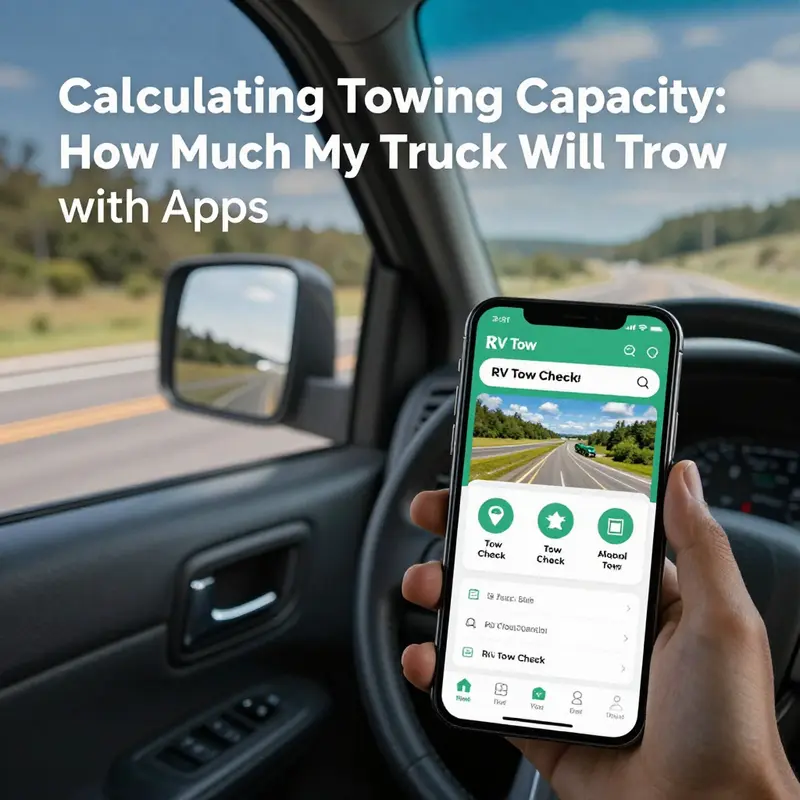
In practice, many drivers rely on modern tools to keep all these numbers in check. A dedicated towing calculator app can walk you through inputs such as your vehicle’s make and model, year, curb weight, GVWR, hitch class, and desired trailer load. Such tools are designed to align with manufacturer safety guidelines and warranty requirements, giving you a clear, personalized estimate. The best of these tools allow you to switch between beginner mode, which guides you step by step through the data, and expert mode, which streamlines inputs for experienced users who already know the numbers they need. This balance between accessibility and precision makes it easier to plan trips, upgrade trailers, or evaluate a new tow setup without leaning on guesswork.
One practical caveat is that these numbers are always a ceiling, not a target. Even when a calculator indicates you can tow up to a certain weight, you should build in a safety margin. Factors like aerodynamic drag, trailer brakes, and tongue weight distribution are not always perfectly captured in a single rating. Real-world conditions can erode the margin between a comfortable, controlled tow and a weight that stretches the limits. This is why many seasoned trail users adopt a conservative approach and test their setups at modest weights before progressing to heavier loads.
If you are stepping into tow planning, one reliable approach is to collect all pertinent data before you ever hitch up. Start with the owner’s manual and the data plate to confirm GVWR and GCWR. Then, determine the GVWR of the trailer or the combined weight you expect to pull, including any accessories and gear. Finally, calculate the payload remaining for passengers and cargo in the truck. This becomes a framework you can apply to every towing decision, whether you are considering a weekend camping setup, a work trailer, or an RV that you plan to move across state lines. When you hear people talk about “the trailer weighs X pounds,” that number needs to be interpreted in the context of the truck’s own weight capacity and its ability to stop, steer, and manage heat under load.
To bring these ideas into a day-to-day workflow, consider a practical scenario that illustrates how the math comes together. Suppose a crew truck with a GVWR of 7,000 pounds and a GCWR of 12,000 pounds is planning to tow a trailer estimated at 5,000 pounds with a tongue weight of about 600 pounds. If the crew carries four passengers and gear weighing roughly 800 pounds, those numbers matter. The payload you allocate toward those passengers and cargo reduces the available margin for towing. If you add this trailer’s weight to the tongue weight and then subtract the vehicle’s own payload, you arrive at a figure that must be compared against the GCWR. If this total nears or exceeds the GCWR, you should re-evaluate the plan—either by choosing a lighter trailer, redistributing weight, or selecting a different vehicle with a higher capacity.
This kind of calculation becomes more precise and approachable when you use an app designed to help match real manufacturer safety guidelines with your actual rig and payload. The device becomes an ally in planning, not just a calculator. With inputs such as your vehicle’s curb weight, GVWR, and the targeted trailer’s finished weight, the app translates the specs into an actionable limit before you hook the hitch. The advantage is clarity in the moment you attach the trailer and step on the accelerator, not after the tires have already met resistance on a grade.
As you delve into the numbers, you can also consult broader safety resources to ground your decisions in established guidance. Official safety agencies emphasize that towing capacity is the manufacturer’s determination based on design and structural limits. They also stress that the data plate and owner’s manual are the primary sources for the exact limits on your vehicle. In other words, the built-in data points in your specific truck configuration, not general estimates, should steer every decision about towing. This is the kind of guidance that helps prevent overloading, averting potential warranty issues and reducing the risk of compromising vehicle control during operation.
For those who want a deeper, diagram-like understanding of the relationships among these numbers, it’s useful to visualize the flow of weights during a tow. The curb weight sits on the scale with you but without passengers or cargo, and it evolves as people climb in and gear gets loaded. The payload accounts for that evolution and sits atop the vehicle’s frame. The tow load, including the trailer’s weight and tongue weight, adds to the weight the vehicle must manage. The GCWR marks the moment at which the vehicle and trailer together exceed what the drivetrain and structural components can safely endure. If you subtract the GVWR from the GCWR, you arrive at a theoretical maximum for the towable load, but this is a theoretical ceiling that must be tempered by real-world considerations. The more you know about how these pieces interlock, the better prepared you are to plan trips that keep you, your crew, and your equipment safe, comfortable, and within warranty.
As part of building this knowledge, you might explore related resources that discuss towing safety and best practices in a broader context. For readers who want to anchor these concepts in a trusted, official framework, the U.S. Department of Transportation and the National Highway Traffic Safety Administration provide accessible, practical guidance on how to determine your truck’s towing capacity. The central idea remains consistent: consult your owner’s manual, read the data plate for exact specifications, and use a calculation tool that aligns with manufacturer safety guidelines to confirm safe limits before you hit the road. The tension between “maximum” and “safe enough to drive” is real, and the wise approach is to prioritize control, braking performance, and stability over sheer capability.
To connect this discussion to ongoing conversations in the towing community, you can reference a broader repository of practical knowledge available at the relevant blog space that regularly covers towing fundamentals, gear checks, and scenario planning. Visit the blog for more context on how practitioners think about weight distribution, hitch selection, and the margins between rated capacity and field performance: santamariatowtruck.com/blog/. This resource complements the core guidance by offering real-world perspectives and experience-based observations that enrich the theoretical framework outlined here.
When it comes to applying these ideas in real life, remember that the numbers tell part of the story. The real story unfolds in how you prepare the vehicle, how you load the trailer, how you distribute weight, and how you drive under different conditions. The right app can help you keep track of those numbers as you plan a trip, adjust loads, or evaluate a new trailer. The key is to use the app as a decision-support tool that complements, rather than replaces, the manufacturer’s data and the safety practices endorsed by national guidance. By layering precise specifications with practical loading strategies and conservative planning, you create a towing plan that respects the vehicle’s limits while delivering the reliability you expect on the road.
For readers seeking official safety guidance that anchors these practical steps in established standards, the National Highway Traffic Safety Administration’s towing safety resources offer an authoritative reference point. They emphasize that towing capacity is set by the manufacturer and that the user manual and data plate contain the definitive numbers for your specific vehicle configuration. The NHTSA guidance reinforces the idea that safety margins and responsible planning are essential components of any towing operation, whether you’re a weekend enthusiast or a professional operator. You can explore this guidance here: https://www.nhtsa.gov/vehicle-safety/towing .
Tow Truths: How Real-World Limits Shape Every Haul and Every Mile
Every time you back up to a hitch or pull out of a dealership lot with a trailer in tow, you’re engaging with a complex balance of physics, engineering, and jurisdictional rules. The number you see on a manufacturer’s specification sheet—often labeled as the maximum towing capacity—belongs to a carefully defined set of conditions. It is not a casual cap on what you might squeeze behind your truck if you’re feeling bold. The real-world implications of that number extend far beyond a simple box on a spec sheet. They weave into every decision you make about how you load, how far you drive, what kind of brake setup you rely on, and how you plan for the unexpected along the highway. To understand how much your truck will tow in practice, you must see the capacity as a ceiling that interacts with payload, ballast, equipment, and the environment—and you must respect that ceiling with discipline, planning, and ongoing maintenance.
At the heart of towing a heavy trailer is a simple, sometimes stubborn, truth: the total weight your truck can safely manage is a function of several interlocking ratings. The gross vehicle weight rating (GVWR) tells you how much weight the truck itself can carry and still be considered safe by design. The gross combined weight rating (GCWR) defines the maximum weight of the truck plus the trailer and all their cargo that the chassis and drivetrain can handle without compromising control or structural integrity. The difference between GCWR and GVWR is the maximum weight that can be allocated to a trailer. These numbers exist to preserve handling, braking effectiveness, and the longevity of components that are under constant load during towing—things like the transmission, cooling system, suspension, tires, and brakes. When you load beyond these thresholds, you are inviting issues that do not manifest as a single alarming failure but as a cascade of wear, heat, and fatigue that erodes safety and reliability over time.
The consequences of over-towing are not hypothetical. They appear in the form of transmission overheating after a long, steep grade, brakes that fade on a downhill run, or an overloaded suspension that feels every rut and pothole as a jolt through the steering wheel. These problems are not just inconvenient; they are safety hazards. Over time, repeated elevated loads can accelerate wear on critical components, increase the chance of brake failure, and shorten the life of the drivetrain. The risk is not limited to the vehicle itself. An overloaded or improperly loaded setup can alter weight distribution, reduce steering responsiveness, and shorten stopping distances. In other words, towing near or above the limits can compromise not only your ability to stop in time but your ability to avoid hazards in the first place.
One of the more overlooked realities is how weight placement affects control. The tongue weight—the downward force that the trailer exerts on the hitch—must be carefully balanced with the trailer’s overall weight. A tongue that’s too light can make the trailer sway, while a tongue that sits too heavy may overburden the hitch and axle components, producing irregular tire wear and steering instability. The rule of thumb most drivers learn is that the tongue weight typically should be about 10 to 15 percent of the trailer’s gross weight. This is not an arbitrary guideline; it is calibrated to maintain enough downward force on the hitch to keep the trailer tracking straight while preserving enough weight on the trailer wheels for traction and braking. When that balance shifts—whether from improper loading, shifting cargo, or a noncompliant hitch setup—the combined vehicle may become unpredictable, especially in crosswinds or on slick surfaces.
In practical terms, safe towing begins long before you leave home. It begins with knowing your vehicle’s exact specifications for your particular model year and configuration. The owner’s manual and the manufacturer’s official pages are your primary sources. They lay out not only the maximum towing capacity in a given context but also the caveats: the conditions under which the rating holds, the type of trailer coupler, the braking system requirements, and the essential safety equipment that must be in place. In some cases, the official guidance may also specify how various options—such as a heavy-duty cooling system, upgraded transmission components, or specific tires—can alter the effective towing capacity. The practical upshot is simple: do not treat the rating as a single universal ceiling. Treat it as a guide that can shift with the vehicle’s configuration, the load’s distribution, and the environment in which you tow.
To translate those numbers into reliable, real-world planning, many experienced tow operators rely on a structured approach to calculate capacity for a given trip. They start with the vehicle’s GVWR and curb weight, add the payload and occupants, and then subtract that sum from the GCWR to determine the maximum trailer weight they can safely manage—the reference point for planning. They then translate that trailer weight into a more actionable figure: how much ramp weight, tongue weight, and axle load will be placed on the tow vehicle during the journey, including climbs, wind, and road grade. This process is not theoretical; it is a practical, repeatable method that guards against the temptation to rely on a sunny day’s memory of a printed number. It benefits from a systematic check of every component that interacts with the load: hitch and hitch ball rating, wiring for lights and brakes, tire load capacity and inflation pressures, and the cooling and braking systems that will be taxed during operation. In practice, this disciplined approach reduces the risk of warranty concerns and insurance complications that can arise when a load is mischaracterized or when the vehicle is operated beyond its safe limits.
Weight distribution is another critical, sometimes underappreciated factor that shapes real-world outcomes. A trailer that is loaded unevenly—cargo shifted toward the trailer’s front or toward the rear—changes the dynamics of the drive. Uneven weight can increase tire wear on one axle, cause the trailer to fishtail, or alter braking behavior in ways that surprise even a seasoned driver. The best practice is to verify that every load is balanced within the trailer’s design specs and that the tow vehicle’s suspension remains within its vertical travel limits. In heavy-use situations, keeping an eye on tire temperatures and wear can reveal early signs of an overloaded system. Tires are a frequent point of failure, and their performance degrades rapidly when they operate beyond their intended load range. The dampening effect of a properly inflated, appropriately rated set of tires goes a long way toward maintaining control and predictability, especially on uneven roads or in adverse weather.
The relationship between towing and maintenance costs is not obvious at first glance. When a vehicle consistently operates near its maximum capacity or beyond it, the engine and transmission work in overdrive to maintain speed and momentum. That extra effort translates into higher fuel consumption, more frequent service intervals, and the likelihood of earlier parts replacement. The incremental fuel penalty may not be dramatic on a short trip, but it compounds over a season of towing. The cost isn’t only financial; it’s about ensuring you have predictable performance and the peace of mind that your vehicle will behave as expected when it matters most. In the long run, the prudent choice is to respect the manufacturer’s recommended limits, plan for the worst-case scenario (steep grades, headwinds, heavy payloads), and accept that a margin of safety often pays off in reliability and safety.
A further dimension of the real-world picture concerns legal and regulatory requirements. Load limits are not universal absolutes; they are bounded by the rules in your jurisdiction, which specify how much weight a trailer may carry, the necessary braking and lighting configurations, and how loads must be secured. Some regions require certain braking systems for heavier trailers or safety chains and electrical connections to ensure redundancy. These requirements exist to protect other road users and to provide a transparent framework for accountability if an incident occurs. Adherence to these rules can also affect your insurance stance and claim eligibility in the event of a loss. Noncompliance can result in higher premiums or, in the worst case, denial of a claim when a tow-related incident occurs. The important takeaway is that capacity is not an isolated figure; it is embedded in a web of safety practices, legal obligations, and the broader responsibility of operating a heavy vehicle on public roads.
For those who imagine a future where towing becomes a more complex operation—such as recovery work for heavier loads or specialized transport scenarios—the landscape of equipment choices adds another layer of consideration. When discussing wheel-lift tow trucks, or wreckers with hydraulic cradles, it is important to be precise about capabilities and limits. These vehicles are designed to lift and secure vehicles in ways that minimize body damage during transport, especially for low-clearance or high-end vehicles. Yet they carry their own limitations. A wheel-lift approach typically lifts a single axle at a time, which means the other axle remains in contact with the road. While this method offers remarkable maneuverability and cost-effectiveness for everyday recovery tasks and quick rotations, it is not ideal for long-distance towing of heavily damaged vehicles or for situations requiring full wheel clearance. For those tasks, other configurations with full-frame lifting, platform stability, and more comprehensive load distribution may be necessary. The point is not to romanticize a single solution but to recognize that the equipment choice must align with the task, the load, and the distance involved. In other words, the right tool for the job is the tool that keeps you within safe limits while delivering predictability and efficiency in operation.
All of these considerations—the technical ratings, the practical load distribution, the maintenance implications, and the legal and regulatory framework—coalesce into a single guiding principle: know your numbers, respect your limits, and plan for contingencies. The journey from a printed maximum towing capacity to a safe, reliable haul is not a leap but a careful, repeatable process. It starts with obtaining precise, model-specific data, continues with configuring and loading the trailer correctly, and culminates in a disciplined approach to driving, maintenance, and compliance. In that sense, the chapter’s core insight is not merely about how much your truck can tow in theory. It is about how the realities of the road demand a strategy that prioritizes safety, reliability, and responsible stewardship of both the vehicle and the mission you are undertaking. When you treat towing as a holistic practice—one that integrates load planning, equipment checks, and adherence to regulations—you gain more than convenience. You gain confidence that your truck’s capabilities are a dependable framework rather than a precarious ceiling. And that confidence translates into fewer close calls, longer vehicle life, and the ability to deliver your load with the assurance that you did everything right.
To connect this perspective with everyday practice, consider how you approach a trip that involves a trailer, boat, or heavy cargo. Start by revisiting the manual’s guidance on towing limits for your exact configuration. Confirm the GCWR and GVWR, and then subtract your vehicle’s actual curb weight plus payload to estimate the maximum safe trailer weight. Remember to factor in ballast shifts, equipment on board, and passengers, which all reduce the available headroom. Then assess the trailer’s weight distribution, ensuring about 10 to 15 percent tongue weight on the hitch, and verify that your braking and lighting systems meet legal requirements for the load you carry. If the payload increases mid-journey—say, you add gear to the trailer or you recalibrate cargo strategically—perform a recheck before continuing, rather than relying on an old calculation.
The value of this disciplined approach becomes even more evident when you plan for the worst possible conditions: a stretch of steep grade, a headwind, a hot day with the air conditioning running, or a long highway climb. These scenarios demand not just horsepower but also thermal margin. The cooling system, transmission, and brakes operate closer to their limits under these conditions, and that proximity heightens the risk of performance degradation. The prudent driver uses those moments to slow down, increase following distance, and adjust the load or equipment to maintain a safety buffer. In doing so, you also preserve your warranty and reduce the likelihood of insurance disputes should something go wrong. The conversation around capacity must remain practical and grounded in the realities of daily driving rather than in abstract, one-size-fits-all rules.
As you assess your own vehicle and planning needs, you may find that a straightforward, model-specific calculation, conducted with a careful eye on tongue weight, payload, and the trailer’s own weight distribution, yields a clear decision: either the planned load fits within safe limits, or it does not, and alternatives must be considered. Those alternatives can range from adjusting the cargo, choosing a lighter trailer, dividing the load across multiple trips, or selecting a tow vehicle with a higher capacity that aligns with the planned task. In any case, the goal remains consistent: to ensure that every mile towed is a mile driven with safety, stability, and control as the primary drivers of your decisions.
For readers who want a sense of how these principles translate into everyday guidance without getting lost in the theory, a practical resource that outlines core concepts of towing capacity and safe loading can be helpful. It offers perspectives on how to interpret ratings, what to check on your trailer and hitch, and how to plan trips to stay within safe margins. Additionally, exploring a structured calculation framework can illuminate how factors such as payload, tongue weight, and trailer weight interact with your truck’s ratings in real-world conditions. This approach helps you avoid the tempting but risky shortcut of assuming the maximum rating applies to every scenario. The most important outcome is consistent safety and reliability on every tow, whether you’re pulling a small utility trailer, a mid-sized camper, or a larger equipment trailer.
In sum, the real-world implications of how much your truck will tow extend far beyond the number printed on a spec sheet. They touch every dimension of the towing experience—from loading accuracy and weight distribution to brake performance, engine cooling, and the regulatory environment. They influence how you plan, how you drive, and how you maintain your vehicle between trips. They determine whether your trailer arrives intact and whether you return home safely. They shape the economics of towing, including fuel costs, maintenance budgets, and insurance considerations. And they remind us that capacity is not a static limit but a dynamic relationship among vehicle design, load planning, and the road’s demands. When you approach that relationship with due diligence, you build a foundation for successful, safe, and responsible towing that can carry you through countless miles without compromising the things you value most.
For readers seeking additional context or practical references, visit the broader resources available in the industry to deepen understanding of capacity planning, load distribution, and safety practices. As you explore, remember to integrate the insights into your own procedures and trip planning. A thoughtful, measured approach to towing is the surest path to reliability and peace of mind on every journey. And when you want to explore more about how to leverage a broader body of knowledge for practical decisions, you can connect with industry perspectives through a centralized hub that hosts case studies, guidelines, and community discussions related to heavy-duty towing practices. For more on towing basics and capacity considerations, see the linked resource in the external references.
Internal link: To explore related guidance and practical considerations in a broader context, you can visit the dedicated section at santamariatowtruck.com/blog/.
External reference: For a comprehensive overview of towing capacity and how it translates into real-world performance across common scenarios, see this external resource: https://www.autoblog.com/2025/10/08/truck-towing-capacity-guide/.
Final thoughts
Knowing how much your truck can tow is not just essential for ensuring compliance with regulations and avoiding damage; it directly influences your safety and the longevity of your vehicle. By understanding manufacturer specifications, utilizing advanced apps, and recognizing the implications of towing heavier loads, you empower yourself as a driver. Always prioritize safety and consult your vehicle’s guidance or a professional for any uncertainties. Stay informed, make responsible choices, and enjoy the benefits of your truck’s capabilities.