
Towing with a half-ton truck is a common necessity for many local drivers, property managers, and businesses that require hauling capabilities. Understanding how much your truck can tow can significantly impact your day-to-day operations, whether you’re moving construction materials or working in property management. Factors such as truck model, engine type, and drivetrain configurations influence towing capacities, which can range from 8,000 to 12,000 pounds, or even more with specific configurations. This comprehensive guide will explore the variability of towing powers between different models, delve into the importance of engine and drivetrain in achieving optimal towing performance, and outline essential specifications and regulations that every driver and service provider should know.
Tow Limits Unpacked: How a Half-Ton Truck Measures Up in Real-World Hauling
To summarize the practical takeaway, a half-ton truck can tow a substantial load, often in the eight- to twelve-thousand-pound range, with the upper end reachable under favorable configurations and precise equipment choices. The exact figure is highly specific to the vehicle’s year, engine, transmission, axle ratio, and whether it carries a four-wheel-drive system. You should always check the Owner’s Manual and the Specification Label for your exact values. When planning any tow, compute the combined weight that will be on the road: the truck’s own weight plus payload and the trailer’s gross weight, and ensure it stays within GCWR. Load the trailer correctly, maintain proper tongue weight, and choose a hitch setup appropriate for the load. Drive with awareness of speed, braking, and road conditions. In doing so, you will harness the true strength of a half-ton pickup while maintaining safety and reliability for every mile you travel behind it. For more nuanced, real-world guidance, remember that the details matter—and the best practice is always to start from the official specifications and build your plan from there.
Tow Limits in the Real World: Decoding How Much a Half-Ton Truck Can Tow and Why It Varies
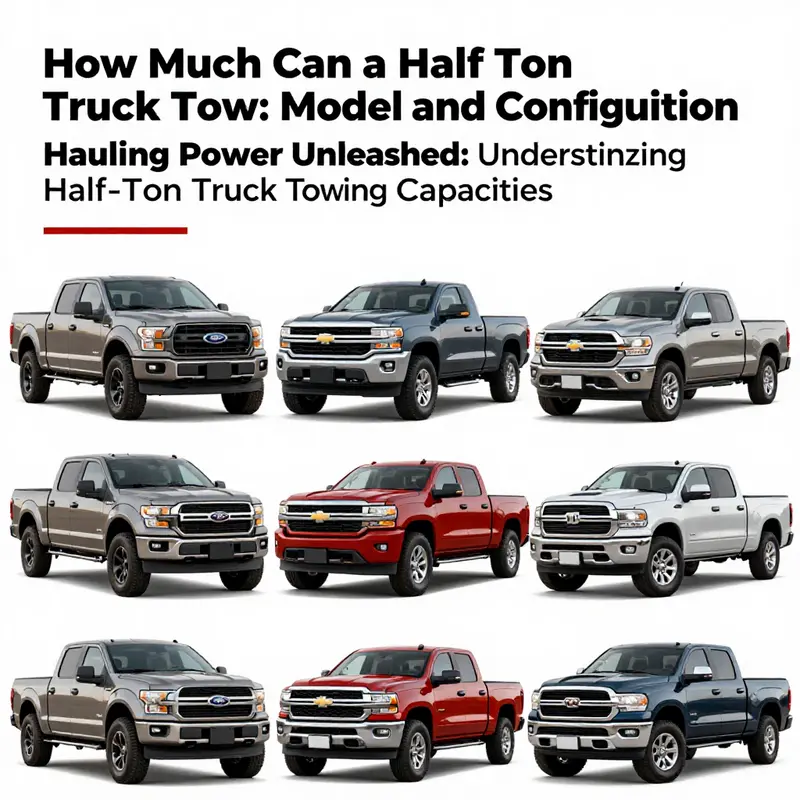
Towing capacity is often discussed as a single, fixed number, a neat badge that seems to belong to a specific truck and nothing else. In practice, the half-ton class—a label that sounds simple but has grown increasingly nuanced—acts more like a spectrum than a fixed line. The truth is that how much a half-ton truck can tow depends on a web of choices: engine size and output, drivetrain, axle ratio, cab and bed configuration, and the presence of factory tow packages or transmission tuning. When you stand back and look at the bigger picture, the question of “how much can a half ton truck tow?” becomes less about a single number and more about the interplay of design, purpose, and the way you plan to use the truck every day. It is a question that invites you to read the data plate with the same attention you give to a map before a long road trip.
In the broader landscape, typical towing capacities for half-ton trucks have historically fallen in a wide band—roughly eight thousand to twelve thousand pounds. That range is not a marketing gimmick; it reflects real variations in engineering and intent. A truck built with a modest V6 and a simpler drivetrain is not aiming to match the capability of the more expensive, high-output configurations. Conversely, a higher-output engine paired with robust cooling, a more aggressive transmission calibration, and a dedicated towing setup can push capacity toward the upper end of the spectrum. The result is a range that can mislead if you take the number at face value. The 2024 models, for example, illustrate that movement has not slowed. When you add the Max Trailer Tow Package to a capable V6 or step up to a turbocharged V6, the capacities can reach or even exceed the 14,000-pound mark in some configurations. It is not unusual to see a mid-range setup hovering in the 9,500 to 13,000-pound territory, with hot-rodded variants flirting with the upper teens, depending on the precise equipment and year. This is where the practical approach to towing begins: know the exact configuration on the vehicle you are considering and verify the precise rating from the manufacturer.
What drives that variation? Engine choice is a principal factor. In many half-ton pickups, a base engine—a naturally aspirated V6 or a smaller V6 paired with a traditional turbocharger—will deliver towing numbers in the lower portion of the spectrum. A step up to a more potent 3.5-liter EcoBoost or its equivalent is what moves most trucks toward the upper end. The logic is straightforward: more horsepower and torque, plus smarter transmission logic and better cooling, can sustain higher tow loads more reliably. This is especially true when a high-torque engine is paired with an upgraded cooling system, reinforced cooling in the transmission, and a rear-drive or four-wheel-drive layout that can handle the weight transfer in a heavy-tow scenario. The drivetrain layout matters, too. On-demand torque delivery, multiple gears, and the way the system handles downshifts when climbing or braking significantly affect how much you can haul legally and safely. A truck with a 4×4 drivetrain can tow close to the same maximum as its 4×2 counterpart, but certain off-road or heavy-duty options may trade payload capacity or tongue weight margin for traction in challenging conditions. These design choices reveal a fundamental truth: to understand a half-ton’s maximum tow, you must parse the exact engine, transmission, and configuration, not just the truck’s general class.
The examples that commonly surface in discussions reflect the diversity within the half-ton family. A midrange configuration with a healthy V6 usually lands in the 8,000 to 12,000-pound range. This is the comfort zone where many buyers feel confident towing typical travel trailers, mid-size recreational vehicles, and utility trailers loaded with equipment. It is where most buyers spend their time, because those loads line up with the everyday needs of a family or a small business fleet. Yet, once you step into higher-tow configurations, the numbers rise decisively. The same chassis and body style can reach up to 14,000 pounds or more when equipped with the most capable powertrains and towing packages, pushing the upper limits of the half-ton class. That jump is not accidental; it is the product of careful engineering—engine tuning, transmission firmware, exhaust routing, radiator capacity, and a hitch-ready rear end that can support the extra load without sacrificing reliability.
To illustrate the variability, consider the range seen across widely used models in recent years. One can encounter a base towing capacity around eight thousand pounds with a smaller engine and fewer tow-focused enhancements. On the other end, models configured for high-performance towing or heavy payloads with robust GCM (gross combined weight rating) and a Max Tow package can approach fourteen thousand pounds. Between those extremes lies a broad middle where most buyers live, towing jobs like large enclosed trailers, fifth-wheel adapters (when used with appropriate equipment), and sizeable flatbeds or boat trailers. The actual capacity that a specific truck can deliver is a function of the exact engine, the transmission’s ability to manage heat and rpm, and the presence of a mechanical arrangement designed to distribute weight to the rear axle efficiently. When a vehicle is properly equipped, its maximum towing figure becomes not just a number, but a reliable limit that the owner can respect to ensure safety, control, and long-term durability.
Alongside engine and drivetrain choices, the trailer itself matters. The gross trailer weight equals the weight of the trailer plus everything loaded on it. But the story doesn’t end there. The tongue weight—the downward force the trailer exerts on the hitch—usually amounts to about 10 to 15 percent of the trailer’s gross weight. This percentage is not a casual rule; it influences steering, braking, and the stability of the combination. A trailer that is too heavy at the tongue can saturate the hitch with force, causing sag and reducing steering control. A trailer that is too light relative to the tow vehicle can sometimes become unstable in crosswinds or at high speeds. The right balance often requires a weight-distribution hitch when the trailer is long or heavy, especially on highways with gusty winds or hilly terrain. This is why the exact number on the door jamb or owner’s manual exists: to guarantee that the vehicle, the hitch, and the trailer work in harmony rather than in a mismatch that could jeopardize safety.
The role of the owner’s manual and the data plate cannot be overstated. These sources capture the precise configuration—engine code, axle ratio, transmission type, bed length, cab style, and optional towing features—that set the official towing limit. Reading the numbers is not a ceremonial exercise. It is a practical step that informs decisions about what you can tow, how you load, and where you should avoid pushing the limits. The manual also often includes cautions about payload limits. A vehicle’s payload capacity is the maximum weight the truck can carry inside the cab and bed, including passengers, cargo, and any after-market accessories. The payload subtracts from the towing capacity in a careful arithmetic that does not simply reflect a single figure, but a balancing act between the vehicle’s gross vehicle weight rating and its gross combined weight rating. Light loads inside the cab, or a heavier trailer that pushes the entire system toward the GCWR, can dramatically shrink what you can legally pull.
This balancing act is echoed in the driving realities of tow planning. Even when the placard shows a high tow rating, real-world performance depends on factors like air resistance, grade, and runtime. A truck towing near its maximum limit may require careful exercise of speed management, engine and transmission cooling, and a careful plan for rest stops to avoid overheating the powertrain. In practical terms, that means assessing your route, trailer length, and the highway conditions before you head out. It also means recognizing that the towing rating is not a ceiling you should treat as a target, but a ceiling that exists to define safe operating boundaries. Understanding that distinction helps keep towing a manageable, controlled activity rather than an exercise in risk. Even with a capable machine, the choice to tow is also a choice to plan, to inspect, and to respect the limits of both vehicle and trailer.
Beyond numbers, the art of towing lies in preparation and discipline. The preparation includes checking the tow vehicle’s hitch, electrical connections, brakes, tires, and suspension, ensuring everything is rated for the load. The discipline involves maintaining a steady speed, braking early, and avoiding abrupt maneuvers that could amplify the effect of the trailer’s momentum on the tow vehicle. Keeping the load properly distributed, ensuring safe following distances, and using the right gear for hills are not optional extras; they are essential components of safe towing that help the driver maintain control even when the weather turns or the road demands extra effort. The best practice is to treat the maximum rating as a legal and technical boundary, not as a permission slip to push beyond what is sensible for a given journey. When you understand the framework—how much you can tow, how that number is determined, and how to respect the intricacies of weight distribution—you gain not just a number you can quote, but insight you can apply every time a load appears on your towing horizon.
In the end, the diversity within the half-ton class is both its strength and its challenge. It allows buyers to tailor a truck to a broad spectrum of needs—from daily commuting with light towing to occasional high-load tasks that require a high-output drivetrain and a carefully engineered towing setup. The numbers you see from one year to the next reflect ongoing improvements in engine efficiency, cooling, and electronic oversight rather than a static measure of capability. The precise capacity for any given model and year depends on the exact combination of engine, gearbox, axle ratio, and tow package. Therefore, if you are planning a specific tow, you should always verify the exact rating for your vehicle, compare it to the trailer’s weight, and consider the combined weight and tongue weight. This careful approach keeps the pursuit of capability aligned with safety and reliability, turning a question that has a numerical answer into a practical framework for responsible towing. For readers who want to explore these ideas in a broader context, the Santa Maria Tow Truck blog offers articles that contextualize fleet readiness and emergency towing planning, which can be useful when preparing for more demanding or unpredictable scenarios. Santa Maria Tow Truck blog
As a closing note, the exact numbers matter, but not in isolation. They matter when they anchor the decisions you make about vehicle choice, trailer choice, route planning, and safety practices. They matter when they shape a plan that keeps people and property safe while enabling the work you set out to accomplish. The half-ton class remains a versatile, adaptable family of trucks, capable of handling substantial loads when configured for it, yet requiring careful attention to the details that govern real-world towing. With the right information, the right equipment, and a cautious approach, towing within the limits of your specific truck becomes a reliable, repeatable part of everyday operation, rather than a leap into the unknown. For further reference on model-specific specifications and updates, see the official manufacturer resources that accompany each year’s lineup, which provide the definitive numbers for your own build configuration. External reference: Ford F-150 specs. https://www.ford.com/trucks/f-150/
Tow Limits Decoded: How Engines and Drivetrains Define a Half-Ton Truck’s True Pull
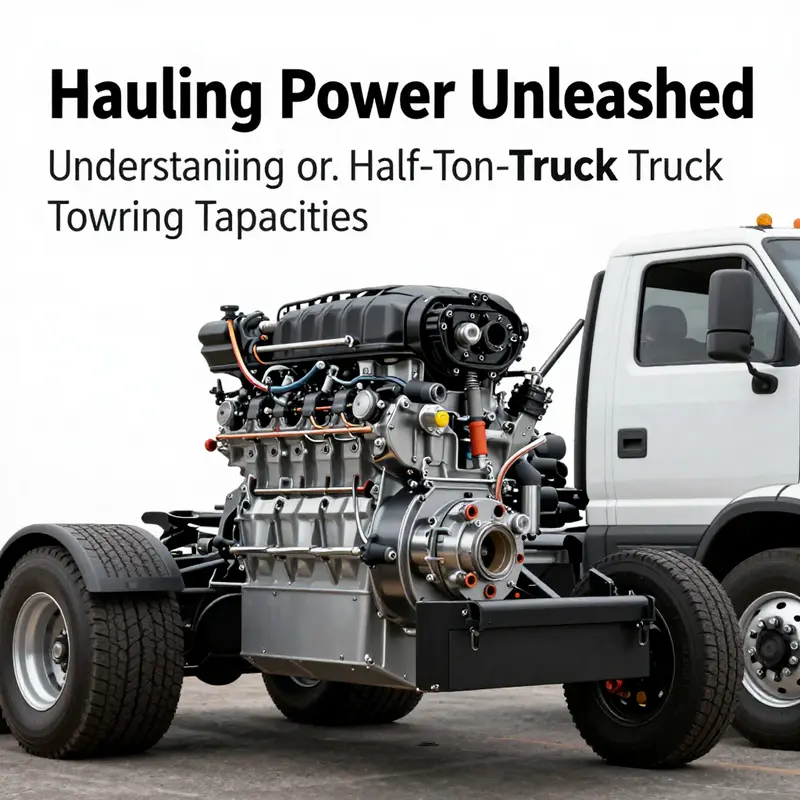
Tow limits are a ceiling rather than a guarantee.
For a half-ton truck, the true pulling power comes from the engine torque, the transmission’s ability to keep that torque in the right gears, and the axle ratio that turns torque into wheel force.
Modern engines deliver strong low-end torque through turbocharging and efficient fuel delivery, so you can start climbs without excessive lugging.
The transmission and axle ratio determine how that torque is delivered to the wheels and how heat is managed during sustained pulls.
The official towing rating assumes specific trailer weight distribution, hitch, payload, and conditions; real-world results vary with tongue weight, payload in the cab, air resistance, and terrain.
Typical ranges for many half-ton configurations fall around 8,000 to 12,000 pounds, with upper ends around 13,500 to 14,000 under ideal configurations and light payload.
But every extra pound on the trailer or inside the bed tightens margins and increases braking and cooling demands.
To tow safely, stay at or below GCWR, monitor tongue load, balance payload, maintain proper tire pressures, and plan for heat and grade.
A disciplined approach—check manufacturer ratings, verify tongue weight, and respect the road—will typically yield a smooth and predictable tow, while always leaving a margin for real-world conditions.
The moral: optimize the system, not just chase the biggest number, and remember that SAE standards anchor the calculations behind the ratings.
Tow Limits in Real Life: Understanding the Regulatory Boundaries and Actual Capacity of a Half-Ton Pickup
When people hear the term half-ton pickup, they picture a versatile workhorse built to haul gear, tools, and passengers every day. The phrase itself carries two meanings at once: payload capacity, the weight a truck can carry in the bed and cab, and towing capacity, the weight it can pull behind it. The latter is what most owners want to know before they hitch a trailer and strike out on the road. The truth is nuanced: a half-ton pickup is not defined by a single tow number, but by a spectrum that shifts with engine choice, drivetrain, axle ratio, and the exact towing package installed. In practical terms, you’ll find that these light-duty trucks can tow anywhere from about ten thousand pounds to fourteen thousand pounds, depending on how they’re equipped and how they’re loaded. That range captures the diversity of modern configurations, and it underscores a basic but essential point: the number on the window sticker or the manual is not a universal cap that applies to every truck in the class. It is the maximum for that specific build, and pushing beyond it invites risk and warranty questions alike. To navigate this landscape safely, it helps to understand the mechanics behind towing capacity, the rules that govern highway use, and the everyday checks that keep a tow setup performing reliably day after day.
At the heart of towing capacity is a simple, forceful idea: a vehicle plus its trailer must stay within a Gross Combined Vehicle Weight Rating, or GCVWR. This rating is published by the manufacturer and represents the total weight the vehicle is legally and mechanically allowed to handle on the road when a fully loaded trailer is attached. GCVWR is not a number you should guess or approximate in your head. It factors in the truck’s curb weight, the cargo inside the cab, the payload in the bed, the tongue weight of the trailer, and any passengers or cargo you’re carrying. In plain terms, if you exceed the GCVWR, you’re asking the powertrain, braking system, tires, and suspension to shoulder more load than they were designed to manage. The risk isn’t only about a sticker shock moment at highway speed; it translates into longer stopping distances, reduced steering precision, and a greater chance of tire blowouts or brake fade under sustained demand. Within this framework, the towing rating you see for a given half-ton pickup becomes a precise boundary rather than a broad suggestion. That boundary is defined by the combination of factors chosen at the factory: the engine’s horsepower and torque profile, the axle ratio that governs gearing, the type of transmission, the presence or absence of a trailer hitch and related electronic controls, and the overall structural reinforcement of the chassis and frame. The result is a capacity that can vary by thousands of pounds across different builds of the same general vehicle class.
To translate a number into practice, think through a few concrete elements. First, the engine matters. A high-output engine or one paired with a robust anti-sway and stability system often supports a higher tow rating, but it also changes the dynamic of how weight is distributed and how the drivetrain responds under heavy pull. Second, the hitch package matters. A factory-installed or aftermarket towing package can include a heavier-rated hitch, a dedicated transmission cooler, an integrated brake controller, and wiring designed for trailer lights and ABS compatibility. Each of these components plays a role in maintaining control and stopping power as you travel with a loaded trailer. Third, brake capability and tire strength are critical. Trailer braking systems add a separate layer of safety, but the truck’s own brakes must handle the mixture of vehicle and trailer mass, especially when descending grades or performing emergency stops. Finally, weight distribution and tongue weight—the portion of the trailer’s weight that sits over the hitch—are crucial. If the tongue weight is too light or too heavy, handling and stability can deteriorate quickly. Lawful and safe towing rests on bringing all of these pieces into harmony with the trailer you intend to haul.
For anyone planning a tow, starting with a conservative assessment is wise. A common rule of thumb in the field is to aim for a safe margin below the maximum rating, not a precise read of the last pound. It is easy to fall into the trap of assuming a rating equals a guaranteed, trouble-free limit. In reality, real-world conditions—topography, wind, road surface, and vehicle load distribution—always push a rating slightly higher or lower than the theoretical maximum. The margin you choose should reflect both your confidence in the equipment and your drive conditions. If you regularly encounter long grades, mountain passes, or frequent stops and starts in urban traffic, maintaining a buffer becomes even more important.
In practice, a half-ton pickup with a properly configured setup can tow a wide variety of trailers—from camping setups and utility trailers to larger, home-improvement haulers. The key is to match the trailer’s gross weight to the vehicle’s stated rating rather than simply matching the trailer weight to the perceived power of the engine. You will often see owners discuss towing numbers in the context of packages that include upgraded cooling, reinforced frames, and electronic aids such as trailer sway control. These features do not magically increase the base rating; instead, they help the vehicle manage the demands of heavier loads more safely. As a result, two similar trucks from the same class can have different practical towing experiences if one is equipped with a towing-focused package and the other is not. This difference underscores why consulting the owner’s manual and the specific specification label on the door jamb is essential before you hook up.
Beyond the vehicle’s own specifications, state rules and roadway standards add another layer of complexity. The federal landscape does not prescribe a universal personal-towing limit for private use; instead, federal agencies regulate vehicle safety, structural integrity, and the proper use of towing equipment. The practical import of this regulatory structure is that blowouts, sway, or misalignment can lead to traffic violations and liability if the trailer is not correctly configured or the vehicle’s rating is exceeded. States vary in their rules about trailer dimensions, axle loads, and overall weight when moving on public roads. A trailer that is too long or too heavy for a given road segment can trigger legal implications, fines, or required route changes on the fly. The interplay of manufacturer specifications, federal safety standards, and state traffic laws creates a framework in which the right towing number is not a single figure but a careful balance of capabilities, conditions, and compliance.
This is why the owner’s manual remains the primary, most reliable compass. It isn’t just a brochure; it is a precise document that maps the vehicle’s capacity to the exact drivetrain in your build. The manual will point you to the correct GCVWR, the maximum permissible weight on the trailer hitch, the tongue-weight guidelines, and any cautions about operating speeds, towing in certain conditions, or restrictions for heavy loads. The specification label on the driver’s door jamb serves a similar function, warning you of the exact weight limits when passengers or cargo are present. It is easy to overestimate your capacity if you rely on memory or general assumptions about a class of trucks. The reality is that the real number is a product of your exact configuration and how you use the truck in daily life. Keeping this in mind helps you avoid a scenario where a heavy trailer pushes you into unsafe territory, especially when negotiating hills, curves, or uneven pavement.
As you plan your next towing project, it’s prudent to consider the practical steps that translate rating into safe operation. First, confirm the rating with the door placard and the owner’s manual for your exact truck. Next, calculate tongue weight by estimating about 10 to 15 percent of the trailer’s gross weight, and ensure your hitch and rearmost suspension can manage that load without excessive squat or sag. If you’re using a weight-distribution hitch, understand how it redistributes weight across the axles and how it affects steering response and braking. Then assess your braking setup. Trailer brakes reduce the load on the truck’s brakes, but you should still ensure the truck’s braking system and tires have ample reserve, particularly on long descents or in wet conditions. Tires must have appropriate load ratings, and the suspension should be able to handle a heavier-than-normal load without bottoming out or overheating. Electrical connections for trailer lights and brakes must be reliable, and you should verify the hitch, coupler, safety chains, and wiring before any move. These are not mere formalities; they are the practical steps that translate a number on paper into a stable and predictable pulling experience on the road.
If the journey includes shared or potentially hazardous routes—where illegal towing practices or unregistered setups could come into play—the literature and professional guidance emphasize vigilance. For instance, there are signs that indicate unsafe towing practices, such as improper weight distribution, inadequate hitch security, or trailer sway. Recognizing these signs early helps a driver avoid a dangerous situation and also aligns with regulations meant to protect everyone on the road. For a concise reminder about these warning signs, you can consult resources that focus on spotting illegal towing practices and the right equipment to use. This kind of awareness is a practical extension of understanding the numeric limits and the legal framework surrounding towing.
In addition to these considerations, the practical reality of planning a tow is to weigh your options against the trip’s demands. If your load will be closer to the upper end of the range, you might choose to brake the journey into shorter legs, schedule rest periods to inspect connections and tires, and ensure you have a plan for weight distribution when taking on long grades or crosswinds. If your trailer carries essential gear or equipment, the cost of a single miscalculation can be not only a safety hazard but also a disruption to a mission-critical operation. This is where the balance of regulatory awareness, mechanical readiness, and cautious practice becomes the bedrock of reliable towing with a half-ton pickup. It is not about chasing a single number; it is about aligning the vehicle’s real capabilities with the demands of the trailer and the road, every time you hook up.
For readers who want to explore the broader regulatory landscape and practical considerations beyond the numbers, there are community and industry resources that discuss the practicalities of towing safety, fleet readiness, and regulatory compliance. While the core concepts revolve around GCVWR and the trailer’s weight, ongoing education about safe towing practices helps keep these vehicles performing well under real-world conditions. If you’re curious about how these concepts apply to mission-critical operations or emergency readiness scenarios, you can explore a related discussion on towing practices and standards that emphasize preparedness and standardization in heavy-duty contexts. spot illegal-towing key signs to know.
Ultimately, the question of how much a half-ton pickup can tow does not demand a single, universal answer. It requires a careful read of your truck’s specific capabilities, a sober assessment of the trailer’s weight and loading, and a respect for the regulatory framework that governs safe highway operation. The road test is not a single moment of truth at the scale; it is an ongoing discipline of matching equipment to load, planning for contingencies, and maintaining the vehicle so that it can carry weight with precision, control, and safety. Keeping the lines clear between the rated maximum and the practical, safe working limit is the mark of a responsible operator who understands that towing is as much about judgment and preparation as it is about horsepower and hitch strength. For the journey ahead, the best approach remains steady: know your exact rating, load within safe margins, maintain your equipment, and stay informed about the rules that shape safe towing across the roads you travel.
External reference: For official regulatory guidance and standards that inform these discussions, see the U.S. Department of Transportation at https://www.dot.gov.
Final thoughts
Understanding how much a half-ton truck can tow is essential for drivers, businesses, and property management teams. With capacities varying widely by model, engine type, and drivetrain configurations, it’s imperative to choose the right truck for your towing needs. Familiarizing yourself with the specifications and regulations can help avoid potential legal issues and ensure safe hauling. Whether you’re utilizing a Ford F-150 or a Ram 1500, having solid knowledge about your vehicle’s limits will empower you to make the right decisions for your towing requirements and ensure efficiency in your work.