
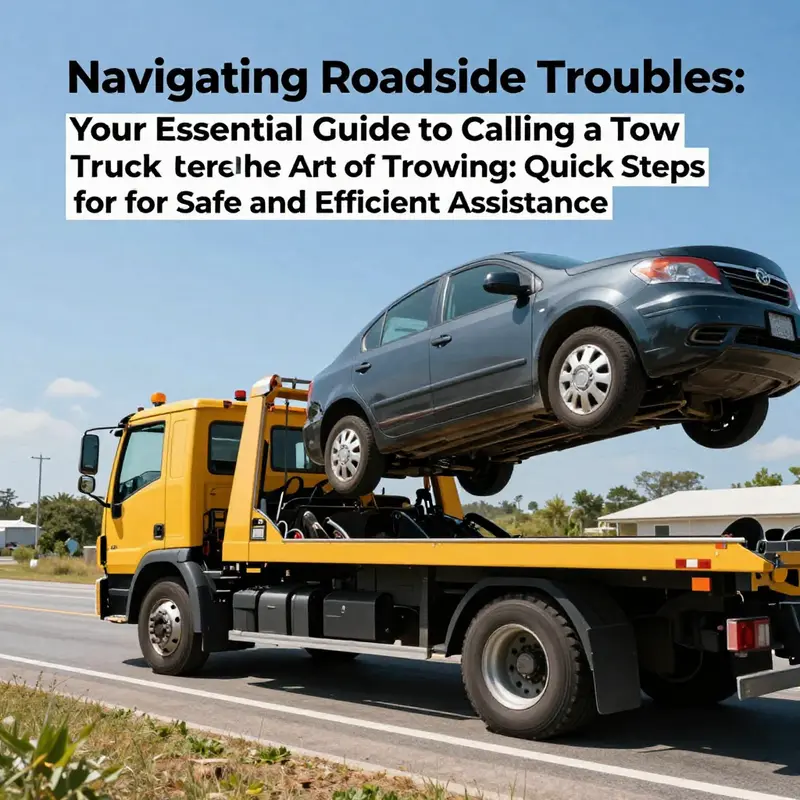
When you’re stranded on the side of the road, the thought of needing a tow truck can be daunting. Understanding how to call for help not only eases your stress but ensures you get the appropriate assistance quickly. This guide is designed for local drivers and car owners, auto repair shops, and even property managers facing unexpected vehicle breakdowns. You will learn how to prioritize safety and situational awareness, gather essential information before making the call, and communicate effectively with towing services to receive the help you need efficiently. Let’s dive into each step, empowering you to navigate roadside emergencies with confidence.
Call for Help with Confidence: Safety-First Tactics and Situational Awareness When You Need a Tow Truck
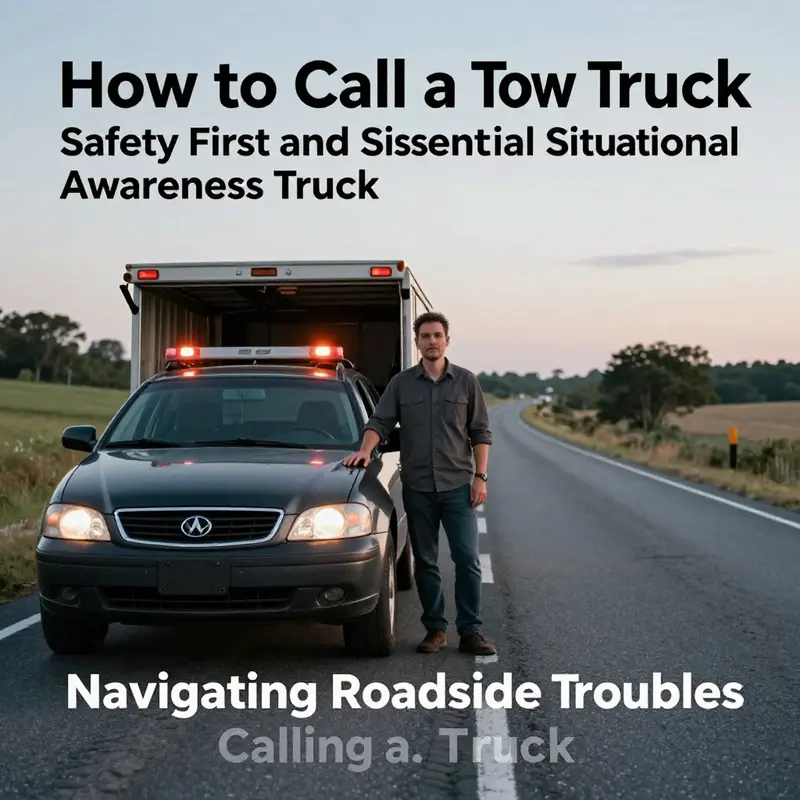
The moment a vehicle falters on the road, the first instinct should be calm, deliberate, and safety-minded. It is easy to panic or rely on the closest voice that sounds confident, but the reality is that a tow truck call is as much about situational awareness as it is about routing a vehicle from breakdown to repair. A tow is not a simple ride from point A to point B; it is a coordinated effort between a driver, a dispatcher, the towing crew, and, most importantly, the person stranded on the roadside. When you understand the sequence of priorities—safety, legitimacy, accuracy, and communication—you begin to shift the experience from a hazardous interruption into a controlled, solvable problem. This chapter weaves those priorities into a continuous narrative, guiding you through the moments before you dial, the information you provide, and the choices you make as you await help. It treats every step as a thread in a larger fabric that keeps you protected, informed, and in control, rather than at the mercy of a chaotic roadside moment.
First comes safety, because without it everything else collapses. If your car has broken down on a highway or a busy street, the immediate imperative is to move people away from danger and to set up a buffer between the vehicle and the flow of traffic. Turn on hazard lights to signal distress, then, if feasible, shift the vehicle to a safer location—ideally completely off the roadway, onto a shoulder or emergency lane. If you can’t move the car, stay with it but step away on the far side where you have a clear escape path and can watch the surroundings. The next layer is to use a warning device that clearly communicates your position to approaching drivers and to the tow operator who will arrive. On highways, place a warning triangle or reflective device at a safe distance behind the vehicle; the distance is substantial because high speeds reduce the time a driver has to react. The general rule, echoed in many safety guidelines, is to place the triangle roughly 250 meters behind the vehicle on highways or freeways, and about 150 meters on regular roads. Those distances translate to hundreds of feet of visibility, giving your potential rescuers a wide arc of awareness before they reach the scene. Evacuating passengers to a safe area beyond barriers is prudent as well, and it should be done with care to avoid turning a roadside incident into a more dangerous situation, such as remaining in a traffic lane or near the edge where another vehicle might strike the car, the passengers, or you.
A point of caution that cannot be overstated is the need to avoid improvised, do-it-yourself towing with ropes or chains unless you are trained and equipped to do so. The risk is not only to the vehicle but to anyone involved. Improvised towing can cause sudden shifts in the car’s weight distribution, unpredictable vehicle behavior, or residual damage to the transmission, suspension, or frame. Even in an emergency, the safest choice is not to attempt a tow between two cars with improvised gear. If you must move a vehicle to a safer location, call for professional help rather than attempting a manual recovery. This caution sits at the core of the safety-first approach, which permeates every subsequent decision—from the choice of service provider to the moment the tow operator arrives and begins work.
With safety anchored, the next consideration is choosing the right service provider. Legitimacy matters as much as speed. The temptation to accept the first offer that pops up on a phone screen can lead to scams, especially when you are in a distressed state and the clock is ticking. The structure of reliable roadside help often falls into a few broad categories: the insurer’s roadside assistance benefit, manufacturer or dealership-backed road services, government or official emergency channels in some places, and trusted third-party providers that display clear licensing and upfront pricing. Insurance-driven roadside assistance is frequently a smart starting point. Many comprehensive auto policies include at least some towing coverage, sometimes with a cap on mileage or a specified maximum benefit. Calling the insurer’s 24/7 hotline not only validates coverage but often triggers a vetted, contracted towing partner that knows the policy terms, the preferred shops, and the billing expectations. If you have a manufacturer’s roadside program, you may have access to complimentary tow or discounted services as part of your warranty or premium membership. These routes reduce the likelihood of being directed to an unvetted shop and can expedite the process by pre-authorizing dispatch.
In certain regions, official government hotlines or dispatch services provide a transparent, regulated option. For example, in places where a national traffic service operates a centralized towing system, calling into that channel can connect you to licensed operators who adhere to set rates and standard procedures. In other contexts, emergency numbers—such as local 911 equivalents—should be used if there is an imminent danger or a serious accident. The emphasis here is on prioritizing channels that are known to maintain licensing, pricing transparency, and accountability. A pragmatic approach is to verify the operator’s credentials at the outset and to request a clear description of the service being provided. If you are using a third-party platform or app, ensure that the provider’s license status is visible and that pricing is disclosed upfront before you confirm any ride or tow. A prudent step, especially when you are uncertain, is to rely on a provider that can offer written or digital documentation of the service agreement, including the estimated cost, the intended route, and the dispatcher’s contact information.
This careful selection is not purely about avoiding scams; it also protects you from overcharging or being steered toward distant, less convenient destinations. The “golden rule” for legitimacy is simple: never allow a call to proceed without confirmation of license and pricing. If a driver or dispatcher pressures you to accept a price, or if you are pressured to authorize a long-distance tow to a shop you do not recognize, pause and reassess. It can be tempting to accept a lower price from an unfamiliar outfit, but the risk of hidden fees or poor service quality can outweigh the perceived savings. The best path is to align with channels that you know and trust—the insurer, the manufacturer, a government dispatch line if available, or a vetted, licensed third party with clear pricing. In any case, the goal is to reduce ambiguity and ensure that once dispatch begins, you are dealing with a provider who can be held to a standard of service and pricing.
Once you have selected a reliable provider, the next phase is to communicate accurately. Information is the operator’s map to the problem and the fastest path to a safe resolution. When you first speak, give your exact location with precision. Use landmarks, mile markers, road names, and any nearby exits if you can. The more precise you are about where you are, the less time the dispatcher spends triangulating your position and the sooner the tow can be on its way. Then describe the vehicle itself: the make or model, whether it is a sedan, SUV, van, or truck, and any distinguishing features that can help the driver identify the right vehicle on site. The issue itself matters. Is the engine failing to start, or is a tire flat? Is there a fluid leak, smoke, or a dashboard warning that adds urgency? These details help the dispatcher advise you on the right kind of tow and whether a flatbed or wheel-lift configuration is most appropriate. If you know the transmission type or the presence of a four-wheel-drive system, share that too. Different kinds of vehicles require different towing approaches to avoid further damage and to transport the vehicle safely.
A practical example helps anchor the conversation to reality: you might say, “I’m on the northbound lane of the G2, near the X River bridge, in a red Honda CR-V. The car won’t start, and there’s a loud grinding sound when I turn the key. I’ve placed the triangle about 160 meters behind me. I need a flatbed tow or wheel-lift depending on what you can bring.” That statement covers location, vehicle type, the problem, and a reference to the available safety equipment. It also signals to the dispatcher that you know what you’re asking for and that you’re considering the safety implications of towing on the site. In some contexts, the dispatcher may ask clarifying questions about the gear shift, whether it’s manual or automatic, or the drive configuration. Providing these details upfront reduces back-and-forth and speeds up the process.
While you await the tow, there are additional steps to maximize safety and efficiency. First, confirm the destination with the dispatcher before the tow begins. Is the vehicle going to a nearby repair shop, a dealership, or your home? Confirm the address, and ask whether the route will be the most direct path or if any detours are expected in case of traffic or weather. Request a written or digital confirmation of the route and the anticipated cost estimate. If the price estimation changes, flag it immediately. Do not hand over the keys or allow the driver to disconnect the engine or remove the battery without clear authorization and documentation. If you have any valuables in the car, remove them beforehand and lock the vehicle to prevent theft during loading and transit. Several operators will require you to stay with the vehicle while loading; if you feel unsafe staying near a loading zone, request a secure waiting area away from the flow of traffic.
There is value in keeping a simple, professional dialogue with the tow operator once they arrive. You should verify the driver’s credentials and the company’s identification. A quick check inside the cab for a company ID, a roadside assistance certification, or a license number is reasonable. Do not assume that the presence of a vehicle means legitimacy. Before they connect the car, perform a brief exterior inspection with the driver and document any pre-existing damage with photos. A few pictures of the car from multiple angles—even when you think you already know the state of the vehicle—provide a verifiable record that can prevent later disputes about damage that may have occurred during loading or transport. The final verification is the destination: confirm again where the car will be taken and that you have written confirmation of the route, the expected arrival time, and the price estimate. If the driver proposes a different route or a different shop, explain clearly why you prefer to stay with the initially chosen destination, or insist on a written note about the alternate route and any price implications.
As the tow begins, a few practical safety points remain. The vehicle must be secured with professional-grade equipment, not improvised ties or makeshift arrangements. Tow straps are acceptable when used by professionals who know the correct tie-down points and spooling methods, but a flatbed often offers the safest, most controlled method for a disabled car. If a wheel-lift tow is used, the proper procedure includes lifting the vehicle by designated points and ensuring the drive wheels are correctly supported. Any attempt to alter the gear arrangement—such as removing the drive shaft in a four-wheel-drive vehicle—should be guided by the tow operator, not done on your own. If anything feels off during loading—unusual noises, shifting weight, or misalignment—pause the process and request a brief consultation with the driver. Parking lots, service lanes, and road shoulders are busy environments, and the risk of distraction is high. Keeping a calm dialogue with the operator reduces misunderstandings and protects you from being drawn into any dispute about cost, route, or delivery.
The scenario is not complete without considering what happens after you reach the destination. A professional tow operator will often provide a receipt, a route summary, and an itemized estimate of the charges. If the price appears unexpectedly high, request an explanation and, if needed, a breakdown of charges with line items for the tow, mileage, tires, or any additional services. If you have a preferred shop, you can request that the tow be delivered there and ask for a copy of the bill that lists the exact service performed. A good practice is to document the entire interaction, from the moment you first call to the handover at the destination, including dispatch times, driver names, and vehicle license numbers. This documentation becomes a useful reference if you later need to file a claim with your insurer or contest a charge that seems out of line with the original estimate.
This chapter has emphasized a simple, repeatable cycle: safety first, legitimacy and reliability second, precise information third, and controlled communication throughout. It is a cycle that keeps you in command of the situation rather than at the mercy of it. The beauty of this approach is that it translates across different geographies, different languages, and different road conditions. The underlying principles—clarity, verification, and steady presence—do not rely on a single country’s regulatory environment; they rely on universal best practices that reduce risk, minimize miscommunication, and speed the return to normalcy after a breakdown.
To connect this guidance to ongoing resources, you can find additional reflections and practical anecdotes in the broader conversation surrounding roadside readiness and emergency planning. For a resource that situates a lot of these ideas within a broader community and offers ongoing insights, the Santa Maria Tow Truck blog provides a repository of practical perspectives, case studies, and updates on standardizing emergency-responses and rescue operations. You can explore that repository at Santa Maria Tow Truck blog. The aim is to give readers a living reference that grows with experience, not a static checklist that can go out of date.
In any part of the world, the tools of preparedness are universal, even if the details differ. If you are in a context where regional authorities coordinate toll-road or highway assistance, lean on those official channels first, then move to your insurer or manufacturer’s program if available. If you are dealing with a private, independent tow service, rely on the same core practices: insist on written pricing, request identification, document the vehicle’s condition before loading, and maintain control over the destination. These steps do not guarantee a problem-free experience, but they sharply reduce the risk of miscommunication, fraud, or unnecessary delays. The center of gravity remains safety: the safer you are, the simpler the rest of the process becomes, and the less you are subjected to the uncertainties that often accompany roadside incidents.
As you reflect on these practices, remember that a tow call is not an isolated incident but a bridge between your immediate safety and your planned next steps. The sooner you can get the right help, the sooner the vehicle can be assessed and stabilized, and the sooner you can return to your day with as little disruption as possible. The approach described here—safety-first, verified providers, precise information, and careful communication—transforms a potentially stressful event into a manageable one. It is a skill set that every driver who spends time on the road should cultivate, not only to protect their own interests but to contribute to the safety and reliability of the broader driving community.
For readers seeking further practical guidance and community-tested insights, the blog content mentioned above can serve as a supplemental resource. It offers a user-friendly venue to see how these principles are applied in a variety of real-world situations, from urban gridlock to rural roadways, and from routine breakdowns to complex towing scenarios. By engaging with that resource, you reinforce the habit of approaching roadside emergencies with a calm, methodical mindset, which is often the difference between a minor setback and a major inconvenience. And while you prepare for the unexpected, you can rest a little easier knowing that you have a clear, legitimate path to getting help when you need it most.
In closing, the mantra remains simple and actionable: safety first, legitimacy second, accuracy third, and steady, transparent communication throughout. Use trusted channels, provide precise information, and verify every step of the process. This approach minimizes risk and helps ensure that the tow experience is as smooth, fair, and predictable as possible. The road may be uncertain, but your response to a breakdown can be intentionally constructed to protect you, your passengers, and your vehicle. When the moment arrives, your preparedness will be your most reliable tow partner.
External resource for broader safety guidelines: https://www.aaa.com/roadside-assistance/
How to Call a Tow Truck: Mastering the Essential Details for Rapid Dispatch
When a vehicle stalls on a busy strip of highway or a quiet suburban street, the moment you decide to call for help can determine how quickly you regain mobility. The act of calling a tow truck is simple in its aim, yet powerful in its impact when done with care and precision. It’s more than a matter of dialing a number; it’s a small, practical sequence that begins with safety, continues with precise information, and culminates in a dispatcher coordinating the right equipment and the right route to meet you where you are. If you can arrive at the end of that sequence with a clear picture of your situation and a single, reliable request—tow to a shop, to a storage lot, or to another safe location—you remove much of the uncertainty that can bloom in an emergency. This chapter does not pretend to erase the stress of a roadside breakdown, but it offers a steady framework for turning a tense moment into a smooth operation, one that respects your time, your safety, and the practical realities of how tow services work today. With that aim in mind, the discussion below threads together the core components you need to gather, the questions you should anticipate, and the language that helps a dispatcher translate your needs into a fast, accurate dispatch.
The first factor in speed and accuracy is safety, and the advice here is deceptively simple: stay put or move to a safe location if you can. If you’re on a shoulder, behind a guardrail, or at an exit ramp, use hazard lights immediately and, if possible, place a reflective warning device a short distance from the vehicle. The goal is not to rush back into traffic or to stand where drivers cannot see you. It’s to create a small, clear zone where both you and the tow operator can operate without risk. Once your safety is secured, the task shifts to information—the kind that makes the dispatcher’s job precise rather than provisional. The exact sequence matters because every mile, every minute of weather exposure, and every obstacle to navigation is a variable the tow team must manage. Your job is to furnish the dispatcher with a dependable map of those variables so the tow arrives not as a hopeful guess but as a planned solution.
Begin with location. The most critical piece of information is your exact spot. This means a full address with street name, city, state, and ZIP code. If you’re still on a highway, note the nearest exit number, mile marker, or landmark such as a gas station, restaurant, or odd-looking building. If GPS signals are weak or the landscape is remote, a landmark can keep the dispatcher from chasing an imprecise dot on a map. A well-phrased location can shave minutes off the arrival time, which matters when you’re cold, late for an appointment, or dealing with a dangerous situation. Consider practicing a concise line you can repeat verbatim: for example, “I’m on Main Street, just north of Oak Avenue, near the gas station, in [City], [State], [ZIP].” If you’re in a rural setting or a mid-block location without a formal address, describe the spot in relation to known features and nearby intersections. In all cases, the goal is to give the dispatcher enough context that, once the call ends, the driver can pull a map to your exact curb or shoulder without chasing mismatched coordinates.
Next, describe the vehicle itself. The dispatcher will want a quick but precise picture: make, model, year if you know it, and color. The license plate number can be essential, especially in high-traffic zones or college towns where multiple vehicles of the same make and color might be present. If your car has distinguishing details—shiny chrome trim, a dent on the passenger door, or a temporary plate—note them briefly. The more precise the vehicle description, the less likely the dispatcher will misallocate a wheel-lift or a flatbed to the wrong car. If you’re unsure about the year or model, don’t guess. Preface with “I’m not sure of the exact year, but it looks like a [color] [make] [model]” and the operator will guide you to confirm.
Then comes the nature of the problem. Are you stranded due to a mechanical failure, did you have a flat tire, or was the car involved in a collision? If you’ve had a minor accident and you’ve already dialed emergency services, inform the dispatcher so they can coordinate with the appropriate responders. If you’ve simply run out of gas, tell them that the vehicle will need a basic tow with a possible tow to the nearest gas station or repair facility. If the problem is more complex—such as the car being in a ditch or off the road—state that clearly so the tow operator can bring the correct recovery equipment and the right personnel. This helps determine not just the type of tow (for example, a standard tow versus an emergency roadside assist) but also whether the service should employ a wheel-lift, a flatbed, or a specialty recovery unit. The dispatcher uses this information to assign the calling caller to the correct truck, ensuring the arrival is efficient rather than improvisational.
A critical but sometimes overlooked detail is how you’ll be reached and who will authorize the tow. Have a working phone number ready and accessible. The dispatcher may need to contact you for clarifications, updates on ETA, or to confirm any changes in the plan. If you’re not the vehicle owner, you’ll need to confirm you have permission to arrange the tow. In some cases, you may be covered by insurance or a roadside assistance program, which can influence the type of service reimbursed by your policy. If you belong to a membership program that includes towing, such as roadside assistance, locate the policy number, provider name, or the plan details before you call. This isn’t merely paperwork; it can change what the tow will cost and who pays for it in the event of a claim. If you have a preferred shop or storage location, have that address ready as well, because some clients want a wait-while- tow scenario or a tow to a specific facility for a diagnostic review.
Because many breakdowns occur in the company of confusion, a small but powerful habit is worth cultivating: speak clearly and in short, direct sentences. When you’re on the phone, you can model the following approach. “I’m on Main Street near Oak Avenue in [City], [State]. My car won’t start. I need a tow to [shop or destination] if possible. It’s a [make/model], color [color], license plate [plate number]. I’m in a safe location and I’ve turned on hazard lights.” If you’re certain about the tow type, mention it: “I need a flatbed,” or “I’d prefer a wheel-lift if a flatbed isn’t available.” The dispatcher will ask targeted questions about the tow, so having ready answers saves cycles and reduces back-and-forth. If you’re worried about payment, you can note when you expect to arrange payment or confirm if your policy will handle the charge. The goal in this phase is to minimize guesswork on both sides and to keep the call concise yet complete.
There is also value in preparing for the moment when the tow truck arrives. The operator will want to know where the vehicle should be loaded and where the driver should position the tow. If you’re on a busy street with active traffic, the safest practice is to guide the operator to a location with as little exposure as possible for both you and the crew. If you know the parking rules at a particular lot or if there are access restrictions—such as a gate code or a no-parking zone—share that information politely and precisely. The driver will likely need access to the vehicle’s keys, especially if the car remains locked or if you require a secured tow to prevent theft during transit. If you can be present, do so; being on-site reduces the chance of a miscommunication about pickup location, and it allows you to verify that the vehicle is connected properly before departure.
As you assemble these details, you may find you want a little guidance about how to phrase things or what to ask the dispatcher. A practical tip is to prepare a short script you can reuse under stress. For example: “Hi, I’m stranded on Main Street near Oak Avenue. My car won’t start. Could you send a tow truck to this location? It needs to be towed to [destination], and I’d like a [flatbed/wheel-lift] if available. Here are my car details: [year] [make] [model], [color], license plate [number]. My contact number is [phone].” A script like this reduces the risk of forgetting essential details in the moment and makes the call more efficient for both you and the dispatcher. If your situation changes—if you move to a safer area, find a different landmark, or decide to cancel the tow—don’t hesitate to call back with updates. Dispatchers are accustomed to changing circumstances, and quick communication can prevent the arrival of an unnecessary or mismatched vehicle.
If you’re reading this and thinking about what resources exist beyond the initial call, consider a few practical avenues. Some readers will have access to a roadside assistance program through their auto insurer or a membership club. These programs often include towing as a benefit, sometimes with a cap on mileage or a maximum reimbursement amount. If you’re unsure about your coverage, you can verify with the provider by calling the number on your policy or membership card. In many urban or suburban regions, it can be faster to call the local towing company you already know or rely on the nearest service, especially if you’ve built familiarity with their response times or equipment. The dispatcher will typically be ready to confirm whether a specific program covers the tow or whether a standard rate applies. If you’re using an insurance or membership benefit, you may still need to sign off on the operator’s charges at the scene, or you may need to give authorization for the tow to proceed under the policy terms. Being prepared with the insurance provider’s name and policy number can save you a scramble during a tense moment.
As you get ready to place the call, you may appreciate seeing practical examples that illustrate how the process unfolds without sacrificing clarity. For instance, imagine you’re on a quiet road at dusk. You dial the local service, and the dispatcher answers with a calm, methodical cadence: “What’s the location, and what’s the problem?” You respond with the exact address, the nearest cross-street, the color and model of the car, and the fact that the engine won’t crank. You indicate you’d prefer a flatbed if safety or damage considerations dictate it, and you confirm you have a valid insurance or membership that may cover towing. The dispatcher confirms the ETA and asks a couple more details about who will be present to authorize the tow. You provide your name, your contact number, and the fact you’re alone at the moment but with a friend nearby who can assist if needed. The call ends with a polite acknowledgment from the dispatcher, a promise of arrival, and a reminder of the basic safety steps—hazard lights on, stay off the traffic lanes, and keep a visible footprint on the road while you wait.
In weaving together these elements, the central principle is to approach the call with a balance of precision and composure. By prioritizing location accuracy, vehicle specifics, and the nature of the problem, you empower the dispatcher to assign the exact equipment and the right driver for your situation. The goal is not to create a long checklist but to embody a practiced fluency: you know what the operator needs, and you communicate it clearly and succinctly. When you couple that with awareness of who will authorize the tow and what insurance or membership may apply, you create a smooth path from breakdown to solution. The result is a dispatch that arrives faster and a tow that proceeds with fewer complications. If you’d like to extend your understanding beyond the moment of dispatch, a visit to the Santa Maria Tow Truck Blog offers practical perspectives on roadside readiness and the workflow behind emergency services. Santa Maria Tow Truck Blog.
As you prepare for that next service call, it’s helpful to keep a few additional reminders in mind. First, know that not all tow services are created equal in terms of equipment and response times. A well-rated local company can sometimes exceed expectations with a ready pool of flatbeds and wheel-lift units, trained operators, and a transparent pricing approach. Second, if you’re ever unsure about safety or the legality of a particular location, contact emergency services or your local roadside assistance provider for guidance. In cases of serious accident or immediate danger, dialing 911 (or your local emergency number) is appropriate to get both responders and the appropriate tow service on the scene quickly. Finally, keeping a light, readable card in your glove box with essential numbers—the tow company you prefer, your insurance provider, and your roadside assistance contact—can reduce the friction of a moment when you’re under stress. The few seconds you invest in pre-saving this information can translate into a much smoother, safer, and more efficient roadside experience when a breakdown occurs.
For those who want a practical, external reference on best practices for securing a tow and understanding the broader landscape of roadside assistance, resources like AAA Roadside Assistance provide detailed guidance on the process from start to finish. This external resource can complement the steps outlined here by offering a framework for what to expect, how to document the tow, and what rights you have as a consumer when choosing a tow operator. You can explore their guidance at https://www.aaa.com/roadside-assistance/ to gain additional context and reassurance as you navigate the dispatcher’s questions and the driver’s arrival.
In the end, the act of calling a tow truck becomes less about improvisation and more about a practiced sequence. Safe positioning, precise location details, a clear description of the vehicle and the problem, practical information about payment and authorization, and a concise script all coalesce into a smooth dispatch. The tow arrives with the right equipment, the driver follows the plan, and you regain control of the situation with a clear path forward. It is a small framework, but it is exactly the kind of framework that can turn a moment of uncertainty into a manageable, efficient intervention. And if you keep this approach in mind, the next time you face a roadside disruption you’ll spend less time explaining your situation and more time implementing a practical remedy. For readers who want to explore related topics, the Santa Maria Tow Truck Blog offers additional insights into the logistics of emergency readiness and the standards that guide tow operations, helping you stay prepared for the unexpected.
External resource: AAA Roadside Assistance
Dialing for Help: Mastering the Call to Tow Services and What to Expect
When a vehicle stalls on a busy road, or worse, after a car accident, the moment you realize you need help can feel overwhelming. Yet the moment you make that call, a chain of practical decisions begins to form. The goal of this chapter is not just to tell you whom to call, but to illuminate how to communicate clearly, what to expect from the service, and how to protect yourself from common pitfalls. It’s about turning a stressful moment into a structured, informed sequence that gets you safely back on the road or to a repair shop with as little friction as possible. Start with safety. If you can, move the vehicle away from traffic to a shoulder or a safe pocket off the roadway. Turn on hazard lights, set up reflective triangles if you have them, and, if possible, stay inside or behind the guardrail where you are less exposed to passing traffic. Your first priority is to reduce risk to yourself and any passengers. Once you have established a safe baseline, you can begin the process of contacting a tow service with a calmer, more precise mind. In many ways, the call that follows is the most important step in a chain of steps that extends from immediate safety to the repair shop and the settlement of a service bill. The plan is simple in structure, but its success hinges on getting the right information across, choosing the most appropriate dispatch method for your situation, and understanding the realities of wait times, fees, and the equipment needed to move your vehicle without causing additional damage.
The most reliable approach to arranging a tow starts with an assessment of your resources and the specifics of your break down. If you carry auto insurance that includes roadside assistance, the fastest route for many drivers is to contact the insurer’s roadside service line. This route is often free up to a policy-defined mileage limit and tends to be well integrated with a nationwide network of approved tow operators. Before you call, locate your policy number and a 24/7 service line card or digital policy file so you can verify your coverage on the spot. You’ll want to be ready to state your location precisely, the vehicle’s make and model, and the nature of the problem. It’s worth rehearsing a concise script in your head: “I’m on Main Street near Oak Avenue. My car won’t start after a sputter, and I need a tow to a nearby repair shop.” A brief, clear description helps the dispatcher choose the right equipment quickly. If you are inside a car that can’t be moved, you may still be able to call from your phone while remaining in a safe, visible spot. The dispatcher will ask for the basics, and you should answer in simple, direct terms.
Beyond the insurer’s program, there are other viable options. A mobile app or an online platform can connect you with nearby tow providers, sometimes with real-time tracking of the tow truck’s approach. These digital services have grown in popularity because they often provide transparent timing estimates and upfront pricing. When using such a service, you typically enter your location, select a service—tow, winch, or flatbed—and specify your destination. The screen may show an ETA and a cost estimate before the driver is dispatched. It’s important to be mindful that some apps require payment at the time of service, and coverage for these expenses varies depending on your policy and the service you choose. If your insurer does not cover towing or if you’re outside your coverage area, a direct call to a local towing company remains a dependable option. In this case, you’ll want to verify the company’s license and reputation before booking and inquire about rates up front to avoid surprises. A critical caution in this space is recognizing the possibility of bait-and-switch scenarios or unregulated pricing in certain markets. The safest path is to request a written estimate and receipt, which helps protect you if questions about charges arise after the service.
In emergency situations, however, time presses. If the vehicle is disabled on a highway, especially if it poses a hazard to traffic, you should consider contacting emergency services. A dispatcher can coordinate a state-approved tow truck that is authorized to remove the vehicle from a hazard zone. This route is not only about speed but about ensuring the vehicle is moved safely and legally from the active roadway. It is a reminder that the tow-truck process exists within a wider system of road safety, and there are moments when the quickest, most reliable option is to involve authorities who can manage traffic dynamics and public safety concerns. When you speak with a dispatcher—whether your insurer, a mobile app, or an emergency channel—assert clarity about your location, the precise nature of the problem, and your preferred destination. If you know that you need a flatbed tow or a wheel-lift tow, state that explicitly, since the equipment choice can impact how your vehicle is loaded and transported and can also affect costs.
The information you provide in that initial contact is the backbone of a smooth experience. Your exact location becomes the anchor for the driver’s arrival. Modern dispatch systems often rely on maps or GPS to nail down a precise spot, and you should consider providing additional landmarks to narrow the search. Landmarks might be a nearby gas station, a junction, or a storefront with a conspicuous sign. If you can, share cross streets and the nearest address or mileage marker. The vehicle’s description should include the license plate number if you know it, the year, make, and model, and any notable modifications or features that could help the driver confirm the correct vehicle. Then, describe the problem succinctly: has the engine failed to start, is there a flat tire, did you lose power while driving, or did you collide with another vehicle? The nature of the problem informs the operator about the type of tow truck and equipment required. Will a wheel-lift tow be sufficient, or does the vehicle require a flatbed to avoid damage? The answer to that question can influence the arrival time and the cost, particularly if the vehicle has lower clearance or is a specialty model.
As you anticipate the arrival of the tow truck, you shift from the realm of the call into the experience of waiting. This phase is often less predictable than the call itself. Wait times can vary widely depending on how busy the service network is, the hour of the day, and your location. In urban centers during peak hours, you might see a quicker response due to higher call volume, but traffic can complicate the driver’s route and extend the wait. In rural areas, the distance between tow operators may translate into longer arrival times. The driver’s arrival is not just about the mechanical act of loading your vehicle but about the transfer of responsibility: you are handing over the care of your car to another professional who is trained to secure it safely for transport. The driver will confirm your destination and the method of transport, discuss potential fees, and ensure that the vehicle is attached and loaded in a way that minimizes risk. It is reasonable to ask for a written receipt at the end of the service, particularly if you anticipate reimbursement through an insurance policy or a third-party payer. Documenting the exact charges in writing can save you from disputes later on.
When you begin this process, you may worry about costs. Towing is not a one-size-fits-all service; it comes in several variations. Insurance-assisted towing often covers a portion of the distance to the repair facility, but the extent of coverage depends on your policy terms, and after-hours or specialized equipment can incur additional charges. If you are using an app-based solution, the price estimate you see at the outset may reflect current demand, proximity of the driver, and any service fees. If you opt for a direct local tow company, you should request a breakdown of the rate: base service charge, per-mile or per-kilometer rate, load charges, after-hours fees, and any equipment surcharges for flatbeds or wheel-lifts. Transparency at this stage protects you from unexpected costs later in the process. It is also prudent to inquire about the possibility of a cancellation fee if your plans change or if you decide to drive the vehicle to a shop after all. The more you know about the fee structure—before you accept the service—the stronger your position becomes as a consumer.
The practicalities of the loading process are another point where clear communication matters. A tow driver will assess how the vehicle should be moved and secured. A flatbed tow transports the entire vehicle on an inclined platform, which can be gentler on the vehicle’s undercarriage and more suitable for low-clearance or all-wheel-drive models. A wheel-lift tow picks the wheels off the ground and can be effective for many standard cars and trucks, though it may not be suitable for vehicles with certain drivetrains or damage patterns. If you have a preference, communicate it, but also trust the driver’s professional judgment. The driver may offer a brief explanation of why a particular method is best for your car, and it is reasonable to ask questions if something about the plan feels unclear. Requesting a recap before the operation begins helps ensure that you and the driver are on the same page about the destination, the route, and any anticipated delays.
As the tow truck nears, you might wonder about the experience of the driver and the steps that follow. A licensed tow operator will bring the necessary equipment—winches, dollies, and safety straps—and they will conduct a brief on-scene assessment to ensure the vehicle can be loaded safely without causing further damage. You can expect the driver to explain the steps as they execute them, and you should observe from a safe distance, staying off the roadway and out of traffic lanes. If you’re waiting in an area with other people, keep your valuables secure and avoid leaving the vehicle’s keys or personal items in accessible places. A calm, cooperative demeanor helps maintain a smooth workflow for everyone involved. The moment of loading is typically straightforward: the vehicle is secured, the hitch is attached, and the vehicle is carefully winched onto the bed or raised to the wheel-lift position. Once the vehicle is secured, the driver will confirm the destination, verify the contact information in their dispatch system, and relay any important notes about the ride. While the payment arrangement may be settled at the end of the service, some apps and insurers allow for pre-authorization or immediate payment, and you should be prepared for either possibility. If you anticipate reimbursal through insurance, keep the receipt and the service details in a safe place for claim submission after you reach the destination.
After the tow, the road to resolution continues. The vehicle will be taken to the chosen repair shop or a preferred location, and you will have the opportunity to communicate any additional needs for the repair process. Your insurer’s claim handler or the roadside service desk can guide you through next steps, including arranging a follow-up tow if the repair shop cannot complete the work in a single day. At this point, it is natural to reflect on the experience and consider what went well and what could be improved for the future. A key takeaway is to keep a preparedness mindset: maintain a current list of contact numbers for your insurer, a trusted local tow operator, and a preferred repair facility. Having a copy of your policy or roadside assistance terms on hand can save you precious minutes in a crisis, and a small roadside kit—water, a flashlight, a reflective vest, and basic tools—can make the wait more comfortable and safer.
In the broader picture, there is value in understanding the ecosystem of towing beyond the single call. The process is part of a larger network that includes regulatory compliance, safety standards for equipment, and the training of drivers to handle a wide array of vehicle types and road conditions. A well-functioning roadside assistance framework hinges on reliable dispatch practices, transparent pricing, and consistent service quality across providers. As you move from the roadside to the shop, you enter a different domain where documentation, warranties, and repair options come into play. The experience can be smoother when you understand that the tow is not an isolated incident but a link in a chain designed to restore mobility with minimum disruption. When you are looking for further reading on the topic, you can explore a range of resources that discuss the practicalities of roadside readiness and the standards that keep tow operations safe and efficient. For additional context on spotting potential missteps during towing, there is a practical guide you can consult as you plan your next steps after a tow. See Spot Illegal Towing: Key Signs to Know for details on recognizing when a tow may be misused or conducted without proper authorization. Spot Illegal Towing: Key Signs to Know.
Together, these considerations—safety first, clear communication, understanding pricing, and awareness of potential risks—form a cohesive framework for approaching tow services. The goal is not merely to survive a breakdown but to navigate the process with confidence, submit to professional guidance when it’s warranted, and emerge with the right documentation for insurance and repairs. The chapter you are reading is designed to be a compact, practical guide that stays with you as you find yourself stranded and as you return to the road or proceed to a repair facility. If you carry a policy that includes road assistance, you’ll want to confirm the exact terms, distances, and any caps before you call. If you rely on a mobile platform, remember that the interface is a tool to connect you with nearby help but will not replace the human judgment that comes with on-site inspection. In all cases, maintain your safety and your awareness of the specifics relevant to your vehicle’s condition. The more these elements become second nature, the easier it will be to move from crisis to resolution with as little stress and as little cost as possible.
External resource: https://en.wikipedia.org/wiki/Roadside_assistance
Final thoughts
Understanding how to call a tow truck is not just about making a call—it’s about being prepared, safe, and proactive in any roadside emergency. By following the steps outlined in this guide, you can ensure that you stay safe, provide the necessary information, and receive timely assistance when you need it most. Empower yourself with this knowledge as a driver, vehicle owner, or property manager, and approach any towing situation with confidence.