
When your vehicle breaks down or needs immediate assistance, knowing how long a tow truck will take can greatly impact your experience. For local drivers, auto repair shops, property managers, and HOA administrators, understanding the dynamics of towing times is vital. This article explores three critical aspects: the typical response time when help is requested, the duration of the towing process itself, and factors that influence both arrival and transport times. By the end, you’ll have a comprehensive insight into what to expect during a towing service, ensuring you can better manage the needs of your vehicle or property.
Tow Times Unfolded: Reading Arrival, Loading, and Travel Durations Across Locations

When people think about requesting a tow, they often picture a single clock in the corner of the windshield ticking until the moment the wrecker arrives. In truth, the clock is really a dashboard of many moving parts, each influenced by where you are, what happened, and how the service provider’s network is holding up at that moment. To understand how long tow trucks take, you have to follow the journey from the moment a call is placed to the final moment the vehicle is deposited at a chosen destination. It is a story of variables that interact in real space and, increasingly, in digital space as well. The arrival time, the loading effort, and the actual transport duration each carry their own rhythms, shaped by geography, weather, traffic, equipment, and the basic realities of dispatching a fleet of service vehicles that must share a single road system with millions of other travelers. In urban cores, response times can feel almost cinematic in their speed, with dispatchers orchestrating a symphony of roars and beeps that funnel help toward the spot where a car sits juddering to a halt. In rural districts, the same symphony slows, the tempo dragging as the nearest tow truck drifts toward a more distant horizon. And in all cases, the clock usually begins to separate from itself when the incident is more complicated than a simple roadside wheel change or a quick jump-start; it splits when traffic, weather, and road conditions turn every mile into a miniature puzzle of timing. The chapter that follows weaves these threads into a single, coherent narrative about how long tow trucks take, why the times shift, and what people can realistically expect when they place that call for help.
A first layer to the timing puzzle is the arrival, or response, time. In dense urban environments with robust networks of service providers, the standard promise is often a window of roughly 15 to 30 minutes. This range has become something of an industry shorthand, a benchmark that signals aggressive scheduling, fast dispatch, and an expectation that the nearest available unit can reach the scene promptly. Yet, even within a city, the clock can snap and then reclock itself as a dozen micro-factors collide. The layout of streets matters, because narrow one-way corridors complicate routing for heavy equipment. The density of traffic changes from minute to minute, and rush hours can compress a fleet’s ability to respond to a new call as other calls funnel into the same corridors. Weather adds another layer: rain slicks roads, fog reduces visibility, snow can chain together blocks of travel time, and wind gusts can slow a driver who is maneuvering a large vehicle through a critical choke point. In such moments, a dispatch center is less a single watchman and more a conductor with multiple other signals to process—emergency priority, the geographic distribution of open units, and the need to balance speed with safety for both responders and the stranded motorist. The result is a response time that can be near the lower end of the stated range most days and drift toward the upper end when conditions become more challenging. The variability is not a reflection of incompetence or inefficiency; it is the natural consequence of operating a fleet within a living, breathing transportation system.
Rural and remote environments introduce a different, almost architectural set of timing concerns. The nearest tow truck may be many miles away, and the road network, though simpler in some ways, is more dispersed. In these environments, the journey from call to arrival can hinge on the precise placement of the fleet and the physical distance to the scene. A rural tow may require a longer drive because the operator has to choose the most efficient route among fewer options, and because the road surfaces themselves may demand slower speeds for the sake of equipment safety. Adverse weather compounds these factors: a snowstorm that blankets a mountain pass, a dense fog that blankets a valley, or a rainstorm that creates slick surfaces on a winding highway can each stretch what would otherwise be a straightforward response. In such places, a target for response times might stretch toward an hour or more, particularly when the weather isolates lanes or when a single truck must handle more than one call along a travel corridor. It is not that the operators are unprepared or uncommitted; it is that geography sets the tempo, and the dispatcher’s job is to keep rolling units properly allocated so that coverage does not degrade for anyone who needs help. In this sense, rural response times are less about a metric and more about a guarantee of availability that recognizes the distances involved. The best-practice companies in these areas do not pretend to promise a one-size-fits-all arrival window; they communicate that a longer travel time may be necessary and then honor it with a transparent update, which often comes through digital tracking or direct voltage-like cues from the dispatcher. On a deeper level, the rural story of response time also highlights how a fleet’s design—its mix of flatbed units and wheel-lift units, the availability of jump-start capabilities, and the ability to service heavy-duty trucks—becomes a crucial factor in meeting the practical needs of the moment. When the vehicle at the side of the road is a tractor-trailer or a heavy hauler, the loading stage itself becomes a significant piece of the time puzzle, pushing the overall window higher because the equipment is larger, heavier, and more complex to maneuver into position.
The actual loading phase, the moment when a truck’s winching gear slides into action or a flatbed bed slides gently under a vehicle, is a surprisingly variable portion of the total timeline. The hourglass for loading is governed by the type of tow truck engaged and the condition of the vehicle in question. A wheel-lift or a hook-and-chain arrangement may require a careful setup to avoid damage, especially if the car’s location is awkward, such as on a slope, in a ditch, or on uneven pavement. A flatbed tow, favored for its ability to keep the vehicle in a level frame, might take longer to prepare but offers a more secure transport result. Small details matter here: the accessibility of the tires, the presence of debris, or the need to protect fragile components can each add minutes to the process. The operator’s experience is also a determinant; a seasoned technician will often complete the attachment steps more quickly and with fewer adjustments, while a less experienced technician may need more time to ensure that everything is secured properly. It is the careful fusion of technique and safety, not speed alone, that determines the efficiency of this phase. In many cases, a well-trained crew can move through the loading sequence in 5 to 15 minutes, a range that aligns with industry expectations for routine recoveries. When the vehicle is severely damaged or the scene requires delicate handling, the loading may stretch toward the upper end of that band, or beyond it, as extra precautions are taken to avoid exacerbating damage.
Once loaded, the journey to the destination begins—the transport phase. Here, the distance to the repair shop or the destination you specify becomes the primary driver of the clock. Short hauls near urban cores can be something of a standard, with 15 to 30 minutes of road time punctuating the end of the episode. Longer hauls are, of course, a different mathematical problem. If a vehicle must be delivered to a distant service center or a specialized repair facility, the drive can stretch into hours. Traffic flow remains a critical variable; even in the best-case scenario, you cannot assume a straight shot with uniform speed. Highway speeds may be tempered by construction zones, detours, or aggressive driving conditions that limit the average velocity. Weather continues to exert influence here as well. A tailwind of light rain can shave minutes off a trip that would otherwise be longer, whereas a heavy snowstorm can reduce the open route options and increase fuel consumption and fuel burn rate, further slowing progress. The geography around the destination matters too. Rural shops may have limited hours or fewer delivery routes to coordinate with, which can influence not just the arrival time but the time at which the vehicle can be off-loaded and handed to a shop technician for further assessment.
Taken together, the full arc from call to delivery is a composite of these phases: the optimistic but aspirational arrival window, the sometimes-variable loading window, and the transport window whose length is a direct function of distance, road conditions, and the degree of careful handling required. In practical terms, the total time from the moment you call for help to the moment your vehicle is placed into the care of a repair facility can range from roughly 30 minutes to several hours. The lower bound is most likely to occur in an urban environment on a relatively quiet street at a moment with favorable traffic and weather, when a well-coordinated dispatcher can allocate the closest unit, the operator can secure the vehicle quickly, and the route to the destination is free of impediments. The upper bound is more of a distribution across scenarios: a remote or difficult scene, adverse weather, multilayered safety checks, and a longer drive to a distant facility can all stretch the timeline. The crucial point is that these are not merely numbers but practical expectations shaped by a landscape that is dynamic and sometimes unpredictable. When people prepare for the experience of requiring a tow, they benefit from understanding the likely shapes of the curve, not just the average. If you live in a city known for heavy traffic, you might plan for a more extended window and use that understanding to coordinate with your schedule, if possible. If you are in a rural area, you may want to have a contingency plan for a longer wait or to prepare for the possibility that the vehicle may be transported to a different location than initially anticipated, depending on the availability of a nearby facility and the nature of the incident.
In addition to the physical geography and weather, several operational practices influence the perceived and actual speed of tow services. Modern dispatch centers often rely on real-time visibility into fleet status, GPS-enabled routing, and dynamic reassignment to keep response times tight. In the best-run networks, a call is not just a ticket but a signal that triggers a cascade of checks: is there an available unit within the closest radius? Which unit can reach the scene fastest while keeping safety at the forefront? How many other calls are already in the queue, and what are their priority levels? These questions are answered in milliseconds, and the answers can change as conditions on the road shift. It is not a failure of service but a reflection of the system balancing urgency, proximity, and safety in a living transportation environment. The best operators maintain clear lines of communication with motorists, offering updates as the situation evolves. Even when a truck is en route, a quick status message about the planned route, the expected arrival window, or a potential delay can greatly reduce anxiety and provide a sense of control to someone who is stranded. In this way, the social dimension of timing becomes part of the service itself: timely communication can transform a stressful moment into a manageable one, even if the clock continues to tick in the background.
To make this discussion more concrete, consider how a single incident might unfold in a typical urban setting. A motorist experiences a breakdown on a congested highway during the late afternoon rush. The call is placed, and the dispatcher mobilizes the nearest available unit. The system knows not just where the unit is but how fast it can reach the site given current traffic patterns and the vehicle’s loadout. As the unit moves through the city, the motorist receives updates that acknowledge the delay caused by, for instance, a lane closure just ahead. The tow operator arrives at the scene within the lower end of the typical window, quickly assesses the situation, and secures the vehicle. The loading process is efficient but deliberate, ensuring that the car is held securely for transport. The subsequent drive to the destination is moderated by a safe driving approach through dense traffic and a few right- and left-turn choreography cues from the dispatcher. The motorist can now anticipate the arrival at the repair facility, whether it is a short hop to a nearby shop or a longer journey to a location that specializes in a particular make or type of vehicle. This kind of scenario demonstrates how the different parts of the timeline fit together in a high-stakes, time-sensitive context. It also illustrates the value of clear expectations communicated at the outset and reinforced during the progression of the incident. A motorist who understands that a 15-to-30-minute arrival window is common in a city but can slip to longer times during peak traffic or in bad weather will be better prepared to respond with patience and practical steps.
What, then, can a reader take away from this more nuanced picture of tow times? First, the simplest message is the one most frequently echoed by dispatch centers: assume the estimate may shift, especially in challenging conditions. A flexible approach reduces the frustration that arises when reality diverges from the initial promise. Second, when possible, consider the nature of the request and the type of vehicle involved. A small sedan that can be loaded quickly on a wheel-lift might yield a faster turnaround than a heavy truck requiring flatbed transport, or a vehicle that is stuck in a precarious position. Third, recognize the importance of communication. The more information a motorist can receive about the progress of the response, the less anxious the wait will feel. A well-communicated estimate becomes a part of the service, not simply a piece of logistics. Finally, remember that the full journey—arrival, loading, and transport—occurs within a network of decisions that balance safety, efficiency, and the practical realities of the road. The numbers on a chart do not exist in isolation; they emerge from a system designed to deliver help when it is most needed, while keeping the road safe for everyone who shares it.
For readers seeking practical, field-tested perspectives, the experiences documented in practitioner outlets and industry reflections provide a grounded sense of what to expect. These sources describe how dispatchers triage calls, how crews prioritize scenes, and how the interaction between the driver, the vehicle, and the environment shapes the timing of every tow. If you want to dive deeper into the operational realities and the everyday practices that influence arrival and transport times, the following resource offers a well-structured overview that aligns with the themes discussed here. Santamaria Tow Truck blog. This reference is not a guarantee of any specific outcome, but it offers a window into the kinds of considerations that inform towing responses on the ground and how professionals talk about time, safety, and service in the field.
In the end, the timing of tow services is not a single metric but a composite story about how people, vehicles, and places come together under pressure. The clock in any roadside moment marks a sequence of decisions: where to send the closest unit, how to ensure secure loading, how to navigate toward the destination, and how to communicate with the stranded motorist along the way. The numbers are helpful, but the real value lies in the understanding they promote—an awareness of the factors that shape arrival, loading, and transport times, and a clearer expectation of what that experience will feel like from the passenger seat of a car or the comfort of a roadside chair while waiting for help. As the road network continues to evolve with new technologies and more integrated logistics, those numbers will continue to shift, too. Yet the core idea remains stable: tempo on the roads is a reflection of place, weather, time of day, and the continuous dance between demand and capacity. When we hold that broader view, the question “how long do tow trucks take?” becomes less a single answer and more a practical compass for planning, safety, and patience in moments when help is truly needed.
External resource: For a broader, context-rich overview of urban towing standards and how fast response times are attempted in city environments, see the external resource at https://www.roadsideassistance.org.uk/services/urban-towing. This material provides additional perspectives on how urban networks organize rapid deployment while maintaining safety across busy roadways. It complements the more field-oriented discussions found in practitioner narratives and helps situate individual experiences within a wider, policy-informed framework. Additional reading from the internal blog can be found here for readers who want to connect practical field experiences with the conceptual thread explored above: Santamaria Tow Truck blog.
How Long Do Tow Trucks Take: The Towing Process Unpacked
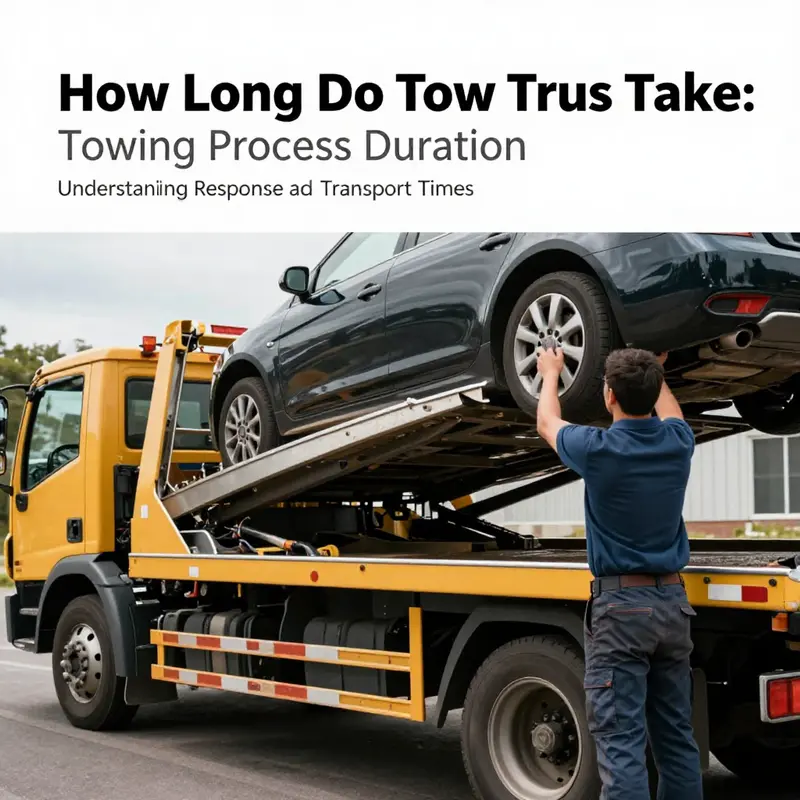
When you stare at a car that won’t move, timing matters more than you might think. The clock your tow operator wears starts ticking the moment you pick up the phone and dial help, but the first tick is not always what you expect. The overall timeline from the moment you request assistance to the moment your vehicle reaches its next stop is not a single, simple interval. It is a sequence of stages, each influenced by a blend of location, vehicle type, the severity of the situation, and the priorities your dispatcher assigns. In the best urban conditions, a tow can unfold in a straightforward pattern: a quick arrival, a careful on-site assessment, and a smooth transfer to a repair shop or storage yard. Yet in rural stretches, during bad weather, or when a vehicle blocks a lane, the clock can stretch in ways that feel almost elastic. Understanding these stages helps you set expectations and, more importantly, makes you a better partner for the tow provider when time is of the essence.
The arrival window is the most visible piece of the puzzle. In densely populated areas where towing services are plentiful, the standard response time is often within 15 to 30 minutes after a caller requests help. This window has become a convention for many reputable operators who advertise “fast response” times and strive to dispatch quickly. It is not a promise of instant arrival, but a commitment to get on the road promptly after you call. The reasons for this window are practical. In urban settings, drivers can share call loads, traffic patterns are predictable enough to permit rapid routing, and the nearest available tow truck is likely not far away. The dispatcher can weigh current requests, weather, and road conditions to determine which truck is best positioned to respond quickly while avoiding bottlenecks that could delay several calls at once. Still, even in these bustling pockets, you should anticipate minor variance. A few minutes early or late is common, and you should be prepared for small delays if a tow truck is rerouted to assist another urgent call or to navigate an unexpected obstacle.
Rural and remote areas operate on a different cadence. The nearest tow truck may be miles away, and the time to reach you can easily stretch from an hour to two hours or more. In these zones, the constraints are physical and logistical: fewer trucks in service, longer distances, and sometimes limited visibility or road access. When the call comes from a farm, a country road, or a remote highway shoulder, drivers must account for these realities and plan distances more aggressively. The same applies if you’re in a location that is technically accessible but lacks direct routes to the nearest repair facility. In such cases, a longer horizon makes sense, and the dispatcher may offer a more conservative estimate so you can plan accordingly. For emergencies—vehicular accidents or situations that block traffic—prioritization has a meaningful impact. Many services will dispatch within 10 to 15 minutes of the call, not because the driver has instant access to the scene, but because someone has determined this is a highest-priority scenario and has shifted resources to maximize safety and minimize disruption on the road.
Once the tow truck arrives, the on-site phase begins. This is where the clock often becomes more granular, and the driver’s expertise directly shapes the total duration. On-site preparation typically takes 5 to 15 minutes, depending on the vehicle type and the specific conditions on scene. A standard light-duty vehicle can usually be secured in a short span, as the driver works to attach the tow device, check for potential hazards, and ensure that all safety measures—such as properly rated straps and wheel restraints—are in place. If the vehicle sits in a tricky position, if there is damage from a collision, or if parking restrictions require negotiating a tight space, that 5 to 15 minutes can expand. A larger vehicle, an all-terrain machine, or a damaged car may demand additional safety checks, extra equipment, or a carefully choreographed sequence to prevent contact with the road, other vehicles, or infrastructure. In some cases, the driver must free a stubborn wheel with a different kind of restraint or adjust the approach because of damaged undercarriage components. The goal in this phase is not speed alone but safe, secure preparation that reduces the chance of slipping, dragging, or accidentally causing further damage.
The stretch that follows—transport—depends almost entirely on distance and road circumstances. Short hauls through city streets, where a repair shop, storage lot, or maintenance facility sits a few miles away, can take roughly 15 to 45 minutes. Those times reflect typical city traffic, signal waits, and the need to move at moderate speeds to preserve the safety of other road users. Longer hauls, intercity routes, or deliveries to unfamiliar destinations can extend the journey to several hours. In these cases, the driver plans for fuel, rest breaks if needed, and the possibility of having to pause for a safe transfer point or for coordination with the receiving facility. The total time from call to delivery can thus range from a half-hour to many hours, influenced by the sum of the factors that the dispatcher weighs early in the process—location, urgency, and distance—and those that come into play after the initial dispatch. It is a dynamic system, not a fixed script.
If the vehicle must be stored or processed before final delivery, that can further prolong the timeline. For example, a car delivered to a storage yard because it requires a diagnostic session or a pre-repair inspection may sit idle for a period before the next leg of the journey occurs. In effect, the final delivery is not always a single hop from the pickup to the shop; it can be a staged sequence that aligns with the facility’s scheduling, inspection practices, or the owner’s instructions. This fact, often overlooked by those who expect a single, continuous movement, underscores the importance of clear communication with the tow operator. A simple exchange about the intended destination, preferred timing, or alternate arrangements can prevent misalignment between what you expect and what the driver can execute.
The list of factors that can lengthen or shorten a tow’s duration reads like a field guide for road conditions. The type of vehicle matters: a large truck, an RV, or a damaged vehicle with unusual alignment demands may require specialized equipment and additional safety steps. Traffic is an obvious disruptor; heavy congestion, roadwork, or a narrow corridor can force slower pacing and more careful navigation. Weather has a heavy hand as well. Snow, rain, fog, or ice can reduce visibility and road traction, prompting drivers to slow down and be extra cautious when loading or transporting. The location itself—remote or hard-to-reach areas—adds another layer of complexity: narrow lanes, steep grades, or limited access can necessitate alternative routes or more precise maneuvering with the tow gear. The severity of damage influences the process in more ways than one. A vehicle that is stable enough to be towed directly may present a faster path than one that requires stabilizing, winching, or additional securing before it is ready for transport. Finally, safety checks always take priority. A sound, compliant operation demands extra checks when there is risk to people or property, and these checks add time but reduce risk—a prudent trade for all involved.
In urgent situations, some operators offer priority dispatch or dedicated quick-response teams. This does not erase the fundamental constraints of geography and physics, but it can shave minutes off the standard timeline by dedicating resources to the scenario, streamlining the routing, and, in some cases, bypassing routine scheduling delays. If your scenario feels time-critical, it is worth explicitly asking about priority dispatch when you call. A practical approach is to set expectations with the dispatcher: describe the situation clearly, provide the precise location, and confirm an estimated arrival time that reflects your own needs without demanding an impossible guarantee. The more precise your information, the more accurately the dispatcher can choreograph the response.
The practical, everyday reality of tow timing is less about a single number and more about a spectrum of possibilities, each shaped by context. A broad guideline you can rely on is that most standard towing scenarios, in typical urban or suburban settings, unfold within a 30-minute to several-hour window from initial contact to vehicle delivery. This range is consistent with the patterns observed across professional tow services, where the emphasis remains on safe handling and mechanical competence as the primary drivers of efficiency. It is noteworthy that this estimate should be treated as a guide rather than a guarantee. Real-time information is often available through roadside apps or by contacting the service provider directly, which can offer a more tailored sense of timing based on live conditions. The ability to obtain a current ETA depends on technology, the provider’s workflow, and the accuracy of the data being used to forecast arrival.
To illustrate how timing translates into action, consider the following mental model. Imagine you call for help and the dispatcher assigns a truck within the urban priority window. The driver heads toward your location and arrives in the 15 to 30-minute band. On arrival, the on-site assessment begins, and securement commences, consuming 5 to 15 minutes. As the driver assesses your vehicle’s position and condition, they decide whether to use a flatbed, a wheel-lift, or another method. The loading sequence then plays out, and the transport phase begins. If your destination is nearby, the ride might be a short, 15- to 45-minute leg. If it’s farther away, you might be looking at a longer haul, possibly crossing into hours of transit. The final leg—delivery to the chosen location—depends on whether the vehicle goes straight to a shop, to a storage lot, or to a pre-inspection facility—and it can be immediate or scheduled after a pause for processing.
Because timing is influenced by so many factors, people often seek real-time information to bridge the gap between expectation and reality. Roadside assistance apps and direct communication with the provider can yield estimated arrival times that reflect the current situation. The value of these tools is their transparency: you can plan ahead, arrange a ride, or prepare the storage space with fewer surprises. In practice, these ETA tools work best when you supply precise information—exact location details, the vehicle type, and the nature of the problem. The more the provider knows, the more accurately they can model the arrival and subsequent steps. This is not just about bragging rights or marketing chatter; it is about reducing the stress that accompanies breakdowns or roadside incidents and enabling smoother transitions from one phase of the process to the next.
In this space, there is also room to reflect on the broader context of towing in different regions. The numbers cited here—15 to 30 minutes for initial response, 5 to 15 minutes on-site, and 15 to 45 minutes for short transports—are general ranges supported by industry experience. They serve as practical benchmarks rather than rigid rules. The actual experience depends on local service density, the weather, the terrain, and the policies of the provider. A factor that often emerges in conversations with motorists is the effect of traffic patterns on arrival times. Rush hours, construction zones, and sudden weather events can shift an otherwise predictable window. By recognizing these patterns, you can adjust plans with your own contingencies—for example, arranging a backup plan for a ride, arranging a temporary parking spot, or coordinating with a nearby service facility in case the tow takes longer than expected.
If you want to anchor your expectations in a more formal context, you can think of the timing as a workflow that joins three primary stages: arrival, preparation, and transport. Each stage has its own customary duration, yet each stage is flexible. The arrival stage is the most variable, because it is the moment at which the world outside your car intersects with the world of the tow operator. The preparation stage centers on safety and security, where the driver applies expertise to ensure the vehicle is ready for movement without creating new hazards. The transport stage translates the initial work into a physical relocation—an act of moving the vehicle from its current place to its next stop. Across these stages, the influences of vehicle type, weather, location, and urgency create a mosaic that defies a one-size-fits-all timetable. This mosaic is the practical truth behind any time estimate you receive. It is why many operators emphasize both speed and safety, and why a clear outline of the steps you can expect—for example, when you should be available at home or at the office, what to do if you must leave a location, and how the vehicle should be prepared for handover—makes the experience smoother for everyone involved.
For those who want to explore this topic further or connect with peers who have walked similar paths, there is value in following a trusted information thread. The Santa Maria Tow Truck blog offers a central resource where readers can dig into related discussions about towing operations, readiness, and how operators manage emergencies. A starting point for readers who want to learn more about the broader landscape of towing procedures and emergency preparedness in practice can be found here: Santa Maria Tow Truck Blog. This resource can provide context for the real-world rhythms of tow operations, including how fleets organize their responses, how they standardize safety checks, and how agencies coordinate with drivers in the field. While the specifics vary by region and company, the underlying logic remains applicable across many service models.
As you close one chapter of the experience and prepare for the next, a practical takeaway emerges. If time matters to you, ask for a realistic ETA during the call and request updates as the situation evolves. If you have an urgency that could affect safety—such as a vehicle blocking a lane or a position in traffic—express that clearly upfront and confirm whether priority dispatch is available. If your location is remote or challenging to access, acknowledge that the timetable may extend and plan accordingly. And if you want to deepen your understanding of the regulatory landscape that governs towing and vehicle handling after service, you can consult the official vehicle-inspection guidelines common to many jurisdictions, such as those outlined by transportation authorities. For instance, a representative resource detailing vehicle inspection requirements after towing or during repairs in Western Australia can provide a useful frame of reference for readers who operate in that region: https://www.transport.wa.gov.au/vehicle-and-driver-services/vehicle-inspection. Such references help connect the practical, day-to-day timing of tow services with the broader rules that shape how a vehicle is treated after it leaves the scene.
In short, the timing of tow truck service is a composite built from arrival realities, safety-driven preparation, and the distance to the final destination. The numbers you hear are the product of many moving parts, and while they can guide expectations, they are not guarantees. The best approach is to stay informed, communicate clearly with the dispatcher, and be prepared for variances that reflect the conditions you are facing. This approach not only reduces stress but also aligns you with a professional workflow designed to keep people, property, and vehicles safe. As the clock ticks, the goal remains consistent: a reliable, secure, and efficient transition from problem to resolution.
The broader takeaway is practical and transferable. Whether you are the driver stranded on a highway shoulder in the early hours, the office manager coordinating a fleet’s recovery after an incident, or the homeowner waiting at home for a car to be brought to the shop, the realities of tow timing boil down to two ideas. First, time is a variable that responds to context. Second, reliable communication with the service provider makes that context navigable. When you prize safety, you also respect the clock. The more precisely you describe your situation and the more you ask about current conditions and expected progress, the more controllable the timing becomes. And because timing in towing is inherently a shared process, the more cooperative you are, the smoother the journey from the call to the delivery at your chosen destination. This chapter has walked through the common rhythms, offered practical expectations, and provided a path to real-time clarity. As you proceed to the next section of this article, you will see how these principles translate into prepared readiness and informed decisions when you do not have the luxury of time to spare.
How Long Do Tow Trucks Take: Reading Arrival Windows, Loading, and the Road Ahead
When you find yourself stranded on the shoulder, the big question is simple and practical: how long until a tow truck arrives, and how long does the whole process take from the moment you call to the moment your vehicle is somewhere else safe? The answer is not a single figure. It unfolds as a blend of geography, traffic, urgency, and the operational realities of the local towing network. What you experience depends on where you are, what you need, and how far a tow truck has to come from its current location to reach you. In urban settings, the density of providers, the proximity of arriving rigs, and the rhythm of the city streets tend to compress waiting times. Many companies advertise fast response times and routinely aim for arrivals within 15 to 30 minutes after a call. Those numbers reflect a landscape crowded with service providers, a web of dispatchers who can quickly marshal a nearby unit, and drivers who are already en route or shadowing popular routes during peak hours. Yet reality still lingers at the edge of those promises. A dense downtown can be a maze of one-way streets, construction zones, and frequent incidents that pull trucks off their usual routes. Even in the best cases, 30 minutes on the clock is not a guaranteed battering ram against every obstacle. If you’re in a rural or remote area, the math shifts. The nearest tow truck often sits at a distance that makes a 60-minute arrival seem like a baseline, and it can stretch to two hours or more when the road network is sparse, when weather narrows options, or when the demand is unusually high. The absence of nearby partners translates into longer drives for the operator and longer waits for you. In emergency situations, time takes on a sharper edge. Accidents, vehicles blocking lanes, or incidents affecting emergency access can prompt a dispatcher to prioritize the call. In those moments, a tow truck may be dispatched within a matter of minutes and arrive more quickly than the usual cadence. The emphasis is safety and clearing the scene, not speed at the expense of caution. The layered picture shows up again in the details of the towing process that follows arrival. The loading stage is a handshake between the vehicle and the tow operator’s equipment. It typically takes about 5 to 15 minutes, though this window can shift. A flatbed may require careful positioning to secure the vehicle in place and prevent any movement during transport. A wheel-lift or hook-and-chain approach has its own sequence of steps, and if the vehicle is in an awkward position—leaning into a curb, half on or off a ramp, or on a sloped surface—the operator may need extra time to safely secure it. The condition of the car matters as well. A car with intact tow eyes and standard anchoring points is faster to attach than a vehicle with damaged frames, missing tie points, or loose components. There are also considerations about the vehicle’s drivetrain. A functional manual loading process can be quicker than moving a non-running car that requires disconnecting a battery or stabilizing a transmission. After loading, the transport leg of the journey unfolds. Short hauls to a nearby repair shop or tow yard typically finish in 15 to 30 minutes. Longer hauls—across town, to another city, or to a distant facility—turn into hours on the road. The distance matters, of course, but so does the choice of equipment. A flatbed trailer, prized for its secure, level transport of cars, can lengthen the preparation phase but reduces the risk of damage and makes unloading simpler at the destination. A wheel-lift rig, on the other hand, is quicker to implement for certain types of vehicles but may impose more care at the unloading point since the car’s balance and ground clearance come into play. Road conditions add their own layer of complexity. Traffic hotspots, highway closures, detours, and weather can knit together into a slower-than-expected itinerary. Weight limits and road restrictions can force alterations in the chosen route. A driver may have to improvise to stay within legal limits while ensuring a smooth, safe transfer. In sum, the full arc—from call to delivered vehicle—can range from roughly thirty minutes on a brisk urban afternoon to several hours when the trip spans longer distances or navigates terrain that demands caution and careful maneuvering. The broad spread of times is not a reflection of incompetence but a reflection of how many levers influence the clock. To think of it more clearly, consider how the arrival window and the transport window relate to the job’s urgency and the location’s service density. When you call, the operator doesn’t merely write your address on a list. They instantly assess the current workload, identify nearby units, and estimate the best possible route in real time. The dispatcher’s efficiency matters as much as weather or distance. A centralized system with real-time tracking can shave minutes off the forecast, while a manual, phone-based setup might introduce small delays that add up over an hour. Time of day also plays a role. The rhythm of the day dramatic shifts between early morning, midday, and late night. In off-peak hours, the same number of trucks may be spread more sparsely, which can compress the window in cities that are well served by night-time towing. In the countryside, off-peak times might mean even longer waits simply because fewer trucks are circulating, and the longest trips can require coordinating several drivers to cover a wide region. It’s worth noting the practical steps you can take to improve your experience and obtain a clearer sense of the timeline. Asking for a rough estimate before the truck arrives can help—though the figure is rarely a guaranteed promise due to dynamic factors. If you need predictability, you can request updates at key milestones: once the unit is dispatched, when it’s en route, and as it closes in on your location. Real-time updates are not universal, but they are increasingly common, especially in urban markets where dispatchers leverage digital tools and GPS-tracking to keep customers informed. Real-time information can be especially valuable when conditions change, such as unexpected traffic or a shift in the carrier’s route. In the same breath, transparency about the process helps set expectations. Understand that the tow operator’s primary role is to secure the vehicle safely and bring it to a location of your choosing or, if needed, to a service that can assess and repair it. This may involve transporting the vehicle to a lot or a shop near your home, or to a facility that specializes in heavy-duty or off-road recoveries in more remote regions. The decision of where to deliver is often a collaborative one between you and the driver, with the constraints of safety, legality, and the optimal use of the equipment available at the scene. Even with precise planning, there are moments when the clock seems to stretch. The vehicles that require extra care or that arrive at a difficult staging point can extend the timeline. A car that has to be winched from a ditch, for example, may consume more time than a straightforward curbside pickup. The weather can add a stubborn variable as well. Rain, snow, ice, or high winds can slow the loading, complicate the securing process, and demand cautious driving under sometimes challenging road conditions. In such cases, the clock does not stop; it simply ticks with more deliberate steps to protect everyone involved. The practical takeaway is simple and actionable: have information ready when you call. Clear identifying details about your vehicle—year, make, model, color, and any visible damage—help the dispatcher assign the right equipment and anticipate the likely sequence. Provide precise location data and any hazards nearby so the driver can plan a safe approach. If you are able, stay near your vehicle but out of the path of traffic. Signal your presence to the driver if needed, and keep children and pets at a safe distance. If you are in a location that can pose additional risk—such as a highway shoulder—move to a safe spot with warning devices like hazard lights or a reflective vest if you have one, and inform the dispatcher so they can prioritize your safety in their plan of action. In the broader context of the article, the timing discussion is not just about a single moment of a single call. It is a window into the reliability and responsiveness of local roadside services, a reflection of how emergency readiness and regular operations intersect in the field. A well-run service network has to balance the urgency of on-demand calls with the realities of geography and logistics. The result is a spectrum of times that makes sense once you accept the variables at play. For readers who want to explore more about how fleets prepare for emergencies and how dispatch readiness translates into faster, safer service, a related resource offers a deeper dive into the operations behind the scenes. You can read a broader discussion on dispatch and readiness at the Santa Maria Tow Truck blog, which discusses how fleets organize and optimize response activities in varied conditions. This perspective helps illuminate the practical realities behind the numbers you see when you call for help. Internal link: Santa Maria Tow Truck Blog.
From a consumer standpoint, the bottom line remains practical and hopeful: plan for the possibility of a small delay, especially in rural areas, but rest assured that in many urban contexts, you are very likely to see a tow truck within a half-hour to an hour. The total journey—from call to vehicle removal—will often hinge on how quickly the vehicle can be loaded and how far the tow has to travel. If your route is short and your vehicle is easy to secure, you may be delivering your car to a nearby shop in less than an hour. If the distance is longer or the car is nondrivable and requires extra care, you may be looking at a longer timeline. Either way, you gain a clearer sense of what shapes the clock when you understand the main levers: distance, traffic, availability, dispatch efficiency, and time of day. Consider this the practical map of the clock that governs tow-truck response times. When you next face a roadside setback, you can hold the thread of understanding in your mind: not every wait is a sign of delay or inefficiency, but a sign of the many forces that converge on that moment. To manage expectations and make the best decisions for your situation, lean on clear communication with the dispatcher, provide as much detail as possible, and stay prepared for the ride ahead. For those seeking further context on the operational side of towing and the readiness practices that influence response times, the external resource below offers a detailed view of what to expect when you call a tow truck and how fleets manage the balance between speed and safety during tow operations. External resource: https://www.roadside.com/what-to-expect-when-you-call-a-tow-truck.
Final thoughts
Understanding how long tow trucks take to respond and complete their tasks is crucial for both vehicular emergencies and managing property-related situations. With faster urban response times, longer waits in rural settings, and variations based on specific factors, being informed allows for better planning and response. Whether you’re a local driver needing urgent assistance, an auto repair shop coordinating vehicle pickups, or a property manager ensuring compliance and convenience, this knowledge equips you to handle roadside incidents smoothly.