
When you encounter a roadside emergency or require vehicle assistance, understanding the gear that comes to your aid is crucial. Tow trucks are vital in this scenario, but how much do they actually weigh? This information not only affects towing services but is also important for property managers, automotive professionals, and vehicle owners. As we navigate through the different classes of tow trucks—from light-duty models designed for smaller vehicles to heavy-duty wreckers ready for the largest of recoveries—this guide aims to equip you with essential insights. Each chapter will delve into the specific weights of various tow trucks, their total weight with loads, and the factors impacting their overall mass, empowering you to make better-informed decisions in your towing needs.
Weighing the Smallest Helpers: How Heavy Is a Light-Duty Tow Truck and Why It Matters
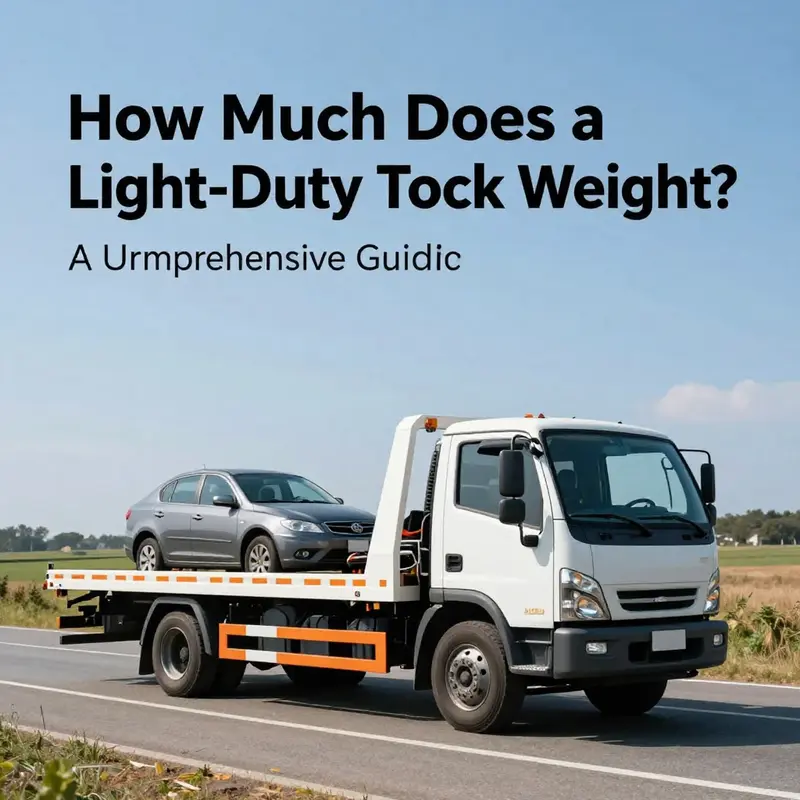
The weight of a light-duty tow truck is more than a number on a scale; it is a defining part of how the machine meets its task on the road. These compact recovery vessels are designed for roadside assistance and the occasional pull of a small-vehicle wreck. They sit in a broad weight spectrum because the job demands differ from one unit to the next: one truck may be configured to carry spare wheels and tools, another may have a more robust hydraulic under-lift, and still another might be equipped with a heavier winch and a longer boom. What stays constant is the need to balance power, payload, and control. In practical terms, the unloaded mass is only part of the story. A typical light-duty tow truck weighs about 3,000 to 6,000 kilograms (roughly 6,600 to 13,200 pounds) when it is empty and ready for service. Add the hydraulic systems, the under-lift flatbed, the winch, the boom, the toolbox, and the onboard equipment that fleets rely on for immediate response, and the total can rise into a higher range that is more representative of the job’s demands. Across the industry, a common working band for fully equipped light-duty models sits at about 5 to 10 tons (10,000 to 20,000 pounds, or 4,536 to 9,072 kilograms). This is not a single fixed number, but a realistic envelope that captures both the core chassis and the functional gear that makes a light-duty unit a capable recovery tool. The specification that matters most is the weight when the truck is loaded and ready to engage a call—because the load is not just cargo; it is the vehicle to be recovered, plus the gear needed to accomplish the job safely and efficiently. In this frame, the curb weight—what the truck weighs on a typical showroom floor or in a service bay—can be a useful baseline, but it does not tell the full story. A light-duty tow truck designed for frequent roadside deployments may hover at the lower end of the empty weight range, yet its effective weight could rise substantially once the hydraulic system is primed, the hoses are filled, and the tools are secured. Conversely, a heavier chassis that emphasizes capacity and range might start closer to the upper end of the empty weight window and then climb further as equipment is added for specific tasks. If you want a clear reference point for how much weight a light-duty unit can bear while in motion, the numbers commonly cited in industry materials place the fully loaded mass in the mid-range of the spectrum, with the understanding that the load the truck can carry and the load it can tow are not identical quantities. In this sense, the weight discussion becomes a conversation about both mass and balance: how the vehicle distributes that mass while accelerating, braking, and turning, and how stable the machine remains when it is anchored by a heavy towed vehicle on a flatbed or tied down during recovery work. For fleet managers and operators, this is not abstract math. It translates to fuel economy, tire wear, brake heat, and the overall safety margin during a recovery. A useful way to anchor the broader picture is to think of weight in layers. The first layer is the truck’s own mass—the chassis, bodywork, powertrain, and the structural frame that supports the under-lift bed and the hydraulic circuits. The second layer is the recovery equipment itself—the flatbed, the winch, the boom, and any stabilizing gear that keeps the truck from slipping during a heavy lift. The third layer is the gear stored on board: chains, hooks, pry bars, wheel straps, and an assortment of tools that make on-scene work possible. The fourth layer is the payload: a vehicle or cargo being recovered. When you fold in these elements, the sum is not a static line but a dynamic figure that shifts with each job. It is here that the statics and dynamics of loading come into sharp relief. The total operating weight, when the towed vehicle is included, can range widely—from around 20,000 kilograms to well over 100,000 kilograms—depending on the towing or lifting scenario. In other words, the weight of the tow truck is only part of the mass that must be controlled during a recovery; the entire system’s mass, including the vehicle being moved, becomes relevant for traction, braking, speed control, and stability on the road. Even within the light-duty segment, a benchmark helps: a typical flatbed tow truck has a maximum carrying weight of about 4,000 kilograms. That figure serves as a practical gauge of how much the unit can safely bear beyond its own curb weight, and it underscores why precise specifications matter when a fleet schedules trips, routes, and maintenance cycles. The weights described above do not exist in a vacuum. They interact with regulatory constraints and road conditions, and they influence how operators plan their workday. In regions where road weight limits or axle-loading rules are strict, knowing the exact curb weight and maximum payload becomes essential for compliance and safety. As fleets consider gear and configuration for light-duty operations, they also weigh the trade-offs between higher empty weight and greater lifting capacity. A heavier chassis might deliver more rugged performance in tougher recoveries, but it also changes the vehicle’s fuel efficiency, tire profile, braking distances, and even maneuverability in tight spaces. This is where the broader context matters: weight is not only about raw mass but about how that mass is managed under real-world conditions. To learn more about how fleets approach weight and readiness in emergency response and standardization, see the resource on fleet-standardization-emergency-readiness. The discussion around weight thus connects with a larger discipline—the careful design and operation of response assets that must balance rapid deployment with predictable performance and safety. For readers seeking a concise overview of how weight considerations shape operations, a general resource on tow-vehicle design and capability can offer helpful context beyond the specifics of any single model. Tow truck weights are not a universal constant; they are a spectrum tuned to intended use, geographic conditions, and the expectations of the fleets that rely on them daily. When you pull back from the numbers and look at the practical implications, weight becomes a guide for choosing the right tool for the job, designing the right support system, and planning the safest path to recovery. For those who want to explore how weight informs broader fleet decisions, the linked resource provides a gateway to the conversations about standardization, emergency readiness, and the logistics of rapid response in challenging environments. And for a broader, technical perspective on tow equipment and weights, external references offer a comparative view of how these machines are categorized and how their mass correlates with lifting and towing capacities across different designs. In short, the weight of a light-duty tow truck is a gateway metric: it opens up considerations about safety, capability, and the practical realities of keeping roads clear while protecting the people who operate these reliable helpers. For a wider lens on the topic, see the general reference material on tow trucks and their capacities at https://en.wikipedia.org/wiki/Tow_truck.
null
null
Weighing the Giants on the Road: The Real Mass of Heavy-Duty Tow Trucks and What It Means for Recovery

When people imagine a tow truck at work, they often picture a tense scene of recovery and clearance on a busy street. But behind every dramatic winch maneuver and every crane lift lies a more steady, fundamental truth: weight governs what a heavy-duty tow truck can do, how safely it can operate, and how efficiently it can perform the demanding tasks of roadside rescue and large-vehicle recovery. Weight is not merely a number on a plate; it is the physical discipline that shapes balance, braking, power, and the very way these machines interact with the roads they service. To grasp how much a heavy-duty tow truck weighs—and why that weight matters—one must first distinguish between the different states of mass at play: the curb or empty weight, the gross vehicle weight rating, and the total operating weight that includes the payload of anything being towed or lifted. These distinctions are the scaffolding for understanding why a vehicle might be limited in some jobs and capable of far more in others, even within the same category of machinery.
In the most general terms, a heavy-duty tow truck sits in the upper tier of mass, far heavier than light- or medium-duty workers on the same fleet. The empty, or curb, weight of typical heavy-duty configurations tends to lie in a broad band—from roughly 15,000 pounds (about 7,000 kilograms) up to 20,000 pounds (around 9,000 kilograms) or more. That range reflects variations in chassis design, cab configuration, and the core lifting platform—whether the machine relies on a robust hydraulic system, a high-capacity winch, a crane, or a combination of these tools. When the truck is fully equipped for its mission—ready to swing a crane, deploy outriggers, and engage a complex hydraulic circuit—the numbers can climb quickly. In some setups designed for lifting and recovering large commercial vehicles or buses, the mass can push well past 30,000 pounds (over 13,600 kilograms). The reality is that the empty weight is only the starting line. The true mass that affects operation emerges as soon as the rig is loaded with cables, hydraulics, and the specialized hardware needed to perform demanding recoveries.
Another anchor in this discussion is the vehicle’s gross vehicle weight rating, or GVWR. This rating represents the ceiling of combined mass that the chassis and suspension are legally and safely designed to bear, including the vehicle’s own weight plus all equipment, fluids, and crew. It is not a fixed number on a scale; it is a specification set by the manufacturer that informs weight distribution, tire choice, braking requirements, and the design limits of the frame. For the heaviest end of the spectrum, GVWR can exceed 26,000 pounds in many Class 8 configurations and can be higher still for models engineered to support significant lifting capacity. In practical terms, this means an operator who plans to lift or tow very large loads must work within a defined envelope. Exceeding GVWR is not just a violation of regulation; it is a prescription for unsafe handling, excessive tire load, and compromised braking. The law, the physics, and the mission all converge at that point.
The weight story grows more intricate when the discussion shifts to the total operating weight—the actual mass carried while performing a job, including the towed vehicle, any attached load, and the weight of the personnel and equipment needed for a given operation. It is here that the numbers become a reminder that the job is rarely about the truck in isolation. A heavy-duty wrecker or recovery truck can realistically move from two metrics to three in a single operation: its own mass, the mass of the towed vehicle, and the mass of equipment or payload being carried or lifted at the worksite. And because road regulations impose maximum weights on state and provincial highways, these operations are guided by a legal framework that governs axle weights, bridge formulas, and traffic safety implications. In practical terms, total operating weight frequently ranges from around 20,000 kilograms to more than 100,000 kilograms on the road in some extreme setups, especially where multiple heavy components are involved. The vehicle’s ability to lift a 50-ton load, for instance, does not erase the fact that the truck itself already sits on the scale as a significant mechanical entity.
What does that mean for the person who is deciding which truck to deploy in a given scenario? It means understanding the balance between capability and constraint. A recovery situation that demands a strong crane and substantial lifting power may necessitate a heavier rig, one with a larger empty weight and a higher GVWR, because the bed, crane, stabilizers, and hydraulic circuits together contribute to overall mass. Yet with more mass comes different handling characteristics: greater stopping distances, altered acceleration profiles, and a need for more robust tires and suspension components. The consequence is that weight cannot be treated as an abstract figure to be subtracted or added at will. It is a design parameter that informs every choice from chassis selection to wheel configuration to outriggers’ deployment. The weight equation also intersects with fuel economy and maintenance costs. Heavier crews and their machinery tend to require more fuel to reach the job site and more frequent maintenance to ensure reliability under heavy-duty duty cycles. In short, weight is a practical multiplier in the economics of an on-call fleet and a critical determinant of on-site safety.
This is why operators and inspectors tend to speak of weight within a spectrum rather than a single value. The light- to medium-duty end relies on curb weights measured in the range of a few tons, designed for small cars and light trucks. When you reach the heavy-duty end, the empty mass expands to a multi-ton figure, and the total mass involved in an operation expands in proportion to the equipment needed for lifting and stabilizing larger loads. The working reality is that the heavy-duty category sits at the intersection between raw mass and controlled capability. It is not enough to measure how much a truck weighs on paper; one must also consider how that weight translates to actual performance under the specific demands of a given call. A heavier machine may be more capable of lifting and handling a heavy cargo, but it might also be slower to respond, harder to maneuver in tight spaces, and more challenging to transport when not at the job site. These trade-offs are at the heart of how weight is managed in the field.
To connect these concepts with a practical frame of reference, consider the role of weight distribution and the physics of lifting. A crane or winch depends not just on power but on how the mass is spread across the chassis and supported by outriggers and stabilizers. Proper weight distribution ensures that the vehicle remains stable when lifting a heavy load, preventing tipping or structural stress. The engineering behind this involves careful placement of ballast, the design of the outrigger system, and the torque capacity of the hydraulic components. The operator’s task then becomes one of balancing speed and stability: selecting a configuration that allows quick response while ensuring that every lift stays within safe limits. In this sense, the precise weight of the truck is a guiding parameter, but it is the interplay of weight with geometry, hydraulics, and control systems that makes the machine effective on the ground.
Notably, even within the same class of heavy-duty trucks, weight varies with chassis type and with how the vehicle is configured for a given mission. A straight-truck configuration, which uses a rigid frame and a single, solid chassis, tends to be heavier than a configuration designed around a tractor-trailer setup, where the weight is distributed across a combination of components and may give different lifting and towing advantages. The cab design, the number and type of axles, and the presence or absence of a mid-body cradle for the lifting apparatus all influence the final mass. Operators must weigh these design choices against the kinds of calls they most commonly encounter—large vehicle recoveries, heavy-duty wheel lifts, multi-axle engagements, or complex crane operations—because the mass budget is a practical constraint on how quickly and safely a team can respond.
For readers seeking a concise anchor to these principles, consider how a typical heavy-duty chassis must reconcile three intertwined needs: the capacity to lift heavy loads, the stability required to operate near busy roadways, and the mobility needed to reach the scene efficiently. This triad inevitably shapes the weight profile of the rig. In the end, the question ‘how much does a heavy-duty tow truck weigh?’ cannot be answered by a single figure alone. The most accurate answer describes a spectrum shaped by empty weight, loading equipment, and the weight of the towed or lifted payload, all governed by regulatory limits and the physics of motion. The result is a practical framework in which weight informs capability, safety, and cost of operation, and where the scale becomes a guideposts for the choices fleets make every day on the road.
For readers who want to explore how these considerations translate into standardized practices and readiness, some fleets emphasize formalized procedures that keep weight and balance predictable across a range of scenarios. Such standardization in heavy-duty rescue operations helps crews anticipate the mass they are dealing with and plan corresponding safety and procedural steps in advance, which you can read about in more depth here: standardization in heavy-duty rescue operations.
If you are looking for a broader reference that situates these weights within real-world operations and regulatory constraints, a detailed discussion from a reputable industry resource examines typical empty weights, lifting capabilities, and how weight evolves from idle to fully equipped configurations. This external reference provides a grounded perspective on the range of mass encountered across the heavy-duty spectrum and the practical implications for planning and compliance: What is the weight of a heavy-duty tow truck. https://www.beyondtow.com/blog/what-is-the-weight-of-a-heavy-duty-tow-truck
null
null
What Governs a Tow Truck’s Weight: From Light-Duty Helpers to Heavy-Duty Giants
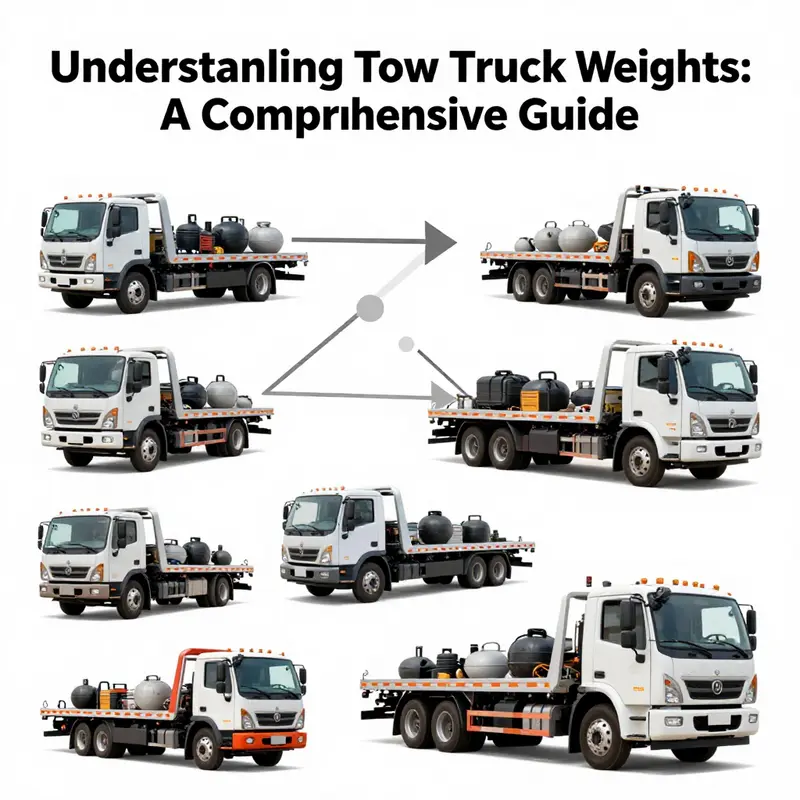
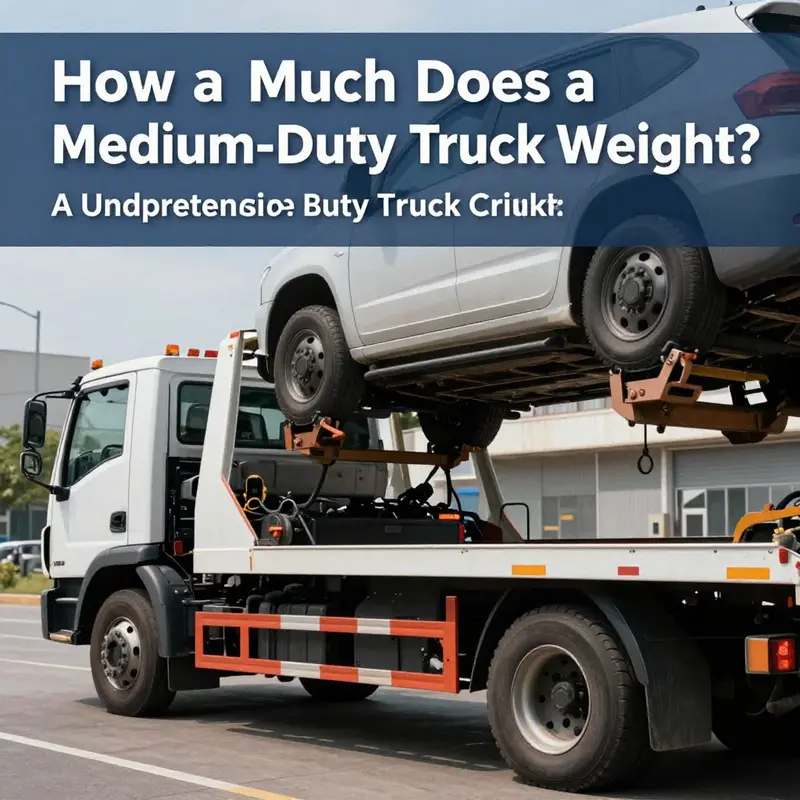
The question of how much a tow truck weighs invites a broader, more practical answer than a single number. Tow trucks span a spectrum from small, roadside-assist units to massive heavy-duty wreckers designed for the toughest recoveries. The unloaded or curb weight can vary widely even within a single class, and the total operating weight grows even more when the tow or the load is included. A useful way to frame the discussion is to consider three broad tiers: light-duty, medium-duty, and heavy-duty. In the light-duty category, a tow truck might hover around 3,000 to 6,000 kilograms empty, roughly 6,600 to 13,200 pounds. These compact units are engineered for everyday roadside tasks and light vehicle recoveries, where speed and agility often take precedence over raw lifting power. Medium-duty machines sit higher, with empty weights that commonly fall in the 10,000 to 15,000 kilogram band (about 22,000 to 33,000 pounds). They carry more robust hydraulic systems, stronger frames, and larger winches, enabling them to tackle increasingly demanding recoveries while maintaining maneuverability. In the realm of heavy-duty wrecker trucks, empty weights frequently exceed 15,000 kilograms and can reach upward of 20,000 kilograms (roughly 33,000 to 44,000 pounds), particularly when equipped with heavy cranes, extended flatbeds, and reinforced chassis. It is not unusual for these giants to combine enormous lifting capacity with substantial ballast and counterweights to stabilize operations on uneven terrain or during complex lifts. This diversity means that the weight you encounter on a job site depends less on a single model and more on the collection of design decisions that define its purpose, strength, and reliability.
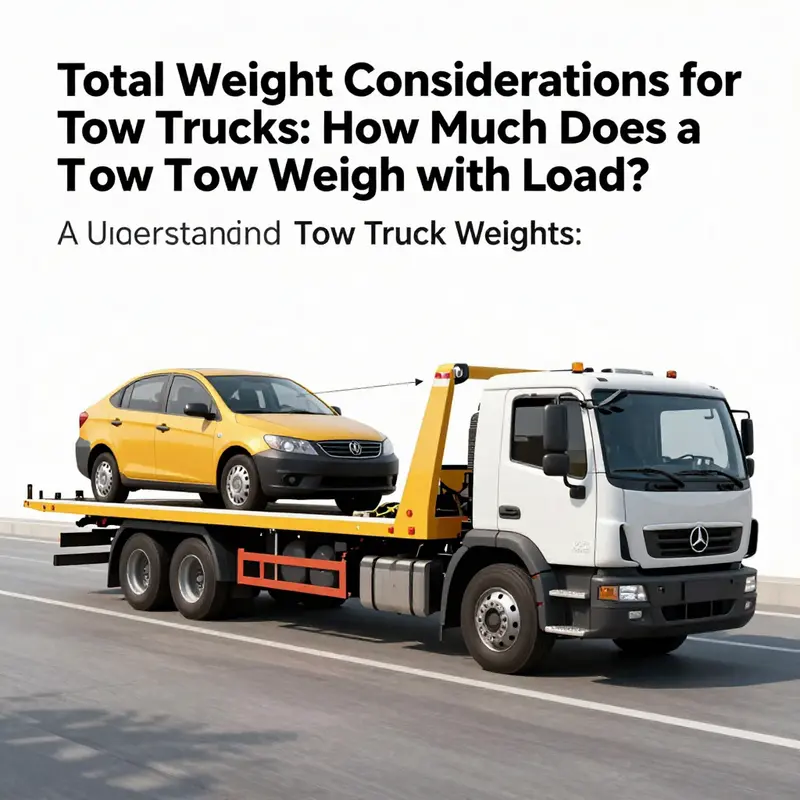
Beyond the truck’s own mass, the total operating weight—often the metric most relevant to fleet managers and safety regulators—depends on what is being towed or lifted. A lightweight rollback or flatbed may have a maximum payload well north of its own weight, but the total weight climbs quickly when the towed vehicle is heavy or when a crane is extended to lift a substantial load. For example, even a relatively modest heavy-duty wrecker can lift tens of thousands of kilograms, but its own weight remains a solid portion of that total. These figures matter because weight directly influences stability, traction, braking performance, and the engineering choices that underpin safe towing operations. A typical flatbed tow truck, designed to carry vehicles on a non-retracting bed, often has a maximum carrying capacity in the vicinity of 4,000 kilograms, a limit that helps determine how much additional mass can be safely loaded alongside the truck’s own weight. In practical terms, fleet operators weigh the truck’s curb weight against the maximum payload and the required lifting capacity to ensure the vehicle can perform its intended tasks without compromising safety or performance.
Several core design decisions drive these weight outcomes. The chassis type and the choice of manufacturer are foundational. Tow trucks are usually built on heavy-duty commercial frames from established manufacturers who specialize in industrial-grade platforms. These frames are built to support substantial loads, and the resulting mass is a direct consequence of choosing a frame robust enough to withstand repeated, high-stress recoveries. The towing capacity and the Gross Vehicle Weight Rating, or GVWR, are closely linked to weight as well. A higher towing capacity means the vehicle must incorporate stronger, heavier components—reinforced axles, larger tires, more substantial braking systems, and a stiffer suspension. Each of these components contributes to the truck’s total mass and, crucially, to its stability and control under load. The relationship between GVWR and empty weight is nuanced: GVWR represents the maximum legal combined weight of the vehicle and its payload, not the weight of the vehicle itself. This distinction helps explain why two tow trucks with similar empty weights can have different payload capacities based on how the weight is distributed and how the chassis handles dynamic forces during towing.
The type of towing mechanism is another big factor. Rollback tow trucks, which feature a hydraulic bed capable of tilting to load vehicles, generally carry more weight than traditional flatbed or hook-and-roll configurations. The hydraulic system, reinforced deck, and the associated balancing mechanisms add complexity—and mass. In contrast, flatbeds and hook-and-roll designs, while still heavy by most standards, tend to be lighter overall because their primary loading method relies on a more straightforward bed and winching layout. The trade-off is more than just weight: rollback systems offer superior loading versatility and quicker positioning for some vehicles, while flatbeds provide a stable, flat surface that distributes weight more evenly during transport. The decision between these configurations is a balancing act among weight, operational efficiency, and the practical realities of the typical tow site.
Specialized equipment also drives weight upward. A tow truck is rarely a bare platform; it becomes a mobile toolbox. Powerful winches, anti-skid or textured deck surfaces for traction, and advanced braking and stability systems all contribute to the mass. Additional gear like hydraulic outriggers, stabilizers, and electronically controlled chassis components can add noticeable heft. The longer the bed, the more structural steel and support framing must be installed to prevent bending or failure when handling heavy loads. Longer beds also demand more robust mounting points to maintain the integrity of the frame under dynamic towing conditions. Each incremental feature—a more capable winch, a tougher deck surface, a heavier braking system, or a larger stabilizer—pitches the scale a little further toward the top end of the weight spectrum.
A final but essential consideration is safety and operational ergonomics. Modern tow trucks incorporate a suite of features intended to protect operators and improve efficiency. LED lighting, cab upgrades for better visibility and comfort, modular designs for easier maintenance, and integrated control systems all contribute to a heavier chassis and body. These elements reflect a broader shift in the towing industry: equipment must endure demanding environments, respond quickly to evolving scenes, and support operators through long shifts and challenging recoveries. The balance between weight and capability is never purely aesthetic or regulatory; it is a practical assessment of how much mass a vehicle can carry, lift, or manipulate while still delivering reliable performance and predictable handling in the field.
To appreciate the real-world implications of these factors, consider how a fleet plans for different scenarios. A light-duty unit optimized for roadside assistance needs to be nimble, consume less fuel, and fit into tight spaces. A medium-duty unit expands the envelope of what can be recovered without resorting to specialized, high-cost machinery. A heavy-duty wrecker is designed to address the most difficult recoveries, often with a higher price tag and higher operating costs that reflect both the extra weight and the enhanced capabilities. In practice, the weight profile of a tow truck is not an accidental outcome but a deliberate result of aligning design choices with the expected spectrum of tow tasks. The math behind these decisions is closely connected to safety standards and regulatory requirements, which govern weight distribution, braking force, and stability during lifts and transports.
This interconnected system of design decisions helps explain why there is no single answer to the question, “how much does a tow truck weigh?” Instead, weight emerges as a moving target shaped by the truck’s role within a fleet, the kinds of loads it is expected to handle, and the environment in which it operates. For fleet managers, the exercise is not simply about selecting the heaviest machine possible but about choosing the right combination of mass, strength, and control. It requires understanding the limits set by the GVWR, the stresses induced during loading and lifting, and the practical realities of road and terrain conditions. It also means recognizing that the towed vehicle’s weight and the cab’s ergonomic and safety features can tip the scales in ways that influence fuel efficiency, tire wear, and overall maintenance costs. In other words, weight is a functional property as much as a physical one. It embodies the compromise between power and control, capability and reliability, and expense and sustainability.
For readers seeking a more practical bridge between theory and application, the discussion of weight is often enriched by industry perspectives that highlight how weight considerations inform fleet standards and readiness. In the realm of heavy-duty rescue operations, for instance, guidelines and standards emphasize consistent weight distribution and modular designs that support rapid deployment while preserving safety margins. This broader context helps elucidate why different tow trucks sit at different points on the weight spectrum and how those choices translate into outcomes on the scene. If you want to explore these standards and how they shape fleet architecture in more depth, you can refer to resources such as standardization in heavy-duty rescue operations.
standardization in heavy duty rescue operations
As a practical takeaway, anyone selecting a tow truck must weigh not just the gross weight rating but the total lifecycle costs associated with that weight class. Heavier units can offer greater lifting capacity and improved stability in heavy recoveries, but they demand more robust maintenance, higher fuel consumption, and more substantial parking and maneuvering space. Lighter units, while economical and nimble, may require additional support equipment or multiple vehicles to accomplish the same scope of work. The decision ultimately rests on the specific mix of tasks a fleet expects to encounter, the typical load profiles, and the regulatory environment governing weight, braking, and safety. When a fleet adopts an integrated approach—balancing chassis strength, bed design, lifting gear, and safety features—the weight becomes a deliberate, measurable part of a strategy to deliver reliable service across a broad range of towing scenarios. For professionals, this means that the chart of weights across light, medium, and heavy-duty tow trucks is less a ledger of masses and more a map of capabilities—the physical expression of a fleet’s readiness to respond to incidents with speed, precision, and safety.
Further reading on configuration trade-offs and weight considerations in rollback tow trucks can provide additional context. For a broader discussion on the topic, see Top 10 Best Rollback Tow Trucks To Buy For Strong Reliable Towing. This external resource offers a perspective on how rollback systems contribute to weight and performance, complementing the internal considerations discussed here.
Further reading: Top 10 Best Rollback Tow Trucks To Buy For Strong Reliable Towing
Final thoughts
Understanding how much a tow truck weighs is more than just a number; it connects to safety, efficiency, and effectiveness in vehicle recovery. Whether you’re a local driver needing assistance, an auto repair shop evaluating towing capabilities, or a property manager coordinating recovery efforts, knowing the nuances of tow truck weights helps in making informed decisions. Light-duty models are nimble for swift emergencies, while medium and heavy-duty trucks provide robust support for larger vehicles and challenging situations. Ultimately, being informed about these weights and factors allows all stakeholders to anticipate operational needs more effectively and ensure overall safety on the road.