
Understanding the earnings of tow truck drivers is essential for local drivers, auto repair shops, property managers, and HOAs. The towing industry plays a vital role in keeping our roads safe, and knowing how much drivers earn can help you make informed decisions when hiring services or managing contracts. This guide will explore what tow truck drivers make in the United States and Canada, highlighting the variations in different regions and comparing salaries to provide you with a comprehensive understanding of this essential profession. Let’s dive in to learn more about these rewarding careers and how they can affect you.
Pay on the Move: A Deep Dive into How Much Tow Truck Drivers Earn Across the United States

If you are weighing a career in towing, the first question a hopeful arrives with is not simply what the job entails, but what it pays. Money, after all, is more than a number on a paycheck; it signals how a role fits into a life. Tow truck driving is one of those trades where the earning picture is peppered with variables. It moves with location, the type of company you work for, and the specific duties you perform. In the United States, the latest data point centers on an average hourly wage of about $21.16 for tow truck drivers, drawn from thousands of salaries reported on a major job site over a multi-year window. That figure is a useful baseline, but it is not a single verdict. It is a snapshot of a dynamic landscape where pay shifts with geography, experience, and the kind of road you’re willing to travel, both literally and professionally.
To understand the earnings, it helps to start with the numbers that most people encounter first: location and the kind of work you do. In the US, certain cities stand out for premium pay. The data show Washington, DC offering weekly wages around $2,108, which translates to roughly $50.21 per hour when you do the math for a standard week. Phoenix, Arizona comes in with about $1,949 per week, or roughly $46.40 an hour, and Salt Lake City, Utah hovers near $1,918 weekly, about $45.67 per hour. These figures reflect posted pay rates, often incorporating overtime, on-call premiums, and the variety of shifts that come with towing work—overnight, weekend, and holiday hours that laborsaving devices do not replace. It is easy to assume higher pay necessarily means easier work, but the reality is that these premium markets also come with higher living costs, tighter schedules, and more intense on-scene demands from motorists and authorities. Entry-level pay, meanwhile, often lands in the mid-40s on an annual basis for those who work full-time and start in a standard capacity, roughly around the mid-40s to high 40s in thousands of dollars per year, depending on overtime, bonuses, and the exact employer.
The heart of these numbers lies in what the job actually asks a driver to do and how that work is compensated. Tow truck drivers perform a spectrum of tasks that can influence earnings as much as any base wage. A typical day may involve arriving on scene to assist stranded motorists, perform a lockout, deliver fuel, or jump-start a car. It can include changing a tire on a shoulder, securing a vehicle after an accident, or dismantling and moving a wreck from a site to a lot. Many drivers also handle more specialized towing, such as heavy-duty operations requiring larger equipment, winching at awkward angles, or repossession work in select markets. Each of these responsibilities has its own risk profile and skill requirement. The more complex the job, the more a fleet will tend to reward the driver who can handle it efficiently and safely.
Experience matters, not just in time but in type. A driver who starts in a general roadside assistance role and then moves into heavy-duty or specialized recovery will typically see a steeper rise in earnings. The market rewards someone who can handle a range of scenes—from flat tires in busy urban corridors to complex recoveries on winding rural highways—because the ability to respond quickly, correctly, and with minimal risk to people and property translates into higher utilization of the driver’s time and a reduced need for multiple calls. In short, versatility compounds value. Certified training, such as on-wrecker operation, rigging safety, load securement, and incident scene management, can push a driver’s pay upward because it signals readiness for assignments that require higher attention to safety protocols and technical competence.
But the most consequential fork in the road for earnings is not just the skill set; it’s the business model behind the job. There are significant differences between being a company driver for a fleet and running your own tow truck business as an independent operator. A company driver may enjoy steadier paycheck timing, benefits in many instances, and a structure that spreads risk across a larger fleet. Compensation can come as an hourly wage with overtime, a guaranteed minimum plus incentive pay, or a salary with per-call bonuses. The predictability of income is attractive, especially for someone who values a steady routine and wants to avoid the overhead of owning a vehicle, maintaining insurance, and covering fuel costs and maintenance.
Independent operators, by contrast, can command higher gross earnings if the volume and demand hold steady. A successful owner-operator negotiates rates with clients and dispatchers, keeps costs in check, and minimizes downtime. Yet the margins are thin where storms, holidays, or regional downturns reduce demand. Owning a rig means heavier responsibility: maintenance, insurance, licensing, and the capital outlay to acquire and upgrade the vehicle and equipment. Downtime becomes a personal cost rather than a cost absorbed by a larger payroll. The math can tilt toward higher gross pay but carries higher risk and more decision-making on pricing, service area, and customer retention. The choice between employment and independence is not simply a debate about pay rate; it is a larger decision about risk tolerance, lifestyle, and how hands-on you want to be with the business mechanics of the trade.
Beyond the employer type, the structure of pay itself matters. Some fleets adopt a per-call model, others a straight hourly wage with overtime, and a growing number blend base pay with performance incentives tied to response times, customer feedback, or on-time completion of recoveries. A driver might also be eligible for shift differentials that reward night or weekend work, or for a travel stipend when the job requires driving long distances to reach a scene. These elements can meaningfully tilt the weekly take-home while remaining within the same role in the same city. The result is a mosaic where the headline wage—what you see in a pay stub or a job posting—only tells part of the story. The real picture includes how many calls you handle, the complexity of those calls, the speed with which you recover a vehicle, and the reliability of the vehicle you operate.
As data sets grow larger and more granular, the pattern that emerges is one of contrasts. In markets with higher volumes of traffic and more acute incidents, the demand for skilled responders who can navigate congested streets, manage hazardous scenes, and coordinate with law enforcement or towing yard staff tends to lift the effective earnings potential. In less dense areas, there may be fewer opportunities but also fewer liabilities—fewer high-pressure recoveries, more predictable schedules, and a different mix of jobs. These broad strokes explain why a driver in a top market may be earning in the neighborhood of fifty dollars an hour if overtime and on-call pay are factored in, while another in a regional market might be closer to the mid-twenties to low-thirties without overtime. Even within the same city, the employer’s philosophy toward pay, the specific roster of duties, and the cadence of shifts can create meaningful variance across individuals.
The data’s cautionary note should also be part of any real-world planning. Figures reported on salary sites tend to reflect a mix of full-time and part-time roles, varying levels of experience, and the inclusion of overtime or premium pay. They are snapshots, not guarantees. The true yearly income for any given driver will hinge on how many hours are worked, how regular those hours are, and how many of the shifts carry overtime or premium rates. It’s also worth noting that the figures capture a period during which the labor market for drivers has shown resilience, but like all fields, it can respond to seasonal demand, weather events, infrastructure constraints, and the ebb and flow of regional fleets adjusting to new regulations and market pressures. In other words, the wage that lands in a driver’s bank account is as much a product of geography and scheduling as it is of skill and intent.
For readers seeking a sharper sense of current figures, the most straightforward approach is to examine job postings and salary aggregators that reflect recent postings and reported wages. The number most often cited for the United States places the national average around the low-to-mid twenty dollars per hour range, with considerable dispersion across markets. A practical takeaway is that a strong candidate who combines reliability, a broad skill set, and a willingness to work the tougher shifts can position themselves toward the upper end of the spectrum in many markets. Conversely, those who are just starting out and who settle into roles with limited hours or in markets with softer demand should expect the lower end of the spectrum until they build tenure and a track record of dependable response times.
To broaden the context and remind readers that pay is not the same everywhere, it is helpful to consider how the United States compares with nearby regions for perspective. In neighboring Canada, for example, the typical hourly rate in British Columbia sits around the mid-teens, with pockets of higher pay in some cities driven by demand and competition among employers. Alberta can present higher top-end opportunities in certain heavy-tow operations, reflecting the region’s industrial activity. These cross-border observations illuminate a familiar principle: the economics of tow truck work are highly local, shaped by provincial or state regulations, the density of vehicle traffic, and the operating environment of fleets. The bottom line—whether you are drawn to a bustling metropolitan area or a rural corridor—remains the same: the day’s pay is a function of how you connect your skills to the needs that appear on the roadside.
For those who want to dig deeper into the data, a current and reputable source is the Indeed salary page, which aggregates thousands of postings and user-reported figures to present an up-to-date picture of tow-truck compensation. While the numbers can shift, the trend remains consistent: as demand for rapid, safe, and reliable roadside assistance grows, so does the incentive to recruit and retain capable drivers. The page also underscores a broader truth about this line of work: pay is not a one-size-fits-all figure but a dynamic response to local conditions and the breadth of services you can provide. If you want to explore the numbers directly, you can review the Indeed Tow Truck Driver Salary data and see how your locale compares to the broader market. Indeed Tow Truck Driver Salary.
The narrative around what a tow truck driver makes is not complete without acknowledging the practical realities behind those figures. A driver who can read the road—and the people on it—will often find themselves in a position to earn more by virtue of timeliness, volume, and safety. The most successful drivers tend to cultivate a blend of speed, technique, and calm under pressure. They arrive prepared with the right equipment in the vehicle, a solid understanding of vehicle dynamics, and the judgment needed to determine the safest approach to any situation. This combination reduces the time a scene remains unsafe, increases the number of calls a driver can fulfill in a shift, and, in the end, translates into more consistent earnings. It is a line of work where reliability compounds value, and where the rewards are not only measured in dollars but in the knowledge that you can safely get a vehicle from point A to point B under conditions that would test most people.
As you map out a potential path in tow work, imagine the career not as a single wage but as a continuum of opportunities. An entry-level driver may start with predictable hours and a modest hourly rate, complemented by overtime as needed. With time, a driver can transition into more demanding assignments, develop a portfolio of competencies, and potentially move into higher-paying markets. That progression does not happen by accident; it occurs when a driver actively seeks broader responsibilities, maintains a clean safety record, and cultivates relationships with fleets that value quality and speed. In that sense, the salary story is also a story of professional growth—where steady execution in less glamorous days leads to access to the tougher, more lucrative work that defines the upper end of the pay spectrum.
If you are drawing this together for your own career planning or for a broader article on the economics of towing, consider the implications of this pay structure in terms of workforce supply and regional demand. The towing industry, especially as it expands to meet emergency readiness and road safety standards, requires drivers who can respond rapidly, operate with precision, and adapt to a wide range of scenes. Fleets that invest in training, safety culture, and equipment maintenance tend to attract higher-caliber drivers and, in turn, offer more robust compensation packages. Those who rely on high-volume, low-margin operations may push pay down over time, particularly in markets where competition is intense and the cost of living is high. The tension between volume and value remains a constant in the wage discussion, and it is a factor every reader should weigh when considering a path in tow work.
To close this chapter, one practical takeaway stands clear: if your aim is to optimize earnings, you do not simply chase a higher hourly rate. You build a career around being indispensable in the field—somewhere in a market that offers both volume and the right mix of duties that align with your skills and risk tolerance. You cultivate a reputation for safety, reliability, and efficiency. You pursue additional training and certification that unlocks access to advanced towing operations and scenario-based recoveries. And you align with fleets that reward that value with a compensation structure that reflects the complexity and urgency of the calls you handle. In other words, the figure on the page is a starting point, but the real measure of success is how broadly you can apply your skills to the demands that roadside life throws at you day after day.
For readers who want to explore more about how industry standards and readiness shape the work, there is a broader body of material in the industry blog maintained by a leading towing services provider. It offers context on fleet standardization, emergency readiness, and related topics that help illuminate the broader ecosystem in which pay is earned. You can visit their blog for more insights: Santamaria Tow Truck Blog.
And for those who want the most current, data-driven picture of pay, the Indeed data remains a reliable touchstone. While it captures a wide range of roles and locales, it remains a practical reference for understanding the salary landscape for tow truck drivers in the United States today. The figures evolve with the market, but the underlying story remains consistent: earnings rise with specialization, reliability, and the readiness to serve when the road demands it most.
null
null
Pay on the Road: How Regional Economies Shape Tow Truck Driver Earnings
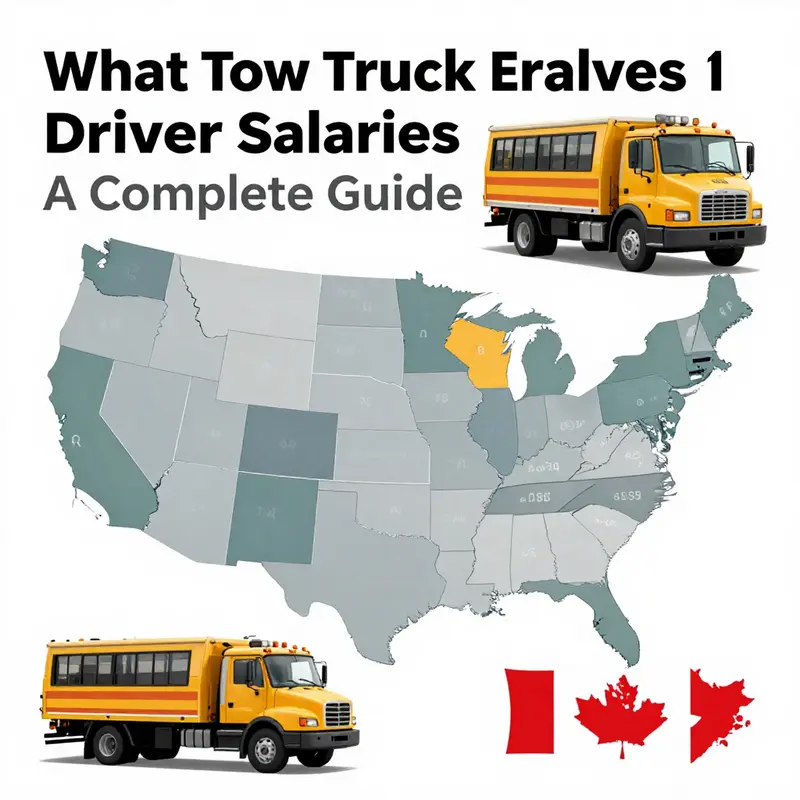
Regional economies shape almost every aspect of the tow truck trade, from hours on the road to the pay that arrives at the end of a shift. When you map the numbers, a simple hourly rate becomes a story about demand, risk, living costs, and the urban fabric that surrounds it. The latest data show wide regional gaps, with metro areas and high cost regions offering higher pay, while rural markets hover at lower levels. The figures pulled from postings and statistics reflect how cities, suburbs, and industries organize towing work and the realities of on-call life, overtime, and contractor versus employee status.
In the United States, national averages sit in the low 20s per hour, with variations by city. For example, Washington DC often tops the scale while other markets differ due to traffic, call volume, and schedule demands. Canada and Australia exhibit a similar regional pattern, with urban centers paying more than rural districts, though pockets exist where demand and living costs push wages higher.
For job seekers, the lesson is to look beyond a single wage figure and consider total compensation, scheduling, and benefits; overtime, standby pay, and shift differentials can change the annual income picture.
Final thoughts
Tow truck drivers play a crucial role in maintaining road safety and responding to emergencies. Their salaries vary based on factors such as geography, experience, and demand for services. For local drivers, auto repair shops, and property managers, understanding these earnings is vital for making informed decisions when hiring towing services. By recognizing the value of these professionals, you can ensure not only fair compensation but also reliable assistance in times of need. Stay informed and appreciate the hard work of tow truck drivers in your community.