
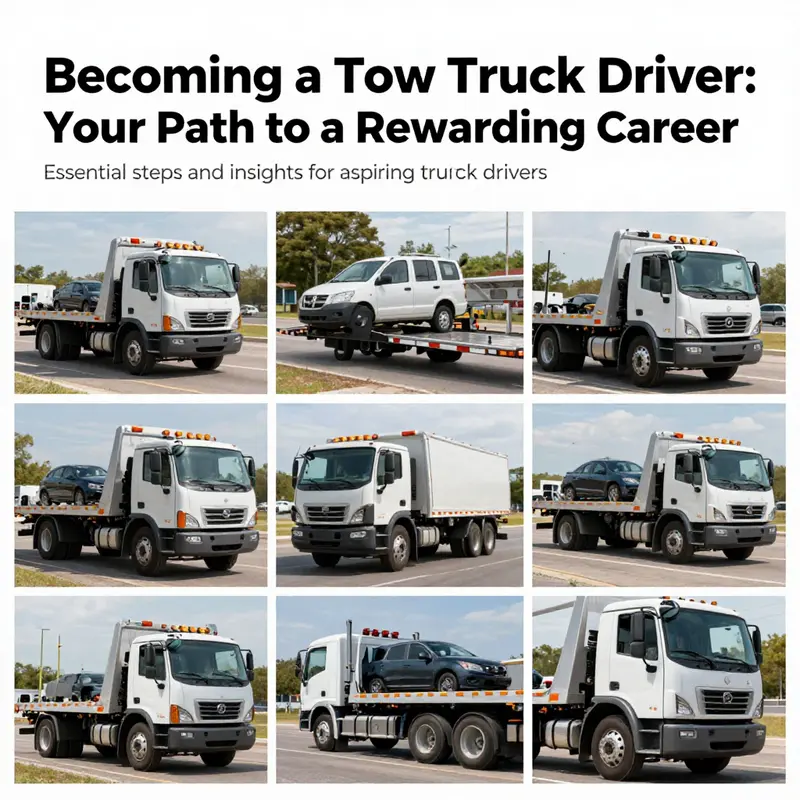
Tow truck driving is not just a job; it’s a vital service that can make a real difference in people’s lives. Whether you’re assisting a motorist in distress or securing a vehicle safely, the role requires dedication, skill, and knowledge. This guide provides a roadmap for those interested in pursuing a career as a tow truck driver. From understanding the necessary license and age requirements to passing physical exams and gaining hands-on experience, we’ll explore each step in detail. By the end of this guide, aspiring drivers will have a clear understanding of what it takes to succeed in this rewarding field.
Tow Truck Licensing Lanes: Navigating Age, Endorsements, and the Road to Professional Towing
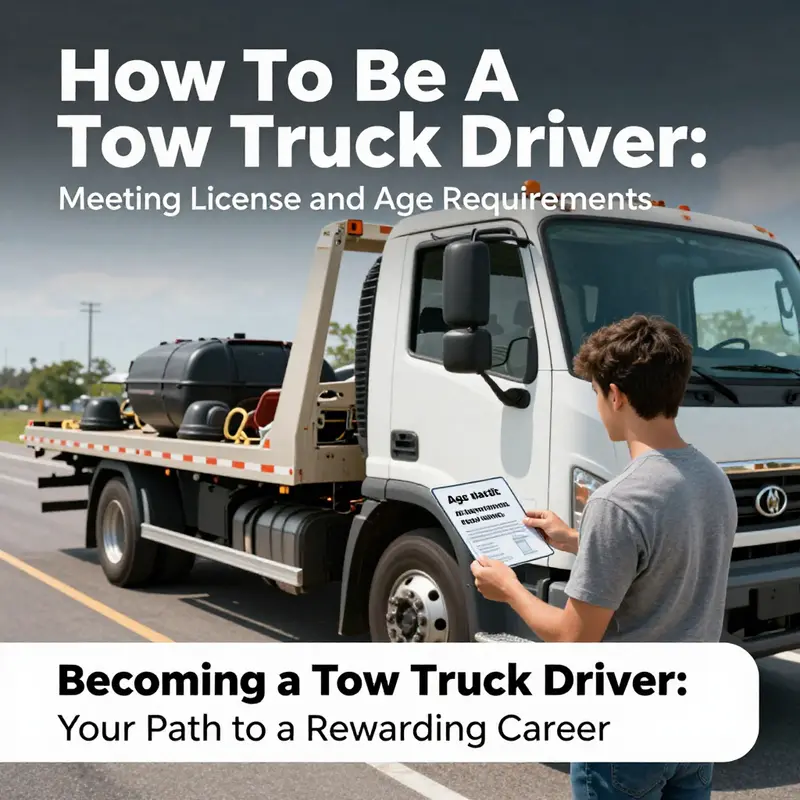
The work of a tow truck driver sits at the intersection of service, skill, and safety. It is a profession that demands more than the ability to steer a heavy vehicle; it requires discipline, situational awareness, and a precise map of licensing and regulatory steps. From the moment you consider the job, you are stepping into a field where preparedness is the core gear you wear. The licensing landscape can feel like a maze, but it is also a clear path toward reliability, credibility, and steady opportunity—the kind of path that becomes easier to navigate once you understand the milestones and why they exist.
First, the baseline that most regions share is age and a valid driver’s license. In many places, you must be at least 18 to apply for a tow truck driver position, with some states or employers preferring 21 for certain shifts or responsibilities. It is common to start with a standard driver’s license, typically a Class C in many jurisdictions, and then upgrade to the credentials that unlock larger, heavier trucks and the specialized towing equipment you will use daily. The city you work in can matter, because local rules vary. For example, in New York City the road to becoming a tow operator includes a specific endorsement that marks you as a professional operator capable of moving or removing vehicles for compensation within the city’s limits. This is known as the W endorsement, and it is mandatory for anyone who handles disabled, illegally parked, or abandoned vehicles within the city.
The W endorsement is not a mere checkbox; it is a recognition of responsibility. It signals to regulators and customers that you meet the minimum safety and accountability standards required to perform towing tasks in urban traffic, on busy streets, and sometimes under tight time pressure. To obtain it, you first need to hold a valid New York State driver’s license and then complete the city’s application process through the Department of Consumer and Worker Protection (DCWP). The DCWP outlines the exact procedures, documents, and checks needed to qualify for the license, including background checks and certain medical or legal clearances. If you are reading this from a different state or planning to work outside New York City, you will still find that most jurisdictions demand a clean driving record and a background check, with drug screening often playing a key role in the eligibility evaluation. The aim is not to paint a restrictive picture but to underscore that this is a public-safety role; your driving history, your present health, and your professional conduct will be on display from the first application.
Beyond the city endorsement, the big, overarching credential for any tow truck operator is the commercial driver’s license, or CDL. The CDL is a federal-and-state partnership governed by the Federal Motor Carrier Safety Administration (FMCSA). It exists to ensure that drivers who operate heavier, more dangerous vehicles can handle their machines and navigate the road with a high level of skill. In the tow truck world, many operators will pursue a Class B CDL because it covers large straight trucks that are common in towing operations. Some tow configurations may require a Class A, or specialized endorsements, depending on the exact weight and configuration of the rig you intend to drive. The process to obtain a CDL is consistent across many regions: you begin with a written knowledge test that covers topics like traffic laws, safety regulations, and how your vehicle operates. Once you pass the written portion, you move on to a skills test that includes both a pre-trip inspection and a practical driving exam. The specifics, such as which class you should aim for and which endorsements you might need, depend on the type of tow truck you plan to operate and the state you call home.
Reaching these milestones—age, a valid license, the W endorsement if you’re in NYC, and a CDL when your vehicle demands it—starts you on the practical, hands-on part of the journey: training. After you secure the appropriate license or endorsement, you usually enter a period of on-the-job training under the supervision of an experienced driver. This phase is where you learn to secure vehicles safely, use towing equipment correctly, and handle emergency scenarios with composure. The learning is tactile and procedural: you learn how to place wheel straps and chains without damaging a client’s vehicle, how to operate winches or hydraulic lifts with confidence, and how to manage the scene of a breakdown or accident so that you minimize risk to yourself, your crew, and bystanders. The emphasis on hands-on practice is critical because no amount of classroom theory can substitute for the real-life coordination and judgment you will need in the field.
A practical framework helps many aspiring drivers see the path clearly. Start with your age and license status; ensure you meet the minimum age and hold a valid driver’s license of the appropriate class. If you operate in New York City or another jurisdiction with a specialized endorsement, secure the W designation and complete any local requirements set by the DCWP or equivalent city authority. If your plans include operating heavier vehicles or more complex towing setups, pursue the CDL following the FMCSA’s guidance and your state’s testing schedule. Gather the necessary medical eligibility—CDL holders are typically required to pass a medical examination to verify that you can physically handle the demands of operating a heavy vehicle, especially when you may be on call at odd hours or during stressful roadside situations. And finally, look for a formal training opportunity that pairs you with a veteran driver who can walk you through the nuances of safety procedures, load securement, and customer-facing professionalism.
In New York City, the specifics matter because the city’s licensing framework connects you to the everyday realities of urban towing. The W endorsement is designed to certify you for the work of moving or removing vehicles within a dense traffic environment, where seconds can make a difference and where the safety of pedestrians and motorists hinges on how skillfully you manage your rig. The DCWP’s official guidelines lay out the application steps, the documents you’ll need to submit, and the checks you will undergo. This makes it essential for any prospective operator to consult the city’s resources to understand what is required in this particular jurisdiction. While the core idea is transferable—proof of age, a valid license, a clean record—the local layer adds concrete steps that ensure everyone on the road operates under a common safety standard and accountability framework.
The broader licensing journey is not a one-time hurdle. It is a progression that builds competence and reliability. The CDL, for instance, is not a credential you obtain and forget. FMCSA guidelines emphasize ongoing compliance with medical requirements, periodic updates to your knowledge and skills, and staying current with state-specific rules that govern vehicle families and endorsements. A clean driving record remains your most valuable asset because it directly influences your employability and the kinds of assignments you can accept. Employers in towing often prioritize drivers who demonstrate stable histories and a proactive approach to safety. The field also rewards those who prepare for the unexpected: a roadside rainstorm, a downhill slope, or a vehicle stuck in a tight space—all situations where your ability to plan, communicate, and maneuver safely will be tested.
For readers who want a tangible sense of the practical steps, a helpful way to think about the process is to imagine a sequence: (1) confirm you meet the age minimum and hold a valid basic license; (2) verify whether your city requires a specialized endorsement like the W and begin the application through the local authorities; (3) determine whether a CDL is required for the type of tow truck you intend to drive and begin the testing process through your state’s licensing authority; (4) complete the medical examination and secure the appropriate medical card; (5) pass the background check and, where applicable, a drug screening; (6) enroll in on-the-job training or a formal driver training program and practice under supervision until you are proficient; (7) seek employment with towing companies, fleet operators, or city services that value safety and reliability. Each step reinforces the next; the stronger your foundation in rules and safety, the more capable you become at handling the demanding but rewarding work of roadside assistance.
Along the way, keeping an eye on the broader industry context can also prove valuable. The towing ecosystem values preparedness that extends beyond the wheel. It includes understanding standardized procedures for securement, knowledge of emergency response protocols, and familiarity with the equipment you’ll encounter—from wheel lifts to hydraulic winches and lighting systems that must operate in all weather. For those shaping a long-term career, engagement with professional resources, ongoing training, and a mindset oriented toward safety will pay dividends in the form of better job stability, broader opportunities, and the trust of clients and colleagues alike. If you’re exploring this path, consider dipping into resources that offer practical insights on the field’s standards and daily realities; one particularly accessible way to connect with industry conversations is to explore the broader towing blogosphere, such as the Santa Maria Tow Truck Blog, which can provide a broad sense of common practices and professional concerns. Santa Maria Tow Truck Blog.
Ultimately, the licensing and age requirements you encounter are not obstacles to be endured but gates that open you to a disciplined profession. They reflect the seriousness of the work and the responsibility you shoulder when you step into the street with a tow truck. As you navigate the process, keep the end goal in sight: the ability to perform your duties safely, efficiently, and with the confidence that you meet the regulatory standards that protect the public. The journey may be methodical, and it will require attention to detail, but each completed step is a stride toward becoming a trusted professional who can respond to requests for help in a way that minimizes risk and maximizes outcomes for drivers, pedestrians, and property alike. For aspiring drivers, the path is clear enough to follow, and the payoff is substantial: the chance to build a career centered on service, skill, and steady work, supported by a solid foundation in licensing and safety.
External resources can provide authoritative guidance as you prepare. In addition to city-specific requirements, federal guidelines shape the CDL process and medical eligibility, which is why many aspiring tow truck drivers consult the FMCSA resources for a broad view of standards and expectations. For comprehensive regulatory context, you can review the FMCSA guidelines and related materials to understand how licensing, medical certification, and safety rules come together to govern commercial driving across the country.
On the Road to Readiness: Securing Your CDL to Become a Tow Truck Operator
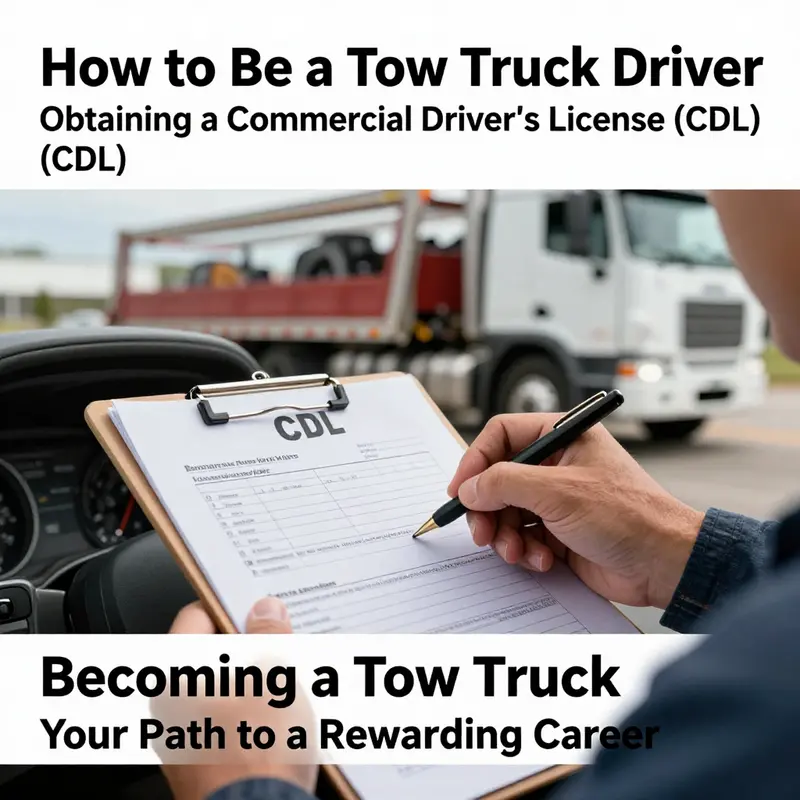
Embarking on a career as a tow truck driver begins with a clear road map that centers on one critical credential: the Commercial Driver’s License, or CDL. This license is not just a permit to drive a bigger truck; it is a comprehensive credential that certifies you can operate heavy, potentially dangerous equipment with the discipline and skill needed to protect yourself, others on the road, and the vehicles you will recover. The path toward that credential is governed by a mix of federal standards and state-specific rules, and it unfolds in careful stages designed to ensure you are fit for the physical demands, the cognitive responsibilities, and the unpredictable hours that define life on a tow fleet.
First comes eligibility, a gatekeeping process that is surprisingly concrete. To tow legally across state lines, you should be at least 21 years old, a rule that aligns with federal interstate commerce regulations. Some states, however, allow an intrastate Class A CDL for younger drivers, but those licenses carry restrictions that can limit where you operate and what you tow. Your age is more than a number here; it signals whether you will be permitted to work on long-haul or regional routes that frequently cross state lines, a reality of many towing assignments that involve roadside incidents on highways or intercity corridors. The next eligibility checkpoint is your current driving credential. You must hold a valid non-commercial driver’s license and carry a clean driving record. A string of violations, such as DUIs, reckless driving, or suspensions, can disqualify you from pursuing a CDL in many jurisdictions, and employers will look at your record as a predictor of reliability on the road, where split-second decisions can have serious consequences.
With those basic prerequisites in place, the process moves into the more formal channels: the medical exam and the documentation that proves you are legally eligible to work. The cornerstone is the Medical Examiner’s Certificate (MEC). Before you can sit for any CDL testing, you must show that you meet the Department of Transportation’s medical standards. A certified medical examiner listed on the FMCSA National Registry conducts a DOT physical that assesses vision, hearing, cardiovascular health, and overall physical condition. Vision requirements include at least 20/40 acuity in each eye, with or without correction, and the ability to distinguish red, green, and amber signals. Hearing is considered in the context of safety—able to perceive sounds that indicate hazards on the highway or at a roadside scene. Blood pressure and cardiovascular health are evaluated to ensure you can endure long shifts, steadier hands, and the physical strain of securing and moving heavy vehicles. The MEC is not merely a formality; it is a practical gauge of your long-term capacity to handle the responsibilities of tow work, including the need to respond quickly and safely in adverse conditions.
Alongside the medical clearance, you must establish your legal ability to work in the United States. This means providing proof of citizenship or lawful residency, plus a Social Security number. If you are not a U.S. citizen, you’ll need a valid work permit. These documentation steps, though bureaucratic, are essential for Interstate commerce and for maintaining safety compliance across fleets that span multiple states. Once you have cleared these foundational hurdles, you can enter CDL training, a structured blend of classroom learning and hands-on practice that introduces you to the theory behind traffic laws, vehicle inspections, and the specific techniques used in towing operations. In the classroom, you’ll study the regulations that govern commercial driving, the importance of pre-trip inspections, and the safe towing practices that minimize risk to the driver, the vehicle, and the surrounding traffic. The hands-on portion is where the practical transformation happens: you learn how to perform pre-trip inspections with a trained mentor, how to operate the tow truck’s controls with precision, and how to secure a vehicle for transport using a variety of recovery techniques.
At this stage, the type of CDL you pursue matters. Tow trucks operate under different classes, typically Class B for large trucks without trailers or with certain configurations, and Class A if you anticipate heavy trailers that demand more complex handling. The choice of class will shape your training curriculum and the skills you must demonstrate on the road test. In many programs, instructors emphasize the fundamentals of safe alignment, proper hook-up procedures, and the critical habit of maintaining consistent communication with dispatch and roadside responders. A central practice is the pre-trip inspection, a rigorous routine in which you verify every major system—brakes, tires, lights, hitch components, and load securement—so that no problem goes unnoticed during a tow. This habit is more than compliance; it is a discipline that underpins the safety culture of any tow operation.
After completing the instructional phase, you will face two pivotal examinations: a written knowledge test and a skills test. The written exam covers traffic laws, vehicle inspection protocols, and safe towing practices. It assesses your comprehension of the rules that govern commercial driving and the mechanics of safe recovery work. The skills test is the more visible hurdle; it examines your ability to carry out the essential maneuvers you will perform on the job. You’ll demonstrate your capacity to complete a pre-trip inspection, to operate the tow truck safely, and to execute crucial maneuvers such as backing up with precision and coupling to a trailer in a controlled, safe manner. The test is not merely about getting through a checklist; it’s about showing that you possess the judgment, the restraint, and the technical control required to protect people and property under pressure.
Beyond testing, there are additional requirements that obtain a compact but decisive seal of trust around your candidacy. A standard background check accompanies most CDL programs or employer onboarding, reflecting the broader safety and compliance expectations of the industry. Drug screening is another standard element, ensuring that drivers enter a job that demands high levels of alertness and dependable performance. These checks, like the MEC, are not punitive details; they are part of establishing a baseline of reliability for a workforce that faces unpredictable incidents, narrow lanes, and the ever-present risk of fatigue on long shifts.
The training and testing process culminates in certification, after which you can pursue your first employment as a tow truck operator. But the journey doesn’t end with a CDL; it begins a chapter of hands-on learning that will unfold under the guidance of experienced drivers. On-the-job training is a critical bridge between theory and practice. While the CDL certifies your legal and technical ability to drive and tow, real proficiency emerges through mentorship, continued practice in securing vehicles, applying the correct winching and dollies techniques, and handling the human side of roadside assistance. Every call presents a unique scenario: a vehicle that won’t start, a flatbed that must be loaded in challenging terrain, or a high-traffic scene where safety cones and warning lights must be arranged to protect the recovery crew and bystanders. The seasoned driver you train with will share tacit knowledge—how to gauge weight distribution, how to position your tow or rollback equipment for stability, and how to communicate with distressed motorists in a way that is calm yet direct.
The logistical rhythms of tow work also shape your preparation. A CDL training program may emphasize not only the technical aspects but also the daily realities of shift patterns, dispatch expectations, and weather considerations. You will often begin with local deployments and short-haul recoveries that build your confidence before gradually tackling more complex scenarios. You will learn to assess scene safety, establish exit routes for passing traffic, and coordinate with law enforcement and highway officials when necessary. The mental model you cultivate is one of deliberate assessment, rapid yet careful decision-making, and meticulous documentation of each incident. You gain practice in using towing equipment with a respect for weight limits and the mechanical limits of your vehicle, internalizing a workflow that reduces risk and increases efficiency.
The path to CDL readiness also invites a broader perspective on the profession. Tow truck work sits at the intersection of emergency response, vehicle recovery, and traffic management. As you prepare to enter this field, you may discover that the most valuable skill goes beyond handling gear. It is the ability to stay composed under pressure, to communicate clearly with motorists who are often upset or frightened, and to collaborate with a network of responders who rely on you as a critical link in the chain of roadside safety. The job demands physical stamina—lifting, hooking, and dragging or winching heavy vehicles for extended periods—along with the steadiness to operate complex machines in cramped or hazardous environments. You will learn to prioritize personal safety, to respect fatigue, and to adhere to strict procedural checklists that govern every task from pre-trip to post-trip.
Finally, the journey is ongoing. Even after you pass the tests and receive your CDL, you enter a landscape of professional growth. Some drivers specialize in certain types of tows—heavy-duty recoveries, accident scene management, or remote or difficult terrain operations—and each specialization requires additional training, experience, and a commitment to safety. Many fleets encourage ongoing education, whether through refresher courses, annual medical re-certifications, or updated procedures in response to evolving regulations and new equipment. Staying current also means actively engaging with industry resources, such as blogs, training programs, and official guidance that help you anticipate changes in practice and policy. A practical stepping stone for new drivers is to build a foundation on reputable, experience-based materials—like the broader content found in industry blogs that discuss fleet readiness, emergency response, and standard operating procedures—so you can connect what you learn in the classroom with the realities of day-to-day work. For example, a good starting point is a trusted industry blog that offers substantive insights into the routines and challenges of tow operations, helping to bridge the gap between learning and doing. You can explore such resources at the Santa Maria Tow Truck Blog, which provides perspectives from real-world operators and can complement formal training with practical, field-tested advice: Santa Maria Tow Truck Blog.
As you look ahead to your first assignments, it helps to keep the broader trajectory in view. The CDL is your passport to the professional side of towing, but it is the daily practice of safety, reliability, and service that will define your reputation on the road. You will encounter a spectrum of events, from routine roadside assistance to high-stakes recoveries, and your ability to stay focused, manage risk, and coordinate with others will determine how quickly you progress from novice to trusted technician. In this sense, the process of becoming a tow truck driver who holds a CDL is not merely a checklist of requirements. It is a rite of passage into a vocation that demands discipline, humility, and a willingness to continually refine your craft. The road to readiness is long, but it is anchored in clear, enforceable standards and in the hands-on learning that only comes from time spent behind the wheel, observing, practicing, and gradually taking ownership of more complex jobs.
For those who want a dependable map of the core steps, the official guidance from the Federal Motor Carrier Safety Administration (FMCSA) remains the best source to verify eligibility and understand how federal rules shape state requirements. Keeping a steady eye on that guidance and maintaining open lines of communication with your prospective employer will help you navigate the CDL journey with confidence and purpose. If you’re curious about the official framework that governs commercial driving qualifications, you can consult the FMCSA’s resources at their site. This step ensures you are aligned with national standards and aware of any state-specific nuances that could influence your path toward becoming a tow truck operator, ready to respond to the road with competence and care. Official guidance can be found at the FMCSA website: https://www.fmcsa.dot.gov.
Clean Driving Records: The Foundation of a Successful Tow Truck Career
A clean driving record is more than a line on a job application; for a tow truck driver, it is the foundation of a safe, marketable, and long-lasting career. Employers in towing companies, roadside assistance firms, municipal departments, and emergency response teams treat driving history as a primary indicator of risk. Tow trucks are heavy, often carry other vehicles, and operate in complex, high-stress environments. When hiring, managers look for drivers who demonstrate consistent judgment behind the wheel, because each citation or crash has direct implications for public safety, company liability, and insurance costs.
A driving record collects the ink and stamps of every meaningful incident: moving violations, at-fault accidents, suspensions, license status changes, and points. It is maintained by the state Department of Motor Vehicles and accessed routinely during hiring and insurance underwriting. For aspiring tow truck drivers, the record you build today follows you for years. Minor infractions may be forgiven in consumer contexts, but towing firms typically apply a stricter standard. One ticket can lengthen your probation, reduce dispatch options, or disqualify you from jobs that involve heavy equipment or municipal contracts. Repeated offenses or serious violations such as DUIs are likely to remove you from consideration entirely.
Beyond eligibility, a clean record affects earnings and opportunities. Insurance is a significant line item for any operator. Companies that hire drivers with blemished histories face higher premiums, increased deductibles, and greater scrutiny. To protect their margins, many businesses either pass higher costs to drivers through reduced pay and benefits or refuse to hire candidates who would increase their insurance exposure. Drivers with spotless records, in contrast, become eligible for premium routes, overtime on hazardous assignments, and promotional tracks like supervisory roles or specialty recovery teams. A strong record signals reliability to dispatchers, fleet managers, and clients alike.
Keeping your record clean requires deliberate habits and a professional mindset. Defensive driving should be habitual. That means scanning the road well ahead, anticipating other drivers’ moves, maintaining safe following distances, and adjusting speed to conditions. Tow truck work pushes you into challenging parts of the road—narrow shoulders, accident scenes, busy interchanges—where the margin for error is small. Remove distractions, including phones, loose paperwork, and unsecured tools. Wearing a safety belt, using mirrors properly, and signaling clearly reduce the likelihood of incidents and the legal exposure when mishaps happen.
Understand how traffic laws apply to commercial and towing operations. Some jurisdictions give specific rules for emergency lighting, right-of-way when towing, or lane restrictions. Violating these rules can carry enhanced penalties. Keep current on local ordinances and company policies. When winter storms, road construction, or special events change traffic flow, adapt your driving plan and avoid risky maneuvers. Training and continuing education programs reinforce these legal nuances and demonstrate to employers your commitment to safety.
Record maintenance is also administrative. Regularly check your driving record for errors. Mistakes such as misattributed tickets, old suspensions lingering on file, or clerical errors can unfairly damage your standing. Most states allow you to request a copy of your record online or in person. Review it yearly and address inaccuracies through the DMV’s correction process. If you receive a citation, respond promptly. Ignoring fines or failing to appear in court can escalate a minor ticket into a license suspension or an outstanding warrant.
When incidents happen, how you handle them matters. Report accidents according to company protocol. Cooperate with law enforcement and obtain a copy of any crash report. Take notes, capture photos if safe, and notify your supervisor as soon as possible. Employers consider not only the fact of an incident but your reaction: did you follow procedure, minimize exposure, and learn from the event? Demonstrating accountability can mitigate the long-term impact on your record and reputation.
Some negative marks fade with time, while others have lasting impact. Many states apply point-based systems; points accumulate and can trigger suspensions. Other actions, such as a DUI, may remain visible for years or become disqualifying for commercial driving. Familiarize yourself with the specific timelines and rehabilitation options in your state. Defensive driving or traffic school can sometimes remove points or prevent insurance rate hikes. Completing certified safety courses not only helps your record but also enhances your resume.
A proactive strategy for protecting your driving record includes lifestyle choices outside work. Avoid impaired driving and manage fatigue—a leading cause of crashes in commercial driving. Know your limits when balancing shifts, rest appropriately, and follow hours-of-service guidelines when applicable. Substance use, prescription medications, and untreated health conditions can affect alertness and decision-making. Periodic physical examinations required for commercial driving test your fitness to work; maintain your health to pass these checks and to reduce the risk of incidents.
Networking and mentorship play an underappreciated role in maintaining a clean record. Pairing with experienced drivers during on-the-job training exposes you to real-world tips: how to secure odd-dimension loads, position a truck safely on a shoulder, or anticipate night-time hazards. Mentors can model the small procedural habits that prevent violations, like pre-trip inspections that reveal equipment issues before they cause a roadside emergency. Employers value drivers who seek guidance and can show they have integrated proven safety techniques into daily routines.
Documentation matters. Keep an organized file of all driving-related paperwork: licenses, medical certificates, training completions, incident reports, and correspondence with the DMV. When employers or insurers request records, a tidy packet demonstrates responsibility and can speed up hiring or claims processes. If you receive a citation you believe is unjust, document the circumstances and pursue the appropriate legal or administrative remedy. Prompt action and clear records often resolve issues before they escalate.
A clean driving record is also a platform for career growth. Tow truck drivers who maintain impeccable histories are more likely to train others, lead specialized recovery teams, or work high-value contracts for municipalities and private fleets. With additional certifications—such as heavy vehicle recovery, winching, or hazardous-material handling—drivers with clean records can access better pay and assignments that build professional standing. Conversely, repeated infractions close off these pathways and limit upward mobility.
For those with blemishes on their record, recovery is possible. First, understand the nature and extent of the problem. Some tickets can be reduced or removed via traffic school; others require legal defense. Participate in defensive driving courses and safety seminars to show good faith. Seek positions with smaller companies or roles that accept drivers with limited infractions while you rebuild trust. Maintain impeccable behavior moving forward; over time, consistent safe operation will rehabilitate your reputation.
Tow truck drivers must also navigate employer-specific policies. Many companies maintain their own thresholds for hireable records, which may be stricter than state regulations. Before applying, ask about the company’s driving standards. Some firms offer conditional hiring with probationary periods tied to safe performance. Others require background checks and driver monitoring. Knowing these policies in advance lets you target employers aligned with your current standing and career goals.
Finally, don’t underestimate the symbolic value of a clean record. Clients, fellow first responders, and the public notice professional conduct. A reliable driver who follows the rules builds trust at accident scenes, gains repeat business, and reduces the stress of legal entanglements. In a line of work where credibility and calm matter, a history of safe driving is often your best credential.
For a practical step, review your state driving record annually and enroll in a defensive driving class if you have not already. If you want to learn how driving records are maintained and what they include in detail, refer to official DMV guidance. For advice on operating in extreme weather and related regulations that affect safety procedures, this resource on winter storm regulations for tow operators can be helpful: winter storm regulations for tow operators.
For official information about how driving records are compiled and managed, consult the Department of Motor Vehicles page specific to your state. The California DMV provides a clear overview that applies conceptually to most jurisdictions: https://www.dmv.ca.gov/portal/dmv/detail/pubs/brochures/cd01drivingrecord.htm
Tow Truck Training Ground: On-the-Job Learning and Medical Readiness on the Road to Professional Dispatch
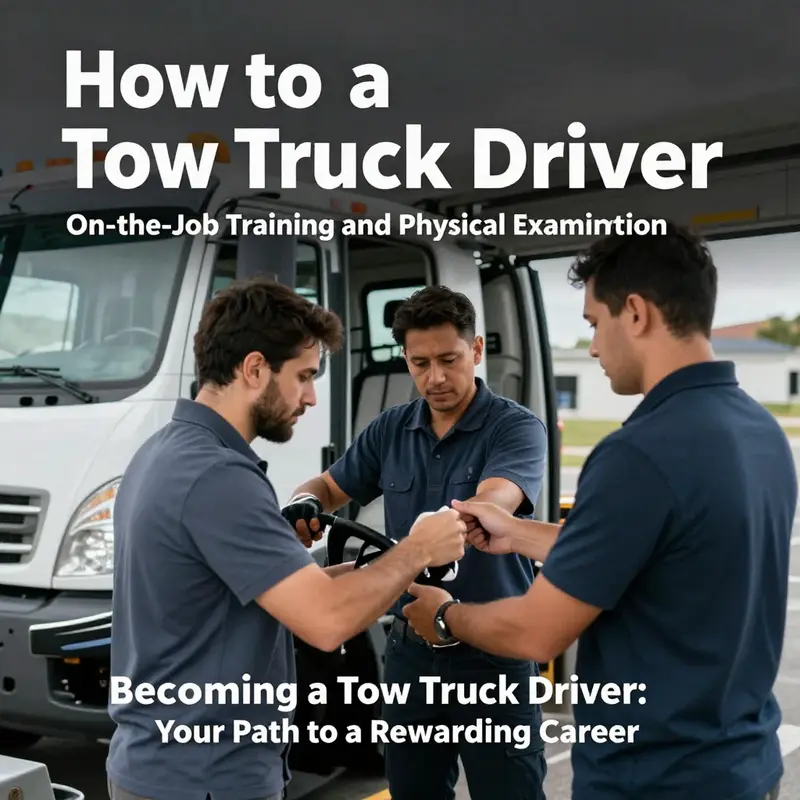
Becoming a tow truck driver starts long before the first slick pull of a wheel-lift under a stubborn vehicle. The journey is a sequence of measured steps that build a foundation of safety, skill, and stamina. You begin with the basics that set the boundary between everyday driving and the demanding role you’re pursuing. The clock starts with age requirements, a valid driver’s license, and the right kind of driving record. You learn that most operations require more than a standard license; they demand a Commercial Driver’s License (CDL) and a clear understanding of the rules that govern heavier, more complex vehicles on real roads and in high-stakes roadside environments. The road to becoming a tow operator is not a sprint but a careful, disciplined pace that blends classroom learning with hands-on work and the strict medical criteria that ensure you can handle the physical demands of the job day after day.
The prelude to any successful tow truck career is clarity about the prerequisites. You must be at least 18, and in many regions the threshold rises to 21 for certain commercial operations. You need a valid license appropriate to the vehicle you will drive, often starting with a Class C license and then advancing to a CDL when you aim to command larger tow trucks. Beyond licensing, a clean driving record matters. Employers look for a history with minimal incidents, reliable adherence to traffic laws, and a demonstrated commitment to safety. A background check is standard, and any pattern of unsafe driving can shut the door before the training even begins. Then there is the medical gate—the physical exam that ensures you can physically manage the lifting, tugging, and long hours behind the wheel that the job demands. The exam evaluates strength, coordination, vision, and hearing, recognizing the repetitive, strenuous nature of towing work. Some employers also require drug testing as a pre-employment safeguard. Taken together, these prerequisites are not merely hurdles to clear but signals that the role requires a serious, ongoing commitment to safety and reliability.
With prerequisites in place, the door to the warehouse, shop, or roadside operations opens to on-the-job training (OJT). This is where the theoretical rules of the road meet the practical realities of real-time emergencies. On-the-job training is conducted in the actual work environment, guided by an experienced driver or supervisor who acts as a mentor and evaluator. The learning curve is steep, but it is also highly efficient because you are absorbing lessons exactly where you will apply them. Trainees learn to secure vehicles with the precise techniques that prevent further damage during transport. They become adept at using tow equipment—winches, hydraulic systems, and wheel collars or wheel-lift devices—while navigating the physical confines of urban streets, rural detours, and busy interstate ramps. The environment is never static; it unfolds with every dispatch, every unusual vehicle in distress, and every new set of weather or traffic conditions. In this setting, the training emphasizes real-time problem-solving. You don’t just memorize procedures; you learn how to adapt them when the situation changes in an instant.
Real-time problem-solving in OJT is inseparable from the feedback loop that guides improvement. An experienced driver demonstrates a move, you imitate, you attempt it, and then you receive immediate critique. The mentor may call out a small but critical adjustment—the way you approach a vehicle, the angle of the winch line, the cadence of your communications with dispatch, or your position on a shoulder that keeps you safe while you work. This feedback is not a labeling exercise; it is a culture of continuous improvement. It reinforces precision in the mechanics of towing—how to hook, chain, or strap a vehicle without causing additional damage—and it also reinforces situational judgment. You learn to assess lighting and weather limitations, to anticipate hazards around stranded motorists, and to improvise safe, effective solutions when standard procedures don’t fit a particular scene.
Another dimension of OJT is learning the choreography of roadside safety. Tow operators operate in some of the most unpredictable spaces on the road: narrow lanes, heavy traffic, uneven terrain, and the constant risk of additional incidents. The mentor guides you through the sequence of scene assessment, securing positions, establishing traffic control, and signaling other drivers with the right lighting and reflective gear. You quickly discover the value of clear, calm communication. Dispatch conversations, hand signals with coworkers, and the precise language used to describe a scene can be the difference between a smooth operation and a dangerous misstep. The hands-on training also covers the manipulation of the equipment itself. You gain familiarity with winches and hydraulic lifts, understanding their limits, maintenance needs, and safe operating procedures. You learn how to stabilize a vehicle on a tow bed, how to manage the weight distribution so the towed vehicle does not shift during transport, and how to secure loads so they can survive a bumpy ride without loosening or breaking free.
The usefulness of OJT extends beyond technical mastery. It nurtures professional judgment. You begin to grasp when a particular technique is appropriate, when to insist on a different approach, or when a scene demands a pause for a quick safety assessment. That judgment grows with exposure to a range of scenarios—breakdowns on quiet rural roads, collisions with multiple vehicles, or stalled automobiles in congested city centers. The best mentors emphasize not just how to work efficiently but how to work safely for others: your fellow responders, the stranded driver, and the general public. This is the ballast of the tow industry’s ethics—speed and efficiency cannot trump safety and accountability. OJT is where those principles are internalized so that they become automatic under pressure.
In discussing the practicalities of OJT, it’s important to recognize that the experience is not simply about mastering individual tools; it’s about integrating them into a workflow that aligns with standard practices and regulatory expectations. The industry values standardized procedures that reduce the risk of damage to vehicles and people alike. As you progress, you will notice a growing focus on standardization in heavy-duty rescue operations, and you will begin to appreciate how consistency in equipment usage and response protocols translates into faster, safer outcomes at the roadside. This emphasis on standardization is not an abstract ideal; it translates into real advantages during busy shifts and in emergencies when hours of fatigue can cloud judgment. The practical reality is that every hour on the job builds a repertoire of reflexes. You learn to anticipate what comes next: the setup, the securement, the lift, the transport route, and the handoffs to facilities or body shops. The more you train, the more you understand how much is at stake in a single tow.
As you advance through OJT, you will discover how critical it is to integrate your training with a larger framework of fleet readiness. The best companies foster a culture where on-the-job learning is coupled with ongoing safety training, equipment maintenance, and emergency-readiness planning. This is not limited to one shop or one city; it is a standard that travels with you as you respond to different assignments and cross into new service areas. The tacit knowledge you acquire—how to judge the terrain of a highway shoulder, how to position your truck to create a safe escape path for other motorists, how to communicate with a dispatcher in a way that reduces miscommunication—becomes part of your professional identity. You begin to see yourself not only as someone who can tow a vehicle but as a responder who can manage risk, protect lives, and restore order in the moment when every second counts.
Beyond the shop floor and the roadside, the pathway to a responsible career includes the pre-employment medical gate, which sets you up for sustainable performance. The physical examination is not merely a hurdle; it is a comprehensive appraisal of your capacity to perform repetitive, strenuous tasks with consistency over long shifts. Lifting capacity is a central measure because tow work often involves moving heavy objects, sometimes repetitively across a shift. Cardiovascular fitness matters because you may be required to stand, walk, or maneuver around scenes under heat, cold, or rain. Musculoskeletal health is crucial because you will shoulder awkward positions while securing loads, aligning the bed, or guiding a vehicle onto a tow truck bed. Vision and hearing tests ensure you can perceive cues in a rapidly changing environment, from flashing lights to distant sounds of approaching traffic. Some employers may add drug testing as part of their safety program, reflecting a broader industry emphasis on those operating under conditions that demand full alertness and reliable judgment. The physical exam, like the OJT, is a part of the professional standard—a commitment to safety and capability that protects you, your crew, and the public.
The interplay between OJT and medical readiness is not accidental. It represents a holistic approach to training that recognizes the demands of the job and the responsibility that comes with it. The journey from license to everyday readiness is a continuum rather than a set of disconnected steps. You carry the lessons learned in the cab, in the shop, and on the roadside into every shift, reinforcing a culture of professional reliability. And while the path can vary by state and employer, the core logic remains the same: prepare thoroughly, train with intention, respect the equipment, and uphold safety as the non-negotiable baseline for every tow. In this sense, the training experience becomes a narrative of growth—a story of how an aspiring driver becomes a dependable, capable operator who can respond effectively when a vehicle fails, when weather turns, or when time is short and the pressure is on.
For readers exploring the wider landscape of the tow industry, the emphasis on training and readiness is a throughline that connects policy with practice. It reflects how standards and procedures shape everyday actions on the road and how those actions, in turn, influence outcomes during emergencies. The path to a tow career is not simply a credentialing exercise; it is a hands-on apprenticeship that shapes a professional identity rooted in safety, competence, and accountability. If you want to dive deeper into the practical implications of fleet safety and emergency readiness, the discussion in fleet standardization and emergency readiness provides a useful perspective. This resource offers insight into how standard practices across a fleet help ensure consistent responses in high-stress situations, a principle that starts in OJT and carries through every shift.
In closing, the journey from prospective driver to seasoned tow operator unfolds on two intertwined rails: the steady hand built through on-the-job practice and the disciplined body prepared to endure the physical realities of the role. The OJT experience teaches you how to work efficiently while maintaining the highest safety standards. The physical examination confirms that you are fit to perform those duties day after day, regardless of the weather, the time of day, or the intensity of the scene. Together, these elements form the backbone of a career that is as demanding as it is essential. As you move forward, remember that the goal is not only to tow a vehicle but to do so with skill, care, and a deep commitment to safety that protects everyone on the road. The road to becoming a tow truck driver is a journey of preparation, practice, and persistence—one that begins with a firm grip on the basics and grows through every real-world tow you undertake.
External resource: https://www.dot.gov
Final thoughts
In conclusion, becoming a tow truck driver involves several key steps that ensure you’re not only qualified but also ready to make a difference when it matters most. From meeting age and licensing requirements to maintaining a clean driving record and completing hands-on training, each element is crucial in paving your path to success. Pursuing this career offers the chance to work in a dynamic environment while helping those in need. If you’re passionate about cars and helping others, this might be your ideal career choice.