
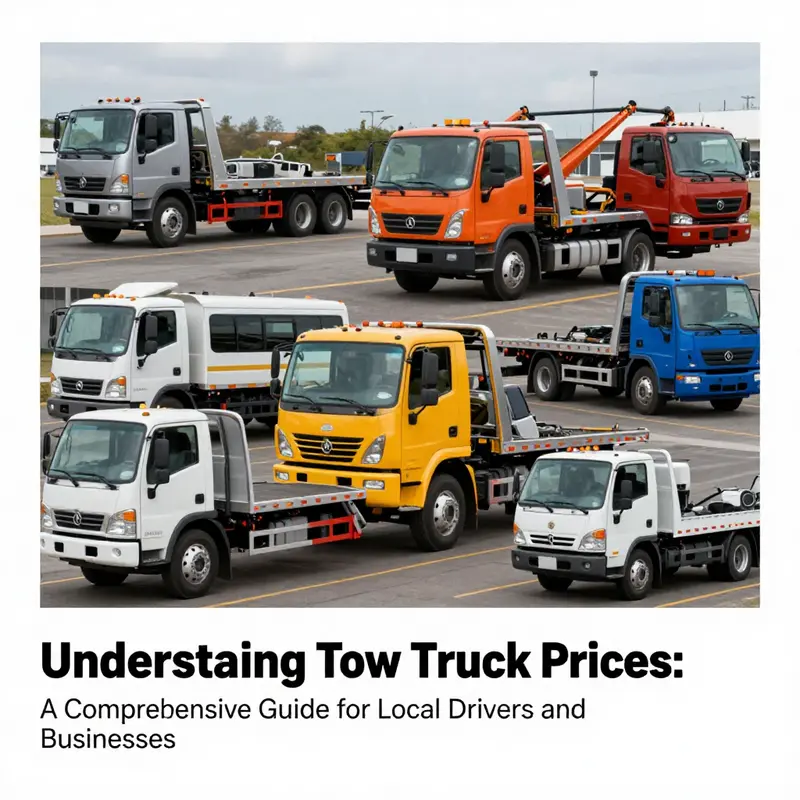
The landscape of towing services is ever-evolving, and understanding how much a tow truck costs is essential for local drivers, auto repair shops, dealerships, property managers, and HOA administrators. Whether you’re considering purchasing a tow truck or needing to arrange towing services, knowing the price ranges and variables affecting costs empowers you to make informed decisions. In this guide, we delve into the current market prices for different types of tow trucks, the factors that play into those costs, the comparison between purchasing trucks and hiring services, the economic implications for the towing industry, and the regional differences that can affect pricing. Each chapter will enhance your understanding of tow truck costs and how it directly impacts your vehicle-related needs.
Decoding 2026 Tow Truck Costs: Price, Purpose, and Practicality in a Shifting Market
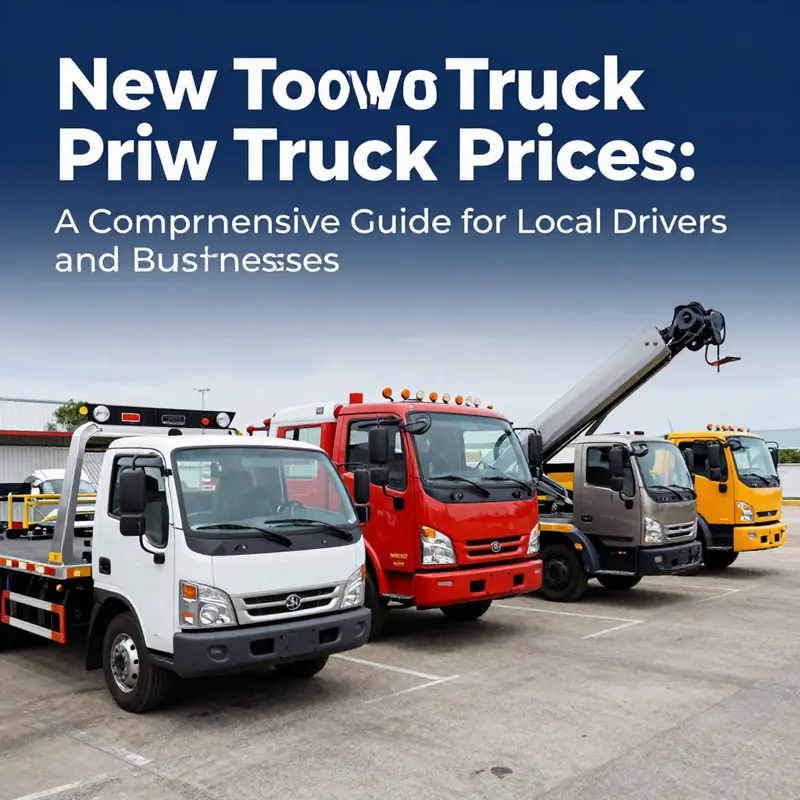
Pricing a tow truck is more than a sticker price; it is a window into how a fleet will operate under shifting fuel costs, regulatory demands, and service expectations. The landscape in 2026 blends a few clear tiers with a set of evolving factors, and understanding those nuances helps fleet managers, repair-shop operators, and small independent haulers align their capital investments with long-term reliability and service quality. In practical terms, the cost of a tow truck reflects not just the vehicle itself but the purpose it serves, the terrain it faces, and the kind of emergencies it is expected to resolve. As with any heavy-duty purchase, the sticker price is only the beginning: the true financial picture includes maintenance, depreciation, insurance, and the ability to maximize uptime on a 24/7 schedule. To know what to expect when you shop, it helps to start with the category you need and then move outward to the features that matter most for your operation.
At a high level, new tow trucks in 2026 tend to fall into three broad categories, each with a distinct value proposition. The most affordable end of the spectrum comprises basic flatbed models designed for light-duty towing and urban streets. These units are purpose-built for simplicity and efficiency: they offer a tilting and sliding bed, a dependable winch, and enough maneuverability to handle common roadside recoveries without the extra heft or complexity of larger equipment. In today’s market, this entry tier often begins around the mid-to-low six figures in U.S. dollars, with smaller, lighter models starting closer to the $12,000–$13,000 range when new and stripped of extras. The appeal is clear: lower upfront costs, lower fuel burn, and a footprint that fits tight alleys and residential neighborhoods. Yet the trade-off is a reduced payload and a more modest reach for lifting and loading, which means higher frequency of trips for a fleet serving busy urban corridors.
Moving up, mid-range wrecker trucks deliver a substantial increase in capability. These are the workhorses for highway incidents, multi-vehicle recoveries, and longer tows that require a heavier frame and stronger winch systems. They typically come with 10-wheeled configurations and robust hydraulic systems, and they can handle vehicles that weigh multiple tons depending on the exact spec. The price band for these models is broad but tends to settle in the range of roughly $32,000 to $35,000 for solid, purpose-built units that balance performance with maintainability. This tier strikes a practical middle ground: enough pulling power and reach for most roadside situations, while remaining within a reasonable return-on-investment window for a small-to-midsize towing operation. It is the category where many fleets find the sweet spot between upfront cost and daily operating efficiency, especially in markets with frequent urban-to-suburban transitions and a steady flow of light-to-medium-duty recoveries.
The upper tier features advanced rotator tow trucks and other specialty units designed for extreme recoveries, overturned vehicles, and difficult terrain. These machines combine a rotating boom with extended reach and precise control, enabling crews to lift and reposition vehicles in ways that standard flatbeds and wreckers cannot. The purchase price for rotators is significant, often in the six-figure range and climbing well past $150,000, with premiums that can push beyond $300,000 for the most capable, mission-critical configurations. The logic behind such an investment is not vanity: in certain environments—highways with frequent rollovers, construction zones on uneven ground, or remote locations where dedicated extraction requires careful maneuvering—the ability to complete a recover without extra equipment or external support translates into faster response times and higher service capacity. For a business with a steady stream of complex recoveries, rotators can be essential, but they also demand careful consideration of maintenance costs, spare-part availability, and technician training.
Pricing, of course, does not happen in a vacuum. Several interwoven factors push the numbers up or down, and these elements matter just as much as the core category. Vehicle type and weight sit at the top of the list. A heavier chassis, a larger bed, a more capable winch, and a crane or rotator dramatically increase the base price. Features such as hydraulic tilting beds, power-operated extensions, multiple winch lines, remote operation, and advanced stabilizing systems add not only to the initial cost but to ongoing maintenance and parts availability. Brand and origin carry weight as well. Domestic and European brands tend to command higher prices in some markets, driven by perceived reliability, dealer networks, and certification overheads. Conversely, certain overseas manufacturers can offer competitive pricing but may require longer lead times, more complex import logistics, or different after-sales support structures.
Certification and compliance further shape the price landscape. Tractors, wreckers, and specialized towing bodies that carry ISO, CE, EPA, RoHS, or CCC certifications can be more expensive, but those credentials often correlate with smoother regulatory compliance, easier inspections, and more predictable resale value. For buyers, this can translate into fewer compliance headaches and a more straightforward maintenance path, which, over the life of the vehicle, can yield tangible savings.
For readers seeking a broader market frame, the 2026 landscape for tow-truck pricing includes a broader ecosystem of commercial vehicles that can be adapted to towing duties. In discussions of market options, you’ll see references to large electric tractor-trailers and other heavy commercial platforms. These models illustrate the upper end of the spectrum for specialized towing applications, and they underscore a reality: the line between a dedicated tow truck and a general-purpose heavy-duty vehicle can blur when fleets pursue electric propulsion, longer service ranges, or higher payloads. Price ranges cited for these models span a wide corridor—from tens of thousands to hundreds of thousands of dollars in local currencies—reflecting differences in battery capacity, range, certifications, and regional incentives. While these electric platforms are not traditional tow trucks in the everyday sense, they remind buyers how shifting technology and policy can reshape what a “tow truck” can cost and what it must deliver on a daily basis.
For buyers who want a hands-on understanding of how these numbers translate into real-world readiness, practical resources exist that explore fleet standards and emergency-readiness frameworks. A good starting point is to review independent industry discussions that emphasize how equipment choices align with response times, maintenance cycles, and driver training. This kind of practical lens helps translate the sticker price into a lifecycle plan—one that balances purchase, upkeep, and the strategic goal of keeping service vehicles on the road when people need them most. A useful companion read in this regard can be found in the broader towing community’s discussions, which you can explore in the towing industry blog dedicated to fleet considerations and standards.
The consumer side of the equation—what a motorist pays when they need a tow—also reveals how price sensitivity can influence the equipment choice behind the scenes. The costs charged to customers for short tows versus long-distance recoveries depend on time of day, location, vehicle type, and whether the move is an emergency. While these service costs are separate from the purchase price of a tow truck, they are part of the same ecosystem: larger fleets with rotators may handle more complex recoveries and thus contend with higher service rates and longer job durations, which in turn shape the economics of owning and operating the equipment that makes those services possible. For a consumer-focused unpacking of these dynamics, see the detailed, objective breakdown of towing costs provided by major consumer-testing organizations, which analyze how insurance, location, time, and vehicle type drive the final bill.
All of this points to a core takeaway: there is no one-size-fits-all answer to “how much does a tow truck cost in 2026?” Instead, the cost must be read as a function of need. A small, urban operation focusing on routine light-duty pulls will justify a different investment than a regional company responding to highway incidents or a rural operation that must recover a wide range of vehicle types, across varied terrain, at all hours. The decision should hinge on a clear assessment of anticipated call volume, average tow weight, travel distance, and the availability of local service and parts networks. The questions that matter most are practical: what is the expected duty cycle? What are the maintenance intervals and parts lead times? How quickly can a technician respond when a unit is down and a contract is on the line? The answers to these questions determine whether you prioritize the most economical flatbed or whether you must invest in a mid-range or even rotator option to meet service-level commitments.
To ground this discussion in current, broad-market data, it helps to acknowledge that 2026 does not yield a single, universal price for dedicated tow trucks. Market snapshots show a spectrum of new-vehicle prices that align with the three-tier framework described above, while cross-border price ranges for heavy commercial platforms underscore how global sourcing and certification costs can shape the bottom line. Prospective buyers should consult current manufacturer listings and local dealers for precise quotes, and they should plan for add-ons that truly matter to their operation—stability controls, exceedance-rated winches, and dependable spare-parts access over the vehicle’s lifetime. Analyzing total cost of ownership, not just the sticker price, will reveal the real budget that a tow-truck investment demands, including financing, depreciation, insurance, fuel, and maintenance plans.
For ongoing insight into how to translate fleet decisions into practical readiness and standardized operations, you can read more from the broader industry discussions on fleet standardization and emergency readiness. See the towing industry blog for a practical perspective on how fleets manage equipment, crews, and response times in the field. the towing industry blog.
If you are evaluating the consumer-facing side of towing costs, a widely cited reference that examines the factors influencing what customers pay—such as distance, time sensitivity, and service conditions—provides a helpful backdrop to the raw price data. This external resource offers a detailed breakdown of how costs accumulate for different towing scenarios and can help you translate operator costs into consumer pricing models. Consumer Reports guide on towing costs.
Behind the Price Tag: What Really Drives Tow Truck Costs and Service Fees
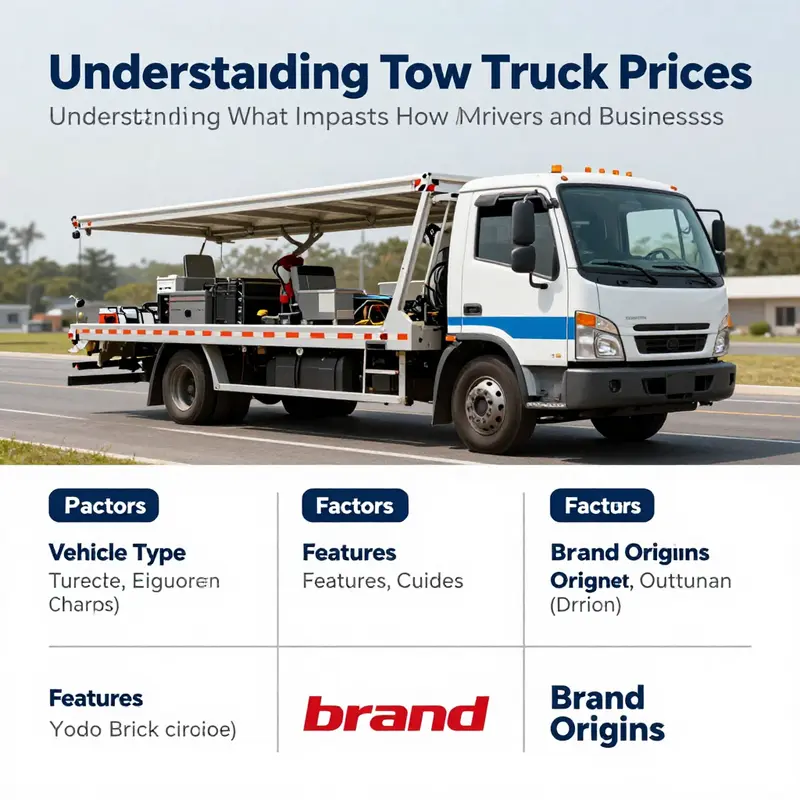
Pricing for tow trucks and the services they perform is rarely a fixed line. For fleet owners, the question of how much a tow truck costs sits at the intersection of function, capacity, and the realities of a market that shifts with demand. When you step back from glossy brochures and quick online quotes, the price is a reflection of choices about purpose. A basic flatbed is priced differently than a heavy duty wrecker or a rotating recovery unit, and those differences are mirrored in the costs faced by drivers and customers alike. The numbers published for new equipment in 2026 show a wide spectrum. A small, light duty flatbed might enter a fleet at roughly twelve thousand eight hundred dollars. Mid range heavy duty trucks capable of handling large vehicles are priced in the low to mid thirty thousands. The most capable specialty units with lifting arms that can reach over hills or recover overturned vehicles easily push past six figures and sometimes north of a quarter of a million. These figures are not just numbers on a page; they reveal the design tradeoffs, maintenance commitments, and regulatory standards that shape every tow job.
In the field, consumer towing costs are built on a base rate plus per mile. The distance matters most. A tow over a few miles will be priced differently than a long haul across town. More miles means more fuel, more wear, more time. Then, the vehicle itself matters. A compact car versus a commercial truck changes the crew size, the rig, the equipment used, and the risk profile. The more there is to handle, the higher the price tag. Time of day and urgency change pricing too. After hours, during weekends or holidays, the demand spikes and operators respond with premium rates to cover the chance of delays or reduced availability. Location matters as well. Urban zones with dense traffic and higher overhead costs lead to higher prices than rural settings, where travel is quicker and labor costs are lower. Then there is the complexity of the job. A routine straight tow is one thing; a job that requires winching through tight spaces, handling a damaged or hazardous vehicle, or dealing with a vehicle resting on unstable ground is a different order of magnitude in both risk and required equipment. Finally, the reputation of the service provider and the regulatory environment can add or subtract value. Those with strong branding, better training standards, or extensive roadside assistance networks may price higher, but the reliability and coverage they offer can be worth it in a stressful moment.
To a fleet buyer, these pricing dynamics are not oddities but predictable factors that determine whole life cost. The first decision is the type and size of the truck itself. A fleet that mostly handles compact cars will not justify the investment in a rotator, even if the latter could knock out a few specialized jobs. There is a direct link between the mix of typical jobs and the amortization schedule of the equipment. Heavier trucks cost more upfront, require more maintenance, and burn more fuel, so the per job cost might still be lower if they do fewer miles but heavier lifts. Conversely, a small operator that takes a lot of night calls and on the spot roadside work may prefer compact units for their lower purchase price and easier maneuverability, accepting a higher per job rate to cover margins and scheduling pressures. The equipment choice also dictates maintenance planning and downtime. A high capacity machine needs regular inspections, hydraulic systems, and trained technicians, which elevates the ongoing cost but reduces downtime and the risk of failed rescues. That aspect matters a lot when a season brings storms and highway incidents where speed and reliability translate into revenue and public trust.
Regulatory and certification demands cannot be ignored. Across regions, certs such as safety and environmental compliance can influence upfront cost and ongoing expenses. Some fleets opt for machinery with formal certifications that reassure customers and insurers. The price premium here is less about marketing and more about risk management. Operators who hold recognized certifications can handle more complex recoveries, including hazardous materials situations in some locales, while reducing legal exposure. Such advantages come at a price, but they also unlock a broader set of job opportunities and contracts. As a consumer, understanding this helps explain why two towing quotes can diverge by a wide margin even when the trip looks similar on the surface. The more complex the job, the more the unit and crew need to be prepared, which can raise the bill substantially. It is not simply the distance or the weight of the vehicle; it is about readiness and resilience and the ability to complete a recovery without further incident or delay.
Another key layer is the operational context in which the service is contracted. A well established company with a robust roadside assistance program may price higher, but that price often includes faster response times, better dispatch visibility, and guaranteed coverage across a broad territory. In addition, some providers carry a larger risk pool, insurance, and compliance costs that are baked into the rate to shield customers from unexpected liabilities. The practical upshot for customers is that the cheapest quote is not always the best value. If a low price comes with slim vehicle specifications, sporadic service, or limited area coverage, the risk of a poor outcome increases. Consumers and fleets alike benefit from asking targeted questions about response times, average rescue success rates, and the availability of specialized equipment or trained operators. These questions can reveal not just the price but the likelihood of a smooth, efficient recovery when it matters most.
From a budgeting perspective, most price schemes use a simple structure: a base fee plus a per mile charge, sometimes with a surcharge for after hours or for particularly difficult lifts. In practice, base fees reflect the minimum cost of mobilizing a crew and equipment, while the per mile fee covers the actual towing distance. The additional charges for heavy vehicles or specialized tasks exist because heavier payloads impose more strain on equipment and require more labor, fuel, and time. At the consumer level, this means two things. First, if you know you will be moving a large vehicle or you expect a difficult recovery, you should expect a higher base or per mile rate. Second, shopping around can pay off, but only when you compare apples to apples. A quote that looks cheaper at first glance may reveal hidden costs for winching, long distances, or after-hours calls. And, perhaps most importantly, the difference in local practice matters. Some regions routinely apply stand-by or installation surcharges, while others include these within the base rate. Knowing the local norms can demystify the final bill and reduce sticker shock when the tow arrives.
For readers thinking about the economics of owning a tow truck, the message is nuanced but hopeful. The initial purchase price is only one piece of the puzzle. The true cost of ownership rests on utilization patterns, maintenance demands, depreciation, insurance, and financing terms. A basic flatbed that appeals to light duty work may be perfectly adequate in a neighborhood with frequent minor incidents, but it will look very different financially in a market where heavy trucks and commercial fleets dominate. The choice of equipment becomes a strategic decision about service capability and market positioning. A fleet that targets routine, rapid-response light towing can achieve favorable economics by maximizing uptime and keeping spare parts in stock. A business that aims to recover larger vehicles or operate in more demanding environments must accept higher capital outlays and higher operating costs with commensurate returns in reliability credits and expanded revenue streams. In the end, pricing is not merely a ladder of numbers; it is a reflection of service commitments, risk management, and the practicalities of moving vehicles of all sizes under varying conditions.
To close the loop for readers who want concrete touchpoints, the numbers in the market data point to a spectrum from modest to monumental. A compact, light duty unit is in the low tens of thousands when new, while the most capable specialty rigs carry price tags well into the six figure range. This breadth explains why two tow jobs can look almost identical on the surface and still yield very different bills. The credibility and reliability of the operator, the distance and weight involved, the timing of the request, and the regulatory backdrop together weave a fabric that makes up the final cost. If you are a fleet manager weighing the option of building a small, nimble towing capacity or upgrading to a heavier, more capable fleet, the choice should be grounded in a careful review of typical call patterns and a thoughtful projection of maintenance and fuel costs. And if you are a consumer seeking help on the roadside, you can approach the quote with a sharper eye by asking about the breakdown and clarifying any potential add-ons that may apply to your specific situation.
For fleets seeking practical frameworks to align preparedness with cost, consult resources on fleet standardization and emergency readiness guidelines, which offer structured approaches to training, equipment checks, and dispatch planning. See here: fleet standardization and emergency readiness guidelines. Finally, when you need to look up broad consumer guidance on costs, a trusted external reference provides a grounded perspective on how pricing works in real life: https://www.aaa.com/driving-resources/towing-costs-explained
Weighing the Price of Help: The Economics of Towing Services Versus Owning a Tow Truck
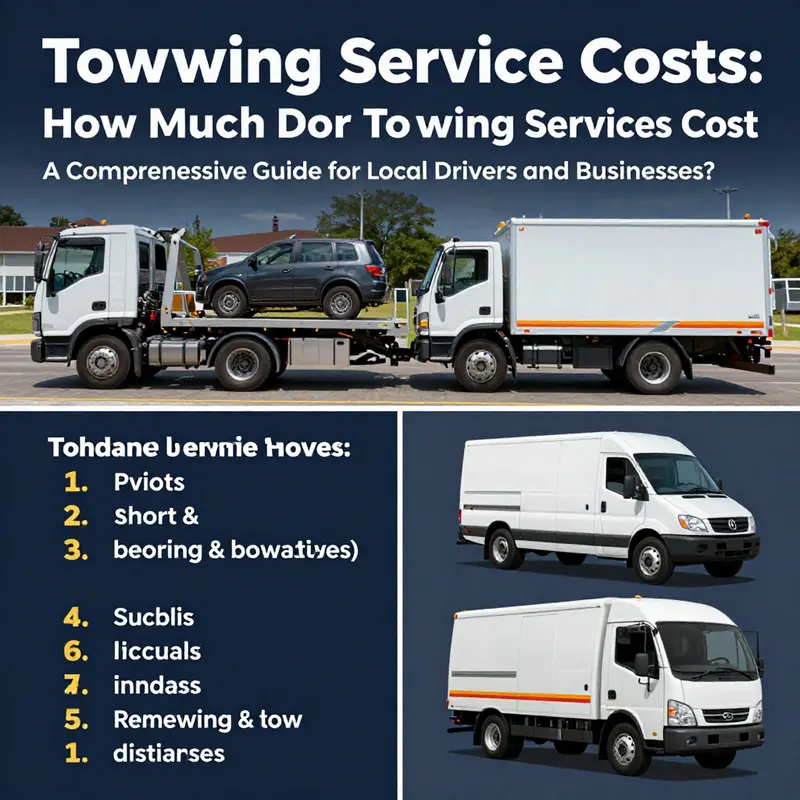
When a vehicle breaks down or is involved in an incident, the instinct is to seek help quickly and predictably. Yet the way help is delivered—whether through a professional towing service or by owning a tow truck—shapes cash flow, risk, and reliability in ways that matter long after the tire iron cools. The economics are simple on the surface: you can pay for a tow service when you need it, or you can invest in a tow truck and shoulder the responsibilities, costs, and opportunities that come with ownership. But the truth lies in the details, where frequency, distance, vehicle type, and the quality of service interact with capital availability, regulatory requirements, and strategic goals. To compare these paths meaningfully, it helps to anchor the discussion in real-world figures that describe what you pay as a consumer and what you invest as a business owner. On the consumer side, the typical city tow is a service you call for a standard tow, and the price reflects the convenience of rapid response, the complexity of the job, and the local market. In most urban settings, a standard tow costs roughly $75 to $125. If the journey stretches beyond a short hop or requires specialized handling—say, a long-distance tow, recovery of a large vehicle, or a scenario that demands extra equipment—the price climbs to the range of $200 to $500 or more. These figures are influenced by several moving parts: the time of day matters, with after-hours service often carrying a premium; the location matters, since urban cores may require more personnel and equipment or negotiating tight spaces; the vehicle type matters, because a heavy truck or an unusually configured automobile will require different handling and winching capabilities; and the emergency status can dramatically alter pricing, especially in accident recovery where quick, coordinated action is essential. Understanding this cost structure helps readers appreciate why, for occasional needs, it often makes sense to hire rather than own. Yet the calculus shifts once a business or individual faces repeated towing demands. The decision to purchase a tow truck hinges on initial price plus ongoing ownership costs and the potential for long-run savings or enhanced control. A straight purchase analysis reveals a spectrum that runs from modestly affordable to highly specialized. On the lower end, an entry-level flatbed or light-duty tow truck may begin around the mid-teens to low six figures when new, depending on capacity and configuration. The real world, however, typically shows more substantial entry points for commercial use: a new medium-duty tow truck commonly costs between $60,000 and $100,000, while heavy-duty models can exceed $150,000. These figures reflect not only the core chassis and bed but also the inclusion of essential systems such as hydraulic tilting beds, winches with substantial pulling power, and the reliability that fleets require for daily operation. Beyond the sticker price, there are ongoing costs that must be accounted for at the outset. Maintenance schedules, routine part replacements, and the risk of downtime all eat into the bottom line. Insurance costs rise with vehicle value and the role the tow truck plays in daily service delivery. Licensing, registration, and emissions or environmental compliance add ongoing expenses. Then there are operational costs: fuel, driver wages, tires, alignment services, and regular diagnostic checks. When these factors are folded together, ownership becomes a financial commitment that resembles a small business venture, not a one-time purchase. It is not just about replacing a tow when needed; it is about sustaining a vehicle and the ecosystem that makes it a reliable tool. In the broader market, there are even more extreme capacity and capability options. Rotator tow trucks with rotating booms and extended reach command premium prices, driven by their ability to recover overturned vehicles or operate in difficult terrain. These specialized units can range from a high ceiling around $150,000 to well over $300,000, depending on reach, control, safety features, and other advanced capabilities. The incentive to invest in such equipment typically aligns with operations that must perform under demanding conditions—highway incidents, multi-vehicle pileups, or off-road recoveries—where the potential savings from rapid response and higher-capacity recovery can be substantial. It is here that the cost of ownership can be justified as a strategic asset rather than a simple expense. However, the choice between owning and outsourcing is seldom binary. It requires a careful assessment of how often you expect to rely on towing services, the geographic spread of your operations, the kinds of vehicles you service, and the regulatory and safety standards you must meet. In practical terms, a small business with sporadic towing needs can preserve cash and minimize risk by outsourcing, especially if it does not have a predictable schedule or consistent demand. The convenience of a readily available and professionally coordinated service can translate into faster response times, insured liability, and a predictable expense model that scales with demand. Conversely, for a fleet that operates with high frequency, the math often tilts toward ownership, but only when the business can shoulder the burden of capital investment and the ongoing overhead. In such cases, owning a tow truck is a way to reduce per-tow costs over time, improve service reliability, and exert greater control over scheduling and customer experience. The threshold for this shift varies by market, by the structure of the business, and by the anticipated maintenance profile. If you expect a high volume of tows within a given period, the per-tow cost of outsourcing can accumulate rapidly. In that scenario, calculating a rough break-even point becomes essential. You would compare the total annualized cost of ownership—initial financing, depreciation, insurance, maintenance, licenses, and operation—against the annualized expense of using third-party towing services for the same volume and distance of work. If ownership lowers the cost per operation, enhances response times, and improves quality control without compromising safety, the investment can be warranted. The decision, however, always comes with non-financial considerations that deserve equal weight. Owning a tow truck means assuming responsibility for compliance with safety standards, maintenance cycles, and the reliability of the vehicle and its crew. It also means managing the risk of roadside incidents and the need to recruit and retain qualified drivers who can operate heavy equipment with precision. In a service-oriented model, those risks reside with the towing provider, which can simplify liability but also introduces dependency on another party’s scheduling and capacity. The trade-offs extend beyond dollars and cents, touching the cultural and operational fabric of a business. For some fleets, owning a tow truck connects directly to emergency-readiness and resilience. A well-maintained unit becomes part of a broader capability that includes trained staff, standard operating procedures, and the capacity to respond to incidents on a predictable timetable. This alignment with emergency-readiness can be a strategic advantage, especially in sectors where downtime translates into meaningful losses or safety concerns. If you are contemplating this path, it pays to explore how ownership aligns with broader fleet strategies, including standardization and readiness planning. For instance, fleets that emphasize standardized equipment and trained personnel often benefit from having in-house towing capability, because it reduces handoffs, accelerates decision-making, and ensures consistency in response. To readers exploring this route, it is useful to connect with industry resources that discuss fleet emergency response and standardization, such as the materials found at Fleets Emergency Response, which explore how to align towing capabilities with broader safety and readiness goals. This internal reference can help contextualize the ownership decision within a larger framework of operational resilience and service quality. At the same time, it remains critical to keep a close eye on external benchmarks and consumer perspectives to avoid investing without a clear understanding of market realities. For most individuals or small businesses, the everyday economics still favor outsourcing for irregular needs or limited usage. The upfront capital, ongoing maintenance, and insurance obligations associated with ownership create a higher hurdle than simply paying for a call-out when trouble arises. Yet for enterprises with steady towing demands, owning a tow truck can offer control, reliability, and potential long-run savings that justify the initial and ongoing commitments. In weighing these options, it is helpful to have a structured view of the price landscape: the typical consumer towing cost versus the more comprehensive investment required to acquire and maintain a tow truck. As you consider the numbers, remember that price signals are only part of the story; reliability, safety, and the operational tempo you aim to sustain are equally informative. For a broader perspective on consumer towing costs and what factors influence them, see resources like AAA Car Care’s towing costs guide. And for organizations weighing fleet readiness and response capabilities, exploring internal resources on fleet standardization and emergency-readiness can yield practical insights that support a prudent, integrated decision. In the end, the choice between paying for a tow service or owning a tow truck rests on a blend of frequency, geography, risk tolerance, and strategic goals. It is a decision that should be revisited as the business grows, markets shift, and technology advances, ensuring that the path chosen continues to reflect not just current costs but future value. Internal link: for practical considerations about how fleets prepare for emergencies, see Fleets Emergency Response. External resource: https://www.aaacar.com/towing-costs
null

null
Price Maps and Roadside Realities: Tow Truck Costs Across Markets
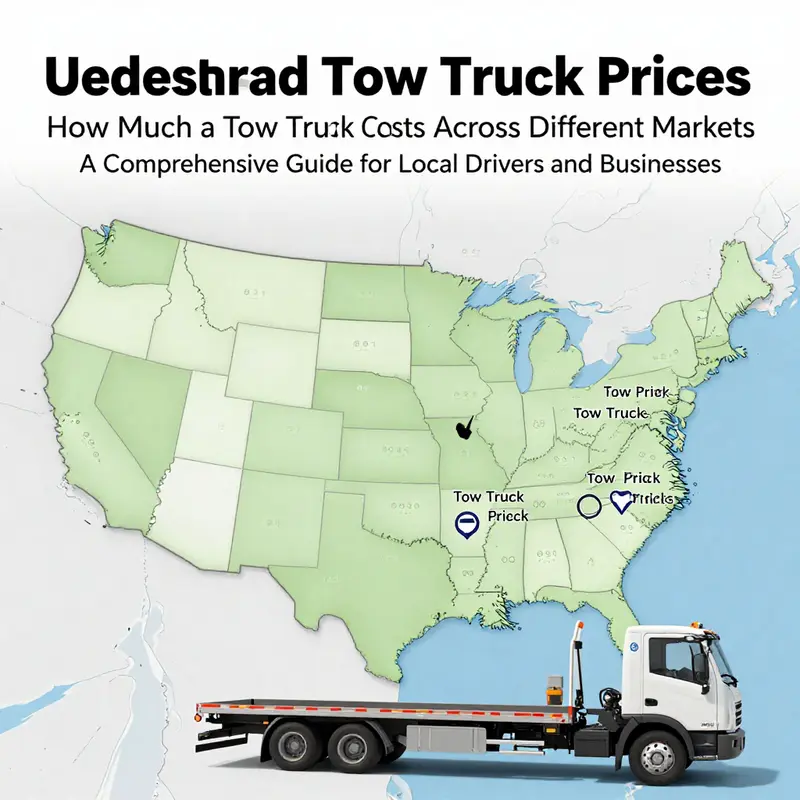
The cost of a tow truck reflects more than metal and hydraulics. It mirrors regional economics, supplier networks, labor wage levels, and the regulatory framework that governs heavy equipment. When you map the price of a tow truck across markets you see a landscape shaped by demand, currency fluctuations, and the cost of doing business, not just by payload and lifting capacity. For buyers, regional price dynamics influence when to buy, how to finance, how equipment is depreciated, and the price customers pay for towing services. In the United States the market presents a broad spectrum of options that match different job profiles from urban light recoveries to highway operations and specialized heavy recoveries. The point is that tow truck price is not a single figure but a continuum. In this continuum, price tiers tell a clear story. At the basic end are simple flatbed configurations. In some markets new light duty flatbeds can start around 12000 to 18000 dollars. This is possible for entry level units, but does not reflect what professional fleets require for durability, payload, and service life. For operators seeking robust, daily urban and suburban work, price placement shifts upward markedly. A typical asking price for well specified new flatbeds without rotators sits in the 70000 to 120000 dollar range, depending on build, hydraulics, winch capacity and manufacturer options. Between these poles lie mid range configurations designed for heavier duties but without the complexity of a rotating boom. These mid range wreckers often range from the low tens of thousands to the mid fifty thousands depending on market and package. Rotator tow trucks carry the largest outlay. Rotating booms and the specialized training required to operate them push sticker prices into the upper ranges, with many quotes in the 150000 to 300000 dollar territory, and higher in some deployments. The rotator value rests not only in lifting capacity and reach but in the ability to perform complex recoveries in challenging terrain and in conditions where conventional setups fall short. These are tools for major incidents, heavy recoveries, and emergency response, and their cost reflects advanced technology, controls and trained personnel who can execute critical maneuvers safely. Beyond sticker price, regional differences emerge through currency and import dynamics, local labor markets, and component availability. When you compare markets the differences can be stark. In other regions similar classes of heavy duty trucks may carry price tags shaped by different fiscal policies and demand. A long haul tractor in a major overseas market might be priced in the high five figure to low seven figure dollar equivalents depending on specifications and import conditions. In some cases the regional equivalent of a premium long haul tractor can resemble or exceed the upper end of a mainstream heavy duty tow truck in another market. The takeaway is that sticker price is not a universal metric but a reflection of region specific economics duties currency exchanges and the cost structure woven into the local supply chain. The regional story extends to the service tier that accompanies the hardware. Towing service costs illustrate how price signals travel from capital goods to daily practice. In the United States a typical short distance tow can hover around a modest baseline, while longer tows urban congestion and rural remoteness push costs upward. For instance a forty mile tow may settle somewhere in the range of a couple of hundred dollars, with price sensitivity based on time of day location vehicle type and urgency of the recovery. In other regions the same distance and weight can carry a different price structure when labor costs fuel and regulation set new baseline economics. Service level disparities reinforce why fleet buyers must consider not only the purchase price but the broader cost ecosystem in which the machine operates. The regional variations also intertwine with regulatory and certification frameworks which can tangibly affect equipment pricing. Compliance with safety standards environmental requirements and industry certifications tends to raise manufacturing costs. These costs, in turn, imprint themselves on the final price of new equipment and on insurance and financing terms available to buyers. In markets with stringent standards upfront costs may be higher but the long term benefits reduced maintenance risk extended service life and easier resale help balance the calculus. Conversely markets with more lenient regimes may show lower upfront costs but latent costs such as safety incidents downtime or accelerated wear can alter total cost of ownership over the life of a fleet. For fleet operators these regional price differences have practical implications. A market with higher upfront costs can still offer favorable total cost of ownership if maintenance is reliable spare parts are readily available and utilization supports steady demand. In regions where access to skilled technicians or high quality components is constrained lower prices today can translate into higher operating risk tomorrow. Operators weigh these variables alongside financing terms tax incentives depreciation schedules and resale potential when planning capital expenditure. The regional price mosaic thus becomes a strategic lens through which operators forecast fleet composition maintenance planning and lifecycle budgeting. In a broader view purchasing decisions do not occur in a vacuum. The price of a tow truck in one market interacts with the cost of doing business in another. As fleets expand or move to serve multiple regions cross market pricing questions arise should sourcing be local to avoid import duties or imported to capitalize on favorable base prices how do currency fluctuations affect the bottom line over multi year financing terms These are the questions that accompany regional price differences and turn a simple price tag into a strategic decision about fleet resilience service reach and response times. For readers seeking practical guidance on aligning pricing expectations with regional realities, a data framework helps. Industry studies and trade resources provide trend lines on how costs shift with market conditions supply chain pressures and regulatory changes. Such sources offer a broader context for understanding price dispersion and help operators calibrate expectations when negotiating with dealers and distributors in different markets. To complement the chapters narrative readers can explore a resource that highlights towing cost trends and industry data via external references. External resource: National Association of Roadside Services Towing Cost Trends and Industry Data. Internal link for fleet readiness and procurement guidance fleet standardization and emergency readiness. Internal anchor text fleet standardization and emergency readiness. Internal link https://santamariatowtruck.com/fleet-standardization-emergency-readiness/. Within this regional frame a simple but powerful practice for fleets is to tether procurement strategies to fleet readiness and emergency readiness benchmarks. Aligning purchasing decisions with standardized maintenance schedules and operator training can reduce total cost of ownership regardless of the market baseline price. A complementary internal reference that can guide such alignment is the concept of standardizing fleet components and tightening emergency readiness protocols. For readers exploring how to harmonize procurement with operational readiness see fleet standardization and emergency readiness. The linkage underscores a broader point regional price differences matter but they are most powerful when paired with disciplined fleet management and proactive readiness planning. Ultimately the regional price differences for tow trucks reflect a confluence of market maturity labor economics regulatory rigor and logistical reality. A higher upfront price in one market may be offset by strong after sales service faster parts delivery and lower downtime while a lower price in another region may be offset by greater maintenance complexity and higher downtime risk. For stakeholders fleet managers operators and buyers the path forward lies in balancing sticker price with the real world costs of operation maintenance training and service accessibility. The goal is to assemble a fleet that not only meets todays recovery needs but remains adaptable to tomorrows regional shifts in price policy and demand. External resource referenced National Association of Roadside Services NARST towing cost trends and industry data. Internal link for fleet readiness and procurement guidance fleet standardization and emergency readiness.
Final thoughts
In conclusion, deciphering the complexities of tow truck costs is crucial for local drivers, businesses, and property managers alike. This comprehensive guide has equipped you with insights into the price ranges of various tow trucks, the factors that influence those costs, and crucial economic perspectives on the industry. Furthermore, understanding the regional price differences can empower informed decisions whether you’re purchasing a tow truck or seeking towing services. Equip yourself with this knowledge to navigate the towing landscape effectively.