
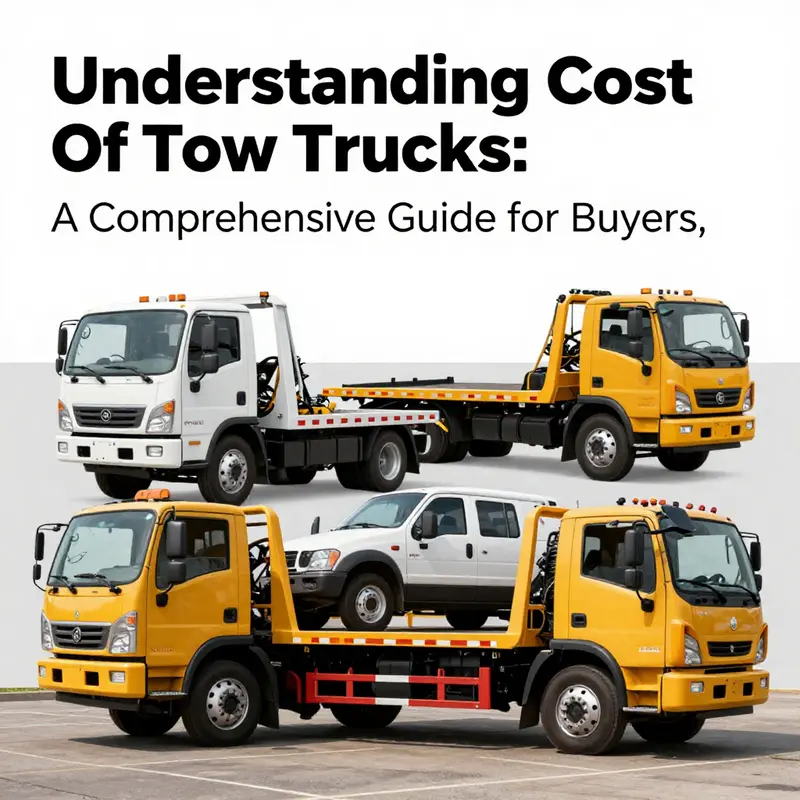
When it comes to acquiring a tow truck, understanding the cost implications can save you money and ensure you get the right vehicle for your needs. Whether you’re a local driver, an auto repair shop, dealership, or property manager, pricing insights can shape your purchasing decisions. This article explores the costs associated with buying new tow trucks, the savings potential in the used market, and the investment in specialty trucks designed for specific functions. By the end, you’ll be equipped with the knowledge necessary to make an informed selection that best fits your operational requirements.
The Price of Power on Wheels: A Comprehensive Look at New Tow Truck Costs
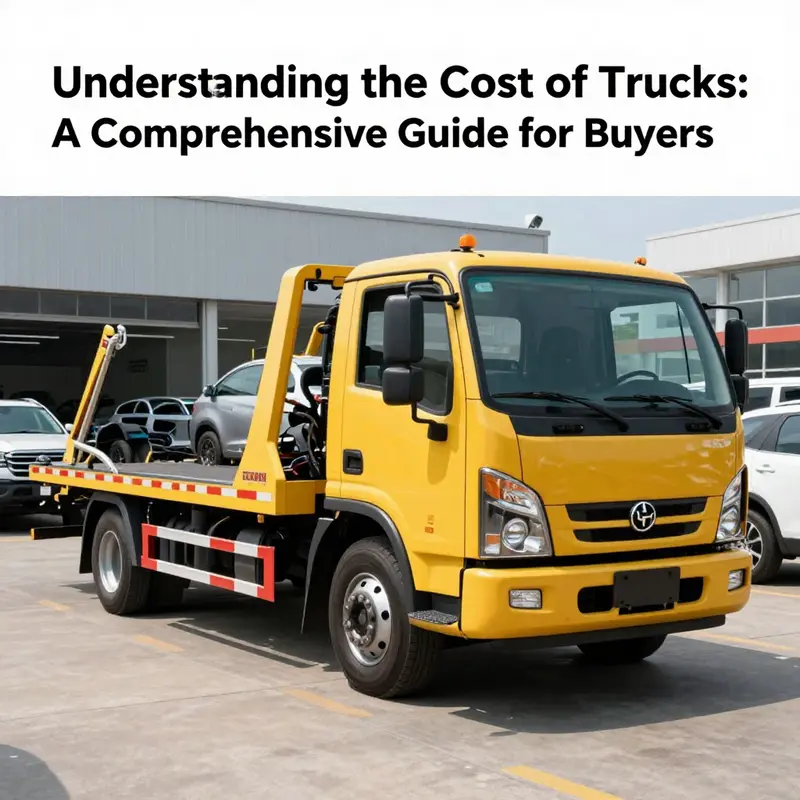
When a new tow business takes shape or an existing fleet looks to grow, the heart of the conversation often lands on a single, practical question: what will it cost to buy a tow truck? The answer sits at the intersection of engineering capability, intended duty, and long-term return on investment. It is tempting to imagine a single price that covers every scenario, but the market for new tow trucks unfolds as a layered landscape. The very idea of a “tow truck” in the mind can drift between a compact, city-ready light-duty unit and a heavy, purpose-built machine designed to move wrecks and restore order after collisions. Each tier carries its own price discipline, its own set of capabilities, and its own bearing on operations, maintenance, and risk management. The resulting decision is rarely a one-off purchase; it is a strategic choice that echoes through a shop’s cash flow, service capacity, and competitive posture for years to come.
To understand the cost dynamics, it helps to picture the spectrum of new tow trucks not as a simple line, but as a set of distinct profiles, each with its own price point and utility. Light-duty tow trucks, the urban workhorses of roadside assistance and quick in-and-out tows, sit in a price band that tends to anchor around the mid-range. They typically offer enough power and reach to handle common passenger vehicles and smaller trucks, while remaining nimble enough for tight city streets and the insertion of safety equipment into congested zones. The price range for these compact cadres generally lands in a zone between fifty thousand and eighty thousand dollars, depending on chassis specifications, crane capacity, winch strength, and the sophistication of the electrical or hydraulic systems that coordinate the crane and bed. The range matters because the cost of a light-duty machine is not only about raw lifting power; it is about how seamlessly that power integrates with daily operations, how much downtime might be anticipated for routine maintenance, and how comfortable the operator is with the vehicle’s control interface and safety features.
As a business grows or takes on more demanding jobs, the need for reserve capacity and more robust recovery capability becomes pressing. Heavy-duty tow trucks answer that call. These are the machines that routinely carry the burden of larger vehicles, commercial fleets, and situations that require more than a simple tow—situations where a sophisticated hydraulic crane, a rotator system, and a reinforced chassis are not luxuries but necessities. The price discipline here is steeper and less forgiving of underinvestment, because the operational heft is tied to uptime, safety, and the ability to accept a wider range of assignments. Heavy-duty models can—depending on specs—exceed one hundred fifty thousand dollars in outright price. The upper end of the spectrum is driven by factors such as crane reach and strength, winch capacity, hydraulic systems, load-bearing frame integrity, and the integration of advanced safety and control technologies. When a shop contemplates a debt-financed purchase, the decision becomes not only about whether to buy a bigger truck, but about how many more service calls, longer tow distances, and higher-value recoveries can be absorbed to justify the capital expenditure.
Then there is the option of flatbeds or rollback tow trucks, a category that many operators find attractive for its specific advantages. A hydraulic bed that can be raised, tilted, and deployed to roll or winch a vehicle onto a platform offers notable safety and versatility benefits, particularly for transporting damaged cars or high-value vehicles where strap-based methods may be inadequate. Flatbeds tend to command higher price points than the most basic hook-and-chain or wheel-lift configurations, reflecting the added engineering and material costs required to ensure smooth bed operation, long-term bed integrity, and reliable alignment mechanisms. The payoff, in practical terms, shows up as faster on-scene deployment, reduced risk of damage during loading, and greater adaptability across a variety of towing scenarios. In a fleet setting, the marginal cost of adding a flatbed unit is weighed against anticipated job mix, geographic coverage, and the expected frequency of the most demanding tasks. In many markets, the economics favor investing in at least one flatbed or rollback unit when the business model includes recovery of damaged vehicles, vehicle transport across longer distances, and work that requires precise positioning and careful handling.
Across these categories, the sticker price is only the beginning. The financial narrative of buying a new tow truck is seasoned with factors that extend far beyond the price tag itself. A comprehensive view includes the cost of ongoing maintenance, which scales with duty cycle and miles. A robust preventive maintenance program can extend vehicle life and maintain peak performance, but it also adds recurring costs—parts, fluids, inspections, and routine replacements—that must be planned for in the operating budget. Then come safety gear and operational downtime for training and compliance. Tow operations demand a disciplined approach to safety equipment, traffic control, and crew readiness. Cones, vests, warning triangles, lighting, reflective gear, and battery maintenance add up, especially when the fleet operates around the clock or in variable weather conditions. The costs of these ancillary items are not vanity; they are risk mitigations that protect drivers, the public, and the investment in the truck itself.
Another layer of the cost equation touches upgrades and evolving business needs. The pace of change in the towing industry—driven by evolving safety standards, regulatory requirements, and client expectations—means that a new purchase may eventually need adjustments. A truck might require upgraded hydraulics, enhanced electrical systems to support new tools, or improved tow hooks and mounting hardware to handle a broader range of vehicle types. The question becomes how to economically time these upgrades, whether through planned capex cycles or by integrating upgrades into maintenance regimes as they become necessary. This is not a nudge toward perpetual belt-tightening; it is a reminder that capital equipment is a living part of a business, and its value is tied to how well it adapts to changing workloads and service expectations.
The broader market context also matters. For buyers navigating the purchase of a new tow truck, wholesale and dealer channels, financing arrangements, and incentives or warranties all influence the bottom line. For instance, light-duty models tend to be priced toward the lower end of the spectrum, yet the cumulative cost over a five- to seven-year horizon can still be significant if maintenance or downtime erodes productivity. On the other hand, heavy-duty purchases, while expensive at the outset, may yield greater reliability and fewer unexpected maintenance events if correctly specified and well maintained. Some operators find value in negotiating packages that bundle maintenance plans, extended warranties, or on-site service agreements, effectively converting some operating expenses into predictable monthly costs. These arrangements can be especially attractive for fleet operators seeking to stabilize budgeting and avoid sudden capital calls when a critical component reaches the end of its expected life.
In practical terms, a buyer often starts by clarifying their intended operating profile. How many calls do they anticipate per week? What is the typical vehicle mix they expect to encounter? What is the longest distance a tow might be required to cover, and how important is on-site loading speed for the business model? The answers to these questions guide the selection among light-duty, flatbed, and heavy-duty configurations and, critically, influence the overall affordability of the purchase. For a small operator primarily serving urban or suburban areas, a light-duty unit might be the prudent first choice, pairing reasonable capability with a price that leaves room for essential safety equipment and initial maintenance reserves. For a shop that anticipates frequent, complex recoveries involving larger vehicles or commercial fleets, a flatbed or a combination of a flatbed and a heavy-duty unit may emerge as the smarter long-term investment. In such cases, the cost calculus becomes a matter of balancing upfront price against the expected volume and value of the jobs that the truck will unlock, along with the likelihood of capturing larger contracts that require higher capability and reliability.
There is also a practical, almost tactical, dimension to the cost discussion: the procurement process and the supplier landscape. New buyers should actively compare specifications and options rather than chase a single price point. It is not merely the engine horsepower or the crane reach that matters; it is how the truck’s systems are integrated—whether the electrical architecture can support additional tools, how easy it is to access critical components for service, and whether the manufacturer offers solid technical support, training, and parts availability. The decision is a synthesis of capability, durability, serviceability, and the assurance that the truck will remain reliable in the field when every minute counts. What makes this evaluation particularly nuanced is that some features commonly treated as optional add-ons in one package may be central to operation in another. A rotator, for example, is invaluable in certain rescue and recovery contexts but represents a meaningful premium in price. Likewise, an integrated flatbed—though costly upfront—can translate into streamlined workflows and fewer equipment changes across shifts, which over time can reduce labor costs and improve job turnaround.
The conversation also extends into the realm of financing and ownership economics. A new tow truck purchase is rarely paid in cash from the first week of operation. Most operators explore financing options that align with cash flow projections, tax considerations, and the life cycle of the asset. The financing structure influences not only the monthly payment but also the total cost of ownership. Interest rates, depreciation schedules, and tax treatment all shape the chart of true cost over the vehicle’s useful life. The depreciation profile matters because it affects taxable income and investment planning. A well-structured plan can help a business recover a portion of the investment more rapidly while still maintaining the capacity to deliver service. Insurance costs, which scale with the vehicle’s value and the risk profile of the operation, also factor into the annual carrying cost of ownership. The premium for a high-capacity unit may be higher, but the exposure to costly downtime without a backup unit can also be greater. In many scenarios, operators aim to keep a reserve fund to cover routine maintenance, unexpected repairs, and potential downtime that could otherwise interrupt service levels or erode customer trust.
The economics of a new tow truck are therefore not simply a function of sticker price. They are a confluence of anticipated utilization, maintenance strategy, risk management, and strategic planning for growth. For someone starting from zero, it is a budgeting challenge that requires forecasting workload, estimating average tow length, and modeling the financial impact of downtime. For a growing company, the question shifts toward asset utilization: how many service calls, how many miles, and how many recoveries does the new unit enable per month? These questions guide not only the choice between light-duty, flatbed, and heavy-duty configurations but also the decision about whether to acquire one or more units at the same time to ensure redundancy, coverage, and the ability to scale operations.
Beyond the numbers, there is a qualitative benefit to investing in a newer truck: reliability and reputation. In the towing world, a fleet’s image matters. Clients expect professional, timely, and safe service. A modern tow truck with newer safety features, clearer lighting, and more responsive controls can communicate a commitment to quality and safety even before the first зак. While the visual impact of a newer vehicle is not the sole driver of business, it often translates into higher confidence from customers, improved job acceptance rates from fleet managers, and easier integration with local regulatory expectations.
As readers consider their next steps, a practical takeaway is to move from a price-first mindset to a value-focused assessment. Start with the job profile you intend to serve, map the tasks to be accomplished, and translate those tasks into the minimum features required for reliable performance. Then layer in the optional features that could extend capability or safety given the local climate, road conditions, and typical recovery scenarios. In many markets, the numbers will converge toward a core set of configurations that balance initial spend with expected workload and maintenance costs. In others, a more specialized setup may emerge as the most cost-effective approach over the vehicle’s life.
To complement this narrative with real-world price boundaries, it is useful to anchor expectations to observed ranges in the market. Light-duty new tow trucks commonly fall in the fifty-thousand-to-eighty-thousand-dollar zone, a balance point that reflects enough lift capacity and maneuverability for everyday calls while preserving affordability. Heavy-duty models, designed for larger vehicles and demanding recoveries, can push beyond the one-hundred-fifty-thousand-dollar mark, particularly when equipped with rotator systems, reinforced chassis enhancements, and high-end hydraulic configurations. Flatbeds and rollback units tend to sit above basic tow trucks in price, capturing the value of a hydraulically operated bed and a safeguarding platform that minimizes risk to both operators and vehicles. These price contours are complemented by broader market considerations, such as supplier ecosystems, the availability of service networks, and the potential for customization to fit unique local needs. Yet the initial sticker price is only part of the equation; the long arc of ownership—the ongoing maintenance, the insurances, the training of personnel, and the procurement of safety equipment—shapes the true cost of bringing a capable tow asset into service.
For readers navigating these waters, a practical approach is to use the price ranges as guardrails while engaging in a holistic assessment that includes maintenance planning, fleet utilization projections, and risk management strategies. A well-structured plan can transform an expensive purchase into a sustainable driver of service quality and revenue growth. It is worth noting that the market also includes a spectrum of used and salvage options, which can provide a gateway for smaller operators or startups to establish a foothold with less upfront risk. While used vehicles require careful due diligence—especially regarding wear, hours, and structural integrity—the total cost of ownership can be favorable when the vehicle is properly restored and integrated into a well-managed maintenance program. The opportunity to acquire a salvage unit at a significantly reduced price exists, but it carries a premium on time and expertise spent on restoration, certification, and potential downtime during the reentry into service. This is a path that requires a strong technical capability and a clear plan for ensuring reliability once the unit returns to work.
In sum, the cost landscape for new tow trucks is multi-dimensional and highly dependent on intended use. Light-duty units offer accessible entry points for small operations; heavy-duty and specialty configurations unlock the capacity to take on larger, more complex jobs but demand a higher initial investment and more rigorous maintenance discipline. The decision is not simply about choosing a price tag; it is about aligning hardware capabilities with a business plan, a service proposition, and a sustainable model for uptime and growth. The chapter’s numbers serve as a compass, not a verdict, guiding readers toward a configuration that matches their market, their service mix, and their financial appetite for capital expenditure. For anyone building or expanding a tow operation, the real work is translating these figures into a practical plan that ensures every mile, every lift, and every minute of on-site time contributes to a predictable, profitable, and safe operation. And as you map out that plan, remember that the path to informed, confident procurement often runs through careful analysis of workload expectations, maintenance readiness, and the ability to adapt to evolving industry standards over the truck’s full life cycle.
For a broader sense of ongoing industry conversations and practical perspectives on fleet readiness and standardization, you can explore our blog. It offers a resource-rich locus for operators looking to harmonize equipment decisions with emergency-readiness strategies while keeping a steady eye on the bottom line. (Internal link)
External resources and additional data are essential to grounding these considerations in the current market reality. In parallel with the price ranges outlined here, buyers should consult verified market reports and supplier catalogs to refine specifications and confirm availability. A widely referenced source for wholesale and distribution perspectives in this space demonstrates how global supply dynamics can influence lead times, cost of components, and the overall timeline for bringing a new unit into service. When evaluating suppliers, prioritize those who emphasize quality control, customization options, and reliable delivery schedules, and remember that the best choice in many cases balances price, performance, and serviceability rather than chasing the lowest upfront cost alone.
As you move from planning to execution, the central takeaway remains clear: a new tow truck purchase is a strategic investment in capability, reliability, and the capacity to fulfill a service promise. The figures provide structure, but the true value comes from aligning the truck you buy with the demands of your customers, the cadence of your operations, and the resilience of your maintenance and safety practices. The result is not merely a machine on the road; it is a cornerstone of a reliable, scalable, and competitive towing operation that can weather the uncertainties of weather, traffic, and demand while delivering consistent, high-quality service to those who depend on it most.
External Resource: https://www.alibaba.com/showroom/tow-trucks-and-wreckers.html
Under the Hook: Navigating Price, Value, and Risk in the Used Tow Truck Market
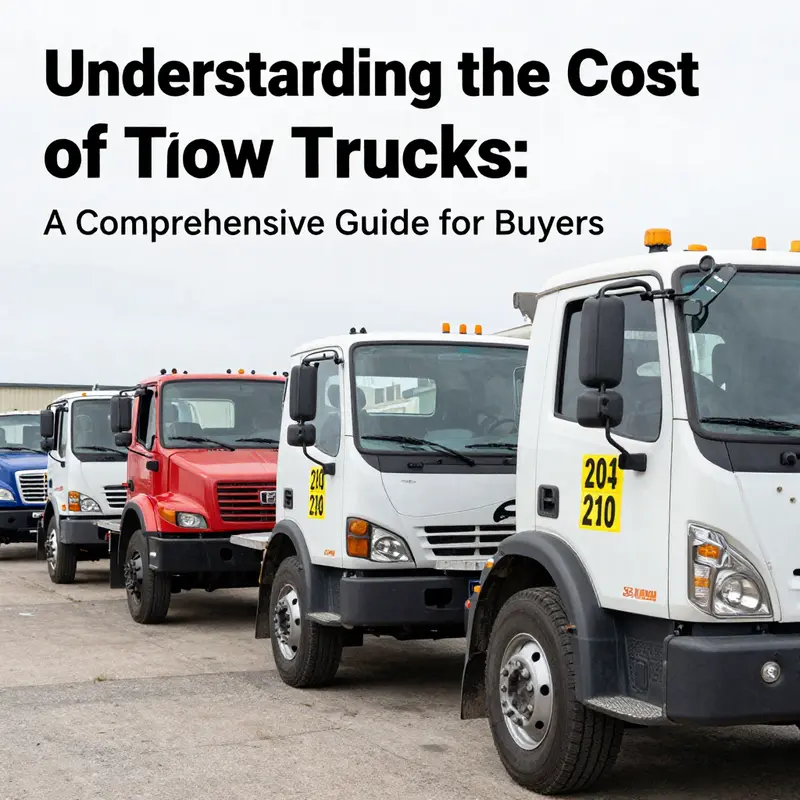
In the towing industry, choosing the right used tow truck is a practical step for growing a fleet. The used market offers a spectrum of options, from basic rollbacks to full-featured wreckers. Price becomes the compass, and as of early 2026 the spread can range from around $15,000 for a lean older flatbed to well over $100,000 for specialized units with advanced hydraulics and safety systems. This range reflects the vehicle’s condition, its role, regional demand, and the buyer’s tolerance for risk.
Price is a function of type, age, mileage, and installed equipment. A basic used flatbed can be found around $20,000-$35,000 depending on year and maintenance history. Higher-end flatbeds with enhanced hydraulics or larger bed capacity can reach the mid- to upper-$50,000 range, and professional-grade setups can hover around $50,000-$75,000, with outliers near $90,000-$100,000 for pristine or fully equipped units.
Wreckers tend to sit higher on the price spectrum due to the booms and lifting capability. A well-maintained used wrecker may start around $25,000, with premium models pushing into the six-figure territory when they feature heavy-duty booms and long reach. The difference is driven by stabilization systems, reliability of control circuits, and boom hydraulics.
Beyond sticker price, buyers must account for maintenance, spare parts, fuel, insurance, and regulatory costs. Downtime is costly in a recovery-focused operation, so reliability and serviceability often trump the lowest upfront price. A well-documented maintenance history and a recent service cadence can translate into lower total ownership costs even if the initial price is higher.
Practical steps for buyers include a thorough history check (title, service records, hydraulic system history), an on-site inspection of lift, bed alignment, and hydraulic pressure, and a road test or diagnostic evaluation by a qualified tech. A structured bidding or negotiation strategy can help bridge information gaps between buyers and sellers. For those seeking benchmarks, price bands tied to the truck’s role help set realistic expectations.
If you want broader context, consider industry resources such as the Santa Maria Tow Truck blog, which discusses fleet readiness and standardization. You can access it here: santamariatowtruck.com/blog/. The bottom line is that the best deals balance price with uptime, reliability, and fit within your fleet’s standards.
Premium Power on Wheels: Understanding the Cost of Specialty Tow Trucks for Modern Fleets
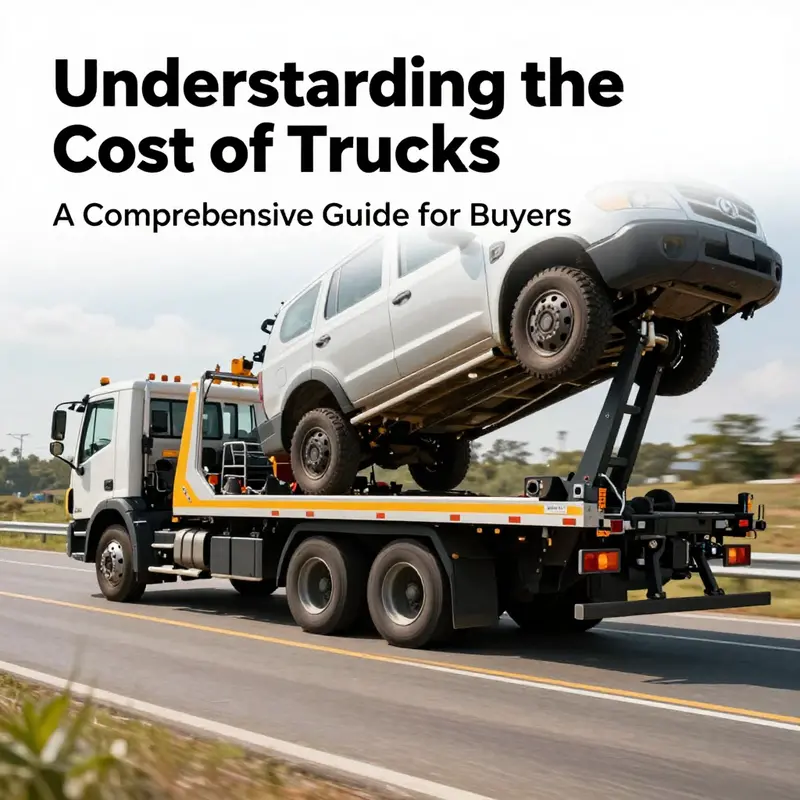
When a towing business talks about premium specialty tow trucks, the price tag signals capability. These are not ordinary work vehicles; they are highly engineered systems designed to lift, stabilize, and recover a wide range of vehicles under demanding conditions. The cost includes chassis, hydraulics, crane reach, winch strength, bed design, and intelligent support systems that keep a fleet productive between calls. For operators, the value lies in uptime and safety, not just the sticker price.
To appreciate the cost, start with market distinctions and the factors that drive price upward. Premium models target heavy-duty towing, large vehicle recovery, and complex salvage. Configurations often include robust rollback or flatbeds and rotators. The base price for a new premium unit commonly lands in the six-figure range, with higher prices for capacity, equipment, or bespoke configurations. The value proposition is reliability and productivity.
Price drivers include core platform, crane and winch, undercarriage geometry, and how many tons of lifting capacity and meters of reach are included. More customization adds to the cost, including multiple hydraulic circuits, extended beds, or specialized control logic. Safety features add to purchase price and ongoing maintenance. When paired with technology, the price rises but so does uptime and data-driven maintenance.
Technology integration matters: GPS, remote diagnostics, fleet-management interfaces, digital controls, real-time diagnostics. Some features are standard; others are optional. Reliability, not speed alone, yields ROI through reduced downtime and faster recoveries.
Customization and configuration are large drivers of total cost: tailored bed lengths, extended reach, reinforced chassis, multiple circuits, bespoke paint and branding. Customization affects maintenance and parts availability, and should be considered a strategic investment.
Market dynamics and manufacturer reputation influence pricing. Premium brands command premiums due to reliability and dealer network, with warranties and service plans that support multi-jurisdiction operations. Higher upfront cost can yield lower risk of operation interruptions.
Beyond the vehicle, financing, insurance, inspection regimes, maintenance intervals, and upgrades affect the total cost of ownership. Upfront price is higher, but predictable maintenance and uptime can reduce long-term costs.
Decision-making: weigh new versus refurbished units based on risk tolerance and usage. ROI depends on typical call types and regions. Evaluate maximum lift, maneuverability, and the importance of real-time diagnostic data.
As you conclude, price represents capability, risk management, and resilience. This is why fleets invest in premium configurations despite higher upfront costs, to achieve higher uptime and safer operations.
For further reading on pricing trends, see Industry Insights on Specialty Tow Truck Pricing (2025 Update) at TruckEquipment.com: https://www.truckequipment.com/industry-insights/specialty-tow-truck-pricing-2025
Final thoughts
Purchasing a tow truck is a significant investment that can greatly influence your business or personal vehicle handling capabilities. Whether you lean toward acquiring a new model for the latest technology and reliability, eye used options for a budget-friendly solution, or opt for a specialty vehicle to meet specific hauling needs, being informed about the costs involved can guide your decision. Armed with information from this guide, you are equipped to make the best choice for your situation.