
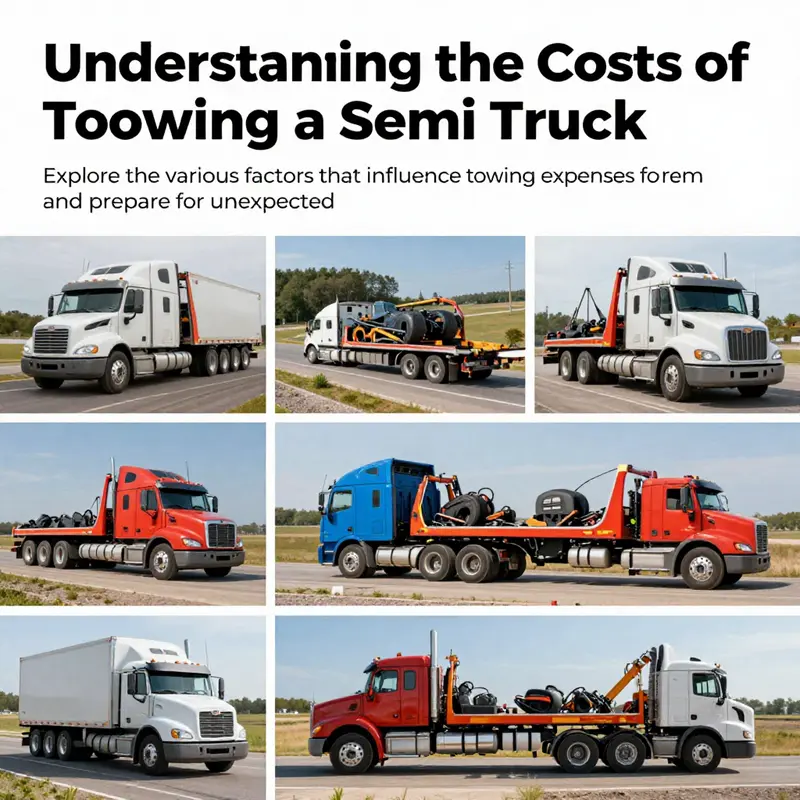
Towing a semi truck is not a straightforward task, and the costs can vary widely based on numerous factors. For local drivers, auto repair shops, dealerships, and property managers, understanding the financial implications of towing can save significant expenses. Throughout this article, we will examine the critical elements that affect towing costs, including distance, vehicle size, and emergency situations. Each chapter will guide you through these aspects, ensuring you’re prepared and informed when faced with the need for towing services.
Tow Economics: Decoding the Costs Behind Semi Truck Tows
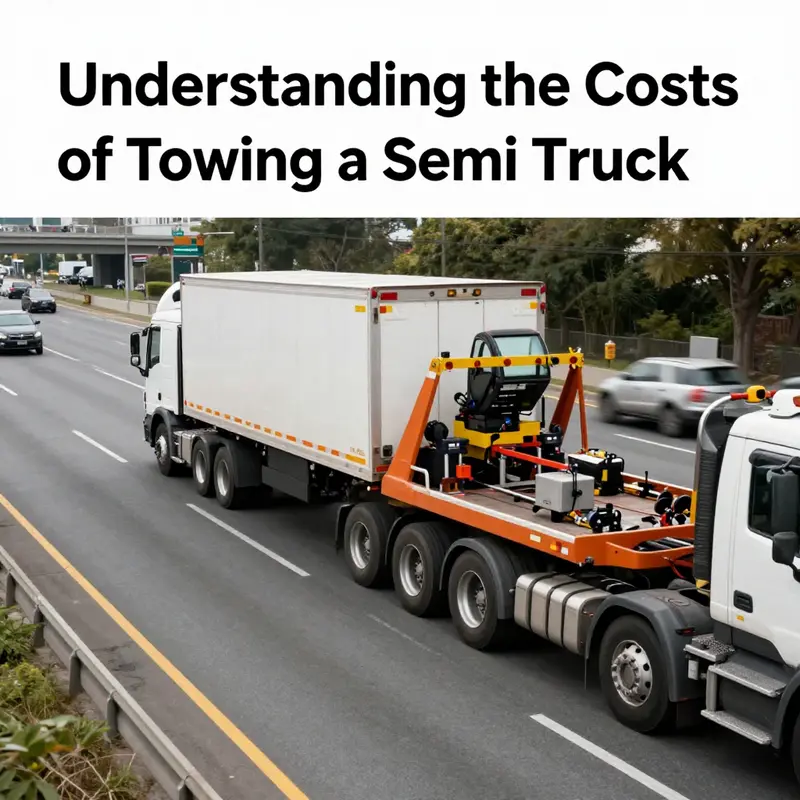
The moment a semi truck breaks down or ends up stranded, the clock and the bill both start ticking in earnest. Unlike a typical passenger vehicle, a semi is a floating contract of weight, length, and logistics that expands the scope of what a tow demands. Cost, in this sense, becomes a ledger of realities rather than a single line item. It reflects not only the distance to be traveled but the physics of moving a vehicle that can weigh hundreds of thousands of pounds and requires specialized equipment, trained operators, and careful risk management. Understanding the factors that shape the price helps fleet managers, drivers, and dispatchers anticipate costs, communicate clearly with service providers, and avoid sticker shock when a quote finally lands. The essential idea is simple: the bigger the machine and the longer the journey, the higher the price tag. Yet beneath that straightforward truth lies a web of specifics that tug the cost in several directions at once, often in ways that catch the unprepared off guard.
At the center of the cost discussion is the vehicle type and its weight. A semi truck is not just longer than a car; it is a heavier, more complex machine. The weight distribution, axle count, and whether cargo is on board or the trailer is empty all influence the kind of towing equipment that must be mobilized. Heavier rigs demand more powerful tow trucks, larger winches, heavy duty straps, and longer hydraulic reels. The crew overseeing the tow must calculate lift points, drivetrain protection, and the risk of damage to tires, rims, and suspension. Because the operation hinges on preventing further harm, many tow operators favor flatbed methods for semi trucks. Flatbeds minimize drivetrain exposure and distribute weight more evenly, but they also require specialized rigs and more precise handling. It is not unusual for the most careful tows to lean toward flatbed solutions, even when a faster method might exist, because safety and equipment protection historically translate into long term savings, especially for fleets that count on uptime rather than quick turnover.
Distance and location play a diametrically opposite but equally decisive role. The mileage to be covered is the most visible driver in a quote, yet the geography of the pickup and drop zones matters just as much. Rural areas can be far from towing depots, resulting in longer response times and greater fuel burn. In urban settings, traffic density, restricted access lanes, and city ordinances can complicate the route and slow progress, inflating labor costs and pushing hourly rates higher. A short tow on a back road between two rural farms may feel economical at first glance, but if the distance stretches into a longer haul, the charge quickly compounds. Conversely, an urban tow may begin with a higher base rate due to city overhead, but the proximity to the final destination could reduce total hours worked. The balancing act between distance and locale is a constant feature of semi truck tow pricing, and it is often the first thing fleets compare when evaluating bids.
Time of day and urgency weave another layer into the pricing fabric. Emergency or after hours tows are not mere inconveniences; they trigger premium rates designed to compensate for the disruption to crews’ schedules, the safety risks of nighttime operations, and the need for rapid response on busy highways. Weekend or holiday requires additional premiums, particularly when the vehicle is stranded in a hazardous spot or compromises lane safety. In some cases, urgent tows also demand expedited services, which can involve dispatching more personnel, arranging for additional equipment, or coordinating with highway authorities to ensure a safe recovery. The result is that the same tow requested during daylight hours can carry a different price tag once the clock crosses into the late hours or when the situation dictates immediate action rather than a scheduled lane-by-lane recovery.
The type of towing service used makes a meaningful difference as well. Flatbed towing is the standard for preserving the integrity of a semi’s drivetrain and is widely regarded as the safest option for heavy commercial vehicles. It reduces the risk of transmission and suspension damage that can arise from other methods. Because it requires specialized trucks, trained operators, and careful loading procedures, flatbed towing tends to carry higher labor and equipment costs. Wheel-lift and hook-and-chain approaches, while sometimes faster or cheaper, carry greater risk if performed improperly and may be unsuitable for certain configurations or payloads. Some scenarios even necessitate multi-point rigging or a staged recovery to keep the operation within safe limits. Each method has its own price curve, and the chosen approach reflects a blend of safety considerations, available equipment, and the conditions of the site. The subtlety here is not merely about preference but about the alignment of practice with risk management and long-term vehicle health.
Beyond the core towing method, additional services can quietly push the bill higher. Fuel delivery, when the truck runs dry in a remote location, is a common but not universal add on. Winching and mechanical assistance may be required if the vehicle remains stuck in mud, snow, or uneven ground. Storage at a facility becomes relevant if immediate delivery to a repair shop is not feasible, or if the owner cannot retrieve the vehicle promptly. Dispatching multiple vehicles for a complex recovery, coordinating with crane services, or arranging complex logistics for multi-truck recoveries also introduces new layers of overhead. Each arriving asset—whether a heavy lift crane, a secondary tow rig, or a diesel fuel delivery unit—adds to the day’s total. The practical upshot is that even a straightforward tow can morph into a package of services when obstacles arise, and each service comes with its own incremental cost that compounds with the complexity of the job.
Insurance and liability considerations are a quiet but powerful force in the final price. Commercial towing operators carry liability and cargo insurance, and the economics of coverage influence rate cards in a big way. The higher the risk profile of a job—due to high value cargo, notorious road conditions, or the potential for damage in an awkward maneuver—the more operators need to cushion the price. This is not about profit margin alone but about guaranteed risk management, safety compliance, and the ability to absorb unexpected events during the recovery. Clients who recognize this dynamic can appreciate why a quote sometimes carries a premium tethered to risk rather than to a purely mechanical factor like distance. The takeaway is that insurance costs are baked into the per mile or base rates, and transparent operators will explain how coverage affects the total and what, if anything, they can do to mitigate it through careful planning or staged recoveries.
A practical lens on these factors shows why quotes for semi truck tows can vary widely from one incident to the next. Consider the spectrum: a short, straightforward 5 mile tow might land around a modest base fee plus a per mile rate, yet a 50 mile haul can easily exceed several hundred dollars. The variability is not arbitrary but anchored in the combination of weight how the truck is set up for transport, the operational reality on the ground, and the broader market conditions in the region. Some regions emphasize rapid response and stockpile more heavy duty equipment; others lean into longer established networks that can manage ultra heavy recoveries with redundancy. In both cases the cost reflects a careful balance between getting the truck loaded, protecting it from damage, and delivering it to a repair facility with minimal downtime. Fleet operators often tell us that understanding this balance comes with experience, and the most reliable quotes come from providers who offer clear line items rather than vague estimates. The emphasis is on transparency, so the client can see where each dollar goes and what value each service adds in terms of uptime and safety.
To help parse the real world implications of these factors, it is useful to see how a seasoned operator narrates the decision process. When a dispatcher assesses a tow, the first question is usually about the truck type and weight, followed by the distance and the road conditions. If a truck is carrying a heavy load, the plan might call for a longer, slower route with more check points to ensure stability, even if a shorter route exists on paper. In a scenario where access is tight or the ground is soft, the operator may opt for a controlled winch or a staged recovery to prevent damage and to keep the truck’s payload secure. Each choice has a price, and the final figure is the sum of all options selected to address the specific risks and requirements of that moment. It is this dynamic and context driven nature of semi truck tows that makes a single price hard to predict in the abstract, underscoring why local market conditions and the particular crew on site matter so much when a driver calls for assistance.
For readers seeking broader context and practical guides that speak to emergency readiness and fleet preparedness, the Santa Maria Tow Truck Blog offers a useful repository of topics that intersect with tow operations and cost considerations. The blog presents scenarios, checklists, and discussions that illuminate how operators think about risks, equipment needs, and planning. You can explore these perspectives further at the Santa Maria Tow Truck Blog. Santa Maria Tow Truck Blog.
In navigating the withering math of semi truck tows, one principle stands out: always request a detailed estimate before service begins. A reputable operator will provide a line item breakdown that includes base hookup, per mile charges, any added services such as winching or fuel delivery, potential storage fees, and the expected duration of labor. If the estimate omits safety considerations or does not clearly define the method of towing, fleet managers should push for clarification. Asking about the specific equipment to be used, the staging plan for the recovery, and any potential risks helps align expectations and reduces the chance of disputes after the job is done. Preparing a short, clear briefing for the driver and the dispatcher can also streamline the process. If the truck is on a major highway or in a hazardous location, communicating those details in advance informs the operator so they can allocate the right resources and plan a safe recovery window. This level of proactive communication matters just as much as the actual mechanics of hooking and rolling the truck onto the transport platform.
The bottom line is that the cost to tow a semi truck is not a single fee but a composite that reflects distance, weight, location, timing, method, and ancillary services. While our initial research indicates that costs are highly variable and that a typical tow can fall into hundreds of dollars or more, the actual number for any given incident depends on a precise combination of factors. Fleet managers who approach a tow with a clear understanding of these drivers, a request for a detailed written estimate, and a plan for the safest and most efficient recovery tend to end up with outcomes that minimize downtime while safeguarding the equipment. The goal is not to extract every penny but to secure a safe, timely recovery that preserves the integrity of the vehicle and its cargo, while also ensuring compliance with industry standards and local regulations. As the market evolves and more operators bring specialized capabilities to the table, the conversation about semi truck tow pricing continues to evolve, reflecting the ongoing tension between speed, safety, and cost effectiveness.
External reference for a broader numerical breakdown and additional context can be found at https://www.aaacar.com/semi-truck-towing-costs. This resource complements the practical guidance outlined here, offering a broader set of scenarios and indicative ranges that help frame expectations when a semi truck goes off the rails and into a tow yard, a situation where precision in pricing and clarity in service scope become invaluable for everyone involved.
Real Costs, Real Decisions: Towing a Semi Truck Across Short, Medium and Long Distances
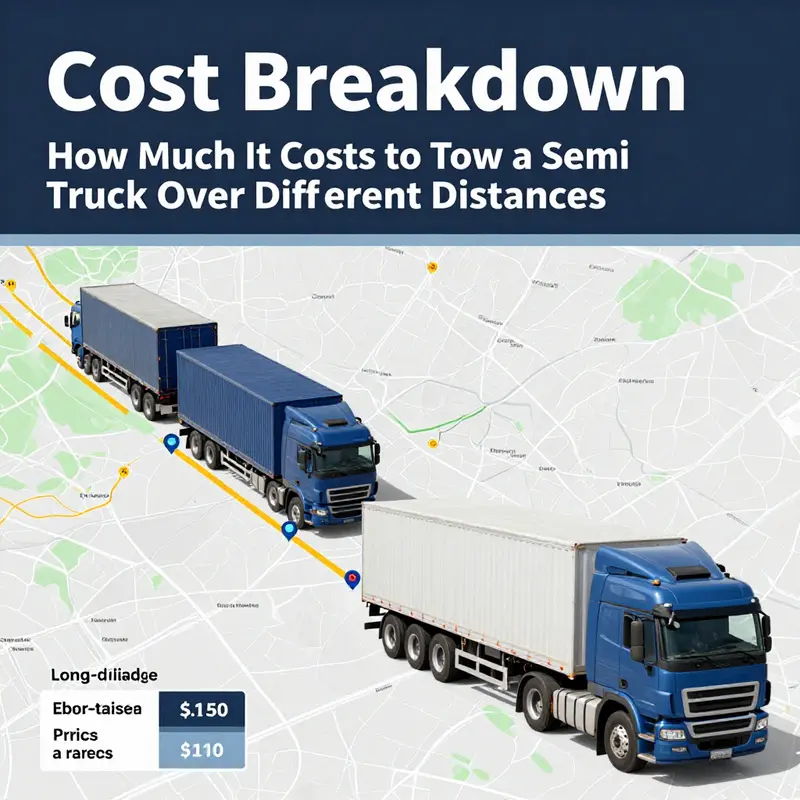
Understanding the true cost to tow a semi truck means looking beyond a single number. The price you see on an estimate reflects a chain of practical realities: the truck’s mass and condition, the distance to a safe destination, the tow operator’s equipment and crew, time of day, and the regulatory or permit needs for the move. This chapter unpacks those elements in a continuous narrative so you can anticipate costs, compare options, and ask the right questions when you call for help.
A semi truck is a heavy, high-value vehicle. Its size requires specialized wreckers, heavy-duty straps, winches, and often a rollback platform or multi-axle trailer. Those tools cost money to buy and maintain, and their use costs fuel and time. Towing companies usually recover those costs through a base rate plus a mileage charge, or through packaged fees that combine hookup and per-mile hauling. For short to medium distances, per-mile rates are typically higher because the job incurs the same setup and safety overhead regardless of miles driven. For very long hauls, per-mile rates can fall as operators spread fixed setup costs across many miles.
For most operators and fleet managers, the simplest framing is to think in three distance bands: short (up to 50 miles), medium (50–200 miles), and long (200+ miles). Short-distance tows are often local recoveries—roadside assistance, accident recovery, or towing to a nearby shop. Expect base rates between roughly $150 and $300. That covers the dispatch, travel time, basic hookup and a short haul. If you call in the middle of the night or on a holiday, emergency service fees often add $50–$100. If the truck is damaged and must be winched off an embankment or requires a flatbed instead of a traditional tow, add another 20–50% for extra labor and equipment. Urban calls can be pricier because traffic and city permits add complexity, while remote rural recoveries may include a travel fee to compensate for long deadhead runs.
Medium-distance tows cover intercity moves and trips to specialized repair shops. The base rate rises into the $300–$600 range and companies commonly add a per-mile charge of $1.50–$3.00. A typical 100-mile haul might land between $400 and $1,200 depending on equipment needs and any fuel surcharges. Fuel surcharges track diesel prices and change frequently. If the move requires more than one driver because of hours-of-service limits, you will see added labor charges of $150–$300 for overnight or shift relief. Specialized equipment such as heavy-duty tow bars, extra winches, or a rollback flatbed increases the fee. For companies that move trucks regularly, some will offer flat-fee packages for up to 200 miles. These packages remove per-mile surprises and can be cheaper than a straight per-mile invoice for those mid-range trips.
Long-distance moves push costs higher in absolute terms but usually reduce per-mile charges. Expect base rates from $600 to $1,500 with per-mile rates around $1.00–$2.50. Totals commonly land between $1,000 and $3,500 for cross-state hauls, and they can exceed that when permits, escorts, or extra insurance are required. Long hauls demand careful planning. Hours-of-service (HOS) regulations may force a second driver, increasing labor costs. Rest stops, overnight fees, and lodging for drivers become part of the bill. High-value trucks or loads that exceed local width or weight limits might need special permits and route planning, adding $200–$800 or more. When a move spans many states, carriers often factor variability in speed limits, congestion, and tolls into their estimate. For trips longer than 500 miles, consider whether a specialized heavy-haul logistics provider or freight carrier offers a better rate; their economics and equipment can yield savings as high as 20–30% on some moves.
A few examples bring these numbers to life. A driver with a lightly disabled truck needing a 30-mile tow in daytime city traffic might pay around $220. That same call at 2 a.m., with an emergency fee and limited local crew availability, can exceed $400. A medium-distance recovery of 150 miles for a truck that needs a rollback flatbed and fuel surcharges could hit $900–$1,200. A 600-mile relocation requiring permits and a second driver, with insurance add-ons, might top $3,000.
Several recurring cost drivers deserve special attention. First, vehicle condition matters. A tractor that rolls and steers will be easier and cheaper to tow than one with frame damage, axle failure, or a severed steering link. When damage complicates loading, expect more hands, more time, and higher risk, all of which raise the price. Second, roadside conditions and access can multiply labor time. Pulling a truck from a ditch or tight shoulder can require winching, anchor rigging, or even a crane. Those techniques take hours and incur significant fees. Third, the type of tow truck dictates cost. Heavy-duty wreckers with 20-ton ratings and dual winch systems are expensive to operate and in short supply in many regions; their hourly and mileage rates reflect that scarcity.
Insurance and liability are often overlooked but matter. Tow providers usually carry insurance, but your trucking insurance or motor carrier policy may cover part of the cost. Confirm who pays first and whether your deductible applies. For moves involving damaged trucks or contested recovery conditions, insurers will want documentation and may approve vendors, which can affect who you call and how promptly help arrives. For oversized or high-value loads, carriers often require additional insurance and may ask for proof before committing to a tow. This increases administrative time and sometimes costs.
There are practical steps that reduce costs and risk. When calling a tow operator, provide clear details: the truck’s weight and configuration, the nature of damage, exact location, and a realistic estimate of access constraints. Ask whether the operator has the appropriate heavy-duty equipment and relevant permits. If the tow isn’t urgent, get multiple estimates and ask about flat-fee options for medium distances. For fleet managers, standardizing response protocols and having pre-approved vendors reduces emergency premiums. Investing in a roadside assistance plan or a relationship with a heavy-haul provider can lower per-incident costs and improve response times. Resources on fleet best practices highlight how standardization supports emergency readiness and reduces overall downtime; see this short guide on fleet standardization and emergency readiness for one approach to preparation.
Deciding between a traditional tow truck and a heavy-haul carrier is another trade-off. For disabled trucks near major corridors, a tow operator is often fastest. For cross-country moves or large-scale fleet relocations, a heavy-haul specialist or freight carrier may be more economical. Those providers operate trailers designed for long hauls, handle permits in-house, and price jobs to reflect the entire route. For costly or high-risk moves, obtain a written estimate that details base fees, per-mile charges, overnight costs, permit fees, and any insurance requirements.
When you receive an estimate, scrutinize the details. Confirm whether the rate includes hookup, winching, fuel surcharges, and driver time. Ask how they bill for delays, staging, and storage if the truck must wait for a shop. If the truck needs repair services en route, confirm whether the tow provider subcontracting mechanics will bill separately. A well-documented estimate removes surprises and speeds payment and insurance coordination.
Understanding towing costs for a semi truck is not about memorizing a single number. It is about recognizing the variables that drive price and learning how to manage them. Equipment, labor, distance, time of day, permits, and insurance combine into an invoice. By providing clear information at dispatch, comparing flat-fee options for medium runs, and planning for long hauls with specialized carriers, shippers and fleet managers can control costs and reduce downtime. For regional rate guides and certified towing provider directories, consult the National Towing Association for current benchmarks and provider listings: https://www.nationaltowing.org/.
Weighing the Price: How Vehicle Weight, Type, and Conditions Drive Tow Costs for a Semi Truck
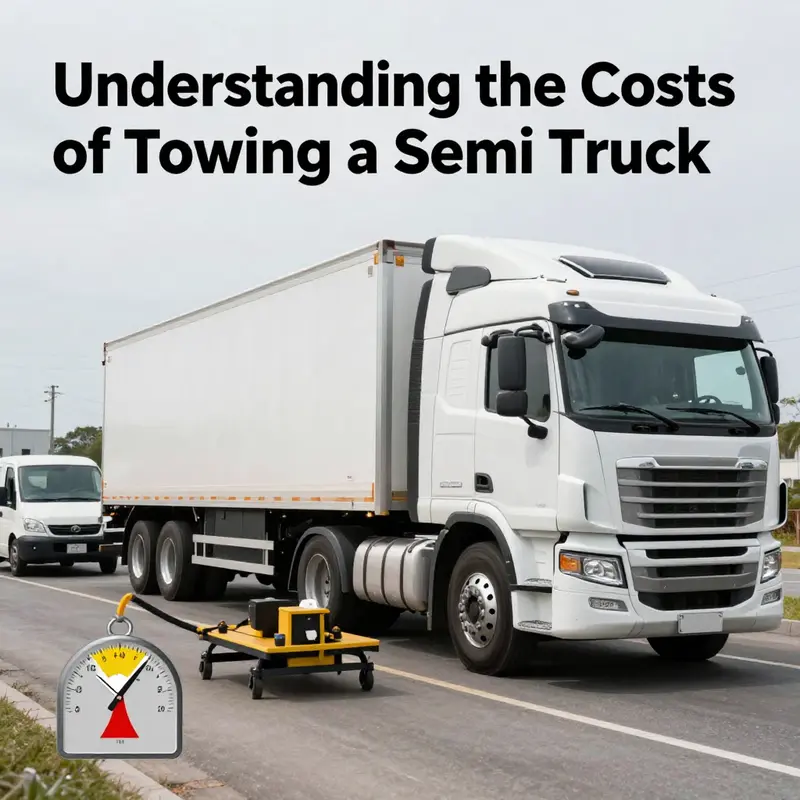
When a semi truck ends up off the road, the act of getting it moving again is about more than just hooking a chain and pulling. Towing a semi is a high-stakes operation that blends heavy equipment, skilled labor, and precise logistics. The price tag attached to that recovery reflects not just the distance between point A and point B, but a careful calculus of weight, configuration, condition, location, and time. In many ways, every factor amplifies or moderates the others, making semi tow costs feel like a moving target rather than a fixed quote. To understand why, it helps to imagine the tow as a coordinated effort involving specialized trucks, multi-person crews, and a fleet of safety measures designed to protect the vehicle and the road users around it. The result is a price that appears to swing with the wind, yet follows a practical logic rooted in the realities of heavy-haul recovery work.
The weight and type of the truck are the first levers in this equation. A standard semi with a typical 18-wheeler configuration is far heavier than any passenger vehicle, and that heft dictates the kind of tow truck required and the level of expertise demanded of the operator. Heavier vehicles are not simply longer; they carry more mass on multiple axles, often with complex drive lines and transmission systems that complicate extraction and securement. A sleeper cab, a day cab, a flatbed configuration, or a specialized heavy-duty trailer can each prompt different mounting, rigging, and winching strategies. The larger the truck and the more complex its bodywork or drivetrain, the more specialized the equipment and personnel must be engaged. In practice this means higher labor hours and costlier gear, as crews may need extra winches, more robust straps, or multiple point tie-downs to distribute the load safely across anchoring points.
The vehicle’s current condition is another decisive factor. If a truck is operational enough to drive, albeit with a breakdown or a minor failure, the tow can often be a simpler, shorter operation. The moment a truck is immobilized by an accident or a rollover, however, the scenario changes dramatically. Recovery from an incident frequently demands additional safety measures, accident scene management, and sometimes the involvement of law enforcement or highway authorities. In these cases, the operator must assess hazards, control traffic, secure the scene, and coordinate with responders, all of which add to the time and risk of the operation. In urgent circumstances, emergency towing services may trigger premium pricing in order to prioritize availability and rapid response. The more embedded the problem—whether fluids, fuel spillage, or the potential for further damage—the more crews, equipment, and procedures come into play, pushing costs higher.
Distance and location sit at the core of pricing, even before the actual lifting begins. Tow rates are commonly anchored by a base charge and a per-mile component, a structure that mirrors the general economics of heavy transport. Distance matters because it translates directly into fuel burn, wear and tear on heavy equipment, and the number of personnel required to safely complete the move. The terrain and landscape between pickup and destination also shape the bill. Rural or remote locations can impose longer drive times and fewer immediate options for staging equipment, which can translate into higher labor overhead. Urban settings, while surrounded by more options, often come with higher access costs, traffic considerations, and the need to coordinate with city authorities or sidewalks, contributing to elevated hourly rates. A tow that stretches across dozens of miles versus a short, local pull can show up in the final invoice as a substantial difference, especially when combined with a base hook-up fee and any call-out charges.
Time of service is not just a matter of convenience; it is a pricing variable. The need for a tow during off-peak hours, late at night, weekends, or holidays can trigger premium rates. Emergency calls that require rapid response and the fastest possible mobilization tend to command higher pricing due to the urgency and the readied posture of the crew. The friction here is straightforward: demand is inversely correlated with the availability of certified heavy-duty operators and the specialized trucks needed to handle semi trailers in a safe, compliant manner. When a truck is stranded on a congested interstate or in a hazardous location, the operator must weigh safety and traffic control against speed, all of which feed into the final cost.
Specialized equipment is the quiet backbone of the semi tow price. Heavy-duty winches, robust recovery gear, and rollback or flatbed tow trucks are not incidental luxuries; they are essential tools for moving a vehicle as large and as vulnerable as a semi. The instrument of the tow—the truck that actually lifts, drags, or rolls the trailer and tractor—must be matched to the weight and configuration of the load. In many cases, securement means more than simply strapping the vehicle down. It can involve multi-angle winching, palletized or dolly-assisted support, and careful positioning to avoid axle or undercarriage damage during loading and unloading. The presence of multiple axles and the possibility of needing to lift from the fifth wheel or from the trailer itself adds layers of complexity, each susceptible to adding hours to the job and inflating the bill. All of this underscores a core truth: the more specialized the rig and the more precise the recovery plan, the higher the price point.
From the perspective of cost estimates, industry logic aligns with a base-driven model augmented by distance-per-mile charges. In many assessments, the base hook-up fee, plus the per-mile rate, provides a transparent floor for the initial quote. The per-mile rates for large commercial vehicles typically sit in a range that, while not universal, is supported by industry resources as commonly starting around three and a half to six dollars per mile for standard services. This band captures the general economics of fuel, equipment depreciation, and crew labor for longer hauls, while still allowing for variations when specialized equipment, heavier weights, or difficult recoveries come into play. It is not unusual for a short, five-mile tow to emerge around a modest figure like seventy-five dollars when the base hook and minimum labor hour are factored in, though real-world quotes can differ based on the exact service configuration and regional pricing norms. A longer, fifty-mile transport may reasonably surpass three hundred dollars, or more, once you include the base charge, the per-mile tally, and any surge or emergency premiums. These numbers, while useful as benchmarks, are best treated as approximate ranges rather than precise quotes, because the specialized, variable nature of heavy-truck towing means every job starts with a tailored assessment.
To appreciate the scale of investment involved, one might consider the broader context of heavy commercial equipment pricing. The market value of a heavy truck—its own asset value, independent of the tow—illustrates why careful handling matters. In industry examples, even new heavy-duty prime movers and towing units carry significant price tags, and mishandling during recovery can lead to costly collateral damage. The research materials reference a heavy-duty prime mover being valued around tens of thousands of dollars in the broader market, underscoring the stakes in a tow operation: improper rigging or rushed maneuvers can compound the financial exposure for all parties involved. While this is not a direct driver of tow cost per se, it helps frame why operators invest in robust training, meticulous planning, and top-tier equipment that collectively push the price into the realm of serious consideration rather than casual expenditure. A concrete illustration from the materials notes a substantial asset price for a large towing vehicle itself, emphasizing that the recovery work protects assets with significant value and warrants the investment in proper gear and expertise.
In light of these dynamics, the practical takeaway for anyone faced with a semi tow is to prepare for a broad but defensible range of charges. The reality is that many reputable tow providers will insist on a written estimate before service begins, detailing the anticipated base fee, per-mile charges, and any expected extras for equipment, labor, or emergency response. Given the variability inherent in weight, type, condition, and location, arriving at a fixed price without a site inspection is unlikely. The safest approach is to seek a provider with proven experience in heavy commercial vehicle recovery, share as much information as possible about the truck’s configuration and current state, and ask for a detailed breakdown of how the final number is assembled. This not only clarifies expectations but also helps prevent unpleasant surprises when the bill arrives. The emphasis on precision is not a pedantry; it is a safeguard for fleets and drivers whose operations hinge on predictable service costs and reliable recoveries under often stressful circumstances.
For those who want a broader frame of reference, industry organizations and official resources provide guidance on pricing expectations for large commercial vehicles. These sources describe per-mile pricing as a prevailing model and highlight the role of base charges and added fees for specialized equipment and labor. While the exact figures can fluctuate by region and service level, the overarching principle remains consistent: heavier, more complex, and emergency scenarios drive higher costs, and the value of the service is closely tied to the safety and reliability of the recovery operation.
In addition to the immediate pricing considerations, there is value in looking at the operational readiness and preparedness around heavy-truck towing. A well-prepared fleet often reduces the time to resolution and can influence the overall cost through smarter, safer, and more efficient recoveries. This is where long-term practices—such as standardized equipment kits, clearly defined emergency response protocols, and ongoing crew training—play a critical role. In fact, a look into the broader literature on heavy-duty rescue operations highlights the importance of standardization and readiness as fundamental components of cost management and service quality. For readers who want to explore how fleets maintain resilience and respond rapidly to incidents, a related discussion on fleet standardization and emergency readiness offers practical insights into the systems that underwrite effective heavy-vehicle recovery. fleet standardization and emergency readiness.
Finally, it is prudent to recognize that the pricing landscape for semi towing is evolving with industry practices and regulatory considerations. The American Trucking Associations, a leading industry body, notes that pricing for large commercial vehicles is influenced by distance and the need for specialized equipment, labor, and safety measures. Their guidance, along with the other research notes, helps fleet managers calibrate expectations and engage with providers who can deliver transparent, safety-focused service even under challenging conditions. For more context on industry standards and pricing expectations, you can consult the ATA’s official resources. External resource: American Trucking Associations. https://www.trucking.org/
In sum, the price of towing a semi truck is a function of weight, type, and condition, amplified by the distance and location of the tow, the time of service, and the need for specialized equipment and skilled technicians. The realistic frame from the research is that you are looking at a range that can start in the low hundreds for a short, straightforward move and rise to well over a thousand dollars for longer, more complex recoveries or emergency responses. The exact figure, however, will always hinge on a precise assessment of the vehicle’s weight class, the configuration of the load, the site conditions, and the expected complexity of the operation. When time is of the essence and safety is non-negotiable, the premium you pay reflects the value of a controlled, professional recovery that protects both the asset and the drivers, and keeps traffic moving with minimum risk. For readers seeking a deeper understanding of how a fleet approaches readiness and response in these high-stakes scenarios, the linked discussion on fleet standardization and emergency readiness provides practical, action-oriented guidance, while the external ATA references anchor the pricing expectations within industry practice.
When Seconds Count: The Real Cost of Emergency Semi-Truck Tows
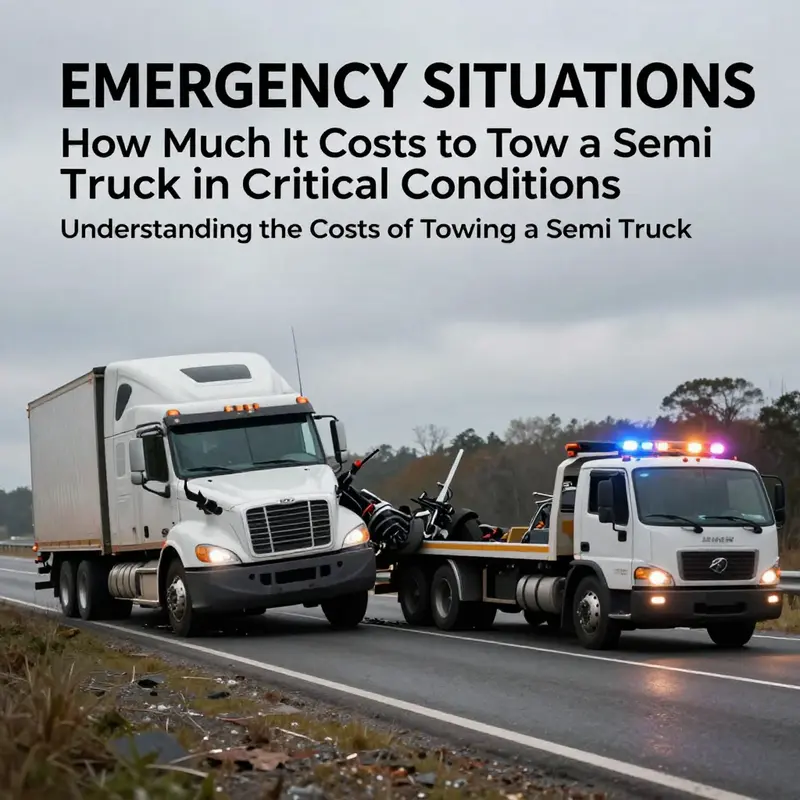
When a semi-truck breaks down or is involved in an accident, the bill for getting it out of harm’s way often puzzles fleet managers and drivers alike. Emergency recovery for large commercial vehicles is not the same as a car tow. The equipment is heavier, the risks are greater, and the clock is ticking. Those differences translate directly into dollars. This chapter explains why emergency tows cost so much, what components appear on an invoice, realistic price ranges, and practical steps to control costs without sacrificing safety.
A few clear realities drive emergency tow prices. First, semi-trucks weigh many tons. Handling that mass safely needs specialized heavy-duty wreckers, dual winch systems, rotating booms, and high-capacity straps and harnesses. Those units are expensive to buy, maintain, and operate. Second, emergency responses demand fast deployment. Tow companies maintain crews and trucks on standby, and when you call for priority service, you pay for that availability and rapid travel time. Third, recovery operations are often complex. A truck into a ditch, rolled, or blocking lanes can require planning, traffic control, environmental protections, and coordination with law enforcement and insurers. Each added complication raises labor hours, equipment wear, and liability exposure, all of which appear on the final bill.
Costs cluster into predictable categories. There is an initial mobilization or hookup fee that reflects the dispatch and arrival of specialized equipment. Labor charges follow and are typically billed by the hour, with rates higher for certified heavy-recovery operators. Then there are mileage or haul charges if the vehicle is moved to a safe location or repair facility. If lane closures, permits, or traffic-control personnel are required, those items add separate fees. Hazard mitigation — such as fuel containment, debris removal, or cleanup following a spill — is another line item. Finally, there are possible storage fees if a vehicle is taken to a secure lot, and administrative charges for coordination with police, insurers, or legal authorities.
To give practical context, industry data from recent recovery operations shows that emergency tows for semi-trucks commonly fall in the range of $1,200 to $3,500. Short, straightforward emergency tows on clear highways may sit at the lower end. More complex recoveries, such as removing a tractor-trailer from an embankment, executing a safe upright rotation after a rollover, or stabilizing loads with hazardous materials, push prices into the mid-range or higher. In extreme situations — big pileups, extensive environmental remediation, or operations requiring multiple heavy wreckers and long hours — costs can exceed $5,000. Those numbers are averages; each incident is unique, and local labor rates, towing company capabilities, and regulations affect the final amount.
Understanding how these figures build helps managers avoid surprises. Mobilization covers the cost to get a heavy unit and trained crew to the scene. A heavy wrecker consumes more fuel and requires more powerful engines, so fuel surcharges and higher mileage rates are common. Winching, stabilization, and load control require extra personnel and time. If a rescue needs lifting equipment such as cranes or multiple wreckers working in tandem, the operation scales up fast. Add to that potential overtime or off-hour premiums. For example, after-hours responses, weekend calls, or holiday operations often include a premium multiplier. Also, responders may require traffic management crews to slow or divert traffic. Municipal permits, police labor reimbursement, and lane closure costs can become substantial on busy interstates.
Regulatory and safety obligations also influence cost. Tow operators who handle heavy vehicles must carry specific insurance levels, certifications, and training. When hazardous materials are involved, federal and state rules may mandate certain containment and disposal procedures. Those regulations protect public safety and the environment but increase recovery complexity and expense. Insurance involvement can either increase speed or slow it. If a carrier or insurer has preapproved recovery vendors, that can accelerate the process and reduce the risk of unexpected charges. Without preapproval, operators may bill at their standard rates, and approval delays can extend on-scene time.
Remote or difficult access magnifies expenses. When a semi leaves the road on a steep embankment, a narrow rural lane, or a construction area, the tow company often needs extra equipment and personnel. They may also need to stage the truck for safe lateral movement. In those scenarios, extra travel for specialized trucks and the time required for careful extraction add hundreds or thousands to the bill. In contrast, a disabled truck in a highway shoulder with no load and no environmental hazards is simpler and cheaper to remove.
There are practical steps fleets and drivers can take to limit emergency towing costs while keeping safety central. Prevention matters: regular maintenance and effective pre-trip inspections reduce the frequency of roadside emergencies. Properly secured loads and correctly inflated tires lower the chance of incidents. Investing in driver training for defensive driving and recovery awareness also reduces risk. For fleets, creating a preplanned emergency protocol pays dividends. Establish relationships and contracts with commercial recovery vendors who specialize in heavy recovery. These contracts typically define rates, service levels, and preferred response windows, which can lower costs and avoid disputes after an emergency. For a deeper look at how fleets prepare for urgent situations, see this guide on fleet emergency response.
When an emergency occurs, good communication can save time and money. Provide accurate information to dispatch: truck weight, load type, location specifics, and whether there are injuries or hazardous materials. If possible, send photos to the recovery provider to speed assessment. Ask for an on-scene estimate before work begins, and clarify which items will be billed separately, such as traffic control or hazmat remediation. If law enforcement or highway agencies are involved, get contact names and report numbers. For incidents covered by insurance, alert the insurer early and confirm whether they require a preferred vendor. Keep in mind that in some jurisdictions, the authority at the scene can direct which tow operator to use. Clarify costs with that operator promptly.
There are also tactical choices to consider. In some cases, moving a partially disabled unit to a safe roadside position for staged recovery later can be less expensive than an immediate complex extraction that blocks traffic. Conversely, leaving a hazardous condition unaddressed may invite fines and higher long-term costs. Weighing safety and cost requires experience, and having trusted vendors onboard contractually helps managers make those trade-offs quickly and with confidence.
Storage and salvage considerations can affect total expense. If a truck is taken to a secured lot, do not assume storage is negligible. Storage accrues daily and varies by facility type. If salvage or extensive repairs are needed, coordinate with insurers and shops early to minimize holding time. In cases where a truck is declared a total loss or requires large repairs, recovery vendors may also bill for light towing, salvage handling, and inventory of cargo — each a separate line on an invoice.
One final factor is reputation and competence. Experienced heavy-recovery operators reduce the chance of secondary damage during extraction. That skill has value. A lower-priced operator who cannot safely remove a truck may cause more damage, increasing repair bills and downtime. For high-value assets, investing in certified heavy-recovery professionals is rarely an area to cut corners.
Emergency towing for semi-trucks is an intersection of technical challenge, safety responsibility, and cost management. Expect to pay significantly more than for passenger-vehicle tows. Expect invoices to include mobilization, labor, mileage, specialized equipment, traffic control, and possible environmental remediation. Plan ahead: preventive maintenance, clear emergency protocols, and vetted vendor agreements help control final costs. When speed and safety matter most, the goal is to move efficiently and deliberately, balancing immediate needs with long-term financial prudence.
For authoritative guidance on towing and recovery standards, consult specialized industry resources that outline best practices and regulatory responsibilities. External information from industry associations can help fleets and operators understand standard fees, required equipment, and compliance obligations: https://www.trucking.org/resources/towing-recovery-services/
Final thoughts
In conclusion, understanding the costs associated with towing a semi truck is essential for drivers, repair shops, and property managers alike. By evaluating the distance, vehicle specifications, and potential emergency situations, you can better anticipate and manage the costs involved in towing services. Being informed empowers you to make calculated decisions to mitigate towing expenses and ensure timely assistance when needed. Always seek multiple quotes and emphasize transparency with your towing service provider for the best experience.