
Tow truck charges can be a source of confusion for many, whether you’re a local driver needing assistance, a property manager dealing with abandoned vehicles, or an auto repair shop looking to partner with a towing service. Understanding the costs associated with towing is crucial to avoid unexpected expenses when you or your clients require help. This article breaks down the components of towing charges, including base rates, per-mile costs, and special charges for emergency situations, guiding you through what to expect. Each section aims to equip you with knowledge, ensuring you are prepared and informed for any towing needs that may arise.
Base Rates Decoded: How the Initial Tow Fee Sets the Stage for Your Tow Truck Bill
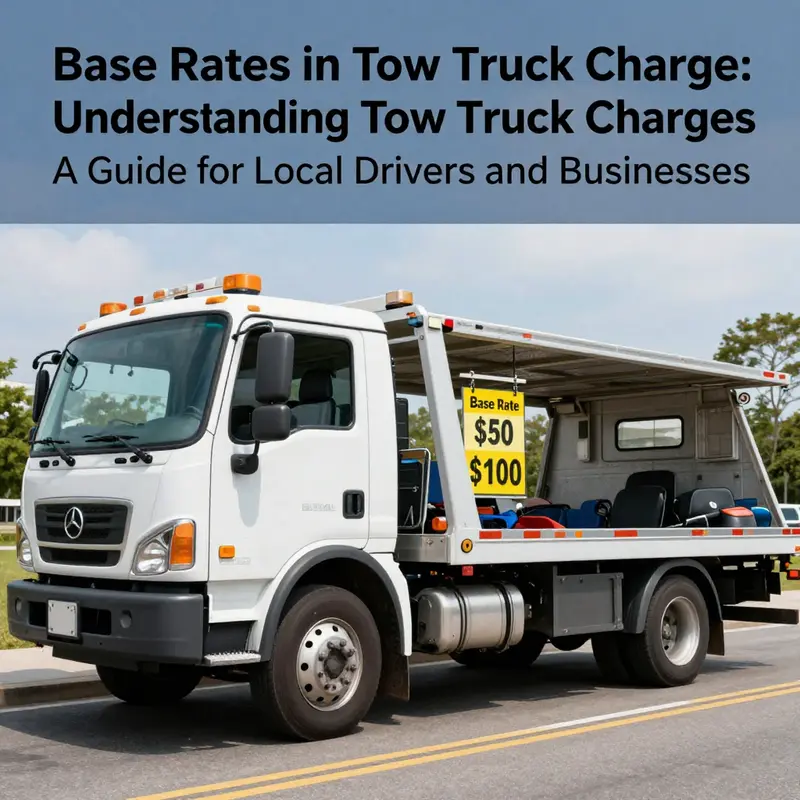
When you call a tow truck after an breakdown, accident, or immobilizing stall, the first number you encounter is the base rate. It is the starting point of the financial conversation, the dispatch fee that unlocks the driver’s arrival, the truck’s mobilization, and the initial labor to connect your vehicle to the service system. Understanding this base rate helps you see how the rest of what you are charged will unfold. It is not a single, simple line item; it is the anchor from which distance charges, equipment needs, and time-based surcharges radiate outward. In practical terms, the base rate is the fee you pay just to get the tow started. Everything else a provider adds—distance, method, timing, and extra services—rides on top of that foundation. This makes the base rate more than a curiosity. It is a critical factor in determining whether a tow feels affordable in the moment or becomes a surprise on your credit card days later.
The base rate exists for good reasons. Dispatch and mobilization require resources: a driver, a truck suited to the job, and the readiness to respond quickly under pressure. Even before any miles are logged, the company has shouldered costs for staffing, equipment, insurance, fuel to reach your location, and risk management. That initial fee covers at least the basic overhead of getting to you and performing the first steps of service. It is the minimum price charged regardless of whether the vehicle is towed across a few blocks or simply pulled onto a tow truck for a short reposition. Because the base rate is designed to cover core operations, it typically does not reflect the more variable elements that will appear in the final invoice. The distinction between the base rate and the total bill is essential for understanding how to read a tow quote and what parts of the price you can compare across providers.
Across the United States, base rates show wide variability. Some companies set a modest dispatch fee near the lower end of the spectrum, while others position a higher anchor to reflect not just labor but a particular service model—such as a more robust 24/7 dispatch capability or a fleet prepared for urgent, specialized calls. It is not unusual to see a base rate in the range of fifty to one hundred dollars, but the actual number you encounter can shift depending on local market conditions, regulatory frameworks, and the competitive landscape in your city or region. The same company may also adjust this fee during peak times or in response to local events that strain resources. In short, the base rate acts like a local economic signal: it tells you something about the standard cost of providing immediate access to a tow service in that specific place and moment.
Because the base rate is a starting point, the rest of the charges are layered on top in predictable patterns. After the base fee, most providers apply a per-mile charge that accounts for the distance the vehicle must travel to and from the scene. That distance-based fee is where geography makes a big difference. In some regions, you might encounter a modest per-mile rate, while in others, the cost per mile climbs higher to reflect labor costs, insurance premiums, and operating expenses in urban centers or long-haul corridors. The math is straightforward in principle: the longer the tow distance, the more the per-mile cost accrues, and the higher the total price will be. This is why a short tow across town can be substantially cheaper than a tow that spans several cities or crosses state lines.
The method of towing also interacts with the base rate in meaningful ways. Flatbed tow trucks, which lift the entire vehicle onto a rigid bed, tend to carry higher equipment and labor costs than wheel-lift or sling-to-tow methods, where the vehicle is supported on the wheels or lifted in a more targeted way. The choice of method can be influenced by the vehicle’s condition, the terrain, or safety considerations at the scene. For example, a landscape with a damaged undercarriage, a high-profile vehicle, or a car that requires careful handling can necessitate a flatbed. In such scenarios, the base rate may be unaffected, but the equipment fees and related surcharges tied to the chosen method contribute to the final bill. The practical takeaway is not to assume the cheapest base rate will always result in the lowest overall price. The way your car is loaded and transported matters as much as the distance traveled and the time spent.
Speaking of time, the clock is a quiet but influential player in the pricing equation. Towing services that occur during holidays, late at night, or during emergencies can carry higher rates. These time-of-service surcharges recognize the premium paid to staff after regular hours, to maintain readiness, and to address demand surges when road conditions are hazardous or traffic incidents are concentrated. Even when the base rate remains stable, a call in the middle of a snowstorm or during a major traffic disruption can push the total upward through additional labor costs, equipment readiness, or the need for expedited handling. The dynamic of time-based pricing means that the same tow, performed under different circumstances, can produce notably different final totals. For drivers, this is a reminder that context matters as much as the nominal number printed on the bill.
To bring a bit more clarity to the way the base rate fits into the total, imagine a tow as a three-act process: dispatch, distance, and service. The dispatch act is the base rate—how much the company charges to send the team and mobilize the equipment. The distance act is the per-mile charge, which scales with how far the tow must go. The service act comprises the type of tow, the time of service, and any extra work performed at the scene. In real life, these acts blend, sometimes with overlapping charges, sometimes with one component dominating due to unusual circumstances. The result is a bill that can look straightforward at first glance but reveals nuance upon closer inspection. The best guidance when faced with a quote is simple: ask for a line-item breakdown. A reputable provider will be able to separate the base rate from per-mile fees, time surcharges, and any additional equipment or labor charges. This level of transparency lets you compare apples to apples when you are weighing options, and it helps you avoid sticker shock when the final number arrives.
What should you do before you commit to a tow service, especially when you are dealing with a base rate that could vary by region and provider? The first step is to request a direct quote. A direct quote reduces uncertainty and gives you a snapshot of what to expect. If the dispatcher or the on-site team can provide an itemized estimate, you can see exactly where the base rate starts and how each subsequent cost adds up. In some cases, the driver may need to assess the scene to determine the most appropriate method and to verify any additional charges tied to the vehicle’s condition or to the route itself. In that moment, you are not merely paying for a ride; you are paying for the expertise and equipment that ensure your car is handled safely and efficiently. If the price seems high, ask about alternatives. For instance, if the distance is manageable and the vehicle is in a condition that permits a wheel-lift tow, you may reduce the overall cost by choosing a method that requires fewer resources. If a minute becomes crucial for you due to time constraints, explain that to the dispatcher; legitimate providers will aim to balance urgency with cost, explaining how the base rate and the following charges will apply under the emergency scenario.
There is also value in staying informed about broader guidelines that shape pricing across the industry. Industry associations and consumer guides often publish general frameworks that help the public understand typical pricing structures, including base rates, per-mile charges, and the ways in which time-of-service surcharges are calculated. These guides can be a helpful baseline when comparing quotes from multiple providers, especially in unfamiliar markets where local norms may not be widely understood. For readers who want to dive deeper into the pricing architecture, an accessible reference is the American Automobile Association’s towing costs guide, which offers a detailed look at how pricing structures are organized and what consumers can reasonably expect in different circumstances. More information is available at the AAA Towing Costs Guide. AAA Towing Costs Guide.
The practical takeaway from all this is that the base rate is more than a starting number. It is a window into the provider’s operational footprint and the local market conditions. If you are planning trips or simply preparing for a roadside emergency, a little foresight can save you both time and money. Store a few notes in your phone: the typical base rate in your area, whether the provider offers a flatbed option, and what time-of-service charges to expect. When a tow becomes necessary, you can transmit this knowledge into a concise set of questions for the dispatcher: What exactly is the base rate, and what additional charges should I anticipate? Is the distance being calculated from the point of dispatch to the pickup and then to the destination, or is there a single distance metric that includes the return trip? Will the vehicle load require any specialized equipment, and how will that affect the overall price? Are there any surcharges for after-hours service or holidays? By asking these questions, you place yourself in a position to make informed decisions rather than reacting to a single number on a screen.
For readers who want to explore practical perspectives through a community lens, many local operators publish blogs and guidance that illuminate how pricing works in real life. These resources can be a helpful complement to formal guides, offering anecdotes about how base rates have evolved in response to changing fuel costs, labor markets, and regulations. In particular, the local context matters: a coastal city with high demand for rapid response might exhibit different pricing dynamics than a rural area with fewer calls but higher travel distances. The most effective approach is to engage with a few reputable operators in your area, requesting quotes for typical scenarios rather than for extraordinary outliers. This practice yields a more reliable sense of what is reasonable in your neighborhood and what constitutes fair value for the service you require. You can also consult a trusted industry blog for credible insights that reflect current conditions and practical considerations. For a perspective anchored in a regional context, see the Santamaria Tow Truck blog, which frequently discusses how to approach pricing, quotes, and service expectations in everyday roadside emergencies. Santamaria Tow Truck Blog.
In summary, the base rate is the essential entry point to understanding tow bill dynamics. It signals the minimum obligation to mobilize, regardless of how far the vehicle travels or what method is used. The final invoice, by contrast, is the sum of multiple components layered on top of that anchor: distance, towing method, time-of-service adjustments, and any supplementary services. A clear, itemized quote is your best ally. It clarifies how much you pay for dispatch and mobilization, how much you pay per mile, and how much the provider charges for the particular approach needed to recover your vehicle safely. When you know these elements, you are better prepared to compare quotes across providers, negotiate where appropriate, and make informed decisions during a stressful moment. If you want to expand your understanding beyond the immediate experience, the broader industry guides and local operator insights can deepen your comprehension of why base rates differ and how they fit into the overall pricing ecosystem that governs tow truck services in your area.
External resources can illuminate the larger picture as well. For a broader industry perspective, see AAA’s towing costs guide, which outlines standard pricing structures and what customers can expect in different scenarios. This external reference complements the practical, local considerations discussed above and provides a framework for interpreting the base rate in the context of the wider market. https://www.aaa.com/autocare/towing-costs
Tow by the Mile: Demystifying Per-Mile Costs and What Shapes Your Tow Truck Bill
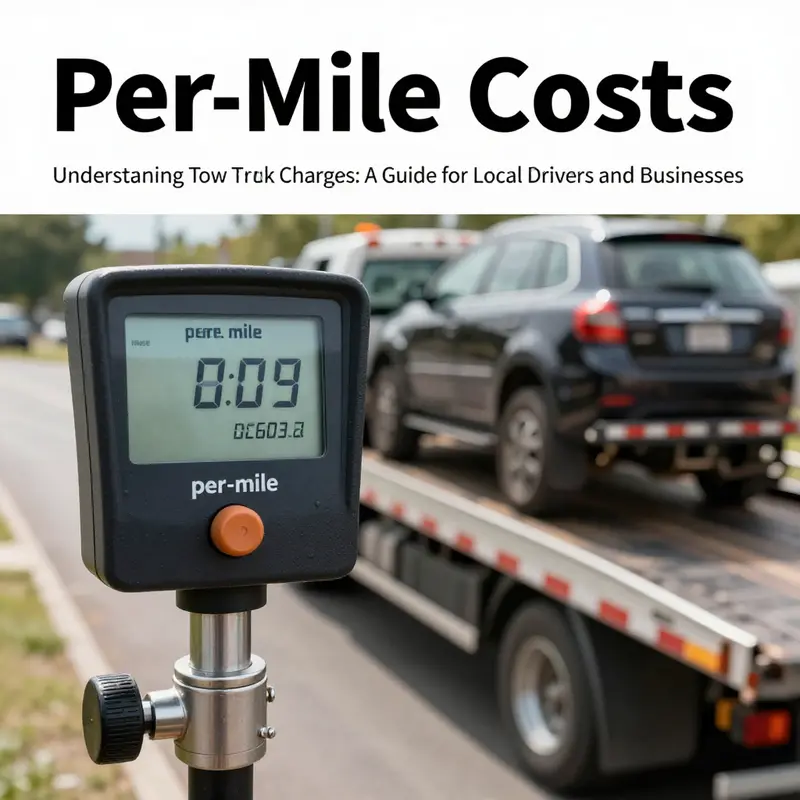
When you need a tow, the first question on many lips is often a plain one: how much is this going to cost? The mechanics of tow pricing can feel opaque, but at its core the expense is driven by a straightforward idea: distance matters. The base charge you pay to dispatch a tow truck is the entry fee into the service, while every mile you travel with the vehicle adds to the cost. In practice, this means your final bill is a careful balance between a fixed starting point and a variable rate tied to distance, with several other factors nudging the total up or down. Understanding how per-mile costs work—and what can push those per-mile rates higher or lower—can turn a mystery into a predictable number, or at least a number you can anticipate with reasonable confidence before the truck arrives on your scene.
Most towing outfits start with a base or dispatch fee. This is the price you pay just for having the tow truck sent to your location, and it can range broadly—from roughly fifty dollars to a hundred dollars or more, depending on local market dynamics, time of day, and the company’s pricing philosophy. Once the truck is dispatched, the real arithmetic begins: distance multiplied by a rate per mile. That per-mile rate is where the cost of the tow truly scales. In many places you’ll see a rate in the neighborhood of one to three dollars per mile, but it can be higher in certain regions or for special circumstances. The practical upshot is simple: a longer tow costs more, while a shorter tow costs less, but the base dispatch fee still plays a crucial role in the bottom line.
A useful way to think about it is to picture a two-part equation. The first part is a fixed hurdle—the base dispatch fee that covers coming out to your location, loading the vehicle, and starting the service. The second part is variable—the distance you must travel with the vehicle, multiplied by the per-mile rate. This mirrors how other services price work: you pay for the start of the service and then for the ongoing resource use, which in towing is the distance the tow truck must cover to reach a destination and complete the tow. If you’re curious about how this translates into real-world numbers, an illustrative calculation helps. Consider a scenario where a car is towed 12 miles to a repair shop at a rate of $3.50 per mile. The arithmetic is straightforward: Total Cost = Distance × Rate per Mile, so 12 miles × $3.50 per mile equals $42.00. This example reflects standard arithmetic reasoning often presented in practice contexts and is a helpful mental model for what pricing can look like under a pure per-mile framework. It’s important to note, though, that many real-world quotes include the base dispatch fee as well, which means the final bill may resemble the sum of the base fee plus the distance-charge portion. In other words, while the per-mile calculation provides a clean baseline, the actual ticket you receive will typically be the base dispatch fee plus distance charges, with any surcharges tacked on as applicable.
The per-mile portion of the bill, however, is not merely a single number set in stone. Location is a primary driver. Urban and suburban regions with higher costs of living and greater labor costs tend to command higher mileage rates than rural areas. Additionally, regional competition, fuel prices, and the operational costs of running a towing fleet influence the per-mile price. If you’re in a market where towing crews work long shifts, overnight hours, or weekends when demand spikes, you can expect an elevated per-mile rate or a separate emergency surcharge. Time of service matters because the labor and equipment costs are higher during off-peak hours or holidays, and some companies add a night-rate premium or emergency fee to cover these added costs.
The method used to tow also affects the cost you’ll pay for each mile. A flatbed tow, which transfers the entire vehicle onto a platform for transport, is commonly more expensive than a wheel-lift tow, where two wheels are lifted off the ground. The higher price tag for flatbed towing reflects the equipment, handling, and protective measures required to load and secure a vehicle in full, especially when dealing with longer tow distances or vehicles with transmission or alignment concerns that require extra care. Even within flatbed or wheel-lift categories, you may encounter variations in per-mile rates depending on the truck’s weight class and the vehicle’s size and condition. Heavier or larger vehicles can push you into higher tiers of pricing, because they require more fuel, more labor, and sometimes specialized equipment.
Beyond distance and method, other line items can creep into the per-mile narrative. The weight of the vehicle and the feasible route to the destination influence how the tow is performed and billed. A heavier vehicle may require additional equipment, more careful securing, or even an extra crew member, and those factors can subtly nudge the per-mile charge upward. The complexity of the pick-up location also matters. A tow from a remote location, a gated lot, or a site with difficult access can impose additional maneuvering time, which might show up as a higher per-mile rate or as a separate access fee. Some operators itemize fuel surcharges or environmental disposal fees if the vehicle is damaged in the incident, while others factor these costs into the base or per-mile rate. All of these potential line items can complicate a straightforward distance-based calculation, which is why getting a detailed estimate that breaks out each component is valuable.
The fact that pricing structures vary by region and company means that a single number can’t capture the reality of every tow. For example, if you’re researching prices before you ever need a tow, you might notice that the same 12-mile tow could be priced around $42 in one market under a $3.50 per-mile rate, while the same distance in another market could be closer to $60 or more when a higher base fee, a higher per-mile rate, or a combination of surcharges are factored in. This is not a sign of deception; it reflects the economics of running towing services. Vehicles, maintenance, insurance, licensing, and the costs associated with rapid availability all feed into the numbers you see on a quote. In practice, the most reliable approach is to request quotes from local providers and ask for a clear breakdown. A written estimate that lists the dispatch fee, the per-mile rate, any mileage caps, and any surcharges will help you compare apples to apples and avoid sticker shock when the tow arrives.
To get a clearer picture of how per-mile costs play out in real life, it helps to consider the broader pricing ecosystem. Some providers quote a single all-in price that includes dispatch and travel, while others publish a base fee plus a standard per-mile rate. In either case, the distance remains a central driver. The longer the tow, the more miles accrue, and the more you should expect the charge to ascend. Short tows, particularly those that stay within a few miles of the origin, can look deceptively affordable because the base fee makes up a larger share of the total. In contrast, long-distance tows across cities or even states reveal the rhythm of per-mile pricing in a more pronounced way, with distance multiplied by the rate and then plus any fixed costs. The arithmetic is the same regardless of location, but the numbers you plug in change from place to place, which is why you’ll often hear callers asked where they’re located or where the vehicle is headed.
For a deeper sense of how per-mile costs relate to vehicle type and circumstances, imagine the tow not as a single trip but as a sequence of micro-operations. The driver arrives, assesses access, secures the vehicle, loads it onto the trailer, travels the route, and then secures it at the destination. Each of these steps consumes time and resources, and some are more resource-intensive than others depending on the vehicle’s weight, the road you’re on, and the distance covered. The per-mile rate is partly a reflection of the resource use per mile, including the fuel burn, tire wear, and labor costs associated with operating the tow truck over longer distances. When a road segment involves steep grades, heavy traffic, or challenging terrain, the actual cost per mile can creep upward because the crew spends more time, conserves less fuel, or requires additional safety considerations. In contrast, a smooth, clear highway route with minimal traffic may yield a more favorable per-mile cost, even if the distance is longer.
The practical upshot for readers who want to budget for a tow is to recognize that a clean, predictable number is unlikely in many cases. There are legitimate, orderly ways to approach the problem. Start with the base dispatch fee, then add the distance-based charges, and finally account for any ancillary fees. When you prepare for the possibility of a tow, you can ask questions that illuminate what you’ll pay: Is there a separate emergency or after-hours surcharge? Does the quote include all fees, or are there potential add-ons for fuel, stair- or gate-access, or extra manpower? Are there discounts for membership, insurance, or roadside assistance programs? You’ll often discover that the practical price you pay is the base plus distance, plus a handful of standard and situational charges, with the exact mix determined by the factors described above.
To bridge the theory with the lived experience of drivers, consider this note about the estimation process itself. The per-mile calculation relies on a straightforward multiplication, a notion familiar to students and professionals alike. The simplicity of Distance × Rate per Mile can obscure the real-world nuances that a dispatch center must juggle when preparing a quote. While a one-line calculation might capture the mileage portion, the actual invoice frequently contains multiple moving parts: base dispatch, mileage, service call time, the type of tow equipment used, vehicle weight, distance to the destination, and sometimes extra for special handling or the vehicle’s condition. If you feel blindsided by a bill, ask for the itemized invoice. A transparent breakdown can reveal how much of the total came from the miles driven and how much came from the fixed start-up costs and any additional fees. It also allows you to compare quotes more accurately, avoiding confusion borne of a blended, all-in number that masks the separate contributors.
A pragmatic route to better pricing awareness is to engage with local providers before you need service. That isn’t about inviting a tow right away; it’s about gathering information that can prevent sticker shock when an emergency occurs. You can ask about typical base fees in your area, standard per-mile rates for common tow distances, and the likelihood of extra charges for current conditions—like if you’re in a high-traffic corridor or if the tow would require a flatbed due to the vehicle’s condition. The goal is to enter a stressful moment with a clearer picture of the pricing framework, so you’re not surprised by a hike that feels disproportionate to the distance traveled. If you want to explore more discussions on related topics before you face a tow, you can visit the Santa Maria Tow Truck Blog for additional context and practical guidance on services and readiness.
As you interpret the numbers, remember that any single scenario can tilt one way or another based on the chain of decisions a tow operator must make from dispatch to delivery. A short, inexpensive distance can still be costly if the base fee is high or if the operator applies a stringent access or after-hours surcharge. Conversely, a longer tow might come out more affordable if it benefits from a favorable base structure or a lower per-mile rate in the region. The variability is real, but the framework is monotonous enough to give you a reliable mental model: base fee plus miles times the per-mile rate, plus any localized surcharges or service-specific charges. The more you understand each component, the more capable you’ll be of anticipating what the final invoice will look like and, occasionally, negotiating a fairer price in situations where you have time to discuss options with the dispatcher.
For those who want to see how this information translates into everyday decision-making, consider how the knowledge of per-mile costs can inform questions you ask when a tow is needed. You might ask not only for the price but also for a rough estimate of the total range, given your current location and likely destination. If possible, request an estimate that separates the base fee from the mileage charges and any potential surcharges. When time permits, you can compare a few local quotes to gauge what is typical for your area. If you’re dealing with a roadside incident during a storm or a holiday weekend, you might also ask about the expected wait time and whether there is a cap on certain fees in emergencies. These questions do not just protect you financially; they also encourage a higher level of transparency in the interaction, which benefits both you and the service provider.
Ultimately, the per-mile cost is one piece of a larger pricing puzzle, but it’s a piece that carries a great deal of weight. Distance is the most directly billable resource in tow work, and as such the rate per mile deserves careful attention in any discussion about cost. When you factor in the base dispatch fee and any additional charges, you obtain a more complete view of what your tow will cost. The essential takeaway is straightforward: plan for both the fixed start and the variable travel, and go into a tow situation with a clear expectation of how those components interact. As you prepare, you’ll be better equipped to navigate the service landscape, compare quotes with confidence, and locate a balance between prompt assistance and prudent spending.
For continued reading about related topics and practical guidance, you can explore the Santa Maria Tow Truck Blog. This resource offers additional insights into readiness, regulations, and best practices in the towing field. External resources also provide broader context on industry pricing structures and standards, such as those offered by professional associations dedicated to towing safety, training, and regulation. To further inform your understanding of industry pricing structures and regulations, see https://www.nationaltowing.org/.
What Really Drives Tow Truck Prices: The Hidden Factors Behind the Bill
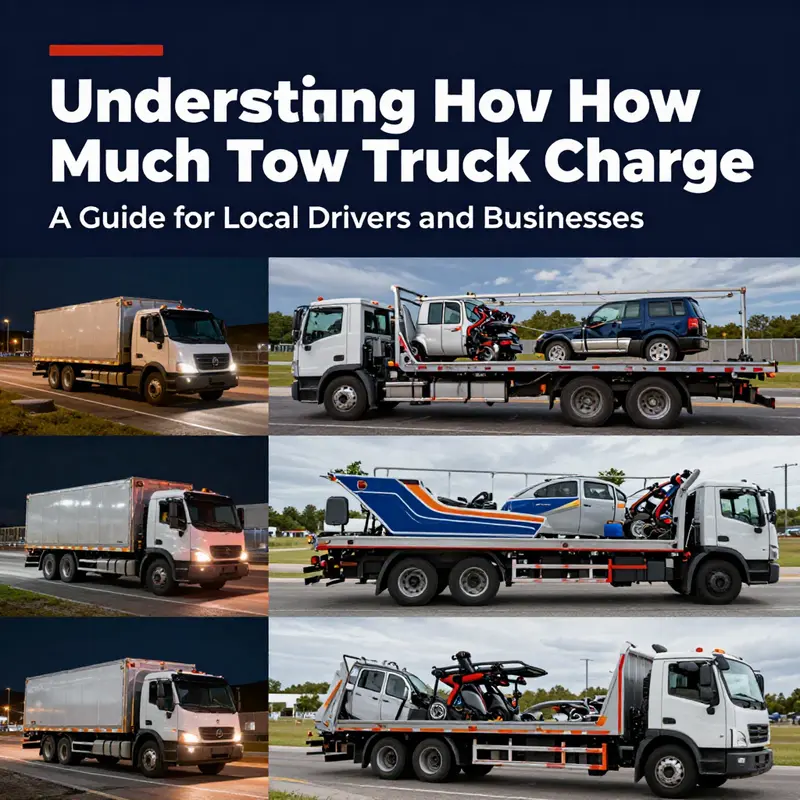
Understanding the true cost of a tow starts with the right questions. A simple figure on a receipt rarely tells the whole story. Tow charges are built from several moving parts: a base fee to send the truck, a per-mile rate for the journey, surcharges for time and location, and special handling for difficult or heavy vehicles. Each element can shift the final amount significantly. Reading the breakdown helps you predict costs and avoid surprises.
Most towing companies start with a base rate, often called a “hook” or dispatch fee. This covers the truck, driver, and minimum labor. Depending on where you are, that number may look like a modest sum or a hefty chunk. Urban areas tend to show higher base fees because operating costs are higher. Rural operators may charge less for dispatch, but add a larger per-mile fee to make long runs feasible.
After the base fee, mileage is the clearest cost driver. Towing firms commonly include a number of miles in the hook charge. Beyond that, every mile or kilometer is billed. Per-mile rates vary widely. In some regions, you might pay a dollar or two per mile. In others, especially when specialized equipment is needed, you could see rates of five to twenty dollars per kilometer. The math is simple: a long tow will quickly eclipse any base fee.
Vehicle type matters more than many expect. Small sedans and compact SUVs are the easiest and cheapest to haul. They fit on standard flatbeds and require minimal manpower. Larger vehicles take more time and may need heavier rigs. Vans, full-size pickups, and commercial trucks often demand specialized tow trucks or extra hands. When a vehicle is modified—lowered suspension, oversized tires, or heavy aftermarket parts—the tow becomes more complex. Luxury and specialty cars frequently require flatbeds or lift-and-load methods to prevent damage. Those options cost more in both equipment and labor.
Time of service is another predictable surcharge. Nighttime, weekends, and holidays are pricier. Companies often add 30% to 50% for off-hour calls. The premium compensates for staffing levels and the difficulty of scheduling crews outside normal business hours. An emergency call at two in the morning can carry a significant markup compared to the same service during the afternoon.
Location and road conditions reshape the cost beyond simple distance. Pulling a vehicle from a downtown alley with limited space takes more skill and time than towing from a parking lot. Mountain roads, narrow residential streets, and congested highways raise risk and labor needs. Remote locations add an “out-of-area” or access fee, reflecting the extra time the crew spends getting to you. If the tow truck must navigate rough terrain or unstable ground, expect special handling charges. Those fees reflect increased wear on equipment and a higher duty of care for the operator.
Company policies and reputation influence pricing too. Larger firms with modern fleets and advanced dispatch systems may cost more, but they offer consistency and often faster arrival times. Smaller local operators might undercut big names on price. Yet, lower cost can mean variable reliability or slower response. If you belong to an auto club or have towing benefits in an insurance policy, your out-of-pocket cost may be lower. These agreements usually cover a set number of miles or provide capped rates for specific towing scenarios.
Then there are the less obvious fees. An “excess distance” or empty run fee pays for the time and fuel used to reach your location. If a tow truck has to travel a long distance without a load to reach you, that cost can be passed on. Special handling fees apply when a vehicle is stuck, flipped, or heavily damaged. Recovering a car from a ditch or removing a stalled truck from a highway often requires winches, dollies, or even cranes. Each piece of equipment adds to the bill.
Hazardous materials and emergency premiums are other possible line items. Vehicles carrying batteries, fuel containers, or industrial goods can require special handling and permits. Companies may add a hazardous material fee, often a percentage of the total, to cover legal and safety requirements. High-priority requests, where you need immediate response, can carry an emergency surcharge as well. These fees signal the extra risk and priority the operator must assume.
Understanding common fee categories helps you negotiate or plan ahead. Ask the dispatcher about the base hook charge, how many miles are included, and the per-mile rate beyond that. Inquire whether night, holiday, or remote-area surcharges apply. Confirm if they will need a flatbed, special rig, or extra crew based on your vehicle. Request an estimated total before they start the tow. A clear quote reduces the chance of surprises on arrival.
There are practical ways to manage costs. If the vehicle can be driven safely, towing can be avoided entirely. For short distances, consider asking a local repair shop if they can send a mobile technician. Some garages will perform small repairs on-site, saving the cost of a tow. Memberships with roadside assistance programs usually cover short tows or provide lower rates through negotiated contracts. Check policy limits and allowed distances before you need the service. If a tow is unavoidable, consider calling several providers for quotes. While time-sensitive emergencies limit shopping around, many situations allow you to compare prices.
Safety and legality should guide your decision more than price alone. Some operators use aggressive practices or inflate fees when they see an opportunity. Learn to spot questionable behavior, such as a tow truck arriving without written authorization or a driver pressuring you to sign unclear documents. Local resources can help you identify illegal towing or predatory operators. For a quick guide on what to watch for, see this resource on spotting illegal towing: Spot illegal towing: key signs to know. That page outlines common red flags and steps to take if you suspect wrongdoing.
Insurance and credit-card protections matter too. Many policies cover towing to the nearest repair facility or within a set mileage. Know your coverage details. If your insurance pays for towing, the provider often has preferred vendors or direct-billing arrangements. That reduces out-of-pocket spending. Some credit cards include roadside assistance or reimbursement for towing. Check terms and keep contact numbers handy.
Real-world cost examples bring these pieces together. A short, local tow in an urban center might show a $75 to $150 base fee, plus $2 to $4 per mile for a five-mile haul. That can add up to $100 to $200 total. A longer intercity tow may carry a high base hook, followed by steep per-mile charges; totals in the hundreds or even a few thousand dollars are possible for cross-state hauls. Heavy-duty tows for commercial trucks usually start much higher due to specialized rigs and permits. Recoveries that need cranes or lengthy labor can become expensive quickly.
When the bill arrives, ask for a written itemization. A legitimate company will list the hook charge, mileage, and any surcharges. Check for unnecessary items or duplicate fees. If you disagree, ask to speak to a manager or your insurance adjuster. Keep records: take photos of the vehicle and its location, and note driver details and truck numbers. These can help dispute incorrect charges.
Ultimately, tow truck pricing reflects equipment, labor, distance, timing, and risk. The best approach is informed action. Ask targeted questions when you call for help. Know your insurance and membership benefits. Compare quotes when possible. And remain alert for signs of predatory towing. With that mindset, you can reduce costs and secure safe, professional service.
For a comprehensive breakdown of national averages and more detailed examples, consult this external guide on tow truck cost estimates: https://www.thebalance.com/tow-truck-cost-4783968
Price, Pace, and Distance: Decoding Emergency versus Regular Tow Truck Charges
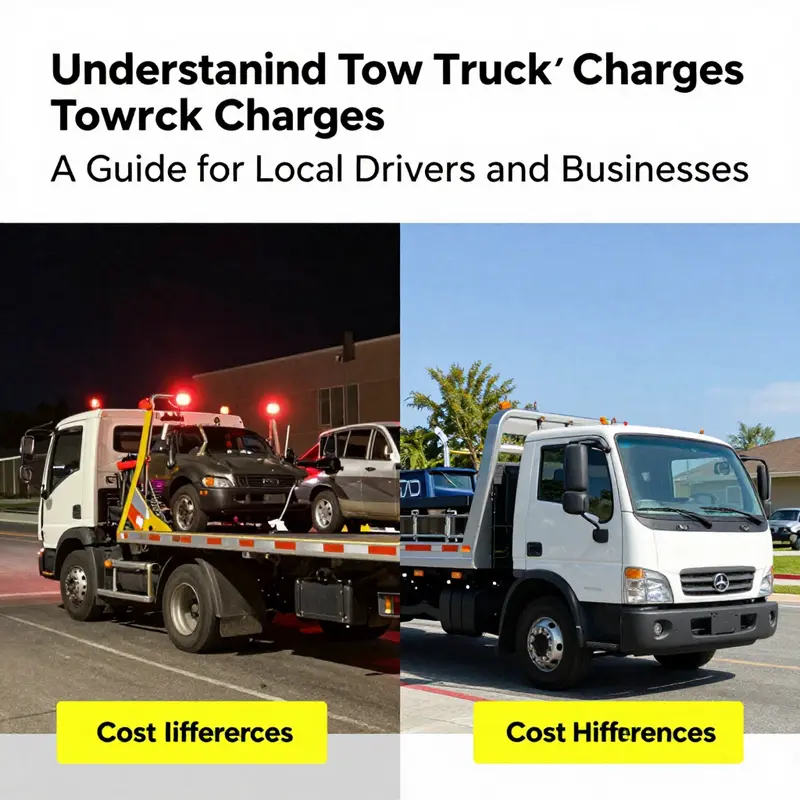
When a vehicle breaks down or is involved in a mishap, the question that weighs on many minds is not merely “Will they tow it?” but “How much will it cost, and does the hour matter?” The short answer is yes—time, distance, and the urgency of the situation all shape the final bill. Tow services sit at the crossroads between a basic logistics operation and a high-stakes service that can determine when a car reaches a shop, when a driver reaches safety, and how quickly a job returns to normal traffic patterns. In practice, the charges you see for emergency towing versus regular towing come from a blend of simple arithmetic and hard-to-quantify factors like response time, fleet readiness, and the kinds of equipment needed to move a particular vehicle. This is why a blanket figure rarely does justice to what a tow will cost. Instead, understanding the framework behind these numbers can help you parse the quotes you receive and make more informed decisions when you’re stranded on the side of a road or at a busy intersection late at night.
The most fundamental elements of any tow charge begin with a base dispatch fee and a per-mile rate. Across many markets, you’ll typically see a base fee in the vicinity of fifty to a hundred dollars just to dispatch the truck and get a crew on the way. After that, the price usually steps up according to distance: a per-mile rate commonly ranging from one to three dollars or more, depending on the region, the size of the tow, and whether the vehicle must be moved a few miles or across a city or state line. For short tows, these base and mileage components can be straightforward and transparent. For longer or more complex jobs, the math becomes more involved because the cost structure must account for fuel, wear and tear, potential traffic delays, and the availability of the driver.
When we move from the ordinary to the urgent, the pricing logic shifts in meaningful ways. Emergency towing is not merely a faster version of regular service; it is a service that must be available around the clock, with crews ready to deploy immediately, often under demanding conditions. The rapid response that characterizes emergency calls translates into higher base costs, premium labor, and the possibility of additional charges tied to the risk and difficulty of the job. In practical terms, you will usually see emergency charges that go well beyond the standard base dispatch and per-mile rates, reflecting the heightened operational costs of 24/7 availability, quick arrival on scene, and the potential presence of hazardous conditions or complex extraction maneuvers.
To appreciate why emergency charges can feel so steep, consider the equipment and staffing required to handle a true emergency. A standard tow truck that can lift and move a car in a routine scenario sits on a small but capable fleet under most providers. Emergency operations, by contrast, often involve specialized vehicles and tools designed for rapid deployment in any weather, time of day, or location. They may include heavy-duty winches, multi-function carriers, and platforms capable of loading a disabled vehicle without causing further damage. The investment in such equipment is substantial, and market analyses have reflected this reality. As of early January 2026, some estimates indicate a market price range for multifunction emergency-service tow trucks that runs from roughly $13,000 to $38,000. This figure points to the capital expenditure required for fleets to deliver fast, capable, high-resilience service. It is important to distinguish that this is equipment cost and not a single consumer invoice. Still, it helps explain why emergency dispatches are priced higher and why providers use terms like “rapid response” and “priority service” when describing emergency tow options. In addition to equipment, emergency work often entails higher labor costs, because responders may be working overnight, on holidays, or in remote locations where travel time and safety protocols add to the bill.
Despite these broad contrasts, the everyday consumer still faces a fundamental question: what is the practical price range for a tow on an ordinary, non-emergency basis? Regular towing tends to be less dramatic in its pricing structure, and the industry often treats it as a transportation service similar to moving a vehicle from one parking spot to another or delivering it to a shop. In those scenarios, the overall bill commonly reflects distance traveled, the vehicle type, and the service area. A practical, widely cited range for regular towing is somewhere between fifty dollars and four hundred dollars. That spread captures the reality that some tows are small, involve a limited distance, and require little specialized equipment, while others may traverse longer distances, involve heavier vehicles, or cross into new jurisdictions with differing regulatory or licensing requirements. It is worth noting that several factors can push the cost up or down within this range. Narrowly, these include the vehicle’s weight, the mounting method used by the tow (flatbed versus wheel-lift, for instance), any on-site preparation needed to prevent damage during loading, and whether the tow involves a shop-to-shop transfer or a direct-to-repair facility. In contrast to emergency work, regular towing usually does not involve dispatch fees that are layered on top of the base rate; the emphasis is more on the distance and the specific setup that the job requires. This distinction matters because it often means that a regular tow, bathed in predictable parameters, provides a more straightforward quote that is easier to compare across providers.
The actual difference in consumer experience between emergency and regular towing is not solely about price. For many drivers, the psychological impact of an emergency—feeling stranded, exposed to the weather, or navigating unfamiliar streets at night—amplifies concerns about cost. The fear of receiving a bill that seems inflated can be real, even when the numbers are within the normal operating range for urgent service. In this context, the value proposition of emergency tow services hinges on two elements: speed and reliability. A batch of scenarios can unfold where a fast arrival prevents further damage to a disabled vehicle or reduces the risk to a driver at the roadside. The cost, then, becomes a premium for safety, minimized risk, and reduced downtime, rather than a simple line-item for a service that could otherwise wait for daytime hours.
The decision-making process following initial charges also matters. Many drivers benefit from asking clear, specific questions when they call for a tow. Is there an emergency dispatch fee, and if so, is it separate from the mileage charge? Do the quoted rates assume a certain loading method, such as a flatbed or a wheel-lift, and how would changing the method affect the total? Are there surcharges for after-hours service, holidays, or remote geographic locations? A straightforward, itemized quote helps, as does requesting an on-scene estimate where possible. In situations where a quick assessment is not feasible, asking for a written, up-front estimate can prevent sticker shock once the vehicle is loaded and the driver presents the final bill. It also clarifies whether the tally includes ancillary charges such as fuel surcharges, service area fees, or after-hours labor, which can accumulate quickly in emergency situations.
The practical reality of pricing also interacts with the type of tow being performed. A flatbed tow, which drags a vehicle entirely on a truck platform, offers protection from road hazards and is often the preferred method for vehicles with sensitive drivetrains or in poor cosmetic condition. The upside is greater safety and reduced risk of tire or undercarriage damage during loading, which makes flatbed tows more expensive than wheel-lift or tow-dolly methods. The trade-off is that the longer loading cycle and larger equipment footprint can raise both the base and mileage charges, especially in emergency scenarios where access is constrained or the vehicle has to be pinned in from a difficult location. Conversely, wheel-lift tows are typically less expensive and faster for straightforward moves, but they may not be suitable for all vehicles, particularly if the car has leaking fluids or if the wheels cannot be lifted without damage. For the consumer, recognizing that the method chosen by the technician can influence the total bill is essential, especially when negotiating or comparing quotes from different providers.
Beyond the vehicle and the method, the environment in which a tow occurs can dramatically alter cost. Nighttime operations, weekend calls, and holidays are higher risk for crews. The added hazard of darkness, fewer nearby service options, and traffic conditions unique to those hours introduces a premium that often finds its way into the final invoice. In remote areas, the challenge compounds: longer travel distances, fewer nearby roadhands, and possibly higher fuel costs due to detours can all drive the total upward. These surcharges reflect the real-world expenses that a provider shoulders to ensure the service remains available when most people need it most. The charges are not arbitrary; they are calibrated against the principle of supply and demand and the practical reality that slow or blocked roads can intensify the complexity of a tow.
In this landscape of price points and service levels, how should a consumer approach the process of obtaining a tow? The key lies in transparency and a willingness to compare. Start by asking the dispatcher for a written estimate that separates the base dispatch fee, the per-mile charges, the load method, and any potential surcharges. If you have time, reach out to a couple of local providers to compare quotes. The goal is not to hire the cheapest option, but the most reliable one that offers clear communication and a realistic plan for getting you back on the road safely. It’s worth noting that some travelers benefit from roadside assistance plans or insurance coverage that can negotiate or cap certain charges. Memberships or contracts with roadside providers can, in some cases, reduce the stress of price negotiations by locking in pre-determined rates or by including emergency dispatch fees as part of a broader service package.
For readers seeking more localized context and practical guidance anchored in a regional perspective, the Santa Maria Tow Truck blog offers a repository of posts that reflect the nuances of pricing, response times, and service standards in the area. A quick visit to that resource can help you understand how dispatch norms and local regulations shape the numbers you see on your bill. https://santamariatowtruck.com/blog/. This chapter’s core aim, however, is to equip you with a framework for thinking about emergency versus regular tow charges, not to replace the value of local knowledge.
As you navigate a tow situation, it’s also useful to keep in mind the broader ecosystem that supports emergency and regular towing. Operators often coordinate with fleets of emergency responders, repair facilities, and insurance networks to streamline the process. In some regions, standardized readiness programs and emergency-response protocols are designed to reduce response times and improve safety outcomes, which can indirectly affect costs by enabling more efficient on-scene actions. For instance, fleets that maintain a fleet-wide standardization in emergency readiness may offer more predictable response patterns, quicker triage, and better on-site decision-making. These factors, while not always visible on a single bill, contribute to the overall value that a reputable provider delivers when time is of the essence.
When you combine the base dispatch and mileage framework with the realities of emergency readiness, the picture becomes complex but navigable. The numbers on your bill are rarely a single fixed sum; they are a constellation of base charges, distance-based costs, equipment choices, and situational premiums that align with the needs of the moment. A well-informed consumer can move through the process with greater confidence, asking targeted questions, seeking itemized estimates, and recognizing the trade-offs between speed, safety, and cost. In the end, the goal is to reach a resolution that prioritizes safety and timely vehicle recovery without letting fear of the unknown overshadow the practical steps necessary to get you back on your way.
External resource: To broaden understanding of equipment scale and the kind of specialized tools that underpin emergency towing, see this external resource on emergency service equipment: https://www.alibaba.com/product-detail/Emergency-Service-Multifunction-Street-Slide-up_1600789469573.html.
Final thoughts
Understanding the various elements that contribute to tow truck charges is vital for both drivers and businesses alike. By being informed about base rates, per-mile pricing, and other influencing factors, you can better prepare for potential emergency situations or routine vehicle transport needs. This knowledge will not only help you manage costs effectively but also facilitate better communication with towing service providers, ensuring a smoother experience in times of distress. Remember, the more informed you are, the less stressful vehicle breakdowns will become.