
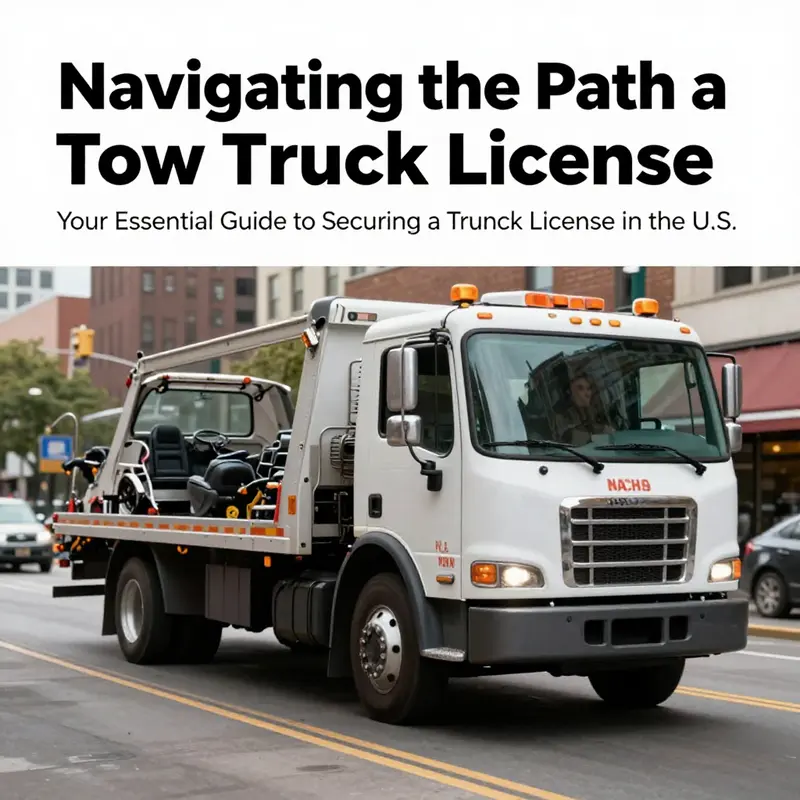
Obtaining a tow truck license is a vital step for aspiring operators and business owners in the towing industry. The process merges legal compliance, practical skills, and knowledge that ensures safe and efficient vehicle recovery and transport. For local drivers, auto repair shops, property managers, and dealership coordinators, understanding this process is crucial. Each chapter of this guide will empower you with the necessary steps—starting from acquiring the right driver’s license, passing crucial CDL tests, obtaining certifications, and ensuring that your operations comply with insurance and safety regulations. By the end of this guide, you’ll have a clear roadmap to navigate your journey to become a licensed tow truck operator.
Wheels, Permits, and the Path: A Comprehensive Look at Western Australia’s Tow Truck Licensing Journey
Becoming a licensed tow truck operator in Western Australia is a structured process that integrates personal qualifications, vehicle safety, and business responsibilities. The journey starts with the driver: you must be at least 18 and hold a current driver’s license appropriate for the vehicle class. A clean driving record is expected and supports safety and public trust.
Next, safety screenings: background checks and drug/alcohol screening are common, reflecting the safety-sensitive nature of tow work. WA emphasizes demonstrated commitment to safety through training and licensing, rather than relying on a single endorsement.
Vehicle inspection is mandatory before licensing. Tow trucks are inspected at the Kelmscott Vehicle Inspection Centre unless exempt or in a remote area. Book in advance; fees apply. The inspection covers structural integrity, winch equipment, lighting, emergency systems, and other roadworthy features.
If the vehicle passes, you receive a Certificate of Inspection. Then you complete the Application to License a Vehicle (Form VL17) and submit it with the certificate, proof of identity, and other documents at a Transport WA service centre. Identity verification is crucial; primary and secondary IDs are required. If you are applying for your first WA vehicle license and do not hold a WA driver’s license, Form VL186 may be required for Proof of Identity/Nominated Owner.
For those who intend to operate a tow truck business, the Registered Tow Truck Operator (RTTO) status applies. This involves a business application, a bond (e.g., $5,000) and proof of liability insurance (minimum $100,000). These safeguards protect the public and ensure financial accountability.
Ongoing compliance means regular vehicle inspections, safety standards, and appropriate insurance coverage. Licences, permits, and RTTO status require renewals, with up-to-date documentation and evidence of ongoing training. The exact cadence varies by license type and circumstance.
The practical takeaway is that licensing is a holistic program: personal qualifications, vehicle inspection, licensing documentation, identity verification, business registration, and financial safeguards all contribute to safe, reliable towing services. Staying informed through official Transport WA resources ensures you have the latest requirements and procedures.
For readers seeking practical guidance, consult the official Transport WA licensing pages for current steps, fees, exemptions, and how to book inspections. A balanced approach—backed by VL17, VL186, and RTTO requirements—provides a clear blueprint for licensing a tow truck in WA and offers context for similar processes elsewhere.
Mastering the CDL Tests: Essential Steps to Earn Your Tow Truck License
Preparing for the CDL tests is the core step toward a tow truck license. The process checks your legal eligibility, driving knowledge, and hands-on skills. It also verifies your fitness and safety habits. Understanding what each exam covers and how state rules layer on top will shorten your path to licensure. This chapter walks through every requirement you will meet on the road to a tow truck endorsement, explains the practical skills you must demonstrate, and gives clear strategies to pass each test with confidence.
Most candidates begin by confirming basic eligibility. You typically need a valid non-commercial driver’s license, a clean driving record, and the minimum age set by your state. For interstate operations, federal rules require you be at least 21. Some states allow 18-year-olds to drive only within state lines. Before you spend time preparing, verify whether your intended work will cross state lines. That single distinction determines whether you need the federal-level credentials right away.
Next, get familiar with the types of commercial driver’s licenses and what they cover. Class B CDLs usually permit operation of single vehicles with a gross vehicle weight rating (GVWR) over 26,000 pounds. Class A covers combinations of vehicles. Your tow rig’s weight and configuration determine which class you must obtain. Many light wrecker platforms can be driven with a Class B, but heavier wreckers and recovery rigs may push you into Class A territory. Check your vehicle’s GVWR and configuration before applying for a permit.
The first formal step in most states is obtaining a Commercial Learner’s Permit, or CLP. To get a CLP you must pass a written knowledge test. The test covers general commercial driving rules and modules related to the vehicle class and endorsements you will pursue. For towing, look for state-specific endorsements labeled for towing or vehicle recovery. Some states issue a separate endorsement, while others combine the skills under other categories. If your state offers a tow-specific endorsement, study the operator manual sections on towing dynamics, load securement, and recovery protocols.
One requirement often missed in casual descriptions is the DOT medical exam. A certified medical examiner must perform it. You must meet federal medical standards to receive a Medical Examiner’s Certificate. Conditions such as uncontrolled diabetes or certain heart conditions may limit your ability to qualify. Carry the certificate with your CLP and later your CDL. Employers and enforcement officers will check this document. Periodic re-certification is required while you hold a commercial credential.
Background checks and drug screening are standard. Expect to submit to a criminal background check and a criminal records review in some states. More universally, a pre-employment drug and alcohol test is mandatory. Federally regulated drivers must participate in a Department of Transportation drug testing program. Synthetic urine kits and other shortcuts are illegal and will disqualify you. A clean result and proper chain-of-custody documentation are essential.
The written knowledge test demands steady preparation. Break study into focused sessions. Learn the general knowledge rules first. Master the air brake system if your tow truck has air brakes. If an endorsement covers vehicle securement, invest time in tie-down patterns, load distribution, and anchor point inspection. Many DMVs publish a commercial driver manual. Read it thoroughly and take practice tests often. Local community colleges and trade schools sometimes offer CDL test prep classes. These courses compress the material and provide hands-on experience with mock inspections.
When you pass the knowledge exam and secure your CLP, schedule the skills test. The skills evaluation has three parts. First, you perform a pre-trip inspection. This is not a casual walk-around. You must identify brake system components, lights, steering, suspension parts, and securement gear. Explain what you check and why. Clear, calm narration during the inspection shows the examiner you can identify hazards.
Second comes the basic vehicle control skills phase. You will demonstrate your ability to back up, make precise turns, and maneuver within confined spaces. Practice backing with mirrors only, using reference points on the cab and trailer, if applicable. Tow trucks require special spatial awareness. Recovery rigs often have extended wheelbases and rear overhang. Practice staging, aligning, and approaching a simulated disabled vehicle. A steady clutch, smooth brake application, and measured acceleration protect both the rig and the load.
The third phase is the on-road test. Expect to be evaluated on lane control, speed management, signaling, navigation of intersections, and safe merging. You will also be observed for risk assessment skills, such as gap selection and defensive positioning. If your operation will involve heavy loading and winching, examiners may watch how you approach loading zones and negotiate entrances with obstacles. Defensive driving and situational awareness are scored highly.
Tow truck endorsements or special certifications vary by state. Some states add a dedicated tow operator endorsement on the CDL. Others require a separate local operator permit. Where a tow-specific test exists, it focuses on securement methods, winch operations, and accident scene safety. You may be asked how to set up traffic control, deploy stabilizing equipment, and select proper recovery angles. Practice these skills in real settings when possible, and carry proof of any training into the test.
Third-party testing is becoming common. Some states allow licensed third-party testers to administer the skills test. Locations, rules, and fees may differ from state-run testing centers. Check whether your state uses third-party testers and whether they require appointments. When booking, specify the vehicle type and endorsement you are testing for. Bring vehicle registration, proof of insurance, your CLP, medical certificate, and any state-required documentation.
Testing environments vary. Expect busy urban routes and quiet rural roads, depending on the center. Ask the testing center about typical routes so you can practice similar conditions. If you will face heavy-traffic lanes or steep grades, practice those specific scenarios. Familiarity breeds calmness, and calmness reduces avoidable mistakes.
Fees and retest policies differ by state. Budget for application fees, testing fees, and possible retest costs. If you fail the knowledge test, most states allow immediate retakes after a waiting period. Skills test retakes may require a full new appointment. Use failures as targeted feedback. Most examiners give a debrief that pinpoints weak areas. Focus practice on those skills before rescheduling.
Passing the CDL tests does not end your obligations. Many states require continuing education or re-certification. Your CDL, endorsements, and medical certificate all have expiration cycles. Renew on time. Some renewals require updated knowledge or refresher training. If you plan to operate as a business or a Registered Tow Truck Operator, additional local filings, bonds, and higher insurance minimums apply. For example, some localities ask for bonds and proof of significant liability coverage before granting business permits.
On the practical side, compile a test-day checklist. Carry personal identification, your current non-commercial license, CLP, medical certificate, vehicle registration, insurance card, proof of training certificates, and any required bonding proof if testing for a business-oriented permit. Confirm the tow truck you will use meets inspection standards. Tires, lights, brakes, and securement devices must be functional. Bring basic recovery equipment and show the examiner how each item is used.
Use realistic practice scenarios. Simulate call-outs and scene management. Practice establishing a safety perimeter, placing traffic cones, and positioning your rig to protect workers. Many examiners observe how you communicate with hypothetical victims or co-workers. Strong radio etiquette and clear verbal commands count in your favor.
After you pass, you will receive your endorsement or CDL classification. Keep a digital and a paper copy of your credentials. Employers will request copies, and law enforcement may ask for them during routine stops. If you operate across state lines, remain aware of differing local ordinances and additional permits required by municipalities. Some cities require tow operators to be registered locally and carry specific signage on their vehicles.
Finally, maintain your standing. Stay current with drug testing programs, medical exams, and record-keeping. A clean driving record and ongoing safety training protect your license. Join industry training programs when available. Specialists in heavy recovery and fleet safety offer courses in winching, heavy-lift rigging, and post-accident procedures. These courses reduce risk and prepare you for complex recoveries.
For more practical guidance on recognizing improper towing practices and protecting your business reputation, consult resources like “Spot Illegal Towing: Key Signs to Know” which outlines on-scene best practices and red flags to avoid. For state-specific details and exam schedules, the comprehensive guide linked below provides up-to-date steps and planning tools to pass the tests and launch your tow truck career.
External resource: A Complete Guide To Becoming a Tow Truck Driver by Indeed — https://www.indeed.com/career-advice/finding-a-job/become-tow-truck-driver
Riding the Road to Certification: A Cohesive Path to Licensing a Tow Truck Operator
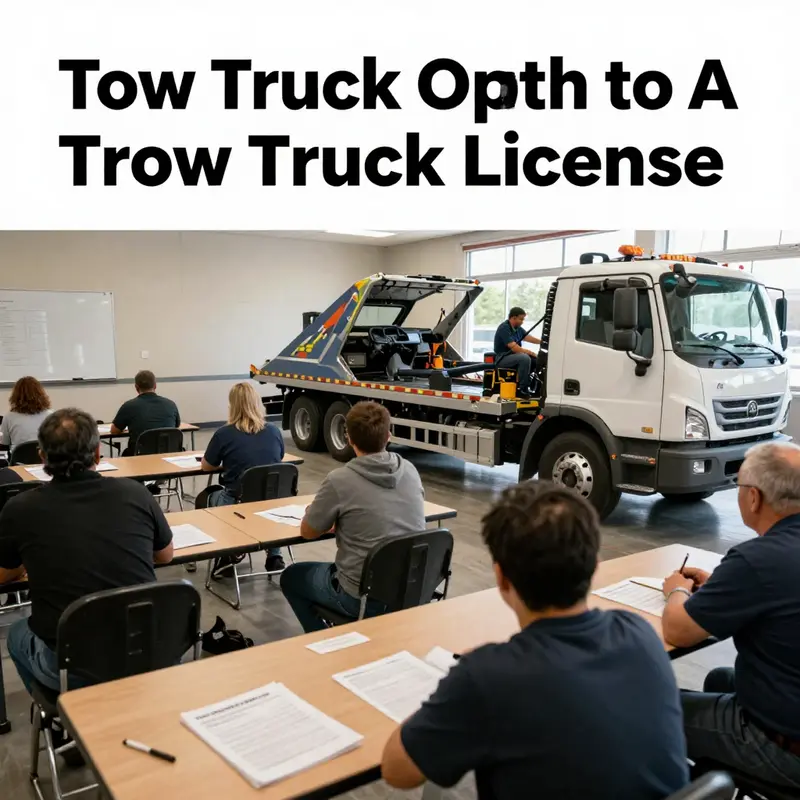
The journey to becoming a licensed tow truck operator is less about a single test and more about assembling a framework of credentials, registrations, and responsibilities that together define professional readiness. It begins with the core requirement that governs who may operate the heaviest, most capable roadside machines, and it extends through the business and regulatory layers that keep those machines safe, insured, and accountable on every pull, tow, or recovery. For anyone who intends to turn a practical skill into a legitimate, lawful enterprise, the path is clear but the details are exacting. It requires understanding not only what to do to obtain a license but why each step exists, how it protects the public, and how it aligns with the broader standards that govern heavy-duty vehicle operation in the United States.
First, the CDL acts as the gateway. Federal and state rules are explicit: if a vehicle carries a gross vehicle weight rating above 26,000 pounds, no operator may legally drive it without a commercial driver’s license. Tow trucks most often fall into this weight class, though the specific class or combination of endorsements can vary by vehicle type and state. The practical implication is straightforward: you need a CDL to pilot the rigs commonly used for towing, recovery, and roadside assistance. This requirement is not merely a bureaucratic hurdle; it signals a baseline of knowledge and skill that is recognized across the country. The process typically starts with selecting the right CDL category, understanding whether a Class B or a Class A license is appropriate, and identifying any endorsements that may apply to towing. The “T” endorsement, when available, acknowledges additional proficiency in towing operations, while other endorsements—such as “P” for passenger services in some contexts—may be relevant if you intend to work with specific types of vehicles or fleets. The exact endorsements you’ll need depend on state laws and the configuration of your tow truck, so the first practical step is to consult your state’s DMV or transportation department’s official materials and confirm the precise requirements for your intended vehicle.
Once the decision about the right CDL is made, the road through testing begins. Most states require a two-part licensing process: a knowledge test and a practical skills test. The knowledge test covers general driving rules, traffic laws, and specifics about operating larger commercial vehicles. It is designed to ensure you understand not only how to drive safely but also how to operate a heavy vehicle in a way that minimizes risk to others on the road and on the scene of a tow or recovery. In some cases, states add endorsements that test particular knowledge areas tied to towing procedures, load securement, and hazardous conditions. The knowledge test is the gatekeeper; you cannot attempt the skills test without passing it. The skills test then takes you through a structured assessment that mirrors real-world demands: a thorough pre-trip inspection, basic control maneuvers, and an on-road driving segment. The pre-trip inspection is not a formality but a diagnostic routine that verifies your ability to identify potential issues before they become safety hazards. For a tow truck, that inspection expands to checking winches, lighting, braking systems, tie-downs, and any recovery equipment you will rely on during operations. The on-road portion evaluates your ability to apply safe driving practices under conditions you will encounter in the field, from shifting traffic patterns to the sudden demands of a roadside incident. A successful outcome signals that you can operate a large vehicle with the judgment and precision required to protect drivers, pedestrians, and property—and to perform towing work with care and competence.
Even as you advance through the CDL process, some states require additional tow-specific certifications or endorsements that go beyond the standard CDL package. These programs, when they exist, focus on specialized areas such as accident scene management, vehicle recovery techniques, and safety protocols tailored to towing operations. They recognize that the tow operator occupies a unique niche at the intersection of heavy vehicle operation and dynamic, potentially hazardous roadside scenarios. If your state requires such certifications, plan them into your training timeline and budget, since they may involve formal courses, practical demonstrations, and sometimes state-level examinations. The key here is to verify your exact state requirements early and build a training plan that satisfies both current regulations and any anticipated changes in policy.
Beyond licensing, the professional pathway often extends to business formation and regulatory compliance that enable you to operate commercially. If you intend to run a tow truck business rather than simply drive a tow vehicle as an employee, you will need to register your business with the appropriate state and local authorities. This typically means forming a legal entity such as an LLC or corporation, obtaining a business license, and meeting tax registration requirements, including an employer identification number if you plan to hire staff. While this is a separate track from obtaining a CDL, it is inseparable from the ability to offer towing services legally and responsibly. The business registration process creates a formal framework for finances, insurance, and contractual relationships with customers, so it is essential to initiate this step early in your planning and to maintain compliance through regular renewals and filings.
In many jurisdictions, a commercial vehicle permit or a similar credential issued by the state department of transportation or its equivalent is the next necessary layer. The application for this permit typically demands proof of insurance, vehicle registration, and evidence that your fleet meets safety standards. Some states also require a dedicated “tow truck operator permit” or a similar credential that explicitly recognizes the operator’s role and responsibilities. The DOT environment emphasizes safety and accountability, and the permit process is designed to ensure that operators not only possess the technical ability to operate a tow truck but also demonstrate a commitment to compliance in the broader sense of how they conduct business, manage risk, and protect the public on the roads and at recovery scenes.
Vehicle standards, too, sit at the heart of licensure. The Federal Motor Carrier Safety Administration sets baseline requirements for safety equipment and inspections in the realm of commercial towing operations. Your tow truck must be equipped with appropriate lighting, emergency braking systems, winches, and the secure tie-down mechanisms necessary to transport and secure vehicles without causing further damage or creating hazards. Regular inspections are not a one-off ritual but a recurring discipline that underpins ongoing eligibility to operate. The physical integrity of the tow truck translates directly into safety for you, your crew, your customers, and bystanders who may find themselves near an incident site. When you consider the long arc of a tow operation—from a roadside pull to a long-distance transport—the importance of maintaining rigorous safety standards becomes evident not only in compliance audits but in the quiet confidence it affords a driver who knows the vehicle is reliable and capable under pressure.
Insurance represents the financial backbone that makes professional towing possible. The typical expectation is commercial auto insurance that explicitly covers towing activities, with liability coverage that often begins at levels around one million dollars per incident, though specific minimums vary by state and the scope of operations. The insurance requirement is not merely a policy detail; it reflects the potential exposure inherent in towing work, where vehicles, roadside environments, and unforgiving weather or traffic conditions converge to create risks that can be costly and, at times, catastrophic. Procuring appropriate coverage protects you, your customers, and any drivers or passengers who might be affected by a tow, and it reinforces the financial accountability demanded by regulators and clients alike. It is wise to coordinate with an insurance provider who understands the towing niche, ensuring the policy aligns with both your current operations and your anticipated growth, including fleet expansions and any out-of-state or cross-border work.
As with any regulated vocation, licensing and certification are living processes. Licenses and permits require regular renewals, and continuing education or training often accompanies these renewals. The renewal cycle reinforces ongoing competency, updates operators on new safety techniques, and keeps pace with evolving regulatory requirements. A diligent operator plans ahead for renewals, keeping track of required documentation, training hours, and fee schedules. In some places, a lapse in license or permit status can shutter a business or interrupt an operator’s ability to work. The practical takeaway is clear: treat renewals not as a financial or administrative burden but as an annual or periodic checkpoint that confirms you remain capable, compliant, and aligned with best practices in the field.
The licensing journey is inherently state-centered, but the logic spans a broader landscape. Regulations differ from one state to another, and a change in jurisdiction can introduce new rules for certification, endorsements, or operating authority. This variability is not a barrier so much as a reminder to stay informed and proactive. The most reliable way to navigate these nuances is to consult official resources directly. State DMV or DOT websites, updated handbooks, and official contact points provide the authoritative guidance needed to tailor a plan that fits your state’s exact requirements. Keeping a close watch on regulatory updates helps preempt gaps between where you are and where you need to be to maintain compliance and eligibility. The best practice is to approach licensing as an ongoing professional development process rather than a one-time milestone.
For readers seeking a practical, experience-based sense of the industry landscape, a closer look at the kind of real-world considerations that accompany licensure can be enlightening. Think through the reasons behind each requirement: the CDL’s weight-based thresholds reflect the increased braking, steering, and maneuvering demands of heavy vehicles; the pre-trip inspection cultivates a habit of daily vigilance; and the insurance and permit layers create accountability for the economic and safety risks associated with towing. These elements collectively shape not just what you must do to obtain a license, but how you will perform as a professional who can be trusted on a busy highway, at an accident scene, or in the quiet hours of a late-night roadside call. The chapter’s throughline, then, is a philosophy of readiness: licensing is the outward sign of a disciplined, safety-first practice that permeates every tow, every scene, and every collaboration with customers, insurers, and authorities.
To connect the practical with the ongoing, consider the resource ecosystem that supports licensure and professional growth. Local associations, training programs, and state guidance sites offer pathways to deeper expertise, hands-on practice, and updated standards. A well-prepared operator builds a personal library of reference materials, checklists, and continuing education opportunities. The lifecycle of a tow truck license mirrors the lifecycle of a responsible operator—one that continuously evolves with technology, regulatory changes, and the shifting demands of the roadside environment. In this sense, becoming licensed is not just about earning permission to drive a big truck; it is about joining a professional community that upholds safety, accountability, and service as its core commitments.
For those seeking practical, curated guidance as they begin or advance this journey, the following directions provide a reliable starting point. First, review your state’s official DMV or transportation department guidelines to confirm the precise CDL classes, endorsements, and testing requirements that apply to towing operations. Then, map out a training timeline that accommodates both knowledge tests and hands-on skills assessments, along with any tow-specific certifications your state may require. Planning ahead for the business side—registration, insurance, and permits—will prevent bottlenecks later, ensuring you can transition smoothly from licensing to operation when your new credentials are in hand. Throughout this process, maintain a focus on safety, accountability, and continuous improvement, because these values are the foundation of professional credibility in the towing industry.
As you progress, you may find it valuable to engage with industry resources and communities that share tips, updates, and best practices. For readers who want to explore more about the everyday realities, challenges, and professional standards of tow operations, the Santa Maria Tow Truck Blog offers a window into practical considerations, field experience, and operational perspectives that complement formal licensing steps. Santa Maria Tow Truck Blog provides context that can help you translate regulatory requirements into real-world habits, from equipment readiness to on-scene safety practices. While the blog itself is not a substitute for official regulatory guidance, it can illuminate how the concepts you’re studying play out in the field and can reinforce the importance of preparedness at every stage of your career.
Finally, to broaden your understanding beyond the licensing process and into broader career guidance, you can consult external resources that discuss pathways into tow-truck work, practical tips for testing, and professional expectations in the field. For a comprehensive overview of how to become a tow truck driver, see the article on Indeed, which outlines career considerations, preparation steps, and practical insights that complement the state-specific licensing process. External resource: How to become a tow truck driver — https://www.indeed.com/career-advice/finding-a-job/how-to-become-a-tow-truck-driver
Insuring Compliance: The Legal Backbone of Earning and Maintaining a Tow Truck License
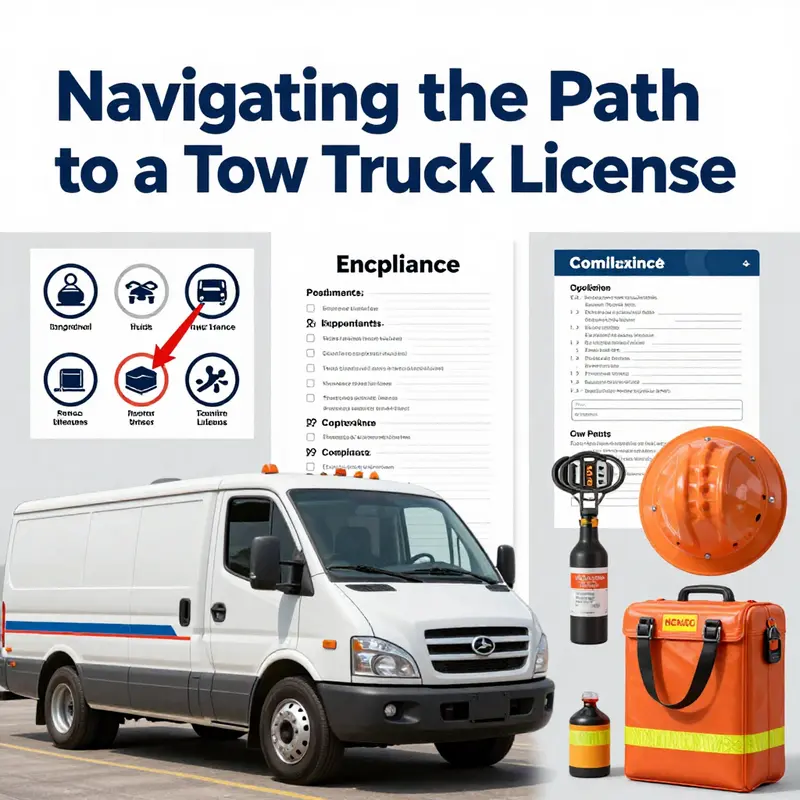
Securing a tow truck license is not simply a test of driving skill. It is a pledge to operate within a framework of insurance, liability, and systematized safety that protects the public, your clients, and your business. Insurance and compliance are the quiet armature that holds up every other step in the process. Without them, even a technically qualified operator may find the road blocked by fines, suspensions, or civil action. The path to a legitimate tow operation begins with a clear understanding that coverage is not a one-time gateway but a continual practice. The certificate of liability insurance you obtain is more than a document; it is a formal statement that you have the financial backing to address the consequences of accidents, damaged property, or injuries that might occur during roadside work, vehicle recovery, or the secure transfer of a vehicle from a street curb to a shop or impound lot. It is the kind of assurance clients look for when they decide whom to trust with their tow needs, especially during emergencies when nerves are frayed and the clock is running. In many jurisdictions, this assurance is neither optional nor vague. It is an explicit prerequisite for licensing and operation. The certificate itself must come from a licensed insurer, and the coverage details must reflect the reality of your towing activities. The certificate is typically issued within a recent window—often the last 30 days—so that the state can verify that you carry current protection. This requirement is not merely ceremonial. It ensures that if a tow operation results in a claim, there is an insurer on the line who can respond. The practical implication is straightforward: you should coordinate your licensing timeline with your insurance carrier so that there is no gap between the submission of your license application and the availability of the COI when requested by the regulatory body. This is one of the reasons many applicants begin by engaging a broker or an understanding insurer early in the process. They want to map out the exact coverage they will need, align premium payments with the license calendar, and keep the paperwork up to date across renewals and any changes in the fleet. The mechanics of coverage are essential, but the meaning behind them runs deeper than a stack of forms. Insurance is a living instrument that adapts to the scope of your operations. If you start with a single light-duty recovery vehicle and gradually add heavier equipment, your liability exposure shifts as the vehicle weight, the loads carried, and the number of personnel on the scene increase. The risk calculus changes, and so should the policy limits and the types of protection you carry. This is why many jurisdictions specify a minimum baseline of liability coverage, with typical figures hovering around the one million dollar mark per incident. That baseline is not a guarantee of immunity from lawsuits or claims; it is a floor that sets expectations for both you and the people who hire you. It is also a signal to lenders, clients, and regulators that your business has the financial wherewithal to meet obligations arising from towing activities. Beyond the baseline, you may be asked to consider ancillary forms of protection. Physical damage insurance protects the tow truck itself from collision, theft, or vandalism. Cargo insurance covers the recovered vehicle while in transit, an especially important consideration when transporting a car, truck, or motorcycle from a collision site to a body shop or storage facility. Hired auto liability insurance becomes relevant when you rely on independent drivers or external contractors to assist with peaks in demand or long-haul tows. Each of these layers adds cost, but they also add resilience. The question is not whether you can afford the insurance, but whether you can afford not to have it. The consequences of being underinsured or noncompliant can be rapid and severe. Governments impose fines, suspensions, or revocation of licenses for lapses in coverage, and civil actions can arise from incidents that might otherwise be mitigated by a robust insurance program. The enforcement landscape varies widely by city, county, and state. Some locales, such as large metropolitan areas, impose additional municipal requirements that intersect with state insurance rules. For example, in certain jurisdictions a tow operator must also hold a local business certificate or permit, in addition to meeting insurance and safety standards. This layered regulatory reality reinforces a simple truth: the journey to a tow truck license is better viewed as a continuous program of risk management rather than a one-time checklist. The additional protection offered by insurance dovetails with broader compliance obligations that help keep the fleet on the right side of the law. In practice, this means more than the COI. It means building a documentation trail—policy declarations, amendments, endorsements, and the latest certificates—in a way that makes it easy for regulators and clients to verify your status at a glance. It means maintaining evidence of safety training, routine vehicle inspections, and driver qualifications. It means keeping a log of incidents and their outcomes, along with steps taken to prevent recurrence. All these pieces reinforce the perception that you are serious about safety, not merely trying to comply to the bare minimum. The insurance conversation naturally extends to the kinds of coverage you should consider as your operation grows, evolves, or shifts focus. Physical damage and cargo coverage can be tailored to the particular risks you face when you work at night, on busy highways, or in rough weather. If you operate in a dense urban environment, you may encounter different hazards than a rural towing service, and your policy should reflect those realities. Hired auto liability is especially relevant if you rely on contractors during peak demand, such as holidays or major weather events, when a single incident could involve multiple vehicles and drivers. In short, your insurance strategy should be dynamic and aligned with the operational profile you expect in the coming year. It is wise to work with a broker who understands the towing sector and who can translate regulatory language into a practical plan. The broker can be a bridge between your daily risk exposures and the coverage that makes sense in the real world. While insurance sets the financial guardrails, compliance is the behavioral framework that keeps you inside those guardrails. The FMCSA and state regulators deliver standards for the mechanical and operational integrity of tow trucks. Vehicle safety standards require reliable lighting, safe braking systems, winches that meet safety criteria, and secure tie-down mechanisms to prevent shifting loads. Regular inspections—pre-trip, en route, and post-trip—are not cosmetic rituals; they are essential to sustaining a safe operation and to avoiding violations during spot checks or audits. In many cases, the compliance conversation includes driver qualifications. A tow operator must hold an appropriate commercial driver’s license with the correct class and endorsements for towing. The knowledge test and the skills test evaluate a driver’s ability to operate a tow truck safely, including proper pre-trip inspection, control of the vehicle in controlled scenarios, and on-road performance. Some states require additional endorsements such as a T endorsement for towing or a separate endorsement for passenger transport when a tow operation carries people as part of the service. The alignment between driver qualifications and fleet requirements matters because the liability picture changes when a trained, certified driver is behind the wheel. It reduces risk, but also signals to clients and authorities that you are investing in professional standards. Compliance also encompasses operational rules that govern how and when you can perform towing activities. Response time requirements, visibility of signage, and proper use of lighting at scenes all contribute to reducing risk for bystanders, other motorists, and the people you are assisting. These rules often reflect a combination of state statutes and local ordinances. The more you understand them, the better you can design processes that minimize friction while maximizing safety. Outside the daily operations, there is a broader reputational and legal layer. If you fail to maintain coverage, skip renewals, or neglect required inspections, you may incur more than fines. You risk losing the trust of clients who rely on your ability to handle complicated, high-stakes recoveries. You may also trigger regulatory probes that extend beyond your state, especially if your fleet crosses state lines or you work with third-party service providers. Compliance is then not merely about staying out of trouble; it becomes a competitive advantage. Clients seek operators who can demonstrate reliable coverage and consistent safety practices because those elements translate into fewer surprises and smoother recoveries. A practical way to integrate insurance and compliance without slowing operations is to view them as a continuous improvement discipline. Start with a COI-focused planning phase aligned with your license timeline. Build a fleet safety program that includes regular maintenance checks, driver training updates, and incident reviews. Create a simple but rigorous record-keeping system so that when you need to demonstrate your compliance, every relevant document is at hand. This is where a structured approach to fleet readiness—like the concepts outlined in Fleet Standardization and Emergency Readiness—becomes a tangible asset in daily practice. The idea is not to overcomplicate operations but to create predictable, auditable processes that support both safety and business growth. Integrating insurance with this readiness mindset helps you project stability to customers and regulators alike. When regulatory bodies request documentation, you can respond with a coherent package that shows your COI, endorsements, license status, vehicle safety records, driver qualifications, and incident histories. The state may require a commercial vehicle permit as part of the licensing process or renewal. In tandem with the COI, the permit establishes your authorization to operate a tow business within a jurisdiction, and it often requires proof of insurance and compliance with safety standards. The interplay between business formation and compliance becomes clear when you consider the lifecycle of a tow operation. If you register as an LLC or corporation, you are not just creating a business entity; you are committing to a governance framework that ensures ongoing adherence to licensing, taxes, insurance, and regulatory reporting. You should also prepare for ongoing renewal cycles. CDLs, business licenses, and permits typically expire every few years, and renewals often demand updated documentation or proof of continuing education or training. Because these elements are time-sensitive, a proactive management approach pays dividends. It reduces last-minute scrambles, minimizes the risk of inadvertent lapses, and supports stable cash flow by avoiding license interruptions. A practical mindset is to check your COI and endorsement statuses ahead of renewal windows, confirm that all driver qualifications remain current, and verify that your fleet meets the latest FMCSA safety standards. The value of this approach becomes especially evident when disputes arise over adequacy of coverage or compliance with local rules. A well-documented, consistently maintained portfolio of insurance and compliance materials can defuse tensions quickly and help preserve your professional relationships with clients and authorities. For operators operating in complex metropolitan environments like major cities, additional municipal layers may apply. In such cases, you may need to secure a business certificate or municipal permit in addition to state-level coverage. The takeaway is straightforward: insurance and compliance are not merely sufficiency checks; they are ongoing commitments that shape how you run your tow operation, how you serve your customers, and how you grow your business. They influence a prospective client’s decision just as much as the ability to perform a high-quality recovery or a timely roadside assist. If you invest in the right coverage, maintain rigorous safety standards, and keep your records current, you build a reputation for reliability and accountability. And that reputation matters when licensing authorities review your operations after an claim or during a renewal cycle. Alongside these considerations, it is wise to consult authoritative resources that reflect the current regulatory landscape. For operators in large cities, official guidelines such as the Tow Truck License Application Checklist offered by city departments provide concrete steps and required documents that help you align your practice with local expectations. These resources can be a practical complement to your internal policies and help you stay ahead of regulatory changes that emerge over time. For broader guidance and state-by-state nuances, the official DMV and DOT communications remain the primary sources of truth. They outline how to prepare for CDL knowledge and skills tests, how to demonstrate insurance readiness, and how to file for commercial vehicle permits that authorize towing operations across jurisdictional lines. In practice, navigating insurance and compliance requires careful planning, disciplined execution, and a willingness to integrate feedback from regulators and clients alike. Your license is not a destination but a doorway into a broader operating framework. The door opens onto a managed lifecycle of risk, safety, and legal responsibility. And as you step through, you can do so with the confidence that your insurance program and compliance practices are aligned with the realities of a tow truck business: a dynamic field that operates at the intersection of roadside assistance, incident recovery, and the ongoing duty to protect people, property, and vehicles. As you continue your journey, remember that readiness is a moving target and that the best operators treat compliance as a habit rather than a chore. To reinforce this approach, consider how a standardized, well-documented framework for fleet readiness complements the financial protection of robust insurance. It is not only about avoiding penalties; it is about creating a dependable service that clients can rely on when every minute matters. For readers who want a deeper dive into fleet readiness, see Fleet Standardization and Emergency Readiness for practical examples of how standardized procedures can reduce risk and improve response times. https://santamariatowtruck.com/fleet-standardization-emergency-readiness/. Finally, for jurisdiction-specific guidance that helps you align your plans with local rules, consult the official NYC Tow Truck License Application Checklist and related DCWP guidelines, which provide detailed steps and required documentation tailored to urban operations. This resource is particularly helpful when your operations intersect with municipal requirements and city-level oversight. You can access the NYC guidance here: https://www.nyc.gov/site/dcp/businesses/tow-truck-license.page.
Final thoughts
Navigating the process of obtaining a tow truck license demands diligence and adherence to regulations. Each step, from securing a valid driver’s license to understanding insurance requirements, shapes the foundation of a successful towing operation. As you embark on this journey, remember that comprehensive knowledge is essential not only for compliance but also for ensuring safety and professionalism in the towing industry. Empower yourself with this information, and take the next steps towards achieving your tow truck license with confidence.