
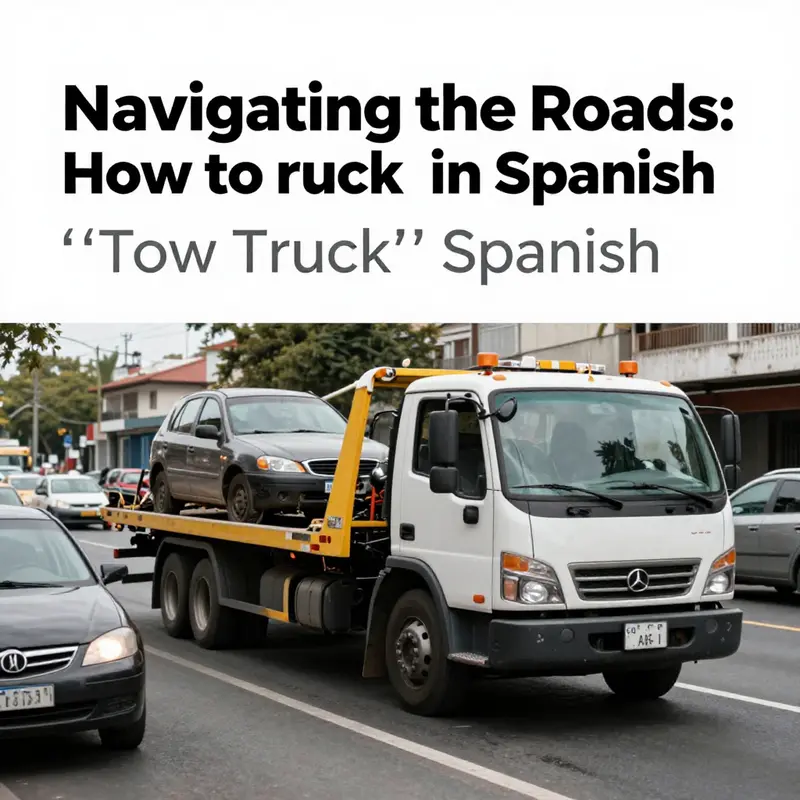
Accidents and breakdowns are unfortunate realities of driving, but knowing how to handle the situation can make all the difference. For local drivers, auto repair shops, property managers, and HOA administrators, understanding the term grúa is essential when calling for assistance in a Spanish-speaking context. This article will explore the nuances of the word grúa, its alternative translations, and its cultural significance in various Spanish-speaking countries, empowering you to communicate effectively when it counts the most. Each chapter is designed to provide a deeper understanding of how to say ‘tow truck’ in Spanish, thereby enriching your interactions in crucial moments on the road.
Grúa Unpacked: How a Crane Term Became the Everyday Tow Truck Across Spanish-Speaking Roads
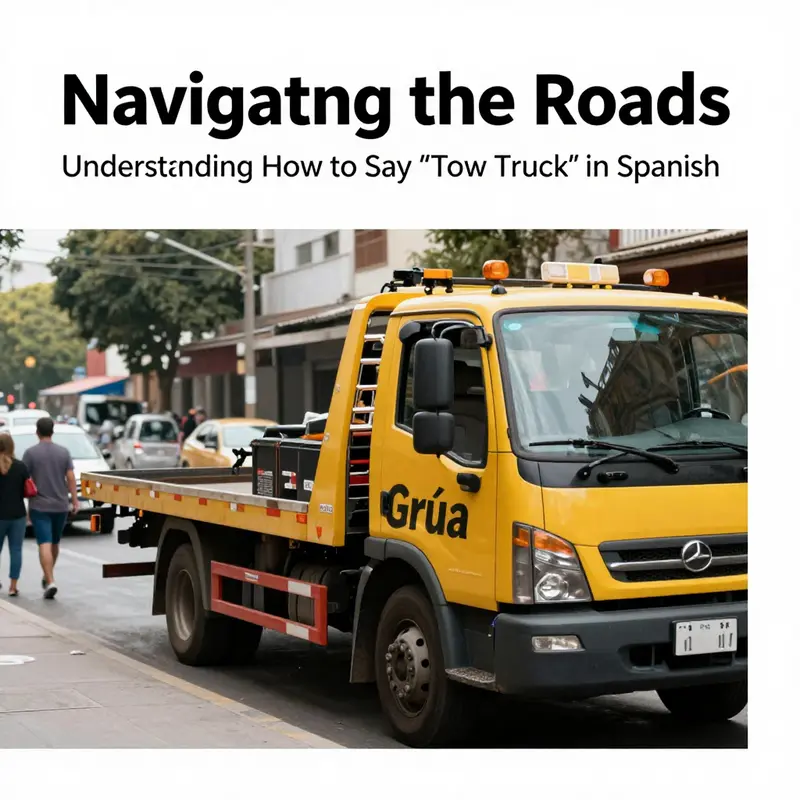
On the road, language moves faster than metal. The word you hear when a car grinds to a halt or a crane lifts a heavy load travels through workshops, dispatch centers, and roadside cafés with surprising agility. In Spanish, the word that starts this journey is grúa. It does not merely refer to a tow vehicle in most everyday conversations; it carries a spectrum of meanings that reflects how intertwined lifting, moving, and managing heavy loads are in urban life, construction, cinema, and even wildlife lore. For anyone learning to talk about breakdowns, rescues, or simply watching a film set, grasping what grúa can signify—and what it should not—unlocks a more natural, confident style of Spanish across countries that share a common word but administer it through distinct local textures. The core takeaway remains practical: in the broad, real-world use of Spanish, grúa is the go-to term for a tow truck in most contexts, while the term remolque serves a different purpose altogether when you want to describe the thing being towed rather than the vehicle performing the towing.
To understand why grúa became so deeply embedded in everyday speech, it helps to trace its first, most common life: the crane. In workshops, factories, and construction sites, grúa is the machinery that reaches, lifts, and shifts heavy objects with a precision that human arms cannot achieve. This crane image translates naturally into many of the same situations where a tow truck is involved—lifting a vehicle off a road, hoisting a van onto a tow bed, or helping move a disabled car out of a dangerous squeeze. The linguist’s eye sees a word that is practical, tangible, and widely recognizable, not a dry label. The term travels easily. In Spanish, as in many languages, a word born in one heavy-domain context broadens its horizon to new tasks when people find themselves in new situations. This is precisely why grúa, in its everyday use, has grown to mean the tow truck in countless Spanish-speaking communities.
When you widen the lens to include the specialized kinds of grúas—especially those you might encounter in a bustling port city, on a sprawling construction site, or in a transportation hub—the range of meanings expands in a way that is both fascinating and a little instructive for learners. There is the grúa de pórtico, or gantry crane, which straddles a budget of beams and wheels that move along a track to lift massive cargo containers or steel frameworks. The grúa torre, the tower crane, Proustian in its height and reach, is the towering figure you see on skyline photos from many megaprojects, its long arm staking the sky as it grabs and places steel, concrete, and fixtures. Then there is the grúa flotante, a floating crane riding on a barge, a reminder that the same principle of lifting and shifting weights widely applies at sea. The grúa móvil, mounted on a truck chassis, itself embodies the same mobility that makes a tow truck essential on a stormy highway. A grúa corredera, the bridge crane, shuttles along rails with a speed and precision that mirror the way dispatch centers move a tow unit from one call to the next. In every case, the mechanical logic is the same: to raise, to move, to reposition heavy loads, whether steel girders or a stranded sedan.
The road-facing sense of grúa—the tow truck or wrecker—sits naturally on top of this family tree. In everyday speech, saying grúa for a tow truck is not a regional eccentricity but a widely understood convention that makes immediate sense to drivers, pedestrians, police officers, and roadside helpers alike. A typical scenario makes this clear: when a car breaks down on a busy avenue, the simplest, most natural Spanish sentence is, “Llamé a una grúa.” If you want to be exact about the service being requested, you might add a descriptor: a grúa para trasladar otros vehículos, a tow truck that can move another vehicle. If you are explaining to a friend what just happened, you might say, “Mi coche se averió, así que llamé a una grúa.” The verb in play is not hidden or specialized; it is the language of necessity and efficiency, of getting a car back on the move or safely off the road as quickly as possible. These everyday constructions are precisely why the word grúa remains the most natural, broadly understood choice across many Spanish-speaking regions when the conversation concerns roadside help or vehicle recovery.
That said, the vocabulary is not a rigid one-word rulebook. The term remolque exists and serves a distinct role, one not at odds with grúa but clearly complementary in a different semantic field. Remolque refers to the trailer being towed rather than the towing vehicle itself. If you are describing the set of equipment in a yard, a piece of machinery that is towed behind another vehicle, or the trailer that contains a car, remolque is the more precise label. In practical terms, if a mechanic tells you to check the remolque or if you are coordinating with a shipping company about a container on rails and wheels, remolque helps you avoid ambiguity. When the discussion shifts toward the vehicle performing the extraction or transport, however, grúa is the term that fills the conversation with immediacy and accuracy. This distinction—between the crane-like lifting capability and the tow truck’s service function—helps prevent miscommunication, particularly in tense roadside moments where every second matters.
For learners and travelers, an important nuance is that grúa carries a robust, almost universal association with the service that arrives to assist on the road. In many Latin American countries, the same confidence in this term is reinforced by the cadence of daily life: heard in a dispatch call, echoed on the phone by a roadside assistance operator, or spoken aloud in queue lines as the tow truck moves into position around a stranded vehicle. In Spain, readers and hearers appreciate the same clarity, even as local phrases evolve in regional media or among automotive clubs. The result is a versatile, widely accepted term that captures the essence of the scenario: a machine-aligned helper, ready to lift and tow, to stabilize, extract, and reposition a vehicle, often in the blink of an eye.
A curious but helpful counterpoint to the road-side usage is the word grúa’s broader industrial and cinematic life. In film and television, grúa may evoke a camera crane—the device that shoots sweeping, dynamic movements, lifting the camera over sets and adding cinematic scale to a scene. The same word thus bridges two worlds that require a precise sense of lifting and moving, whether the lift is of steel and concrete or of a lens and a crew. The overlap in meaning is semantic, not accidental: both senses speak to the central human activity of raising and shifting heavy loads, and the language naturally travels from the factory floor to the street to the studio. Such cross-domain resonance helps explain why grúa is so resilient as a term. It allows speakers to convey complex tasks succinctly, without forcing listeners to chase different vocabulary for each scenario.
Of course, accent and spelling matter in Spanish. Grúa is distinctive for its acute accent on the final syllable, which marks the stress and helps avoid confusion with its homophone cousins in other languages or dialects. A small tilt in pronunciation—emphasizing the final syllable—signals a word with a very practical, real-world function. A neighboring word, grulla, exists in a different register altogether: it refers to a bird, the heron, and is generally not used in the same context as grúa. The presence or absence of the accent can, in spoken language, create or dissipate ambiguity in noisy traffic scenes or crowded marketplaces. For learners, listening practice and careful pronunciation are essential. The difference between a mere crane on a site and a tow truck answering a call could well hinge on a single syllable’s stress.
In everyday practice, contexts guide choice. If you are discussing a breakdown with a tow operator or a fellow driver, grúa is your instinctive, reliable option. If you are cataloging equipment or describing a trailer in a shipment, remolque can prevent misreading. If your conversation brushes the edges of cinematic production or heavy lifting on a ship, you may hear grúa in a more specialized sense as a crane or a camera crane, with the meaning clear from the surrounding words. The key is not memorizing every possible meaning of grúa as a monoculture rule but recognizing the cues that point toward the right usage in a given moment. The cues are visual and situational: a vehicle on the side of the road, an operator with a control panel and a winch, a film crew near a camera platform, or a yard with heavy machinery and steel beams. In those moments, the language narrows down to a single, shared interpretation: grúa is your tool for lifting or moving heavy loads, whether in the open highway or a controlled studio.
For anyone who wants to anchor this understanding in real-world practice, listening to native speech is a powerful companion. In conversation, the phrase “Cuando se me averió el coche, llamé una grúa” is a natural, fluid line that captures the essence of the experience—an interruption, a response, and help arriving in the form of a lifting, towing vehicle. When people want to emphasize the act—the act of removing the vehicle from a dangerous lane, repositioning it to a safe shoulder, or loading it gently onto a bed—the vocabulary fits as if designed for that moment. The descriptive phrase grúa para trasladar otros vehículos makes it clear that the focus is on the operation, not the vehicle as a mere object. In summary, grúa is the word to lean on for tow truck communication in most cases, remolque for the towed object, and grúa in its specialized crane senses when the situation calls for it.
For readers seeking more grounded, field-tested guidance, a practical reference is available through a well-respected industry blog that collects notes, anecdotes, and operational tips from the road. See the Santa Maria Tow Truck Blog for insights drawn from real-world dispatches, field experiences, and the layered vocabulary that professionals use when a call comes in and a grúa is needed to stabilize a scene (https://santamariatowtruck.com/blog/). This resource illustrates how the language of tow trucks is deployed in everyday practice, how crews discuss the job, and how terminology can shift with regional preferences or the specifics of a given incident. The blog’s approach to language aligns with the core purpose of this chapter: to illuminate a term’s journey from the crane in a factory to the tow truck on a winding hillside, always with the goal of clear and trustworthy communication on the road.
The learning thread remains simple and practical: use grúa as the default term for a tow truck in general conversation, especially in roadside contexts where speed and clarity matter. Reserve remolque for the trailer being hauled or for technical descriptions of cargo arrangements. Keep in mind the broader world of grúa, where cranes of all kinds populate industrial landscapes and cinematic sets alike, and remember that pronunciation matters in the loud, hurried spaces where vehicles and people must work together to move heavy loads safely. With this understanding, you can speak with confidence, whether you are negotiating with a dispatcher, asking for assistance on a busy thoroughfare, or describing the setup at a construction site where a grúa towers over the skyline. The word is versatile, but the right choice hinges on the story you want to tell and the context in which you tell it.
For further reading on the linguistic nuances behind this term, you can explore more about general usage and translation nuances in the Cambridge Dictionary entry for grúa, which clarifies the core meaning and demonstrates its common applications across contexts (https://dictionary.cambridge.org/dictionary/spanish-english/grua).
From Grúa to Camión Grúa: Navigating Tow Truck Terminology Across Spanish Conversations
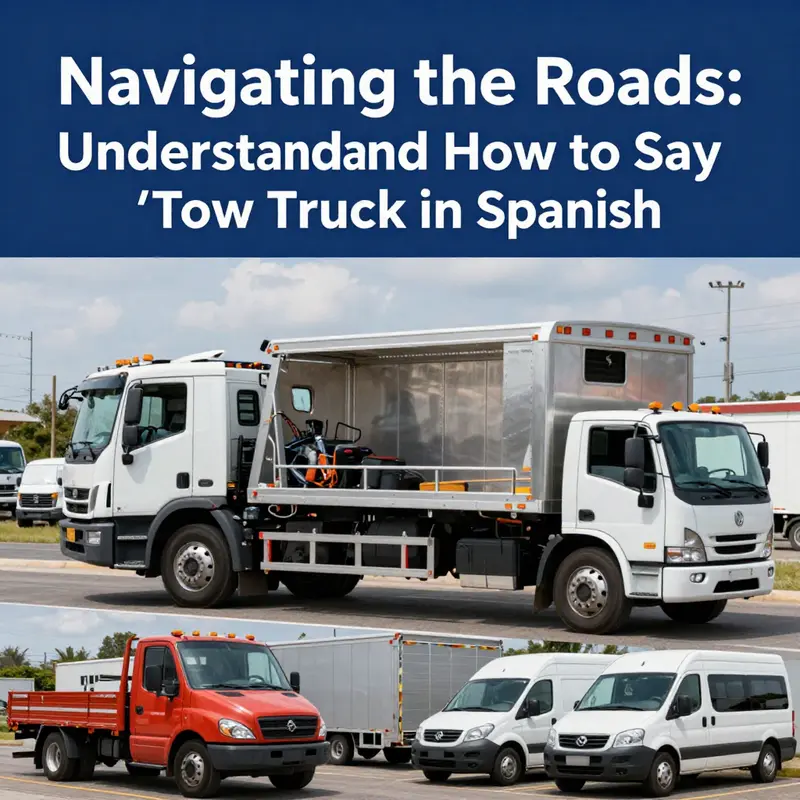
When you need a tow after a breakdown or an accident, the words you choose matter as much as the help you receive. In Spanish, the language of roadside assistance is rich with nuance because different regions, industries, and everyday speakers lean on different terms to describe the same vehicle: the tow truck. The most familiar and dependable word across the Spanish-speaking world is grúa, a term that has earned broad trust for its simplicity and reach. Yet the choice between grúa, camión grúa, coche de remolque, or remolcador can shift meaning in subtle but important ways. Understanding these distinctions gives you not only linguistic clarity but also a smoother, safer conversation with dispatchers, operators, and fellow drivers when time is of the essence.
Grúa stands as the foundation. It is a general, widely recognized term that evokes the lifting or hoisting mechanism at the heart of the vehicle designed to tow, recover, or assist immobilized cars. In most urban and suburban contexts, a single word, grúa, suffices. When someone says, “Llamé a la grúa,” the implication is clear: an emergency vehicle with a winch or crane capabilities is on the way to help. This sufficiency is why grúa has become the default choice in many regions, especially when the focus is the act of lifting or towing rather than the precise model of vehicle.
But language lives in context, and context often prefers precision. The term camión grúa adds a layer of specification that can be indispensable in professional settings. Camión, the word for truck, reinforces that you are talking about a larger, commercial vehicle built for heavy-duty towing duties. When a dispatcher needs to distinguish a heavy-duty tow truck from a smaller roadside-assistance unit, camión grúa communicates that difference with a single compound expression. It signals capacity, reach, and the equipment necessary to handle vehicles with significant weight or special recovery requirements. The phrase resonates across many countries where fleets operate with a mix of light-duty and heavy-duty units, and it is especially common on job sites, in fleet rosters, and within emergency readiness documentation.
The vocabulary also travels into everyday speech with coche de remolque. This phrase, literal enough to be understood by most Spanish speakers, foregrounds the action rather than the vehicle type. It speaks to the role of the vehicle as the one that remolca, or pulls, another car. Coche de remolque can feel more informal or descriptive, useful when someone is explaining a situation to a neighbor, a friend, or a non-technical audience. It foregrounds function—pulling a trailer or another vehicle—without committing to a particular vehicle pedigree or a fleet classification. The nuance here matters when the audience is casual and you want to avoid jargon while still conveying the essential idea.
Remolcador, while technically associated with maritime or industrial towing in many Spanish-speaking regions, occasionally appears in inland or regional conversations as a metaphor for a tow truck. This usage is far less common and can introduce confusion in professional contexts or with audiences unfamiliar with the regional twist. In most everyday exchanges or dispatch communications, remolcador risks being interpreted as something more specialized or even inappropriate for the roadside context. The lesson is simple: reserve remolcador for places where the term is recognized and unambiguous, and lean toward grúa or camión grúa in standard traffic-related conversations.
To appreciate the balance between universality and precision, consider how these terms function in a real call for assistance. A driver whose car has stalled in a busy city street might tell a dispatcher, “Necesito una grúa, por favor,” emphasizing urgency and the general action. The same driver, in a different moment of the same conversation, might specify, “Necesito un camión grúa para remolcar un camión pesado,” conveying capacity needs that help the operator assign the appropriate unit. The subtleties here aren’t about decorative language; they are safeguards. They ensure the right vehicle arrives promptly, equipped to handle the weight, the angle, and the potential hazards of recovery in a congested or risky environment.
Regional variation adds another layer to this linguistic map. Spain often uses grúa in everyday roadside talk, with camión grúa appearing when the speaker wants to stress the vehicle’s size or its professional role. In many Latin American countries, grúa remains dominant in common parlance, but you may encounter camión grúa in formal documentation or on highway signage. The phrase coche de remolque may bubble up in less formal conversations or in casual explanations to someone unfamiliar with towing terminology. The upshot is clear: while grúa is universally understood, the moment calls for a nudge toward more precise terms—camión grúa or even a clear explanation of the needed weight class and equipment—when the situation demands exactitude.
In professional contexts, the language of towing is often embedded in documents, dispatch sheets, and safety protocols. Here, the clarity of camión grúa is not just a preference; it is a standard that reduces ambiguity about vehicle size, crane rating, and recovery capabilities. The difference between a light-duty grúa and a heavy-duty camión grúa can influence response times, required routes, and the safety measures that crew must observe during a recovery operation.Fleet operators, rescue teams, and road-services staff cultivate a shared vocabulary that aligns with the kinds of incidents they encounter. This shared vocabulary extends into radio communications. A unit might report, “En camino va una grúa para remolque ligero,” signaling a quick, nimble unit. If the incident involves a toppled car or a disabled multi-vehicle pile-up, a supervisor may request a camión grúa with extended reach and winching capacity. In settings where speed is essential, the phrase grúa is cherished for its brevity; in situations with complex recovery needs, camión grúa conveys the necessary precision right away.
Word choice also influences consumer expectations. When drivers call for help, their language can shape the perceived reliability and professionalism of the service. A caller using camión grúa may be signaling that they expect a higher-capacity unit, possibly with additional personnel or specialized equipment. Conversely, grúa suggests standard service, with the practical implication that a typical recovery system is sufficient. Understanding these subtle signals helps both sides avoid miscommunication and aligns expectations with on-the-ground capabilities. The result is safer rescues, fewer delays, and a more transparent service experience for drivers who are already dealing with stress and time pressure.
For readers who want to anchor these ideas in a practical, field-tested frame, a clear example helps. Imagine you are outlining a transport and recovery plan for a fleet that includes both light-duty and heavy-duty vehicles. In your plan, you might specify call flow like this: first, request a grúa for a minor breakdown on a quiet street; second, anticipate a camión grúa if the vehicle is a heavy truck or requires upright lifting from a precarious angle. If a description must be translated on the spot for a non-Spanish-speaking driver, you could offer the following bilingual cue: “Tenemos una grúa disponible; si el peso excede X kilos, necesitaríamos un camión grúa.” The exact numbers will depend on the equipment catalog and safety guidelines, but the structural distinction remains valuable for clear communication and operational efficiency.
As you become fluent in these terms, a simple litmus test can anchor your usage in everyday life: ask yourself what you want the listener to imagine. Do you want to convey a general sense of help arriving, or do you want to signal serious lifting capacity and specialized equipment? If the former, grúa often suffices; if the latter, camión grúa or even a brief note about the vehicle’s weight class can prevent misinterpretation. This approach works whether you are stranded on a roadside in a busy city, coordinating a fleet response, or explaining to a family member what kind of vehicle will arrive to assist a damaged trailer or a stalled car.
The path to mastery is not merely about memorizing translations. It is about listening to how language functions in your specific environment. If you are a student learning Spanish for travel or a professional in the towing or emergency-response sector, you will benefit from hearing how native speakers switch between grúa and camión grúa depending on the moment, the audience, and the technical demands of the call. It helps to practice by reading aloud the phrases in context, pairing them with beeps of a dispatch terminal, or simulating a call with a partner who can offer feedback on phrasing and tone. In doing so, you develop not only vocabulary but also the pragmatic sensibilities that make your communication swift, precise, and empathetic to the person at the other end of the line.
If you crave further practical perspectives drawn from field experience, you can explore community insights and real-world guidance in the industry-focused discussions available at the Santa Maria Tow Truck blog. There, practitioners reflect on language use, case studies, and best practices for dispatch communication and roadside operations. This resource can help you connect the vocabulary you study with the real situations you may encounter on the road, reinforcing a robust, adaptable approach to saying and understanding these essential terms. Santa Maria Tow Truck blog
Finally, the linguistic map of tow-truck terminology reminds us that a language is a living tool. It evolves with technology, with safety standards, and with the shifting needs of drivers and responders. The grúa, camión grúa, coche de remolque, and remolcador distinctions may ebb and flow as new equipment enters the market or as regulations require clearer classifications for certain operations. What endures is the shared goal: to move people and vehicles to safety efficiently, with clear words that keep everyone on the same page.
For a concise reference on the official spelling and usage, the authority of the RAE remains a reliable compass. The dictionary entry for grúa guides learners toward the standard understanding and flags nuances that may vary by region. Keeping this resource in view helps you avoid common missteps and ensures that your everyday speech aligns with established norms when clarity is paramount. To consult the authoritative entry, you can visit the RAE’s dictionary at the following link: RAE dictionary entry for grúa.
Grúa: The Tow Truck Word That Carries Culture, Metaphor, and Meaning
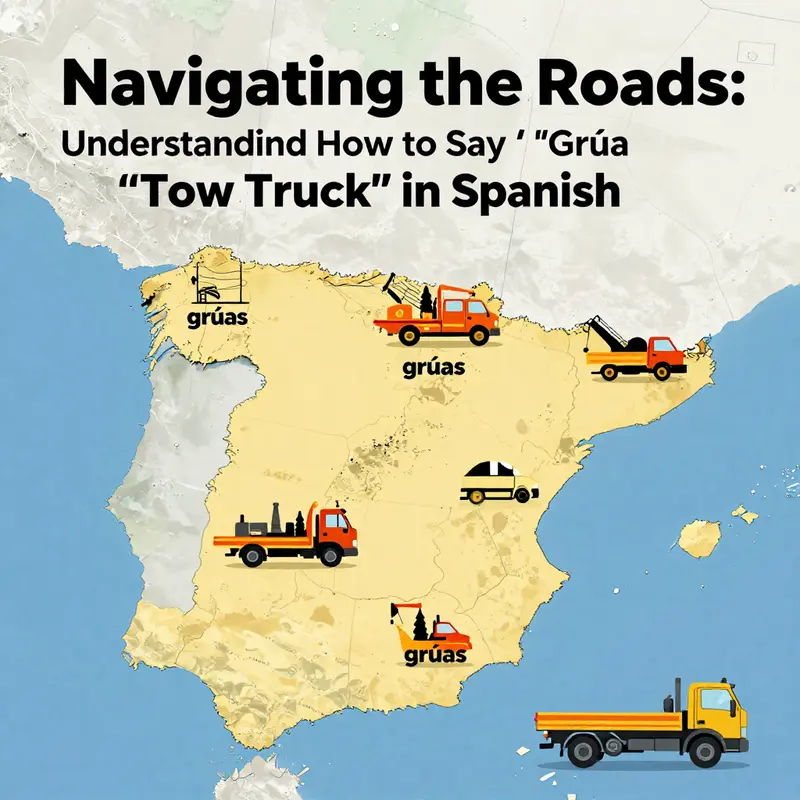
The most immediate and practical answer to how to say tow truck in Spanish is straightforward: grúa. In everyday conversation, road-side res моей and the dispatch desk alike reach for grúa as the natural term for a vehicle whose sole function is to tow wrecked, disabled, or stalled cars. This deceptively simple word carries more than a single denotation. It functions as a bridge between mechanics and speech, a linguistic emblem that reveals how Spanish-speaking communities think about work, reliability, and the burdens that must be shouldered when a journey is interrupted by trouble on the road. While grúa is the preferred choice across most of the Spanish-speaking world, other options exist. Remolque refers technically to a trailer being towed rather than the towing vehicle itself, and camión de remolque provides a descriptive label that makes the purpose explicit, though it is less common in day-to-day speech. The practical takeaway remains clear: for natural, universally understood communication, grúa is the best fit, with remolque and camión de remolque reserved for more descriptive or specialized contexts. When a conversation turns to what happened on the road, the sentence becomes a test of fluency rather than a mere translation. Cuando se me averió el coche, llamé una grúa. The sentence is simple enough on the surface, but the choice of grúa rather than remolque or camión de remolque signals that the speaker expects a clinician’s speed and a driver’s competence, not a generic device that tows a trailer. In Spanish, voice and tone matter as much as vocabulary, and the choice of a single noun shapes the listener’s mental image of the situation.
To speak with precision in a mixed-language environment or when describing a service encounter, it helps to understand how grúa travels within regional variants. In Spain, grúa is the standard term for the towing vehicle, and it travels confidently alongside signage and public notices that speak to roadside assistance and emergency towing. In Latin America, the term enjoys broad acceptance as well, though local vernacular can shade the word with color and nuance. In practical terms, the listener recognizes grúa as the vehicle whose business is to recover mobility, not merely to move a trailer or to lift an object. The distinction matters when a mechanic or operator explains options to a client, or when a dispatcher coordinates a response to a stalled vehicle on a busy highway. The audience understands not just the action but the identity of the tool. This shared semantic map is what makes grúa so enduring as a everyday term.
Beyond its literal meaning, the word grúa has acquired a set of metaphorical resonances that deepen its cultural significance. In many Spanish-speaking communities, grúa becomes a stand-in for resilience and reliability. The phrase el grúa de la empresa—though grammatically delicate to translate in some dialects—captures a recurring social motif: certain people in organizations shoulder the heaviest loads, keep crucial operations moving, and do so without fanfare or complaint. This isn’t simply a compliment to individual stamina. It is a reflection of a value system that prizes steadfastness, problem-solving under pressure, and the willingness to bear burdens that others avoid. When colleagues refer to someone as the grúa del equipo or la grúa de la empresa, they honor a practical leadership style that might be invisible in formal performance reviews but is vital to the crew’s rhythm and success. Language here becomes a living archive of workplace culture, codifying admiration for those who pull the team forward when the road ahead looks rough. It also speaks to a social contract in which quiet competence is valued over dramatic gesture, where the ability to move a stalled project or a stalled vehicle alike earns respect through consistent, dependable action.
This metaphorical field is enriched by another linguistic thread that travels from construction site to living room and back again: the pluma de grúa, literally the crane’s feather, a term used in technical and engineering contexts to refer to a boom—the long, extendable arm on a crane. Though the literal meaning is mechanical, the metaphor is provocative. The boom embodies reach, reach that can extend to lift heavy loads or to reach distant targets. In everyday Spanish, phrases like pluma de grúa carry with them a cultural sense that engineering language and human labor share a vocabulary of strength, reach, and controlled precision. The fact that such a literal component of a heavy machine slips into broader discourse illustrates how industrial imagery permeates daily speech. It is not only about moving cars; it is about the social imagination of what it means to extend one’s capacity, to reach into a problem and pull it toward resolution. The persistence of these metaphors suggests that the icons of the workshop—the crane, the boom, the rope, the hook—are not relics of an industrial past but living symbols that shape judgments about leadership, teamwork, and personal duty.
Scholars in cross-linguistic and multimodal studies of engineering metaphors have taken note of these patterns. They point to a broader tendency for mechanical imagery to migrate into everyday language, layering meanings in ways that can be productive for communication, yet potentially opaque to newcomers. A useful resource in this line of inquiry demonstrates how terms like pluma de grúa operate across professional and casual registers, revealing how technical terms enter general discourse and how such metaphors can illuminate or obscure intent depending on the audience. For readers who want to explore this phenomenon in greater depth, the linked resource provides a detailed look at how a single mechanical term can acquire broader interpretive power within civil engineering and beyond. See the technical discussion at Pluma de grúa (CE Eng. ‘boom’).
In ordinary dialogue, the choice of grúa also interacts with how audiences perceive the service itself. Roadside assistance is not simply a mechanical rescue; it is a service encounter, a moment when trust is established between driver, dispatcher, and tow operator. Saying grúa conveys a practical image: a robust, purpose-built vehicle designed to restore mobility. In contrast, remolque evokes a different frame—a trailer, perhaps, or a towed object—without directly naming the rescuing vehicle. This distinction becomes especially salient in formal communications, like insurance claims, fleet management reports, or emergency response protocols, where precision matters and the audience expects a specific kind of equipment to be in play. In less formal contexts, however, the warmth and familiarity of grúa can help all parties move more smoothly through the interaction. People can joke about the grúa that saved the day, while still respecting the professionalism of the operator who arrived promptly at the roadside.
The road, with its noise and speed, can also shape how language travels and how quickly terms become part of public consciousness. Signs along highways, service centers, and roadside billboards routinely use grúa, reinforcing the term in everyday vernacular. The vehicle itself embodies a social contract: we may not know the specific mechanics of how a tow truck operates, but we recognize its role in restoring movement and safety. The ubiquity of grúa across regions creates a shared linguistic terrain, where drivers from different countries can communicate with confidence about what kind of vehicle is needed and what kind of service will be delivered. In this way, a single word does important cultural work. It reduces friction in a moment of vulnerability and anchors trust in a time of uncertainty.
In discussing how to talk about towing in Spanish, the practical guidance should also acknowledge a few caveats. When translating for a non-Spanish-speaking audience or translating for multilingual contexts, it is wise to clarify the exact vehicle type involved. If a tow is being described in a report or a customer-facing document, using grúa keeps the language natural and widely understood. If the description must be more descriptive, or if the audience includes engineers or technicians who work with trailers, remolque may appear as a precise technical term. In some formal contexts, camión de remolque can be used to emphasize the towing vehicle rather than the load. The best practice is to think about who will read or hear the message and what domain the discourse occupies—casual conversation, field reports, or technical manuals. Even small choices can influence how readers picture the scenario and how seriously they take the information being conveyed.
For readers who want to explore the practical, day-to-day realities behind the vocabulary, consider not only what is said but how it is said in different environments. Dispatch centers, roadside service fleets, and emergency response teams often cultivate specific terms and usage patterns as part of their professional identity. This linguistic craft—how to name a vehicle, how to identify a service, how to describe a situation—becomes part of the standardization that keeps operations smooth under pressure. In the broader picture, it is a reminder that language in the transport sector is not static; it evolves with technology, with regional dialects, and with the experiences of drivers who rely on these terms at barely a whisper of speed or a crash of alarms.
Practically speaking, if a reader is planning to communicate with a Spanish-speaking tow operator or fleet manager, a compact set of guidelines helps ensure clarity. Start with grúa as the default term for the towing vehicle. Use remolque only when the context clearly denotes the trailer or towed load rather than the towing machine itself. If you want to convey professional precision, you can add a descriptive phrase such as grúa de remolque or camión de remolque, though the latter reads more like a label than a common spoken form. In conversations or customer-facing material, lean into the warmth and reliability implied by grúa. In technical documentation or cross-industry discussions that touch on engineering concepts, acknowledge pluma de grúa as a related term when discussing the mechanical aspects of lifting and reach.
The broader significance of this vocabulary extends beyond translation. It points to a shared cultural appreciation for those who keep mobility alive in the moments when technical systems fail. It speaks to a community that values reliability, resilience, and the quiet competence of people who make a difficult situation less painful for others. When we align our terms with these values, we help ensure that language remains not only accurate but resonant—a bridge that connects road-side realities with the language we use to describe them.
If you are assembling a guide, a course, or a simple reference for drivers and service personnel, this resonance matters. The knowledge of which term to choose in which circumstance can reduce miscommunication, speed up response times, and foster a sense of shared understanding among motorists, dispatchers, and technicians. The effect is practical as much as it is cultural. It makes the difference between a sentence that feels stilted and a sentence that feels natural, between a formal document that reads like jargon and a field note that reads like a reliable account of events. In short, the word grúa is more than a label. It is a touchstone in the Spanish-speaking road world, a word that gathers meaning as it travels from the pavement to the conversation and back again.
For readers curious about the broader implications of how engineering language seeps into daily talk, the discussion of pluma de grúa provides a concrete example. The boom—the long extendable arm—has long been a symbol of reach and strength in civil engineering. When the term enters general discourse, it carries with it a memory of the workshop and the site where heavy loads meet careful calculation. It is this cross-pollination of technical vocabulary and everyday speech that makes the study of language in the field of tow trucks more than a matter of translation. It becomes an exploration of how people negotiate risk, assign blame or responsibility, and navigate the unpredictable rhythms of the road. The cross-disciplinary notes on these metaphors illuminate the ways engineers and operators speak to one another and to clients, in ways that translate across languages and cultures. For those who want to delve deeper into these linguistic currents, the external resource linked here offers a scholarly vantage on how metaphors rooted in civil engineering travel into everyday usage.
In sum, saying tow truck in Spanish is more than a lexical decision. It is a doorway to culture, a mirror of how labor is valued, and a lens onto how communities imagine reliability and leadership in moments of disruption. Grúa distills a complex collage of meanings into a single, everyday word that keeps wheels turning and conversations clear. When the road throws up a sign that says you need help, the word you use—grúa—carries with it a collective sense of trust, competence, and the shared belief that someone will arrive with the right tool, the right skills, and the right attitude to set things in motion again. And in that sense, the language of tow trucks reveals a broader truth about any working world: the most ordinary words can carry extraordinary weight when they are spoken with understanding of where they come from and where they must go next.
External resource for further reading on related engineering metaphors: https://www.researchgate.net/publication/375694120PlumadegruaCEEngboom
Final thoughts
Understanding how to say ‘tow truck’ in Spanish is vital for effective communication, especially in emergencies or roadside situations. By familiarizing yourself with the term grúa, alternative translations, and its cultural relevance, you can navigate interactions with confidence. Expanding your linguistic toolkit not only aids in personal situations but also enhances your professional engagements within the diverse Spanish-speaking community. Equip yourself with this knowledge, ensuring that language barriers do not hinder timely assistance when you need it most.