
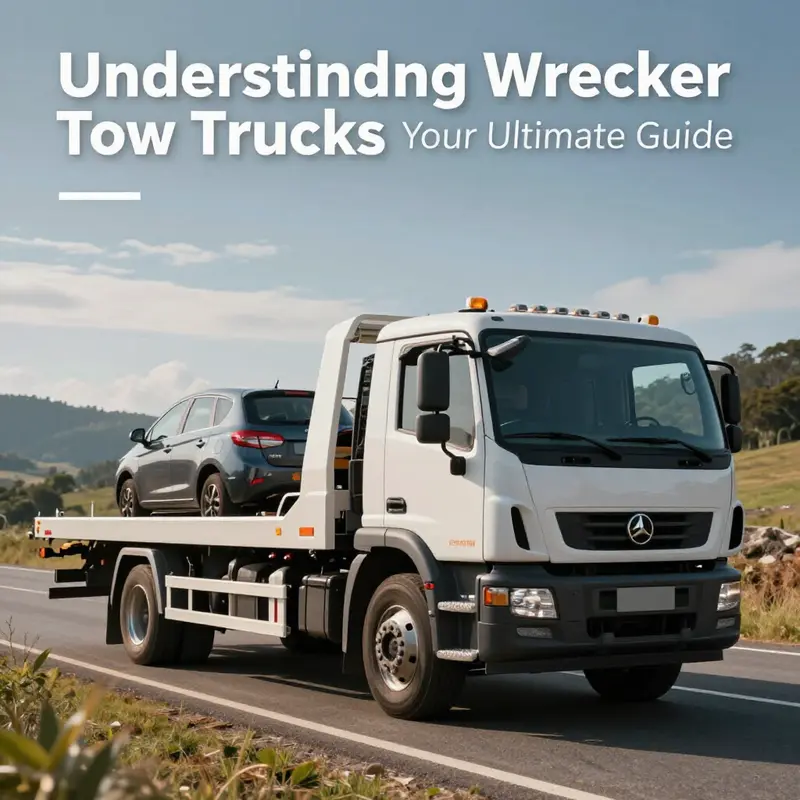
Wrecker tow trucks are essential emergency vehicles that offer critical services to drivers, auto repair shops, property managers, and community members alike. These specialized vehicles are designed not only for towing disabled or wrecked cars but also for providing assistance during roadside emergencies and clearing obstructions that can disrupt traffic flow. Understanding the definition and functionality of wrecker tow trucks is crucial for local drivers and businesses that rely on their services, as well as for property managers who need safe parking protocols. In the following chapters, we’ll delve into the components and features that make wrecker tow trucks indispensable, their applications in roadside assistance, and the profound economic and societal impacts they hold on our communities.
What a Wrecker Tow Truck Really Does: Definition, Functionality, and the Mechanics of Roadside Rescue
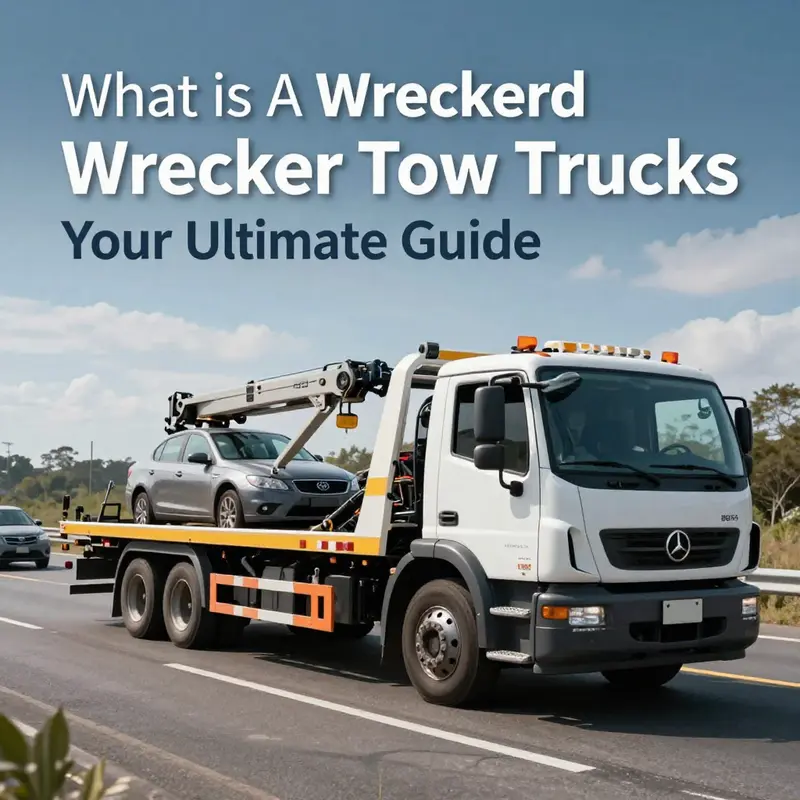
A wrecker tow truck is more than a motorized tow hitch on wheels. In ordinary terms, it is a purpose-built vehicle designed to move cars that cannot, by choice or circumstance, drive themselves to safety, repair bays, or impound yards. Yet the truth runs deeper than a simple hook and string. A wrecker is a compact logistical system on four or six wheels, a mobile repair and recovery unit that combines power, balance, and precision to restore order on congested streets and highways. The term itself is commonly used across North America to describe a class of tow vehicles that differ from the everyday roadside helper by virtue of specialized mechanisms, from hydraulic winches to articulating booms and flatbed platforms. The resulting image is a machine trained to adapt to the unpredictable realities of road rescue: slippery curves after a wreck, a stalled truck blocking a busy lane, or a car left damaged and immobilized in a precarious shoulder. Its work is fundamental to safety, traffic flow, and the timely return of a scene to normalcy. A modern wrecker blends the art of lifting and pulling with the science of securing a vehicle so that it can travel, sometimes over long distances, to a place where repairs can begin. While the phrasing may vary by region or industry, the core idea remains consistent: a wrecker tow truck is a mobile recovery platform capable of manipulating awkward loads with care and control, reducing the risk of further damage to the towed vehicle and to surrounding road users. To understand its essential function, consider the elements that set this class apart from a standard carrier or a simple towing rope. The most visible distinction is the presence of a mechanical apparatus such as a winch, a boom, or a flatbed that enables the operator to connect to a vehicle that cannot be moved by a standard tow line alone. A winch, mounted on a sturdy frame, allows the operator to grab a vehicle from a distance, pull it toward safety, and secure it with straps designed to withstand the forces of gravity and momentum. A boom or articulating arm extends reach and angles, lifting a vehicle from awkward angles, such as a ditch or a curb, while maintaining balance across the vehicle’s frame. A flatbed, by contrast, turns the entire bed into a loading ramp, allowing a vehicle to be slid or winched onto a level surface. Each configuration serves a distinct scenario, and seasoned operators learn to read the scene and select the approach that minimizes risk while maximizing efficiency. The setup is not merely mechanical; it is a discipline that blends physics with the practical demands of real-world roadways. In practice, the job of a wrecker begins long before the tow. The operator must assess the scene, identify hazards, and determine how best to access the vehicle without causing further damage or endangering other motorists. The act of securing a vehicle involves a careful choreography: placing wheel chocks, attaching heavy-duty straps or chains, and ensuring that all restraints are correctly tensioned. The choice between a flatbed and a wheel-lift approach often hinges on the condition of the vehicle and the distance of travel. Flatbeds are favored when damage needs to be minimized or when the vehicle must be transported upright to another facility. Boom-based trucks excel in difficult recoveries where the car is partially buried, overturned, or perched in a precarious position. Winch-driven recoveries provide versatility when a vehicle must be pulled from a ditch, snowbank, or roadside where space is constrained. The operator’s hand is guided by a trained sense of balance, the weight distribution of the towed car, and a steady assessment of the road’s surface under tire, ice, or rain. Even the choice of equipment materials—steel, alloy, hydraulic components—reflects a balancing act between durability and weight, ensuring that the system can lift heavy loads while remaining maneuverable enough to respond quickly in emergencies. Beyond raw mechanics, a wrecker is an integral part of a broader ecosystem that includes law enforcement, emergency medical services, and municipal operations. When a collision occurs on a high-speed corridor, responders rely on wreckers not only to remove the damaged vehicle from the lane but also to preserve the scene for investigation, to prevent secondary crashes, and to help reopen traffic as soon as possible. In this context, the wrecker becomes a visible symbol of a rapid, organized response. The service’s reach extends to roadside breakdowns where a vehicle loses power in a vulnerable location; the operator must often coordinate with dispatch, police, and, if necessary, a tow to a repair facility. The goal is not simply to move a vehicle, but to do so in a way that augments public safety and sustains the flow of traffic. This demands more than technical skill. It requires an approach to risk management and situational awareness that is rarely visible to motorists who pass by. A trained operator will consider traffic directions, the potential for secondary incidents, and the presence of hazardous road conditions such as slick pavement or limited visibility. The discipline also involves an understanding of how to communicate with vehicle occupants when possible, offering reassurance and explaining what steps will unfold next. The human element—calm instruction, careful coordination, and a steady hand—often makes the difference between a smooth recovery and a scene that lingers longer than necessary. In many communities, the wrecker represents a safety system embedded in the fabric of modern transportation. Roadside assistance and accident recovery would be incomplete without the capability to remove obstacles and recover stalled vehicles with speed and care. This is not merely about convenience; it is about reducing the risk of injury to drivers, passengers, and responders, and about returning lanes to normal operation so that congestion does not snowball into a larger disruption. The equipment, the training, and the procedural standards all converge to form a reliable response mechanism. When a wrecker arrives at an incident, the scene is already a brief negotiation between physics and policy. The vehicle’s geometry—how the car sits, whether it is resting on a skid, and how its axles align with the road—dictates the safest path for lifting and loading. The operator must align winch cables and chains with the vehicle’s strongest structural points, avoiding delicate areas such as fuel tanks, exhaust systems, or mounting hardware. The result is a controlled, methodical lift that keeps the vehicle intact enough to be towed to a repair facility or storage yard, where technicians can assess damage and plan repairs. This careful work is mirrored in the planning that precedes it. Dispatchers map out the quickest and least disruptive routes, while crews coordinate with traffic management authorities to minimize lane closures and maintain safe distances from passing traffic. In this sense, the wrecker is a piece of a larger operational philosophy—one that prioritizes efficiency, safety, and transparent communication with the people who depend on these services. The practical aspects of today’s wreckers are complemented by a culture of readiness. Modern fleets emphasize standardized procedures, rigorous maintenance, and ongoing training to ensure that every operator can handle the most challenging recoveries. The emphasis on readiness extends to planning for extreme weather, which can transform a routine tow into a high-stakes operation. As winter storms or heavy rain pummel roads, the wrecker team learns to adjust the approach, to adapt anchor points, and to coordinate with other responders to keep the road clear. This readiness is not limited to the physical equipment but also encompasses the organizational capacity to mobilize quickly and efficiently. For readers who want to explore how fleets stay prepared for such scenarios, a study of emergency readiness and standardization in heavy-duty rescue operations reveals how coordination, training, and equipment evolution combine to create a resilient response network. As you move through the broader landscape of roadside services, you will encounter a parallel narrative of professionalization that helps explain why a wrecker is more than a vehicle. It is a cohesive system designed to protect lives, minimize damage, and restore order in moments of vulnerability on the road. To connect this narrative with related discussions on fleet readiness and emergency response, consider exploring the discussion on Fleets Emergency Response, which offers a window into how agencies organize, standardize, and deploy their resources when every minute counts. For a concise, widely accepted reference on terminology and primary definitions, the external resource linked at the end of this chapter provides a compact overview of what people mean when they say wrecker or tow truck. In the end, the image of a wrecker is straightforward but profound: a vehicle engineered to reestablish mobility, safety, and confidence on a road that can change in an instant. The next chapters will expand on the systems that support this work, from the regulatory frameworks that govern towing operations to the technical innovations that push lifting capacity and control to new limits, always with an eye toward the people for whom road rescue is a lifeline. For now, when you hear a siren and see a wrecker approach, you are witnessing a carefully choreographed blend of physics, engineering, and public service, a small but essential engine of safety in motion. The wrecker’s role is to translate a moment of breakdown into a return to momentum, a bridge from obstacle to onward travel, and a reaffirmation that traffic, under pressure, can be guided back to safety with skillful hands, disciplined practice, and machines built to endure the road’s unpredictable demands. External reference: https://www.thefreedictionary.com/wrecker
Wrecker Tow Trucks Unveiled: The Machinery, Strength, and Precision Behind Vehicle Recovery
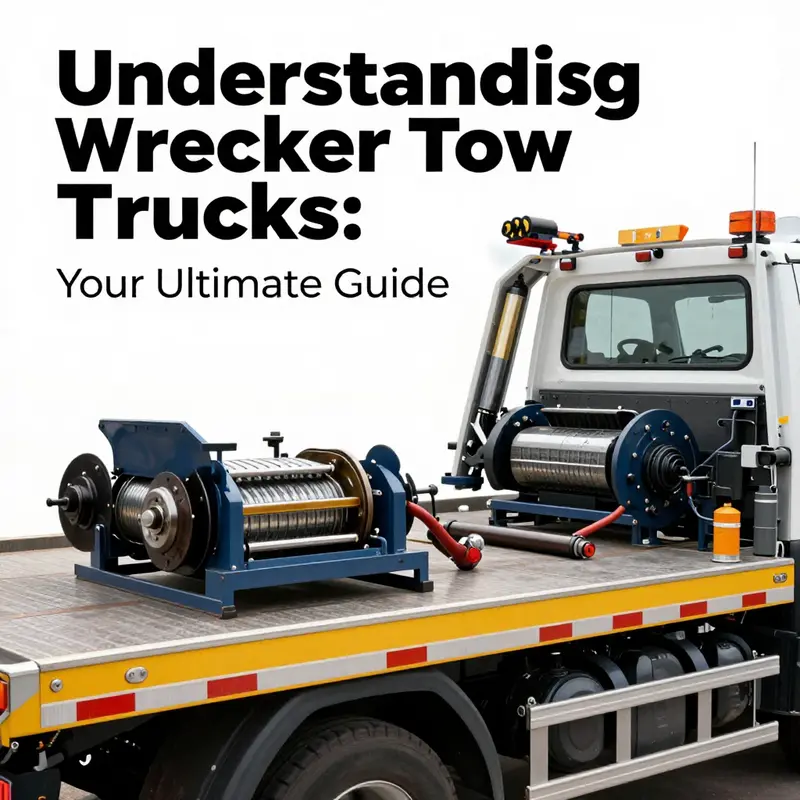
When a vehicle fails on a busy road, the wrecker tow truck arrives not merely to move a car, but to orchestrate a careful recovery operation. It is a mobile platform where power, leverage, and control converge to transform a potentially dangerous scenario into a managed, safe outcome. The wrecker embodies a philosophy of safety in motion: a single toolset configured for lifting, pulling, securing, and transporting with a respect for the vehicle’s integrity and the surrounding traffic. The purpose is straightforward—recover and remove a non-driving vehicle from the scene while minimizing the risk to people, other vehicles, and the environment. Yet beneath this clarity lies a network of decisions about strength, geometry, and choreography. Every component is selected and calibrated to perform reliably in rain and glare, mud and asphalt, urban canyons and rural shoulders. The modern wrecker is a synthesis of force and finesse, designed to meet the unpredictable demands of roadside assistance, collision clearance, and fleet recovery with a consistency that operators rely on when seconds matter and the road never stops demanding attention.
At the heart of every wrecker tow truck is a chassis that can bear immense stress. Built on a heavy-duty commercial truck frame, the structure is reinforced with high-strength steel and a suspension system tuned for stability under load. The frame acts as the backbone, resisting bending forces when a vehicle is being winched from a ditch, dragged from a roadside ditch line, or rolled onto a bed after a skid. In higher-capacity configurations, this foundation must not only carry the weight but also preserve weight distribution so that the truck remains controllable during dynamic recoveries. The geometry of the chassis—its length, wheelbase, and attachment points—determines how the rest of the apparatus deploys and how the machine negotiates tight turns or narrow lanes without compromising the tow path. In essence, the chassis is the stage on which all recovery acts play out, and its integrity sustains every other function.
The winch system is the heartbeat of most wreckers. It provides the primary pulling force that initiates the recovery, whether the disabled vehicle is stuck in mud, snow, or a roadside embankment. Modern hydraulic winches come with multiple speeds and a rated capacity that can reach tens of thousands of pounds, enough to conquer tough recoveries without resorting to improvised leverage. The winch is paired with a rope or steel cable that has to endure abrasion, weathering, and cyclic loading while maintaining smooth operation. Operators balance speed with control, ensuring that a heavy vehicle does not surge toward the tow rig or rebound into oncoming traffic. In difficult environments, the winch is complemented by accessories such as fairleads and rollers to guide rope load and reduce wear. The cleverness of a capable winch lies not only in raw force but in how predictably it behaves as tension increases, which is essential when negotiating a vehicle that has rolled onto its side or settled into a soft shoulder.
Another central element is the boom or lift arm. This component determines how the wrecker applies force and position to the target vehicle. Boom systems can be articulated, allowing multiple joints to extend, retract, and rotate. Some configurations offer a full 360-degree rotation, a feature that becomes particularly valuable in constrained spaces or when the vehicle to be recovered is wedged behind obstacles. The art of deploying the boom is a test of the operator’s spatial judgment, as lines must be kept clear of auxiliary equipment, parked cars, and bystanders. The lift arm must also work in concert with the winch, tensioning lines to achieve a stable cradle for the vehicle. In some scenarios, the boom functions in tandem with a wheel-lift or a slide-bed, providing the versatility to lift by axles or roll the car onto a platform. The flexibility of the boom thus becomes a decisive factor in the ability to recover vehicles of varying heights, wheelbases, and drive configurations without forcing contact with sensitive components.
The flatbed or slide-bed mechanism represents a different approach to the recovery challenge. On this category of wreckers, the bed tilts and slides hydraulically to create a ramp onto which the towed vehicle can be rolled. Flatbeds are often favored for their safety profile: they allow the entire vehicle to remain off the ground during loading, reducing the risk of drivetrain or undercarriage damage. The bed retracts into a locked, level position for transport, ensuring the vehicle is secured with a combination of chains, straps, and chocks. Roll-back systems emphasize precision and control; the operator can position the bed with exact alignment and load the vehicle with minimal ground contact. This method is especially advantageous for cars with low ground clearance or modern AWD platforms that would be vulnerable to scrapes and scrubs during other tow procedures. The bed mechanism thus complements the lifting and winching systems by introducing a path that preserves the condition of the towed vehicle while delivering it to repair facilities or storage lots.
The wheel-lift system is another common method embedded within many wreckers. This approach uses a hoist to lift a vehicle by one or more of its axles, typically the front or rear. Wheel-lift is particularly effective when the vehicle cannot be safely driven onto a flatbed or when ground clearance is a limiting factor. By isolating the weight from the tires and drivetrain, the wheel-lift reduces the risk of further damage during recovery and makes it possible to load vehicles with low clearance or all-wheel-drive configurations that might resist other methods. While wheel-lift does not eliminate all contact with the ground, it minimizes it to preserve drivetrain integrity and tire wear. The choice between a wheel-lift, a flatbed, or a combination system is a matter of the scene, the vehicle’s condition, and the operator’s assessment of safety and efficiency.
No discussion of wreckers is complete without addressing safety and stabilization. In the field, securement is as critical as the lifting itself. Stabilizing struts or outriggers extend from the chassis to anchor the truck and prevent movement as forces are applied to the disabled vehicle. Wheel chocks, binders, and wheel straps are employed to eliminate shifting during transport. In some configurations, air cushions or additional padding protect delicate components from incidental contact. The overarching aim is to prevent secondary damage to the towed vehicle while ensuring the operator and other road users remain safe. The modern wrecker integrates these safety features into a single operating envelope, a design that reduces the likelihood of skidding, tipping, or uncontrolled rebound during a recovery.
When it comes to features, wreckers are often equipped with more than raw lifting power. Digital control panels provide precise control of hydraulic functions, winch load sensors monitor tension in real time, and remote monitoring capabilities give operators the ability to adjust settings from a safer vantage point. These systems support better decision-making on the ground and contribute to a more predictable recovery process. The versatility of wreckers is further enhanced by modular options that let fleets tailor a rig to their typical work. A city-based operator might favor a compact, maneuverable integrated wrecking unit, while a rural operator could prioritize load capacity and a robust stabilization system. The spectrum of configurations reflects the diverse challenges found on roads and highways around the country, from tight urban corridors to remote stretches where recovery must be completed with minimal external assistance.
Integrally, the concept of a wrecker tow truck is not just about lifting and pulling. It is a coordinated system where the chassis, winch, boom, bed, wheel-lift, and safety measures interact with the operator’s skill to deliver reliable outcomes. The high load capacities that some models boast—whether in the 30-ton, 40-ton, or 50-ton range—are not mere numbers. They are benchmarks for capability, indicating a vehicle’s ability to contend with heavy-duty scenarios that involve large commercial fleets, buses, or trucks. Yet strength alone does not define effectiveness. The true measure lies in the ability to adapt quickly, choose the right combination of components, and execute a controlled recovery with a predictable, safe result for each unique scene.
As with many fields, consistency and reliability stem from standard practices. In the world of heavy-duty rescue operations, standardization helps ensure that crews across agencies can work together with predictable safety margins and communication protocols. For readers curious about how these principles permeate wreckering work, a focused look at standardization in heavy-duty rescue operations can illuminate the shared frameworks that guide everyday practice. standardization in heavy-duty rescue operations
The evolution of the wrecker continues to be shaped by advances in hydraulics, control systems, and materials science. As technology becomes more integrated, operators gain clearer visibility into load, balance, and trajectory. Yet the fundamental economy of a recovery remains: choose the right tool for the job, respect the limits of weight and clearance, and execute with a deliberate sequence that minimizes risk. In urban traffic and on high-speed corridors alike, the wrecker is the quiet workhorse that translates engineering into safety, efficiency, and mobility. It is the visible seam where road maintenance, emergency response, and commercial logistics intersect, allowing transportation networks to endure even when individual vehicles falter. The chapter that follows will explore how these core components differ across models and applications and what that means for operators in various environments. For readers seeking a broader mechanical overview of how these parts come together across different configurations, see the broader discussion of tow truck types. External resource: https://www.towtruck.com/types-of-tow-trucks
Tow, Lift, and Rescue: Inside the Wrecker Tow Truck and Its Role in Roadside Recovery
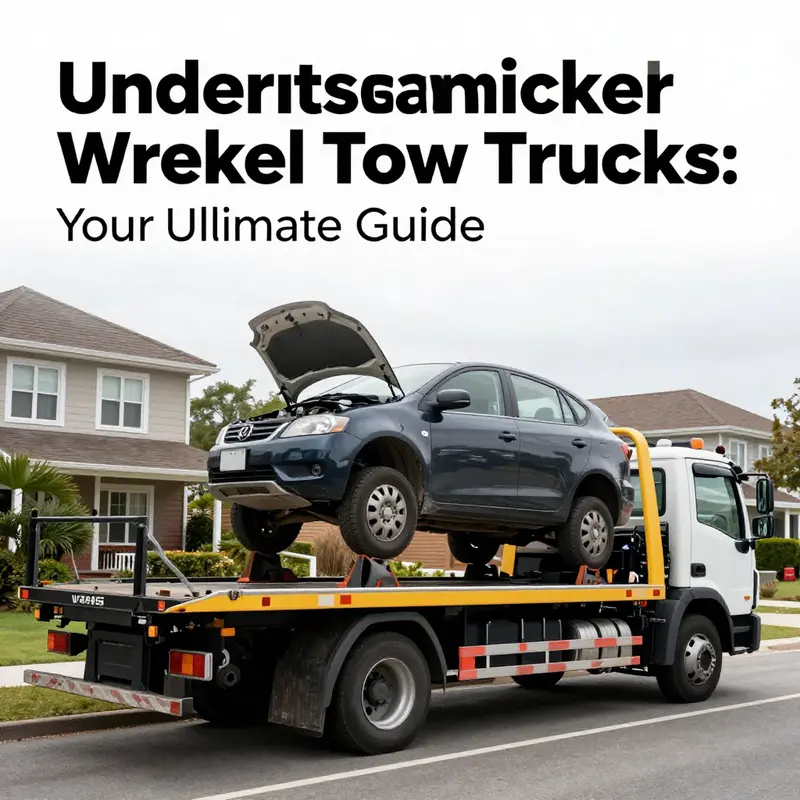
On a stretch of highway where the lanes narrow to a sigh and the hum of traffic becomes a distant murmur, the wrecker tow truck sits at the edge of the scene like a patient instrument waiting for the moment it can turn disruption into relief. It is easy to misread its calm silhouette as mere muscle, but the truth lies in the quiet sophistication built into its frame. A wrecker tow truck is more than a vehicle designed to pull other cars; it is a purpose-built recovery platform. Its essence rests on an integrated trio of hydraulic power, mechanical reach, and secure load control that together enable it to lift, pull, stabilize, and transport vehicles that cannot drive away on their own. The core idea is simple, even if the machinery is not: a single, stable platform capable of working in the most demanding roadside situations, from a muddy verge to a crowded highway shoulder, from a twisty rural lane to a scene of a multivehicle collision. The body of the wrecker is a study in balance, where the powertrain, hydraulic systems, and lifting apparatus are harmonized to deliver safety, speed, and control when time and safety demand every ounce of reliability.
At the heart of the wrecker’s capability is integration. The hydraulic boom, winch, and wheel-lift tools do not merely hitch a vehicle and drag it away; they perform a chorus of actions that must synchronize under pressure. The hydraulic boom provides reach and angular control, allowing operators to hook onto vehicles from sides or behind, position them for straight tow or for staged extraction from precarious angles, and, when needed, place heavy loads onto a flatbed for transportation. The winch, a robust electric or hydraulic device with a heavy steel wire rope, can pull a damaged or immobilized car from a ditch, recover a vehicle stuck in mud, or help to align it for safer loading. The wheel-lift mechanism, with its set of straps or arms gripping the vehicle by its wheels, offers an approach that preserves the integrity of the car’s body and minimizes further damage during lifting. The design behind these tools is to create a stable, controlled environment around a legally and physically demanding task. In practice, that means engineers and operators think through weight distribution, center of gravity, and the dynamic forces that occur as a vehicle is pulled, winched, or loaded; every maneuver must be predictable and repeatable, not a trial-and-error moment on the edge of a roadside danger.
These machines are built to do heavy work without sacrificing finesse. They must handle a range of sizes and configurations—from compact cars to larger trucks—and they must operate in a spectrum of weather and lighting conditions. The capacity of a typical heavy-duty wrecker can be measured in tens of thousands of pounds, with winches and booms rated for substantial haulage and controlled, deliberate movements. The physical stability of the platform relies on outriggers or stabilizers that brace the chassis during lifting or when exerting force with a winch. This stability is essential not only for the safety of the operator but also for the surrounding traffic and bystanders. The result is a vehicle that is as much a platform for precision as it is a conveyance for transfer. In practical terms, a wrecker might lift a vehicle partially off the ground to reposition it, then use the winch to coax the car toward a safe loading point. If the situation is severely compromised—such as a rollover on uneven terrain—the wrecker can stabilize the vehicle first, secure it with chains or straps, and then execute a careful, controlled approach to recovery or removal.
Across different environments, the wrecker’s versatility becomes evident. On crowded urban streets, a smaller, more maneuverable wrecker can be deployed quickly to clear a stalled car from a lane before it creates a backlog of traffic. In highway conditions, longer reach and greater weight capacity come into play, enabling technicians to recover vehicles that are deeply embedded in medians or crash sites without requiring a second, larger unit. In rural terrains or on unpaved shoulders, the combination of a solid wheel-lift and a robust winch allows the operator to establish secure footing and extract a vehicle with minimal movement that could endanger bystanders or responders. Each of these scenarios tests different facets of engineering and training, but all rely on the same fundamental principle: the recovery process must be controlled, safe, and efficient enough to restore normal traffic flow as soon as possible.
The operational sequence of a typical recovery illustrates how these principles translate into practice without losing sight of the human element. A scene arrives on the radio, and a wrecker is dispatched with a clear plan of action. Upon arrival, the operator conducts a rapid yet thorough assessment: is the vehicle upright or overturned? Are its wheels accessible? Is there risk to fuel lines, airbags, or loose debris? The operator then positions outriggers to brace the platform and ensures the area is secured with cones or barriers to prevent secondary incidents. If the vehicle is upright and accessible, the wheel-lift system comes into play, gently lifting a set of wheels off the ground so the vehicle can be aligned to a tow point. If the vehicle is more challenging, the hydraulic boom can extend, the winch can be engaged, and the operator can work to stabilize, re-right, and prepare the car for loading. In every step, there is a continuous focus on control. A lightweight error here can multiply risk for everyone nearby, while precise, methodical movements keep the operation predictable and within the safety envelope of the equipment’s capabilities.
This attention to control feeds into a broader consideration of how wreckers integrate into emergency and traffic-management ecosystems. They are not isolated machines driven by brute force but critical components of a chain that includes dispatch centers, roadway safety officers, and hospital and repair networks. Quick response is not merely a matter of speed; it is about getting the right tools to the right place at the right time and deploying them in a sequence that minimizes further harm. A wrecker’s ability to extract, stabilize, and transport a vehicle efficiently can influence the length of road closures, the severity of secondary incidents, and the trauma of the people involved. In this sense, the wrecker is a steward of traffic safety as much as a vehicle for recovery. And because roadways present variable conditions—from slick patches to snowbank roughness—the operator’s skill is as essential as the machine’s built-in capability. The operator must understand hydraulics, rigging, and load dynamics, but also the practical realities of the scene: shifting weather, changing traffic patterns, and the need for clear communication with other responders, towing teams, and the vehicle’s owner.
The versatility of wreckers also reflects evolving standards in the industry. While there are distinct classes on paper—compact wreckers for urban work, heavy-duty wreckers for longer hauls and more complex recoveries—the real difference lies in how fleets adopt and deploy these tools. A well-run towing operation considers not only the physical hardware but also the human and organizational elements that enable rapid, reliable service. This includes crew training, maintenance schedules, and a disciplined approach to safety and risk management. Smaller, urban-oriented wreckers offer rapid response and greater maneuverability in tight city spaces, while larger units bring the leverage needed for stubborn recoveries, the ability to handle heavier vehicles, and the option to carry a flatbed for secure transport. The choice between these capabilities is rarely about one being better than the other; it is about harmonizing the fleet to meet the common and the uncommon roadside challenges with equal readiness.
In practice, crews rely on a balance of experience and technology. A wrecker is a living tool that benefits from continual checks, calibrations, and adherence to best practices. Modern operators prepare for variable conditions by inspecting winch drums, hydraulic lines, and lifting arms, ensuring that there are no signs of wear that could compromise a critical lift. They plan their approach with regard to wind direction, traffic speed, and the potential for secondary hazards such as leaking fluids or unsecured components. They coordinate with other responders to implement traffic control measures that maximize safety and minimize disruption. All of this happens within the frame of a single mission: to restore mobility, to secure a safe transfer, and to do so with as little risk as possible to people on the scene and to the surrounding infrastructure.
The broader significance of the wrecker tow truck extends beyond the immediate rescue. It embodies an industry philosophy that values preparedness, reliability, and responsible operation. While every recovery is unique, the common thread is the commitment to a controlled, predictable process that respects the dignity and safety of those involved. In that sense, the wrecker becomes a moving embodiment of road safety itself, a reminder that behind every tow there is a combination of engineering design, skilled craftsmanship, and disciplined teamwork working together to turn a moment of vulnerability into an opportunity for safety and restoration. The lesson extends beyond the highway shoulder: fleets, dispatchers, and responders who invest in standardized practices and ongoing training tend to achieve better outcomes, faster clearances, and fewer injuries, a point underscored by industry resources that discuss fleet readiness and standardization. For readers seeking a deeper look into these operational principles and the practical realities of managing a recovery fleet, a related discussion can be found at fleet-standardization-emergency-readiness.
For those who want to explore the technical spectrum of modern recovery equipment, there is value in consulting external technical resources that illuminate how these machines are designed to work under pressure. A detailed technical reference offers insights into the mechanics of under-lift and flatbed configurations, shedding light on how various lift points, hook arrangements, and load paths are engineered to minimize risk and maximize reliability during a recovery operation. Such resources provide a practical complement to the narrative of the wrecker’s day-to-day work, illustrating how years of field testing translate into on-the-ground performance. To gain a more concrete understanding of the hardware capabilities and design considerations that underpin these recovery tools, readers can review external documentation such as technical specifications for heavy-duty tow trucks and their lifting systems. This information helps connect the narrative to tangible mechanics and the engineering decisions that keep recovery operations safe and effective on every roadway.
The wrecker tow truck, in short, is more than a specialized vehicle. It is a sophisticated, purpose-built system that makes a dangerous situation safer, faster, and more predictable. It blends mechanics with judgment, hydraulics with strategy, and individual skill with fleet organization. It stands as a quiet, efficient backbone of roadside assistance, accident recovery, and traffic management. Its value grows as fleets align training, maintenance, and dispatch practices with the realities of the roads they serve. And while the image of a tow truck might evoke a simple pulling of a car, the true story is one of controlled complexity, where every component is calibrated to turn uncertainty into safety, and delay into forward momentum for everyone sharing the road.
Wrecker Tow Trucks at the Edge of Safety and Society: An Economic and Social Perspective
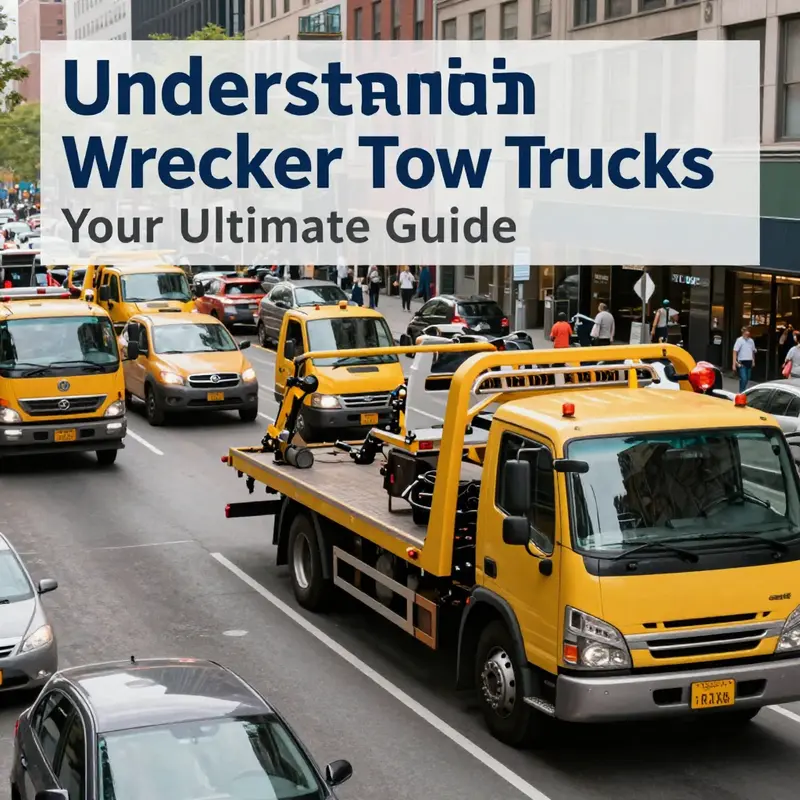
A wrecker tow truck is more than a roadside helper. It is a specialized instrument of mobility, safety, and urban coordination, built to restore order after mishaps, clear obstructed lanes, and support the many moving parts of a modern transportation system.
In the public imagination, tow trucks might appear as mere pulling machines, but the reality is more nuanced. These vehicles carry hydraulic booms, winches, wheel-lift arms, and flatbeds—capable of everything from a simple roadside pull to complex multi-vehicle recoveries on crowded highways. Their function touches road safety, traffic flow, emergency response, and the rhythm of daily life in cities where a single stalled vehicle can cascade into hours of delay.
The technology behind wreckers is purpose-built for versatility and precision. Hydraulic systems power booms and winches to lift and stabilize vehicles of varied sizes. Wheel-lift mechanisms cradle a vehicle’s wheels while the other end is secured to the tow. Flatbeds, including roll-backs, allow loading without contact with the driveline, valuable for damaged or low-clearance vehicles. Operators balance speed with care, pulling a vehicle onto a trailer while avoiding further damage. These are not brute-force operations; they rely on training, experience, and scene assessment.
From a macroeconomic standpoint, the wrecker industry sits at an intersection where urban growth, vehicle ownership, and public policy converge. Urban growth brings higher traffic and accident frequency, elevating demand for roadside recovery and clearance. The market expands with population density, miles traveled, and municipal fleets and private operators. Reckoning the economic footprint, wreckers affect dispatch centers, emergency response times, insurance pricing, and traffic management plans. Prompt removal reduces downstream costs: less secondary collision risk, shorter congestion, and lower emissions from idling. Faster clearance translates into benefits for businesses, commuters, and taxpayers.
Industry observers point to a dynamic market driven by urbanization and rising vehicle ownership. The global wrecker market spans compact fleets to large operations and increasingly capable equipment. The trend toward better wreckers is coupled with efforts to reduce total cost of ownership, including maintenance networks and accessible parts. In markets with competitive suppliers, small improvements in uptime and fuel efficiency yield meaningful savings across a vehicle’s life. Accessibility of affordable wreckers helps modernize fleets in growing regions.
Societal dimensions include road safety: rapid clearance reduces secondary incidents, eases emergency services, and keeps essential corridors open. Tow services support law enforcement and traffic management by removing illegally parked or abandoned vehicles, improving public space and pedestrian safety. Modern wreckers use rotator booms, stabilization, and precise rigging to recover with care in tight spaces, minimizing repair costs and safety risks. Insurance costs, repair industry workload, and dealership networks respond to how efficiently a tow reaches a facility.
Policy and regulation shape the operating environment. Licensing, equipment standards, and dispatch protocols guide cost, availability, and safety outcomes. A regulated environment yields more consistent performance; training, safety, and readiness become priorities. The industry is also feeling the push toward sustainability, exploring electric propulsion and energy-efficient maintenance.
The future lies in safety, efficiency, and environmental stewardship. Electric or hybrid propulsion for heavy-duty tow trucks may emerge as fleets modernize, offering lower operating costs, quieter operation, and alignment with procurement goals. The recovery industry must balance high-load operations, weather, and training to prevent injuries and equipment damage. The central takeaway remains: wreckers keep roads safer, sustain commerce, and restore order after disruption. They reflect how transportation systems move communities through risk, cost, and consequences to allow society to thrive.
For practitioners, fleet standardization and emergency readiness matter: uniform procedures, shared training, and coordinated dispatch improve outcomes at the scene, shorten delays, and reduce economic disruption. The broader industry outlook—grounded in market research and comparative performance—offers perspective on what lies ahead. See more on the industry landscape in related resources. The road ahead will test the balance between urbanization, budget constraints, and environmental goals, while restating that investing in capable wreckers is investing in safer roads and resilient logistics.
Final thoughts
Wrecker tow trucks play a critical role in maintaining safety and efficiency on our roads. From their unique functionalities to their vital impact on local economies and community welfare, understanding these vehicles enriches our appreciation for the services they provide. Whether you’re a local driver, an auto repair specialist, or involved in property management, recognizing the significance of wrecker tow trucks ensures that when emergencies arise, you’ll be well-equipped to respond proactively and efficiently.