
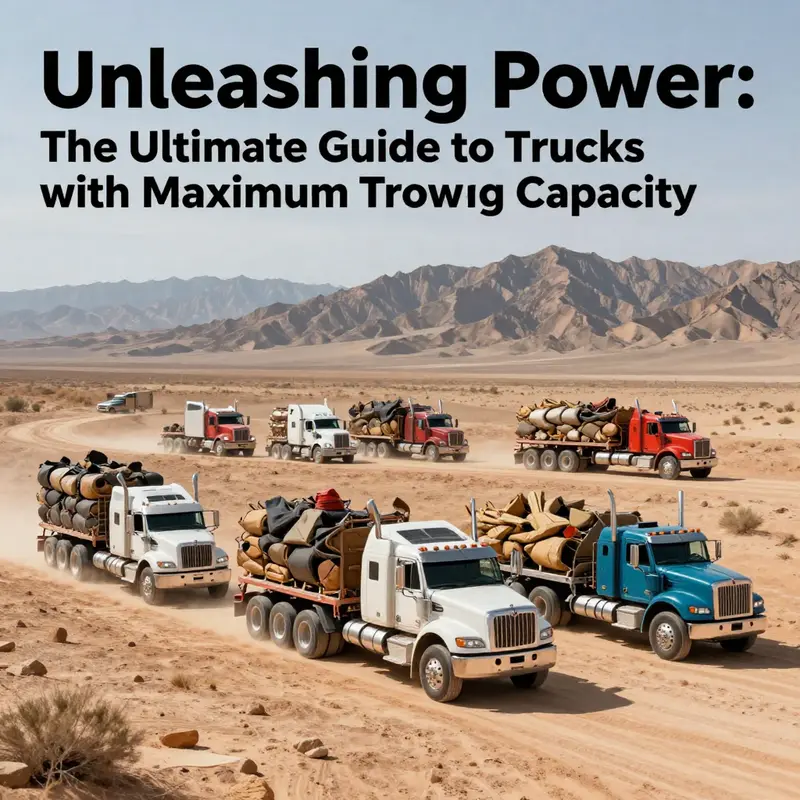
For local drivers, car owners, and property managers, understanding towing capacity is essential for ensuring safety and efficiency on the road. Whether you’re hauling a trailer, moving heavy equipment, or embarking on an adventurous road trip, knowing which truck can tow the most can make a significant difference in your experience. In this exploration of maximum towing capacities, we will analyze top vehicles in the market, focusing specifically on SUVs in the first chapter. Our second chapter will delve deep into competitive comparisons, ensuring you can identify the perfect match for your needs. Finally, we’ll take a look at future trends in towing capabilities, ensuring you stay ahead of the curve and make informed decisions.
null
null
Maximum Tow Among SUVs: How the Biggest Haulers Earn Their Ratings
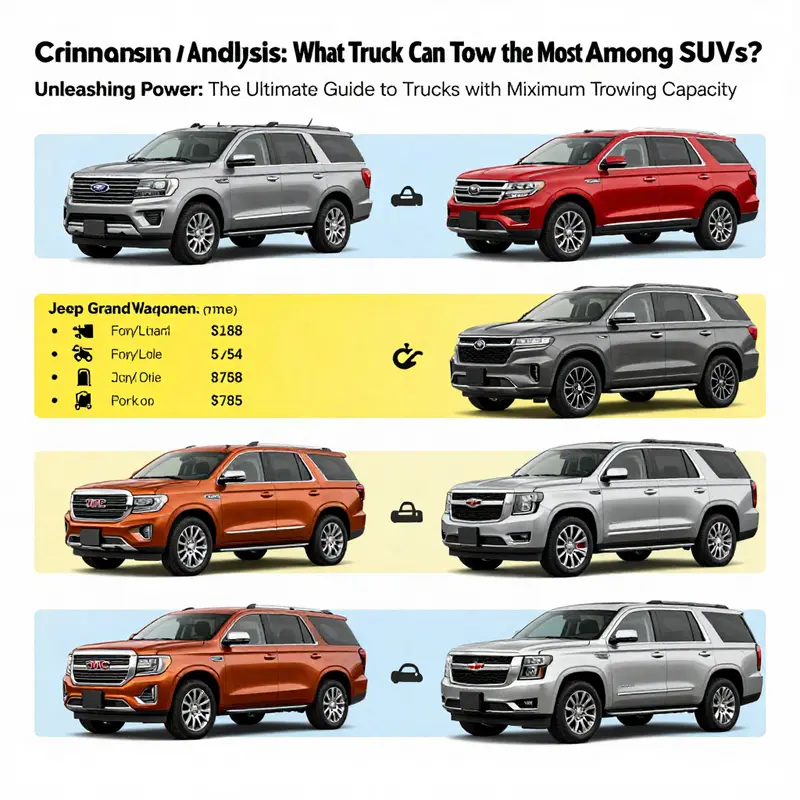
Maximum Tow Among SUVs: How the Biggest Haulers Earn Their Ratings
When the question is which SUV can tow the most, the short answer is that full-size, frame-based SUVs with heavy-duty powertrains and factory tow packages sit at the top of the list. But the longer answer is more useful. Tow ratings are the product of multiple engineering choices: engine torque, cooling capacity, transmission gearing, axle ratio, suspension and frame design, braking systems, and the electronics that manage trailer stability. Understanding how those pieces work together reveals why some SUVs approach the towing capability of light-duty pickup trucks, while most crossovers stay well below them.
A handful of large SUVs from major manufacturers are engineered to tow in the high thousands of pounds. One representative example from a mainstream American full-size SUV segment is factory-rated for up to 9,600 pounds when specified with the correct tow equipment. That vehicle pairs a 3.5-liter twin-turbo V6 with roughly 440 horsepower and about 510 lb-ft of torque. Those engine numbers matter because towing is fundamentally about torque—especially low-end torque—to get a heavy trailer moving and to maintain speed on grades. The 9,600-pound rating also depends on an upgraded cooling system, a heavy-duty transmission, a reinforced frame and suspension tuning, and factory-installed towing aids such as an integrated trailer brake controller and trailer sway mitigation.
A different group of large, luxury-oriented SUVs pushes even higher in some trims. Certain three-row, high-end models achieved tow ratings near or at 10,000 pounds by combining strong V8 or boosted V6 engines with heavy-duty chassis components. Diesel-powered variants of large SUVs often make excellent tow platforms thanks to significant torque at low RPM. Diesels can sustain towing loads over long distances with less heat buildup in the engine, although cooling for the transmission and brakes still requires careful engineering.
On the other hand, many full-size SUVs from domestic manufacturers commonly rate around 8,400 pounds when appropriately equipped, and large European off-roaders and long-wheelbase utility models typically rate in the low 8,000s. Compact and midsize SUVs, including many efficient European wagons and crossovers, usually top out between 2,000 and 5,000 pounds—often much lower without an optional factory tow package. That optional equipment can nearly double towing capacity on some platforms by adding components the base vehicle lacks: upgraded cooling, stronger rear suspensions, and a higher-capacity wiring and hitch setup.
Towing ratings are not arbitrary; they reflect a manufacturer’s assessment of a vehicle’s safe operating envelope. Key elements that determine those numbers include:
- Engine output and torque curve. Peak torque available at low RPM helps with launch and hill climbing. Twin-turbo and diesel powertrains excel at producing usable torque across a broad range.
- Transmission strength and cooling. Heavy towing generates heat in the transmission. Tow ratings assume sufficient cooling capacity, often via auxiliary coolers and heavy-duty transmission mapping.
- Rear axle ratio and gearing. Higher numeric axle ratios multiply torque to the wheels, improving towing capability at the cost of highway fuel economy.
- Frame, suspension, and GVWR limits. Gross Vehicle Weight Rating (GVWR) and Gross Combined Weight Rating (GCWR) set the legal and mechanical ceilings. Reinforced frames and heavier-duty springs increase the payload and tongue weight the chassis can handle.
- Brake system capacity and trailer brake integration. A rated tow vehicle needs adequate stopping power; integrated trailer brake controllers and heavier-duty brakes help control long trailers.
- Electronic stability systems. Trailer Sway Control, hill descent control, and integrated trailer profiles in the vehicle’s stability-management system reduce the chance of instability under load.
A buyer focused on maximum towing should prioritize a vehicle engineered for towing from the factory. That means selecting a model with the heavy-duty tow package or the specific engine/transmission combination that raises ratings. Aftermarket hacks—adding an aftermarket hitch or tuning—cannot change GVWR or GCWR and may expose the owner to safety and warranty issues. Factory options include reinforced hitch receivers, upgraded rear axles, transmission coolers, and factory trailer wiring harnesses that permit integrated control systems to function as designed.
Towing capacity numbers tell one part of the story, but matching the tow vehicle to the trailer requires attention to other figures: payload, tongue weight, and GCWR. Payload is the maximum weight the vehicle can carry in the cabin and cargo area. Tongue weight is the downward force the trailer exerts on the hitch—typically 10–15% of trailer weight for conventional trailers and slightly higher for some configurations. If payload is insufficient, a vehicle rated to tow 9,000 pounds may not safely handle the trailer once passengers, cargo, and hitch hardware are factored in. That makes payload a gating constraint for real-world towing.
Weight distribution matters. A weight-distributing hitch and sway control hardware transform a heavy SUV’s towing behavior. These devices transfer some tongue weight toward the front axle, restore steering feel, and reduce rear suspension sag. For heavy trailers, a weight-distributing hitch is often essential, not optional. Coupled with a high-capacity trailer brake controller and a properly adjusted trailer brake gain, these components make high tow ratings usable and predictable.
Braking and thermal management are the unsung heroes of heavy towing. Long descents produce massive heat in service brakes; a vehicle and trailer must be able to dissipate that energy without fade. Integrated trailer brakes that proportionally add brake force to the trailer help stabilise braking. Auxiliary transmission coolers and engine oil coolers prevent overheating during sustained pulling. Manufacturers that rate their SUVs for near-10,000-pound towing have designed cooling circuits, transmission mapping and shift schedules, and brake capacities that account for those demands.
Electronic driver aids make modern towing far safer than earlier generations. Trailer Sway Control can use the vehicle’s brakes and engine torque reduction to counteract oscillations. Tow/Haul modes change shift logic to hold lower gears longer and reduce hunting. Rearview camera systems with trailer-assist overlays and dedicated hitch guidance simplify hookup. These systems do not increase structural limits, but they expand the envelope in which a vehicle can safely operate at its rated capacity.
Diesel versus gasoline powertrains deserves a moment of attention. Diesels typically produce more torque lower in the rev range, making them naturally suited to towing heavy loads. Their fuel efficiency under load can also be an advantage on long hauls. Gasoline engines that are turbocharged and paired with modern transmissions can close the gap with high peak outputs, but they may run hotter under sustained high-load towing unless matched with robust cooling. Ultimately, specific engine and cooling package choices determine which variant of a model is best for towing.
Long-wheelbase SUVs and those with reinforced frames tend to offer higher tow ratings. Wheelbase influences trailer sway behavior and how the combined vehicle-trailer unit tracks through corners. Longer wheelbases generally improve towing stability, which is why extended versions of some models have higher ratings. However, a longer wheelbase does not compensate for inadequate cooling, brakes, or incorrect axle ratios—it simply contributes favorably to dynamic behavior.
For buyers comparing options, several practical steps help identify the best candidate for maximum towing:
- Compare official tow ratings for the exact powertrain and equipment packages. Ratings vary widely across trims.
- Check GVWR and GCWR numbers. Higher numbers usually indicate a platform built for heavier loads.
- Confirm payload capacity after accounting for passengers and cargo. You must have enough payload left for tongue weight.
- Review the factory tow package content. Look for dedicated transmission coolers, a factory trailer brake controller, heavier rear springs, and a reinforced hitch receiver.
- Evaluate available stability and assistance technologies. Trailer Sway Control, Tow/Haul modes, and camera aids are valuable.
- Consider diesel variants if sustained torque and fuel economy under load are priorities.
Real-world towing also brings legal and insurance considerations. Local and state laws govern trailer brakes and weight limits on certain roads. Insurance policies may have different coverage rules for vehicles used frequently to tow heavy loads. The combination of truck and trailer weight may trigger commercial registration requirements in some jurisdictions. Owners must be aware of these constraints before assuming a high towing rating gives free rein to haul any load.
Practical experience from towing professionals highlights a few recurring themes. First, a high tow rating is only as good as the weakest link: hitches, ball mounts, trailer wiring, and the trailer’s own braking system must match the vehicle’s capability. Second, routine maintenance becomes more critical when towing near a vehicle’s limits: fluid checks, cooling system integrity, brake inspections, and tire condition must be managed more frequently. Third, driving technique matters. Smooth throttle inputs, early planning for deceleration, and lower target speeds on grades greatly reduce thermal stress on drivetrains and brakes.
There is also a trade-off between everyday usability and maximum towing capability. Vehicles tuned and optioned for maximum tow can feel stiffer under ordinary driving due to heavier springs and different shock tuning. Some buyers prefer a mid-range setup that balances passenger comfort and respectable towing, while others accept a firmer ride in exchange for maximum trailer weight capacity. The choice depends on intended use frequency and the types of trailers typically towed.
Finally, not all heavy tow-capable SUVs are equal when it comes to long-term reliability under load. Factory-engineered solutions that include uprated transmissions, cooling, and brakes generally hold up better over time than aftermarket modifications. If you plan to tow near the vehicle’s limit regularly, selecting a platform that offers a dealer-backed heavy-duty towing package is the prudent route. For additional operational guidance and how to spot unsafe towing practices, reference reputable industry guidance on illegal or unsafe towing practices: spot illegal towing — key signs to know.
When deciding which SUV is right for maximum towing, the best approach is to match three things: the manufacturer’s rated capability, the vehicle’s payload and GCWR, and the real-world demands of the trailer you intend to pull. If your trailer regularly approaches the high towing ratings discussed here, choose a full-size SUV with the factory tow package and a powertrain variant designed for sustained loads. Otherwise, a mid-size or heavy-duty truck platform may offer a simpler, more robust long-term solution.
For detailed manufacturer-specific towing figures and testing, consulting authoritative reviews and spec sheets is useful. One reputable source provides a clear breakdown of towing capacity for a popular full-size model and its various configurations: https://www.caranddriver.com/chevrolet-tahoe/towing-capacity
Tow Capacities in a New Era: How Tomorrow’s Tow Platforms Will Tow Heavier Than Ever
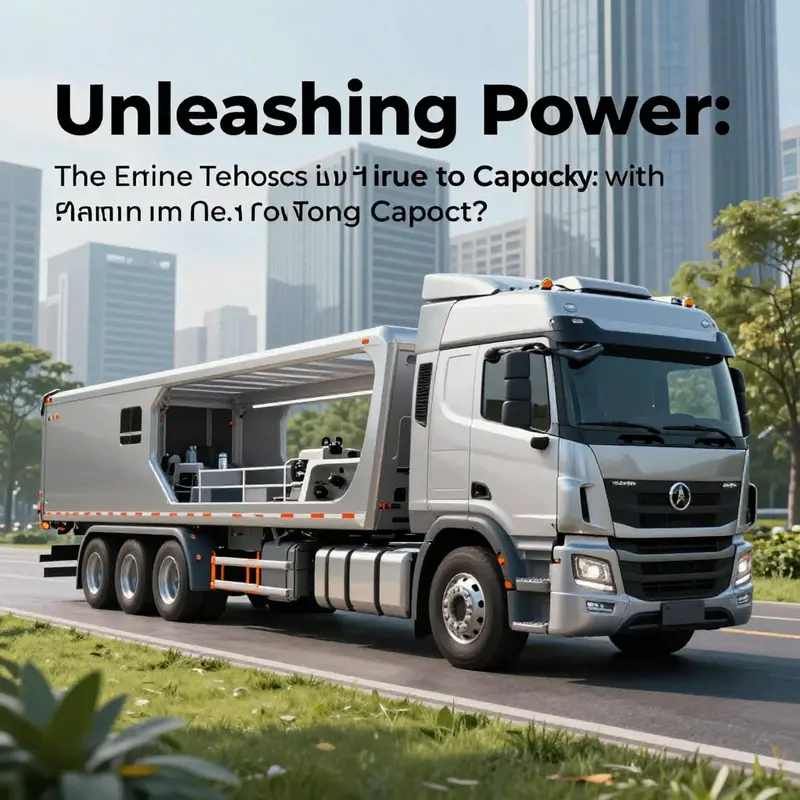
The question of which vehicle can tow the most has long invited both practical analysis and aspirational thinking. People want numbers to guide purchases, yet they also seek confidence that a platform can handle the loads it is asked to haul. As towing technology evolves, the answer grows more nuanced than a single rating.
This chapter traces a path from today to a future where electric propulsion, smarter materials, and adaptive towing systems redefine the ceiling. The headline figure remains important, but it is increasingly complemented by stability, efficiency, and real world capability.
Electric propulsion is the clearest driver of change. Instant torque, not a single peak curve, allows smoother starts on grades and easier launches when pulling a loaded trailer. Electric platforms can be engineered with compact, integrated powertrains that free space for the hitch, brakes, and cooling, reducing overall mass somewhat while maintaining structure. In practice this can move the capability envelope upward so that once impressive numbers feel routine in capable electric pickups or large EV SUVs.
Materials science is shrinking the penalty of hauling heavy loads. High strength steels, aluminum alloys, and carbon fiber can be used where weight savings do not compromise safety. Lighter framing improves efficiency and handling while maintaining payload and tow rating. Weight distribution remains central; the balance of mass around the axle matters more than a single number.
Adaptive towing systems will likely mature beyond the simple trailer brake controller. Sensors monitor weight, tongue height, wind, and grade, feeding data into an onboard processor that adjusts steering assist, braking, throttle response, and even suspension. The result is improved safety, precision, and efficiency. These systems can respond faster than a driver to gusts or lane changes and can optimize power and braking distribution across drivetrain and trailer.
Battery technology also matters. Better energy density, thermal management, and charging solutions enable heavier tows and longer ranges. A well tuned battery pack can sustain high demand without derating, and efficient cooling prevents performance drop on hot days or long descents. When paired with energy management and regenerative braking that favors the trailer, electric platforms may offer more predictable towing performance than some traditional setups.
Charging infrastructure and trip planning influence practical limits. A higher rating is meaningful only if the vehicle can sustain towing for the intended trip. A robust charging network makes long haul towing with electric trucks more viable, with speed and availability shaping how often the top rating translates into usable capability on the road.
Market dynamics suggest the top end of towing remains the domain of large, purpose built platforms, while electric entrants push the boundary higher. Industry projections point to configurations and trims that approach or exceed fourteen thousand pounds for select setups. Not every configuration will deliver the same results, so buyers should compare trim level, axle ratio, braking setup, and trailer control features.
To translate these developments into guidance, certain factors deserve emphasis. Tow rating must be considered alongside payload capacity. Braking performance and trailer brakes are crucial. Hitch height and weight distribution influence sway and stability. Steering and suspension tuning must account for added mass, not just highway speed. Finally energy efficiency matters for electric platforms. A capable tow vehicle must balance safety and performance with range and cost considerations.
As the conversation evolves, industry previews and consumer guidance expand in tandem. Readers can follow ongoing coverage through industry reports and official manufacturer disclosures. For practical perspective, many resources connect high level engineering trends with everyday towing realities. Readers can explore reputable blogs and guides that discuss planning, execution, and management of heavy tow tasks across diverse scenarios.
The future belongs to platforms that deliver consistent heavy tow performance across trips, weather, and road profiles while offering comfort, efficiency, and total cost of ownership advantages. The electric platform with its instant torque and integrated energy management is well positioned to redefine what most capable towing means. Yet the picture remains nuanced: a higher rating matters only if the entire system works reliably under a range of conditions. The era of purely pound for pound dominance gives way to a more mature understanding of towing excellence, one that blends capability, reliability, and user experience.
For buyers, the wise choice is the platform that can adapt to evolving needs, whether towing a heavy trailer on a single trip or maintaining peak performance across a season of demanding hauls. In this evolving landscape, the answer to the headline question shifts as technology advances, but the core aims remain clear power when needed, control when required, and endurance across miles with a trailer attached. External reference for a recent electric towing platform specification can be found on manufacturer sites and industry publications.
Final thoughts
Choosing the right truck for maximum towing capacity is essential for local drivers, property managers, and commercial operators. The Ford Expedition leads the pack with its superior towing capabilities, aggressive power, and supportive technologies tailored for adventurers and workhorses alike. However, the market also presents formidable competitors such as the Jeep Grand Wagoneer, GMC Yukon Denali, and Chevrolet Tahoe, each offering unique strengths that cater to diverse needs. By staying informed about current models and future trends, you can ensure that you’re making the most powerful and efficient choice for your towing endeavors.