
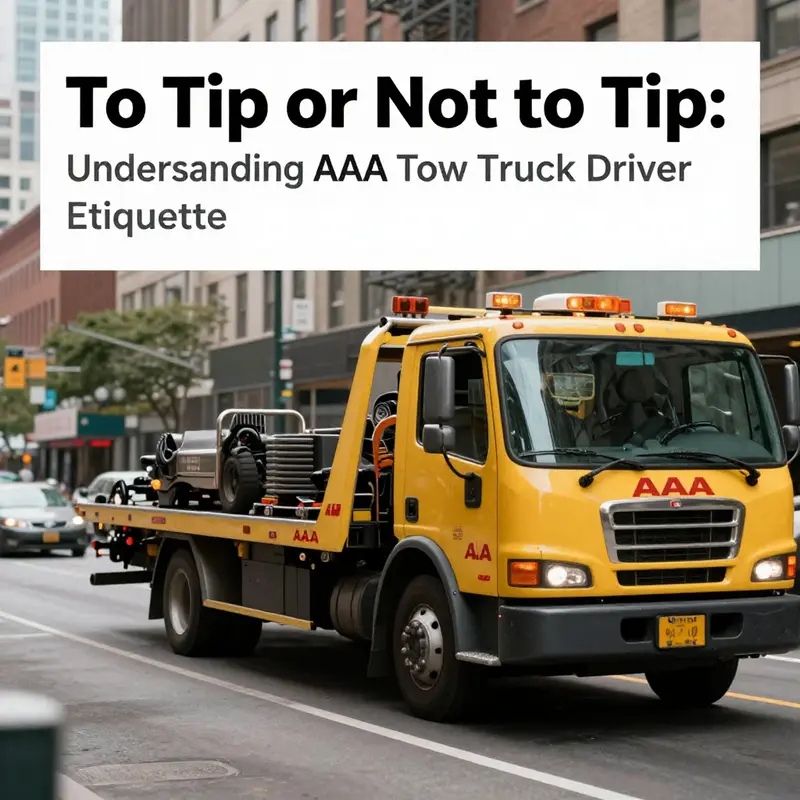
Tipping, a common practice in various service industries, often comes with its own set of unwritten rules. Among these is the question of whether to tip AAA tow truck drivers, a topic that has left many car owners unsure. With a professional towing service linked to a membership organization, understanding the expectations and norms around tipping in this context is crucial. This article will delve into the intricacies of the role of AAA tow truck drivers, the economics of AAA membership, societal norms pertaining to tipping, and alternatives for acknowledging good service. Each chapter will provide insights to help local drivers, auto repair shops, and property managers navigate this often-overlooked aspect of roadside assistance.
Grace on the Road: Why Tipping AAA Tow Truck Drivers Isn’t Expected, and How Real Appreciation Happens
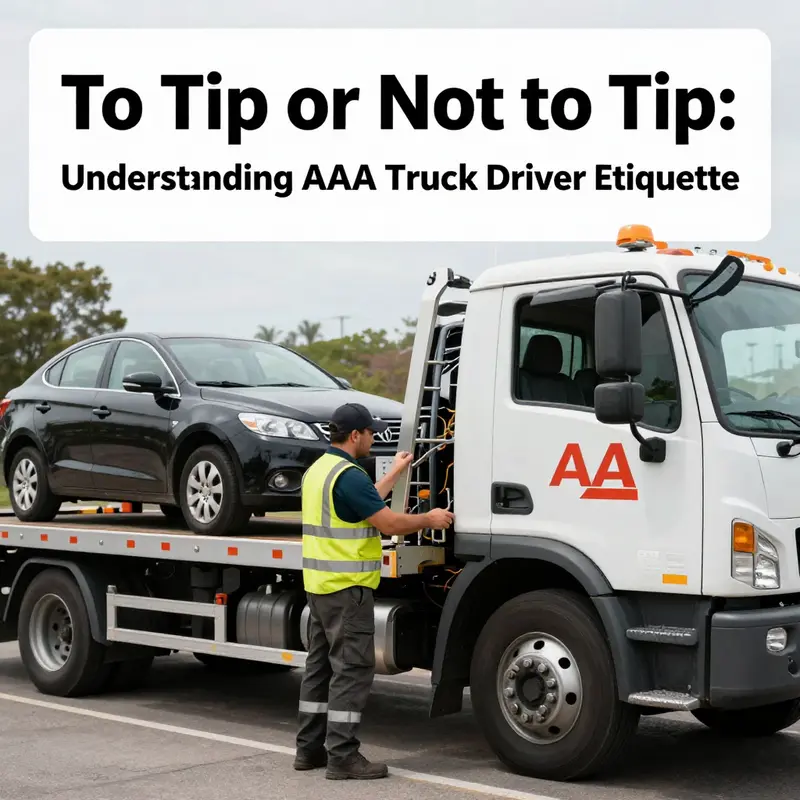
When you find yourself stranded with a silent dashboard and the clock ticking, the arrival of a tow truck can feel like a lifeline. In that moment, questions about tipping may arise. For membership-based roadside assistance providers like AAA, tipping is generally not expected. The service is funded by membership dues, and drivers are typically paid employees whose compensation is built into the plan. That means gratuities are not part of the equation of fairness or service level.
From the driver’s perspective, the work is demanding: they manage heavy equipment, work in traffic, and communicate clearly about what they can do and when. Their professionalism and safety-first approach are the core value delivered, not the promise of a tip.
Tipping policies exist to prevent conflicts of interest, complicate accounting, and preserve consistent service across regions. Guests can still show appreciation in non-monetary ways: a thank-you note, positive feedback through official channels, or a brief online rating that helps the branch improve. If you must offer something tangible, confirm policy first and use approved channels.
Ultimately, the point of membership-based roadside assistance is predictability and safety. The value comes from a reliable network, documented procedures, and the driver being supported by a professional organization. Your gratitude should reinforce that system, not disrupt it. For readers who want to learn more, review official policy pages or contact the local branch.
Tipping Tow Trucks in a Membership Economy: Etiquette, Economics, and the Roadside Promise
When a roadside emergency arrives, the first concern is safety and swift resolution. The second often lingers in the back of the mind: should I tip the tow truck driver who appears with calm efficiency, a mobile beacon of help in an otherwise stressful moment? The straightforward answer, grounded in the realities of a membership-based roadside assistance network, is usually no. Tipping is not expected or customary for services billed through a membership plan, where the cost of towing and related assistance is bundled into the paid access fee. Yet the question persists because tipping culture runs deep in many service industries, and good work in a crisis deserves recognition. The challenge is to reconcile instinctive gratitude with the business model that underpins a national, membership-driven network and to understand how the economics of that model shape expectations at the curbside.
To grasp why tipping is not part of the standard practice in this context, it helps to situate roadside assistance within the broader idea of a membership economy. This model, thoroughly explored in modern discussions of customer relationships, shifts the emphasis from isolated transactions to ongoing access and reliability. Members pay a recurring fee for access to a vetted network of service providers, along with a promise of prompt, professional help when needed. The primary value proposition is the peace of mind that comes with predictable access: you know you have a reputable resource at the ready, and the network has a reason to keep service levels high because there is a predictable revenue stream underpinning the relationship.
In this framework, the tow that arrives in response to a breakdown is not merely a single service rendered for a one-time payment; it is part of an ongoing, negotiated system of benefits. The membership fee covers foundational infrastructure—the dispatch center, the network of drivers, the standard operating procedures, and the general capacity to respond quickly. The actual towing price, when it applies, is often disclosed up front as a per-service charge or included as part of tiered plan benefits. What matters is that the driver’s time and expertise are compensated through a structure that minimizes volatile, informal payments at the point of service. The result is a service experience that prioritizes reliability, safety, and efficiency over the spontaneity of cash tips.
This is not to suggest the drivers are underpaid or that discretionary generosity has no place. Rather, it is to recognize that tipping, in this particular ecosystem, does not operate as a supplement to wages in the same way it might in a solo contractor arrangement or in a restaurant where tips directly power a worker’s income. The driver is part of a larger, organized network with standardized pay models, dispatch protocols, and performance metrics. In practice, that means the amount to settle for a tow is either pre-determined within the membership structure or clearly itemized as an additional service charge. The driver’s compensation is designed to be stable and aligned with the network’s pricing strategy, not dependent on the generosity of customers who may be in a moment of stress or urgency.
As a consumer, recognizing this distinction can reduce confusion during an incident. If your plan includes a free or fixed-deductible tow, tipping the driver would not be expected; it would be an outlier, and some organizations even advise against it to preserve consistency across the member base. If the policy indicates a per-use fee beyond what the membership covers, the documented pricing should guide your decision, not a discretionary impulse at the scene. The practical takeaway is simple: treat the encounter as a service provided under a contract rather than a personal favor granted by a single worker. Acknowledge competence and courtesy verbally, if you wish, but do not feel obligated to offer cash as a gratuity.
That said, a chapter-like exploration of the economics behind this dynamic helps illuminate why the question arises at all. The membership economy, as described in foundational business literature, emphasizes predictable, recurring revenue and a sense of bundled value. Clients join not just for a single incident but for ongoing access to a network that promises reliability in moments of need. This arrangement tends to cultivate a sense of entitlement to service continuity rather than a transactional expectation of extra payments for individual acts of service. The implicit contract is not “you pay for this tow, and you may add a tip if you choose” but rather “you pay for access, and you receive prioritized service under agreed terms.” In such a system, tipping becomes atypical—a vestige of a different service culture rather than a robust component of the compensation structure.
Yet the question still matters in everyday life. When a driver goes beyond the call of duty—perhaps they navigate a dangerous weather condition to reach you, or they take extra minutes to ensure a safe transfer of your vehicle to a service location—many people feel that courtesy should be acknowledged in some tangible way. The appropriate response in a membership-based model is nuanced. Verbal appreciation and a detailed, constructive rating can have real value for service quality and accountability. Providing feedback through the network’s channels helps ensure that high performers gain recognition in a manner aligned with the system’s governance. In contrast, cash tips can create inconsistencies in how compensation is perceived and distributed across the network, potentially complicating uniform standards and equal treatment of all members.
The practical path, then, is to rely on the formal mechanisms of feedback, review, and policy adherence. If you are confronted with opaque pricing or unexpectedly high charges, the onus is on the network to clarify those costs. Transparent communication about what portion of your charge is membership-based and what portion is service-specific reduces the risk of misunderstanding. You can also use the post-service window to review your experience and, if needed, escalate concerns through customer service channels. This approach preserves fairness in compensation while retaining the personal gratitude that accompanies good service. It also aligns with the broader responsibility of membership organizations to maintain trust and deliver consistent value across all encounters, not just in moments of frustration.
Crucially, the etiquette around tipping in this context does not arise in isolation. It is shaped by the expectations of a membership community, the contractual nature of the service, and the professional norms of a large-scale dispatch operation. A driver’s expectations—their wages, their schedule, the way dispatch works, and the way customers perceive the value of the service—are all influenced by the underlying pricing architecture. When a tow is billed as part of a membership benefit, the tipping impulse can feel out of place, almost incongruous with the contract-driven exchange. The psychology of tipping—an act of immediate personal reward—collides with the long-term value proposition of the membership model, which seeks to reduce the friction of each individual transaction by delivering a predictable, reliable service network.
Still, it would be remiss to ignore the broader social norms that pervade any service encounter. People often want to reward clear competence, empathy, and extra effort. In such moments, a non-monetary acknowledgment can be powerful. A sincere thank-you, a calm and respectful tone, and a brief note of appreciation can reinforce positive behavior without altering the financial structure of the relationship. For those who feel compelled to offer something tangible, a small gesture that remains within policy parameters—such as a card with gratitude or a formal compliment filed through the service network—can be a constructive alternative to a cash tip. The key is to keep the gesture aligned with the collective framework rather than creating divergent incentives across the member base.
From a consumer education standpoint, it is useful to clarify how pricing works before you need help. When you join a membership program that includes roadside assistance, you are securing access to a network with standardized rates for common services and a transparent policy on limits and exclusions. If you anticipate a tow or other assistance during a high-demand period or in a location where surcharges might apply, you can prepare by understanding what the plan covers and what would count as an add-on service. This knowledge helps prevent a rude surprise and reduces the temptation to compensate for perceived shortcomings with a tip. It also supports fair treatment across all members, ensuring that the experience you receive reflects the terms under which you joined, rather than a separate negotiation at the roadside.
Looking beyond the immediate scene, it is instructive to consider how the broader business literature treats compensation in membership-based services. The idea of “permanent transactions” with a network suggests that value is anchored in access, trust, and predictability rather than in discretionary, episodic payments. When a crisis strikes, customers rely on the reliability that the membership promise conveys. If tipping becomes a habit in this sector, it risks eroding that reliability—introducing variable expectations and potential disparities among members who encounter differently compensated drivers in different regions. The rational choice, from both customer and firm perspectives, is to maintain a transparent, policy-driven approach to pricing and compensation, while channeling gratitude through the channels that reinforce consistent service quality rather than personal, ad hoc payments.
As you reflect on your own experiences with roadside assistance, you may find it helpful to compare the etiquette you observe with other service contexts. In many hospitality or food-service settings, tipping remains a core part of income. In professional services with a membership framework, the tipping norm is notably different. The driver’s income is shaped by dispatch systems, contracted wages, and performance incentives that are calibrated to maintain fairness across all customers. The tipping instinct is not wrong or morally suspect; it simply operates under a different economic logic here. Recognizing this logic helps align personal etiquette with organizational policy, ensuring that the moment of crisis is handled with courtesy and clarity rather than confusion or inconsistency.
For readers who want a deeper dive into how subscription and membership models influence pricing strategies, customer value, and service delivery, consider the broader literature on the subject. The concept at the heart of this chapter—relationships over transactions—receives detailed treatment in the work that popularized the membership economy. The discussion there illuminates why many large-scale service networks choose bundled access over piecemeal pricing and how that choice affects customer expectations, including etiquette around tipping. This perspective can empower consumers to navigate not just roadside assistance but any situation in which a service is purchased as part of a broader, ongoing relationship. It also highlights the tension between the immediacy of a tipping gesture and the longer arc of value a membership is designed to offer.
If you want a concrete reference to the ideas behind the membership model discussed here, you can explore further resources on the subject. A foundational text in this area, which analyzes the pricing and value dynamics of subscription-based businesses, offers a rigorous backdrop to understanding why a tipping culture may not fit the structure of a membership network. See the external reference at the end of this chapter for further reading on these concepts. And to connect theory to practice, you can explore practical perspectives on towing operations within membership networks through industry-focused blogs that discuss standards, readiness, and emergency response. A nearby resource with operational insights is the blog of a regional tow truck service, which provides context on how fleets standardize procedures for safety and efficiency, including how they handle emergency dispatch, readiness, and customer communication in high-pressure situations. For readers who want to explore more about the mechanics of towing operations and fleet standards, the page at Santamaria Tow Truck’s blog offers relevant real-world viewpoints and policies that complement the concepts discussed here. You can visit that resource at the following URL: https://santamariatowtruck.com/blog/.
In sum, tipping the tow truck driver within a membership-based roadside network is not the customary practice. The model’s strength lies in its ability to deliver predictable, reliable service through a bundled, contract-driven relationship. Gratitude remains appropriate, but the financial gesture of tipping is generally unnecessary and, in some cases, discouraged. By focusing on transparent pricing, constructive feedback, and formal recognition of exceptional service, customers and networks alike reinforce a culture of trust and fairness. The result is a roadside experience that prioritizes safety and clarity over the spontaneity of gratuities, aligning with the broader aim of the membership economy: to transform episodic acts of service into dependable access to a trusted network.
External reference: https://www.amazon.com/Membership-Economy-How-Companies-Create-Permanent/dp/111895645X
Gratitude on the Road: Rethinking Tipping Norms for AAA Tow Truck Drivers in a Modern Service Landscape
The moment the roadside light flickers and your engine coughs to a stubborn stop, a tow truck arrives without fanfare, a quiet promise that you won’t be left stranded. The driver steps out, assesses the situation with practiced calm, and lines up the plan to get your car rolling again. In that tenseness of a moment, a simple impulse can rise from the core of human interaction: a desire to show thanks. Tipping is a familiar gesture in many service encounters, a quick way to acknowledge care under pressure. Yet for AAA tow truck drivers, that impulse sits against a backdrop of policy, compensation, and evolving social norms that don’t always align with everyday expectations. The question, “Do you tip the AAA tow truck driver?” invites more than a yes-or-no answer. It invites a broader reflection on what counts as good service, how value is paid for in professional roadside assistance, and how communities negotiate gratitude when time and safety are at stake.
To understand tipping in this particular service context, it helps to start with the economics and the structure of AAA’s model. AAA operates on a membership-based framework in which certain towing benefits are bundled into the fee members pay. The cost of towing is, in many cases, included as part of the membership benefits, or reimbursed through insurance channels, depending on the plan and circumstance. In practical terms, this means the driver’s compensation is largely set by the enterprise’s standard pay scales, benefits, and the negotiated rates with the company, rather than by the momentary generosity of a single customer. In many corporate accounts, the driver’s salary is designed to be stable and sufficient to attract and retain trained professionals who can handle the safety, logistics, and communication required in a roadside emergency. The evidence gathered from employee reviews and industry analyses points to a pattern: AAA tow truck drivers typically receive solid training, a salary and benefits package, and up-to-date equipment. The implication is straightforward: tipping is not a necessary or expected part of the financial calculus that supports the driver’s livelihood.
This distinction between tipping as a social practice and tipping as an economic norm matters, because tipping operates on multiple planes at once. It functions as a way to reward service quality, yes, but it also serves as a signal that a tipping customer recognizes the stress of the moment and the driver’s skill in coping with it. This dual function is well-documented in studies of tipping norms across service sectors. The literature emphasizes that tipping has both an economic function and a psychological one: it can reinforce positive behavior and strengthen social bonds between recipients and givers. In a narrative sense, a tip is a visible symbol of gratitude for a job well done under constraint. But the critical point for roadside assistance—where risk, safety, and time pressure loom large—is that the typical economic structure of the service provider reduces the necessity of tipping.
The absence of a tipping expectation does not erase the social pull toward appreciation. People are often drawn to acknowledge help that arrives at a moment of vulnerability. A tow truck ride is not a casual transaction; it is a heavy, stressful experience with real consequences for people’s schedules, finances, and wellbeing. Still, professional norms and corporate policy sometimes diverge from personal sentiment. AAA’s formal stance, reinforced by policy communications and industry practice, leans toward tipping not being required or expected. The gap between personal inclination and organizational guidance can create a space where customers feel uncertain: should they tip anyway, as a private gesture of thanks, or should they respect the policy and focus on safe, respectful interaction? The tension is not merely about money; it’s about aligning personal gratitude with a standardized, scalable model of service delivery.
From a norms perspective, the tipping conversation reveals how social conventions persist, even when economic incentives shift. In many service contexts, norms endure because people rely on shared scripts—if you tip in a restaurant, you tip in a bar, you tip when you’re satisfied with a service. These scripts are reinforced by social learning and cultural expectations that sometimes outpace formal policies. When a driver has a stable income and a clearly defined job description, the tipping norm may weaken, but it can still linger in the memory of the customer’s experience. Researchers who study norm dynamics explain that norms persist through conformity and pluralistic ignorance—that is, people may assume everyone else is tipping, and so they tip, even when they do not strictly need to. Other factors, such as cognitive dissonance or reactance to being told how to behave, can complicate or reverse those impulses, especially when the situation is highly charged emotionally. In the context of AAA towing, these dynamics play out in the margins: a customer may feel grateful and want to tip, a driver may prefer no tip, and the policy remains a clear reference point that most parties treat as normative guidance rather than a mandatory rule.
What, then, should a customer do in practice when faced with a roadside hitch that feels like a moment to reward outstanding care? First, it’s reasonable to prioritize safety and patience. The driver’s primary task is to secure the vehicle, assess hazards, and arrange a safe transport route. Demonstrating that you trust the driver’s expertise by following instructions, staying out of the way, and communicating clearly can be a profound form of appreciation. In high-stress moments, a calm demeanor and cooperative attitude may do more to reinforce positive behavior than any monetary gesture could. If you choose to express gratitude with a non-monetary gesture, a simple word of thanks, a brief note of appreciation to the dispatch center, or a respectful compliment in a survey can ripple through the company’s feedback systems and influence future service quality. These gestures acknowledge the human element of the encounter without altering the formal compensation framework that underpins the driver’s livelihood.
For those who still feel strongly about a monetary gesture, the policy is not a hard rule that punishes or shames. Rather, it is a reminder of the prevailing standard and a cue to consider context. If you are dealing with a particularly difficult situation—such as a prolonged breakdown in severe weather, a dangerous location, or a driver who goes above and beyond in terms of communication, safety checks, and efficiency—your impulse to show appreciation may be directed toward a different channel. Some customers choose to provide positive feedback to the company, either through a formal rating system or by sharing a detailed compliment with the dispatcher. In the ecosystem of a large organization, constructive feedback can influence training, resource allocation, and the development of best practices for future incidents. It creates a tangible, scalable form of acknowledgement that aligns with the company’s mission to deliver reliable, professional assistance.
Incorporating industry perspectives, the discussion also benefits from a broader look at how norms evolve. The tipping conversation is not static, and it can respond to changes in public awareness, corporate policy, and the broader service environment. If a company or a regulating body clarifies tipping expectations or introduces new guidelines, norms can shift quickly. Conversely, when policy remains silent or ambiguous, social habits can maintain a degree of inertia. This dynamic is not a flaw; it reflects how communities continuously renegotiate their expectations in light of new information and experiences. The validity of any single approach—tip or don’t tip—depends on the alignment among policy, professional practice, and personal values. As customers, we can honor that alignment by choosing actions that emphasize safety, respect, and reliability, recognizing that true appreciation may be conveyed more effectively through cooperative behavior than through monetary gratuity.
An additional layer of nuance comes from looking at the source material and how industry voices connect to broader discussions about tipping. For readers who want a snapshot of day-to-day reflections in the field, industry blogs can offer practical, grounded perspectives. For example, the Santamaria Tow Truck Blog provides a space where practitioners discuss standards, readiness, and the realities of emergency response in ways that translate to customer expectations. The value of consulting such industry-focused resources lies in understanding how front-line workers and dispatch teams interpret and respond to customer interactions, and in how they think about the etiquette of appreciation in the field. You can explore this broader dialogue at the Santamaria Tow Truck Blog, which captures the practical concerns and professional norms that shape everyday towing operations. Santamaria Tow Truck Blog.
From a policy and practice standpoint, the key takeaway is to anchor gratitude in the service’s context and the organization’s guidance. The primary obligation in a AAA-towed scenario is safety, efficiency, and clear communication. The driver’s skill set—steering through traffic, assessing risk, managing complex logistics, and coordinating with the dispatch team—exists within a system designed to deliver reliable help under pressure. The tipping question, while emotionally salient, is a secondary consideration when viewed through the lens of professional standards and organizational incentives. The most effective expressions of appreciation, then, are those that reinforce positive behavior without compromising the standardized service model. A moment of respectful cooperation, a quick acknowledgment of the driver’s expertise, and the propagation of positive feedback through official channels all serve to reinforce a culture of high-quality roadside assistance.
In closing, the question of whether to tip an AAA tow truck driver does not invite a singular, universal rule. It invites a careful weighing of policy, personal values, and the situational reality of the encounter. For most customers, tipping is not expected or required, given the membership-based structure and compensated workforce that characterizes AAA towing. Yet gratitude remains a powerful force, and it can be expressed in ways that align with professional standards while still conveying genuine appreciation. By prioritizing safety, patience, and respectful communication, and by channeling gratitude through feedback mechanisms and non-monetary gestures, customers can recognize exceptional service without bypassing the policy framework that ensures consistent, high-quality support for those who need it most. As social norms continue to drift and as institutions evolve, the tipping landscape may shift in small but meaningful ways. Until then, the prudent approach is to gauge the context, honor the guidance, and remember that true appreciation is best expressed through the collision of calm cooperation and thoughtful feedback—leaving tips as a personal, optional accent rather than a universal expectation.
External reading on tipping norms and their social functions can deepen this understanding. For further exploration of the psychology and sociology behind tipping, see The Social Norm of Tipping: A Review (external resource).
Gratitude Without Gratuity: Recognizing Exceptional AAA Tow Truck Service Without Tipping
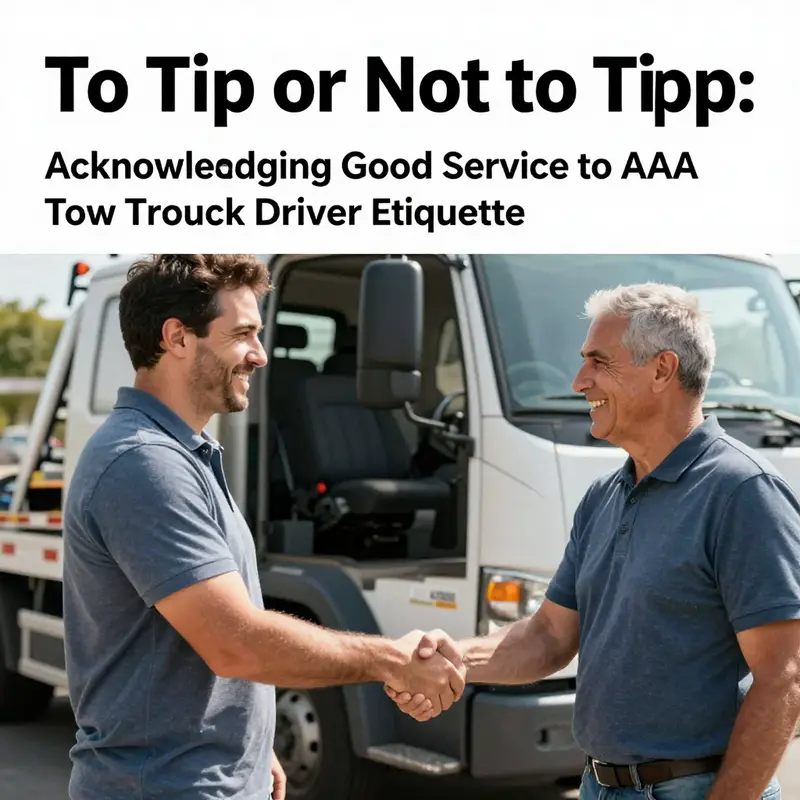
When you find yourself stranded on the roadside, the moment can feel uncertain, even terrifying. A tow truck arrives, professionally attired, methodical in their approach, and focused on getting your vehicle to a place where it can be repaired or reassessed. In these moments, the impulse to show appreciation is strong. Yet the question remains: should you tip the tow truck driver, particularly when the service is provided by a membership-based organization like the one you rely on for road assistance? The simple answer, grounded in policy and long-standing practice, is that tipping is not required for AAA tow truck drivers. The towing service is part of the membership benefits you pay for, and the corresponding wages and performance expectations are built into that arrangement. Still, gratitude can take many forms, and passengers long to acknowledge impeccable handling, thoughtful communication, and calm expertise under pressure. That desire to say thanks, however, does not have to translate into money; it can translate into words, reviews, and official commendations that carry weight within the company and help others make informed choices in the future.
As you unpack this topic, it’s important to keep a few core ideas in view. First, the primary purpose of a tow truck driver is safety and efficiency. They are professionals who operate under rigid standards, often under time pressure and in challenging conditions. Second, the service you receive is part of a broader package that customers select and pay for as a membership. Tipping would introduce a discretionary element into a fixed-benefit contract, which can complicate both policy and expectations for drivers and dispatchers alike. Third, acknowledging good service does not require cash. In fact, for many drivers, the most meaningful recognition comes through formal feedback channels and public praise that help them and their teams improve and be recognized within the company. These ideas form the backbone of this examination of how to express gratitude in a way that respects policy, supports quality service, and maintains the dignity of the professionals who respond when you need them most.
To begin with, it’s worth noting the practical realities behind the policy. AAA tow truck services are designed to offer predictable, pre-paid value through your membership plan. The cost of towing is included in your annual or monthly dues, which covers the driver’s time, equipment, fuel, and the operational costs of the service network. When a driver arrives at the scene, their objective is to secure your vehicle safely, assess the next steps, arrange the tow to an appropriate destination, and communicate clearly about what happens next. The driver’s focus is not simply on completing a move from point A to point B; it is on minimizing risk, protecting passengers, securing the vehicle, and delivering reliable information about repair options and timelines. In many situations, the driver is working in difficult weather, at odd hours, or in traffic-choked environments where every decision can reduce the chance of further harm or damage. Given these conditions, the absence of a tipping expectation is less about the driver’s generosity and more about the contractual nature of the service you are receiving and the established etiquette within professional roadside assistance.
That said, a customer’s gratitude is a meaningful social signal. It recognizes the effort, empathy, and skill a driver brings to a difficult moment. The most direct and widely accepted ways to convey that appreciation are non-monetary and constructive. A positive, specific review on official platforms helps the driver’s professional profile and contributes to a broader perception of the service’s quality. When you take a moment to describe what impressed you—perhaps the driver’s clear explanations, the calm demeanor under stress, or the careful handling of your vehicle—you provide the kind of feedback that can travel far beyond a single ride. In a field where judgment calls are frequent and outcomes matter, precise praise about a driver’s communication, safety practices, and operational efficiency informs supervisors and fellow customers alike. The effect is twofold: it reinforces professional standards and signals to others that the service is reliable in real, concrete terms.
Within the same framework, reaching out to AAA directly to commend a driver offers a more formal route for recognition. Customer service channels exist specifically to log instances of outstanding service, acknowledge exceptional behavior in the field, and ensure that appropriate commendations are recorded in the driver’s performance profile. A written note to a regional office or a dedicated feedback form may carry more weight than a casual compliment spoken at the scene. When you articulate what the driver did well, be as specific as possible: the time of arrival, the conditions, the way the driver explained the next steps, and how their actions reduced your anxiety. Such detail helps the company quantify and celebrate best practices, which in turn encourages other drivers to emulate those behaviors. In difficult moments, this kind of feedback can shape a culture that prizes composure, competence, and clear communication, ultimately benefiting the entire roadside assistance ecosystem.
Social media can also play a constructive role in acknowledging a driver’s good work. A thoughtful post tagging the official service page or the local office can reach a wider audience and establish a public record of positive outcomes. Public recognition is important for drivers who build their reputations one encounter at a time, especially in a field where visibility can influence future assignments and career advancement. When posting, keep the tone factual and appreciative, focusing on specifics rather than general praise. Mention the driver’s name if you know it, describe the sequence of events, and explain how their actions helped you move forward. The social space is a powerful amplifier for professional conduct, and when used with care, it can reward skillful performance without introducing gratuity as a variable into the service equation.
Beyond these channels, there is value in a personal, considerate gesture that does not involve money. A handwritten note to the service station or the dispatcher can convey sincere gratitude in a tangible, lasting form. If you’re stranded with a family member or a coworker who could be impacted by the driver’s work, a note that conveys how the experience influenced your day can be a meaningful tribute. This approach respects the policy framework and acknowledges the real emotional weight of a roadside emergency, especially when the experience included stress, fear, or pain. While such gestures are modest, they can carry substantial significance for drivers who rarely hear from grateful customers, particularly when the service is invoked during severe weather or time-sensitive situations.
There is also educational value in acknowledging the complexity of the job. Tow operators are often part of a broader system that includes dispatchers, fleet managers, maintenance crews, and safety officers. Their ability to navigate a shifting scene—reading the road, adjusting to weather, coordinating with police or parking authorities, and maintaining vehicle control—reflects a high level of professional training and ongoing competency. Acknowledging these dimensions through praise and feedback helps to humanize the work and underlines the critical role these professionals play in keeping people safe and moving again. In turn, this recognition can influence how road service professionals perceive their own work and how the public perceives the value of having a dependable roadside infrastructure. In a landscape that prizes efficiency and reliability, human acknowledgment can be as powerful as any policy statement.
To connect these ideas back to practical guidance, consider a straightforward path for expressing gratitude that aligns with policy and supports good service. First, resist the impulse to offer money unless explicitly invited to do so by the company policy. If a driver suggests that tipping is not expected but appreciated, you may decide to follow their lead. In most cases, however, the recommended approach is to document the encounter with a positive review and a detailed commendation to the AAA customer service system. This preserves the integrity of the service contract while still letting the driver know their work was valued.
Second, take the time to document the interaction in the moment. Jot down the driver’s name, the location, and the time of service. Note the key behaviors that stood out: did they explain the process clearly, reassure you about safety steps, or coordinate smoothly with other responders or with the vehicle’s owner? These notes become the backbone of an effective review. Third, consider sharing your feedback in multiple channels. A well-crafted Google review can help future customers, an official AAA feedback form can ensure the message reaches the right people, and a social post can celebrate the driver publicly. By distributing your gratitude across platforms, you maximize the chance that the driver’s professionalism is recognized, without introducing monetary expectations that may complicate the relationship between the customer and the service provider.
It is also valuable to reflect on the emotional labor involved in roadside assistance. Drivers often operate in environments that are hazardous, unstable, and physically taxing. They may face long hours, mechanical uncertainties, and the emotional weight of assisting a stranger who is worried about their vehicle and their plans. Acknowledging this reality helps customers cultivate a culture of respect that honors the personal effort behind every service call. The power of a kind word, a clear compliment, or a precise narrative about what was done well can be an antidote to the stress of the moment. Recognizing stress and resilience in service workers contributes to a healthier public understanding of roadside assistance as a profession, rather than as a transactional, impersonal encounter. When communities treat responders with consistent courtesy, the entire emergency-response ecosystem benefits, improving morale, safety, and the reputations of the organizations that stand between ordinary life and vehicle breakdowns.
If you want a concise summation of the recommended pathways for acknowledging excellent service, consider these practical bullets. First, submit a detailed praise note or form to AAA’s customer service, naming the driver and describing the favorable actions. Second, leave a specific, positive review on official platforms or well-known search or review sites, focusing on behaviors and outcomes rather than general sentiment. Third, share the experience on social media in a way that tags the service or the local branch, amplifying visibility for the driver’s hard work. These steps preserve the integrity of the service model while ensuring that excellent performance is visible, valued, and rewarded in a meaningful way that does not involve tipping as a normative practice.
To acknowledge the broader significance of professional standards, readers may also explore a related discussion on how standards shape the effectiveness of heavy-duty rescue and roadside operations. See the article Standardization in Heavy-Duty Rescue Operations for a sense of how structured training, clear communication, and disciplined procedures contribute to consistent outcomes on the road. The idea that there is a system behind what seems like a straightforward tow operation helps explain why tipping is not typical—because the service is a defined part of a larger, standardized program designed to deliver predictable, responsible care in unpredictable circumstances. This awareness can color how customers experience the service and how drivers experience the feedback they receive, reinforcing a cycle of accountability, improvement, and professional pride.
As you move forward with any experience involving a tow truck, remember that your approach to gratitude matters as much as the service you receive. Tipping remains outside the standard practice for AAA tow truck drivers, but your recognition can be just as impactful through thoughtful, specific, and timely feedback. If you ever wonder whether your praise makes a difference, consider the ripple effects: a saved, reassured customer; a driver who feels seen and valued; a dispatcher who notes the positive outcomes and shares them across the network. In the end, the form of gratitude that best sustains a reliable, professional roadside assistance system is the one that aligns with policy, elevates service quality, and respects those who work to keep people safe on the road. For more information on how to provide feedback to AAA, customers are encouraged to visit: https://www.aaacar.com/contact-us.
Internal resource for broader context: For readers curious about field standards and practical excellence in heavy-duty operations, see the piece on Standardization in Heavy-Duty Rescue Operations. It provides background on how professionals maintain high levels of performance under pressure, a backdrop that helps explain why a simple compliment can carry significance within a well-structured service network.
Final thoughts
Navigating the issue of whether to tip AAA tow truck drivers underscores a larger conversation about service expectations and professional standards. AAA employs drivers who are highly trained to deliver safe and efficient service as part of their membership package, which inherently diminishes the need for tipping. Acknowledging good service does not always require financial compensation; simple gestures of thanks can go a long way. Ultimately, understanding the role of AAA drivers, the economic implications of membership, societal norms around tipping, and alternative ways to show appreciation helps create a respectful relationship between drivers and customers.