
Acquiring a tow truck license in China is a crucial step for local drivers, auto repair shops, and property managers who wish to offer towing services. Not only does it ensure compliance with local laws, but it also guarantees the safety and efficiency of operations. In this comprehensive guide, we will walk you through the necessary driver’s license requirements, business licensing and permits, vehicle registration, and even unique situations like towing personal vehicles. By understanding each aspect, you’ll be well-prepared to embark on your towing business journey or enhance your service offerings as a driver or property manager.
Tow Truck Licensing Unlocked: Building The Driver’s Credentials and Permits You Need to Legally Tow
Tow truck licensing is a layered process that starts with the driver and extends to the vehicle and the business. There isn’t a single form or quick test; the journey unfolds as a sequence of credential milestones designed to ensure safe operation, regulatory compliance, and accountability for both fleets and private operators. A clear roadmap helps because the goal is to be legally empowered to operate a tow truck safely, responsibly, and within a defined business footprint if you intend to run a towing operation rather than tow casually. While the exact steps vary by country and locality, the underlying logic remains consistent: driver capability, vehicle suitability, and formal authorization must align to keep roads safe and services compliant. To begin, outline your intended use and determine whether you will tow as a hobby, for business, or both; this decision shapes the applicable license class and prerequisites. The driver license category typically depends on the weight and configuration of the tow vehicle and its trailer, with some systems requiring a heavy-tow threshold tied to total mass or to a specific vehicle class and trailer combination. In practice, you must first clarify lift capacity and trailer profile before selecting a path, because the license you hold authorizes only certain vehicle families. The common fork is whether a standard passenger license will suffice or if higher categories are required; smaller tasks may be covered by a mid-range class, while frequent heavy towing often calls for an A2-equivalent license or its country-specific equivalent, along with medical and knowledge tests and a practical heavy-vehicle evaluation. Beyond the headline license class, prerequisites may include holding a prior license category for a defined period, maintaining a clean driving record, and meeting health and vision standards, all of which affect eligibility and test content. If pursuing heavy towing, expect tests and qualifications focused on control, braking dynamics, trailer handling, and emergency maneuvering; the aim is safe coupling and stable trailer tracking under real-world conditions. When commercial operations are planned, the licensing framework expands to include road transport permits and vehicle certificates, along with a safety management system, driver qualifications, and documented procedures for maintenance, incident reporting, and risk management. A road transport permit typically requires a valid business license, proof that tow vehicles meet technical standards, qualified drivers, and a structured safety program. A separate road transport certificate for the tow truck confirms that hitching, lighting, braking, emissions, and overall condition meet regulatory standards after inspection. For private towing or non-commercial use, the emphasis shifts to ensuring your license class matches your vehicle and that your equipment complies with local rules; this helps avoid penalties when towing in personal contexts. The practical takeaway is to align three streams—driver qualification, vehicle certification, and business authorization—tailored to the size and purpose of your operation, and to prepare for a staged path that includes testing, permitting, and ongoing safety practices. If you plan to tow commercially, anticipate license upgrades, permit applications, and fleet readiness under a formal safety program; if your needs are private, ensure your vehicle and license remain within local towing rules while observing weight limits and equipment standards. Finally, safety culture matters: implement a safety management framework, schedule routine maintenance, train drivers, and document drills and incident reviews to support reliable, professional towing. This chapter provides a high-level map, with future sections detailing specific steps for tests, permits, and fleet readiness; consult local authorities or official guides for forms, deadlines, and region-specific nuances as you prepare to advance through licensing stages.
Tow Truck Licensing 101: Building a Legal, Safe, and Sustainable Operation
Getting a tow truck license is not a single form or test; it’s a layered process that combines driver skill, vehicle compliance, insurance, and local permits. This chapter outlines the core steps: establishing a legitimate business, obtaining the right driver credentials, securing commercial auto insurance, registering vehicles in the business name, and meeting local zoning and safety requirements. It also covers ongoing compliance: training, inspections, renewals, and recordkeeping.
Because licensing requirements vary by location, treat this as a flexible framework. Start by checking with your city or county clerk, the state motor vehicle department, and your insurance provider to collect the exact forms, timelines, and documentation. Together these elements create a foundation for a stable tow operation that can legally tow, recover, and transport vehicles for paying customers. The process is iterative and evolves with growth.
Tow Truck Licensing Unfolded: The Roadmap of Registration, Permits, and Certificates
Gaining a tow truck license is less a single test and more a carefully choreographed sequence of registrations, certifications, and compliance steps. It is a journey that links vehicle identity, driver capability, business legality, and safety systems into a single, enforceable package. When you begin, you are not just seeking permission to haul a car from one place to another; you are committing to an ongoing standard of operation that protects your workers, your customers, and everyone sharing the road. The path is navigable, but it demands attention to both national rules and local specifics. In this chapter, we trace that path from the moment you acquire a tow vehicle to the day you stand ready to offer towing services to the public, and we do so with a practical focus that helps you avoid common stumbling blocks while maintaining a sense of the larger ecosystem that governs roadside assistance.
The first realization is that a tow truck license sits atop a foundation built as much on vehicle registration as on professional credentials. Before any license to drive or tow is issued, you must establish the vehicle’s legal status on the road. In many jurisdictions, this begins with the vehicle’s identity and conformity. A tow truck cannot simply be driven onto the street on the strength of a personal license; it must be verifiably registered. That means securing a valid Vehicle Identification for the machine, a Certificate of Conformity or similar vehicle qualification document, and a formal purchase invoice that proves ownership and provenance. Once these pieces are in hand, you submit them to the local vehicle management department, sometimes known as the Traffic Police Vehicle Administration in certain regions. The end result is collection of the Motor Vehicle Registration Certificate and a license plate that publicly marks the vehicle as roadworthy and legally owned. This is not a one-and-done step. It is the anchor for every subsequent license and permit.
From this platform of registration, the road to licensing continues with a set of tow-truck specific permissions. If your aim is to offer towing as a business, you must obtain a Road Transport Operation Permit. This is more than a business license; it is a signal to the authorities that you have a compliant operational framework. The required documents typically include a valid business license, proof of the legal representative’s identity, the vehicle registration certificate, and insurance policies that safeguard your operation. But the permit process also tests you in the other pillars of road transport safety: a technical standard for the vehicle itself, evidence that qualified drivers are on staff, and a documented safety management system with clear rules, accident response procedures, and ongoing risk controls. In regulatory terms, this reflects the principle that safe transport depends not only on individual driver skill but also on a structured organizational culture that treats safety as a core value.
With the vehicle registered and the business permit underway or secured, the next chapter is obtaining the Road Transport Certificate for the tow truck. This certificate is the government’s formal acknowledgment that the machine meets the necessary safety and emission standards and that all supporting documents—vehicle registration, driver licenses, business paperwork, and the road transport operation permit—have been properly aligned. The application for the certificate is usually submitted to the local transportation authority, which reviews whether the vehicle conforms to the applicable standards and whether the operator meets the required qualifications. A technical inspection of the tow truck is an expected step in this process, and the certificate is issued only after this inspection passes. In practice, this is the moment at which the tow truck shifts from “mere possession” to “legitimate service vehicle.” The certificate acts as a public assurance that the vehicle and its operator are ready to participate in the regulated economy of road transport.
These layers—vehicle registration, tow-truck-specific permits, and the road transport certificate—form what many operators think of as the core licensing stack. Yet the driver behind the wheel must also carry the right credentials, a fact that often surprises new entrants. The driver’s license requirements are tightly tied to the vehicle’s size and weight. In many jurisdictions, a small-to-medium tow operation may be served by a C1 or C3 license level, depending on the vehicle’s gross weight and how it is configured to tow. A larger commercial operation or a heavy-duty tow truck may demand a higher class, sometimes a B2 or its equivalent, reflecting the greater skill set and risk management required to move a heavier load. The regulatory reasoning is straightforward: heavier vehicles demand more precise handling, deeper understanding of towing dynamics, and a broader appreciation of emergency procedures. Therefore, the licensing system is designed to ensure that a driver’s competence grows proportionally with the vehicle’s potential impact on the road.
Beyond the basic driver’s license, the modern tow-truck enterprise often requires the Road Transport Personnel Qualification Certificate. This credential is earned through a training program approved by the transportation department and is indistinguishable from the professional credentialing that accompanies other regulated transport sectors. It signals that the driver has completed necessary coursework on vehicle operation, hazard recognition, safety protocols, and the practical management of roadside incidents. Even for individuals operating privately, the driver must hold a valid license appropriate to the vehicle’s class and meet any background-check requirements that may apply to professional transport work. The emphasis here is consistency and reliability: a driver should be able to perform within the regulatory framework under ordinary conditions and, crucially, in emergencies.
Insurance is the financial backbone of responsible tow-truck operations. The law often requires at least the Compulsory Traffic Accident Liability Insurance (CTPL) to be in force for all vehicles. For those who run a business or who tow professionally, a broader suite of coverage is strongly advisable: third-party liability insurance, vehicle-damage insurance, and even cargo liability insurance where the operation involves transporting Damaged or recovered vehicles. While the CTPL provides a baseline safety net, the additional coverages protect the operator from the kinds of financial exposure that can accompany roadside recovery, vehicle storage, and transport. Together with other compliance measures, insurance creates a predictable risk profile that makes the business viable and resilient in the face of accidents, theft, or equipment failures.
The compliance landscape also includes periodic inspections and environmental considerations. Many jurisdictions require annual safety technical inspections to ensure the tow truck remains mechanically sound and compliant with emission standards. Fire safety equipment—such as functional fire extinguishers—must be onboard and ready for use, and the vehicle’s emissions must align with national or regional standards. In addition to the mechanical and environmental checks, a business operator must consider tax obligations and registration requirements if they are operating as a company. These measures ensure that the operation contributes to public revenues and follows sound accounting practices, which in turn support ongoing compliance and access to future regulatory approvals.
The distinction between private and commercial use is crucial, and it colors the registration and licensing process. If you plan to tow private vehicles with a personal vehicle or tow-bar setup, a separate set of rules may apply. In some regions a private operator can tow a friend’s car or their own vehicle under a narrow set of conditions without the full commercial licensing stack. Even then, you should confirm that your towing setup is legally recognized—this might involve adding towing capability to the vehicle’s registration and ensuring your hitch, brake controller, and other towing components meet the standards. For private use, there may be fewer permits to obtain, but the core requirement remains: drive legally and safely, with the vehicle and driver properly credentialed for towing activities.
Regional differences are a standard feature of any licensing journey. While the broad themes—registration, permits, driver qualifications, and insurance—hold in most places, the exact forms, processing times, and specific category designations can vary by city or province. It is essential to check with the local transportation bureau or vehicle management office for precise forms and deadlines. The local office will confirm whether a particular license class is appropriate for your tow truck’s weight and configuration, whether a separate tow-truck permit is required, and what documentation must accompany each application. The habit of verifying locally cannot be overstated; it is the practical step that prevents delays and ensures that you do not invest time and money in a licensing path that cannot be completed in your area.
To keep this process navigable, many operators benefit from thinking of licensing as a coordinated system rather than a patchwork of checks. A useful mental model is to align each element with a phase of operation: registration of the vehicle, licensing the operator (driver qualifications and certifications), and the authorization to transport (the road transport permits). When these elements are aligned, the road to licensing becomes a coherent progression rather than a jumble of requirements. This approach not only reduces the risk of missing a document but also clarifies how each step supports the larger business objectives—reliability, safety, and trust with customers and regulators alike. This is why many operators follow a practical, phased approach: gather vehicle documents first, then secure driver credentials, then pursue the transport permits that unlock commercial activity, all while building the necessary safety culture into daily operations.
A practical note on information sources and process flow can help prevent misunderstandings. For those seeking official, up-to-date guidance, the Ministry of Transport publishes guidance and official resources that outline the general contours of road transport regulation. While this chapter may reference specific forms or category names that appear in regional practice, the core principle remains constant: every tow truck operation must demonstrate compliance across vehicle identity, operator capability, and safety systems before it can lawfully offer services on public roads. A reliable way to anchor your planning is to consult the official portal and the National Integrated Government Service Platform for the precise forms, submission channels, and processing timelines. Keeping a checklist that mirrors the essential elements—vehicle registration, tow-truck permit, road transport operation permit (for commercial activity), driver licensure and qualification, and insurance—can keep the process on track and prevent the kind of backtracking that frustrates new operators.
The narrative above is not merely theoretical. It reflects the real-world experience of operators who built compliant, stable businesses by respecting the sequence and the spirit of the regulations. A successful licensing journey does not end at the moment the certificate arrives; it triggers a continuous cycle of compliance checks, driver training updates, insurance renewals, and annual inspections. It also invites a broader role for the operator as a custodian of safety in a high-stakes environment—on the roadside, in the workshop, and in the vehicle management office. That broader role includes keeping up with changes in regulations, maintaining equipment readiness, and cultivating relationships with regulators, insurers, and customers who rely on the service in moments of urgency.
For those who want a consolidated resource as they plan, implement, and refine their licensing path, consider consulting the broader community of operators and safety professionals. A practical way to stay aligned is to follow a trusted guide that frames compliance as an ongoing discipline rather than a one-time milestone. In this spirit, you can explore materials that discuss fleet standardization and emergency readiness, which can illuminate how a well-run tow-truck operation organizes its equipment, procedures, and training to respond effectively under stress. See the resource linked here: fleet standardization and emergency readiness. This kind of guidance helps you translate licensing steps into a durable operational culture, one that reduces risk, accelerates service delivery, and supports sustainable growth.
Finally, a word about timing and practical expectations. The licensing journey will have different timelines depending on local offices, the volume of applications, and the completeness of your submission. Gather the required documents early, verify translations or local formatting needs, and prepare for a vehicle inspection that may reveal minor issues needing attention. Build a timeline that accounts for potential backlogs and plan for contingencies. By treating the process as a system—registration, permits, driver credentials, insurance, inspections, and ongoing compliance—you set up your tow-truck operation to run not only legally but also with a level of professionalism that earns the trust of customers and colleagues alike. If you keep that vision in view, the day you receive the final paper confirming your license and certificate will feel less like an end and more like the start of a reliably compliant business in a regulated, safety-conscious industry.
External resources can provide up-to-date, jurisdiction-specific guidance that complements this narrative. For a comprehensive overview of national-level transport policy and regulatory expectations, refer to the official Ministry of Transport portal at mot.gov.cn. This external resource anchors the practical steps described here in the broader policy framework that governs road transport and vehicle safety across the country.
Tow Warrant: A Thorough Path from CDL Endorsements to Personal Towing Exceptions
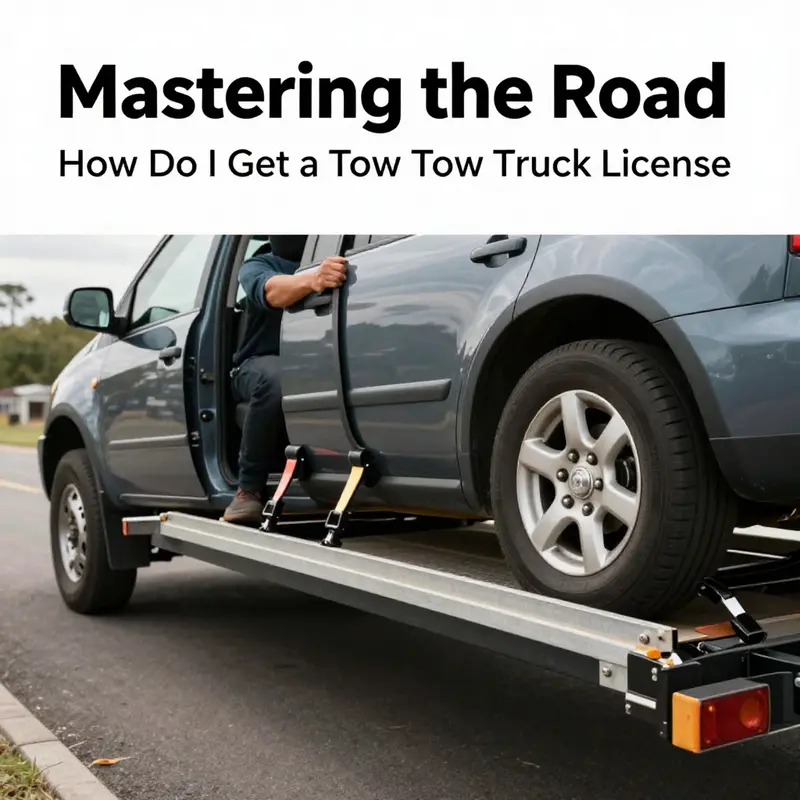
When a driver first considers becoming a tow truck operator, the instinct is usually to focus on the vehicle itself—the strength of the winch, the reach of the crane, the reliability of the lighting. But the real gatekeeper is the licensing landscape that surrounds the work. Licensing is not a single form you file once and forget; it is a network of rules that touches every mile of the job, from the moment you swing the door open on a cold garage floor to the first call you respond to after dark. The question “how do I get a tow truck license?” therefore invites a broader inquiry: what kind of operation do you intend to run, where will you operate, and how closely will you align with the safety and financial requirements that keep roads safer and businesses sound? This chapter threads those questions into a cohesive journey, weaving together paths across the United States and a contrasting look at China’s framework. The aim is not to confuse, but to illuminate how licensing anchors every tow truck business—from the solitary operator who tows only family vehicles to the fleet that moves critical hazards off busy highways, and even to those who tow for private, noncommercial reasons in moments of need.
The first hinge is the most visible one: the driver’s license itself. In the United States, the road toward a tow truck career typically begins with a Commercial Driver’s License, commonly called a CDL. The industry recognizes that tow trucks, especially when they involve heavy vehicles, require a higher standard of training and assessment than ordinary passenger-car operation. Within the CDL umbrella, the precise endorsement you need depends on the configuration and weight of the vehicle you intend to tow. The familiar rule of thumb is that a T endorsement—often described as the “Tow Truck” endorsement—applies to vehicles that are designed to tow other vehicles or that themselves carry significant weight and require specialized handling. But endorsements are not invented in a vacuum. You must meet state prerequisites: you typically need to be at least 21 years old to engage in interstate commercial driving, or 18 for some intrastate operations in certain states. You must already hold a valid state driver’s license, and you must pass a written knowledge test that covers everything from braking and weight distribution to proper towing procedures and safety protocols.
Beyond the knowledge test lies the practical exam, a rite of passage that mirrors real-world demands. The skills test is a careful sequence: a pre-trip inspection that demonstrates you understand every switch, gauge, and brake on the tow rig; basic vehicle control that proves you can maneuver a heavier, less maneuverable machine through a controlled course; and an on-road driving test that places you in typical road situations, often with a mock roadside incident to test your ability to respond calmly, legally, and decisively. The aim is not merely to prove you can drive a big vehicle; it is to prove you can drive it safely under pressure, with and without a tow attachment, and under conditions that demand restraint, judgment, and respect for other road users. Medical certification is another practical hurdle for many aspiring operators, ensuring that vision, hearing, and general health do not impede safe operation of a commercial vehicle. All told, the CDL process with a T endorsement is designed to screen for competence at a level commensurate with the risk and responsibility of towing, rescuing, and sometimes extricating stranded motorists.
If you intend to run a business that uses tow trucks, licensing expands beyond the driver. A commercial operation must be registered with the state, and many states require you to obtain a Department of Transportation or equivalent number for interstate work. This is not merely bureaucratic busywork; it reflects a broader responsibility to regulate the movement of freight and rescue assets across borders and through urban corridors. A business license is the face of your enterprise, and it usually sits alongside proof that your company is legally organized, financially solvent, and compliant with labor and tax laws. In practical terms, you will likely need to obtain liability insurance that meets or exceeds the minimum thresholds set by state or federal authorities. Insurance is not optional if you intend to contract with fleet services, insurers themselves, or local municipalities for roadway support. The combination of a valid CDL with the appropriate endorsements, comprehensive business registration, and sufficient insurance forms the core legal spine of a tow truck operation in many parts of the United States.
Another thread in the fabric of licensing is vehicle registration and safety inspection. Your tow truck must be recognized as a roadworthy vehicle, with its braking systems, lighting, and towing apparatus verified by the relevant authorities. The vehicle often needs to pass periodic inspections and display proper commercial plates or tags. This is not merely a paperwork exercise; it is a live test of your vehicle’s readiness to perform critical tasks on busy roads, at night, in bad weather, or during emergencies. Fleet operators understand that a well-maintained fleet correlates directly with uptime and safety. For a single operator, the standard remains the same: a compliant, inspected vehicle supports not only your license, but your professional credibility and the trust that customers place in you when they call for help.
A note about the scale of operations helps prevent disconnects between aspiration and reality. If you intend to tow only your own vehicle or to help family and neighbors, the path can be simpler. Personal towing in many states does not require a CDL, provided you stay within the bounds of personal, noncommercial use and respect vehicle weight and safety standards. The line here is important: the vehicle must be properly registered and insured for its use, and you must adhere to any vehicle-specific towing limitations. If, however, your ambition grows into offering towing as a service to others for compensation, the regulatory door closes behind you with a clang. The moment you solicit business, accept payment, or operate as a professional service, the CDL framework—possibly along with additional state or federal registrations—becomes your baseline. Some states also require a local business license or a permit specific to transportation services, especially if you intend to operate in urban cores or near critical infrastructure.
Beyond the U.S. framework, a broader look at licensing, which helps contextualize the U.S. path, invites a brief comparison with other regulatory environments. In a different country, the licensing architecture may revolve around vehicle-specific classifications rather than a centralized CDL. For example, in a jurisdiction that requires a Road Transport Operation Permit for any commercial tow operation, the emphasis often lies on the operator’s ability to manage safety systems, the vehicle’s conformity to national standards, and the presence of a qualified workforce. In such cases, the process may involve a combination of driver qualifications, company licensing, vehicle inspections, and the demonstration of a safety management system. This is not exotic bureaucracy; it is a structured approach to ensure that tow operators can deliver upon the core responsibilities of the job: securing disabled or obstructed vehicles, preventing further hazards, and protecting bystanders and themselves in unpredictable roadside environments.
The practical import of this comparison is to remind you that licensing is not a single obstacle but a continuum. You begin with the driver’s license suitable for your vehicle, then align with the business framework if you intend to operate commercially, and finally ensure that your vehicle and operations meet ongoing safety and regulatory standards. The outcome is not merely a credential on a wall but a reliable pathway to professional credibility. When storm calls come in or a highway bears the weight of a multi-vehicle collision, you want to be the operator whose license, insurance, and vehicle performance all signal readiness, readiness that translates into faster response, safer handling of heavy tows, and ultimately more reliable service for those in distress.
The process can feel daunting because it spans different kinds of documentation, government agencies, and inspections. The key to moving through it with confidence is to treat licensing as an ongoing partnership with regulators and customers. Start by identifying your intended scope: private towing for personal use, a small business that handles local tows, or a larger operation that moves vehicles across counties or states. Then map the steps, from obtaining the appropriate driver’s license to securing business permits and insurance, to registering your vehicle and maintaining it in peak condition. As you prepare, seek out clear sources for forms and procedures—your local DMV, the state transportation department, and your city or county licensing offices are the primary touchpoints. Different cities or counties can have variations in processing times, required documents, and even the order in which you must complete steps. Patience and organization become as valuable as mechanical skill and business acumen.
A practical reminder follows: while the core requirements are fairly consistent, the specifics matter. The requirements to obtain a CDL with a T endorsement, the thresholds for commercial insurance, and the existence of additional permits can fluctuate. Some states require a separate trip to a medical examiner for the CDL qualification, while others integrate the medical requirements into the written testing process. A few jurisdictions may impose more stringent background checks if you will be transporting passengers in some capacities or if you expect to work with municipal fleets. The best approach is to contact your state’s DMV or equivalent transportation authority early in the planning stage and outline your intended operation. This proactive step saves time and reduces the chance of missteps down the road.
For those who want a glimpse beyond the border: the Chinese framework presents its own logic. The steps described earlier emphasize that license class (C1, C3, B2) aligns with vehicle size and use, while the Road Transport Operation Permit anchors the business aspect. A Road Transport Certificate for the tow truck itself rounds out the regulatory posture, ensuring the vehicle meets national standards for towing, emissions, and safety. Even for private use in China, there is a distinction between recording towing capability on your vehicle’s registration and obtaining a specific permit for commercial activity. The emphasis is consistent with a safety-first philosophy: the operator, the vehicle, and the operation are all subject to evaluation and verification.
How do these insights come together for you as a prospective tow truck operator? The chapter’s throughline is that licensing is less about a single form and more about creating a credible, compliant practice. If your aim is to tow professionally in the United States, start with the CDL, preferably the T endorsement, and simultaneously develop an understanding of the business requirements: state registration, insurance, and, if you intend to operate across state lines, a DOT number and, possibly, a motor carrier permit. If your goal includes international experience or comparative study, you can view each regulatory mechanism as a different route to the same destination: safety on the road, reliability in service, and accountability in business. For those who plan to start by helping family and neighbors, the route may be simpler but still requires attention to proper registration and insurance, ensuring that even well-intentioned private towing remains within legal boundaries and safety expectations.
Those who navigate these waters well prioritize information gathering. They keep a file—digital or physical—of licenses, permits, insurance certificates, registration documents, and a schedule of inspections. They recognize that licensing is a moving target: regulations evolve, new safety standards emerge, and the responsibilities of tow operators expand as the profession grows. If you advance from a personal towing role toward a commercial operation, the incremental steps—upgrade your license, secure a robust insurance package, and align your safety management system with recognized standards—will not merely satisfy regulators. They will also build trust with customers who rely on you during moments of vulnerability on the road. The ultimate payoff is predictable: fewer delays caused by regulatory hurdles, more consistent access to work, and a stronger reputation for prompt, safe, and professional service.
As you plan your course, consider that the path you choose should reflect not only the letter of the law but also your values as an operator. The license is a contract with the public, a signal that you have the training, discipline, and oversight to help people when they need it most. It is wise to approach licensing as a long-term investment in your professional identity—an investment that pays off in safer work environments, smoother operations, and the ability to grow from a lone driver to a trusted partner for fleets, municipalities, and communities.
To deepen your understanding and to tap into practical discussions drawn from field experience, you may find it helpful to consult industry-focused resources such as professional blogs and operator communities. For a concise read that translates into real-world guidance, consider exploring the practical perspectives offered by the Santa Maria Tow Truck blog, which often covers the daily realities of tow work, fleet management, and on-the-ground readiness. Santa Maria Tow Truck blog. This resource can complement the formal licensing steps by offering workflow insights, equipment considerations, and safety reminders that echo the licensing framework discussed here. It’s a reminder that while the form you file is essential, the craft you practice every shift—how you handle safety, how you communicate with customers, and how you maintain your equipment—defines your professional character as a tow operator.
Finally, for readers seeking official, comprehensive guidance, turn to the national and international authority structures that govern road transport and commercial vehicle operations. The Federal Motor Carrier Safety Administration in the United States provides authoritative information on CDL endorsements, testing prerequisites, and safety regulations that shape how tow trucks fit into the broader movement of freight and people across the country. You’ll find detailed, up-to-date information on their site, including the conditions under which a CDL with a T endorsement is required and how to prepare for the knowledge and skills tests. For official guidance, visit FMCSA’s resources: https://www.fmcsa.dot.gov. This external reference anchors the practical steps described above in the larger framework of national standards, reminding us that licensing is not a solitary achievement but part of a regulated system designed to deliver reliable, safe, and accountable roadside service.
In sum, getting a tow truck license, whether in the United States or in another regulatory environment, is a disciplined journey. It begins with the driver’s license appropriate to the vehicle and your plans, then extends into business and vehicle registrations, insurance, and safety systems. It includes the awareness that personal towing has a simpler path only if it remains noncommercial; once compensation enters the picture, the regulatory map expands. The process is not merely a checklist; it is a continuous commitment to safety, professionalism, and public service. With clear steps, careful preparation, and a readiness to engage with regulators, you can move from the decision to become a tow operator to delivering dependable, lawful, and trusted towing services on the road whenever you are needed.
Final thoughts
Acquiring a tow truck license is a vital process that encompasses various elements, from ensuring you have the appropriate driver’s license to adhering to local business regulations. For local drivers, auto repair shops, and property managers, understanding each stage will not only keep you compliant but also position you to provide valuable services to your community. Take the time to navigate these steps thoroughly, and you’ll be better equipped to handle challenges and maximize opportunities in the towing industry.