
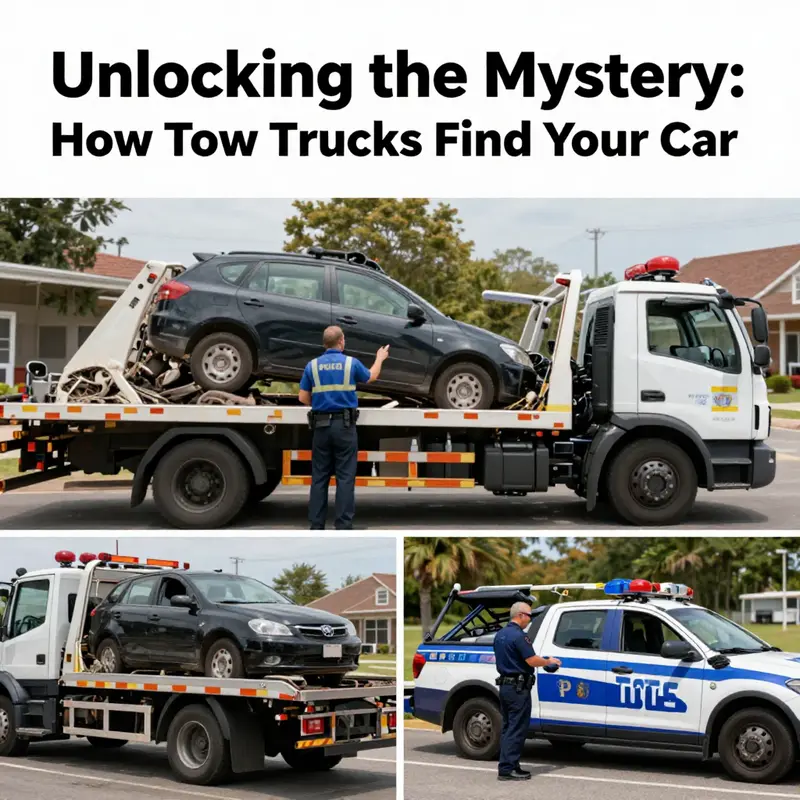
Understanding how tow trucks locate your vehicle can alleviate stress during roadside emergencies. Whether you’ve called for assistance, a police officer has intervened, or a service is pre-arranged, knowing what to expect can make the process smoother. In this article, we’ll explore these three critical methods of how tow trucks find your car, providing you with insights that are vital for local drivers, property managers, and automotive professionals alike.
Finding You Fast: How Tow Trucks Locate Your Vehicle
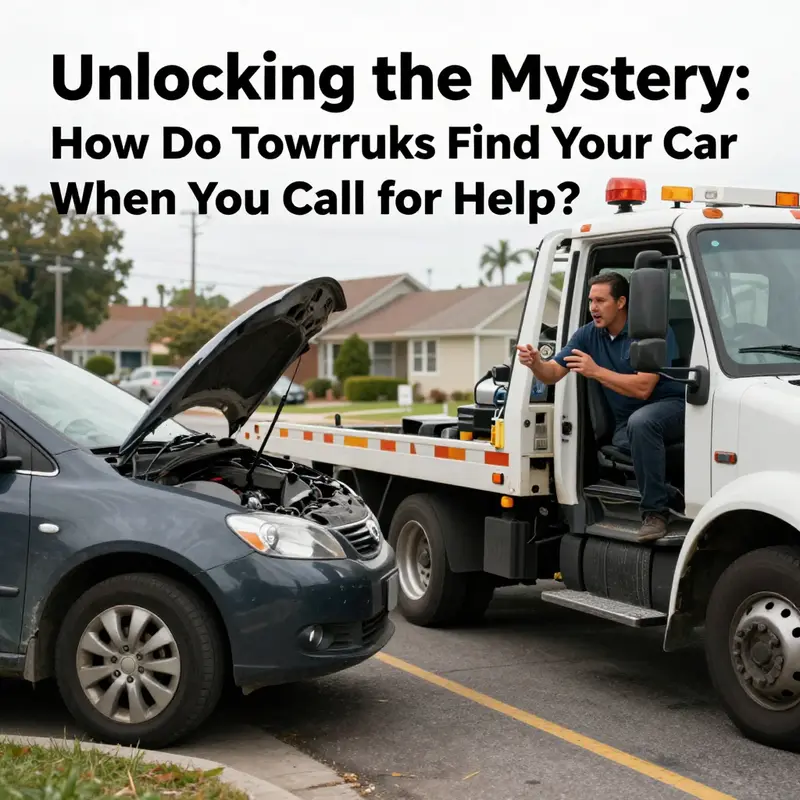
When your vehicle stalls on a highway shoulder or sits in a parking lot, you call for help and wait. Behind that simple act is a quiet choreography: location data, dispatch software, and real-time tracking that turn a place into a service call. This chapter explains how tow trucks locate your car with speed and care, using accurate location, centralized dispatch, and transparent updates. The process starts with you: sharing landmarks or an exact address, or enabling location sharing from a connected car. The dispatch center then triages the request, assigns the nearest suitable unit, and shares ETA and instructions with the driver. The fleet’s on-board devices report real-time location back to the center, while the driver follows a mapped route. Live location sharing reduces guesswork and speeds arrival. The system is resilient to weak signals, thanks to design choices that tolerate brief gaps in connectivity. Clear communication with the caller helps ensure the right unit is sent and the owner stays informed. Pre-arranged agreements with insurers or rental companies can streamline the process. In routine recoveries, the same location-driven workflow applies, even if the service is on-site rather than a tow. The result is a coordinated, data-driven effort that arrives with minimal disruption to traffic and safety in mind. If you want more depth, many fleets publish emergency-readiness guides that describe how they allocate units and share data within policy and safety boundaries.
Dispatched Precision: How Tow Trucks Pinpoint and Retrieve Your Car Through Police Coordination
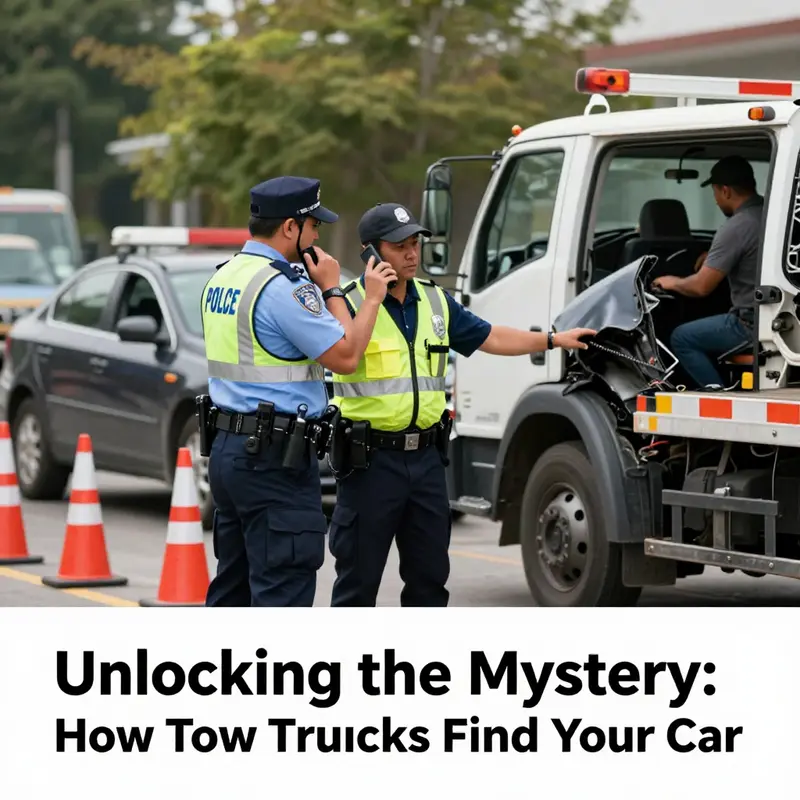
When people picture the moment a tow truck appears on the scene, they often imagine a vehicle wandering the streets, scanning for a car to rescue or remove. In truth, the process is less about a tow truck driving off into the night with a premonition and more about a carefully choreographed sequence of communication, documentation, and human verification. The sequence begins not with a roaming search but with a request that travels through a chain of authorities and operators who hold the responsibility to move a vehicle from a street to a designated destination. The result is a delivered location, a precise match, and a controlled, accountable tow that unfolds in real time on the ground. This is the backbone of how tow trucks find your car when a police officer, a dispatcher, or a roadside assistant calls in the request. It is a story of verifiable data transforming into a coordinated physical action, and it rests on a few core elements: the incident, the towing order, the dispatch process, and the on-site verification that confirms the right vehicle is being towed. In this light, the act of locating a specific car becomes less about search and more about a matched, data-driven handoff that places the right tow at the right curb at the right moment.
First, consider the moment of origin. A vehicle comes to the attention of authorities or roadside personnel because of a violation, an incident, or a roadside breakdown. The possible catalysts are varied: a car blocking a lane or hydrant, a disabled vehicle in a travel lane, a car involved in a collision, or a vehicle that has simply run out of fuel in a location that makes it unsafe to linger. In each scenario, the catalyst is not a detective’s hunt but a decision that a tow is required for safety, traffic flow, or legal compliance. If the car is illegally parked, for instance, a police officer on the scene will assess the situation and, when appropriate, issue a citation or a tow order. If the car is involved in an accident, responders will document the scene, capture essential details, and determine whether removing the vehicle is necessary to clear the roadway. If the car has stalled or broken down, a driver or passerby may make a call for assistance, initiating a different path that still converges on a formal towing request.
The information that travels from the incident site into a towing operation is precise and factual. The officer or official will typically record the license plate number, the make and model of the vehicle, and its exact location. They add the time, the street or intersection, and any relevant notes about conditions that might affect the tow, such as traffic restrictions, access constraints, or the vehicle’s accessibility. This is not a vague description but a structured set of data designed to minimize uncertainty. The moment this data is compiled, the tow company’s dispatch system becomes the next stage in the chain. The dispatcher receives the incident details from a municipal or contracted dispatch center, or in some cases from the police department’s own dispatch workflow. The information is then translated into a work order, a formal directive that specifies the vehicle by its license plate, the location by the precise address or block, and the required action, whether it is removing the car to an impound lot, clearing a lane, or transporting it to a repair facility.
The license plate emerges as a critical identifier. In the ordinary flow from the scene to the tow truck, the plate number is the anchor. It is how the towing operator confirms they are dealing with the correct vehicle in a landscape where multiple cars may share a color, make, or model in a single block. The dispatcher inputs the plate into the system, cross-checks the plate against the recorded details, and presents the downgrades and contingencies if any. The exact location is another essential element. A location cue such as “Main Street between 5th and 6th” or a specific cross street is not merely a signpost; it is a navigational instruction the driver will use in the field. The chain of information is precise because it is designed to move a vehicle from point A to point B with as little ambiguity as possible.
Once the dispatch system has the data, the tow company assigns a driver and a rig, and the operator heads to the scene. The tow truck’s approach is guided by standard operating procedures that prioritize safety, efficiency, and accuracy. The driver enters the location into the vehicle’s navigation system, but crucially, the plan does not rely on the navigation alone. The driver arrives at the described site and begins a on-site verification process. This is a moment of reconciliation: the driver must confirm that the license plate on the actual vehicle matches the plate in the dispatch record, and that the vehicle is indeed the one that authorities identified as needing removal. You might wonder what happens if this verification fails. The answer is straightforward: the tow cannot proceed until the correct vehicle is confirmed. The driver will communicate with the dispatch to double-check the details and may even call the scene to verify the plate and other identifiers with the police officer or scene supervisor. In practice, such checks prevent a wrong vehicle from being towed and protect both the vehicle owner and the public safety officers from liability or mistaken removals.
That verification step is not a mere formality but a fundamental safety and accountability measure. The scene can be complicated, with multiple vehicles present. A driver who misreads a plate or misreads a vehicle’s identifying features can cause a cascade of problems: misapplied towing, disputes with property owners, or accusations of improper removal. The on-site verification reduces those risks dramatically. It also ensures that the tow truck is targeting the vehicle that was documented at the scene. If there is any discrepancy—if the plate on the vehicle does not align with the record—the driver halts the operation and contacts the dispatch. The process, in this sense, is designed to fail safely: only when the right vehicle is confirmed does the tow proceed to the destination specified by the authorities or the contract.
Delivering the vehicle to its destination is another element that reinforces the chain of precision. The destination is not chosen at random. It is determined by the reason for removal and the ongoing instructions from the incident scene. It could be the impound lot designated by the city, a repair facility, or a storage yard that specializes in the particular type of vehicle. In many municipalities, the impound rules are governed by a formal policy that outlines where to take towed vehicles and how to manage the paperwork. The paperwork itself is a record of custody: the tow operator signs for the vehicle, the police officer or dispatcher signs off on the tow, and the vehicle’s owner receives the appropriate documentation when they reclaim the car. The entire procedure creates a traceable trail that ensures accountability and makes the towing operation auditable even long after the fact.
The orchestration does not end with the tow itself. After the vehicle leaves the scene, the dispatch system updates in real time to reflect the status of the tow: en route, on site, completed, or awaiting release. This status update is visible to the appropriate parties—police, property managers, and the vehicle owner through the appropriate channels. In some cases, a dedicated liaison within the dispatch network monitors each tow’s progress to ensure that any delays or complications are addressed promptly. If the vehicle cannot be retrieved immediately due to weather, road closures, or ongoing investigations, the dispatcher will record contingencies and communicate them to the involved authorities, ensuring that there is a coordinated plan for the vehicle’s movement when conditions improve. This is not a solitary operator’s task but a collaborative enterprise, where field personnel, dispatchers, and law enforcement work in concert to ensure safety and compliance while minimizing the disruption caused by immobilized vehicles.
The double emphasis on data integrity and field verification characterizes the whole process. There is no assumption that a tow truck will magically locate a particular vehicle. There is, instead, a robust framework in which a precise set of information travels from the officer to the dispatcher, then to the operator, and finally back to the scene for on-site validation. The role of the license plate, for most towed vehicles, is central. It ties the physical presence of the car to the official records that justify the tow. In this model, the license plate is the key that opens the door to the right tow, the correct destination, and the rightful release to the owner after the required processes are complete.
This is not to say that the system is flawless or that it leaves no room for human oversight. The field is inherently dynamic: traffic conditions, weather, and the occasional miscommunication between a caller and a dispatcher can introduce delays or confusion. Yet the architecture of the process is built to absorb these disturbances and revert to the core principle of verification. A well-trained dispatcher will cross-check the plate against the reported make and model, verify the physical location, and confirm the incident’s status before contacting a driver. A well-trained driver will perform a careful on-site check, confirm the plate, confirm the location, and then perform the tow. In cases where the data conflict, the procedure requires escalation and a re-collection of facts rather than a rushed removal. This approach preserves safety for all road users and ensures lawful, traceable administration of vehicle removal.
From a broader perspective, the chain of communication around police-assisted towing reflects a broader principle in public service: the practical fusion of law, logistics, and road safety. When a tow is required, it is not merely about removing a vehicle. It is about maintaining safe traffic flow, ensuring compliance with local regulations, and protecting the rights and property of vehicle owners. The dispatch system, the officers on the scene, and the tow operator each carry a portion of the responsibility, and they coordinate through a precise exchange of identifiers, locations, and statuses. The result is a chain that can be audited and understood by any stakeholding party, including the vehicle owner who later seeks to reclaim their car.
For readers curious about how these relationships translate into everyday operations, think of the fleet-wide collaboration that enables efficient emergency response. The same principles of standardization, readiness, and cross-agency coordination apply to the field operations that move vehicles from the roadside to a secure location. In practical terms, this means that on a day-to-day basis, the dispatch center and the towing crew operate under a shared framework that emphasizes ready resources, clear lines of communication, and rapid verification processes. The end goal is straightforward: to restore traffic flow while safeguarding people and property, and to do so with a traceable, accountable process that makes the handling of every towed vehicle transparent to the public and to the authorities involved. This is the essence of how tow trucks locate and retrieve a car when police dispatch is involved, a process that might appear opaque at first glance but is, in fact, a carefully engineered system designed for clarity, safety, and reliability.
To illuminate this further with a practical touch, consider how these steps unfold in a typical urban setting. A scene unfolds with a parked vehicle blocking a lane. An officer notes the obstruction, notes the plate, and issues the removal order. The dispatcher receives the order and enters the plate, location, and incident time into the system. A nearby tow truck, already staffed and ready, is assigned. The driver navigates to the spot, checks the plate against the record, confirms the location with the officer on scene, and proceeds to tow the car to the impound lot that handles such removals. The owner, upon contact, will provide proof of ownership and pay the appropriate fees, after which the car is released from impound. In another scenario, a vehicle involved in an accident may require towing to a repair facility. The officer documents the scene, the vehicle’s plate, and its condition. The dispatcher routes the tow, the driver arrives, and the vehicle is connected to a tow rig and moved to the chosen facility. In each case, the critical thread remains constant: a documented sequence that begins with an issue on the street and ends with a verified, legitimate tow, all anchored by the license plate and the precise location.
This layered, data-driven approach has another benefit as well. It creates a clear record trail that can be reviewed by authorities, owners, and insurers if questions arise. The chain of custody is essential, especially in urban environments with dense traffic and frequent incidents. The public can trust that every vehicle removal follows a formal procedure, every step is recorded, and any deviation is subject to scrutiny. The owner’s rights are protected because the exact vehicle can be traced from the moment the incident is identified to the moment it is reclaimed. That traceability is what keeps the system honest and reliable, a crucial feature for both safety and civic order.
For readers who want to go deeper into the operational side of fleet coordination and emergency readiness, there is a broader frame in which tow operations sit. In the larger ecosystem of road safety and incident management, dispatch protocols and standardized procedures are developed to handle not just routine removals but the most demanding scenarios, including multi-vehicle collisions, hazardous road conditions, and mass evacuations. This broader view helps explain why the process of locating a car through police coordination feels so precise: it is the result of decades of refinement in how public services partner with private responders to keep roads safe and responsive. The more you understand the logic of this coordination, the clearer the role of each participant becomes, and the more you can appreciate that the tow operator is not an isolated figure but a participant in an organized, accountable system designed to meet public safety needs.
If the story feels technical, that is because it is a story of systems working together under strict rules. Yet beneath the formal language lies a practical truth: the driver at the curb does not guess or improvise. They rely on a documented set of facts—license plate, exact spot, and official instruction—to do their job correctly and safely. The officer’s role is not merely to decide that a tow is necessary; it is to provide a validated directive that equips the towing crew to act with confidence. The dispatcher, in turn, translates that directive into actionable steps, balancing speed with accuracy. The vehicle owner, finally, benefits from the consistency of the process—proof that the right car has been towed and that the chain of custody will hold up under scrutiny should questions arise later on.
In closing, the perception of a tow truck as a roaming solver is a romantic simplification. The actual mechanism is a structured, evidence-based operation that relies on clear data packets, verified identities, and a disciplined sequence that connects a street-level decision to a completed tow. The license plate is the thread that runs through the entire operation, a reliable identifier that ties the physical car to the administrative record. The location details are the map that guides the driver to the curb and then to the impound or destination. The result is a service that, though sometimes inconvenient, is conducted with transparency and accountability. For readers who want to connect this understanding to a broader view of fleet readiness and coordinated emergency response, the linked discussion on fleet operations provides a complementary perspective on how organizations prepare, standardize, and execute these tasks across different incident types. This is the practical essence of how tow trucks find your car: through a disciplined, multi-party workflow that turns a street-level need into a safe, traceable outcome.
Internal resource for readers seeking a broader lens on coordinated fleet responses: Fleet Emergency Response.
External resource for a broader look at how emergency services and towing operations work together: https://www.naac.org/
Directed by Data: How Pre-Arranged Tow Services Precisely Target Your Vehicle

When a car needs help, the instinct is to imagine a tow truck roaming the streets like a search party, scanning rows of cars until it finds the one that needs assistance. In reality, the scene is more orderly and deliberate. Tow trucks do not wander in hopes of spotting a car that matches a description; they respond to a request that comes with precise information, then navigate to a known location using data they receive as part of the dispatch. This is especially true when the service is pre arranged for you, through roadside assistance plans, rental car agreements, or parking enforcement processes. In those cases, the process is less about searching and more about data coordination. The driver does not rely on a cat and mouse chase; the driver follows a curated map drawn from the moment the service is requested, reinforced by real time location tools, and guided by the vehicle’s telltale details. This chapter unpacks how that system works when the service is scheduled in advance and what it means for speed, accuracy, and the experience of the person at the roadside.
To begin with, there is a subtle, but meaningful distinction between two kinds of towing work: on demand help that you initiate, and pre arranged work that flows from a prior agreement or official directive. When you call for help after a breakdown, the dispatcher receives your location and basic vehicle information and assigns a nearby tow truck to respond. In those moments, you become the active participant in shaping the route, providing a precise street address or a recognizable landmark. The tow operator is the beneficiary of your clarity, not the hunter in search of a moving quarry. On the other hand, when a service is pre arranged, the process shifts toward a pre loaded set of data that the dispatcher already holds. The exact location is queued up in the system, often with additional details such as the vehicle’s license plate and even its color or model. The tow truck is still an agent in motion, but the starting point has already been dialed in, almost like a pin dropped on a map ahead of time. The result is a faster, more predictable response, with less time spent poring over distance or trying to identify the right car among a sea of similar vehicles. In short, pre arranged towing works through a choreography of information rather than a search of space, with each link in the chain playing a precise role.
Consider how this works in practice. A driver may have a roadside assistance plan, perhaps backed by an insurance policy or a rental car agreement, that enables rapid dispatch after a reported incident. The moment you report a problem to the plan’s hotline or app, you are prompted (or required) to share details that reduce guesswork. You give your current location in the form of an address, GPS coordinates, or a reference like a parking spot number in a garage. You confirm the basics about the vehicle: make, model, color, and the license plate. You may also provide a contact number so a dispatcher can verify the arrival window or confirm the scene. All of this information travels through a secure channel to the towing company or service provider, which then assigns a tow truck that already knows where to go. The data is the map; the driver is the navigator; the vehicle is the anchor point being retrieved.
The role of GPS and digital dispatch systems cannot be overstated. Modern fleets are equipped with telematics that feed live location data from each vehicle to a central dispatch console. Those systems track where every tow truck is in real time, how fast it is moving, and what the traffic conditions look like along the planned route. Dispatchers can see an up to the minute view of which truck is closest to the call, what the fastest route is given current traffic patterns, and whether there are any ongoing issues on the approach. This ability to see multiple moving parts at once translates into faster response times and more accurate ETAs for the person waiting on the roadside. It also creates a layer of reliability for the operator and the customer, because the lines of communication remain open and data can be shared back and forth with minimal friction. When a call is tied to a pre arranged service, those GPS and telematics tools are often used to execute a direct, point to point journey rather than a search of the area. The driver receives turn by turn directions that are optimized for the quickest path, taking into account the usual hazards of the road and any temporary restrictions.
A critical element in all of this is the data you provide. The exactness of location information and the clarity of vehicle descriptors are what separate a smooth, efficient pickup from a day of miscommunication and delayed arrival. The pre arranged system assumes that the data has been verified at the moment of request. When a towing company or an emergency response network receives the details, it can instantly map the vehicle’s location into the navigation system and cross reference the license plate or VIN where available. If the car has been reported in a certain parking zone or garage bay, the system can usually cue the exact stall or lane number and feed that to the driver’s in cab display. In many jurisdictions, a well organized fleet can also attach a contact phone number to the job so that as the driver approaches the scene they can confirm with the vehicle owner or a building manager that they have arrived at the correct location. The combination of precise location data and cross verified vehicle information means there is little room for confusion. The tow operator does not search for the car in a crowded city block; the car is already mapped onto the system, and the driver follows the trail laid out by the data.
The precision of pre arranged towing has another layer of value that often goes unnoticed by the person needing help: consistency. Because the data is prepared in advance, the response can be organized to minimize confusion in high stress situations. If the incident occurred in a busy urban corridor or a campus environment with many similar vehicles, pre arranged data helps the dispatcher assign the most appropriate unit and the best approach. A rental car company that has a fleet management arrangement can direct a tow to the exact fleet location where a car is parked, with the license plate cross checked and the color and model confirmed by the renter at the time the service request is placed. In a parking enforcement context, the authority or the enforcement agency is able to convey the specific location details to the towing company along with a registration that verifies ownership or legal authority to tow. In every scenario, the pre arranged flow minimizes the time the vehicle sits idle and lowers the risk of human error in identifying the right car among many.
This is not to say that pre arranged towing eliminates the need for human judgment. On arrival, the driver still performs a careful verification. The vehicle’s plate is checked, its model verified, and a quick cross check against the owner’s contact details is done before any movement occurs. The actual process of hooking and loading the car is carried out with standard safety procedures, but the initial point of contact—the moment when the tow is tasked to go to a specific location—rests on the data that was captured and confirmed earlier. In practice, the driver behaves like a courier who is already handed a package with a name, a destination, and a route; the courier simply delivers it. This is the hidden efficiency of pre arranged services. The most fundamental principle is the elimination of ambiguity. If you tell a dispatcher your exact location, provide a current license plate, and confirm the phone number for contact, the tow job becomes a straight line from location to loading bay, with minimal detours and with safety checks integrated along the way.
There is also a practical advantage for the driver that grows out of this data centric approach. When the service relies on a pre arranged workflow, the driver can arrive with the necessary tools ready. The rig can be equipped for the typical types of tow operations that are expected at that location, whether it is a flatbed needed for a delicate sports car or a wheel lift designed for a standard roadside extraction. The pre loaded job details can include notes for the driver about obstacles such as stairs, narrow driveways, or height restrictions in a garage. The navigation system can propose alternative routes in case of a closure and the dispatcher can monitor the approach in real time, ready to intercede if conditions change. The result is a sense of calm for the person waiting on the curb, because the expectation is set by data and the actual arrival matches that expectation closely.
In the conversation between customer and dispatcher, there is also room for practical guidance that supports the whole experience. People who have repurposed or pre arranged service plans are often given a checklist of what to share when placing a request. They learn to provide the precise location, the vehicle’s identifying details, and the best way to contact them on arrival. They also learn to describe any special circumstances: is the car in a garage requiring a lock box code, or is it in a driveway with a gate? The more information the customer provides up front, the smoother the handoff and the more efficient the pickup. These details do more than just speed up the process; they reduce risk for the driver and for the vehicle itself. A misstep in the initial data can lead to confusion at the scene, which can cause delays, the need for additional explanations, and even misplacement of the vehicle. The design of pre arranged services, therefore, incentivizes accuracy at the outset, knowing that the rest of the chain depends on it.
The human element remains essential. A dispatcher navigates not only a network of vehicles but also the real time complexities of a scene. A tow job can change as a result of a sudden road closure, a blocked entrance, or a weather event that makes the original route impractical. In those moments, the dispatcher can pivot quickly, rerouting the assigned tow truck to a new approach that still respects the data given at the outset. If the alternative location is identified, the system can update the driver with a fresh ETA and provide any new instructions. The ability to adapt without starting the process anew is a direct payoff of the data oriented approach. And because the data is stored and accessible, the update can be applied across the entire fleet so that every unit involved is aligned with the latest information. This coordination means that even when conditions change, the chance of a mis-specified pickup is minimized.
From the perspective of the person needing help, pre arranged towing feels almost magical in its reliability, but it rests on a lattice of practical steps that often go unseen. It begins with a clear, direct request that includes location and vehicle details, then passes through a system designed to capture, verify, and relay that information in a way that the driver can convert into action. It continues with real time monitoring of the tow truck as it travels toward the scene, with ETA adjustments that reflect current traffic and road conditions. It ends with a careful on scene verification, where the driver confirms plate and ownership details, ensures the vehicle is properly secured, and communicates the plan for loading. Throughout this chain, the aim is not merely to move a car from A to B; it is to move information through a chain that resonates with speed, accuracy, and accountability. When done well, the experience is one of clarity rather than confusion, speed rather than delay, and certainty rather than guesswork.
If you want to explore more about how you can best prepare for a tow and what information to have handy in advance, a good starting point is the basic guidance that emphasizes precise location and verified vehicle details. This direction aligns with the core principle of pre arranged services: efficient retrieval begins with verified data. For a broader practical overview, you can also visit the Santamaria Tow Truck blog, which covers a range of topics around arriving at a scene and managing the logistics of a tow. santamariatowtruck.com/blog/.
To conclude this exploration of how pre arranged tow services locate your vehicle, remember that the process hinges on knowing where the car is and what it is. The more exact that information, the less time the driver spends searching and the more time the vehicle spends safely loaded onto the tow. The GPS is the compass, the dispatch system the conductor, and the data you provide the map that makes the whole operation coherent. In that sense, a pre arranged tow is not a search at all but a guided journey that begins with precise information and ends with a safe, efficient retrieval. The result is a service experience that feels seamless even under pressure, and a vehicle that is returned to its owner with minimal fuss. External resource: https://www.roadsideassistance.com/prepare-for-tow-truck
Final thoughts
Knowing how tow trucks find your car can empower you during stressful situations. Understanding the process—from personal calls for help, police intervention, or a scheduled appointment—ensures you are prepared and can navigate these circumstances with confidence. As a car owner or property manager, being informed enhances not only your readiness but also your peace of mind when dealing with vehicle issues.