
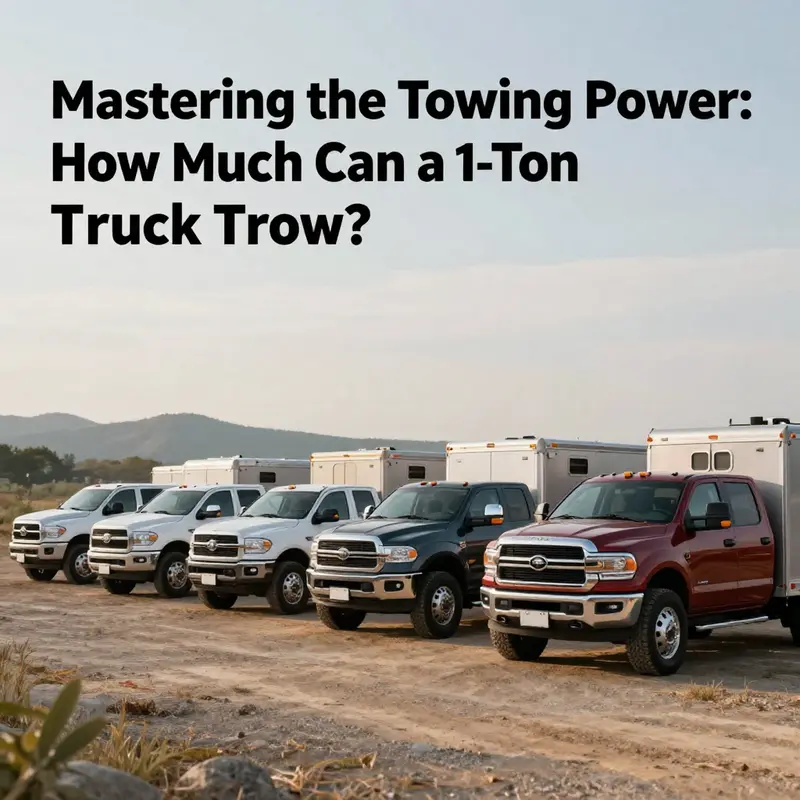
For local drivers, auto repair shops, property managers, and HOA administrators alike, understanding the towing capacity of 1-ton trucks is crucial. Whether you’re towing heavy equipment for property management or need reliable transportation solutions for daily tasks, knowing how much your truck can tow will ensure you make informed, safe decisions. This article delves deep into the towing capacities of 1-ton trucks, the various factors influencing these limits, and practical applications that highlight their power in real-world situations. Each chapter builds on the last, providing you with a comprehensive understanding of how much a 1-ton truck can tow and the considerations necessary to harness that capability effectively.
Tow Limits Revealed: Capacity Ranges and Real-World Variations in 1-Ton Trucks
The question of how much a 1-ton truck can tow is, at first glance, straightforward. Yet beneath the surface it becomes a study in how capability is defined, tested, and applied. A 1-ton designation generally sits within the heavy-duty pickup category, where the vehicle’s gross vehicle weight rating (GVWR) lands in the upper tier of the light-truck spectrum. But the actual figure you can pull is governed not by a label alone but by a precise mathematical relationship and a set of operating realities that expand or contract the number you see on a spec sheet. In practical terms, most people will discover that the towing capacity of a properly configured 1-ton truck sits in a broad band that can stretch from the mid-teens into the low twenties of thousands of pounds. The exact position of that band, however, is dictated by engine choice, drivetrain, axle ratios, suspension design, and the presence of specialized towing adjustments and safety systems. Importantly, the margin between payload and towing capacity is not a single ceiling but a carefully engineered balance that must respect the GCWR—the maximum allowable weight of the vehicle combined with its trailer and load when in operation. This GCWR, minus the truck’s own curb weight, yields the usable towing figure a driver can rely on while staying within safe engineering limits. In other words, the math is GCWR minus curb weight, but the interpretation rests on the hardware configuration and how you intend to use the truck day to day.
To understand why the numbers shift from one configuration to another, consider the role of engine type. Diesel powertrains have long been favored in heavy-duty hauling for their high torque at low revolutions. That torque curve translates into sustained pulling power, which matters when you’re overcoming hills, starting from rest on grades, or maintaining momentum with a heavy load over long stretches. Gasoline engines, while often lighter and sometimes more economical in initial cost, may deliver different torque characteristics and engine temperatures under heavy use. The choice between a diesel and a gasoline setup is not simply about mpg; it’s about the conditions in which you expect to tow, the weight of the towed trailer, and how quickly you want to reach cruising speed under load. The drivetrain is the next layer in the equation. A 4WD configuration brings added traction for steep grades and slick surfaces but also adds weight and drivetrain losses. Those weights and losses trim the usable tow figure because they increase the curb weight while sometimes reducing the relative headroom within GCWR. In sum, driveline decisions can nudge the towing capacity up or down by thousands of pounds when you account for real-world conditions.
Axle ratio is another critical factor. A taller ratio may improve towing performance on longer grades by providing more torque multiplication at lower engine speeds, but it can compromise fuel economy and high-speed efficiency when the truck is not towing. Conversely, a steeper ratio can enhance on-demand acceleration and initial pull but may demand more engine effort at highway speeds if you’re not carrying heavy payloads. This interplay between gearing and weight is a subtle dance, one that becomes visible most clearly when you compare two trucks that look similar on paper but differ in rear-end gearing and transmission tuning. The suspension system, too, plays a quieter but essential role in towing capacity. Heavy-duty suspensions, reinforced frames, and optional features like air-ride or upgraded shocks help keep the trailer aligned with the truck’s centerline as the load changes road-surface contact and dynamic forces during braking and acceleration. These components are part of what makes a particular configuration capable of maintaining control and stability under a given weight, especially when the trailer is close to the upper end of the rating.
A towing package often carries a name and a package of components that signal to the driver, and to the vehicle, that the truck is equipped for heavier work. These packages can include enhanced cooling for the transmission and engine, stronger frames and chassis reinforcements, more capable torque converters, upgraded brake systems, and even integrated trailer brake controllers. Each element serves a purpose: better cooling reduces the risk of heat-related power loss when pulling heavy loads; stronger frames and better brakes help maintain control and reduce the chance of component failure during long pulls or repeated braking on grades. What often matters more than the label on the package is the actual configuration and how it aligns with the trailer’s weight distribution and the road conditions you expect to encounter. The upshot is simple in theory and complex in practice: the towing capacity you see published is a reflection of a specific, calibrated setup designed to work within a defined operating envelope.
When you look across the typical range of 1-ton pickups, a common pattern emerges. In well-equipped configurations, many trucks in this class demonstrate towing capacities roughly between 16,000 and 20,000 pounds. That range represents a blend of heavy-duty engines, favorable axle ratios, and towing-friendly packages designed to exploit the high-strength frames that these trucks possess. It is also possible for certain configurations to reach toward or even beyond the 20,000-pound mark, particularly when a strong diesel engine is paired with an optimized cooling system and a high-capacity transmission. On the other side of the spectrum, lighter configurations or those with less powerful engines and basic packages may land closer to the 10,000- to 14,000-pound zone. In other words, the label “1-ton” points to a category, but the actual towing capacity hinges on the exact build and the intended use. The same chassis that can retrieve substantial hauls in one job can be far more limited if you strip away the critical components that enable heavy towing.
A concrete reminder of this nuance lies in real-world application: a flatbed wrecker designed to tow between one and five tons typically carries a substantial curb weight—roughly 11,500 pounds in some configurations—yet its towing capacity is derived from the GCWR minus that base weight. This demonstrates how the total system weight interacts with the maximum permissible load to shape what is actually safe and feasible to tow. The wrecker example also highlights the importance of trailer design, weight distribution, and braking capacity. In emergency or road-rescue operations, these factors become paramount because the vehicle must perform not only under static conditions but also while maneuvering, braking, and stabilizing a heavy trailer across varying terrains and weather. The engineering that makes a 1-ton truck capable of heavy towing is, at heart, about keeping the towed weight within a precise set of limits while preserving control and margin for safety.
To determine the edge of capability for any particular vehicle, the manufacturer’s GCWR chart remains the authoritative guide. This chart, coupled with the curb weight of the truck, reveals the true towing capacity for that exact configuration. The calculation is straightforward in form, but the interpretation requires attention to the specifics: Towing Capacity equals GCWR minus Curb Weight. GCWR defines the maximum combined weight of the vehicle, any passengers or cargo, and the trailer; curb weight is the truck’s own weight ready for operation with full fuel and fluids but without passengers or payload. From there, safety margins and practice guide how far you should push the limit in real life. A careful operator never tests the outer edge continuously; instead, they plan with a buffer to accommodate dynamic factors such as wind, grade, and the trailer’s weight distribution. It is equally important to consider that the practical towing weight is also influenced by the hitch type and the ability of the braking system on the trailer, which can change the entire dynamics of safe towing.
The numbers and ranges discussed here are intended to provide a framework, not a universal prescription. Every model year, every option package, and every regional variation can shift the math slightly. The best practice is to consult the official manufacturer specifications for the exact model and build you intend to use. This ensures you’re aligning your expectations with the vehicle’s tested configuration. The conversation about 1-ton towing capacity is thus both arithmetic and engineering, a synthesis of torque, gearing, cooling, suspension, and the methods by which a trailer is loaded, couched, and braked.
In summary, the towing capacity of a 1-ton truck is not a single fixed figure. It occupies a range shaped by engine choice, drivetrain, axle ratio, suspension improvements, and the presence or absence of a dedicated towing package. The practical outcome is that a well-equipped 1-ton truck can reliably tow in the mid-teens to around twenty thousand pounds, with some configurations pushing higher and others more modest depending on how the vehicle is built and used. The key is to translate published ratings into real-world expectations by examining GCWR, curb weight, and the specific options that contribute to stability, cooling, and braking under load. For anyone planning substantial towing, a careful review of the exact configuration, a conservative safety buffer, and adherence to manufacturer guidelines will ensure that the vehicle remains within its intended operating envelope while delivering the performance needed for practical hauling.
For readers seeking a broader view on how industry standards influence heavy-duty towing decisions, see Standardization in Heavy-Duty Rescue Operations. This reference provides context on how equipment design and safety practices shape the limits that help professionals perform under challenging conditions. The discussion above, grounded in the core relationship GCWR minus curb weight, aligns with those standards in emphasizing that real-world towing capacity emerges from a disciplined integration of power, gearing, cooling, chassis strength, and braking capability. As you consider your own towing goals, remember that the exact capacity is defined by the configuration you choose and the way you carry weight, the road you travel, and the trailer you pull. In the end, the 1-ton class offers substantial pulling power, but it must be exercised with awareness of its engineered boundaries and the practical realities of daily use.
External resource: Official manufacturer specifications can provide detailed, year-specific data on towing capacities and package options. See https://www.ford.com/trucks/f-series/ for a representative reference to how OEM specifications present towing ratings and configuration-based limits.
Pull Capacity Reimagined: How Equipment, Configurations, and Safety Define a 1-Ton Truck’s Tow
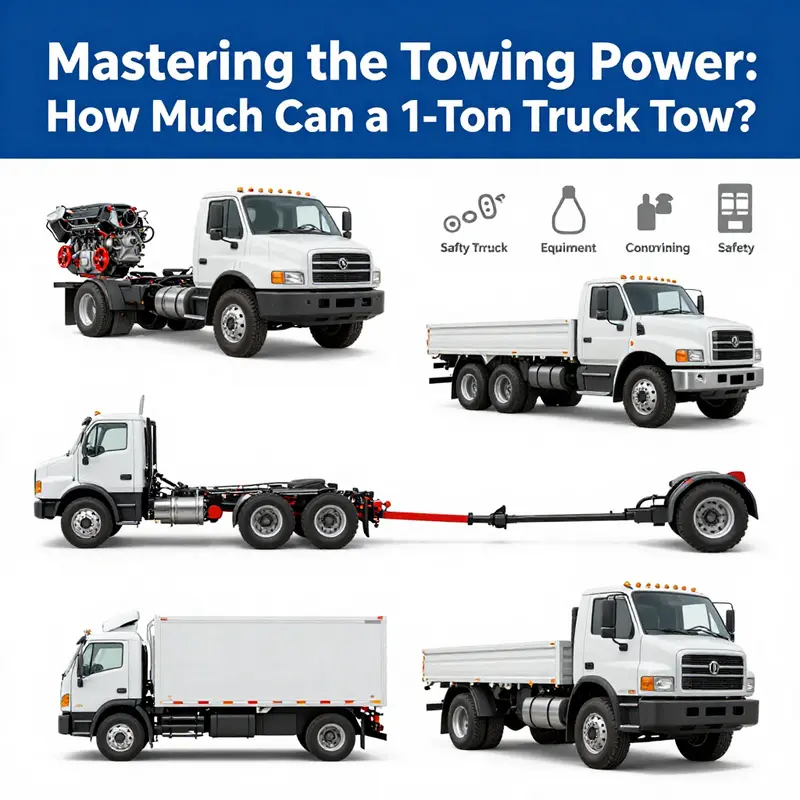
Tow capacity is a spectrum, not a single figure. For a 1-ton pickup, the practical capability comes from engine torque, transmission behavior, frame and suspension strength, and the safety systems that govern towing. Real-world performance shifts with configuration, terrain, and load, so the allowable pull is a dynamic envelope rather than a fixed number.
The heart of the equation is the torque profile. High torque at low rpm helps launch a trailer from rest, climb grades, and maintain momentum with headwinds. Torque at mid-range keeps the trailer moving smoothly, reducing gear hunting and stress on cooling and brakes.
Transmission and gearing shape how that torque is applied. Tow/haul settings, lower gears, and torque-conserving shift logic help keep momentum under heavy load, while preventing clutch overheating or brake fade.
The frame, axles, and suspension provide the stiffness that translates engine power into usable traction. A reinforced chassis resists flex under load, yielding steadier steering and more predictable braking with a trailer attached.
Weight distribution and safety systems cap the practical limit. GCWR (truck plus trailer) and GVWR (truck itself) define the upper envelope; exceeding either can compromise braking, stability, and control. A weight-distribution hitch and proper tongue weight help keep steering responsive, while electronic stability control and trailer brakes improve safety.
In practice, the maximum towing rating is a ceiling, not a target. Operators risk poor handling or component wear if they routinely push to the limit. By staying within manufacturer limits, planning for weight distribution, and using appropriate hitching hardware and trailer brakes, teams and households can achieve reliable, repeatable performance across a range of tasks.
For readers seeking precise limits, consult the manufacturer’s specifications for the exact build. Towing capacity is defined for a specific engine, transmission, axle ratio, cooling, brakes, and safety electronics. External resources and model-specific data are the ultimate arbiters of the exact numbers.
External resource: Official manufacturer specifications can be consulted for precise, model-specific guidance on towing capabilities and related safety features: https://www.toyota.com/trucks/1ton-specs
Tow at the Apex: Real-World Uses and the Concrete Limits of a 1-Ton Truck
A 1-ton truck sits at a unique crossroads in the world of heavy hauling. It is not merely a label or a classification; it is a promise of capability that translates into real-world usefulness on job sites, farms, and roadways alike. The distinction between the vehicle’s theoretical rating and its practical performance is subtle yet critical. When people ask how much a 1-ton truck can tow, they are really asking how that truck will behave when the work is demanding, when the trailer is long and heavy, and when the terrain throws in a curveball, such as a muddy ramp, a steep grade, or a windy stretch along the highway. The honest answer is that towing capacity is highly variable. It shifts with the engine option, the drivetrain, the hitch configuration, and the way the trailer’s weight is distributed. In many discussions, the number you see on the door jamb or in the manual represents the maximum you could tow under ideal conditions with a properly matched trailer, but the practical story is richer. For the responsible operator, the 1-ton class is less about chasing a single number and more about knowing how the truck’s power, its braking, and its stability interact with real loads across real routes over the course of a workday. The range of application—from construction crews moving heavy equipment to families taking a weekend trip with a large trailer—illustrates both the adaptability and the limits of these workhorses. It also underlines why understanding the full spectrum of factors—engine type, drivetrain configuration, hitch style, trailer weight distribution, and terrain—is essential before drawing conclusions about what can be towed and how safely it can be done. This chapter weaves together the practical scenarios that reveal the true utility of a 1-ton truck and the cautions that must accompany every heavy haul. It builds on the premise that while the maximum rating can be impressive, the practical towing envelope is defined by careful planning, precise calculations, and disciplined operation on a mile-by-mile basis. The aim is not to celebrate a single peak figure but to illuminate how those large numbers translate into real-world performance, reliability, and safety when the truck works in the field, not just on a spec sheet.
In ordinary terms, many 1-ton trucks are designed to pull substantial loads—often in the range of 15,000 to 20,000 pounds for specialized setups such as fifth-wheel or gooseneck trailers. Those high capabilities are not universally applicable to every 1-ton model, and they depend on a blend of configuration choices: diesel versus gasoline powertrains, four-wheel drive versus two-wheel drive, cab-and-chassis versus crew cab and long bed, and the precise rear axle ratio. What matters most is how these choices align with the intended task. If the work involves moving a large piece of machinery on a gooseneck plate with a properly matched trailer, the combination can be remarkably capable. If, on the other hand, the job uses a weight distribution that places most of the load on a standard two-axle trailer with a marginal tongue weight, the effective towing performance can feel limited by the trailer’s balance rather than the truck’s power. This interplay—between what the truck can do in theory and what it can do in practice—frames the everyday realities of heavy hauling in the 1-ton segment.
Across construction and industrial settings, the practical utility of a 1-ton truck becomes most evident when it acts as a moving workshop on wheels. The job sites that require moving large, heavy equipment rely on trailers that can carry skid steers, compact excavators, generators, and bulky tool assemblies. The robustness of the truck’s suspension, the reliability of the diesel torque, and the capacity of the braking system all contribute to a safe and efficient transfer from shop to site. In many cases, crews opt for a 1-ton setup with a diesel engine and a 4×4 drivetrain because the combination delivers steady, low-end torque and confident throttle response in uneven terrain. This torque profile helps the truck manage the acceleration needed to climb a ramp with a fully loaded trailer, while the 4×4 capability mitigates the risk of getting stuck in loose soil or gravel. It is here that the line between peak rating and practical performance blur, because a well-maired fifth-wheel trailer can carry a load well into the mid-teens or even beyond twenty thousand pounds, provided the hitch, the balance of weight, and the route are meticulously planned. The operator’s judgment becomes as critical as the engine’s horsepower; stopping distance, trailer sway, and hitch integrity must be continuously monitored as the vehicle negotiates rough access routes, embankments, and tight turns.
Agriculture introduces another facet of the 1-ton story. In rural settings, distances are long, and the need to haul large grain carts, hay trailers, and irrigation equipment is common. The payload capacity of the truck itself deserves equal respect to the towing figure, because the combined weight of the loaded trailer and the truck—what the manual calls the Gross Combined Vehicle Weight Rating, or GCWR—defines the allowed trip profile. When a farmer attaches a high-capacity trailer to a diesel-powered 1-ton, the operator values not just the peak pounds the trailer can pull, but the sustained performance across a full day of driving, starting and stopping on uneven fields, and maneuvering on unpaved lanes. The stability of the vehicle during deceleration becomes a practical concern: without proper braking power and weight distribution, even a trailer within the nominal rating can induce trailer sway or reduce steering feel, especially when the load shifts during field-work turns or long highway drives between plots. The ability to tow across fields is not merely about raw numbers; it is about how predictable the vehicle feels when the trailer is attached, how quickly the driver can respond to a lane-change scenario, and how reliable the braking system remains under repeated heavy pulls. This reliability is rooted in more than horsepower; it rests on an integrated approach to drivetrain tuning, suspension geometry, and the careful selection of hitch types that align with the trailer’s geometry and weight distribution.
In the realm of emergency services and fleet operations, the towing prowess of a 1-ton truck translates directly into mission readiness. Fire departments, law enforcement fleets, and other public-safety entities often require rapid deployment of specialized equipment. A 1-ton chassis can pull mobile command units, rescue platforms, or large support trailers that carry water pumps, flood response gear, or communications racks. The use-case stretches beyond raw torque; it tests how succinctly the vehicle can deploy, stabilize, and return with critical gear. The vehicle’s role is as much about uptime and reliability as it is about speed or the sheer ability to haul heavy equipment. The harmonic interplay between power, torque, braking, and weight distribution becomes a texture of field operations: the driver must anticipate terrain challenges at a moment’s notice, and the truck must deliver consistent performance without sacrificing command over the trailer’s stability. In many fleets that rely on heavy towing, a careful balance is struck between the proportion of payload carried by the truck and the weight of the trailer and its cargo. In practice, this balance means ensuring the GCWR is not exceeded, that tongue weight remains within a target range, and that the hitch system is capable of withstanding continuous use in varied environments—from paved streets to unpaved backroads.
Recreational and personal uses round out the practical picture. Families embarking on long trips or hobbyists towing larger travel trailers, boat trailers, or sizable campers will often find a 1-ton truck meets their needs with a comfortable margin. The family that plans a remote lake weekend, for example, may choose a trailer weighing well over 12,000 pounds when loaded, confident that the truck’s engineering has built in reserve for wind gusts, road grades, and braking demands. Yet even in this arena, sound decision-making remains essential. A trailer’s gross weight, its axle configuration, and its hitch setup all influence the actual towing experience. The experience is not simply about the weight the truck can pull; it is about the smoothness of the ride, the predictability of handling with a loaded trailer, and the effective stopping distance under highway speeds. For many owners, that means choosing a gooseneck or fifth-wheel trailer in the right range, using a hitch that matches the trailer’s tongue weight and balance, and arranging for regular trailer tongue weight checks and brake controller calibration. In all these contexts, the central truth holds: the maximum towing rating is a ceiling that provides a performance aspiration, not a guaranteed outcome for every situation. The practical envelope—what you can tow safely and efficiently over the course of a trip or a job—emerges from a disciplined approach to payload, hitching, braking, and route planning.
Key considerations thread through every scenario. The specific numbers matter, but so do the conditions under which those numbers apply. Hitch type matters, because a gooseneck or fifth-wheel configuration distributes payload differently than a traditional two-axle trailer, often enabling higher towing capacities when the trailer design aligns with the truck’s strongest points of torque delivery and braking leverage. Trailer weight distribution is another decisive factor. If the tongue weight sits too far forward or too far back, steering response and braking performance can degrade, even if the gross trailer weight is within the stated limit. Terrain can amplify these effects in ways that are not captured by a static rating on a page. A gravel road, a muddy grade, or a windy crosswind can push a trailer beyond what might be considered a comfortable margin. Vehicle condition—tire tread, brake wear, suspension health—plays into this equation as well. A well-maintained truck with fresh brakes and properly inflated tires will manage heavier loads with more confidence than one that is approaching the end of its service life. In practice, a thoughtful operator will perform routine checks before every long tow: verify the hitch and safety chains, confirm the trailer’s lights and brakes, test the braking response, and estimate the route’s elevations and turns. The realities of the road demand this kind of vigilance because the safety margins implied by the numbers are only as reliable as the daily actions that keep the system in balance.
All of this points to a central conclusion: the practical towing capacity of a 1-ton truck is not a single value but a set of operating envelopes shaped by a combination of vehicle configuration, trailer design, and the conditions of service. When the goal is to move heavy loads reliably and safely, the most responsible path is to align the trailer’s weight with a rating well within the truck’s GCWR, maintain precise balancing of tongue weight, and use a hitch that best suits the trailer geometry. Operators should also be mindful of the payload allowed by the truck—an important constraint that limits how much cargo can accompany the trailer on the same trip. And because the same vehicle can be used in multiple contexts, from construction to recreation, the practical effort often involves revisiting the plan for every transfer of load. The best outcomes come from a blend of disciplined planning, clear understanding of the trailer’s weight distribution, and a willingness to adjust the plan when road or weather conditions demand it. This approach—anchored in knowledge of the vehicle’s true capabilities, rather than a single maximum figure—transforms the 1-ton truck from a generalist hauler into a precise tool for a wide range of demanding tasks.
To anchor these reflections in real-world expectations, consider the role of official specifications and model-specific data. The best practice is to consult the manufacturer’s documentation for precise GCWR, axle ratios, and recommended towing configurations for the exact truck and trailer pairing in use. This becomes particularly important when planning long trips or when the load approaches the upper limits of what the vehicle can safely handle. In practice, the decision to tow a heavy trailer should be guided by a careful assessment of the trailer’s weight, the truck’s payload, and the road profile, with contingency plans for weather, traffic, and terrain. The overarching message is clear: with the right setup and disciplined operation, a 1-ton class pickup can perform tasks that require substantial pulling power, delivering reliability and efficiency that support both professional endeavors and personal adventures. Yet this capability is a reflection of careful engineering and careful practice as much as it is of raw horsepower. The road rewards planners who translate the numbers on the spec sheet into a rhythm of checks and adjustments that keep people and loads aligned as they travel toward their destination.
For readers seeking deeper, model-specific guidance, official manufacturer documentation remains the authoritative resource. See resources related to towing capacity and configuration details in official specifications for further clarity and precise limits that apply to your exact truck and trailer combination. In the broader ecosystem of towing knowledge, professional fleets and emergency-readiness planning also benefit from standardized approaches to load management and equipment readiness. For those involved in fleet planning or emergency response, a practical touchstone is the integration of towing capability within broader standardization efforts. These considerations help ensure that a 1-ton truck is not just capable in isolation but also effective within a coordinated fleet approach that prioritizes safety, reliability, and rapid deployment. For readers who want to explore this broader context, a dedicated resource on fleet standardization and emergency readiness provides valuable perspectives on how to align towing capacity with organizational needs and operational realities.
To connect these ideas to broader practice, it is worth noting the importance of ongoing education and alignment with regulatory expectations. Tow operators need to understand not only the mechanical limits but also the legal and safety frameworks that govern heavy towing. Staying current with local regulations, weight limits, hitch requirements, and safety inspection schedules helps ensure that the practical capabilities discussed here are realized in a law-abiding, safe manner. As a final reflection, the chapter’s core insight rests on balance: the best outcomes come from a deliberate balance between power and control, between the trailer’s demands and the truck’s capabilities, and between aspirational performance and verified safety. The 1-ton truck is a versatile ally in the realm of substantial hauling, and its true value emerges when those capacities are harnessed with preparation, vigilance, and respect for the road and its payload.
For additional context and practical resources on fleet readiness and emergency operations linked to heavier towing needs, see the following internal resource: Fleet Standardization and Emergency Readiness. This link offers insights into how organizations plan for heavy hauling as part of a broader readiness strategy, extending the discussion from individual vehicle capability to collective, mission-focused capability. Fleet Standardization and Emergency Readiness.
External reference for model-specific data and official towing ratings can be found here: https://www.ford.com/trucks/ – a reference point for how manufacturers frame towing capacity across various configurations, underscoring the importance of consulting official specifications for precise limits.
Final thoughts
Understanding how much a 1-ton truck can tow is crucial for drivers, property managers, and businesses relying on such vehicles for various tasks. The towing capacity can vary greatly depending on the specific truck configuration, equipment, and safety measures taken. By recognizing these nuances, you can make informed decisions that ensure safety and efficiency in your towing needs. Whether you’re managing a fleet or just need a dependable truck for personal use, leveraging this knowledge will empower you to utilize your vehicle effectively, avoiding the pitfalls of overloading and ensuring compliance with safety regulations.