
Towing a trailer or heavy machinery can unlock a world of versatility for your truck, enhancing both your work and recreational pursuits. However, knowing how much you can tow isn’t just about brute force; it’s crucial to understand the specifics of your vehicle’s towing capacity. This article delves into vital aspects, guiding local drivers, auto repair shops, dealerships, property managers, and HOA administrators in making informed decisions. From exploring the definition and nuances of towing capacity to assessing safety concerns, legal considerations, and necessary accessories for towing, we’ll equip you with knowledge to ensure you tow safely and legally. Each chapter serves as a building block to a comprehensive understanding, allowing you to make confident towing choices without compromising safety or regulations.
Reading the Sticker and the Road: How Much Can You Safely Tow With Your Truck?
Towing capacity is a practical, not just a theoretical, measure. It governs how you plan trips, how you load gear, and how you drive on highways and grade trails. At its core, towing capacity is the maximum weight a truck can pull without compromising safety. That limit is set by the manufacturer after testing the vehicle in howling combinations of engine power, transmission, suspension, brakes, and the way the axle and frame handle the stress of towing. In everyday terms, it’s the line you don’t want to cross, because passing it can make handling unpredictable, increase stopping distance, and raise the risk of tire blowouts or component failure. The dimension isn’t a single number plucked from the air; it’s the product of careful engineering and conservative safety margins. When you understand what that number represents, you gain a clearer sense of what you can realistically tow and how to do it without inviting trouble along the way. If you’re curious to see how others interpret and apply these ideas, you can explore the broader conversation in the blog, which often translates these specifications into actionable guidance for real-world trips. blog
What is towing capacity? It is the maximum weight a vehicle can safely tow, determined by the manufacturer based on a mix of factors. Engine power and transmission play a central role, but the suspension, braking system, and even the axle ratio influence how that power translates into controlled movement behind the tow vehicle. The chassis and hitch connection also matter because a weak connection or poor alignment can magnify every irregularity on the road. In short, the capacity is a ceiling set to preserve steering response, braking performance, tire integrity, and the safety of the trailer and its contents. Exceed it, and you risk degraded handling, longer stopping distances, or failure of a key component when you least expect it. Keeping the limit in mind helps you stay within a margin that weather and road conditions don’t erode.
Towing capacity varies widely because trucks are configured for different roles, from everyday haulers to heavy-duty workhorses. A typical, standard pickup might be able to tow around 860 kilograms, or about 1,900 pounds, in a basic setup. That figure represents a scenario with a modest engine and a standard transmission, without the extra gear that comes with larger payloads or specialized towing packages. On the other end of the spectrum, a heavy-duty model equipped with a powerful engine, reinforced cooling, and a dedicated towing setup can reach around 8,100 pounds, or roughly 3,674 kilograms. Some commercial-oriented configurations push beyond 9,000 pounds, venturing into capacities that require careful planning, precise hitching, and often, a more robust braking system and trailer equipment. These ranges illustrate the principle that capacity is not just about engine horsepower; it’s the sum of the truck’s architecture, drivetrain, chassis stiffness, and the reliability of the brakes and tires under load.
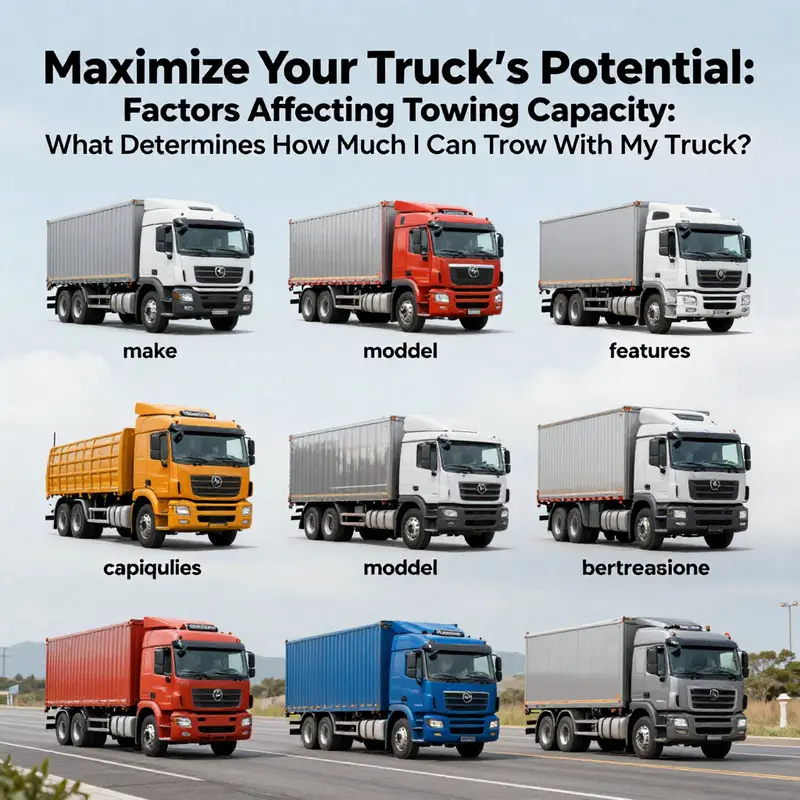
It’s important to emphasize that the towing capacity number you see is not a standalone target. The capacity is essentially the system’s rating for the total weight the vehicle can manage when you add the trailer’s weight and every dynamic force that comes with towing. The real constraint often becomes the lowest-rated component in the drawbar-to-road chain. If the hitch, the frame, the brakes, or the tires are not rated to handle a given load, the whole system isn’t safe at that weight. This is why the sticker on your door jamb, the owner’s manual, and the manufacturer’s specifications matter so much. They tell you the limit for your exact model, taking into account the engine option, transmission, axle ratio, and the presence or absence of towing packages. It’s not one number for all trims; it’s a map of your truck’s real-world capability.
The role of the driver’s license in towing can surprise people at first glance. While the vehicle itself defines the mechanical limit, there are legal limits tied to your license type and the laws in your jurisdiction. These limits can constrain how much you’re legally permitted to tow, independent of your truck’s mechanical capability. The practical takeaway is simple: know both the manufacturer’s limit and any local rules that may apply to the weight you’re moving. When planning a haul, you’ll want to document the trailer’s weight, the tongue weight or ball weight, and the actual weight you’re carrying. These figures feed into a mental and, if needed, a written calculation that helps you determine whether you’re within safe, legal bounds.
To find the exact towing capacity for your truck, start with the owner’s manual and the sticker on the driver’s door jamb. Those two sources typically display the official GVWR, the towing capacity for your model and trim, and any notes about packages that influence the rating. The configuration matters as well. A truck with a different engine, a different transmission, or a heavier rear axle may sit at a significantly higher or lower capacity than another version of the same model. If you’re sorting through numbers and trying to reconcile claims from different sources, remember that the precise figure for your truck is the one that matches your exact combination of engine, transmission, axle ratio, and any towing package. If you need a broader sense of how these numbers play out across models, reputable external resources can offer comparative data, but always correlate any third-party figure with the exact configuration you own.
A key concept that often gets overlooked is GCWR—the Gross Combined Weight Rating. GCWR is the total allowable weight of the tow vehicle plus the trailer and its cargo. It’s a separate limit from the truck’s towing capacity alone and becomes crucial when you’re calculating the safe total on the road for long hauls or when towing heavy loads up grades. The payload of the truck—the weight the truck carries in the cab and bed—also matters because it subtracts from the maximum gross vehicle weight when you’re calculating how much you can safely add with a trailer in tow. Both GCWR and payload work in harmony with the usable towing capacity to define a safe, practical ceiling for any given towing scenario. When you factor these numbers together, you begin to see why two identical trucks can tow very different loads simply because they’re loaded in different ways or paired with trailers that impose different stress patterns on the drivetrain and brakes.
So, how does a driver translate these numbers into a real trip? First, weigh the trailer you intend to pull, plus its cargo, and estimate the tongue weight, which is the weight pressing down on the hitch. Then compare that total with the truck’s stated GCWR and towing capacity for your exact configuration. Don’t forget the weight of passengers and gear in the truck itself; the total must stay within the GCWR and the vehicle’s curb weight plus payload boundary. It is wise to leave a margin of safety—don’t ride the limit. Weather, road grade, wind, and terrain all change the dynamic forces on a trailer. In practice, that margin can be the difference between a smooth, controlled tow and a stressful, high-stress drive where braking distances lengthen and steering becomes a more deliberate act.
Beyond the numbers, safe towing hinges on preparation and awareness. Regularly inspect the hitch and coupling, ensure brakes on the trailer are adequate, and verify tire condition and pressure on both the tow vehicle and the trailer. A trailer can impose lateral forces that your truck’s suspension and tires must safely accommodate. If you tow frequently or with heavy loads, consider how your truck is configured. A model with a wider range of gearing, a more robust cooling system, and a braking setup designed for sustained towing will usually provide a meaningful safety margin. While it can be tempting to push a truck toward the upper limit to maximize payload or travel with a larger trailer, the prudent approach is to respect the published limits and adapt your plans to reduce risk rather than increase it.
In the end, understanding towing capacity is about translating a manufacturer’s rating into a practical plan for every trip. It’s about recognizing that the limit is not merely a number on a sticker but a probability of safe performance under real-world conditions. By reading the official specifications for your exact truck, considering the entire weight equation—vehicle, trailer, and cargo—and accepting that a margin is part of responsible driving, you’ll approach every tow with confidence rather than compromise. If you’re curious to see how this connects to broader vehicle-use decisions or how to interpret markings and labels more effectively, the linked blog offers approachable guidance that translates the jargon into everyday scenarios. blog
For broader context on these kinds of manufacturer specifications and to compare how different setups relate to practical towing, consult an external reference that aggregates this information. Official manufacturer specifications are the most reliable anchor for your exact configuration, and they are the best starting point whenever you’re facing a new trailer or a different load. As you plan, consider the full weight picture, your license and legal requirements, the road conditions you’ll encounter, and the safety margins you want to maintain. The discipline of checking, calculating, and rechecking before you commit to a tow will yield safer journeys and longer vehicle life, along with greater peace of mind on every road you travel. For a broader context, you can review the official manufacturer guidance referenced in credible resources, which helps in understanding how these limits are set and how to apply them in practical terms. official manufacturer specifications
null
null
null
null
Tow Law Compass: Charting How Much Your Truck Can Legally Haul
Understanding how much you can tow with your truck starts with a simple, stubborn truth: the legal limit is defined by the vehicle manufacturer and by local rules, not by what you feel your engine can handle. The number you see on the door sticker or in the owner’s manual represents a carefully calculated boundary. It accounts for the unique combination of your truck’s engine, transmission, axle ratio, frame, and whether it was equipped with a heavy-duty towing package. This is not a figure you should treat as a target to beat; it is a ceiling that protects the drivetrain, brakes, tires, and cooling system, and it also limits your liability in the event of an accident. The spectrum of possible towing capacities is broad—some trucks might tow only a few hundred pounds, while others, given powerful configurations, can reach well into the thousands. The variability underlines a core point: never exceed the rated capacity, because doing so can compromise safety, cause mechanical wear, and void warranties. Beyond the vehicle’s engineering, your legal ability to tow is also shaped by your license, local enforcement, and how the load is distributed.\n\nTo interpret what the manufacturer’s rating really means, you need to understand a few terms that often appear in owner manuals. The gross vehicle weight rating, or GVWR, is described as the maximum weight the vehicle is designed to carry, including passengers and cargo. In the same breath, the manual may refer to a rated load capacity—the total of the truck’s own weight plus everything it is carrying. It is common to see this described in tandem with the vehicle’s towing capacity. In practice, the trailer you attach adds its own weight and dynamics, which is why safety guides also reference the gross combined weight rating, GCWR. That GCWR is the ceiling for the vehicle combined with the trailer, and it can limit what you can safely tow even if the truck’s chassis itself could handle a heavier payload. These terms—GVWR, rated load capacity, and GCWR—form the vocabulary you must master before you hitch anything up.\n\nThe everyday implication of these ratings is straightforward: always verify your exact numbers for your make, model, year, and configuration. The easiest sources are the owner’s manual and the door jamb sticker, which typically list the GVWR and often the towing capacity or GCWR. When you are planning a trip or a project that involves a trailer, take the time to check these figures. The numbers are not just academic; they translate directly into how you load the truck, how you distribute weight on the hitch, and how you manage braking and steering under load. If you are unsure, consult a trusted automotive resource that consolidates data across model years and configurations. The point is to be precise, not optimistic, about the weight you intend to haul.\n\nThe guidance on how much payload you should carry on the road varies with the type of surface you are driving on. The materials you are towing and the terrain you face collectively determine how much margin you have. On secondary or lower-grade paved roads, it is advised that the payload you carry should not exceed 85 percent of the rated load capacity. This precaution helps preserve suspension travel, tire integrity, and steering response when conditions are less than ideal. On unpaved or non-graded surfaces, the policy tightens further: no more than about 70 percent of the rated load capacity. Those reductions take into account the additional stress from rougher surfaces, reduced traction, and the higher risk of weight shifting during abrupt maneuvers. These aren’t arbitrary figures; they reflect practical countermeasures against the extra demands that certain roads place on a loaded truck and trailer combination.\n\nLegal implications naturally follow if you ignore these limits. Exceed the rated capacity, and you risk penalties that can vary by jurisdiction, from fines to findings of liability in the event of an accident. The range isn’t just punitive; it can also affect insurance coverage and the validity of warranties. The interplay between manufacturer specifications and local regulations is why the best practice is to verify both the official documentation and the regulatory framework in your area. Local authorities may impose additional restrictions, particularly for commercial towing operations, where compliance is essential for public safety and liability management.\n\nTo stay compliant, start with the manufacturer’s specifications and confirm them against what you actually use in the field. Look at the owner’s manual for the precise GVWR and GCWR and note any caveats about hitch classes or brake requirements. Pay attention to how your trailer’s weight is distributed. A poorly balanced load can push you toward or past the recommended percentages even when you are operating under the numerical limit. It may surprise some drivers to learn that the practical payload—passengers, cargo, and the trailer—can approach the limits in ways that the raw engine horsepower never reveals. This is why meticulous planning matters, especially if you intend to tow across varied terrains or on routes with frequent stops and hills.\n\nA useful starting point for practical decision-making is recognizing that the towing capacity is not simply a single number you quote to a friend. It represents a composite constraint that includes engine torque, transmission cooling, suspension load, braking capacity, tire strength, and chassis stiffness. If any of these elements are pushed too hard, performance degrades. The result can be longer stopping distances, less precise steering, and higher risk of component failure under strain. For many drivers, the best approach is to treat the towing capacity as a ceiling rather than a goal. Plan loads so that the actual weight is comfortably below the GCWR, with additional headroom to absorb dynamic effects of road irregularities and elevated speeds. This mindset encourages safer maneuvers, more controllable braking, and a margin that protects both the vehicle and its occupants.\n\nIn addition to reading the manuals and observing load percentages, it helps to be mindful of common myths that conflate engine power with legal towing ability. Some drivers assume that “more horsepower equals more tow,” but legal limits are about safe operation under a broad spectrum of conditions, not raw acceleration or torque alone. The legal framework also considers braking, drive-train cooling, and the trailer’s braking system. If your trailer has its own brakes, you are often allowed to tow heavier loads than if you tow with a trailer that relies solely on the truck’s braking system, but the exact threshold depends on the vehicle’s GCWR and the trailer’s braking compatibility. On the road, staying within the prescribed range is not merely a matter of avoiding fines; it is about ensuring that the tow setup responds predictably when you need to slow down, maneuver, or recover from a wind gust or an evasive steering input.\n\nTo reinforce these principles in a way that ties directly to the practical experience of towing, consider a quick check before you hit the road: weigh your trailer and estimate the combined weight, then compare it with the GCWR. If you are within the margin, you have a confidence buffer for the trip, but if you are creeping toward the limit, slow down, re-distribute the load, or reduce the payload. It is also wise to inspect hitch components, trailer brakes, and electrical connections, as these systems are critical to safe operation when weight and momentum are involved. When you prepare with diligence, you reduce the risk of an unpleasant surprise at a scale house, in peak traffic, or on a long grade where momentum matters.\n\nFor readers who want a concise reminder of when to be cautious about crossing legal boundaries, a practical quick-reference resource is available that highlights signs of potential illegal towing and improper load distribution. This resource draws attention to indicators you can check before departure, such as an overloaded hitch, uneven tire wear, excessive trailer sway, or a payload that visibly exceeds the manufacturer’s guidance. The goal is not to alarm but to empower responsible planning and safer roads. Spotting these issues early helps you avoid the consequences of noncompliance and keeps your travels smooth and predictable.
Tow-Proof Your Truck: Upgrades That Expand Safe Tow Capacity
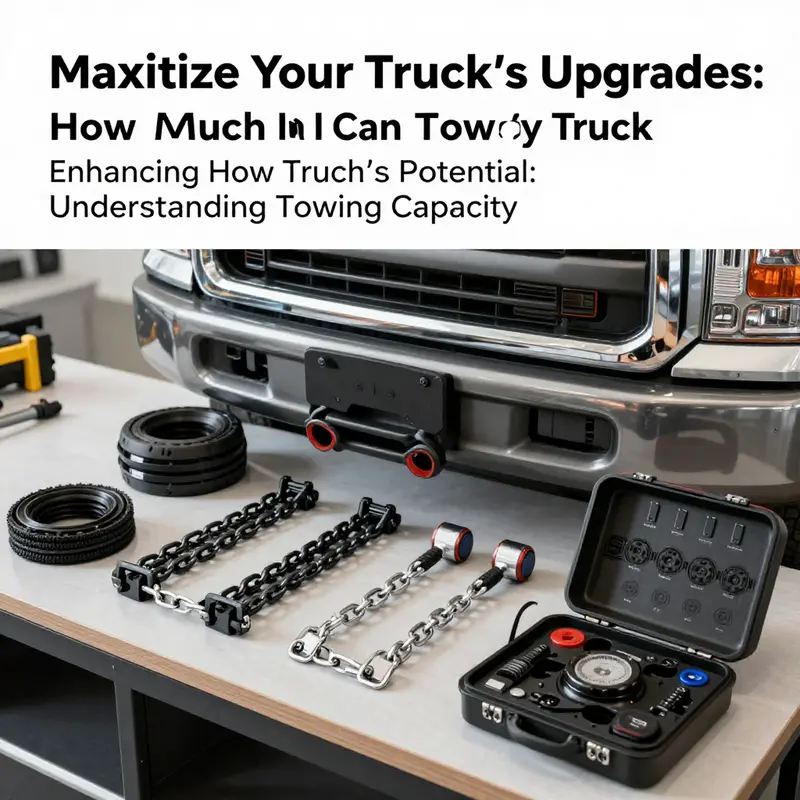
Understanding how much you can tow with your truck starts with a simple but critical truth: towing capacity is a specific rating assigned by the manufacturer. It’s not a guess and it isn’t something you derive from horsepower alone. The official towing capacity, often listed as part of the GVWR and GCWR specifications, is the maximum trailer weight your truck can handle safely under standard conditions. This number is printed in your owner’s manual and often found on a door jamb sticker or in the vehicle’s bridge of documentation. Real-world towing is influenced by your truck’s makeup—engine, transmission, axle ratio, and whether you’ve equipped a heavy-duty towing package. The point is not to chase a higher number by any means, but to align your expectations with the vehicle’s rating and then consider upgrades that help you tow closer to that rating in a safer, more controlled manner. The legal limits stay fixed, and so should your adherence to them, because exceeding the published capacity can compromise braking, steering, suspension, and load stability. For accurate, model-specific guidance, consult official manufacturer specifications or trusted automotive references. A thorough, model-by-model check helps you avoid the trap of assuming “more power equals more tow.” It often isn’t that simple, and even capable setups have their thermal and mechanical ceilings. Alongside manufacturer data, practical considerations—driver licensing, weight distribution, and the nature of the load—play meaningful roles in determining what you can actually haul. As you plan upgrades, a holistic view becomes essential. You’re not just chasing a higher number; you’re building a safer, more predictable towing experience that minimizes the risk of heat buildup, sway, or frame fatigue during long hauls or frequent stops.
One practical route to safer, more capable towing is to anticipate what typically causes difficulty under load. When a trailer becomes part of your daily routine, stability, stopping power, and the ability to manage heat in critical systems rise to the top of the list. Upgrades aren’t about pushing past a limit as much as they are about harmonizing the vehicle’s physical performance with the demands of heavier, longer, or more dynamic towing tasks. In this sense, the upgrades discussed here are not mere accessories; they are the bridge between rating and reliability. They’re designed to improve how your truck behaves under load so you can feel confident that the towing task is completed without surprising or dangerous deviations. With that mindset, you can pursue a plan that respects the factory rating while addressing the practical realities of real-world towing.
Air suspension systems sit at the heart of this approach. When you install an air spring system, you’re aiming for better weight distribution between the front and rear of the truck. A more level ride height reduces squat and dives during braking, which in turn translates to more predictable steering and reduced chassis stress. In practical terms, a level stance helps the tires maintain a more constant contact patch with the road, improving grip and minimizing the dynamic sway that can occur when heavy loads shift forward or back during cornering or evasive maneuvers. The effect isn’t just comfort; it’s a real improvement in how efficiently the vehicle transfers power to the wheels and how well the brakes respond under load. This is especially noticeable on trailers with uneven loading or when traveling over uneven pavement where the suspension would otherwise compress unevenly and amplify trailer sway.
Next, a heavy-duty towing package represents the factory-backed approach to strengthening critical systems. These packages typically include upgraded brakes, a reinforced frame, a more robust cooling system, and a transmission cooler. Each element targets a specific failure point that commonly arises under heavy towing. Upgraded brakes enhance stopping distances and reduce brake fade on long downgrades, while a reinforced frame and chassis help resist flex under load, preserving alignment and predictable steering. The enhanced cooling system’s role is not merely keeping the engine from overheating; it’s keeping the entire drivetrain from cooking under sustained loads. The transmission cooler, in particular, shields the heart of the powertrain from heat-induced wear, maintaining shifting quality and longevity when towing heavy loads over extended periods. The effect of these upgrades is measured not by a higher label on the door but by the smoother, more reassuring performance you feel while pulling a trailer through mountains, across heat waves, or along long, traffic-dense corridors.
Bed accessories might seem like small touches, yet they influence both safety and efficiency. Durable bed liners and cargo management systems help secure items and prevent shifting during transit. A secure load reduces dynamic stress on the hitch and ensures the trailer tracks more predictably. Add a hitch-mounted trailer brake controller and a tow mirror system, and you gain both control and visibility. The brake controller ensures the trailer’s braking force is coordinated with the truck’s braking system, which is essential for stopping safely when the load is heavy or when you’re descending grades. Tow mirrors and alignment-friendly camera systems expand your field of view, turning what used to be a blind spot into a clear picture of the trailer’s position in relation to traffic, curves, and loading docks. These visibility tools are not flashy add-ons; they translate directly into safer lane changes, easier backing into a hitch, and more confident maneuvering in tight spaces where trailers can easily become a source of disruption or hazard.
Beyond the mechanical and physical upgrades, electrical and cooling enhancements play a crucial supporting role. A robust electrical system ensures that lighting, brake controllers, and other trailer-related electronics perform reliably under load. LED lighting may consume less current, but it also demands proper wiring and a solid electrical backbone to prevent dimming or flicker during long hauls. Upgrading radiators, oil coolers, and transmission coolers helps maintain stable operating temperatures, a factor that becomes increasingly important as trailer weight climbs and ambient temperatures rise. Heat is the silent adversary of towing; even modest improvements in cooling can extend component life, preserve fluid viscosity, and keep horsepower available when you need it most. The end result is not only better performance but also enhanced durability over the long term, especially for drivers who tow routinely or cover substantial distances with a heavy trailer in tow.
A final, practical point concerns visibility and awareness on the road. Tow mirrors and camera systems aren’t secondary conveniences; they’re essential safety tools. The wider field of view reduces blind spots, which helps with lane changes, merges, and exiting highways with a trailer in tow. Cameras can be invaluable for hitching, backing into docks, or navigating tight loading bays where precise positioning prevents brush with obstacles that would otherwise ruin a day’s haul. Taken together, these upgrades create a capable, stable platform that supports a more confident approach to heavier towing without the risk of overreaching the vehicle’s design limits.
For readers seeking a path forward, a methodical approach is best. Start with your truck’s documentation to confirm the official capacity and the exact equipment your model requires to reach or approach that rating. Then, compare upgrades against your typical use: are you often towing in hot climates or on long downhill stretches where cooling and braking demands spike? Do you commonly haul bulky, irregular loads that are prone to shifting? Do you require greater confidence when backing into loading ramps or pulling a trailer through narrow streets? By aligning upgrades with your real-world tasks, you’ll find that the practical towing capacity—what you can safely and consistently manage—improves rather than simply chasing a higher, abstract number.
If you’re looking for a broader discussion on selecting these upgrades, you can explore additional guidance and experiences in the Santamaria Tow Truck blog, which offers practical perspectives on heavy-duty towing and related safety considerations: Santamaria Tow Truck blog.
As you consider next steps, remember that even the best upgrades do not alter the fundamental limitation set by the manufacturer. They do, however, shift the practical and safe operating window upward, enabling you to handle heavier loads with greater control, reduced heat buildup, and improved stability. When in doubt, consult the official specifications for your exact model, and if your needs evolve toward frequent heavy-duty towing, discuss options with a dealer or a qualified technician to ensure compatibility and safety. For a deeper, more comprehensive guide on heavy-duty towing upgrades, a detailed resource outlining the top upgrades and their rationale can be a valuable companion to your planning and decision-making process: a guide on heavy-duty towing upgrades.
Final thoughts
Maximizing your truck’s towing potential requires a keen understanding of its towing capacity, the many factors influencing it, as well as the safety and legal frameworks governing these activities. From ensuring you never exceed your vehicle’s limits to being aware of the necessary accessories and upgrades, knowledge is your best ally. As you gear up for your next towing endeavor, remember that safety should always remain your priority, ensuring both your vehicle’s integrity and the safety of others on the road. Equip yourself with the right information, and you will confidently enjoy the added capabilities that come with towing.