
Tow truck drivers play a pivotal role in ensuring road safety and providing essential services to stranded motorists. Yet, their earnings can vary significantly based on their location, experience, and work environment. Understanding these salary nuances is crucial for local drivers, auto repair shops, dealerships, property managers, and HOA administrators. This article breaks down the average annual salaries for tow truck drivers in the United States, examines regional variations in Canada, and provides a global perspective by comparing earnings from Australia and other regions. By the end, you will have a comprehensive understanding of what tow truck drivers earn, enabling better decision-making whether you’re hiring a driver or evaluating service costs.
What Tow Truck Drivers Earn in a Year: A Clear View of Pay, Paths, and Market Realities
Tow truck driving sits at the intersection of rapid-response labor and the quieter arithmetic of annual earnings. In the United States, the numbers tell a nuanced story: a national average annual pay that sits above the midpoint of many blue-collar roles, but one that also hides a broad spread from city to city, and from company to company. The most recent data available paints a portrait in which the typical tow truck driver earns about $55,952 per year, translating to roughly $28.32 per hour when measured against a standard 40-hour work week. That hourly figure, like so many wage statistics, is more a spectrum than a single line. It reflects not only the work performed on the side of the road but also the long tails of on-call shifts, overtime opportunities, weekend and night hours, and the different expectations that employers have for a driver’s role.
From the outset, the average represents a blend: it includes entry-level drivers who are just starting to build the necessary repertoire of roadway skills, as well as seasoned professionals who repeatedly respond to high-stress calls in the middle of the night or during holidays. Entry-level positions in this field typically begin closer to the lower end of the spectrum, around $40,853 per year, a figure that acknowledges both the value of on-the-job training and the need for time to accrue the experience that truly commands a higher wage. Those early years are often about mastering the art of fast, safe stowage, the discipline of secure tows, efficient dispatch communication, and the judgment that comes with handling damaged vehicles in unpredictable traffic. As a driver accumulates mileage, builds a reputation for reliability, and learns the nuances of the service area, pay can rise in meaningful ways, sometimes substantially.
Consider the case of a role titled within the industry—Roadway Towing & Transportation Tow Truck Driver—that provides a concrete reference point. This specific position has an average yearly pay of about $49,587, which sits roughly 13% below the national average. Such figures illustrate the diversity within the field: some employers, markets, or contract types may place a premium on volume, efficiency, or specialized equipment handling, while others may pay toward the national average or below it depending on demand, scheduling, and the terms of the job. The landscape is not simply a straight line from low to high; it is more accurately a mosaic shaped by where you work, whom you work for, and how you are deployed within an operation’s fleet.
A central driver of this mosaic is location. The United States spans a wide geographic range with cost of living, population density, and road networks that all influence demand for towing services. In practice, that means urban centers with high traffic and 24/7 towing needs tend to support more aggressive overtime opportunities and, in some cases, higher wages to attract and retain skilled drivers. Rural and less congested areas may offer less intense call volumes and fewer shifts that meet the same overtime thresholds, which can translate into a different annual income profile. The role also interacts with the type of employer. Municipal fleets, private recovery services, and hospital or automotive-service partnerships each bring distinct scheduling patterns, benefit structures, and incentive models. While base pay is a strong indicator of earning potential, the total compensation picture is often complemented by overtime pay, on-call stipends, bonuses for safety performance, and sometimes per-tow or trip-based incentives that, for experienced drivers, can materially improve total earnings over a calendar year.
Taken together, these threads—entry-level foundations, the advantages of experience, and the geographic and employer-driven variability—shape a year’s earnings that can be as modest as the lower end suggests or rise toward the higher end for drivers who specialize, persist, and operate in high-demand markets. In addition to base pay, other forms of compensation may enter the equation, including overtime, shift differentials, and occasional bonuses tied to fleet performance, safety records, or mechanical readiness. These components, while not guaranteed across all positions, are common enough in the industry to influence the annual totals that workers report and payroll systems reflect. The included data, while grounded in national averages, is therefore best read as a map of possibilities rather than a single, immutable figure.
Within this landscape, it is useful to anchor expectations against more precise examples from within the field. For instance, a Tow Truck Driver employed by a large, metropolitan operation with round-the-clock coverage and a robust dispatch network may experience more irregular hours but also greater exposure to high-traffic incidents and complex recoveries. The ability to manage multiple calls efficiently and to perform high-skill tasks—such as handling heavy-duty equipment, rollovers, or complex winch operations—can sometimes lead to higher wage brackets, particularly when paired with a facility that offers overtime, shift differentials, or time-and-a-half on weekends. Conversely, smaller fleets or regional operators might emphasize predictability and steadier on-call rotations, which can translate into a steadier though sometimes lower annual total if overtime is limited.
The broader context within the United States—and how it compares to other regions and countries—underscores that the American wage picture for tow truck drivers is not monolithic. While the U.S. data highlights a national average that sits above many other blue-collar benchmarks, the picture shifts when you look at other nations that publish their own wage norms. Canada, for instance, exhibits different dynamics shaped by its provincial systems and market scales, while Australia presents yet another framework with weekly pay common in its own right. These cross-border contrasts are informative for readers who are weighing career options or planning mobility, but they also reinforce a central point: wage figures in this field are inherently local, tied to demand, cost of living, and the structure of the local towing industry.
For readers who want to trace pay trends across the industry with a view toward practical planning, the key takeaway is that the denominators of annual earnings—hours worked, overtime, and job intensity—combine with the numerator—base pay—to determine total compensation. The presence of overtime is especially relevant; some drivers routinely perform extra hours during peak periods or in emergencies, which can meaningfully lift annual earnings even if the base pay bracket remains steady. In many markets, the ability to respond quickly, safely, and with good customer service helps secure reputation and reliability, which in turn can translate into sustained call volume and steady overtime opportunities.
Beyond the raw numbers, aspiring tow truck drivers should consider the components that influence pay trajectories. The base wage, as reported, provides a floor for what you can expect on a typical year if you work standard hours and do not pursue additional shifts. But the story becomes richer when you factor in overtime, on-call allowances, and potential bonuses tied to safety performance or fleet efficiency. A driver who masters the practical mechanics of safe towing, demonstrates reliability in high-pressure situations, and proves to be an effective part of a dispatch team can become a candidate for higher-paying assignments, whether those are long-haul recoveries, heavy-duty tow operations, or specialized equipment handling. While the data points highlighted here provide a reliable starting framework, the path to higher annual earnings in tow truck work depends as much on the quality of the job fit and the willingness to invest in skill-building as on a single pay grade.
In the context of the broader discussion about the economics of towing work, it is worthwhile to connect this chapter to the practical realities that fleets and drivers face daily. The work is physically demanding and often unpredictable. It demands not only mechanical aptitude but also situational awareness, the ability to read traffic patterns quickly, and clear communication with dispatch and customers under stress. The pay, then, becomes a reward for the combination of these skills, the reliability of service, and the efficiency with which a driver can restore order on the road. When readers see a figure like $55,952 per year, they might also consider the hours behind that figure: the nights spent on the outskirts of a city, the early mornings after late-night calls, and the constant readiness that marks the lifestyle of a towing professional. The reality is that earnings reflect labor intensity, not just a seat at a desk; they capture the willingness to answer the call at all hours and the competence to bring a vehicle back into service with safety and care.
To readers who are exploring careers in this field or evaluating current pay, a practical approach is to benchmark against your local market. Look up the pay ranges for your state or city and compare them with your experience level and shift patterns. If you are early in your career, seek employers who offer structured training programs, clear pathways to more complex towing assignments, and compensation plans that recognize overtime and on-call responsibilities. If you already possess several years of experience, assess whether your current employer provides opportunities to advance into specialized towing tasks or to assume roles in fleet operations that bring additional pay or benefits. And for decision-makers within fleets, the takeaway is to balance competitive base pay with a culture that values safety, efficiency, and reliability—elements that ultimately drive higher call volumes and better overall performance for the fleet.
For readers who want to situate these numbers within a broader reading of labor-market data, an accessible starting point is Indeed’s aggregated salary information for tow truck drivers. It provides a baseline you can compare against other sources and regional data, helping to triangulate where you stand in the market today. As you navigate these figures, remember to factor in the whole compensation package and the realities of the work schedule. The true value of the career lies not only in the annual take-home figure but in the stability of demand for towing services, the quality of the job network you build, and the ongoing opportunities to grow your skills in a field that keeps roads moving and communities safe.
If you want to explore more about how fleets organize their operations and the readiness that underpins efficient, compliant towing work, the deeper conversation goes beyond pay alone. It touches on how fleets standardize processes, how emergency-readiness plans are integrated into daily operations, and how drivers can participate in continuous improvement. For a concise look at one facet of fleet operations, you can read about Fleet standardization and emergency readiness. This context helps explain why certain pay structures emerge in the industry and how a driver’s daily routines align with broader organizational goals. Fleet standardization and emergency readiness.
In closing, the numbers tell a robust story about the earnings potential of tow truck drivers in the United States, while also inviting readers to think critically about the conditions that shape those numbers. The core takeaway is straightforward: while the national average provides a solid reference point, the day-to-day reality of pay is heavily influenced by location, employer, and level of experience. For many drivers, this translates into a career with meaningful upside as skills mature and market demand shifts, along with a steady, reliable baseline that reflects the essential service that tow operators provide across the country. To plan effectively, readers should combine the national figures with local market research, seek out opportunities for advancement in specialized towing tasks, and stay attuned to how overtime, on-call duties, and company policies impact annual earnings. The result is a practical, honest view of what tow truck drivers can expect to earn in a year—and a pathway to maximize that potential through experience, skill, and strategic choice of employer.
External resource: https://www.indeed.com/career/tow-truck-driver/salaries
Regional Pay Realities for Tow Truck Drivers Across Canada: How Geography Shapes Annual Earnings
Canada’s tow truck workforce operates in a landscape where earnings are as diverse as the terrain itself. From coast to coast, the figures tell a story not only of what drivers make, but of how local demand, cost of living, municipal contracts, and employer pay structures shape every paycheck. When the topic is salary, it’s tempting to fix on a single national number. Yet the reality for tow truck drivers in Canada is a mosaic: your annual income can swing by thousands of dollars simply because you work in a different province, city, or fleet, or because your role blends roadside assistance with heavy-duty recovery, or because overtime reshapes the base rate you earn week after week. The broader picture, then, is less the certainty of a fixed amount and more the interplay of location, company strategy, and the day-to-day rhythm of road calls that create the true pay landscape for this line of work. To understand these regional dynamics, it helps to anchor the discussion in the national baseline and then map how the numbers bend in specific places and under particular employment conditions.\n\nAcross Canada, the baseline context starts with a national average that most wage reporting tools place in the upper thirty-thousand-dollar range for full-time tow operators. A commonly cited benchmark puts the national hourly wage for tow truck drivers at roughly $17.75, translating to about $36,900 per year for a standard 40-hour workweek. That benchmark offers a starting point, but it’s a one-frame snapshot. The real headline is that regional variations are large enough to shift a driver’s annual take by a full mortgage payment or two within a few provinces. In provinces with higher living costs, wages tend to rise to attract and retain talent, yet overtime, specializations, and municipal contracts can still pull the final figure in unexpected directions. In a country as geographically expansive as Canada, the geography of work matters just as much as the work itself.\n\nWithin this regional tapestry, you can see the broad patterns emerge when you compare averages by province and a few city-level exemplars. In British Columbia, for instance, the provincial average hovers around $37,140 per year based on a 40-hour week at an hourly rate near $17.85. The province’s elevated cost of living and dense urban centers create upward pressure on wages, but the data also point to pockets where pay rises are particularly pronounced. In Richmond, an important urban hub in the Metro Vancouver area, the average hourly rate climbs to about $24.06, which places annual earnings near $49,980 for full-time work. Thunder Bay in Ontario shows a different story yet again—an hourly rate around $26.53 translates to roughly $55,170 per year, underscoring how provincial and city-specific market dynamics can deliver markedly higher pay than the provincial averages might suggest. These city-specific numbers illustrate a consistent theme: coastal and metropolitan markets often command higher wages than rural or remote regions, but the gap is not simply about proximity to a big city; it is about the mix of services, demand density, and the value employers place on certain capabilities, such as heavy-duty recovery or night-shift availability.\n\nThe Canadian salary landscape also reveals how company-level pay structures can tilt the scales even within the same region. Two illustrative company-level patterns, drawn from salary data, demonstrate how much regional and employer differences can matter. In one case, a regional towing company based in a mid-sized market reports an average annual pay of about $42,128 for tow truck drivers. That figure sits roughly 32% below the national average, painting a picture of a job that pays well under the crest of the national benchmark, even while the work remains essential and steady. In another scenario, a different employer—operating perhaps in a more competitive market with heightened demand for speed and comprehensive roadside coverage—pays about $58,819 per year. This figure is only about 6% below the national average, suggesting that within Canada’s wage ecosystem, a given company can offer a much more generous package, likely reflecting higher service expectations, greater dispatch volume, or more favorable overtime and shift differentials. Taken together, these two company-level snapshots highlight two truths that hold across the country: pay is as much about who you work for as where you work, and within a given region there can be a wide spread in earnings depending on the fleet’s strategy and market positioning.\n\nOntario presents a particular case study within this broader Canadian context. The province is a labor market with substantial variation in towing pay, driven by a mix of large urban centers, suburban corridors, and rural routes. Some Ontario postings have indicated salaries ranging from the mid-50s to well over $80,000 per year, especially for more experienced drivers or those who perform specialized towing roles or heavy-duty recoveries. This reflects a few core dynamics: the higher cost of living in many Ontario metros, the density of traffic incidents and dispatches in large cities, and the willingness of employers to offer premium pay to attract drivers who can perform under high-pressure conditions or during off-peak hours. Even within a single province, the range of salaries can be vast, revealing that Ontario’s towing labor market rewards not just hours worked but the complexity of the assignment, the speed of response, the size of the fleet, and the scope of the service the driver provides.\n\nThe Atlantic provinces, Prairie regions, and the central provinces each tell their own part of the earnings story as well. In places where population density is lower but road networks are extensive, annual earnings may lag the national average unless the employer offers overtime, performance bonuses, or specialty work that commands a premium. Conversely, in cities with robust road-service ecosystems, fleets may compete for skilled drivers with attractive wage packages, particularly if the work involves heavy-duty recovery or accident response during peak traffic hours or in challenging weather conditions. Cost of living remains a consistent counterbalance to wage levels: drivers in areas with lower living costs might take home a lower nominal salary, but their real purchasing power could be comparable to or even exceed the higher-wage markets when housing, transportation, and everyday expenses are factored in.\n\nThe data sources that paint this regional portrait have limitations, but they also illuminate practical realities for people weighing job offers in Canada’s towing sector. The national baseline often comes from standard wage aggregators and employer-reported figures that assume a full-time 40-hour week. Yet many tow truck drivers work variable hours: some are on-call, others operate in municipal fleets with shift differentials, and still others run private agencies that emphasize rapid response during evenings and weekends. Overtime can be a significant component of annual earnings, particularly in markets with high call volumes or in fleets that operate around the clock to meet insurance and roadside assistance contracts. In practice, this means a driver’s annual take-home can swing by thousands of dollars based on how many hours of overtime they accumulate, whether they are eligible for night or weekend differentials, and how many high-demand periods occur within a given year. The interplay between base pay and overtime is a recurrent theme in this sector, and it complicates any one-number snapshot. For job seekers and employers alike, the takeaway is that a complete picture of annual earnings must account for hours worked, overtime, on-call availability, and regional market conditions.\n\nWithin the regional mosaic, the existence of city-specific wage variations also prompts a nuanced approach to career planning. A driver who relocates from a lower-paying rural region to a higher-demand metropolitan market may see a meaningful leap in annual earnings, but this is balanced by higher living costs and potential differences in the type of work performed. A driver who focuses on heavy-duty recovery or emergency roadside services in a major market may find the opportunity to command premium pay, especially if they develop specialized certifications or a track record for rapid, high-stakes dispatch and recovery. Conversely, a driver in a smaller market may enjoy a steadier, more predictable schedule and a level of pay that aligns with local demand but without the volatility of large urban centers. In every case, the curve of earnings across a driver’s career tends to bend toward greater compensation as experience, reliability, and specialized skill accumulate, even as the nominal wage level is shaped by the market in which the worker operates.\n\nThe conversation about regional wages also intersects with questions about career stability and growth within the towing sector. For many drivers, the pathway to higher earnings is twofold: firstly, by moving into regions with greater call volume and higher willingness to compensate complex work; and secondly, by expanding the scope of services offered. A driver who adds heavy-duty towing, winching, recovery in adverse weather, or fleet maintenance responsibilities can differentiate themselves and position for pay premiums. Employers, in turn, weigh not only the number of calls completed but the quality of service delivered, the speed of response, and the safety record of each operator. This means that professional development—certifications, safety training, and a proven track record—becomes a practical investment with a direct payoff in annual earnings. The pay ladder in this field is not a single rung but a sequence of steps that reflect both the person behind the wheel and the market around them.\n\nFrom a practical standpoint, job seekers evaluating offers must pay careful attention to the terms beyond the annual salary figure. The base rate may be only part of the total compensation picture. Overtime policies, on-call expectations, shift differentials, and potential bonuses tied to performance or service reliability can substantially alter take-home pay. In regions with higher wage baselines, the premium for overtime might be more substantial, reflecting the value that employers place on reliable, round-the-clock coverage. In rural or remote areas, the scarcity of certified drivers can push wages higher as well, particularly when the work demands long hours and the ability to handle more complex or heavier equipment. The net effect is that a seemingly modest base pay in a high-demand market could translate into a robust annual earnings package when overtime and benefits are factored in, whereas a higher base wage in a market with limited overtime opportunities might yield a more modest total compensation over the course of a year.\n\nTo bring the narrative back to the big picture, the Canadian tow truck wage landscape is a reminder that earnings are not distributed uniformly. They are distributed according to the weight of demand, the cost of living, and the strategic choices fleets make about pay structures, service levels, and operating hours. The regional data points—Richmond’s near-$50k annual figure, Thunder Bay’s $55k-plus, and Ontario postings that sometimes reach $80k for specialists—illustrate how geography and specialization shape earnings. The company-level contrasts—one employer paying around $42,128 and another around $58,819—offer a concrete reminder that a driver’s bottom line is the result of both where they work and who employs them. For readers trying to chart a path through this field, the core lesson is clear: regional market conditions matter, but so do the personal decisions about skills, certifications, and the willingness to respond to high-demand periods or to take on specialized assignments.\n\nIf you want to explore more about the broader realities and to gauge how your own region stacks up, it can be helpful to review local wage data alongside provincial cost-of-living indicators and regional demand signals. A starting point for broader context is the industry discussion and resources found in general tow-truck labor content, such as the Santa Maria Tow Truck Blog, which offers insights into industry standards and on-the-ground considerations that affect daily work and pay. You can read more there at Santa Maria Tow Truck Blog. For a broader dataset and ongoing salary trends, industry readers often turn to established salary databases, which compile wages across regions and job types. A widely used external reference in this field is the Indeed salary data for tow truck drivers, which aggregates reported pay across various regions and employers and can help illuminate how the regional variations we’ve discussed translate into real-world compensation. See the data at Indeed Tow Truck Driver Salaries for a contemporary snapshot.\n\nIn sum, the Canadian wage landscape for tow truck drivers is not a single line on a spreadsheet but a moving map that shifts with geography and market conditions. The numbers we’ve examined—provincial averages, city exemplars, and company-specific pay patterns—converge on a central truth: earnings are dynamic and deeply contextual. A driver’s annual income reflects a balancing act between base pay and the opportunities that overtime, specialized work, and regional demand provide. It’s a field where expertise and reliability command attention, where flexibility during peak periods translates into meaningful compensation, and where the national baseline is best understood as a floor that rises or falls with the local market’s heartbeat. For anyone contemplating a career in tow truck operations, the path to higher earnings runs through a combination of strategic geography, targeted skill-building, and a willingness to engage with the full spectrum of services that a modern towing fleet must offer to keep roads safe and incidents contained. The right regional choice, paired with the right set of skills and a forward-looking employer, can turn a solid income into an enduring, rewarding career on Canada’s busy highways, quiet byways, and everything in between.
Across Borders, Across Pay Scales: A Global Look at Tow Truck Driver Earnings and the Local Realities
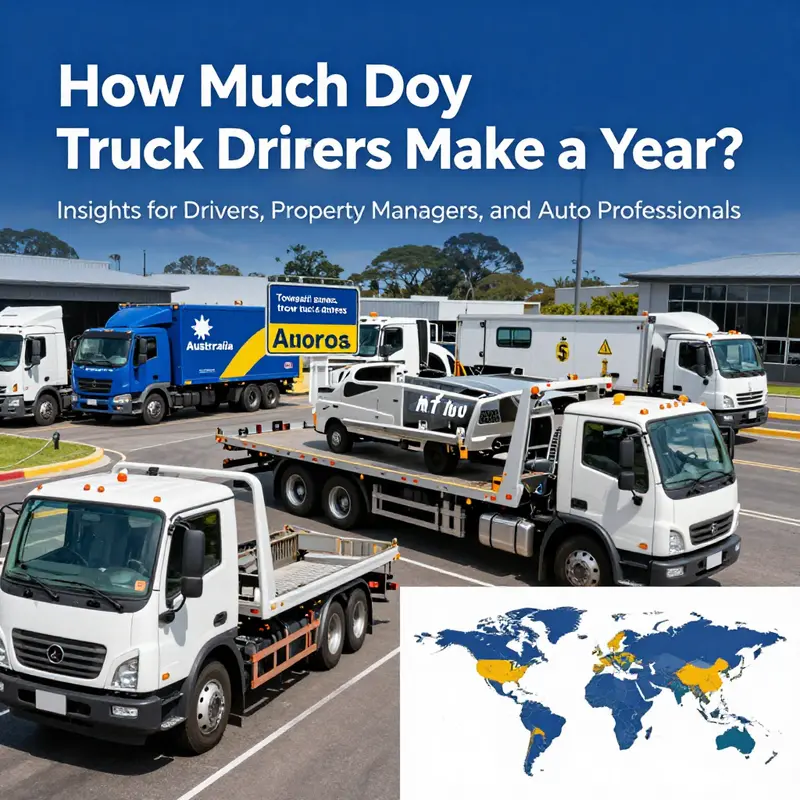
Tow truck drivers stand at the crossroads of urgency and infrastructure, moving from breakdown to breakthrough on roads that never pause. Their pay, like the work itself, is shaped by a blend of demand, risk, skill, and the cost of living in the places they serve. Across countries and regions, the numbers tell a story of both convergence and divergence: a common baseline for what it takes to respond to emergencies and recover stranded vehicles, and a mosaic of regional premiums that reflect urban density, labor markets, and local expectations for compensation. To understand what a tow truck driver makes in a year, it helps to step beyond the headline figures and map how the pieces fit together in different corners of the world, while keeping in view the everyday realities that workers confront on a 24/7 schedule. The latest data from Australia, North America, and beyond illustrate how a job that is inherently frontline and flexible can still generate a wide range of annual incomes depending on where you work, who you work for, and how much overtime and on-call time you log.
In Australia, the panorama of pay is striking in its breadth. A recent snapshot puts the national average for tow truck drivers at about $75,969 per year, according to Indeed’s 2025 data. This figure sits in a context where the country’s urban centers are hotspots for road-side incidents and the attendant towing services that must respond quickly, efficiently, and safely. It is not merely the routine callouts that push earnings higher; it is the concentration of work in big cities where traffic volumes, accident frequencies, and road service demands cluster, coupled with the fact that operators in these centers often juggle on-call duties, after-hours shifts, and the need to maintain rapid response times. The result is an annual figure that, for many, feels robust by international standards, especially when one considers the scope for overtime, weekend premiums, and the potential for shift differentials that can tilt a base wage into territory that seems more lucrative on a yearly basis.
Within Australia, there are pronounced regional variations that demonstrate how pay scales crystallize in specific labor markets. Melbourne, for example, emerges as a high-wage node near the top of the spectrum, where the average annual pay for tow truck drivers is reported around $127,008 based on two salaries. This is not merely a reflection of the city’s size; it is driven by the density of incidents, the higher cost of living, and the willingness of employers to offer premium compensation to ensure rapid, reliable on-call coverage in a metropolitan environment where every minute counts on the road. Nearby regions and satellite areas also show distinct profiles. Sunbury, for instance, is cited at approximately $122,535 per year, signaling strong regional demand even outside the urban core. Ballarat sits further down the curve at around $85,512 yearly, while the Mornington Peninsula sees averages near $77,775. These figures collectively illustrate how a single profession can carry a wide range of outcomes even within the same country, shaped by traffic patterns, call volume, and the operational realities of local towing outfits.
Beyond the general Australian picture, the data reveal a nuanced contrast with other parts of the world. In the United States, the typical tow truck driver earns about $21.23 per hour, translating to roughly $44,150 per year for a standard 40-hour week. Some sources put the annual salary a little lower or higher, around $42,500, depending on the method of calculation and the inclusion (or exclusion) of overtime and benefits. The U.S. landscape is characterized by substantial regional variation as well, with wages often higher in coastal or urban markets that experience heavier traffic and more frequent emergencies. The Canadian experience offers another point of comparison, where the national average hovers around $17.75 per hour, or about $36,900 annually on a full-time schedule of 40 hours per week. Yet the Canadian map is far from uniform. In Richmond, British Columbia, the rate climbs to $24.06 per hour, equating to roughly $49,980 per year. Thunder Bay, Ontario shows even stronger hourly wages around $26.53, or about $55,170 annually. The higher end of the Canadian spectrum is visible in Ontario job postings that sometimes list salaries from $50,000 up to $80,000 per year for experienced or specialized roles. These numbers underscore a pattern common to many trades: base pay may be solid, but the capstone figures come from experience, location, and the particular demand for skilled responders in more demanding environments.
In British Columbia more broadly, the average is about $17.85 per hour, which translates to roughly $37,140 annually. Yet this average belies real opportunities for higher earnings in certain outfits or jurisdictions. In Surrey, for instance, some employers offer wages up to about $39.50 per hour, a rate that would push annual earnings to around $82,160 for a full-time worker. The spread between the typical provincial average and the upper end of the scale highlights how pay can diverge significantly even within the same region, depending on the employer’s willingness to bid up salaries to attract and retain drivers who can manage high-pressure assignments and tight response windows. Across the Atlantic, New South Wales in Australia shows an entirely different rhythm, with a reported average weekly wage of $1,264, which sums to roughly $65,728 per year. That weekly figure captures a pay regime that balances stable base compensation with the likelihood of overtime, weekend shifts, and the security that comes with being part of a municipal or larger private fleet that relies on predictable scheduling.
These cross-border comparisons illuminate several practical takeaways for anyone weighing a tow truck driving career. First, base pay is only part of the equation. Overtime, on-call stipends, bonuses for exceptional response times, and shift differentials can significantly alter annual take-home totals. In places with high incident rates or where fleets operate around the clock, earnings can rise well above the baseline, while rural or low-demand markets may offer modest base pay with limited overtime opportunities. Second, the cost of living and local tax structures matter. A high gross salary in a congested metropolitan area may still feel modest when living expenses, housing costs, and regional taxes compress purchasing power. Conversely, a lower nominal wage in a cheaper region can yield a more comfortable standard of living when expenses are proportionally lower. The third takeaway is about career progression and specialization. In markets with a robust road-services ecosystem, there are paths for higher earnings through experience, advanced certifications, or roles that require additional expertise—such as managing complex recoveries, heavy-duty towing, or coordinating regional response operations. The presence of these specialized tracks often correlates with a broader ecosystem of training programs and licensing requirements, which in turn influence who can command higher wages and how quickly they can advance.
The data also invites reflection on the role of employers and labor market structure. In some regions, standard full-time employment with benefits can stabilize earnings and provide predictable cash flow, while in others, the market leans more heavily on independent or semi-independent drivers who may negotiate pay on a job-by-job basis or be drawn into longer on-call commitments with overtime potential. The Australian context, with a large base wage and significant urban premiums, suggests a market leaning toward structured employment with clear shift patterns. In North America, the mix of municipal, private, and fleet-based operations means earnings can hinge as much on the specific employer’s compensation philosophy as on the market rate for the region. Such structure matters for workers contemplating long-term financial planning, including retirement contributions, health benefits, and earnings stability amid seasonal fluctuations in demand for towing and roadside assistance.
To readers who want a sharper sense of what this means in practice, it helps to translate these numbers into a daily, weekly, and yearly rhythm. A driver in a high-demand Australian city who clocks robust on-call hours and weekend shifts can approach or exceed the upper end of the provincial pay scale, particularly when overtime is available and when the driver takes on high-priority or hazardous recoveries. In Melbourne, with its dense traffic and frequent incidents, the combination of long shifts and premium rates can translate into a year that looks markedly more generous than the national average. In contrast, in smaller Canadian towns or rural U.S. counties, the same level of effort may yield a much more modest annual sum, with the caveat that a steady stream of work and reliable scheduling can still offer a comfortable, if not lucrative, living, especially when the driver has built up experience and a solid referral network that sustains demand.
The comparison also serves as a reminder of how this line of work interacts with broader labor-market trends. As cities grow and fleets modernize, the demand for skilled operators who can handle complex tows, safely secure loads, and coordinate efficient on-site solutions tends to rise. This drives not only higher wages but also a greater emphasis on training and certification, which can reduce risk and improve job security for experienced drivers. At the same time, the expansion of ride-sharing and on-demand services in some regions can influence demand for traditional tow services, creating a dynamic where traditional tow operators must adapt by offering faster response times, better fleet management, and more transparent pay structures to attract and retain talent. These forces—urban density, incident frequency, and the evolving shape of the road-services economy—shape the pay landscape in ways that simple hourly rates cannot fully capture.
For readers seeking a practical window into the current market, the most immediate yardstick is the published salary data from recognized labor-market sources. The Australian figures highlight the premium that metropolitan markets can command and the powerful effect of urban demand on annual earnings. North American figures remind us that while base pay in some markets remains in the mid- to high-40s thousands per year, localized factors—such as city size, call volume, and the mix of municipal and private fleets—can push earnings higher or lower in meaningful ways. And the Canadian examples illustrate how provincial labor markets can deviate sharply from the national average, offering high-earning opportunities in city centers while keeping a more modest baseline in other areas.
As readers plan their career trajectories or analyze the sector for investment or policy considerations, it is important to anchor expectations in the available data while recognizing the fluid nature of the road-services market. The numbers at hand are best read as a spectrum rather than a fixed ladder: an Australian driver in a major city may enjoy earnings well into six figures, a Canadian driver in a thriving metropolitan market may approach the upper end of provincial pay ranges, and a U.S. driver in a mid-sized urban area or a high-volume region may see substantial overtime opportunities that lift annual earnings beyond the base wage. Across all of these scenarios, the pattern remains clear: pay is shaped by the interplay of market demand, operational realities, and the extent to which an employer values reliability, speed, and safety in very time-sensitive work.
For readers who want to connect these macro patterns to concrete resources, a practical starting point is to explore industry-focused content that delves into the day-to-day realities of road-service work. This can include trade-focused discussions on how fleets optimize response times, how on-call cycles are scheduled, and how drivers manage the physical and logistical demands of towing and recovery operations. Such perspectives help explain why two drivers earning the same nominal hourly rate can end up with very different annual incomes depending on the structure of their work, the location, and the specific responsibilities of their role. And for those who are assessing their own potential in this field, the takeaway is clear: alignment between skill development, regional demand, and a clear strategy for overtime and on-call coverage is often the most reliable predictor of a robust annual income.
To connect these insights to ongoing industry conversations, you can consult resources that compile current salary data and discuss regional variations in depth. For a broader view of industry context and long-term trends, see the Santa Maria Tow Truck blog, which often features analyses and practical guidance related to fleet operations and emergency readiness. Santa Maria Tow Truck blog
External references provide additional benchmarks and corroboration of the patterns discussed here. For a current, country-specific snapshot of tow truck driver pay in Australia, and to compare with other regions, the Indeed salary page offers a comprehensive set of figures and regional breakdowns. External reference: Indeed’s Tow Truck Driver Salary page — https://www.indeed.com/career/tow-truck-driver/salaries
Overall, the journey of a tow truck driver’s annual earnings is as much about where you work as it is about how you work. The numbers we’ve examined show that Australia often presents a strong pay proposition, especially in major urban centers, while North America demonstrates substantial variability shaped by city size, demand, and the structure of employment. Canada adds another layer of nuance, with high regional variance that can yield very strong earnings in certain locales and more modest compensation in others. For a reader weighing a move or simply seeking to understand the current market, the message is not a single figure to chase but a landscape to navigate—one where training, licensing, and strategic scheduling can maximize earned income, and where the right regional context can transform a solid wage into a significantly enhanced yearly take-home amount.
Final thoughts
Understanding the salaries of tow truck drivers is vital for various stakeholders, from drivers and vehicle owners to service providers and property managers. The earnings of these essential workers not only reflect the economic landscape of the towing industry but also influence decisions about hiring and service pricing. As you consider these figures, keep in mind the importance of quality service and reliability in the towing profession. This knowledge empowers you to navigate the towing landscape with greater confidence and clarity.