
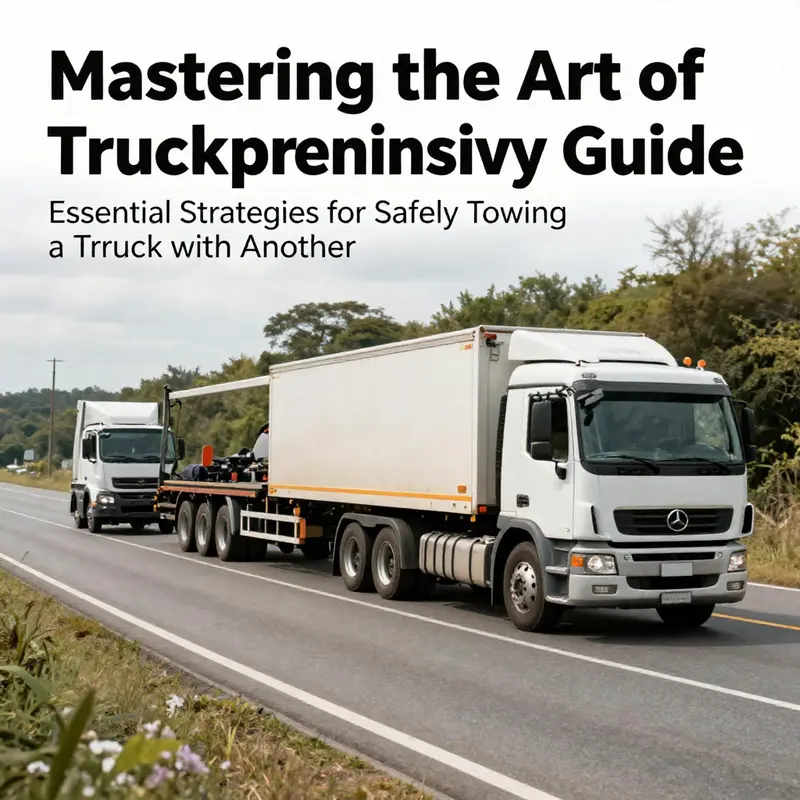
Towing a truck with another truck is a task that demands both knowledge and precision. Whether you’re a local driver facing an emergency, a property manager needing to move an abandoned vehicle, or an auto repair shop assisting customers, understanding the nuances of towing is crucial. This guide will illuminate the steps required to successfully and safely tow a truck, exploring vehicle compatibility, necessary equipment, preparation protocols, secure connection methods, and effective communication strategies. By the end of this guide, you will be fully equipped to handle towing tasks, ensuring the safety of both vehicles on the road.
Weighing the Connection: Verifying Compatibility and Capacity Before Towing a Semi-Truck with Another Semi-Truck
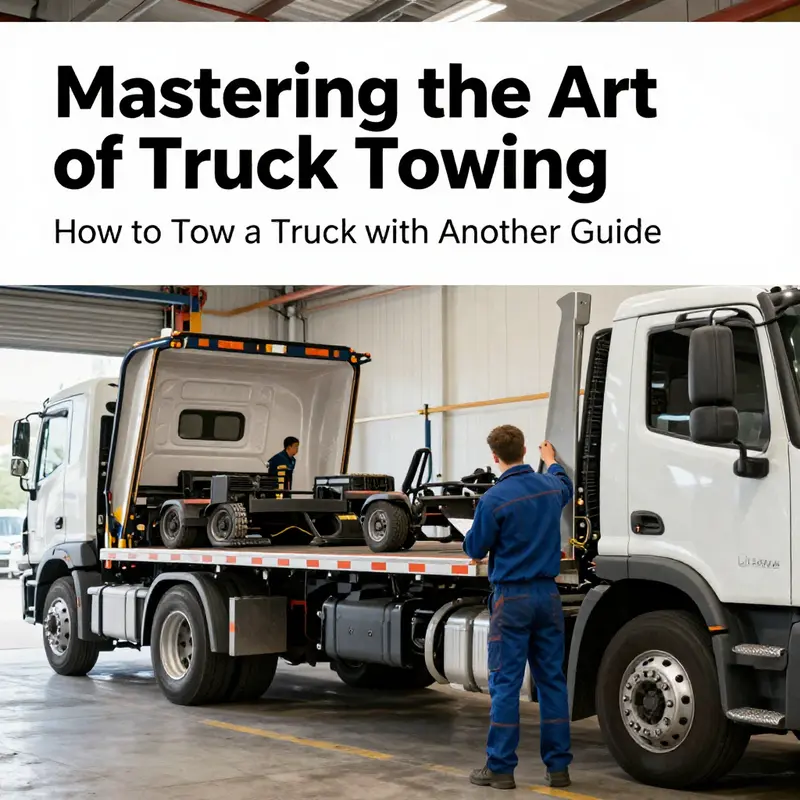
Towing a semi-truck with another semi-truck is a specialized operation that tests the limits of both vehicles and the people who operate them. It demands meticulous planning, exacting attention to weight, and a clear understanding of the equipment that will bear the load. The stakes are higher than with lighter pickups or standard tow rigs because the payload, the mass, and the dynamics of two heavy machines interacting on the road create a complex set of risks. The central question before any hook or dolly is touched is not just whether a tow vehicle can physically pull the other, but whether it can do so reliably, safely, and within the constraints laid out by the manufacturer and by the governing rules of the road. In this context, the first chapter of any heavy-duty towing operation must be framed around compatibility and capacity. This means more than a cursory glance at numbers on a spec sheet; it requires a holistic check of licenses, hitch systems, weight distribution, and the ability of the towing setup to handle the loaded weight of the towed truck, especially if it is a fully fueled, loaded semi on a highway-grade climb or a long, straight stretch where drag and rolling resistance interact in unpredictable ways. When the process is done correctly, the connection feels less like a shortcut and more like a carefully engineered link that keeps both vehicles aligned while preserving the mechanical integrity of each truck.
The most fundamental consideration is the towing truck’s ability to handle the weight of the towed semi. In commercial towing, the industry emphasizes a simple truth: the gross vehicle weight rating (GVWR) and hitch capacity of the towing vehicle must exceed, not merely match, the weight of the combination under the most demanding conditions you expect to encounter. This means accounting for a loaded semi’s weight, fuel, cargo, and potential climatic factors that might increase rolling resistance. A mismatch here is not just a safety concern; it is a direct threat to the drivetrain, brakes, and steering systems of both machines. Before any hooking occurs, the operator must verify that the towing truck’s GVWR and hitch rating are appropriate for the task at hand, and that the anticipated combined weight remains within legal and manufacturer-specified limits. This baseline check is the quiet prerequisite that makes every subsequent step more predictable and less risky.
Beyond the basic weight math, the licensing framework for the driver is a critical element. Heavy-duty towing requires credentials that align with the classification of both the towing and towed vehicles. In many jurisdictions, operating a heavy-duty tow setup with a semi-truck on the back demands a license class that reflects the vehicle’s weight and configuration. The driver’s qualifications are not a mere formality; they are an essential component of safety, training, and the ability to respond effectively if a situation deviates from the plan. A license that matches the vehicle class signals that the operator has been trained to manage the unique dynamics of two heavy vehicles connected in a towing arrangement, including braking, steering geometry, and the potential for trailer sway under load. The complexity of a semi-on-semi tow underscores the need for specialization, and it is a reminder that this task belongs in the hands of skilled professionals when conditions are less than ideal.
With licensure in hand, attention turns to the equipment itself. A properly rated tow bar or dolly designed for heavy-duty use is essential, and understanding the coupler system that will connect the two tractors matters as much as knowing the combined weight. Semi-trucks often rely on fifth-wheel or pintle-type connections, and the compatibility between these coupling interfaces and the trailer’s coupler dictates stability, pin alignment, and the ability to transmit braking and steering impulses without distortion. A mismatch can produce unpredictable trailer behavior, especially at highway speeds or during abrupt maneuvers. The industry’s emphasis on using equipment rated for the load is not simply about avoiding a failure; it is about ensuring that every component—hitch, tow bar, dolly, safety chains, and the connection points—works in concert to keep critical systems synchronized under stress. In practice, this means selecting a towing setup that is certified for the weight class of the semi and the chosen towing configuration, whether that be a tow dolly with the front wheels lifted, a full flatbed, or a purpose-built heavy-duty rollback unit.
Manufacturer specifications for both trucks provide the final, non-negotiable check before any towing begins. The coupling system’s compatibility with the trailer’s type and the design requirements for the tow points on each truck must be verified. A common pitfall is assuming that a generic heavy-duty hitch will automatically suit every scenario. In reality, the geometry of the connection, the alignment of the hitch, mounting points, and the location of the tow rig’s braking system all influence stability and control. A mismatch can introduce unintended hitch load sharing, uneven weight transfer, or binding that accelerates wear and raises the chance of damage to frames, suspensions, or coupling hardware. This is where professional judgment matters most. Fleet managers and experienced operators remind us that the smartest investment is in equipment that has proven resilience under heavy-duty use. The point is not simply to meet the minimum requirements, but to exceed them when the job demands it. As industry voices have noted, investing in premium rollback units or equally robust recovery equipment can pay dividends in reduced maintenance costs, fewer on-road delays, and higher job completion rates due to the reliability of the hardware in demanding conditions. Such investments reflect a philosophy of risk management: you buy the capability you need to do the job safely and efficiently, rather than gamble with underpowered or underrated gear.
Having established the baseline compatibility and capacity, the crew proceeds to the practical steps that transform theory into a safe, controllable towing operation. Before any connection is made, thorough preparation of both trucks is essential. The towed semi must be placed in neutral (for automatics) or first gear (for manuals) and the parking brake released entirely. Tires must be inspected and inflated to the recommended pressures, and any signs of wear or damage must be addressed before attempting to roll. For 4WD or AWD semis, the standard warning applies with particular seriousness: do not tow with all wheels on the ground unless you are using a flatbed or a properly rated tow dolly that is approved for that specific configuration. The towing truck, in turn, must have fully functional brakes, lights, and steering. All hitch receivers must be checked for wear, and the connection point must be rated for the load. When a heavy tow involves a trailer-based connection or a dolly, a trailer brake controller is often required by law and by best practice to ensure coordinated braking response between the two trucks. In many fleets, the emphasis on test-fitting the electrical and braking linkages becomes a routine safety check rather than a one-off chore.
The actual connection is the moment of truth. Attaching the tow bar or dolly to the designated tow points on both vehicles requires a steady, systematic approach: secure the connection, double-check the hardware, and then cross the safety chains underneath the hitch, just as a redundancy. If the rig uses an electrical harness, test the towed truck’s brake lights, turn signals, and hazard lights to confirm proper function. This phase is not a formality; it is a critical safeguard against miscommunication on the road. Clear channels of communication between drivers are essential, whether they rely on hand signals, radios, or a modern app-based system. Start with a slow, deliberate roll to confirm that the towed truck tracks smoothly, then gradually increase to the planned pace only after both drivers are confident in the behavior of the setup. Speed management is a quiet but powerful discipline in this context: keep speeds modest, typically well below general highway limits when conditions permit, and always avoid abrupt accelerations or braking that could unsettle the train. A safe following distance of at least several truck lengths is prudent, and generous turning radii help prevent wheel scrapes and hitch misalignment when navigating through turns.
Throughout the journey, vigilance is nonnegotiable. The crew should monitor the connection regularly for signs of looseness, drips, or overheating in any couplings or tie-down points. The longer the route and the heavier the payload, the greater the opportunity for wear or system strain to emerge. On the road, access to well-maintained routes with predictable traffic, fewer obstacles, and better surfaces reduces the chance of dynamic loading that can stress the towing setup. In addition, hazard management is part of the routine—turn on hazard lights when the configuration is in motion to increase visibility and communicate the unusual load to other motorists. The guiding rule remains simple: if anything seems off—unusual noises, sway, binding, or tire overheating—stop safely, reassess, and address the issue before continuing. This conservative approach can be the difference between a controlled tow and a roadside incident that could escalate quickly.
When the destination is reached, care still matters. Stop in a safe, open area and begin the disconnection in reverse order of installation. Inspect both trucks for any signs of new damage, paying particular attention to tires, suspensions, and frame integrity. Reapply the parking brake on the towed truck and bring both machines back to their normal state before leaving the scene. The process, while mechanical in nature, is also a test of judgment and discipline—the ability to maintain composure under pressure while keeping safety at the forefront. For teams responsible for frequent heavy-duty recoveries, the discipline of consistent pre-checks, careful connections, and thoughtful route planning becomes a core competency, one that aligns with broader fleet readiness and emergency response standards. For operators seeking further context on how to translate these principles into everyday practice within a fleet setting, the topic of fleet standardization and emergency readiness offers useful guidance. See the Fleet Standardization and Emergency Readiness resource for deeper reflections on aligning procedures, equipment, and training across complex towing operations, which helps ensure that each mission is executed with reliability and safety.
Internal link: For additional fleet-focused guidelines and readiness considerations, see Fleet Standardization and Emergency Readiness. Fleet Standardization and Emergency Readiness.
In closing, the decision to tow a semi-truck with another semi-truck is not a casual choice. It rests on a foundation of careful compatibility checks, capacity calculations, and a disciplined approach to equipment selection and operation. The process requires more than mechanical leverage; it demands a clear understanding of how weight, timing, and control interact in the real world. When done correctly, it reduces risk, protects valuable assets, and keeps the mission on track. When done incorrectly, it creates risk for drivers, bystanders, and the equipment itself. The best practice is to treat heavy-duty towing as a high-stakes operation that deserves the same level of precision as any professional recovery or transportation task. External sources underscore these principles, highlighting the importance of advanced techniques and best practices for heavy-duty towing in demanding conditions. For readers seeking a broader technical perspective, an external resource on truck towing techniques offers additional insights and data that can inform decision-making and procedure refinement. External resource: FleetOwner – Truck Towing Techniques.
Choosing the Right Towing Gear: A Practical, Safe Path to Towing a Truck with Another Truck
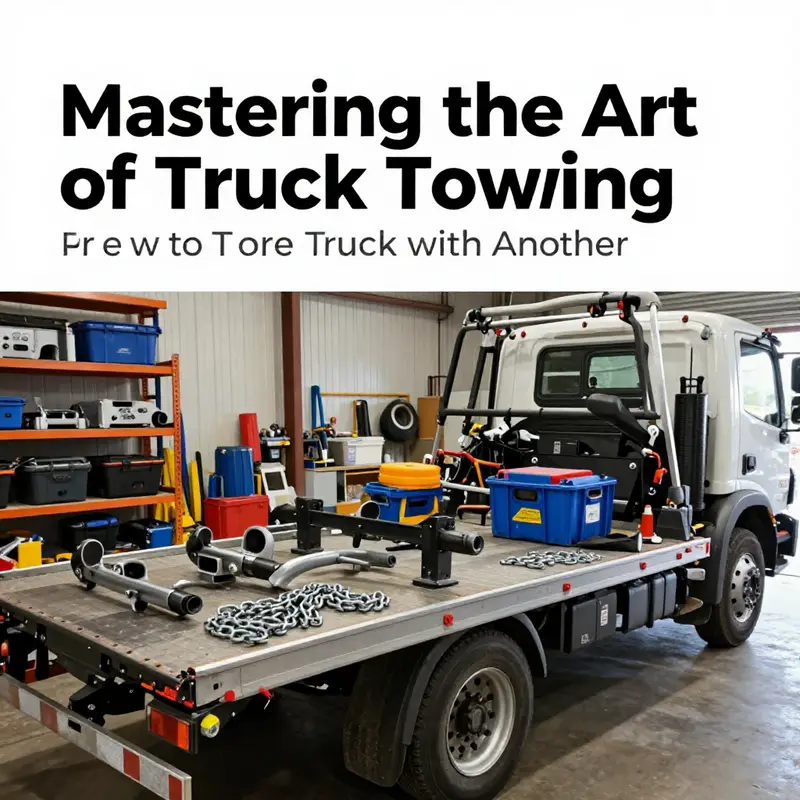
When a tow becomes necessary, the equipment you choose is not just a detail—it’s the fulcrum on which safety, efficiency, and the viability of the operation hinge. Selecting the right towing gear for pairing two trucks demands a quiet, disciplined approach that balances weight, control, and visibility. At its core lies the tow bar, often paired with a compatible hitch system, which serves as the bridge between the two vehicles. The strength of that bridge must be commensurate with the combined weight of the front end of the towed truck and its load, because under load the dynamics of a two-vehicle connection behave differently than when you’re driving solo. The tow bar is not a generic accessory; it is a living component in a safety system that also depends on additional elements to keep the tow stable and predictable.\n\nSafety chains are the second pillar of reliability. They are not decorative hardware but a redundant connection that keeps the towed vehicle tethered in the event of a tow-bar failure. The chains should be crossed under the tow bar so, if the primary link fails, the chains cradle the connection and prevent the towed vehicle from dropping toward the pavement. The chain rating should correspond to the gross vehicle weight of the towed truck, ensuring that every link in the chain can withstand the forces involved without giving way. This redundancy is a common-sense safeguard that reflects the same logic behind keeping spare tires in the trunk and spare fuses in the glove box: contingency planning saves lives and equipment.\n\nThe braking equation is another critical piece. If the towed truck has electric brakes, a brake controller in the towing vehicle becomes essential. It’s not merely a convenience; it’s a coordination tool that helps the two sets of brakes operate in concert. Without it, you risk uneven deceleration, which can lead to sway, jackknifing, or loss of steering control. The brake controller’s job is to translate the towing truck’s braking input into the proper brake response on the towed vehicle, smoothing the stop and reducing stress on the drivetrain and hitching hardware. Paired with properly calibrated lighting and turn signals, the braking system helps other road users anticipate your move and respond accordingly.\n\nVisibility is often underestimated until you’re actually moving with a heavier, longer setup on the road. Towing mirrors are not an optional luxury; they are a safety necessity when you’ve doubled the length of your vehicle and added weight to the rear. Wide, clear sightlines around the towed vehicle help you monitor the setup, ensure the chains and hitch points stay secure, and navigate lanes and turns with confidence. This is especially important on rural roads or in changing weather, where sudden obstacles demand quick, accurate responses.\n\nBeyond the hardware, the choice of gear must reflect the physics of the tow. The towing truck must be capable of handling the extra load without overheating the engine, compromising the transmission, or stressing the cooling system. A careful pre-tow assessment should include checking the towing vehicle’s GVWR alignment with the weight of the towed front end plus payload and ensuring the engine cooling system is up to task for the duration of the move. The licensing and regulatory context matters, too. The operator’s credentials should cover the specific operation, and the vehicle should be equipped with appropriate safety devices and documentation that reflect local rules. In practice, this means more than simply attaching equipment; it means validating the entire system through a thorough pre-tow inspection that confirms connections, lighting, and braking systems are fully functional before you roll.\n\nWith the mechanical groundwork in place, the method of connection becomes a matter of disciplined steps rather than improvisation. Attach the tow bar firmly to properly rated hitch receivers on both trucks, using a ball mount that matches the tow bar’s design and the hitches’ compatibility. The safety chains should be connected and crossed, as noted, with their slack minimized to prevent drag or snagging during turns. If you’re using a traditional tow dolly or a flatbed approach, the chosen method should align with the towed truck’s drivetrain and condition. Rigid mounting points on the frame or designated hitch points are the best targets, avoiding any components that could shift, bend, or wear under load. After securing the hardware, test the electrical harness if applicable. Confirm that brake lights, indicators, and hazard lights on the towed vehicle respond when you operate the towing truck’s controls. The vehicle’s signals are not decorative; they illuminate your intent and communicate with surrounding traffic.\n\nThe practical rhythm of a tow emerges in the choreography of preparation and motion. Before you begin, establish a clear line of communication between drivers. A shared understanding of how the tow will proceed minimizes misjudgments. Begin slowly, with gradual acceleration, and let the towed truck follow the towing vehicle’s pace. Maintain a conservative separation to accommodate increased stopping distance and the potential for sway, especially on uneven pavement or in gusty conditions. Speed should be deliberately reduced, and you should avoid aggressive lane changes or sudden direction shifts. The extra length and mass change the vehicle’s dynamic profile, so you need more room to react and more time to stop.\n\nThe route matters as much as the gear. The safest path is one with well-maintained pavement, light traffic, and avoids high-speed corridors where a misstep could escalate into a serious incident. It is prudent to communicate speed expectations and braking rhythm with the driver at the towed end so you can harmonize your actions. On longer or more complex runs, route planning becomes part of the safety equation. Consider elevation changes, curves, and potential ladder effects where the towed vehicle’s motion could compound on itself if the towing vehicle slows abruptly. The discipline of planning—checking weather, road conditions, and any restrictions on vehicle combinations—saves time, reduces risk, and supports smoother operation.\n\nAll these considerations—equipment selection, proper fit, and coordinated operation—are not abstract best practices but the practical synthesis of lessons gleaned from authorities and practitioners alike. The emphasis on compatible weight capacity, robust connections, and redundancy reflects guidelines that survive in real-world towing. They echo the importance of matching the towed weight to the towing vehicle’s capability, ensuring that the front end of the towed vehicle does not impose undue stress on the drivetrain, and recognizing that a successful tow is as much about control and predictability as it is about raw pulling power. In this sense, the choice of gear is not merely a shopping decision but an entry point into a broader, safety-centered approach to emergency readiness and operational reliability. You may explore this broader framework in resources focused on fleet-standardization and emergency-readiness practices, which align with the careful selection and use of towing equipment across varied scenarios. fleet-standardization and emergency-readiness practices.\n\nAs you prepare to execute the tow, grounding your choices in established standards and cautious practices helps ensure that the operation remains controlled and within safe limits. The equipment you select should be evaluated not only for its strength but for its compatibility with both vehicles’ mechanical systems and the driver’s ability to manage the combined configuration. The best gear is the gear that you understand deeply, that you have tested under controlled conditions, and that you use with disciplined attentiveness from start to finish. In the event of doubt or complexity—such as uncertain weight distribution, uncertain road conditions, or a towed vehicle with unknown mechanical history—the prudent choice is to defer to professional towing services with the right equipment, training, and insurance to handle these challenges with minimal risk to people and property. For those situations, relying on the experience and resources of trained operators can be a wise decision rather than attempting a nuanced, high-stakes maneuver without the full suite of safeguards.\n\nIn the end, choosing the right towing gear is more than a selection of hardware; it is an act of disciplined problem-solving that begins long before the tow and continues long after it ends. It is a practice that recognizes weight in motion, respects the chain of safety that binds the two vehicles, and upholds the responsibility to keep other road users out of danger. The equipment you assemble, and the procedures you follow, should embody that commitment in every mile of the tow. For those seeking further detail on equipment types and compatibility, official guidelines provide a broader, system-wide perspective on how towing should be conducted and monitored under varying conditions. Additional official guidelines can be found at the National Highway Traffic Safety Administration’s towing guidelines page: https://www.nhtsa.gov/vehicle-safety/towing-vehicles.
Tow-By-Tow Readiness: Preparing Two Trucks for Safe Vehicle-to-Vehicle Hauling
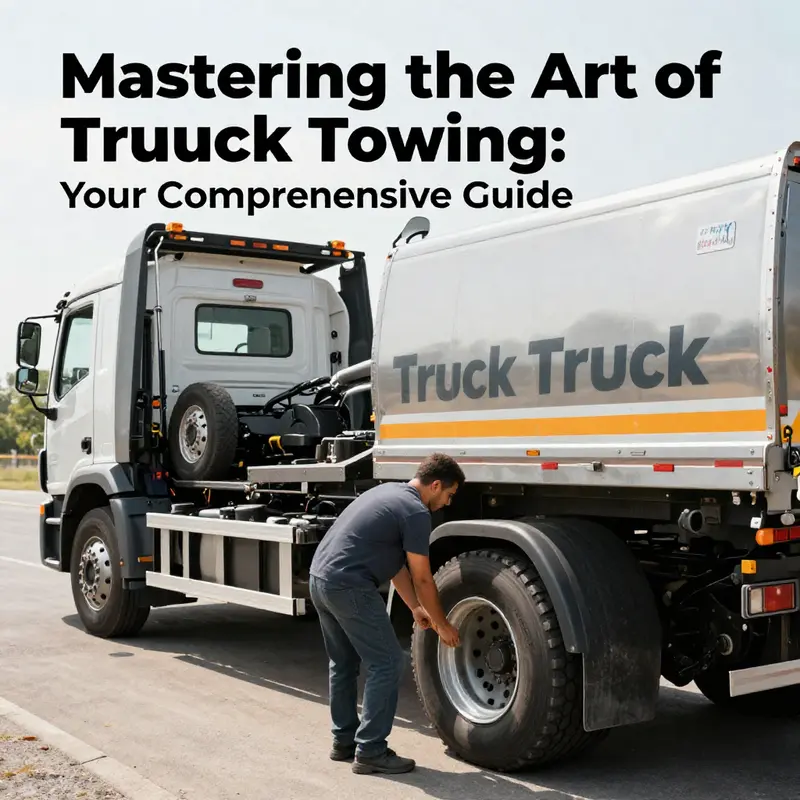
Towing a truck with another truck demands discipline, planning, and clear communication before any wheels move. Preparation is as important as the act of towing itself, because a safe tow is built on compatible equipment, known limits, and a shared plan among drivers.
The first step is verifying towing capacity on both vehicles. Check the GVWR and ensure the towing vehicle can handle the combined weight of the towed truck, its fuel, cargo, and any gear. Do not exceed manufacturer limits; oversize or heavy hauls may require different equipment or a different method.
Next, inspect and prepare the equipment. The hitch, ball mount, safety chains, electrical harness, and trailer brakes must be rated for the load. Use appropriate hitch classes and verify all bolts and pins are secure. Safety chains should cross under the hitch in an X configuration, and a quick test of lights and brakes on the towed vehicle should confirm proper operation.
Plan the tow route and signaling. Agree on a simple communication method, maintain a conservative speed (for example 20-30 mph depending on conditions), and increase following distance. Ensure the towed vehicle is in a neutral or park state as appropriate and that steering and braking systems are functioning for both vehicles.
Secure the Link: Mastering Safe Connections When Towing a Truck with Another Truck
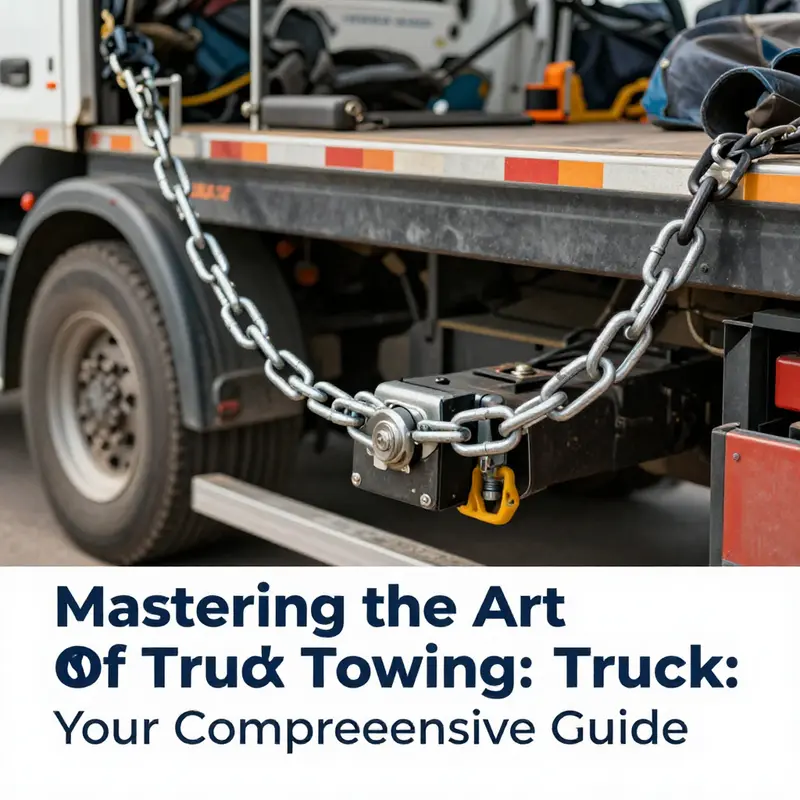
When you set out to tow a truck with another truck, the moment you couple the two vehicles is more than a technical step. It is the point at which risk either compounds or vanishes. The strength of the tow rests on a single, carefully executed sequence: verify compatibility, secure every connection, ensure electrical communication, and then move with deliberate, restrained motion. This is the core of safe towing, a discipline built on discipline, not bravado. The work you do at the hitch, the anchor points, and the wiring creates the shield that keeps both drivers and bystanders safe as the convoy progresses from start to finish. The approach is methodical, and the emphasis is on clarity and redundancy. If you take nothing else away from this chapter, remember that the connection is not a one-and-done act. It is a living part of the operation, worth frequent checks and calm, deliberate action.
Equipment verification begins long before the trucks meet on the road. The towing setup must be matched to the weight and dynamics of the towed vehicle. A tow bar, often described in the field as an A-frame, is generally preferred for heavy-duty applications over a simple rope or chain. It provides a stable, predictable pull and keeps the towed vehicle aligned with the towing vehicle, reducing the risk of drift or jackknifing. The compatibility check extends to the hitch receiver on the towing vehicle and the mounting points on the towed truck. These components must be rated for the load they will bear, and they must be free of wear or damage that might compromise the connection. In practice, this means inspecting the hitch receiver for cracks or bending, removing any debris that could limit movement, and confirming that pins, clips, and locking mechanisms are intact and operable. A quiet rule of thumb: if anything looks worn or questionable, address it now rather than later. This is not the stage for improvisation.
Securing connections brings the verification into physical form. If you opt for a tow bar, the locking mechanism and hitch pin should be engaged per the manufacturer’s instructions. A proper lock deters accidental disengagement and resists loosening under load. When using a tow rope or chain, choose high-strength options that display no fraying or signs of abrasion. Attach to designated anchor points on both vehicles, which are typically frame or bumper points designed to bear towing loads. The rope should be connected with secure loops rather than knots that can weaken fibers. Techniques like a bowline or a double figure-eight knot can provide strong, reliable loops without compromising the rope’s integrity. As you complete these connections, a thorough final check becomes essential: confirm that the connection is tight, free from twists, and free of slack that could allow swing or unexpected load transfer. The aim is a clean, predictable line of pull, with no surprises as speeds increase.
Electrical connections are the lifelines of communication between the two trucks. A reliable wiring harness with a plug-in connector is not optional; it is the explicit channel through which braking, turning, and hazard signals travel from the towed vehicle to the towing vehicle. The plug should seat firmly, the harness should be compatible with both vehicles, and all lights must be tested before any movement. This testing is not a courtesy; it is a prerequisite for safety. When the lights and signals are functioning correctly on both vehicles, the intent and the actions of the drivers become legible to other road users. The transmission of brake signals, in particular, carries real consequences for following traffic, especially at slower speeds and on mixed surfaces. In the rare case of a fault, pause and re-check the wiring and the connectors rather than proceeding. A small misconnection can yield large risks.
Before stepping off, a pre-move inspection anchors the process in a practical, real-world check. The towed vehicle should have its handbrake released and its transmission in neutral (or in park if automatic). The steering wheel should be unlocked, allowing the towed vehicle to roll under guidance, within the limits of the connection. If the towed truck is four-wheel-drive, understand that certain configurations—such as having all wheels on the ground—can be destructive to the drivetrain unless you are using a flatbed or a professionally rated tow dolly. The drivers must communicate clearly—via radio, hand signals, or a mapped agreement—so that turns, speed changes, and braking are anticipated by both parties. These checks, thorough as they seem, often save minutes later by preventing missteps that could escalate into mechanical damage or, worse, an accident.
The moment you begin moving marks a transition from preparation to execution. The driving guidelines stay centered on a disciplined, patient tempo. Start slowly and allow the towed vehicle to follow the towing vehicle with a steady, smooth progression. Avoid abrupt accelerations or decelerations; the goal is to preserve the aligned pull and to prevent jerks that could loosen or stress the connections. A conservative speed is essential. In many practical contexts, keeping the pace at a level that feels almost too slow for traffic is prudent. Yet even a modest speed must be matched to conditions. On uneven pavement, in crosswinds, or when negotiating curves, the need for gentle steering inputs and careful throttle control becomes even more pronounced. Because the overall length and weight are greater when two vehicles are linked, you will notice that turns require a wider arc and a longer stopping distance. Doubling back on a route to avoid busy corridors may seem inconvenient, but it is a small price for control and safety.
Safety chains, though sometimes overlooked, deserve a precise and deliberate approach. They are the secondary safeguard that remains active if the primary connection fails. Chains should be installed with the expected alignment in mind, crossing beneath the hitch to form a cradle that limits any lateral movement that could lead to a detachment. The chains must be taut but not overly tight; there should be enough slack to accommodate turning radius and minor suspension movement without binding. When you cross the chains, you create a safety loop that resists the worst-case scenario of a failed connection by providing a controlled, mechanical fallback. The emphasis here is on redundancy: a chain that functions as intended can keep the towed vehicle in line and under control, even if other links briefly falter.
In the practical flow of towing, ongoing monitoring remains essential. The connection, the electrical signals, and the mechanical linkages should be checked at regular intervals during the journey. Stop to inspect for any unusual wear, unusual clattering, or signs of overheating in the hitch area or undercarriage. Watch for consistent trailing patterns and stability in the towed vehicle’s motion. If you notice swaying or a change in alignment, reduce speed, straighten the path, and reassess. When possible, choose routes that minimize high-speed traffic, steep climbs, or abrupt decelerations. Hazard lights should be on during towing to heighten visibility, reinforcing the awareness of other drivers about the unusual configuration on the road.
The overall approach is not merely a sequence of steps but a mindset: view the connection as a critical, evolving element of the operation. The two drivers must maintain continuous, calm communication. Where to stand, how to monitor, and when to pause for inspection should be part of the planned routine. Brief, consistent checks and predictable actions outperform ad hoc decisions born of pressure. If a task feels outside your confidence, or if you encounter equipment that does not meet safety standards, stopping and seeking professional help is the wisest choice. For more structured guidance on fleet safety and emergency-readiness practices, you can consult fleet-standardization-emergency-readiness guidelines. These guidelines emphasize standardized procedures, regular audits of equipment, and clear lines of responsibility—principles that can elevate even a straightforward tow into a reliably safe operation.
As the operation advances, you will notice that the quality of the connection becomes the quiet, steady heartbeat of the journey. When the towed vehicle is properly secured, when the electricals are sending correct signals, and when the physical links remain intact under load, both drivers can focus on the road ahead rather than wondering about the integrity of the link behind them. The chapter’s practical emphasis does not undermine confidence; it reinforces it. The safest tows are those where preparation, precision, and patience converge in a controlled environment. This is the standard against which every successful truck-to-truck tow is measured: not by speed, but by reliability and predictability in how the two machines behave as one.
For readers seeking formal guidance beyond the practical steps described here, remember that official safety standards are published and updated by national authorities. They provide a baseline for professional practice and personal accountability alike. Further official guidance can be found at https://www.nhtsa.gov.
Synchronizing the Move: Clear Communication and Safe Beginnings When Towing a Truck with Another Truck
When two heavy vehicles must move as one, the first moments of action set the tone for the entire maneuver. The moment you decide to tow a truck with another truck, you are choosing precision, patience, and a shared language between drivers. This chapter explores how to translate preparation into a smooth, controlled start. It ties together the careful checks described earlier with a disciplined approach to coordination, so the tow begins not as a gamble but as a practiced, deliberate sequence that prioritizes safety for everyone on and around the road. The essence is simple: agree on a plan, establish signals that both drivers understand without guesswork, and then execute those signals with calm, consistent actions. In practice, this means treating the tow as a single operation with distinct roles, a clear line of communication, and a pace that honors the limits of the equipment and the conditions on the road. A well-executed start reduces the risk of surprises down the line and helps keep the towed vehicle aligned with the towing truck, which in turn reduces the chance of swaying, jackknifing, or unintended braking that could end badly for both drivers and other road users. For those who want to explore more about ongoing towing safety and training, our dedicated blog offers context and practical tips rooted in years of field experience. Santa Maria Tow Truck blog.
Before any movement, the two operators should have completed the necessary checks and equipment choices described in earlier chapters. The towing truck should be equipped with properly connected braking and lighting systems, and the hitch hardware must be secure and rated for the load. The towed vehicle should be set up in neutral or first gear, with the parking brake released, and its tires in good condition. With these foundations in place, the next step is to establish a shared operating rhythm. Communication is not merely a courtesy; it is the mechanism that keeps both vehicles aligned and the plan visible to both crews. The most reliable approach is a pre-tow briefing that covers who will call the shots, what signals will be used, and what the expected cadence will be once movement begins. While radios are ideal for real-time feedback, hand signals and simple verbal cues can work when electronics are unavailable or impractical. The key is to agree on a fixed set of signals before you move and to practice them in a low-stress setting, so there is no guesswork when you’re on the road.
A practical way to frame the communication is to designate two roles: the lead driver, who controls the towing truck, and a spotter or secondary driver who is focused on the towed vehicle and the immediate road environment. The spotter’s job is to watch for any musical changes in the path, such as sway, misalignment, or the need to adjust clearance around obstacles. The lead driver maintains a steady plan, listening for cues and maintaining a smooth throttle. This division of labor helps prevent overwhelmed or distracted drivers and ensures that both vehicles respond in a synchronized way. The signals themselves should be straightforward and easily distinguished in different weather or lighting conditions. A simple and effective set might include a slow-speed cue to begin moving, a cue to increase throttle, a cue to maintain a steady speed, and a clear stop or slow-down signal. If radios are used, a predefined call-out such as “rolling now,” “steady,” and “stop” creates a constant thread of communication that is not dependent on visual cues alone. If hand signals are employed, an open hand in a palm-forward direction can indicate “go,” a closed fist can indicate “hold,” and a waving hand can signal “slow or stop.” Whatever method is chosen, consistency matters. Wavering between different signals creates confusion at the moment of initiation, when precise timing matters most.
The moments just before moving are also a time to verify the relationship between the two vehicles. The towed vehicle should be in the safest alignment possible, which means ensuring that its tow points are secured and that any quick-release mechanisms are locked. The electrical connection, if used, should be tested to confirm that brake lights, turn signals, and hazard indicators on the towed vehicle function correctly in concert with the towing truck. This test run is essential, because even a minor misalignment or dim light can create a hazard for following traffic. After confirming signaling and lighting, the two operators should confirm an agreed starting speed. The guidance from safety literature favors a crawl pace when the tow begins, typically around 5 to 10 kilometers per hour (roughly 3 to 6 miles per hour). This cautious start allows both drivers to observe how the towed vehicle follows, how the tow assembly behaves at the front of the line, and whether any mechanical resistance becomes apparent as the vehicles begin to move in tandem.
Once the tow begins to move, maintaining a low, steady cadence is crucial. The aim is not to rush the process, but to let the towed truck simply follow the lead truck in a controlled, predictable manner. A key parameter is the following distance. In most towing scenarios, keeping a longer distance than normal is prudent; 4 to 6 meters (about 13 to 20 feet) provides a buffer for braking and steering adjustments without encouraging tailgating or causing the towed vehicle to lose tracking. This distance also helps accommodate any slight misalignment that may occur as the curve of the road or the geometry of the tow rig influences the path. Speed should be kept within the conservative range of roughly 20 to 30 kilometers per hour (12 to 18 miles per hour), unless local regulations or road conditions dictate otherwise. Keeping the speed modest helps reduce the forces acting on the tow bar or hitch, minimizes the risk of the towed vehicle overtly pushing or pulling the towing truck, and makes it easier to respond to any unanticipated event on the roadway.
The selection of lane position is another element in the safety calculus. Operators are advised to use the far-right lane whenever possible, especially on multi-lane roads. This reduces exposure to higher-speed traffic and provides more room for error recovery. In urban areas or on open highways with limited traffic, it may still be appropriate to remain in a right-hand position, provided other safety practices are observed and the route is stable enough to accommodate a longer, slower maneuver. Hazard lights should remain illuminated during the tow not simply as a courtesy, but as an essential cue to surrounding motorists that something unusual is happening ahead. Drivers should also be mindful of weather and road conditions. Wet or windy weather can amplify the risks of sway and reduce traction. In such cases, reducing speed further and increasing the following distance becomes not just prudent but essential.
The actual moment of initiation—when the two trucks begin to move together—demands a calm, coordinated rhythm. The spotter should confirm the plan, the lead driver should begin a controlled acceleration, and the towed vehicle should follow with no abrupt changes in tension or feedback on the tow line or bar. The first few seconds are a test of the connection: if any jolt is felt, both drivers should stop slowly, recheck the connection and alignment, and reset the plan. It is better to pause and verify than to press on and risk a dramatic failure of the coupling or a dangerous misalignment. Throughout the initial movement, a steady, even throttle is preferable to bursts of acceleration that can escalate into oscillations or sway. If a sway is detected, the appropriate response is usually to ease off the throttle, allow the vehicle to settle, and then proceed at an even slower pace with increased attention to alignment and straight-line travel.
Beyond the immediate moment of starting, the ongoing coordination remains a test of discipline and shared responsibility. The two drivers should maintain clear, constant communication. If visibility is compromised, or if the towed vehicle seems resistant or noisy in a way that suggests mechanical stress, it is wise to stop and inspect rather than press onward. Routine checks should be scheduled at safe intervals during the journey. The crew should look for signs of overheating in the towing equipment, unusual wear, or any tendency for the towed vehicle to pull to one side. Even minor changes in steering effort or braking response can be early indicators of a problem that could escalate if ignored. In all these considerations, the human element matters as much as the mechanical. The confidence built by pre-tow briefing and practiced signals translates into smoother execution on the road and lower hazard potential for everyone nearby.
As you move toward the end of the initial leg, remember that the goal is not to finish a spectacle of speed but to deliver both vehicles to the intended location with the least risk and the greatest control. The end of the first leg should be signaled in the same calm, consistent manner as the start, with all lights functioning and the plan locked in. When you reach the destination point, slow and stop in a safe, open space, and prepare to disconnect with the same care that defined the setup. The steps—releasing the connection safely, ensuring that both vehicles are stable, and checking for any signs of damage—should follow the reverse order of the connection protocol. This deliberate approach prevents confusion and helps ensure that no component is left unsecured or in an unsafe condition.
In reflecting on this process, it is clear that the most effective towing starts are built on shared language, redundancy in safety measures, and the willingness to pause when anything feels uncertain. If you are unsure of your equipment, or if the route presents significant challenges—heavy traffic, narrow roadways, or poor weather—the safest option may be to seek professional help. Tow operators bring trained personnel and specialized equipment that can reduce risk and deliver reliable outcomes even in difficult situations. For ongoing, practical insights that extend beyond the exact moment of moving, you can explore more on our towing safety hub, which offers context and guidance based on field experience and safety standards.
External resource: For authoritative guidance on towing and trailer safety, refer to the National Highway Traffic Safety Administration at https://www.nhtsa.gov/equipment/towing-and-trailer-safety.
Final thoughts
Successfully towing a truck with another truck requires careful attention to detail and a solid understanding of safety practices. By following the steps outlined above—from checking vehicle compatibility to using the correct equipment and maintaining open communication—you can ensure a secure and efficient towing process. Remember, safety should always be your top priority. Equipping yourself with knowledge empowers you not only to handle your own towing needs but also to assist others, enhancing the safety and efficiency of your automotive community. Approach each towing task with diligence, and you’ll manage each situation with confidence.