
For many drivers and vehicle owners, understanding how tow truck drivers get paid can illuminate not just the intricacies of the towing profession, but also how these services impact their own experiences. From hourly wages for company-employed drivers to per-job fees for independent operators, the payment systems in this field are multifaceted. As we delve deeper, we will explore the different payment structures and models used by tow truck drivers in the first chapter. The second chapter will shed light on the factors that influence income variability, helping vehicle owners, auto repair shops, and property managers grasp what can affect fees and service quality. Finally, the concluding chapter brings attention to the role of technology and digital platforms that are transforming how payments are processed for these essential services, showcasing the benefits for all parties involved.
The Paylines of the Road: How Tow Truck Drivers Earn Across Wages, Fees, and Apps
Tow truck driving is a craft in which compensation comes from more than a single paycheck. It rests on a mosaic of wage models, fee structures, and occasional incentives, with regional differences that can amplify or soften the math. The question “how do tow truck drivers get paid?” does not have a single answer because the structure shifts with who pays the bills, where the work happens, and how the job is organized. The driver may be employed by a company, work as an independent operator, or function somewhere in between, all of which shape the daily, weekly, or monthly income in meaningful and sometimes surprising ways. What remains constant is the practical truth that pay joins up with performance, availability, and the demand cycle of the road. In a world where calls arrive in bursts and tempo matters, compensation is designed to reflect both the inevitability of unpredictable jobs and the value of timely assistance when a vehicle breaks down, a car accident creates a bottleneck, or a fleet needs a recovery in the middle of a cold night. In this sense, pay is not simply about a rate per hour or a price tag per tow; it is the sum of how often a driver is dispatched, how quickly they respond, what kind of tow is requested, and how the work is organized around the clock. The structure that underpins this reality is itself a layered conversation between employer policies, market conditions, and the mechanics of servicing a customer base that expects reliability and professional handling of their vehicles.
For drivers aligned with a towing company, the backbone of earnings often rests on an hourly wage. Across the United States, recent postings and salary surveys place the average hourly wage in the vicinity of a little over twenty dollars per hour. A widely cited figure from job postings indicates an average hourly rate of about 21.27 dollars, derived from thousands of salaries collected over a substantial period. This average is not a universal ceiling; it represents a market snapshot that can be raised by seniority, certifications, specialized equipment handling, and regional cost of living. Experience matters in a tangible way: more seasoned drivers command higher pay, particularly when the job includes heavy-duty towing, complex roadside recoveries, or the handling of specialized equipment such as winches, cranes, or flatbed operations. In practice, many drivers who stay within a company structure will see progression through pay scales tied to tenure and demonstrated skill, with potential salary-level opportunities for those on heavy-duty tracks that may reach substantial annual figures—some estimates indicate a full-year payoff approaching or exceeding the six-figure range for top-tier, heavily specialized roles. This is more common in large, well-equipped fleets serving commercial clients and long-haul operators who demand high levels of reliability and technical capability on a regular basis.
That said, salary and hourly earnings are not the only components of the equation. A significant portion of a tow truck driver’s income often comes from per-tow or per-call fees. These are charges assessed for each service and can vary based on multiple variables: distance driven, type of vehicle being towed, whether it’s an urban break-down or a long-distance haul, the time of day, and whether the tow is standard or emergency. In many markets, per-tow fees are accompanied by a separate storage or impound fee if the vehicle must be held for an extended period in a secure location. The exact percentage of these per-tow fees that a driver receives can vary, but they frequently contribute a meaningful share of take-home pay, particularly when a busy week turns over a large number of calls. The conventional approach in some organizations is to pay technicians a percentage of the collected tow fees; others might adopt a flat-rate per tow, with additional bonuses tied to performance metrics, such as high customer satisfaction scores, rapid response times, or the total volume of tows completed within a pay period. The result is a compensation landscape where the base wage provides stability and predictability, while the per-tow component rewards productivity and efficiency in real time.
In addition to hourly wages and per-tow fees, overtime plays a crucial role in the overall compensation picture. Federal labor guidelines grant overtime pay at one and a half times the regular rate for hours worked beyond a typical 40-hour workweek. This structure is particularly consequential in contexts where weather events, peak demand periods, or regional emergencies create spikes in call volume. A driver who can maintain a steady pace through a long shift, while meeting service quality standards, may see a meaningful bump in earnings through overtime. Overtime is not merely a financial incentive; it also reflects the operational realities of towing work, where emergencies do not adhere to standard schedules and the demand for rapid response can persist long after the sun goes down. The interplay between base pay, overtime eligibility, and the allocation of overtime across teams influences not only what a driver takes home in a given week but also the career planning decisions that someone may make when choosing an employer or a specialization.
A smaller but notable slice of the pay landscape involves commission-like arrangements and performance incentives. In some independent or smaller operations, drivers may earn commissions that tie directly to the revenue generated from each service. This approach makes earnings more variable but can yield higher upside for drivers who consistently secure more tows, handle high-value or urgent jobs, or serve demanding customers with efficiency and professional care. Commission models can serve as a lever to align driver incentives with business outcomes, encouraging faster turnarounds, better on-scene problem solving, and a stronger emphasis on safety and customer satisfaction. However, the variability inherent in commissions also means a driver’s income can swing with market conditions, competition, and seasonal patterns. For drivers who pursue independence or operate within a smaller fleet, this model complements a base rate with performance-related pay, creating a blended compensation profile that rewards both reliability and revenue generation.
Beyond wages and fees, the evolution of digital payment platforms has introduced new layers to how drivers get paid, especially for independent operators or those who rely on on-demand dispatch. In markets where mobile platforms connect drivers with customers directly, payment can be processed through the app after the service is completed. Customers pay online via the app, and the driver’s earnings flow through the platform with real-time updates and transparent breakdowns. This model affords drivers a degree of financial flexibility: it reduces delays between service delivery and payment, provides a clear audit trail, and often unlocks faster access to funds. The shift toward app-based payments also reframes how drivers manage their time. With the ability to see incoming jobs and forecast earnings on a map-based interface, drivers can strike a balance between being on the clock and pursuing opportunities that maximize their hourly yield. Yet, it is important to recognize that app-based earnings can also introduce new considerations, such as service fees charged by the platform, potential changes in payout schedules, and the need to maintain high customer ratings to sustain steady work.
The conveyance of money in tow truck work, then, is a dynamic negotiation among wage scales, per-service charges, and the more fluid streams of digital payments. The individual driver’s income is shaped by a matrix of choices: where they work, whether they are on a company payroll or operating as an independent contractor, what kind of tows they specialize in, and how extensively they engage with high-demand shifts or peak times. A driver who wants to optimize earnings must weigh the stability of a regular hourly wage against the profit potential of per-tow fees, the security of overtime, and the lure of commissions or platform-based incentives. They must also take into account the realities of the job itself: the distance involved in each tow, the eventual need for storage or towing to a secure location, and the sometimes unpredictable nature of roadside emergencies. These are not merely mechanical details; they are the levers that a driver can pull to shape a weekly or monthly paycheck.
This complexity is also shaped by the organizational and regulatory framework within which the work occurs. In places where local regulations standardize towing fees or storage charges, drivers may see more predictable revenue streams. Conversely, in highly competitive markets or regions with frequent weather disruptions, pricing can be more fluid, and the driver’s ability to secure immediate dispatch can become a key differentiator. For those who operate as independent contractors, the relationship with a customer or a dispatch operator is pivotal. They exercise discretion over when to respond, how to allocate time across calls, and which jobs to accept, all of which influence total earnings. The independent model, in particular, highlights the value of time management and customer-facing skills. It rewards not only the physical labor of towing but also the capability to communicate effectively, manage logistics, and deliver a professional experience that earns repeat business and favorable ratings.
In reflecting on the broader picture, it is helpful to consider how these pay structures interact with the practical realities of the road. A tow driver who can efficiently navigate a busy urban corridor may accrue more per-tow fees over a week than a driver who works in a quieter rural area, even if their hourly wage is similar. The difference lies in scale and speed: more jobs, shorter wait times, and faster turnarounds can translate into higher earnings within the same 40-hour window, or into a more lucrative week when overtime opportunities arise. The vehicle used, the equipment available, and the mechanical reliability of the tow fleet all contribute to whether a driver can take on back-to-back calls without compromising safety or service quality. The chain of consequences extends to the customer experience as well. A driver who arrives promptly, handles the vehicle with care, and communicates clearly about the process can secure better tips, more favorable reviews, and future referrals, all of which feed back into the financial equation in the form of increased call volume and a smoother, more predictable workload.
From a strategic perspective, understanding pay structures helps illuminate why some drivers choose to stay with a particular employer and others decide to go independent. Stability and predictable pay can be highly valuable, especially for those who prefer a steady routine, a clear benefits package, and predictable overtime. On the other hand, the freedom to set one’s own schedule, to take advantage of peak-demand periods, and to optimize earnings through self-directed dispatch can be immensely attractive for drivers who crave autonomy and can tolerate income variability. The tension between stability and flexibility often governs career choices in this field, shaping not only where people work but how they perceive their own value on the road. The choice is rarely about a single factor; it is a composite decision that weighs pay, risk, time, and the personal satisfaction that comes from helping people in moments of crisis.
For readers seeking broader context or more practical guidance, there are resources that summarize typical compensation patterns and offer insight into current market conditions. An understanding of these figures can anchor a driver’s expectations as they evaluate job postings, negotiate terms with an employer, or plan a career path that aligns with their skills and goals. In addition to official labor statistics, industry-specific postings and salary aggregators provide snapshots of wage ranges, bonuses, and the prevalence of per-tow revenue structures. When evaluating a potential employer, a driver might ask about the base wage or salary, the formula for per-tow pay and any applicable caps or floors, the overtime policy, and whether there are commissions or performance incentives. Asking about the timing of payments, whether funds are disbursed weekly, biweekly, or after each job, and how customer tips are treated can also clarify the financial picture and reduce surprises over the course of a few pay periods.
An important practical takeaway is the realization that pay is not merely a line item on a paycheck but a set of levers—each with its own rhythm and consequence. The base wage provides a stable floor, the per-call or per-tow fee adds variable income tied to demand, overtime rewards added hours, and commissions or platform-based earnings add the possibility of outsized weeks when opportunities align with the driver’s strategy and scheduling. The combination of these elements can create a compelling financial proposition for drivers who are adept at balancing speed, safety, and customer service. It is a professional landscape that rewards reliability and efficiency and, at times, rewards those who can navigate the nuances of dispatch, pricing, and the customer experience with equal skill. The takeaway is clear: tow truck pay is less a single number than a dynamic, multifaceted equation that drivers optimize through planning, performance, and an understanding of how various pay streams converge over the course of a workweek.
For readers who want to explore further, a visit to our industry blog can offer deeper context on how these elements play out in real-world operations, along with practical tips for maximizing earnings and planning a sustainable career on the road. industry blog.
And for a snapshot of current wage benchmarks in the broader market, a reliable external resource provides updated figures that can help frame expectations against regional realities and evolving industry trends. See the latest data here: https://www.indeed.com/q-Tow-Truck-Driver-salary.html
Tow Truck Pay Unpacked: How Income Fluctuates Across Pay Structures, Roles, and Real-World Demands
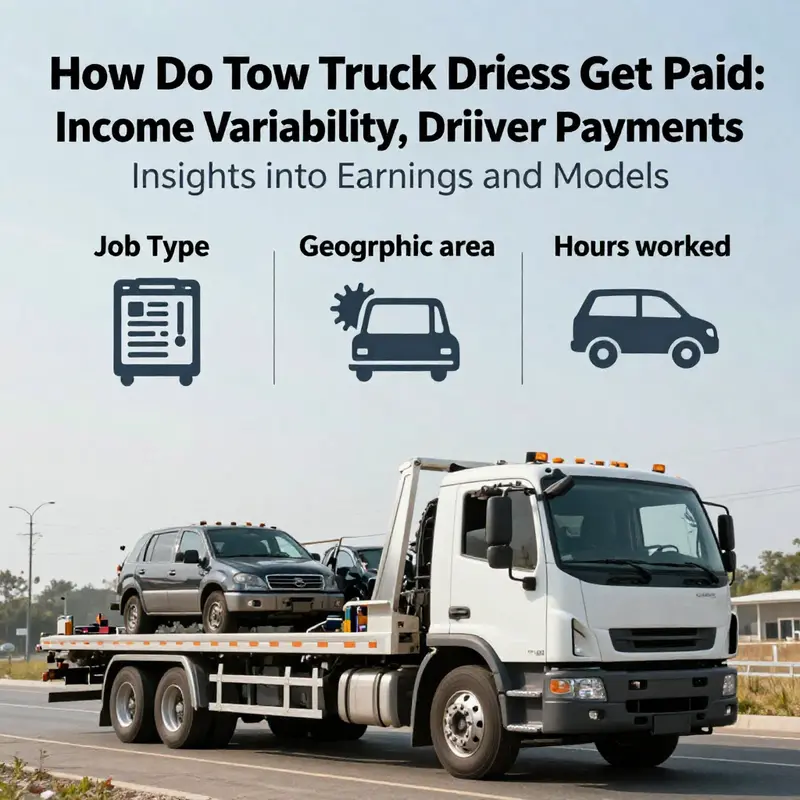
Tow truck pay rarely arrives as a single, uniform number. It arrives as a blend of wages, per-job fees, and an overlay of incentives that reflect the unpredictable rhythms of road service work. The pay landscape for tow operators is shaped by where they work, how they’re employed, what kind of towing they perform, and how they choose to structure their hours. Reading this landscape well means looking beyond a headline hourly rate and understanding how different elements come together to determine a driver’s take-home income over weeks and months. The most immediate reality is that payment usually comes in one of two broad tracks: an hourly wage paid by an employer or a per-job fee paid either by a company’s dispatch system or directly by the customer when the driver is independent. The former offers consistency and predictability, essential in budgeting and tax planning, while the latter offers flexibility and the potential for higher earnings during peak demand or in specialized services. For many drivers, the reality is a hybrid: a steady base that comes with an array of per-job earnings and performance-based bonuses that can lift the total well above the base wage when conditions align. In markets across the United States, including urban hubs with dense traffic and rural stretches where incidents may be sparse but long-distance recoveries are common, the arithmetic of a good week can look very different from one job to the next. The upshot is that the most reliable predictor of income is not a single rate but a balance of rate, volume, and timing. It helps to place this in context with some data points that reflect the current market landscape. Nationally, the average wage for tow truck drivers hovers around the low- to mid-twenties per hour, with recent data pegging the figure near $21.27 per hour. This average comes from a broad pool of data points gathered from job postings over a multi-year period, capturing a mosaic of experience levels, company sizes, and regional economies. As of December 2025, this snapshot reflects 4,100 salary data points collected over the preceding 36 months, illustrating how compensation has remained a moving target rather than a fixed ceiling. Yet averages don’t tell the full story. Many drivers earn far more or less than the average depending on how they structure their work, the services they offer, and the hours they’re willing to work. A driver who is employed by a company that pays an hourly wage can benefit from predictable paychecks, paid time off, and sometimes insurance and retirement benefits. But those benefits vary widely by employer and by region. In contrast, an independent tow operator using a digital platform to receive calls can turn spare time into ready cash, taking payments directly after each job and watching earnings accumulate in near real time as trips appear on a map in the app. The freedom to accept or reject calls, to target certain neighborhoods, or to focus on high-value jobs can create an income profile that is lean in slow periods and robust when demand spikes. That flexibility is a powerful draw for many drivers, even if it also means income gaps calendar in the same way that full-time payroll cycles do not. Both models have their logic and their risks, and many drivers navigate a hybrid path that allows a steady base with the possibility of extra earnings when the system is humming and the roads are busy. The baseline wage, when it exists, often sits on a spectrum. On one end, wages are stable but capped, with annual pay that can be substantial for specialized, heavy-duty towing positions. On the other end, per-job arrangements and incentives can push earnings significantly higher in busy markets, during extended shifts, or when a driver can respond quickly to urgent calls that require immediate and professional service. In the rough math of a week, a driver might start with a predictable hourly wage for the portion of time spent actively serving and waiting for calls in a yard or a shop. Then, when a tow is dispatched, a separate per-job fee is added, sometimes influenced by distance, the type of vehicle, the complexity of recovery, and whether the job involves accident response or heavy equipment. That per-job component is where the economics of a given week diverge most sharply. Think of it as two interlocking gears: the fixed gear that gives a floor under the income and the variable gear that can wildly alter the final tally depending on where the truck is, what needs to be towed, and how fast the job is completed. The type of towing service is a major lever in this system. Standard vehicle recoveries may command a certain per-job fee, but adding elements like accident response, winching, or the towing of heavy-duty vehicles introduces new pricing tiers. The heavy-duty end of the market not only pays more per job but also tends to come with longer service times, greater risk, and higher skill requirements. In markets with high demand, the combination of per-job fees and possible overtime pay creates a compelling advantage for those who can work long shifts, cover late-night or weekend hours, and respond to emergencies with speed and precision. The geographic dimension further reshapes the income picture. Urban areas with dense population and heavy traffic tend to offer more opportunities per shift and a wider mix of jobs, including urgent recoveries, staged dispatches for fleet accounts, and impromptu roadside assistance. Rural or suburban areas may feature longer travel distances between calls and fewer overall jobs, but the per-job fees can be higher to account for distance, travel time, and the scarcity of service providers. A driver’s chosen focus—whether light-duty vehicle recoveries, heavy-duty equipment transport, or specialized services—also matters. Specialized towing requires particular equipment and expertise, and those drivers can command higher rates and bonuses for maintaining safety and compliance on challenging recoveries. The payment narratives expand further when we consider the role of overtime and shift differentials. Night shifts, weekend coverage, and holiday work often come with additional pay structures designed to attract drivers to times when demand is less predictable. Overtime compensation, if it exists, adds another layer of financial planning for drivers who balance long hours with physical and mental fatigue. In some workplaces, performance bonuses are offered to reflect reliability, speed, or customer satisfaction—factors that customers notice and rate, sometimes influencing the likelihood of repeat business and future dispatches. Taken together, these elements produce a mosaic of potential outcomes. A driver who stays within a single employer’s system for years might accumulate a steady, predictable income while still benefiting from occasional bonuses for outstanding service. A driver who operates across multiple platforms, on the other hand, may experience wider earnings swings, but with the potential to capitalize on peak demand periods, favorable routes, and high-value jobs that pay above the baseline. The practical implications of this pay mix extend into how drivers manage their finances, taxes, and benefits. When pay is primarily hourly, the budgeting becomes straightforward: know the hourly rate, the expected hours, and any overtime thresholds. When pay is predominantly per job, a driver must monitor job mix, distances, and the cadence of calls. The tax picture shifts as well. Hourly wages delivered by an employer may come with employer withholdings and standard payroll deductions, while independent income from per-job fees requires more proactive tax planning, quarterly estimates, and self-employment tax considerations. Some drivers also weigh the value of benefits like health insurance, retirement contributions, and paid time off, trading potential higher take-home pay for a more comprehensive benefits package that a traditional employer might provide. The income picture is further nuanced by the arrangement a driver has with their employer or with a platform. In a company-employed configuration, a driver often enjoys a predictable wage, sometimes with bonuses tied to company-wide performance metrics, truck availability, or safety records. In independent work, earnings ride on the rails of customer demand, call volume, and the efficiency of the driver’s operation. This can produce exciting weeks, where a handful of high-value jobs and efficient routing yield a total well above the base wage, and slower weeks where the same driver might earn less if demand dips or travel distances grow longer than usual. It’s not unusual for experienced operators to build a portfolio that includes long-term fleet contracts, ad hoc roadside assistance, and occasional specialized towing tasks. Each of these elements adds a different pricing dynamic. Fleet contracts, for example, may guarantee a steady stream of dispatched work but sometimes come with negotiated rates that settle in predictably, even if the per-job pay fluctuates with the volume of calls across a region. Independent operators might pursue a blend of customer-directed jobs combined with recurring fleet calls, stabilizing income while preserving the flexibility that makes the role appealing. The variation in income can be substantial. In some markets, a steady schedule with a reliable hourly wage may yield a predictable annual income in the mid-range of the industry. In others, a cautious but opportunistic operator who leverages a platform to accept urgent calls and prioritize high-value jobs can push annual earnings into a higher tier, especially when backed by specialized equipment, strong local relationships, and a reputation for rapid, careful work. The numbers matter, but they don’t tell the full story of what drives earnings. The real drivers are the availability of work, the speed with which jobs are completed, the complexity of the tow, and the willingness to accept or refuse certain calls based on safety, distance, and time. A driver who can balance speed with safety, while maintaining a high level of service quality, gains access to more opportunities and, over time, a larger share of the available work in a given market. The human side of pay—customer satisfaction and reliability—plays a fundamental role. Many drivers earn tips or cash bonuses through repeat customers or through the goodwill of those they have helped. While tips may be a smaller portion of earnings in some markets, they can meaningfully augment take-home pay in others, especially where service quality is highly valued and where customers are accustomed to acknowledging the help they received after a stressful roadside moment. It’s critical for drivers to track their earnings and costs, including fuel, maintenance, insurance, and the wear and tear on their equipment. When a driver understands the full cost of doing business, they can set realistic targets for per-job pricing, identify opportunities to reduce travel time, and decide when it makes sense to upgrade equipment or pursue additional certifications that enable higher-paying, specialized work. For readers who want a broader sense of the industry’s current compensation landscape, the broader data pool is instructive. The Indeed salary dataset gives a national snapshot, but it’s the local market that ultimately shapes a driver’s weekly income. A driver in a congested city with a thriving fleet-services ecosystem may enjoy a higher job density and more frequent urgent calls, offset by longer drive times and higher fuel costs. By contrast, a driver in a smaller metro or rural region might benefit from longer per-job fees intended to compensate for travel distances and fewer opportunities per day. In both cases, the combination of hourly wage, per-job fees, and performance-based incentives is what constructs the final pay envelope. An important practical note for readers considering their own paths is the value of flexibility and ongoing skill development. Becoming proficient across different services—such as compliant accident recovery, secure winching techniques, and careful handling of heavy loads—can unlock opportunities to work for multiple employers or serve varied customer segments. Developing a reputation for reliability, safety, and professionalism makes a driver more attractive to fleets, insurance partners, and independent customers alike. That reputation then translates into more consistent work, fewer declined calls, and the chance to command higher per-job fees. For readers who want to explore more background on how compensation is evolving and how industry players structure earnings, there is a wealth of context in industry resources and job-market data. A broader view can illuminate how the pay landscape is shifting in response to changes in demand, regulatory environments, and the evolving expectations of customers who increasingly expect rapid, dependable service. As you consider the numbers and the scenarios, it’s helpful to think of tow truck pay as a living system rather than a fixed ladder. The rate you see on a posting is only the starting rung; what matters most is the combination of rate, volume, and timing—and how effectively you convert opportunities into consistent, high-quality service that earns trust and repeat business. For readers who want to explore more about the industry’s current conversations and guidance on operations, you can visit the Santa Maria Tow Truck blog for practical insights into how fleets prepare for emergencies, how standardization supports quick response, and how operators approach training, safety, and compliance in the field. Santa Maria Tow Truck blog The chapter’s insights also align with a broader picture of compensation in service industries, underscoring that the dollar amount in the paycheck is the product of availability, efficiency, and the value customers place on timely, careful assistance. When the road calls, the way a driver answers that call—whether through steady, wage-based employment or through flexible, platform-enabled work—determines not just the weekly take-home but the long arc of a career built on mobility, problem-solving, and dependable service. External resources that provide a national snapshot of pay levels can offer additional context for readers evaluating potential earnings, comfort with risk, and desired work-life balance. External resource: https://www.indeed.com/salaries/tow-truck-driver-salary
Tow Truck Pay in the Digital Era: How Technology Reshapes Wages, Per-Tow Fees, and Payments
The pay landscape for tow truck drivers has always rested on a blend of labor and logistics. An operator could earn through an hourly wage when tied to a shop or fleet, or collect per-tow fees when working as an independent contractor moving from call to call. What has changed in recent years is the way money flows from the moment a customer pays for help to the moment a driver can access funds. Technology does not just automate the accounting; it redefines the tempo of a driver’s day, the reliability of income, and the very meaning of being “on the clock.” In the broad arc of the industry, pay now streams through a spectrum that includes traditional wages, per-tow incentives, tips, and increasingly, digital payments that consolidate earnings into a real-time, trackable ledger. The result is a profession that, while rooted in service, increasingly behaves like a flexible gig economy job—one that offers the potential for steadier cash flow when demand aligns with a driver’s schedule and the discipline to manage a variable income when it does not. \n\nThe foundational picture remains familiar in many places: company-employed drivers often receive an hourly wage for steady work, with the occasional salary tier for more demanding assignments such as heavy-duty or semi-truck towing. In the United States, industry data commonly reference hourly wage averages in the low-to-mid tens of dollars for broader classifications; recent postings note an approximate national median around the mid-$20s per hour for some company roles, while others report average wages nearer to the low $20s. It is important to recognize that these figures are highly region-specific and depend on factors like company policy, union involvement, and the type of towing (light-duty, medium-duty, or heavy-duty). For drivers working under traditional employment models, the arithmetic is straightforward: predictable hours, predictable pay, and, in some cases, eligibility for overtime, benefits, and bonuses tied to performance metrics or safety records. \n\nIn contrast, independent operators and those who log more miles through on-demand platforms frequently describe a different equation. Per-tow fees become the central piece of compensation, and drivers routinely negotiate or see posted rates that vary by distance, vehicle type, and urgency. In many regional markets, per-tow income will fluctuate with the time of day, weather, traffic patterns, and the number of service calls a driver accepts. The upside is flexibility and the possibility of higher earnings during peak demand, while the downside includes income volatility when demand recedes or when competition among drivers increases. To add another layer, some independent operators earn a base rate plus a percentage of the service fee, with additional revenue from tips and occasional bonuses that reward quick response times, good customer feedback, or rapid completion of a high-priority job. \n\nThe numbers offered by researchers and job boards illustrate this dual reality. A typical company pay model might hover around an hourly wage that, in aggregate, aligns with the broader vehicle-service sector standards. In a market with strong demand and a robust dispatch backbone, that hourly rate can translate to competitive annual compensation—especially for professionals handling heavier equipment or complex recoveries where expertise commands a premium. For heavy-duty towing specialists, there are narratives of annual earnings reaching into the six-figure range, particularly when those roles are tied to commercial fleets or critical incident response. Yet it is equally common to see wages anchored closer to the national hourly baseline for skilled trades in the region, with earnings enhanced by overtime, on-call premiums, or shift differentials. The bottom line is that pay is not a single number; it is a mosaic built from hourly labor, per-service fees, overtime opportunities, and the real-time economics of who answers calls when the window of demand opens. \n\nDigital platforms have introduced another layer to this mosaic. Instead of handling cash, checks, or even complex invoicing, many drivers now receive payments through a connected mobile platform that links the service call to a secure, digital transaction. In practice, a customer pays for the service through the app or platform, and the driver’s earnings are credited automatically to the driver’s account with near-immediate visibility. This model offers clarity for both sides: a digital receipt for the customer and a transparent, auditable record for the driver. The effect is a reduction in payment delays, fewer disputes over whether a job occurred, and a more predictable cash flow that can be tracked in real time. The ability to see earnings on a map after each job—essentially a live earnings dashboard—creates a powerful incentive for drivers to optimize their schedules and align their availability with the parts of the day that demand the most service. \n\nFrom the driver’s seat, this confluence of wage structures and digital payments changes not only how money arrives but how time is spent. When a platform handles the payment, a driver can decide to squeeze in a late-night call or take a mid-morning break if the map shows a lull in demand in the next hour. The autonomy is real: the platform does not merely verify identity and authorize a transaction; it also communicates the rhythm of work to the driver. This is a shift from the era when a driver could be entirely dependent on the dispatcher for a paycheck to a newer regime in which the driver negotiates coverage, responds to real-time demand, and experiences earnings as a continuous thread rather than a weekly or biweekly deposit. In such a world, the role of a tow operator evolves to emphasize liquidity and timing as much as the mechanical skill of handling a tow. \n\nYet the digital-pay reality also highlights the variation in base wages and the sum of all earnings, depending on where a driver works and which platform—or combination of platforms—they use. For some, the national wage averages may appear low, signaling a push toward supplementary income streams like tips or performance-based bonuses. A driver who relies primarily on a platform that processes payments after each service may notice the income signal changing day by day. In markets where the platform’s reach is broad, a driver can maximize their availability and align shifts with peak demand. In markets with fewer calls, the same driver may rely more on per-tow fees and overtime to reach a sustainable take-home amount. The interplay among base wage, per-tow fees, and platform-based payments means that compensation is best understood as a dynamic system rather than a fixed paycheck. \n\nThe narrative of pay is also shaped by the way platforms manage the financial workflow. When a payment is processed digitally, the driver does not need to chase a client for compensation nor worry about the risk of nonpayment for a service. The digital record serves as a transparent ledger, showing the exact time of service, the distance traveled, the type of vehicle towed, and the final amount paid. For drivers, this means a reliable archive for tax reporting and expense tracking, which is particularly valuable for independent operators who must manage self-employment taxes, fuel costs, maintenance, insurance, and depreciation on heavy equipment. For fleet owners and dispatch teams, digital payments can streamline back-office operations, reducing the administrative overhead associated with invoicing, check processing, or late payments. In short, payment platforms are not only a convenience; they are a structural improvement that can influence the economics of a driver’s workweek. \n\nThe role of payment technology in this sector cannot be overstated. Even as traditional wages and per-tow fees remain the backbone of compensation, platforms that facilitate secure online payments, instant transfers, and real-time income visibility are altering how tow professionals plan their days and allocate their time. A driver may now choose to cluster calls in a certain part of town where demand tends to spike in the early evening, knowing that the earnings map will reflect those choices within minutes of completing the job. Conversely, a quiet afternoon might be a thoughtful time to perform routine maintenance, respond to customer messages, or align with fleet management tasks—without the anxiety of delayed pay, since the platform’s history confirms every transaction. \n\nThis evolution also raises practical considerations about how to maximize earnings within a digital framework. Experience matters, as does the ability to read the map of demand properly, respond quickly to service calls, and maintain a high level of customer service to secure favorable ratings and, by extension, more opportunities. Bonus incentives tied to performance can sweeten the pot: rapid response, quick completion of a high-priority tow, or consistently high customer satisfaction can translate into additional earnings, even when per-tow fees or hourly wages are relatively fixed. The digital layer often makes it easier to compare performance to pay in real time, allowing drivers to adjust strategies midweek—for example, prioritizing heavy-duty calls on days when the fleet has more heavy-duty assignments in the queue, or shifting toward shorter, higher-volume routes when the map shows dense urban coverage. \n\nThe regional variable is an enduring truth in towing compensation. Cities with dense traffic and abundant call volume tend to produce higher per-tow fees and more opportunities to earn overtime or bonuses. Rural or smaller markets may offer fewer calls and greater reliance on per-tow pricing and platform-driven bonuses to reach comparable incomes. For drivers who operate on multiple platforms, the effect can be a hedged income stream: one platform might guarantee a baseline hourly wage for certain kinds of service, while another offers flexible per-tow earnings during peak hours. This multi-platform approach can soften the volatility inherent in a purely demand-driven model and can help a driver translate free time into reliable revenue, provided they manage their schedules and fuel costs effectively. \n\nThe social and professional implications of growing digital payments in towing are also worth noting. When money moves through a platform, it becomes part of a broader ecosystem that includes reputation, reliability, and safety. The transparency of digital transactions encourages accountability on both sides of the transaction. Customers benefit from a clear receipt and a documented service history, while drivers can quickly verify that a service was completed and paid for. The alignment of customer expectations with service delivery is reinforced by digital records, which can improve customer trust and lead to repeat business. At the same time, the platform’s data can help fleet managers optimize dispatch, balance workloads, and design incentive schemes that reward efficiency and reliability without eroding the viability of independent operators who must price their own risk. \n\nFor readers seeking a concrete sense of where the numbers stand in this evolving landscape, it is important to anchor assumptions in credible data while recognizing local realities. Some job marketplaces and employer postings show hourly wages in the range of the low to mid-twenties for standard tow- and recovery work, with higher pay possible for specialized or heavy-duty tasks. Independent operators who maximize utilization, minimize downtime, and leverage platform-based payments can push earnings toward the upper end of the spectrum, especially when they combine per-tow revenue with tips and bonuses earned through consistently strong service. However, the core truth remains: pay is not a single fixed figure. It is a composite of base compensation (hourly wage or salary), per-service earnings, possible overtime, and the incremental value created by digital platforms that simplify the payment process, improve transparency, and enable strategic scheduling. \n\nAs with any professional field that intersects with rapidly changing technology, drivers benefit from staying informed about how pay structures are evolving. Engaging with industry resources, reading about compensation trends, and examining the experiences of peers across regions can help aspiring tow operators calibrate expectations and design a career path that balances income, autonomy, and workload. For readers who want a curated resource that dives into industry compensation trends and related topics, the Santamaria Tow Truck Blog offers deeper exploration of these dynamics and practical guidance for operators navigating a modern payment landscape. It is a useful starting point for understanding how compensation models adapt to new platforms, regional demand, and regulatory considerations. https://santamariatowtruck.com/blog/ \n\nThe broader picture remains consistent with the industry’s shift toward digital payment ecosystems. These systems are not merely technical conveniences; they are shaping the cadence of work, the certainty of income, and the relationship between a driver and the customers they serve. With real-time earnings tracking, secure instant payments, and a flexible alignment with personal availability, tow truck work increasingly resembles a modern, on-demand profession that rewards readiness, speed, and reliability. The wage story, once told mostly in wage brackets and overtime rules, is now told in dashboards, instant transfers, and the daily decisions a driver makes about when to hit the road, where to position themselves in a city’s geography, and how to balance client expectations with the precariousness of demand. In a landscape where the ultimate metric is cash flow, the digital platform stands as both a financial tool and a strategic partner in shaping a driver’s earning potential. \n\nThis chapter has traced the connective tissue between traditional pay structures and the new digital reality. It has shown how hourly wages, per-tow fees, overtime, and tips combine with platform-driven payments to create a flexible, sometimes uneven, but increasingly transparent earnings stream. It has also considered how regional demand, vehicle specialization, and driver strategy feed into the overall compensation picture. The transformation is not about replacing the skill of towing or the importance of dependable response; it is about rethinking how money flows through the system so that drivers can plan, invest in their equipment, and manage their finances with greater confidence. As this evolution continues, the profession will likely see further refinements in pay models, more sophisticated incentive structures, and broader adoption of digital records that support both the driver’s livelihood and the consumer’s experience. For those who want to explore the data behind wage trends and employment patterns in this field, the official statistics provide a grounded reference point that complements the frontline experiences captured in this chapter. \n\nExternal resources on wages and employment trends can be found at the U.S. Bureau of Labor Statistics, which offers authoritative data on wages and workforce dynamics across the towing and related service sectors. For readers seeking that broader data context, the following source is a reliable starting point: https://www.bls.gov/.
Final thoughts
Understanding how tow truck drivers get paid is essential for vehicle owners, auto repair shops, and property managers as it informs decision-making and enhances service appropriateness. By grasping the diverse payment structures and how factors like technology and income variability work, stakeholders can foster better relationships with towing professionals. This knowledge not only benefits those who require towing services but also highlights the importance of fair compensation for the drivers who assist them in times of need. As the industry continues to evolve, staying informed will help ensure the best possible outcomes for everyone involved.