
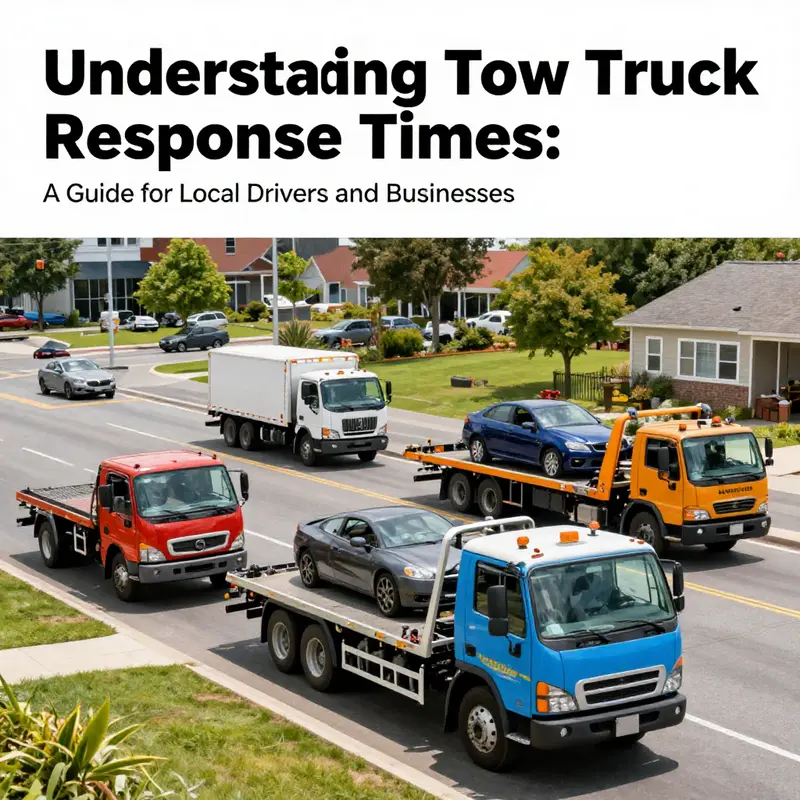
When you find yourself stranded due to a vehicle breakdown, knowing how long it will take for a tow truck to arrive can significantly affect your peace of mind. Various elements determine arrival times, from urban versus rural settings to traffic conditions and type of services requested. This guide will equip local drivers, auto repair shops, dealerships, property managers, and HOA administrators with the essential knowledge they need about tow truck response times. Each chapter dives deep into how geography, technology, and service types can influence arrival speed, ensuring you are informed and prepared for roadside emergencies.
Fast Lanes, Real-Time Details: Understanding How Long Tow Trucks Take to Arrive in Urban Areas
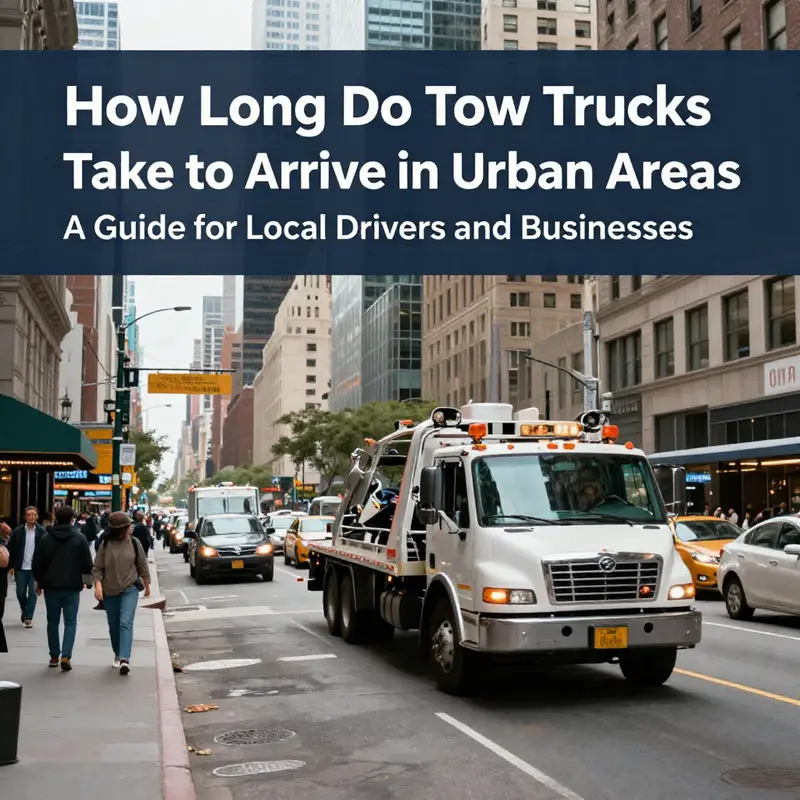
When you need help on a city street, the moment you place a roadside request becomes a small-anchor moment in a wider urban web. The clock starts ticking not only for you but for a dispatcher who must balance location, availability, and the immediate safety of everyone involved. In cities, where streets twist tight and driveways vanish behind a sea of parked cars, the arrival time of a tow truck is a blend of promise and probability. Most services now provide an estimated time of arrival, an ETA, right after you confirm the booking. This ETA is not a guess drawn from thin air; it is a real-time calculation based on the nearest available unit, its current location, and the traffic and weather conditions that affect that route. The growing use of mobile apps has turned a formerly opaque process into a transparent one. You can watch the tow truck’s progress on a map, receive notifications, and adjust your expectations as the story of your roadside incident unfolds in real time. This is not just about speed; it is about predictability, safety, and a clear path from breakdown to resolution in the dense urban fabric where every minute matters.
In urban areas, the numbers often reflect a dynamic balance between speed and scale. On average, emergency or roadside assistance providers aim to arrive within thirty to sixty minutes after dispatch. In major metropolitan centers with robust towing networks, the response can be even faster—often within twenty to thirty minutes—especially during hours of peak demand when fleets stay on duty and routes are optimized for rapid deployment. The caveat is that these figures are averages, not guarantees. Off-peak hours, holidays, or districts with fewer service providers can push waits beyond an hour, sometimes longer if the incident requires specialized equipment or a more complex setup. The infrastructure that makes urban life efficient also creates bottlenecks. Proximity helps; being near a service hub reduces average wait time because a truck sits closer to your location. Traffic congestion, narrow streets, and multi-lane bottlenecks can slow even a well-dispatched unit, particularly if the incident blocks lanes or if the tow requires a careful approach around other vehicles.
The kind of help you request also matters. Simple services like a jump start, fuel delivery, or a battery check can arrive faster than a full recovery or a multi-vehicle extraction that demands heavy-duty equipment. In this sense, a tow is not a uniform service; the equipment, crew, and planning needed for your exact scenario shape how quickly a truck can be en route and then on scene. Tech-enabled dispatch has made a big difference here. Most providers now use GPS-based dispatch, which continuously recalculates the fastest route while the truck is moving. Real-time tracking means you can see when the unit is a mile away, then a block away, then just around the corner. The ETA you receive is updated as conditions change—an indispensable feature when weather turns a street into a potential obstacle course or when a sudden traffic slowdown requires rerouting. The result is a service experience that resembles a live update rather than a static promise.
You can often interpret the ETA as a spectrum rather than a single line in the sand. If you are in a dense urban corridor at rush hour, think in terms of a best-case window of twenty to thirty minutes, with a practical ceiling of thirty to sixty minutes depending on the exact neighborhood and the nature of the call. If you are outside the core or in a district with fewer nearby providers, the best-case window shifts upward, sometimes reaching seventy minutes or more but still with the ETA updating as the situation evolves. The nuance matters. The ETA reflects not only the geographic distance but the operational realities of a moving fleet, including the need to triage calls, the weather that might slow a route, and the time required to prepare specialized gear for the job. A simple jump start, for instance, likely doesn’t require the same mobilization as a complex recovery that uses a spare or a flatbed and a boom. The more complex the task, the more the dispatch has to balance speed with safety and equipment readiness.
From the user side, the experience has become more user-friendly because of apps and online platforms that pull together location data, service type, and real-time progress. You can expect to receive an ETA immediately after you confirm the booking, and you can rely on live tracking to verify when the tow is en route, when it is arriving, and when it has reached your vehicle. This is particularly important in urban settings where a vehicle can be tucked into a lot behind a row of storefronts or tucked away on a side street. The live-tracking feature helps you locate the unit yourself, giving you the option to move to a safer spot or to direct the operator if your position has changed since you first called for help. In practical terms, this translates into a safer, more predictable experience for the person stranded on the curb or the driver waiting by the roadside after a breakdown.
An important, often overlooked factor is how the type of incident influences arrival time. Simple, quick services can often be executed on a tight schedule, and the ETA reflects the near-term readiness of a nearby unit. Complex incidents, especially those requiring specialized equipment to stabilize or recover a vehicle, may take longer to mobilize. The dispatch center has to ensure that the right truck with the right gear is available and that the crew has the appropriate permits and trained personnel to perform the operation without additional hazards. In cities, where space is at a premium and every maneuver is a little more deliberate, preparation time becomes part of the total wait. This reality underscores why an ETA is a dynamic commitment rather than a static promise. It is updated to reflect the evolving situation on the ground and the realities of urban mobility.
The human element also matters. Behind every ETA is a network of drivers who know city streets well, who navigate by instinct as much as by a GPS screen, and who balance speed with the safety of pedestrians and other drivers. A well-coordinated fleet can reduce uncertainty by keeping units on duty, rotating them through high-demand zones, and communicating clearly with dispatch and the customer. The best operators view arrival time not just as a number but as part of a humane service ethos: arriving promptly, acting with courtesy, and explaining the situation when the tow is on site. In this sense, the ETA becomes part of the service narrative as much as the tow itself.
For readers curious about the practical side of this timing, it is worth noting the role of technology in delivering the experience. Apps that provide ETA and live tracking are built on a combination of GPS data, real-time traffic feeds, and a dynamic dispatch system that continuously adjusts to the city’s pulse. The result is a moving calculation that adapts to the moment. And while you might want a precise minute, the reality is that urban flatness and hills, parking maneuvers, and on-street constraints introduce small variances that can slip the clock forward or backward slightly. Even so, the value of having an ETA and live updates remains high. You gain situational awareness, you know when to step outside or stay put, and you can take protective steps to keep yourself and others safe while you wait.
If you are curious about what makes a fleet ready for this kind of urban responsiveness, consider the broader context of how fleets prepare and coordinate for emergencies. The modern approach emphasizes standardization, emergency readiness, and efficient resource allocation. A well-run network keeps a steady pace in high-demand neighborhoods, maintains a balanced equipment mix, and commits to continuous improvement through after-action learning and process refinement. When you read about the urban arrival times, you are seeing the result of that ongoing design work: a system built to reduce the distance between you and assistance, even when the street layout and traffic patterns are stacked against a quick arrival.
For readers who want to explore more about how fleets organize their operations in real time, the link to internal resources offers further insights into how teams build resilience into their emergency response capabilities. See the section on fleet structure and emergency readiness for a deeper dive into what makes a tow operator capable of meeting tight ETAs in busy cities. fleet emergency response. The discussion surrounding urban ETA and real-time tracking is part of a broader conversation about reliability, safety, and service quality in roadside assistance, a topic that touches every driver who travels through a city’s arteries and side streets.
In sum, the urban arrival time of a tow truck is a composite of distance, density, and discipline. The ETA you receive is not a fixed fate but a living projection that adapts to the city’s tempo. The closer you are to a hub, the better your odds of a quicker arrival. The more straightforward the service, the shorter the wait. The more traffic and weather conspire against the journey, the longer the ETA may stretch. Yet with modern tools, you gain a clear sense of when help will arrive and how to navigate the minutes that separate you from being back on the road. That transparency is the value proposition of contemporary roadside assistance in dense urban landscapes, where being stuck can feel heavier amid the hum of the city, but getting help feels lighter when you know what to expect and when it is likely to occur.
External reference: For official statistics on tow truck response times in urban areas, see the American Automobile Association’s discussion of towing service response times. https://www.aaa.com/automotive/towing-service-response-times/
Patience on the Prairie: Understanding Tow Truck Arrival Times in Rural Regions
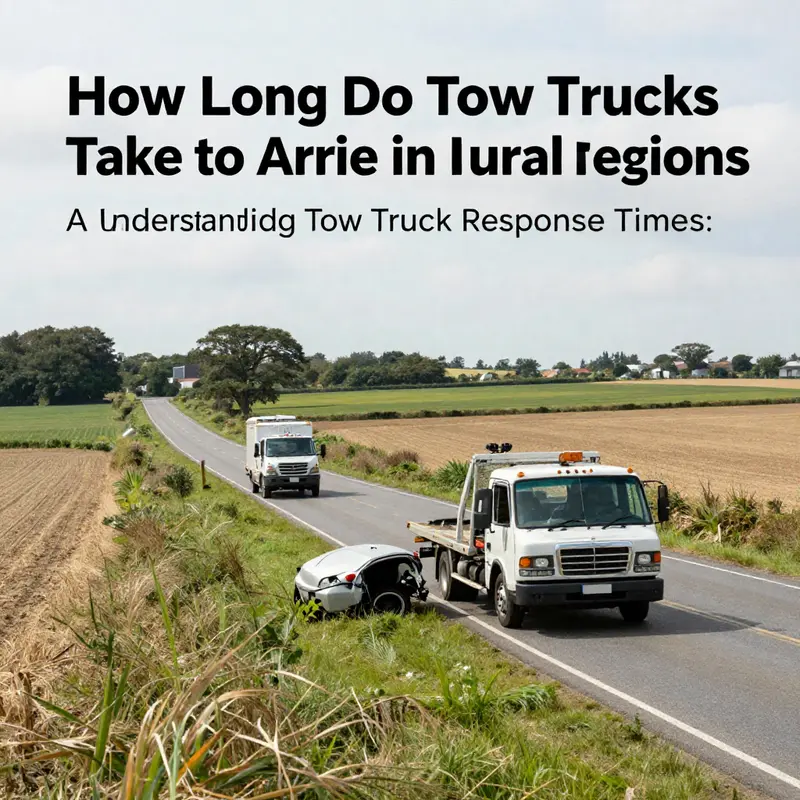
When a car conks out on a long stretch of country road, the mind senses two things at once: the car is stuck and time seems to slow to a crawl. The reality behind that feeling is surprisingly data-driven. In rural regions, tow truck arrival times are less a simple countdown and more a dynamic equation built from distance, weather, road quality, and the ebb and flow of local demand. What you experience in a moment of roadside stress often comes down to a handful of variables that, when understood, can transform anxiety into a practical plan. Modern roadside-assisted services increasingly rely on instant, app-based estimates of arrival and the option to track progress in real time. After you place a request for help, you typically receive an estimated time of arrival (ETA) that reflects the real-time location of the nearest available provider. This ETA is not a promise carved in stone; it is a live prediction that updates as conditions change. The promise, however, is pragmatic: you gain a concrete sense of when a tow might show up and a way to monitor that progress, which can be especially valuable when the landscape around you stretches toward the horizon and cell signals waver in and out. In this context, the rural landscape turns into a field of probabilities rather than a fixed minute-by-minute expectation, and that distinction matters for planning—whether you’re a stranded driver, a dispatcher, or a bystander trying to coordinate help for someone you know.
Across the country, the range of possible arrival times in rural settings tends to widen compared with urban centers. A textbook spread would place rural wait times roughly from 30 minutes to more than an hour, and in some cases even longer. The reasons are straightforward enough: there are fewer towing services scattered over larger distances, and the nearest available tow truck might be miles away. That geographical reality translates into practical outcomes. If you’re in a region with dense population but sparse service coverage, the ETA may tighten because several nearby providers can respond quickly. If you’re in a sparsely populated county with long road stretches between towns, the ETA can stretch into the hours. The practical upshot is simple but important: your actual wait is a product of where you are, not just the severity of your breakdown.
But rural arrival times are not a lottery. They are shaped by deliberate, consequential factors. Weather is a frequent, unpredictable antagonist. Snow drifts, ice, heavy rain, or even a sudden flood can slow a tow crew as they navigate slick roads, washed-out shoulders, or low-visibility conditions. In regions where winter brings sudden freezes or snow events, a truck may need to tread more carefully, or a driver may choose a safer route that adds minutes to the clock. Road accessibility matters, too. Narrow lanes, unpaved stretches, steep grades, or rural bridges with weight limits can reroute a tow truck or constrain the kind of equipment that can be mobilized. The type of service requested influences the timeline as well. A simple jump-start or fuel delivery can be quick wins, whereas a complex recovery, flatbed towing, or the removal of a disabled vehicle from an off-road location may require additional personnel and specialized equipment, extending the ETA.
Availability is the third big piece of the rural puzzle. In off-peak hours—late at night, early mornings, or weekends—there may be fewer operators on call. That doesn’t mean support vanishes; it means the nearest available truck might be engaged elsewhere or operating from a base farther away. In emergency scenarios, dispatchers often prioritize life-threatening situations or critical needs, which can alter the order of responses and change the expected wait for a passenger with a non-emergency breakdown. These patterns are not about caprice; they reflect a system designed to maximize safety and efficiency given limited resources.
What does this mean for someone stranded in the countryside? It means a blend of practical precautions and calm reliance on the tools that modern roadside assistance offers. The ETA you receive after booking is the best single predictor of when help will arrive, but it is not the last word. Real-time tracking provides continuous updates as the tow truck closes the distance, and notifications alert you when the vehicle is near and when it has arrived. This level of visibility, while it cannot erase the delay, can dramatically reduce the tension of a long wait by turning uncertainty into a steady stream of information. The moment you book, you gain a coordinate map of the recovery landscape in which the driver moves toward you, and that map grows more accurate as the carrier’s location space contracts toward your roadside spot. For drivers, the knowledge that the ETA is anchored in live data can be a small but meaningful relief, a sign that the system is responsive rather than opaque.
The rural picture also shifts when you consider how you can influence the timeline in practical ways. First, clear communication with the dispatcher matters. If you can describe your location with recognizable landmarks, mile markers, or cross streets—even something as simple as “near the old综合 store” or “beside the county road with the two oak trees”—you reduce the chance of misrouting. Being specific helps the provider’s crew locate you faster, especially when cell coverage is inconsistent or when you’re surrounded by open fields and long sightlines. Second, have essential information ready. The dispatcher will want to know your vehicle’s year, make, model, color, and plate if possible, but more critically, your exact location, the nature of the problem, and any hazards present around the vehicle. If the vehicle is in a tricky spot, such as a ditch, on a steep incline, or off a shoulder, it’s worth mentioning. Those details can affect the choice of equipment and the approach the tow crew will take, potentially shortening the on-site time or preventing a back-and-forth cycle that would otherwise stretch the total duration.
In this setting, the relationship between the driver and the provider is less transactional and more collaborative. Providers in rural regions often operate with a mix of standardization and improvisation, a balance shaped by miles of road and the need to respond to a variety of scenarios with limited resources. A broader, system-wide approach—to standardize some core response processes while allowing for field-based adaptations—can help keep arrival times predictable as possible. This is where programmatic coordination across fleets becomes meaningful. When fleets implement structured emergency-response practices, they reduce the variance that can occur when a lone operator must wear many hats under pressure. The result is not a dramatic shortening of every single ETA, but a more reliable pattern in which drivers and dispatchers anticipate common bottlenecks and mitigate them before they become critical delays. For readers who want to understand how fleet-level coordination translates into tangible rural outcomes, exploring the concept of Fleet emergency response programs can be illuminating and practically helpful. Fleet emergency response programs offer a window into how larger-scale planning translates into faster, safer off-road recoveries and more predictable wait times.
Even with these advances, the rural landscape continues to remind us that timing is a moving target. The ETA provided by a service app is a real-time forecast that adapts to changing conditions. It’s not a guarantee of exact minutes but a candid snapshot of when help will likely arrive given current patterns. Keeping expectations grounded in that reality can spare nerves and help travelers plan ahead. If you’re traveling through sparsely populated areas, it may be wise to carry a simple, practical contingency plan: have a charged phone with a backup charging option, stay aware of weather forecasts, and keep warm clothing and water on hand if you anticipate a longer wait. If your vehicle is in a location that could pose safety concerns, take care to stay in a visible spot, avoid standing near traffic, and maintain a safe distance from any potentially hazardous equipment as it arrives.
Rural response times also intersect with broader systems of roadside support. Local or regional highway departments sometimes run roadside assistance programs that can offer quicker access in emergencies. These programs reflect a recognition that rural travel is an enduring part of the transportation fabric, one that requires dedicated resources and coordination across agencies. The delicacy of rural timing underscores the value of dependable, well-maintained equipment and the importance of a trained, ready-to-respond workforce. In the end, the question of how long a tow truck takes in the countryside is less about one universal number and more about a composite picture formed by geography, weather, availability, and the behavior of the system you rely on. For the person waiting, the most meaningful outcome is not a fixed minute but a trustworthy, ongoing stream of updates and a clear sense that help is on the road and moving toward them.
For readers seeking a broader sense of how these dynamics operate in practice, the NPR reporting on rural roadside assistance provides deeper context on delays, decision-making, and the realities of rural response times. As you consider your own experiences or the experiences of loved ones on rural trips, remember that the arrival time is a living estimate shaped by countless practical factors, and that modern tools exist to translate those factors into information you can use right away. To learn more about the wider landscape of rural roadside support, you can consult the original NPR article linked in this chapter. For those who want to explore how fleets organize and coordinate under pressure, the link above offers a useful lens into the planning and operations behind the scenes. And as you navigate the highways near your community, consider how reliable ETAs and real-time progress updates—not just speed—can be the most helpful aspects of a reliable rescue moment. For a broader context, NPR’s reporting on rural roadside assistance offers deeper insight into these delays: https://www.npr.org/2024/05/17/1298623272/rural-roadside-assistance-tow-truck-response-times.
Tow Truck Arrival Times: Why Minutes Vary and How Real-Time Dispatch Keeps You Informed
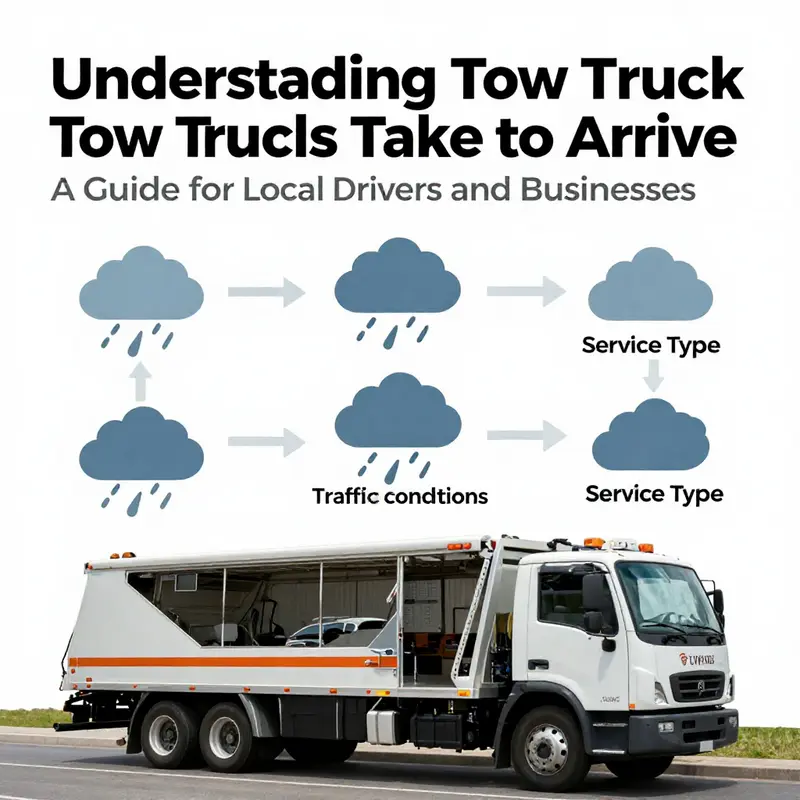
When a vehicle breaks down on a highway, the clock becomes a quiet, constant pressure in the passenger compartment. The arrival time of a tow truck is not a single fixed number but a dynamic prediction shaped by a cluster of interacting factors. In practice, you generally receive an estimated time of arrival (ETA) almost as soon as you confirm a roadside assistance request. That ETA is not a vague promise; it hinges on the real-time location of the nearest available service provider, how far they must travel, and the current conditions along the route. In many modern systems, you can watch the tow truck on a live map, receive notifications as the vehicle closes the distance, and feel a little more in control even as the highway hum of engines and wind noise rises around you. The technology behind this is not mysterious. It is a dispatch network that combines GPS, job queuing, and adaptive routing to optimize which truck goes where, when, and how fastest it can get there without compromising safety or service quality. This approach has become central to the way roadside assistance platforms operate, especially in dense urban districts where demand can outpace supply for brief windows at a time. The result is that ETA is not a single guaranteed arrival but a live estimate that updates as the situation changes, rather like a weather forecast that shifts with the wind and the radar. And while the promise of a quick rescue remains the aim, the practical reality depends on tangible, everyday factors that drivers and customers alike can recognize in real time.\n\nIn urban cores, the confluence of proximity, dense road networks, and plentiful fleets generally yields shorter waits. It is not unusual to see arrival times in the range of 15 to 30 minutes in well-served metropolitan corridors. The dispatch centers in these areas often know the exact locations of nearby responders and can assign the closest truck almost as soon as a call comes in. In truth, numbers like this are not merely aspirational; they reflect the efficiency of well-connected networks that are designed to respond to routine issues—jump-starts, fuel delivery, or minor tire problems—before the situation worsens. The real advantage of this system is transparency: you are not left guessing about when relief will arrive, you are given a line on the clock and, increasingly, a live feed of the truck’s progress. To a driver, the goal is straightforward: arrive safely, minimize disruption, and communicate clearly about any changes to the ETA when conditions shift.\n\nBut the highway is a long, variable machine, and rural or remote geographies quickly test the limits of dispatch efficiency. In these regions, response times can stretch beyond the urban norm, often falling into a broader band that runs from 30 minutes to over an hour. This is especially true in areas where rescue points are sparse and the distance to the nearest available truck is substantial. The more remote the breakdown, the more the ETA becomes a probabilistic forecast rather than a hard, fixed mark. In some vast landscapes, particularly in the more sparsely populated stretches of large countries or regions with challenging terrain, the picture can widen further. Here, two or three vehicles may be the maximum supply available within a reasonable radius, and the route to reach you may take longer because of road quality, occasional detours, or limited dispatch resources. The net effect is a clock that ticks differently depending on where you are. In worst-case scenarios, the clock can creep into the one-to-two-hour range, or longer when the road remains clear but the service provider must trek significant distances to reach your location. These outcomes, though less common in busy corridors, are a sober reminder that geography and logistics set boundaries on even the most efficient systems.\n\nAs with any service that operates in real time, the weather and the flow of traffic on the road add their own volatility to the ETA. Heavy rain, snow, ice, or dense fog changes not only the driver’s speed but also the risk calculus of the entire operation. In adverse conditions, dispatchers may reroute the assigned tow truck to avoid hazards, or they may send an additional unit to ensure the scene is secured and the vehicle can be stabilized safely once it arrives. The effect is a slower, more deliberate progression toward the rescue point, even if the truck is relatively nearby. In mountainous or remote corridors, anti-skid chains or other safety precautions might be required, subtly reducing speed and adding time, especially when roads are slick or visibility is compromised. The practical takeaway is simple: the ETA given in good weather and calm traffic is a best-case projection, while the actual arrival time can drift as weather systems shift, road conditions change, or a nearby incident diverts attention and resources.\n\nGeography matters just as much as weather. Remote or rural locations with fragile rescue infrastructure—and fewer trucks physically stationed nearby—pose the biggest challenges. In such places, the odds of a swift arrival dip, and estimations can extend to several hours in extreme cases or when the breakdown occurs far from a primary dispatch hub. Sparse connectivity complicates not only the initial assignment but also the subsequent tracking and navigation that keep customers informed. Even the best-dispatched itineraries can be thwarted by road closures, unfamiliar routes, or signage issues that cause vehicles to encounter delays while locating the precise breakdown point. This is not mere speculation: when the system must bridge large distances with fewer on-call resources, the margin for error narrows. By contrast, a dense network with robust coverage and well-maintained highways can compress the range of possibilities, delivering a more predictable turn of events and a tighter, more reliable window.\n\nThe difference between an efficient and a slower response often comes down to the capacity and organization of the service provider itself. Large, professional rescue networks with hard-waked dispatch lines, real-time fleet visibility, and strategic partnerships with insurers can often respond within a relatively tight frame. In urban settings, that translates into 45 minutes or so as a typical target, with a slightly longer window in county or suburban areas where vehicle density is lower. Smaller local garages or shops may face more pronounced constraints: limited fleets, more manual scheduling, and fewer vehicles at the ready can slow things down, even when the caller is only a few blocks from a service point. This disparity in responsiveness underscores an important reality for drivers stranded on the shoulder: the speed of the response is less about a single truck and more about the thriving ecosystem that supports the dispatch, the maintenance of the fleet, and the reliability of the communications link between the customer, the dispatcher, and the driver.\n\nIn this sense, the ETA is as much a gauge of system health as it is a forecast of a truck’s arrival. If you have access to a well-integrated roadside assistance app or platform, you are likely to see a clear, updated ETA that reflects the live state of the network. You may also experience something increasingly common in modern services: live tracking. Watching the truck’s progress gives you a sense of control and helps reduce anxiety, especially on a long, quiet stretch of highway where every passing minute can feel like a small eternity. The notifications—when the truck departs, when it is a few minutes away, when it arrives—are more than conveniences; they are a testament to the transparency that customers expect in an era where information moves as fast as engines do. To minimize the wait, one practical strategy is to select providers who offer legitimate, insured, or officially partnered roadside assistance. These arrangements tend to be more reliable and better connected, reducing the risk of miscommunication or misrouting that can sometimes delay a rescue.\n\nAnother piece of practical wisdom is to communicate clearly and calmly about location and needs. A precise description of the breakdown point, visible landmarks, and any hazards improves the odds of a quick, accurate dispatch. If you have a companion who can relay information while you handle safety steps, use that help. And while the mind naturally fixates on the clock, it is worth remembering that the arrival time is a moving target. The ETA is a guide, not a guarantee, and it will naturally adjust as the truck moves toward you and as the conditions on the road evolve. In the end, the aim is to harmonize human judgment with machine guidance: to leverage the dispatch network’s strengths while maintaining situational awareness, so you can stay safe and prepared for what comes next. For an additional layer of context on how fleets coordinate emergency responses in larger, organized networks, you can explore further through this resource: Fleets Emergency Response.\n\nAs you ride out the wait, the most useful frame of mind is to think of the ETA as a flexible, living estimate rather than a fixed deadline. The system is designed to update with fresh, location-based data, so your patience is informed by the same real-time signals that guide the truck’s journey. And when the tow arrives, the sense of relief often comes with a sense of gratitude for a transparent process that helped you understand what was happening, why it happened, and how you could prepare for the next moment of need. The better the information flow—precise location sharing, clear instructions, and trustworthy dispatch—the smoother that moment becomes. For a broader, external look at highway tow timing and analysis, see this external resource: https://www.autohome.com.cn/tech/20260206/82378.html.
Faster by Design: How Technology Shortens Tow Truck Arrival Times
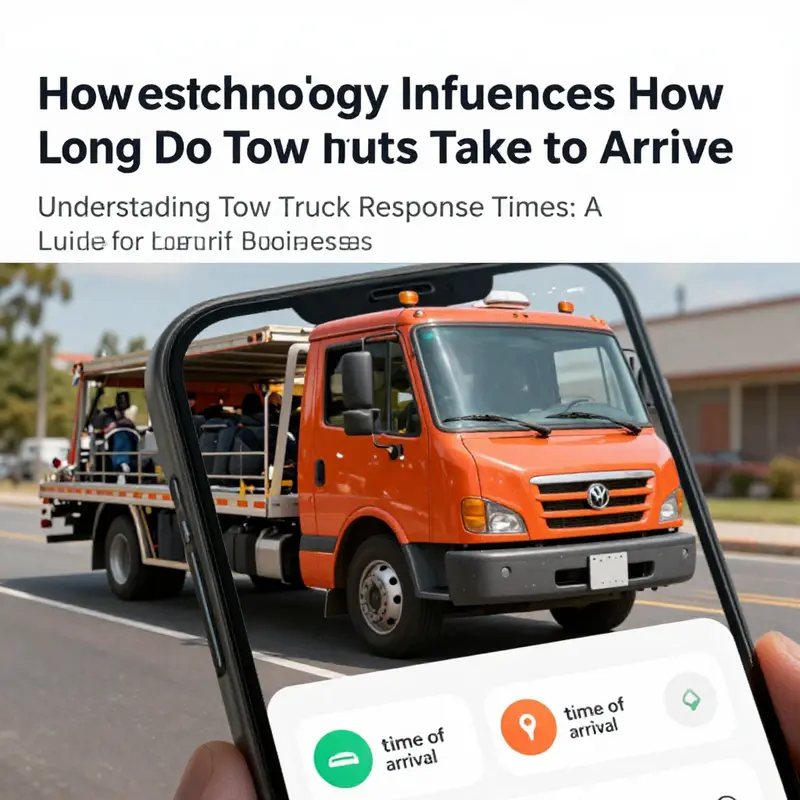
In moments of car trouble, time is a kind of pressure. The clock becomes a fourth passenger, and the value of a precise estimate matters as much as the physical vehicle rolling toward the scene. The arrival time of a tow truck is not a fixed, universal standard; it is a live figure that shifts with demand, distance, and road realities. Yet across urban corridors and rural lanes, technology has redefined what we can expect from a roadside assist service. ETA estimates are now delivered with the immediacy of a ride-share screen, and the subsequent progress toward arrival unfolds with a clarity that would have seemed miraculous not long ago. This transformation is less about a single invention than about the orchestration of several layers of digital capability: real-time location data, automated dispatch logic, dynamic routing, and the open exchange of information across networks.
When you trigger a roadside request today, the system usually presents an estimated time of arrival almost instantly. The ETA is not a promise carved in stone but a projection built from current position data, the known capabilities of nearby units, and prevailing traffic conditions. The moment you confirm, the clock begins, anchored in a map that shows the closest available unit, the truck’s current status, and the path it will likely travel. That single glance can ease the anxiety of waiting because it replaces ambiguity with a reachable figure. If conditions shift—an accident on a major artery, a construction detour, or a sudden influx of calls—the ETA updates. The customer can refresh the screen and watch the truck’s progress in real time, a feature many providers now include as a standard. Live tracking transforms what used to be a waiting period into something more transparent, with a moving symbol that shows distance to go, the direction of travel, and the approximate moment when realism will bite into the original estimate.
The logistics behind these capabilities are anchored in several core technologies. GPS-enabled vehicles are the backbone of the system. Each tow truck is equipped with location-tracking that feeds directly to the dispatch center. This is not merely for accountability after the fact; it enables the dispatchers to see where every unit stands at any moment and to optimize assignments on the fly. In a high-demand urban area, this granular visibility means the nearest eligible truck can be chosen with confidence, even when multiple calls are streaming in simultaneously. The dispatch decision is a delicate balance between proximity, availability, and the predicted travel time along the current route. It is a cognitive load that would be nearly impossible for a human to manage at scale, but one that a well-designed automated system handles with speed and objectivity. The result is that the final customer experience—how fast the tow reaches the car—becomes a function of data accuracy and the speed of the algorithm, rather than chance.
Mobile applications broaden the accessibility of this capability. A customer-facing app acts as both the entry point and the feedback loop. The user can report the incident with a few taps, share location with a precision that earlier generations could only dream of, and observe a live map that traces the truck’s path. The interface is deliberately lean, emphasizing the ETA, the truck’s status, and safety-critical guidance for what to do while waiting. This design matters because the customer experience hinges on clarity. A clear ETA and steady updates reduce the cognitive load during an already stressful moment. Even small improvements—shorter screens, intuitive icons, and timely notifications—contribute to the perception of speed. It is not simply that the truck is closer; it is that information about its progress arrives without friction, enabling the driver and the passenger to coordinate safely and calmly.
Behind the user experience, automated dispatch systems are the engine room. They synthesize incoming demand, fleet availability, and routing constraints into a decision that would be nearly impossible to execute manually at scale. Algorithms evaluate multiple factors: how far away each unit is, how long it would take to complete the current task, the specific service requested, and the likelihood of encountering delays. The result is a prioritized assignment that tends to favor the quickest feasible arrival while maintaining service balance across the network. In areas where demand spikes—think rush hours or severe weather—the predictive logic can help by pre-positioning units that are likely to be needed soon. It is not magic; it is the aggregation of many streams of data into actionable commands. The moment a route is chosen, the truck begins its journey with a path that is optimized for speed and safety, and the system continues to monitor real-time conditions to reroute if needed.
Predictive analytics add a forward-looking layer that complements real-time routing. Historical patterns become a guide for where to station vehicles and when to expect more calls. If a particular corridor tends to yield more breakdowns during a winter storm, the system can adjust by nudging coverage toward that corridor ahead of the weather shift. The practical implication is a smoother distribution of capacity, which translates into faster first-response times in the zones where they matter most. It is a proactive posture rather than a purely reactive one. The data foundation for this approach is broad: service histories, time-of-day patterns, seasonal fluctuations, and the ongoing rhythm of road conditions. In combination, predictive analytics empower fleets to meet rises in demand with a preparation that shows up as shorter waits and more reliable timing.
Traffic intelligence rounds out the technology stack. Real-time feeds about congestion, incidents, and roadwork inform route selection and the pacing of dispatch. If a truck is en route but encounters a lane closure that would slow them down, the system can pivot to a faster corridor or even switch to a different unit that remains within an acceptable ETA range. The value here goes beyond speed. It reduces the unpredictability that people dread when they are stranded by the roadside. In cities where traffic patterns can shift within minutes, this capability proves decisive. In less densely populated regions, the same tools help avoid long detours that would otherwise elongate a response time.
The variation in arrival times also reflects the complexity of the task at hand. Not every call is the same; a straightforward jump-start will typically resolve faster than a full vehicle recovery, which may require specialized equipment and personnel. The algorithms account for this, presenting an ETA that reflects both distance and the operational complexity of the service. This nuance matters because it shapes expectations. Customers who understand that the type of service can influence the clock are better prepared to make decisions on safety and contact.
Within the broader ecosystem, integration with roadside networks amplifies efficiency. When dispatch and maintenance partners share protocols and data in near real time, the friction of handoffs diminishes. The customer experiences a more seamless transition from request to mobilization. The operator benefits from reduced duplication of steps and a clearer, single source of truth for the status of the call. It is a version of service coordination that scales in tandem with demand, ensuring that even under pressure the system can respond quickly and coherently. That cohesion becomes a competitive differentiator, because it translates into consistent performance across a city or a region. In practice, this is the sort of standardized approach described in fleet-standardization-emergency-readiness.
For readers who want practical guidance on what to do while waiting, technology delivers more than a timer. The ETA updates give you cues about the immediate steps you can take to stay safe and protected. If you are in traffic or on the shoulder, the updates can remind you to pull to a safe location, turn on hazard lights, and keep your seat belt fastened. A well-implemented system also communicates any changes in the arrival window with a new ETA and a refreshed route, so you are never left guessing. This clarity reduces the stress of the moment and helps people maintain composure when they need to manage a roadside emergency.
It’s worth noting that the improvements in arrival times are not universal; geography still matters. In dense urban centers, the combination of high call volume and dense road networks can yield the most immediate benefits from automated dispatch and real-time routing, often pushing average response times into a favorable 15 to 30-minute window. In contrast, rural or remote areas may continue to experience longer waits—perhaps 30 minutes to over an hour—because the nearest available unit is farther away and fewer units are on the road at any given time. Even here, however, technology prevents morose bottlenecks by enabling faster allocation and smarter routing, so the difference between a best-case and a typical-case arrival time remains relatively small compared with earlier eras. Weather conditions and traffic incidents always factor in, but the variance is now better understood and managed through live data streams.
As fleets adopt broader digital standardization and emphasize emergency readiness, the predictability of arrival times improves. Standardized workflows ensure that, regardless of the operator on duty, customers experience consistent processing, faster mobilization, and clearer communications. The emphasis is not merely speed but reliability: a system that can deliver a transparent ETA, update it with accuracy, and provide a coherent narrative of where the vehicle is and what comes next. These improvements are not theoretical; they translate into real-world benefits for people who are stranded or stranded-in-waiting in the middle of the night, when every minute feels extended. The central insight is straightforward: technology does not replace human expertise. It augments it, letting operators focus on safety, integrity, and service quality while the digital layer handles the rapid coordination and the dynamic determination of the best path to the scene.
The broader takeaway for readers is that arrival times are a moving target guided by a suite of technologies designed to make the scene a little sooner and a little less uncertain. The ETA is a living metric, not a fixed countdown, shaped by where the closest crew is, what type of service is needed, and what the road conditions permit. The more robust the data and the more seamless the integration across systems, the faster a tow truck can arrive and the more precise that arrival becomes. The experience a customer has—from requesting help to watching the truck appear on the horizon—rests on the fidelity of these digital processes and on the trust that the information presented is current and accurate. The potential for improvement continues to expand as fleets invest in sensors, better data sharing, and more sophisticated forecasting. Each incremental improvement compounds, reducing wait times and improving the sense that help is on the way and that it will reach you promptly and safely.
If you want to see a more comprehensive examination of technology’s impact on roadside response, consider a detailed industry assessment that explores how data, dispatch, and telematics converge to improve outcomes across a region or network. For a broader perspective on these developments, you can consult the Roadside Assistance Technology Impact Report (2025): https://www.aaa.com/roadside-tech-report-2025
Timing the Tow: Decoding Arrival Delays Across Service Types, Places, and Weather
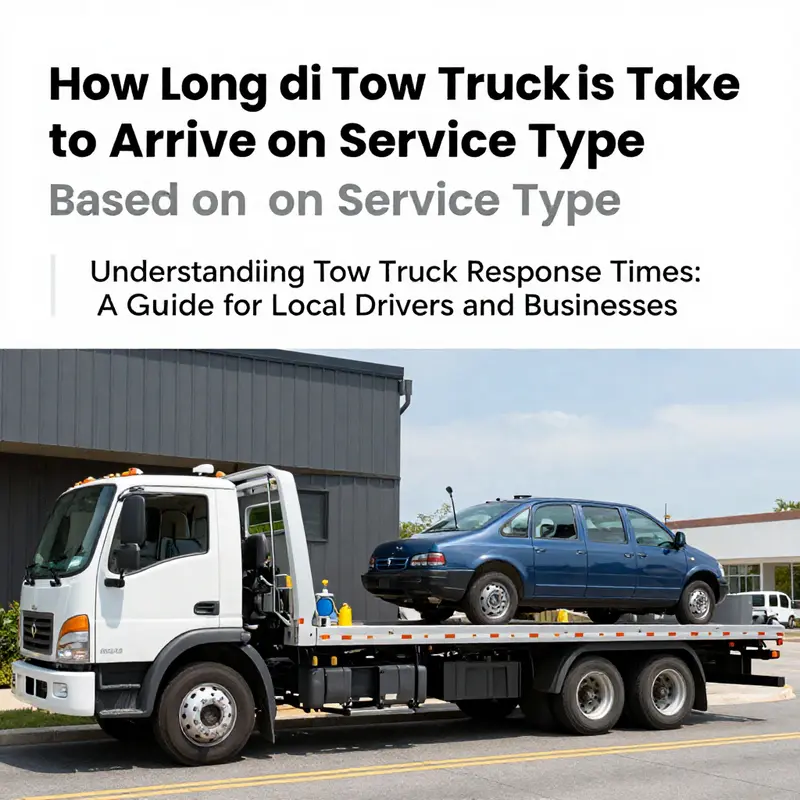
When a vehicle breaks down or sustains damage on the road, the arrival time of a tow truck becomes more than a number on a screen. It is a lived experience that blends service design, geography, and conditions beyond anyone’s control. In recent systems, the moment you confirm a roadside call, you are handed an estimated time of arrival (ETA). This ETA is calculated from the real time position of the nearest available provider and is updated as the situation unfolds. The experience is aided by live tracking, a feature that lets you watch the tow vehicle progress toward you and receive alerts when it nears your location. These capabilities, common in modern roadside assistance ecosystems, have reshaped expectations and reduced the anxiety that once accompanied waiting for help on a lonely shoulder or a noisy highway. The ETA is not a vague promise; it is a dynamic value that reflects the current distribution of assets, road conditions, and the day’s unique mix of demand and supply. In practice, this means you get a number you can trust, not a vague estimate that dissolves when the next car swerves into view. The reality behind that ETA is grounded in a few essential factors that repeat across many tow operations, regardless of who answers the call or where you are. The most visible of these factors is service type, which in turn interacts with location and weather to shape the actual arrival time.
Standard towing, the workhorse of roadside assistance, is designed to be prompt but realistic about the typical needs of minor incidents. The broad range most customers encounter lands around thirty to sixty minutes after dispatch. This window exists because standard towing involves routine tasks: a simple roadside fix, a tire change, or a basic pull to the nearest safe spot or repair facility. In many programs run by insurers or membership clubs, this category forms the core of the service portfolio. The ETA for standard towing is built on the premise that there will be enough nearby units to handle a steady flow of calls, yet each scenario can present its own nuances. A flat tire in a crowded urban corridor might still be within that thirty-minute surge, while a vehicle immobilized in a snowbank on a rural road could slide toward the upper bound of the window. These numbers are not absolutes; they describe a practical average across a broad landscape of contexts, a guide that helps drivers and dispatch centers align expectations and resources with real world conditions. In practice, the ETAs are most reliable when the call contains precise details about location, accessible approach routes, and the immediate safety of the scene, because even small barriers can push a response toward the outer edge of the range.
Emergency towing, by its nature, commands a higher priority in dispatch queues, especially in densely populated areas or on high-traffic routes where accidents or severe breakdowns create ripple effects. The arrival times for emergencies typically cluster in a tighter band, roughly fifteen to forty-five minutes, depending on urban density and the number of available heavy-duty units. In cities with robust towing networks and strong on-call coverage, these times compress further, reflecting a prioritization logic designed to move the most critical incidents forward first. The advantage here is not just speed but the ability to position resources where they are most needed; an urban corridor with multiple responders can shorten the window substantially for an incident that demands immediate under-lift or on-scene recovery. The tension that remains is the unpredictability of the incident itself: a crash can require complex, multi-vehicle management and specialized equipment, at which point the ETA may extend toward the longer end of the emergency range. The dispatch system must balance urgency, safety, and the availability of appropriate gear, so the ETA evolves as the scene evolves. In all cases, the aim is a timely arrival that preserves safety, enables rapid scene stabilization, and reduces the risk of secondary incidents caused by blocked lanes or stranded motorists.
When the journey involves long distances or heavy-duty requirements, the timing picture shifts again. Long-distance towing or the recovery of large commercial vehicles frequently stretches into the one- to three-hour zone, and sometimes beyond. The logistics of transporting a heavy-duty unit, the need for specialized rigs, and the coordination with multiple stops along a planned route all contribute to longer lead times. These operations often involve equipment that lives in regional depots or at specialized hubs, and deployment may require additional checks to ensure the right combination of truck, boom, and under-lift capacity is ready for the task. The distance to a repair facility or staging yard matters: in some cases the vehicle must be moved from a remote area to a more central service network, and that transition adds a layer of time that is not present in local or routine calls. The result is a pragmatic rule: the more complex the task, the more the arrival time expands. Although modern dispatch platforms can optimize routes and pre-stage equipment, the fundamental constraint remains the same—the right asset has to be available and capable of performing the specific job, and that asset may be miles away when the call comes in.
A related but distinct category is the wrecker service, which often comes into play at accident scenes or in recovery operations requiring under-lift work, multi-vehicle management, or specialized maneuvering. For these scenarios, the arrival window tends to be broader on the first leg due to the need to confirm safety, secure the scene, and bring in the right heavy-duty gear. In many cases, you can expect one to two hours before a wrecker specialized for complex scenes reaches the location, especially if the incident involves multiple parties or significant vehicle damage. The scale of the operation matters here; the more complex the scene, the more time needed to assemble the fleet of vehicles, coordinate with traffic authorities if required, and execute a controlled retrieval that minimizes risk to responders and motorists alike. This is not a simple pickup; it is a carefully choreographed response designed to restore order after disruption, with timing calibrated to the choreography rather than a single pickup moment.
For scenarios that involve pre-booked arrangements, the picture changes yet again. When a tow has been scheduled in advance—for example, to move a vehicle for a specific appointment, or to stage a vehicle for a planned service window—the timing becomes more predictable. In many cases, the window can be precise, often within a one-hour range. The advantage of booking ahead is that the dispatcher aligns a chosen asset with the actual time of need, reducing the guesswork that occurs in reactive dispatch. This approach benefits fleets and households that rely on a fixed schedule or a coordinated plan, offering a clearer sense of when to expect the tow and how much time to allocate in the day. The trade-off is that pre-booked slots require a reliable communication flow between customer, dispatcher, and technician; if any link in this chain falters, the promised window can drift. Nevertheless, for those who value predictability, pre-booked towing can provide a steadier cadence of service that complements the spontaneity of emergency requests.
Beyond the service type itself, several external forces shape the actual arrival times you experience. Location is perhaps the most determinative. Urban cores teem with service providers, and dense networks usually translate into shorter ETAs. In contrast, rural or remote locales depend on the distance to the nearest available unit and the presence of compatible equipment. Geography matters: a single narrow road, a steep grade, or a flood-prone corridor can complicate access and slow arrival, even if a nearby tow truck is physically closer on a map. Weather casts a broad shadow over dispatch dynamics. Rain, snow, ice, or fog can affect travel speed, road availability, and the time needed to secure a scene. In adverse conditions the same ETA may become a best-case scenario, a worst-case projection, or something in between, depending on how incident volume and road conditions interact with the distribution of units. The interplay of traffic and weather is especially pronounced during peak hours, storm events, or holiday travel periods, when the demand for assistance surges and the pool of nearby trucks is stretched thin. Service type and weather are partners in shaping the clock; both illuminate the path from call to arrival and remind us that accuracy depends on a live read of the street-level reality.
The tools used to craft these ETAs have evolved considerably. Real-time GPS tracking and dispatch systems deliver continuous updates to both operators and customers. The ETA you see is generated from algorithms that consider distance, road speeds, traffic, and the current status of the available units. The tracking feeds enable customers to monitor progress, receive notifications when the unit is nearby, and gain visibility into when the job will be completed. This is important not only for reducing uncertainty but for facilitating safety. If the tow is happening in a high-risk location or along a busy highway, knowing when a responder is due to arrive helps motorists plan their next steps and maintain a safer posture around the scene. Some cities have begun experimenting with AI-powered prediction models that attempt to forecast arrival times with higher precision by patterning on historical data, incidents, and weather forecasts. While these models are still learning and evolving, they illustrate a direction in which the timing dialogue can deepen, offering more reliable ETAs and fewer false hopes during volatile conditions.
For operators and customers alike, understanding the range and its drivers can ease the tension that accompanies a roadside emergency. If you find yourself waiting, remember that the ETA is a living metric, responsive to the day, the road, and the incident’s demands. To help the process move smoothly, supply clear details—your exact location, accessible approaches, and any hazards you can mention. If you can, stay with the vehicle until help arrives and keep a safe distance from traffic while you wait. If you must move, only do so to a safe area well away from lanes of travel. In some fleets, the dispatch system can adjust the ETA in real time as new information becomes available, but it is always wise to interpret the number as a best estimate rather than a guarantee. The modern tow experience blends technology with logistics and human judgment, offering transparency without erasing the complexities that every call carries. For you as a customer, this means a more predictable cadence when you need it most and a clearer sense of what to expect as the tow truck closes the distance from the depot to your location.
From the operator perspective, the challenge lies in balancing readiness with demand. The moments of truth happen when a unit is dispatched and begins its journey toward the scene. The availability of the right asset at the right time depends on a fleet’s emergency response planning, its maintenance readiness, and the ease of coordinating with regional hubs. A well-orchestrated fleet keeps a mix of standard and heavy-duty units on standby, with clear criteria for what constitutes emergency deployment and how long a specialized unit should wait before being considered overdue. In this sense, the arrival time is not just a function of speed; it reflects the quality of the fleet’s readiness and the efficiency of its information systems. The goal is simple: minimize the time to help while ensuring safety, legality, and proper scene management. When you open the door to a roadside crisis, the path the tow truck travels is a corridor that maps not only distance but the collective competency of a network designed to respond with precision and care. If you want to explore how these networks have evolved in practice, one useful resource is the broader discussion of fleet emergency response, which you can read here: Fleet Emergency Response.
In sum, the timing of tow truck arrivals hinges on a nested set of variables. The service type you choose signals the level of urgency and the equipment needed. Your location and the day’s weather conditions translate that signal into speed or delay. Advanced dispatch and tracking technologies translate that reality into a visible ETA and live progress updates. The most credible guidance comes from the ETA provided by the service provider after you book and the live tracking that follows. You can think of the ETA as a living estimate that improves as the system learns about the scene, traffic, and the unit closest to your position. The result is a more transparent and manageable waiting period than ever before, a shift that aligns with broader trends in transport technology and customer experience.
External resource: For industry guidelines and typical response times across different towing scenarios, see the American Automobile Association guidance on towing and roadside assistance. https://www.aaa.com/automotive/towing/
Final thoughts
Understanding how long tow trucks take to arrive is crucial for any driver or business personnel involved in roadside assistance scenarios. Factors such as location, time of day, traffic conditions, and service specifications can significantly alter response times. By remaining informed on these aspects, local drivers and businesses can better prepare for potential breakdowns. Be it navigating through bustling urban streets or waiting in a remote area, being proactive with knowledge empowers you during roadside emergencies.