
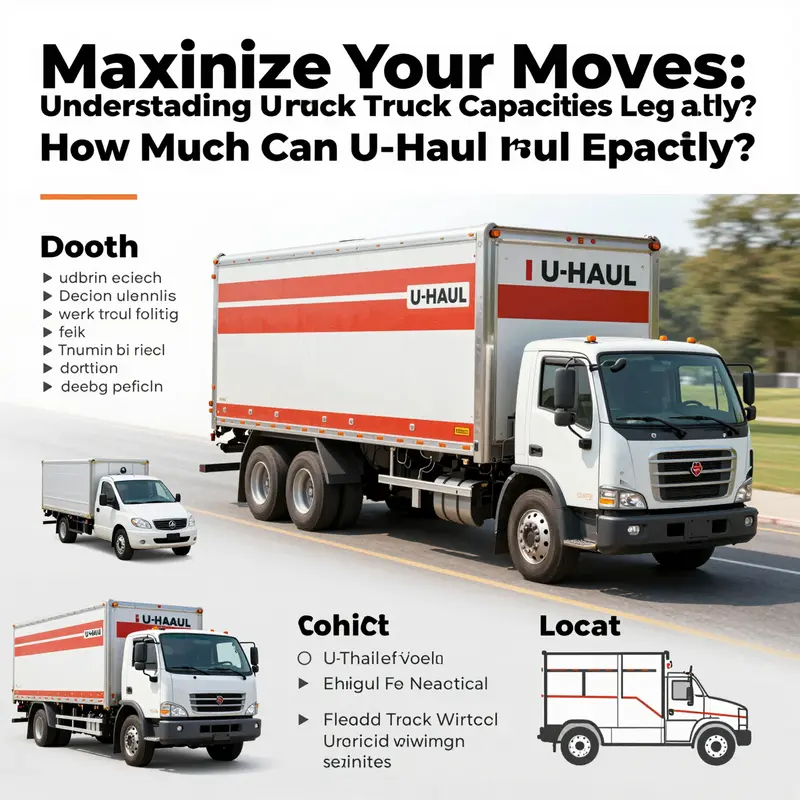
When it comes to towing, understanding the capacities of U-Haul trucks is essential for local drivers, auto repair professionals, property managers, and HOA administrators. Each truck size offers differing towing capacities, allowing you to match your specific requirements with the right vehicle. This article delves into the towing capabilities based on truck size, practical applications for various uses, safety considerations when towing, and legal regulations that may affect your towing options. By the end, you’ll have a comprehensive grasp of how much a U-Haul truck can tow and how to leverage that information to your advantage.
Tow Limits Unveiled: How Moving-Truck Size Dictates What You Can Tow—and Why It Matters for Your Move
When planning a move that might include towing a trailer, a boat, or even another vehicle, the most practical question is often simple: how much can this truck actually tow? Yet the answer is layered. It isn’t just a single number tied to a model year or a rough guideline about “bigger is better.” Towing capacity exists at the intersection of the truck’s design, the hitch system, and the trailer or towed load you intend to pull. For anyone weighing options across different moving-truck sizes, the key insight is that capacity scales with size, but not in a straight line. The largest trucks do not automatically offer the highest trailer weight allowance. In fact, the maximum towing figure is a ceiling, a limit defined by how the truck distributes weight, how the hitch is rated, and how the trailer itself is built. To move safely and legally, a planner must translate that ceiling into a real-world plan grounded in the numbers and in the physics of towing.
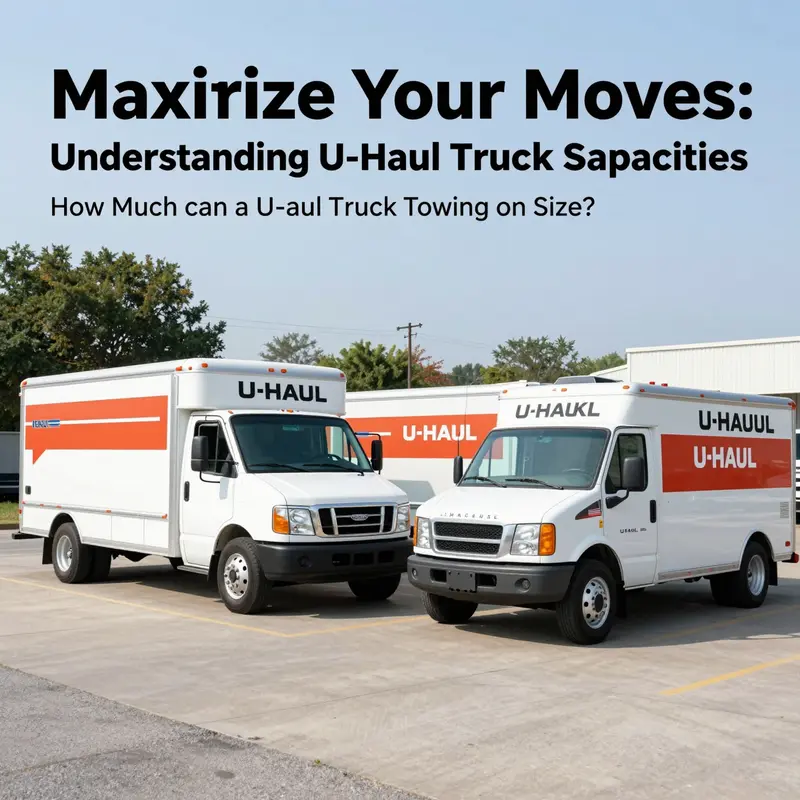
The simplest way to grasp the landscape is to start with the commonly cited maximums associated with different truck sizes. In practical terms, the smallest moving truck in most fleets can handle a trailer weight up to about six thousand pounds. This upper bound is more than enough for a small personal vehicle, a motorcycle, or a sizable boat trailer, provided the trailer’s weight does not exceed the rating and the hitch system can handle it. When you step up to mid-sized moving trucks, such as the 15-foot class, the ceiling climbs to roughly ten thousand pounds. The same ceiling of ten thousand pounds often applies to the larger end of the moving-truck spectrum as well—models in the 26-foot category tend to share that same upper limit. These figures are maximum ratings and should be treated as the cap, not a target to push right up to. Real-world results can drift downward due to how a particular truck is configured, how weight is distributed in a given load, and the precise hitch setup used for the tow.
This nuance matters because towing capacity is not a standalone metric. It sits alongside the truck’s own weight rating, its hitch configuration, and the trailer’s own weight rating. In the language of vehicle specifications, the relevant guardrails are the hitch’s load rating, the trailer’s Gross Vehicle Weight Rating (GVWR), and the vehicle’s Gross Combined Weight Rating (GCWR)—the latter representing the maximum combined weight of the tow vehicle and the trailer, including everything loaded on both. If a trailer weighs more than the hitch or the vehicle can safely manage in a combined sense, you are exceeding the limit no matter how you load the trailer. This is why the widely circulated numbers—6,000 pounds for smaller moving trucks and up to 10,000 pounds for certain larger models—must be read in context. They reflect a safe upper bound given typical configurations, not a blanket guarantee for every individual rental or every road condition.
To plan with confidence, it helps to think in terms of the actual towing setup rather than the abstract capacity alone. The towing capacity applies to the combined weight of the trailer and its payload. The truck’s own weight, including its fluids, passengers, and cargo inside the cab, is accounted for in the GCWR and GVWR, but what matters most for towing is what you attach behind the hitch and how much load that attachment can safely bear. That is why two trucks of the same nominal size can exhibit different practical towing limits: one may come with a sturdier hitch, a higher-rated axle assembly, or a different configuration that redistributes weight more conservatively when towing. The upshot is simple: even within a given size category, the actual towing limit is a negotiated value among the truck, the hitch, and the trailer.
From a planning standpoint, a first practical step is to identify the exact towing target. Are you trying to move a personal vehicle, a boat, a motorcycle, or perhaps a utility trailer loaded with furniture? Each option carries its own weight profile. A car may push the upper limit of a 10,000-pound ceiling when fully fueled and loaded with cargo, while a light boat trailer might stay well within the same ceiling if the boat is small and the trailer is well under its GVWR. It’s also essential to account for tongue weight—the downward force the trailer exerts on the hitch—which ideally should be about 10 to 15 percent of the trailer’s total weight. That distribution ensures the hitch and rear axle of the truck bear the load without causing excessive sway or instability. If the tongue weight is too light, the trailer can become light on the hitch and unstable; if it’s too heavy, braking and steering can suffer because the vehicle’s rear wheels are overloaded. This is an important subtlety many first-time tows overlook, and it can be the difference between a smooth pull and a stressful drive.
The practical takeaway is that you should treat the published maximums as guardrails you must stay within. You verify them by checking the truck’s manual and the trailer’s specifications, and you confirm you are not exceeding the hitch’s rated capacity. The precise configuration of the truck matters as well. A truck configured for a higher payload may offer a larger towing cap than a differently configured version of the same size; conversely, a lighter hitch or a more conservative frame can reduce capacity even if the exterior dimensions look the same. In short, two trucks that appear alike on the showroom floor can behave differently once they are hauling behind a hitch.
In practice, this means approaching a move with a clear, numbers-driven plan. If you plan to tow a trailer, begin by determining the trailer’s gross weight, including everything you intend to carry inside it. Then compare that figure to the towing ceiling appropriate for your truck size. If you have a 10-foot truck and the trailer’s gross weight plus its cargo sits around six thousand pounds, you are at the upper wound limit for that truck in many common configurations. If your plan involves a larger trailer or a vehicle to be towed, you’ll almost certainly need a larger truck—or a different relocation strategy that reduces the towed weight. When in doubt, err on the side of caution and choose a configuration that leaves a buffer between the trailer’s weight and the truck’s maximum rating. The margin protects you against scale variations, changes in ballast, and the inevitable realities of road conditions that can push a tow slightly beyond the ideal range.
For a more expansive discussion that goes into how towing capacities have been analyzed in industry contexts and how different fleet configurations approach these limits, you can explore further insights in the Santa Maria Tow Truck blog, which delves into practical towing considerations and the nuances of weight distribution and hitch safety: Santa Maria Tow Truck blog. The blog emphasizes that the numbers you see in a spec sheet are starting points, and real-world safety comes from understanding how weight, balance, and mechanical limits interact on the road. This perspective helps bridge the gap between abstract capacity figures and the lived experience of moving day, where every pound behind the hitch matters and every decision about load balance influences control, braking, and maneuverability.
Of course, the path from number to decision should always circle back to the primary source of truth: the official specifications for the exact truck you are renting and the trailer you intend to tow. The numbers cited in general guides are helpful, but the precise configuration of a rental fleet can shift the outcome by a few hundred pounds in either direction. Reading the manual, confirming the hitch rating, and confirming the trailer’s GVWR are essential steps that prevent miscalculations from turning into risky situations on the highway. If you want to cross-check and confirm the most accurate, up-to-date numbers for moving-truck towing capacities, consult the official moving-trucks information from the rental provider. This careful due diligence is what turns a well-planned move into a smooth, uneventful journey rather than a day of surprises.
As you plan, keep in mind another practical reality: larger trucks, while capable of towing heavier loads, still require careful driving adjustments. Increased length and mass affect braking distances, turning radii, and sway control. The weight behind the hitch changes how the vehicle accelerates, how it responds to crosswinds, and how aggressively it must be braked when descending hills. If you are stepping up to a larger model to gain more towed capacity, you may also need to adjust your driving style, install or adjust anti-sway devices if your trailer requires them, and ensure your trailer brakes are compatible with the tow vehicle’s braking system. All of these elements contribute to a safer, steadier tow and align with the broader principle that capacity is a constraint, not a license to ignore road dynamics.
In the end, the question—how much can a moving truck tow—yields a layered answer. The numbers you see in brochures or on a price sheet reflect maximums under optimal configurations. Real-world towing is a negotiation between the truck’s mechanical limits, the hitch system’s rating, and the trailer’s own weight limits. The safest approach is to treat the stated maximum as a ceiling and design your move around a target well below that ceiling. Start with your trailer’s gross weight, add your payload, and compare that sum to the vehicle’s GCWR, then mind the hitch rating and the trailer’s GVWR. If you’re ever uncertain, don’t push the boundary. Reconfigure the plan, select a larger truck, or rent equipment that better matches your load. Your safety, and the safety of others on the road, depends on it.
For those who want a concrete reference point while planning, the official resource for model-specific numbers and configuration details is the moving-trucks information page from the rental provider. This page offers the precise figures for each truck size and any caveats tied to specific configurations, and it’s the most reliable starting line for decision-making on move day. External references can also provide historical context on how towing capacities have evolved with vehicle design and safety requirements, helping you understand why those numbers exist and how they are applied in practice. External reference: https://www.uhaul.com/moving-trucks.
Tow Capacity in Motion: Understanding How Much a U-Haul Truck Can Tow and Planning Real-World Hauls
When people ask how much a U-Haul truck can tow, they’re looking for a clear threshold they can rely on. The truth is more nuanced than a single number because capacity depends on the truck size, configuration, and how the load is balanced. The same truck that can pull a certain weight when empty might behave differently once it carries a trailer and cargo. To make sense of it, start with the lineup movers encounter and how the ratings are expressed. The common options—the 10-foot, the 15-foot, and the 26-foot moving trucks—each bring a distinct towing ceiling, and the maximum ratings are ceilings. Real-world towing depends on how the trailer is loaded, the hitch setup, and the route you plan to take. The numbers exist to guide decisions, not replace due diligence or safe operating practice.
The ten-foot model stands at the small end of the spectrum, but it carries a surprisingly capable towing profile when used within its design. The maximum towing capacity is around 6,000 pounds, which opens possibilities for a light trailer, a small boat, a personal vehicle, or a motorcycle. At the same time, the cargo capacity remains modest—up to about 2,850 pounds—meaning you must balance the trailer weight against inside cargo. This balance between the truck’s own mass, payload, and the trailer’s weight reminds us that tongue weight, distribution, and braking demand need respect. If you plan to tow something lighter and compact, the 10-foot model can be efficient. For heavier gear, you’ll likely consider bigger trucks.
Stepping up to the 15-foot model expands both the payload and towing horizon. The stated towing capacity for this size is up to 10,000 pounds in many configurations. That jump makes the 15-foot truck practical for towing mid-sized trailers, boats, or larger personal vehicles that still fit within a manageable balance of payload and tow weight. The cargo capacity is not always stated with the same precision as the towing spec, because interior space matters for the move. What matters most for towing is how much weight is being pulled and how much is inside; the 15-foot generally maintains a comfortable margin for moderate to substantial hauls when paired with a properly chosen trailer.
The 26-foot truck, often the primary workhorse for larger moves, shares a broad ceiling of about 10,000 pounds for towing in many circumstances. Yet this size also brings substantial internal cargo capacity—up to roughly 12,859 pounds—reflecting its role in moving heavy household goods and equipment. In practice, the 26-foot can tow heavier trailers while carrying a heavy load of belongings inside the unit. The distinction between trailer weight and payload becomes critical in planning. A heavier trailer demands careful attention to hitch setup, tongue weight, braking, and road performance. Even with a generous towing rating, ensure load distribution is even and braking systems are up to the task.
Specialized towing options exist for moving multiple vehicles, ATVs, or recreational gear in a compact but capable package. These configurations can accommodate a sizable load while staying within a practical range, with a maximum load around 6,845 pounds and a gross vehicle weight rating up to 9,999 pounds. They offer a useful middle ground between maneuverability and capacity for certain gear without pushing the platform beyond safe limits. For anyone towing beyond the car-and-trailer mix, these setups can be a practical option.
Beyond the explicit numbers, the broader truth remains: some configurations are capable of handling up to about 10,000 pounds when properly equipped. The key word is properly equipped. A tow rating assumes the right hitch, the correct trailer, adequate braking, and tires rated for the load and the road conditions. It also presumes load distribution that minimizes dangerous tongue-weight imbalances. Treat these figures as a planning baseline rather than a guaranteed outcome in every scenario. Environment—the roads, altitude, and weather—can all influence how the system performs.
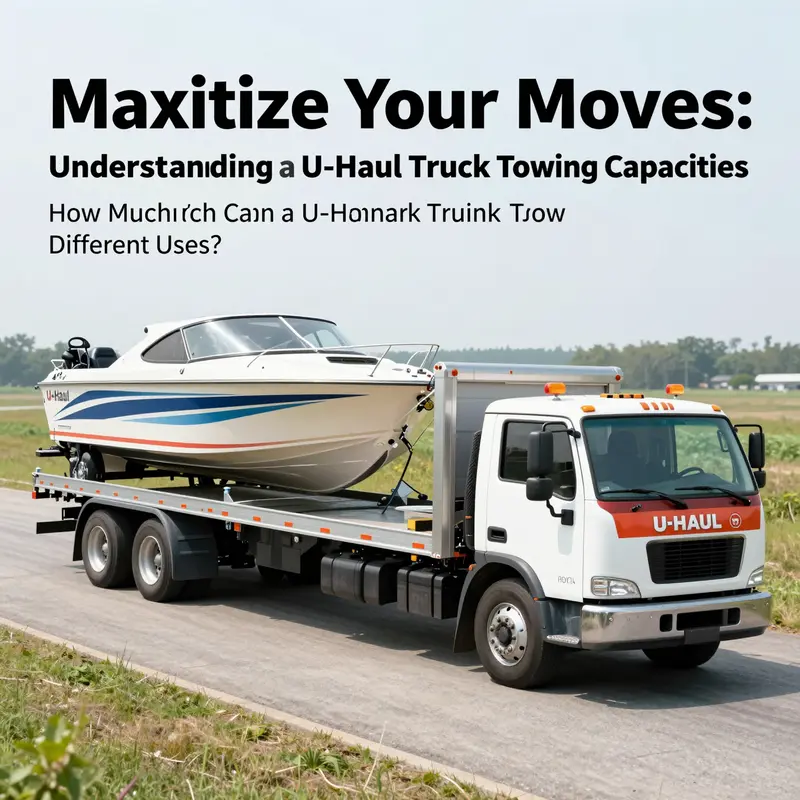
Real-world uses help illustrate how these capacities translate into decisions. For instance, transporting a boat or a personal automobile can be a match for the 10-foot or 15-foot trucks, depending on the boat’s size and the trailer’s weight. If the project involves moving large quantities of furniture along with a heavy trailer, the 26-foot option becomes compelling—provided the trailer’s weight and the cargo inside are carefully accounted for. There are even scenarios where a small camper or utility trailer works well with a higher-capacity configuration, though careful calculation remains essential. For families planning a cross-country move, the ability to tow a trailer while carrying a full load inside the moving truck means fewer trips and more efficiency. For others, the priority may be to transport a recreational vehicle, a boat, or multiple pieces of equipment in one go. In each case the guiding principle is to ensure that neither the tow vehicle nor the trailer is asked to exceed safe operating limits.
Planning for any tow begins with a clear assessment of weight. The total weight behind the hitch is the sum of the trailer’s weight unladen, its cargo, and the tongue weight—the portion of the trailer’s weight that presses on the hitch. It’s easy to focus on the trailer’s gross weight and miss the tongue weight, but both dimensions matter. The trailer’s braking capacity, its own weight, and the distribution of cargo inside the truck all influence handling, braking distance, and stability. Reading the label on the truck and the trailer, and matching these with the road conditions you expect to encounter, is essential. If your payload approaches the upper limit of the truck’s tow rating, you’ll want to double-check that the hitch and braking are appropriate and that there is a clear plan for braking distances and cornering. It’s also wise to consider the route: steep grades, winding roads, and weather can magnify the demands on the vehicle and trailer.
For readers who want to connect theory to an ongoing resource, a practical reference exists in the community blog dedicated to towing and heavy-duty operation. It provides accessible discussions about how these numbers translate into everyday moves and operations, including tips on load distribution, hitch selection, and regulatory considerations. See the santamariatowtruck.com/blog/ for more context and experiential insights that complement this chapter’s technical focus. This kind of blended view—from the official spec sheets to real-world experiences—helps ensure that decisions aren’t based on numbers alone but on a thorough understanding of how those numbers play out on the road. As you delve into planning, remember that the official specifications are the baseline. For the most accurate and up-to-date information, you can consult the manufacturer’s guidance and reach out to a local rental location to confirm any configuration-specific details.
In closing this exploration of towing capacity, it’s helpful to keep the big picture in front of you. The numbers tell you what’s possible, but the real safety, performance, and efficiency come from how you prepare, load, and drive. The practical takeaway is straightforward: choose the truck size that aligns with your load profile, confirm that your trailer and hitch are rated for the combined weight, distribute the load carefully, and plan for braking and maneuvering with the right equipment. By staying grounded in these principles, you can transform a move or a haul into a well-coordinated operation rather than a risky challenge.
Tow Limits and Safe Handling: Understanding How Much a U-Haul Can Safely Tow
Towing with a U-Haul truck requires understanding capacity, weight, and balance. The vehicle’s hitch rating defines the maximum gross trailer weight and tongue weight, and these are limits to stay within, not targets to chase. In practice, a 10-foot truck is commonly rated to tow up to about 6,000 pounds, while the 15-foot and 26-foot models top out near 10,000 pounds under ideal conditions with proper hitch and balanced load. The actual safe towing capacity can vary by unit, cargo, and trailer, so always confirm the specific unit’s limit before towing.
Weight distribution matters: heavier cargo toward the front of the trailer (toward the hitch) helps stability. A common guideline is around 60 percent of the trailer load toward the forward area to maintain stable tongue weight and reduce sway. Use proper distribution devices if needed and ensure tongue weight aligns with the hitch specifications. Before departure, verify that the hitch is secure, safety chains are crossed, coupler latched, trailer tires inflated and in good condition, lights functioning, and brakes working.
Match the total to the truck’s towing rating, not only the number on the label. Pushing near the limit can cause excessive engine/transmission heat, longer stopping distances, reduced steering response, and more sway, especially in wind, hills, or at high speed. Plan routes with gradual grades, allow for longer stopping distances, and maintain safe following distances. If you’ll be climbing long grades or traveling in gusty conditions, consider a lighter trailer or more conservative load for margin of safety.
Finally, use official resources from the rental provider for the exact unit’s towing specs and any local regulations. The core message is simple: know the limit, load within it, and drive with caution.
null
null
Final thoughts
By reviewing the various U-Haul truck sizes, their towing capacities, practical applications, safety requirements, and relevant regulations, local drivers, auto repair professionals, and property managers can make informed decisions. Whether you’re transporting vehicles, trailers, or other items, understanding these factors ensures safer and more efficient towing. Equip yourself with this knowledge and approach your next towing job with confidence and peace of mind.