
Roadside emergencies can be stressful, and when a tow truck driver arrives to assist, it’s natural to wonder about proper etiquette, including whether to tip. Unlike service workers in restaurants or rideshares, towing services operate on different customs regarding gratuity. This article aims to clarify how much you might consider tipping tow truck drivers for their invaluable service, particularly emphasizing the experiences that warrant a thank-you gesture. Each chapter thoughtfully dissects tipping norms, explores influencing factors, and examines societal perspectives, all directed towards ensuring a better understanding of this nuanced topic.
When Help on the Road Comes with a Tip: A Practical Guide to Tipping Tow Truck Drivers
Tow emergencies arrive with questions as you pull over. Tipping tow truck drivers isn’t a universal expectation the way it is for a barber or a waiter. The service is usually bundled into a company fee that covers labor, equipment, fuel, and dispatch. A tip remains optional and not a contract obligation, but a small gesture can carry real weight when the driver goes above and beyond, arrives quickly, or offers practical guidance in a stressful moment. The decision to tip should rest on the quality of service, the effort shown, and your own sense of fairness. Understand what drives tow costs, what counts as exceptional service, and how tipping norms can vary by region or circumstance.
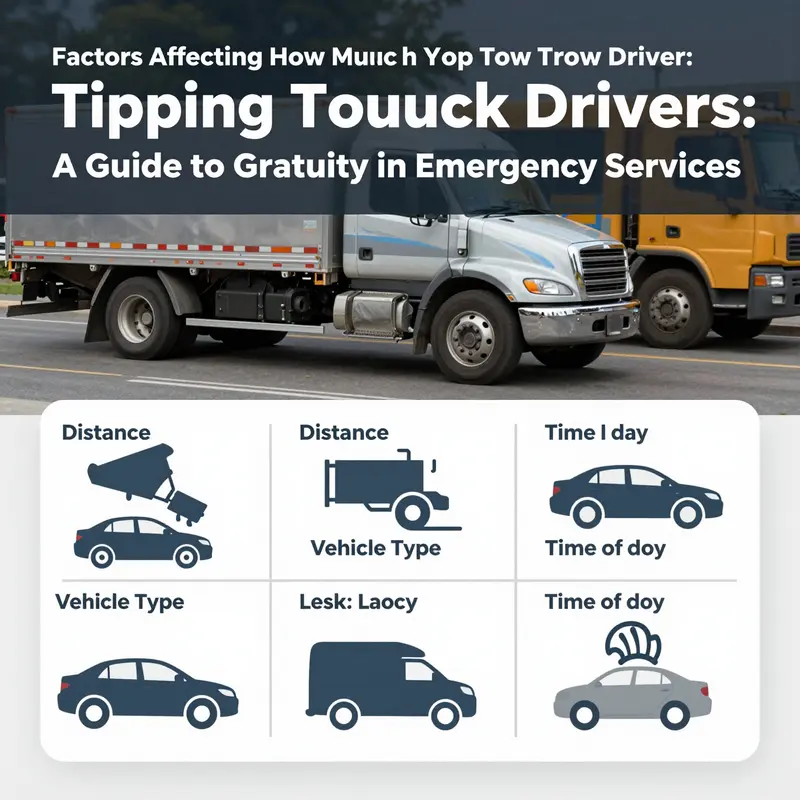
Tow costs vary by distance, vehicle type, time of day, and location. A short tow may be modest, a longer haul can push the bill higher, especially in rural areas. Before a tow begins, ask for an estimated total and for any potential extra fees. This transparency helps you determine whether a tip makes sense and gives you a sense of the value received. If a driver explains potential surcharges such as after-hours rates, winching fees, or road restrictions, your tipping decision may hinge on service quality rather than price alone.
The core question centers on when it is appropriate to acknowledge exceptional service. If the driver arrived rapidly in an emergency, provided clear instructions, stayed calm, helped with safe recovery, or offered extra hands on help like safely securing the vehicle, explaining the next steps, or guiding you to a safe staging area, that is when a tip becomes meaningful. The amount is not a rigid rule; a common range is roughly five to twenty dollars, adjusted up or down based on complexity and risk. Some people tailor tips to the situation, offering more when the job involved difficult maneuvering, long distance, or hazardous conditions. Others prefer a simple flat amount for routine service. Either approach is acceptable as long as it reflects genuine appreciation.
Regional norms also color tipping practices. In the United States, tipping can vary by state or rural versus urban settings. In some regions, roadside help is culturally expected to be tipped; in others, the service fee is the main compensation. In Canada tipping is more common in some areas, influenced by local expectations. The overarching message: tipping remains optional and should align with the driver’s performance and the service context, not a universal rule. If you’re unsure, a quick check with someone familiar with the area or the towing company can spare awkward moments on a tense roadside.
Practical tips for delivering a tip: cash is often the simplest way to ensure immediate receipt. If you don’t have cash, ask whether the company accepts electronic tips or if you can add gratuity to the invoice after the tow, only if that option is available. First offer a verbal thank you, then present the gratuity clearly and politely. Timing matters: a tip given promptly after a challenging task tends to feel more immediate and meaningful than one offered later at home. If the service was routine and offered no extra effort, a modest tip or no tip may be appropriate. Remember, tipping is voluntary and should reflect your experience and means.
Putting it into practice: a practical guideline is the five to twenty dollar range, with higher amounts for lengthy hauls, difficult recoveries, or safety-conscious work. But always base your tip on your perceived value, the driver’s professionalism, and your finances. Do not feel pressured to tip; the policy of the company and your own expectations matter too. If you want more context, you can seek towing tips and facts from credible industry sources such as AAA.
For further perspective, see external resources that discuss towing tips and roadside assistance norms, including official guidance and industry discussions. The tip should be considered as a gesture of appreciation that complements the professional labor behind the wheel, not a requirement or a contract term.
null
null
Tow-Along Etiquette: How Situational Context Shapes Tipping Tow Truck Drivers
When you need a tow, the moment arrives with its own set of pressures. Your vehicle is immobilized, time may be of the essence, and the driver who arrives becomes more than a service provider—you become the hinge between getting moving again and facing a layer of uncertainty. In that high-stakes context, the question of tipping often surfaces, but it is not a universal rule etched into the highway. Tipping tow truck drivers is less a formal expectation and more a nuanced choice shaped by the circumstances surrounding the tow, regional norms, and the demeanor and actions of the driver themselves. This is not about a rigid tariff but about acknowledging a job well done under specific conditions, and about recognizing the economic realities that drivers navigate, including how their compensation often hinges on more than base fees. The guidance here pulls from a broader understanding of service gratuities and pares it down to the realities of towing, a field where the balance between policy, practicality, and courtesy can vary widely from place to place and from one company to another. The result is a practical framework you can apply in the moment, rather than a prescriptive rule that can feel constraining when you are already stressed by a roadside incident.\n\nThe heart of the matter begins with what the service involved actually looked like for you. Tow experiences range from urgent, high-pressure recoveries on a busy highway to routine transports that feel almost mundane by comparison. The emergency scenario—an engine stall on a remote stretch, a tow in harsh weather, or assistance late at night when visibility is poor—often demands more from a driver. In those moments, drivers may be asked to juggle safety concerns, traffic hazards, and the logistics of a quick yet careful departure. If a driver arrives rapidly, communicates clearly about what will happen next, and demonstrates professionalism under pressure, a tip can be seen as a straightforward expression of appreciation for those added efforts. It is not a payment for the outcome alone, but a nod to the process that helped you regain mobility during a stressful period. Conversely, when the tow is routine—say a vehicle towed for a parking violation or a non-emergency relocation of a car in a lot—the perceived value of additional gratuity tends to be lower. In those cases, tipping is less expected and more discretionary, especially if the driver’s actions were efficient but not extraordinary.\n\nRegional norms weave into this framework in meaningful ways. The United States is a vast country with a patchwork of tipping cultures that can shift from town to town and from coast to coast. In urban centers with dense service economies, a small tip—often in the range of five to ten dollars—may be welcomed when the driver is polite, offers a bit of helpful information, or goes beyond the basics of the job. In more rural regions, tipping can be less common, and the lack of tipping expectation may reflect local practices or the prevalence of companies that discourage or discourage tips for policy reasons. It is also worth noting that many tow companies do not publicly encourage tipping, either because it is not built into their compensation model or because legal considerations in some states complicate the practice. Therefore, the decision to tip—and how much to tip—should be calibrated not only to your personal sense of gratitude but also to the local climate you are in and the company’s stated policies if you are aware of them. The safest approach is to treat tipping as optional and proportionate to the level of service, keeping in mind that the ultimate goal is to acknowledge value rather than reward service out of precious habit. If you are unsure, a quick courtesy check with the dispatcher before the tow begins can clarify whether tips are welcome, discouraged, or irrelevant for that company.\n\nThe conduct and professionalism of the driver are central to determining tipping appropriateness. A tow can involve complex paperwork, roadside safety considerations, and the coordination of multiple moving parts—dispatch instructions, the route chosen, and communications with you while equipment is being set up. A driver who communicates clearly, answers questions with patience, offers practical advice (for example, what to do next if the car cannot be driven or how to handle paperwork with a rental agency), and minimizes your inconvenience may create a positive impression that invites gratuity as a sign of appreciation. This does not imply that you should exchange pleasantries for a tip; rather, it recognizes that the driver has added value beyond simply moving a vehicle from point A to point B. It is also important to consider how the driver handles misgivings or mistakes. If there is a misunderstanding about the service, or if the driver is unhelpful or abrasive, any inclination to tip is likely to be tempered by the experience. Professionalism, then, becomes a meaningful predictor of tipping behavior because it directly correlates with the quality of the interaction you have during a highly disruptive moment.\n\nThe policy and regulatory environment surrounding towing adds another layer to the decision. Some tow operators maintain strict no-tipping policies, a posture sometimes justified by concerns about how gratuities might influence compensation structures or classifications of workers. In certain states and jurisdictions, accepting tips could raise concerns with labor law interpretations or company policies designed to ensure consistent treatment of drivers. Given these complexities, it is prudent to verify whether the company has a stated policy about gratuities. If there is a policy that prohibits tipping, respect it. If there is no policy and the driver’s conduct has been exemplary, a discreet tip may still be appropriate. The important thing is to avoid making tipping a condition of service or a trigger for substandard treatment in the future. Your awareness of corporate guidelines helps maintain a professional boundary while still acknowledging exceptional effort.\n\nThe nature of additional services provided also informs tipping decisions. Tow drivers sometimes perform more than the scheduled service: jump-starts, tire changes, securing vehicles in tow, or even offering guidance about post-tow steps, such as how to reach a rental car desk or how to handle insurance claims. When these added services are part of the encounter, a tip of five to twenty dollars can be a practical reflection of the added value delivered. The variation in tips here mirrors the spectrum of service: small gestures for routine improvements, and larger gestures when the extra mile involves specialized knowledge or particularly time-consuming efforts. The same logic applies when the driver helps with paperwork or offers direct assistance in coordinating with other services. These actions—though they fall outside the core tow—demonstrate a level of commitment to reducing your burden and deserve acknowledgment. It is helpful to keep a mental note of these moments as you assess whether a gratuity feels appropriate.\n\nAnother critical factor is transparency about costs before the tow proceeds. Consumers commonly underestimate the total cost of a tow, which includes the base fee, mileage, equipment used, time of day surcharges, and any roadside assistance charges. If you find yourself in a position where the estimated total feels uncertain or unexpectedly high, you should request a clear, written estimate before the tow starts. The ability to separate the driver’s fee from the service’s cost and to understand the cost structure contributes to a fair tipping decision. When you have clarity about the charges and you still feel a driver has delivered outstanding service in a difficult scenario, a tip is more justifiable. The desire to be fair is essential here. It safeguards you from tipping out of confusion or misplaced expectations while still allowing room for generosity if the service quality warrants it.\n\nThe broader context of income stability for tow drivers also informs the tipping conversation. Like many independent contractors in service roles, tow drivers can face variability in earnings. A tip can be a meaningful supplement to their income, especially when the job involves irregular hours or emergency calls that disrupt a typical schedule. Recognizing this reality helps frame tipping as a humane gesture rather than a duty or entitlement. It is a personal choice, informed by circumstances, but one that can reinforce a sense of mutual respect between person in need and person providing assistance. When you consider the cost of a tow and the stress of the situation, it is reasonable to see a tip as proportional, not as a price of admission to better treatment. In practice, this translates to keeping a small amount in mind for moments when the service stands out, rather than setting a rigid habit that might strain your own finances.\n\nA guiding principle that can help you calibrate tipping in real time is to separate the net effect of the driver’s performance from the overall cost of the tow. The base fee and the mileage determine the essential price, but the human element—the courtesy, the responsiveness, the clarity of instructions, the willingness to offer practical help—constitutes the qualitative value that tips are meant to recognize. In many cases, a modest tip—five to ten dollars—suffices to communicate appreciation for good service without imposing pressure on the driver to perform beyond what is reasonable. In more demanding scenarios, such as an emergency response that involves careful vehicle handling, patient guidance under pressure, or a driver who goes the extra mile to secure belongings or arrange transportation to a safe location, a larger tip in the range of twenty dollars can be a legitimate and appreciated gesture. The upper limit is a personal decision, shaped by your budget, the level of service delivered, and your sense of how much the driver alleviated your hardship.\n\nAs you weigh these considerations, keep in mind the practical etiquette that can guide you in the moment. If possible, prepare a small amount of cash for tips before you encounter a tow scenario. This approach minimizes delays and ensures that the tipping gesture is spontaneous and sincere. If you do not have cash, you can inquire whether tips can be accepted via other means, while recognizing that some drivers prefer cash for gratuities. Regardless of the method, the act should feel like a natural acknowledgment rather than a contractual obligation. The tone matters as well: a brief, respectful expression of gratitude, paired with the tip, reinforces the positive dynamic and emphasizes that your appreciation is for a job well done under pressure. The sentiment matters as much as the amount.\n\nThe guidance here does not exist in isolation. It intersects with broader conversations about roadside assistance culture, the changing economics of independent contracting, and the expectations consumers bring to urgent service encounters. It is shaped by the same currents that influence how we treat other professionals who respond to emergencies—paramedics, tow operators, and other essential responders who may not center tipping in their compensation but who appreciate recognition for outstanding service when it is appropriate. The overarching message is simple: tipping tow truck drivers is optional, situational, and a genuine reflection of the service experience. When delivered thoughtfully, it conveys respect for the driver’s effort, acknowledges the stress of the situation, and reinforces a mutual understanding that compassionate, well-executed service deserves acknowledgment. It remains a personal choice rooted in decency, not a gatekeeper for quality work.\n\nTo connect this discussion with practical resources and the broader context of towing etiquette, consider how local norms and company policies shape your approach. In addition to the widely varying regional practices, you may observe divergence between urban and rural settings, or between companies that emphasize customer etiquette and those that emphasize efficiency. In all cases, the core principle endures: gratuities are optional and should reflect the service quality you experienced, not a fixed expectation. If you feel you have benefited from exceptional service—whether the driver arrived promptly in bad weather, calmly explained the process, or performed additional tasks that reduced your stress—a modest tip can be a meaningful signal of appreciation. And if the driver’s conduct fell short of reasonable expectations, withholding a tip is a legitimate response, particularly if it signals a boundary regarding service quality or professionalism. The focus should always remain on fairness and clarity—fair pricing, transparent communication, and an appreciation of service that makes what is often a painful disruption a little more manageable.\n\nFor readers seeking a starting point in understanding local tipping norms and service etiquette, one practical reference point is the blog maintained by a regional towing service network. You can explore ongoing discussions and practical insights at santamariatowtruck.com/blog/. This resourcekeeper is not a universal authority, but it provides a window into how different communities think about tipping within the context of towing services, which can help you calibrate your own approach when you find yourself facing a tow in unfamiliar surroundings. While reading, remember that individual experiences will vary, and the most reliable guide is your own judgment based on the circumstances you face and the standard practices of the company you hire. When in doubt, ask the dispatcher about tipping expectations before the tow begins. This simple courtesy can prevent awkward moments and set a tone of mutual respect for the service you receive.\n\nAs you move forward, keep in mind the broader implications of tipping in this particular service field. Tow truck drivers, frequently independent contractors or part of small fleets, sometimes rely on tips as a supplementary income stream. The tip, in many cases, is less about rewarding the distance travelled and more about recognizing the driver’s efficiency, safety, and customer-focused approach during a tense episode. The decision to tip should thus be grounded in the quality of service and the driver’s conduct, rather than in a rigid formula. If the emergency was well-handled, if the driver provided clear guidance for subsequent steps, if they offered assistance beyond the bare minimum, a gratuity in the five-to-twenty-dollar range is a reasonable gauge. If the experience was smoother and more procedural, a smaller amount or even no tip can be appropriate, particularly if the company’s policy discourages tipping or if the cost of the tow was already substantial. The balance you strike should reflect personal judgment and situational context, but always with an eye toward fairness and respect for the effort involved.\n\nIn the end, tipping tow truck drivers is less about a universal script and more about a human response to service delivered under pressure. It requires you to weigh the emergency-context value added by the driver, the regional norms in your area, the company’s stated guidelines, and your own financial capacity at the moment. It requires clear communication, realistic expectations about costs, and a sense of gratitude that respects the professional duties that keep people on the road when things go wrong. By keeping these elements in mind, you can navigate tipping with confidence, protecting your own interests and supporting drivers who may rely on gratuities to complement a variable income. The outcome is not simply a financial transaction but a shared acknowledgment that a difficult moment was handled with care, competence, and courtesy. The road may be unpredictable, but the etiquette surrounding tipping can reflect steady, humane judgment that helps both sides move forward with dignity.\n\nExternal resource: AAA towing tips
Gratitude Under Pressure: Navigating Cultural Signals and Personal Etiquette When Towing Is Needed
The roadside moment can feel intimate in its urgency. A window rolled down, the hum of a distant highway, and the urgent, almost ceremonial pace of a tow truck driver who arrives with a combination of trained calm and practical efficiency. Towing a vehicle sits at the intersection of emergency service and everyday commerce, where the driver’s role blends technical skill with a reassurance that things will be handled. In this space, tipping becomes less about tradition and more about a quiet recognition of service that helps people regain control in the middle of chaos. The question of how much to tip tow truck drivers is not a single answer, but a canvas of cultural norms, personal circumstances, and the specifics of the job at hand. It invites a broader reflection on how a society values frontline workers when their labor is essential yet often taken for granted, and how an individual can offer thanks in a way that respects both local custom and the needs of the person on the other end of the transaction.
Across the United States, tipping tow truck drivers is not a universal practice. The towing industry typically operates with a base service fee, a published rate that covers the call-out, the vehicle’s weight class, and the distance driven. This structure means that the price you see before service is largely separate from any gratuity you might offer. Yet the gaps between policy and practice—between what is prescribed and what is felt—are where tipping finds its meaning. When a driver arrives quickly during an emergency, when they stay patient while the car is being assessed, or when they provide practical guidance about next steps and safety, a small gift of appreciation can feel like a humanizing counterpoint to the stress of the moment. In those scenarios, a tip is less a social obligation and more a token that acknowledges the value of dependable, calm, and competent service in an otherwise tense situation.
In the American context, the occasional gesture tends to be modest. The range most often discussed is around five to ten dollars for a routine tow, with the caveat that the distance, the time of day, and the complexity of the job can shift what feels appropriate. If the tow is particularly long or arduous—think a 50-mile haul through rural terrain or a late-night call in a storm—some customers opt to adjust their gesture accordingly, while still recognizing that the core cost usually remains the responsibility of the vehicle owner or the client company that paid the base rate. This straightforward approach—tip only if you feel the service went above and beyond—helps preserve the tipping system as a personal choice rather than an industry standard.
Beyond the United States, tipping culture for tow truck drivers varies widely. In parts of Europe where fixed pricing and regulated service benchmarks are common, customers often expect that the price quoted is all-inclusive, and adding extra cash is not customary. In countries such as Germany or Sweden, where the pricing structure tends to absorb what would be considered a gratuity in the U.S., tipping is generally not part of the etiquette. The financial model in those regions leans more on a transparent price that reflects labor, equipment, and time, with professional service delivered as a standard rather than as a relay of discretionary bonuses.
This contrast is not merely cultural trivia. It speaks to a broader evolution in tipping, a shift many experts describe as a response to economic realities facing frontline workers in gig economies and traditional service sectors alike. Dr. Lena Peterson, a labor economist at a prestigious research university, has offered a perspective that resonates with many frontline workers outside the hospitality frame. She notes that tipping, historically about rewarding good service, has increasingly become about ensuring basic dignity and fair pay in an underfunded system. When applied to tow operations, this insight helps explain why some drivers may welcome a tip when the service is particularly important—like help after a breakdown on a remote road—while others may adhere to a more formal price structure that leaves gratuities outside the transaction.
The international dimension adds nuance for drivers who operate across borders or in areas with diverse customer bases. A driver who covers long sections of rural highway in one state and then ferries a vehicle into another country within a single shift may encounter a spectrum of expectations. The best approach, many industry voices suggest, is to read the situation generously: ask questions up front about what the bill covers, look at the overall service level, and recognize that cultural expectations may differ from one locale to the next. This is not about giving up a personal gesture, but about aligning that gesture with local norms and the practical realities of the job.
Within this framework, tipping takes on a broader meaning. It becomes a lens through which customers express gratitude, not a compulsory addition to a bill. It becomes a signal that the customer valued more than the mechanics of the service; they valued the driver’s demeanor, their patience, and their ability to calm a stressful moment. And it becomes a reminder that the labor of tow operators—often unsung, always essential—merits recognition that aligns with the total experience rather than a rigid expectation.
To translate these principles into practical guidance, consider the core factors that influence whether a tip feels appropriate in the United States. First, the time sensitivity of the situation matters. If a driver arrives within minutes of a call, or if their quick arrival allows you to plan your next steps with less risk or peril, a tip can be a thoughtful acknowledgment of that value. Second, the complexity of the job matters. A routine roadside recovery on a dry highway differs from a winching job in precarious conditions or a haul at night with fluctuating weather. In the latter case, many customers choose to slip a small amount into the client’s hand as a sign of appreciation for handling a challenging scene with poise and safety. Third, the level of information and transparency about costs matters. Tow fees can be difficult to estimate before a tow is completed, because rates depend on distance, time, vehicle type, the allocation of the fleet, and any on-site services. Asking for an estimated total cost upfront is prudent. It helps you understand what portion of the payment is the service fee and what portion, if any, could be considered discretionary praise for excellent service.
The practical questions of how much and when to tip can be guided by a few simple rules. If you are in a routine, non-emergency pull-over scenario where the service is straightforward, tipping is optional and often modest. In a stressful emergency, where the driver arrives promptly, communicates clearly about the process, and ensures your safety while moving the vehicle, a small tip—typically five to ten dollars—can be a meaningful expression of gratitude. For longer or more difficult tows, some people adjust the amount upward, mindful that the extra distance or challenging conditions may require more time and risk from the driver. The overarching guideline remains: tip to the degree that you feel the service enhanced your safety, peace of mind, or efficiency, and do so with cash if possible, or through the payment method accepted by the company if cash is impractical.
Transparency about costs stands alongside tipping etiquette as a core consumer practice. Before a tow begins, ask for an estimated total cost, and request a breakdown of any additional fees or surcharges. A clear understanding of what the quote covers helps you decide whether a gratuity feels appropriate and proportional. It also helps support the ethical standard by which you measure the interaction: a respectful, trusting exchange where the customer is informed and the driver is fairly compensated for their time and effort. The professional ethos that many tow operators carry—emphasizing safety, efficiency, and customer care—also reinforces the idea that gratuities should be a voluntary extension of appreciation rather than a transactional obligation.
Within this broader landscape, the call for a more formalized approach to pay and recognition is not out of reach. Some fleets and independent operators encourage customers to consider tipping as part of a broader conversation about fair compensation. They look at this as a component of a system that includes clear pricing, predictable response times, and safety-focused service standards. In such a framework, tipping remains a discretionary gesture, but one that can reflect a culture of mutual respect and humane treatment of workers who must navigate traffic, mechanical challenges, and complex safety considerations every day. The conversation about tipping then extends beyond the personal encounter and into the corporate philosophy of the industry: how to value, protect, and fairly compensate those who keep roads open and people moving under stress.
For readers who want to explore how tipping is evolving in related service sectors, there is a broader conversation about etiquette norms and regional differences. A recent study from an urban mobility research initiative highlights that tipping behaviors can be highly contingent on local expectations and the perceived adequacy of the service ecosystem. The report notes that while rideshare tipping has become more common in some regions, the cross-regional variability underscores the importance of cultural literacy when engaging with workers across different markets. This broader perspective does not diminish the individual choice about tipping a tow operator; rather, it places the act of tipping within the wider social contract around fair pay and dignity for frontline workers in a rapidly changing economy.
In the end, tipping tow truck drivers remains a personal decision shaped by circumstance, culture, and conscience. It can be a quiet, practical gesture that acknowledges the human element in a repair process, or it can be a more deliberate reflection of gratitude for exceptional service. The most important takeaway is to approach the moment with clarity and respect: understand the cost structure, communicate your expectations, and keep the choice purely discretionary. When you do tip, let your gesture be a small, thoughtful act that aligns with both local norms and the quality of service you received. If you ever wonder how these practices are evolving within fleets that prioritize emergency readiness and standardized procedures, you can explore related insights at the fleet standards resource, which discusses how organizations are aligning operational guidelines with frontline realities. fleet-standardization-emergency-readiness
As you consider tipping in this context, it helps to step back and connect the moment to the bigger picture: the tipping conversation is part of a larger dialogue about fair pay, professional respect, and the practical needs of a workforce that frequently works alone on the edge of the road. The dialogue is not settled by a single gesture, nor should it be reduced to a fixed formula. Instead, it invites you to reflect on what constitutes fair gratitude, how to honor the person who moves your vehicle from a precarious position to safety, and how to participate in a society that increasingly expects both reliable service and humane compensation for those who deliver it. The next time you call for a tow, you can carry with you this nuanced understanding and a ready sense of judgment about when a tip feels appropriate, how much to offer, and how to express gratitude in a way that respects local norms and the realities of the trade.
External resource: https://www.urbanmobilityresearch.org/insights/tipping-rideshares-2026
Final thoughts
In the realm of roadside assistance, understanding how much to tip tow truck drivers transcends the simple act of giving. It reflects gratitude for service rendered, especially in tough situations. Whether to tip or how much might not seem obvious, yet considering factors like service quality, situational contexts, and different cultural perspectives can help you navigate this decision more confidently. Remember, tipping is optional but often appreciated; your choice can brighten a challenging day for those lending a helping hand.