
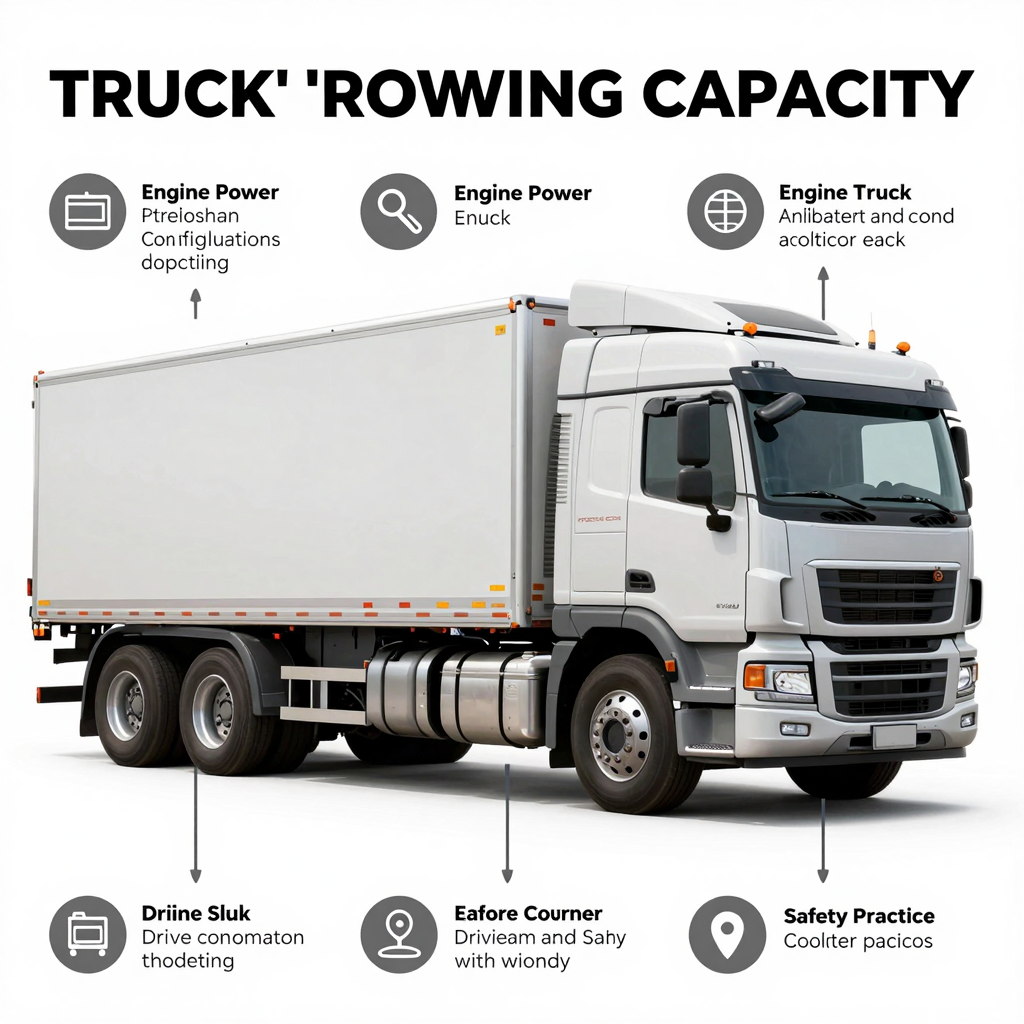
When it comes to towing, understanding your truck’s towing capacity is not just a number-it’s a crucial factor for your safety on the road. Towing capacity refers to the maximum weight your vehicle can safely tow, and underestimating this limit can lead to dire consequences such as accidents, vehicle damage, and even lawsuits. Whether you’re a local driver pulling a trailer full of gear for a weekend getaway, a property manager needing to move heavy equipment, or a dealership ensuring your inventory is safe, knowing the limits of truck capacity is essential for towing safety. In this guide, we’ll walk you through how to calculate towing capacity accurately, ensuring that you engage in responsible towing practices-because when it comes to towing, being informed can make all the difference. Learn more about towing safety to understand the implications of neglecting this vital aspect.
Key Factors Affecting Towing Capacity
Understanding the factors that influence a truck’s towing capacity is essential for safe and effective towing. Here’s an ordered list of the key considerations:
- Engine Power: The horsepower and torque provided by the engine are fundamental. More powerful engines can support heavier loads more safely.
- Drivetrain Configuration: The type of drivetrain (e.g., 4×4 vs. 4×2) affects traction and stability when towing. Larger and more robust versions generally provide better towing capacity.
- Transmission Type: Automatic transmissions often handle the strain of towing better than manual ones, influencing the effective power delivery to the wheels.
- Axle Ratio: A higher rear axle ratio can improve towing capacity by allowing the truck to maintain better pulling power at lower speeds.
- Gross Vehicle Weight Rating (GVWR): This rating limits the total weight of the vehicle, including payload. Knowing this is crucial for determining the maximum safe towing capacity.
- Frame and Suspension Strength: The truck’s design and build quality, including the suspension system, determine how well it can handle heavy loads without compromising safety.
- Hitch and Trailer Specifications: The hitch must be rated for the weight being towed, and both the truck and trailer should match in performance specs.
- Environmental Conditions: Factors like road grade, weather fluctuations, and terrain may significantly impact real-world towing capabilities, especially on long trips.
For more information on safety during towing, check out our blog on safe towing practices. Understanding these elements will help you effectively calculate your truck’s towing capacity and ensure you can tow safely, whether it’s for work or personal use.
Understanding Towing Capacity Terminology
When navigating the complexities of towing, understanding specific terminology is crucial for ensuring safety and compliance. Two essential terms to know are Gross Vehicle Weight Rating (GVWR) and Gross Trailer Weight (GTW).
Gross Vehicle Weight Rating (GVWR)
GVWR is the maximum allowable weight of a vehicle when fully loaded, including its curb weight (the weight of the vehicle without any cargo), passengers, cargo, and fuel. This rating is set by the manufacturer and serves as a critical guideline when calculating how much weight your vehicle can tow safely. If your vehicle’s loaded weight exceeds its GVWR, you risk compromising its performance and safety.
Gross Trailer Weight (GTW)
GTW refers to the total weight of a trailer when it is fully loaded, encompassing the trailer’s own weight along with all its contents and any fluids. Just as with GVWR, understanding GTW is vital for safe towing practices. The GTW must be within the vehicle’s towing capacity, which is derived from the difference between the Gross Combined Weight Rating (GCWR) and the vehicle’s curb weight.
Exceeding these ratings can lead to serious safety hazards, including brake failure and loss of control. For a deeper dive into towing capacity and safety, check out our resources on towing capacity explained and understanding GVWR and GTW.
By familiarizing yourself with these terms, you can make informed decisions that not only enhance your vehicle’s performance but also ensure a safe towing experience.
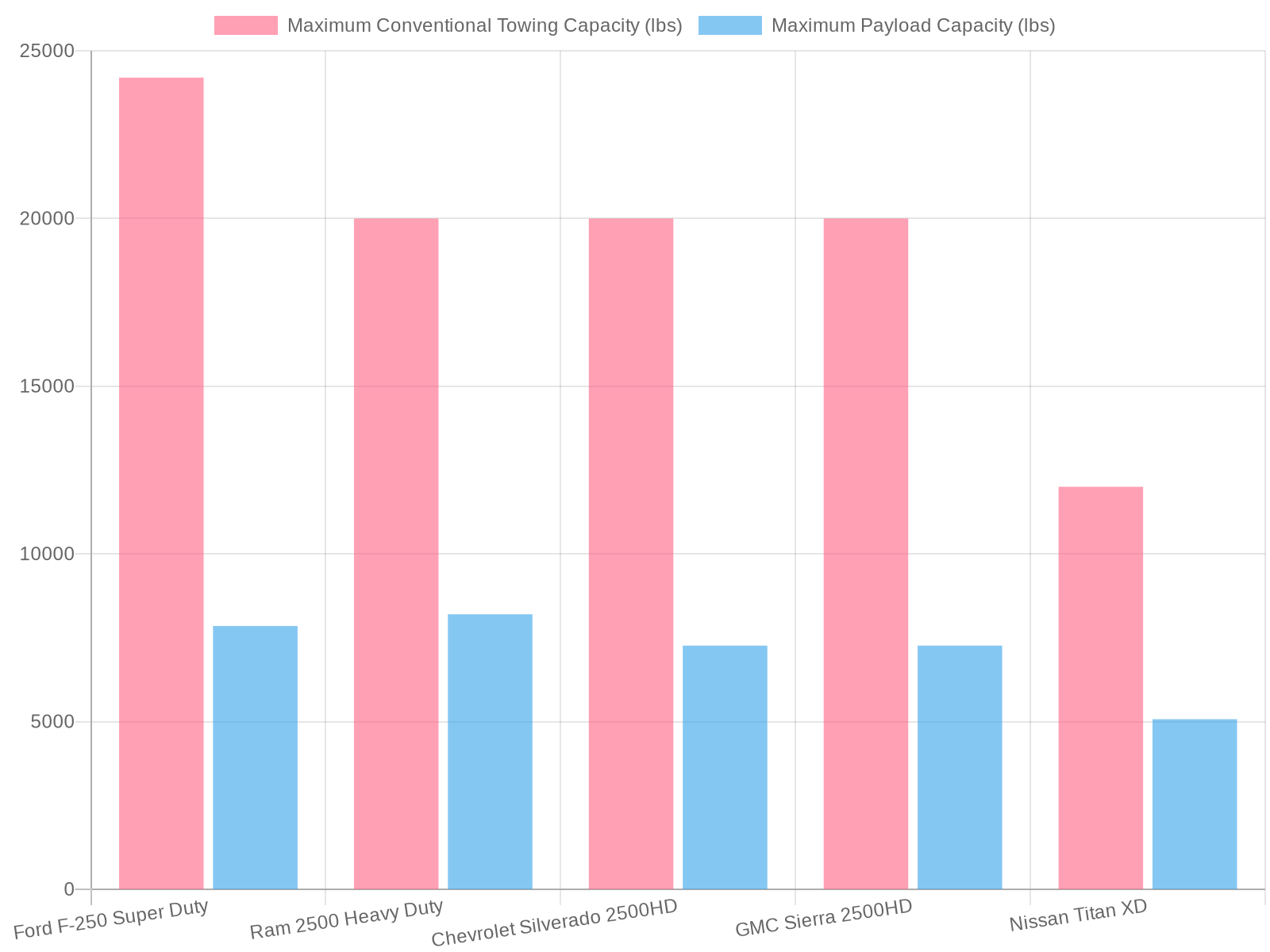
| Truck Model | Year | Maximum Conventional Towing Capacity | Maximum Fifth-Wheel Towing Capacity | Engine Type | Maximum Payload Capacity |
|---|---|---|---|---|---|
| Ford F-250 Super Duty | 2023 | 24,200 lbs (10,977 kg) | 37,000 lbs (16,783 kg) | 7.3L V8 Gasoline (V8) | 7,850 lbs (3,561 kg) |
| Ram 2500 Heavy Duty | 2023 | 20,000 lbs (9,072 kg) | 37,000 lbs (16,783 kg) | 6.7L Cummins Turbo Diesel | 8,200 lbs (3,718 kg) |
| Chevrolet Silverado 2500HD | 2023 | 20,000 lbs (9,072 kg) | 37,000 lbs (16,783 kg) | 6.6L V8 Gasoline (V8) | 7,265 lbs (3,295 kg) |
| GMC Sierra 2500HD | 2023 | 20,000 lbs (9,072 kg) | 37,000 lbs (16,783 kg) | 6.6L V8 Gasoline (V8) | 7,265 lbs (3,295 kg) |
| Nissan Titan XD | 2023 | 12,000 lbs (5,443 kg) | 18,000 lbs (8,165 kg) | 5.6L V8 Diesel (V8) | 5,071 lbs (2,300 kg) |
Sources:
- Ford F-250 Super Duty 2023 Towing & Payload Specs
- Ram 2500 Heavy Duty 2023 Towing & Payload Specs
- Chevrolet Silverado 2500HD 2023 Towing & Payload Specs
- GMC Sierra 2500HD 2023 Towing & Payload Specs
- Nissan Titan XD 2023 Towing & Payload Specs
To correctly determine the towing capacity for your specific needs, consult the manufacturer’s guidelines and consider your own vehicle’s specifications. For further details, you can also learn more about towing capacities on our blog.
How to Calculate Towing Capacity of Your Truck
Calculating your truck’s towing capacity is essential for safe towing practices. Understanding how to calculate towing capacity ensures that you don’t exceed your vehicle’s limitations, which can lead to accidents or damage to your truck. Here’s a straightforward guide to help you through the steps:
Step 1: Locate the Gross Vehicle Weight Rating (GVWR)
Begin by finding the GVWR of your truck, which is typically located on the placard in the driver’s side door jamb. The GVWR indicates the maximum weight your vehicle can safely carry, including passengers and cargo.
Step 2: Determine the Curb Weight
Next, determine your truck’s curb weight. This is the weight of the truck without any passengers or cargo. You can typically find this information in your owner’s manual or on the manufacturer’s website.
Step 3: Calculate Available Payload Capacity
Subtract the curb weight from the GVWR:
Available Payload Capacity = GVWR – Curb Weight
This number will indicate how much weight you can add to your truck, including any passenger and cargo weight.
Step 4: Account for Passengers and Cargo
Now, you must consider the weight of your passengers and any additional cargo. Subtract this figure from the available payload capacity to determine how much weight can be safely towed.
Step 5: Check Tow Ratings and Tongue Weight
Lastly, ensure that the trailer’s tongue weight does not exceed the truck’s hitch rating. The tongue weight is typically around 10-15% of the total trailer weight. Make sure to refer to your owner’s manual or consult your dealer for specific ratings relevant to your vehicle.
By following these steps, you can accurately calculate towing capacity and tow safely. For further information related to your truck’s specifications and towing needs, you can learn more about the importance of towing and how to prepare for towing.
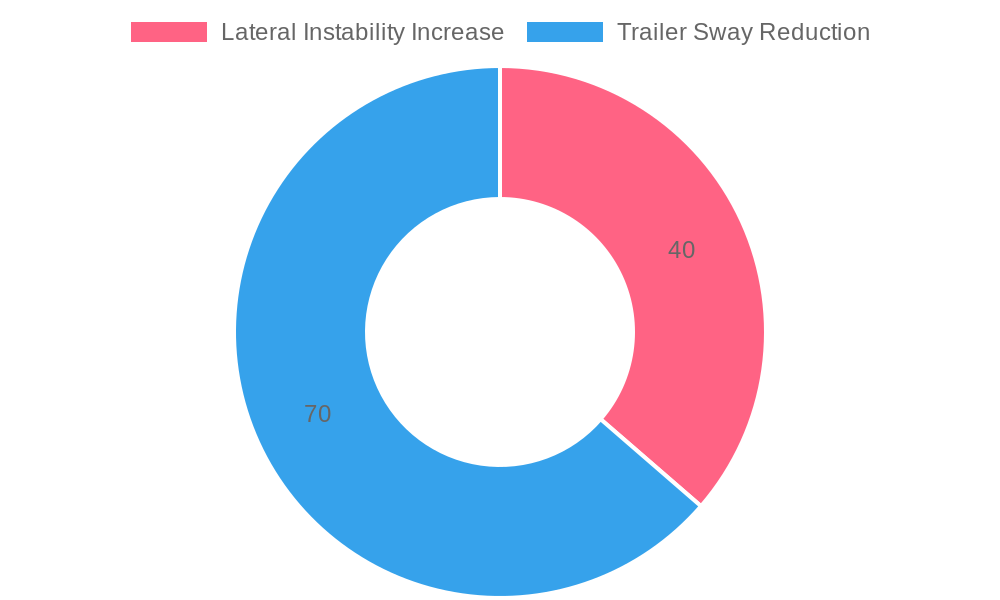
This chart visually represents the importance of weight distribution in towing:
| Statistic | Description |
|---|---|
| 40% increase in lateral instability | Vehicles without weight distribution hitches experience a 40% higher risk of lateral instability during towing. |
| 70% reduction in trailer sway | Properly adjusted weight distribution hitches reduce trailer sway by up to 70%. |
| Recommendation | Use weight distribution hitches for trailers exceeding 3,000 pounds or when tongue weight exceeds 10% of the total trailer weight. |
Source: National Highway Traffic Safety Administration (NHTSA) – Towing Safety Guidelines, 2023; Society of Automotive Engineers (SAE) – Trailer Stability and Control Research Report, 2022.
Common Mistakes in Towing Calculations
When it comes to towing, numerous drivers make critical mistakes that can jeopardize safety and performance. Understanding these common misconceptions can help you tow safely and effectively.
1. Relying Solely on Advertised Towing Capacity
One major pitfall is relying only on the advertised maximum towing capacity of a vehicle without considering actual weight distribution. Many drivers overlook essential metrics like the Gross Vehicle Weight Rating (GVWR) and Gross Combination Weight Rating (GCWR). Check out this guide on towing mistakes to learn more.
2. Ignoring Trailer Tongue Weight
Another frequent error is neglecting the trailer tongue weight, which should typically be 10-15% of the total trailer weight. Not factoring in this weight can put undue stress on your vehicle, affecting handling and brake performance. Learn more about the importance of weight with Consumer Reports’ insights on towing capacity errors.
3. Not Adjusting Vehicle Weight
Drivers often forget that adding passengers or cargo to the vehicle decreases the overall towing capacity. Many assume their towing capacity remains constant regardless of additional weight when, in fact, exceeding the rated limits-even slightly-can compromise safety and control.
By being aware of these common mistakes, you can significantly reduce the risk of accidents and ensure that your towing setup is safe and reliable.
When calculating the towing capacity of your truck, precision is paramount, not just for your safety but also for the well-being of others on the road. An authoritative voice in the automotive field, an expert from Consumer Reports, emphasizes this need for accuracy:
“If you exceed your vehicle’s towing capacity, you’re not just risking damage to the engine and transmission-you’re putting your family and other drivers in danger.”
This statement reiterates the importance of understanding your truck’s limitations. Towing capacity is determined by several factors, including the vehicle’s curb weight and Gross Combined Weight Rating (GCWR). Accurate calculations help prevent mechanical failures, enhancing your safety and ensuring the stability of your vehicle during towing operations.
To ensure you’re operating within safe limits, always refer to your vehicle’s owner’s manual and consider using reliable towing calculators. Learn more about towing capacity and safety to make informed decisions during your towing adventures, and never hesitate to consult with professionals if you have uncertainties about towing loads.
Conclusion and Call to Action
In summary, accurately calculating your truck’s towing capacity is not just a recommendation; it’s a crucial step towards ensuring your safety and that of others on the road. Miscalculating towing capacity can lead to disastrous outcomes, including brake failure, increased stopping distances, and loss of vehicle control. As highlighted by the National Highway Traffic Safety Administration (NHTSA), overloaded vehicles are prone to breakdowns and are more likely to cause accidents. It’s imperative that you understand your vehicle’s limitations and remain within the manufacturer’s specified limits to maintain optimal performance and safety.
To further enhance your towing experience, explore the innovative solutions offered by Summit Fairings. Their aerodynamic accessories, including roof-mounted wind deflectors and trailer fairings, can significantly improve towing stability and fuel efficiency, offering real-world benefits reflected in customer testimonials. With Summit Fairings, you can enhance your truck’s capabilities while ensuring safety on the road. Don’t just drive-drive with confidence and enjoy every towing adventure!