
Tipping practices can vary widely across service industries, and towing is no exception. If you’ve ever needed roadside assistance, you might be wondering whether it’s appropriate to tip your tow truck driver. This decision can be particularly relevant for local drivers, car owners, auto repair shops, and property managers. In this article, we’ll explore the etiquette surrounding tipping tow truck drivers, analyze industry standards, discuss regional variations, and outline thoughtful considerations for tipping. By the end, you’ll have a better understanding of the expectations and practices surrounding this aspect of towing services.
Tow Truck Etiquette on the Open Road: When gratuity fits the moment and how to handle it with care
The moment you realize you’re stranded can feel like a private crisis, a disruption of plans, a soured mood that threatens to turn a quiet evening into a ledger of problems. When the tow truck arrives, the tone of the encounter often determines the rest of your day. The driver’s demeanor—calm, clear, and professional—can transform a fraught situation into a manageable one. In those moments, the question of tipping may arise, not as a fixed obligation but as a human gesture that acknowledges service quality. Across the United States, tipping tow truck drivers isn’t a universal expectation, and there is no standard practice like there is in restaurants or hair salons. Fees for towing are typically set by the company and governed by local regulations, leaving little room for a one-size-fits-all gratuity policy. Yet this lack of a formal standard doesn’t render appreciation moot. When a driver demonstrates exceptional courtesy, rapid response, or practical, reassuring guidance, a tip can feel appropriate, even meaningful. The key is to read the situation, respect company policies, and act with clarity and courtesy rather than noise or pressure.
In practical terms, the decision to tip is situational rather than scripted. If a driver arrives promptly during an emergency, ensures your safety first, and communicates options in straightforward terms, these moments create what many customers perceive as added value. If the service is routine and professional but uneventful, tipping is less common. On balance, many drivers appreciate a token gratuity in recognition of their effort, even if the payment is already settled by invoice. A commonly discussed range in casual conversations is modest, with most people leaning toward small amounts when the service is straightforward—think something like five to ten dollars. In contrast, when the situation is high-stress or genuinely challenging—heavy weather, a difficult access point, or a complex recover—the gesture can extend toward ten to twenty dollars or more, depending on the driver’s discretion and your ability to pay.
The ambiguity around tipping is not a barrier to fair, respectful conduct. For those who worry about tipping influencing the service itself, the simplest rule is to separate the act of gratitude from the payment of the bill. The towing fee is the amount agreed upon in the contract or invoice; a tip, if offered, is an additional gesture of appreciation. This distinction helps prevent awkwardness, both for the customer and for the driver who may be operating as an independent contractor or as part of a company with its own policies. The presence of a policy against tips in some companies is not a sign of hostility toward customers; it is often a precaution designed to avoid conflicts of interest or perceptions of favoritism. If a driver or company declines tips, respect that stance with a polite nod and a sincere thanks for the service rendered. If you’re unsure about whether tipping is appropriate, a quick phone call to the towing company or your insurance provider can prevent uncomfortable moments at the roadside.
Those who want to acknowledge good service without overstepping boundaries can opt for a carefully considered approach. A cash tip offered directly to the driver is the most straightforward method, especially if there is no card reader at the scene or if the driver prefers cash. Present the tip with gratitude and a brief, specific comment about what stood out—“I appreciated how you stayed calm and explained the options clearly” or “You got us to safety quickly, thank you.” This kind of specificity helps the driver understand exactly what you valued about the encounter and reinforces the positive behavior for future calls. Beyond cash, a handwritten note or a quick online review can also carry weight, particularly if the driver provides a service that goes beyond the ordinary. In many cases, a positive review can ripple through the company, helping other customers choose well and ensuring the driver receives recognition that may extend beyond a single encounter. If you want to explore practical anecdotes and regional norms in depth, see the Santa Maria Tow Truck blog for local perspectives and real-world scenarios: Santa Maria Tow Truck blog.
When tipping, timing matters as much as amount. A tip given at the end of the encounter, after the full invoice is settled, preserves professional boundaries and reduces the impression of a “pay-for-preference” dynamic. If the driver offers to wait while you arrange payment or calls ahead for additional services, it is better to hold off on tipping until the transaction is complete and the driver’s responsibilities for that particular call have concluded. In some circumstances, a tip given immediately as the driver pulls away can feel abrupt or misaligned with the actual service—especially if the discussion around cost and process is ongoing. The neat, practical approach is to tip after you have received a clear explanation of charges and an unequivocal finish to the service. In doing so, you communicate not just gratitude but an understanding of the value you were given in that moment.
Of course, not all drivers welcome tips, and not all customers want to give them. In a culture that prizes transparency, it’s reasonable to expect that a driver might refuse a tip if it would create discomfort or if it could be perceived as pressuring the customer in a tense situation. It’s equally reasonable, when you feel that the service was outstanding, to express your appreciation in a manner that respects the driver’s boundaries. In some cases, drivers might request that tips be directed toward a charity or toward a “tip jar” with other colleagues rather than to a single individual. In that sense, the moment of gratitude can be broader than a single exchange; your gesture can become part of a wider practice that supports the team and fosters a culture of helpfulness on the road.
The question of amount is perhaps the most delicate aspect of roadside tipping. Because towing practices vary widely by region and by company policy, a universal number would be misleading. A conservative guideline is to consider tipping if the service exceeded ordinary expectations—arriving during a crisis, offering a clear roadmap for the next steps, or taking time to ensure your safety and comfort. In many areas, a five-to-ten-dollar tip is common for standard calls, with ten to twenty dollars reserved for situations that demand extra effort, technical skill, or personal risk. It’s important to remember that the tip is optional; the fee charged for the towing service should be paid as agreed, regardless of whether you choose to tip. If you’re financially constrained in a moment of crisis, a sincere expression of thanks and a quick online review can still convey appreciation without compromising your budget or the driver’s policies.
Legal and practical realities can shape tipping in subtle ways. The dollar amount you offer may be influenced by the presence of additional passengers, the environment in which you’re towed, or the severity of the situation. In temperatures near freezing, for example, a driver who helps you navigate slippery conditions and ensures your vehicle is secure deserves recognition for the extra care. Likewise, a driver who offers practical guidance—such as how to prevent future issues, what insurance coverage applies, or how to safely arrange a roadside repair—provides added value beyond the immediate service. In such cases, a modest tip aligns with the level of assistance provided, while still respecting any company policy that discourages gratuities. The aim is to acknowledge notable effort without complicating the transaction or compromising safety on the roadside.
From a consumer rights perspective, tipping is a voluntary act rooted in goodwill. The Better Business Bureau emphasizes fair practices and transparent dealings, including how services are priced and billed. While the BBB does not establish tipping norms, it encourages customers to verify charges, understand regional norms, and engage with service providers in a manner that protects both parties’ interests. This broader framework is especially relevant when a customer is dealing with unfamiliar or emergency towing scenarios. If you suspect any misrepresentation or ambiguous pricing, you should document the encounter, request a written invoice, and, if needed, contact the company’s customer service department for clarification. In the end, the tipping decision should reflect your satisfaction with the service and your ability to express that satisfaction without pressure or confusion.
To integrate a broader sense of context into your decision, consider the social dimension of tipping on the road. Tipping is not just about money; it’s a signal that you recognize someone’s effort when time, safety, and stress are all pressing factors. A driver who communicates clearly, respects your safety, and minimizes further inconvenience contributes value that goes beyond a simple job performed. The reciprocal effect is that drivers who feel appreciated may carry that positivity into future calls, helping to set a standard for courteous, professional roadside assistance across the industry. And while this is a personal decision in the moment, it can also reflect a broader ethical stance toward service workers who face irregular hours, demanding conditions, and unpredictable workflows. The road can be a tough workplace, and a small act of generosity can feel like a shared sense of community when you reach your destination.
For readers seeking a grounded, practical approach to tipping that won’t turn a roadside emergency into a maze of questions, a simple, well-communicated plan works best. Check the company’s policy when you first engage the service, if possible. If the driver arrives within the expected window, explains the charges, and completes the service with courtesy and competence, a tip in the five-to-ten-dollar range is a thoughtful acknowledgment. If the call involves dangerous conditions, complex extraction, or substantial time on scene, increasing to ten-to-twenty dollars can be appropriate. Always be prepared to pay the full invoiced amount first, independent of any gratuity. And if you’re unsure, ask politely whether tipping is permitted and whether the driver would prefer that tips be given directly or distributed to the team. A respectful exchange around these points helps avoid awkwardness and ensures that everyone’s boundaries are honored.
The practical takeaway is straightforward: tipping tow truck drivers remains discretionary, guided by service quality, local norms, and company policies. It is not a transactional expectation, but a courteous expression when a driver has gone beyond the basic duties of getting you from point A to point B. If you choose to tip, do so with clarity, directly after the service, and in a form that aligns with the driver’s preferences and the company’s guidelines. If you choose not to tip, a sincere thank-you and a clean, timely payment still acknowledge the effort and the professional standard you experienced. And for those who want continued learning on towing practices, etiquette, and consumer rights, the Santa Maria Tow Truck blog offers regional insights and practical perspectives that can inform your understanding of how tipping fits into the broader culture of roadside assistance: Santa Maria Tow Truck blog.
As you navigate future roadside calls, remember that tipping is a personal choice shaped by context. Your decision should reflect a balanced assessment of the driver’s performance, the safety and efficiency of the service, and your own financial capability. Hold onto the idea that gratuity should enhance a positive encounter, not complicate it. In the rare cases where a driver rescues you from harsh weather, a tip becomes more than a simple acknowledgment; it’s a public affirmation that skilled, considerate service matters, especially when conditions are unforgiving. Yet even in ordinary circumstances, a brief note of appreciation, a clean invoice, and a respectful closing to the interaction can convey the same respect without altering the transactional nature of the service. The road is unpredictable, but the etiquette around tipping can be clear, humane, and adaptive to the moment.
External resource for broader guidance: for additional context on towing service practices and consumer rights, consider reviewing resources from AAA National Services: https://www.aaanationalservices.com/tips-for-towing-services/
Gratitude on the Road: Tow Truck Etiquette, Tips, and the Fine Line Between Service and Policy
Tow truck arrivals are often the quiet, decisive salvage of a bad moment. The roadside becomes a temporary stage where fear, fatigue, and frustration meet the skill of a trained driver. In the United States, tipping tow truck drivers is not typically expected or required. Yet it remains a polite gesture when the service is especially helpful or professional. The lack of a universal tipping rule in towing stands in contrast to restaurants or salons, where gratuities are almost code. This divergence gives travelers and families room to decide based on the quality of the experience rather than a blanket expectation.
Because towing is a service built around safety and efficiency, the standard price covers the basic tasks: assessing the vehicle, arranging transport, and securing it for movement. The primary concern for most customers is the towing fee and any applicable dispatch or wait-time charges. Drivers do not rely on tips to make a living in the same way as servers do; the job is often priced with a fixed rate and the possibility of mileage charges. Still, many people feel compelled to show appreciation when they feel they received exceptional care.
Exceptional service can tilt the decision toward tipping. If a driver responds quickly during an emergency, explains what they are doing in plain terms, and keeps the scene calm, that matters. A courteous driver who avoids jargon and speaks with empathy can ease stress for someone who just watched a vehicle become immobile. If a driver offers extra safety measures—like checking the path for hazards, securing loose cargo, or coordinating with a backup responder—these touches can justify a tip. The goal is to acknowledge meaningful effort, not to reward the standard fulfillment of duties.
Policy varies widely. Some companies explicitly allow tips, others discourage them, and some have no stance at all. In practice, pricing is designed to be transparent, so customers do not wonder whether a tip would somehow reduce the listed fee. When in doubt, a quick check with the local towing company or the insurer can save everyone from confusion. If a policy exists, following it demonstrates respect for the business model while still leaving room for personal appreciation in appropriate moments. In all cases, tipping should be voluntary and never coerced.
When tipping feels appropriate, timing matters. Most drivers appreciate receiving the tip after the job is complete, once the vehicle is secured and you are safe. A discreet, direct gesture avoids drawing attention away from safety concerns. Cash remains the most common method because it is immediate and universally accepted. If you prefer to use a card or a third-party payment app, confirm that tipping via that method is possible and note any processing fees. Avoid tipping while the tow is underway, especially if the site is hazardous or busy; the focus should stay on safety, not on a wallet.
Real-world guidance tends to anchor tipping in the range of ten to twenty dollars, with adjustments for the call’s complexity. A complex recovery, a rescue from a precarious position, or a driver who stays with you through a stressful situation might justify a tip toward the higher end. Conversely, a routine, short-distance tow or simple roadside assistance may warrant a modest amount or none at all. If you are unsure, consider offering a brief compliment in a review, or a note to the company praising the driver’s professionalism. Remember, the tip is optional and should not be interpreted as payment for substandard service or as a bargaining chip for future help.
Beyond cash, there are other meaningful ways to express gratitude. A thoughtful online review highlighting punctuality, clear explanations, and respectful conduct can have real business impact. Sharing your positive experience with neighbors and on social platforms helps the industry learn what customers value. If something felt unsafe or poorly managed, constructive feedback to the company can drive improvements. In all cases, the core message remains consistent: appreciation should be sincere and proportionate to the service delivered. For more practical insight on recognizing questionable practices, see Spot Illegal Towing: Key Signs to Know.
Regional norms reflect different roadside ecosystems. In high-traffic metro regions, drivers may encounter frequent calls and varying expectations about gratuities. In other parts of the country, tipping remains uncommon, treated as an optional courtesy rather than an obligation. For families pressed by time and stress, the choice to tip is often anchored in gratitude rather than obligation. The driver’s central task is to ensure safety and efficiency; money is a secondary signal of how well that work was done. A small tip, if offered, can reinforce a positive outcome and encourage continued professionalism.
Consumer awareness matters in this space. The towing industry intersects with consumer rights, fair pricing, and ethical service. While tipping is not a legal requirement, documenting what happened helps if disputes arise. The Better Business Bureau provides guidance on fair practices in towing, helping to clarify expectations for both customers and providers. As you reflect on a tow, think about how the driver communicates, how they handle your vehicle, and how clear the aftercare steps are. The simplest moments—the driver asking if you are comfortable, or explaining the plan for transport—often determine whether a tip feels appropriate.
Transparency in pricing matters, too. Most providers price standard services predictably, leaving tips as an optional add-on if offered at all. A clear, upfront estimate reduces surprises and sets the stage for more confident decisions when the tow is finished. If you choose to tip, it should not influence how the driver handles the job, nor should it be used as a lever to secure more favorable treatment in the future. In turn, a customer who remains informed and respectful helps sustain a marketplace where service quality, safety, and accountability are valued over quick fixes or rush-rush expectations.
With all this in mind, consider practical steps for your next roadside incident. Know that tipping is a personal choice and that company policies vary. Reach out to the dispatcher or insurer if you want to confirm norms in your area. Prepare a small amount if you plan to tip, and keep it ready so you do not have to search for change in a stressful moment. When the driver arrives, treat them with courtesy, allow them to do their job, and offer thanks at the right moment. If you have questions about what constitutes acceptable service, look to professional guidance that emphasizes safety, fair treatment, and accountability. For broader context on the ethics of roadside assistance, you can review resources from industry bodies and consumer protection groups.
Ultimately, tipping is not a dictator of service quality. It is a voluntary signal of appreciation when a job is done well under difficult circumstances. The core purpose of roadside assistance remains straightforward: to restore mobility safely and with care. A tip is a small way to acknowledge that effort, not a requirement that forces the driver to surpass the standard. As you move forward, carry with you a sense that the best practices in towing are built on clarity, safety, and respect—the very traits a professional driver brings to every call. The chapter closes with a reminder that informed choices, not social pressure, shape tipping behavior, and that readers can use their experiences to contribute to improvements in how the industry serves communities.
Finally, for those who want a wider sense of the field beyond whether to tip, the landscape includes emergency-readiness protocols, standardization in heavy-duty rescue operations, and ongoing efforts to improve customer rights. The industry, like any service sector, evolves through dialogue between drivers, dispatchers, insurers, and customers. To keep this conversation grounded, you can explore the broader context through reputable industry resources and associations, which offer guidelines on pricing, safety standards, and ethical engagement with clients. For broader industry guidance, see https://www.towingindustry.org/.
Regional Variations in Tipping Tow Truck Drivers: How Local Norms Shape a Small Gesture in an Emergency Service
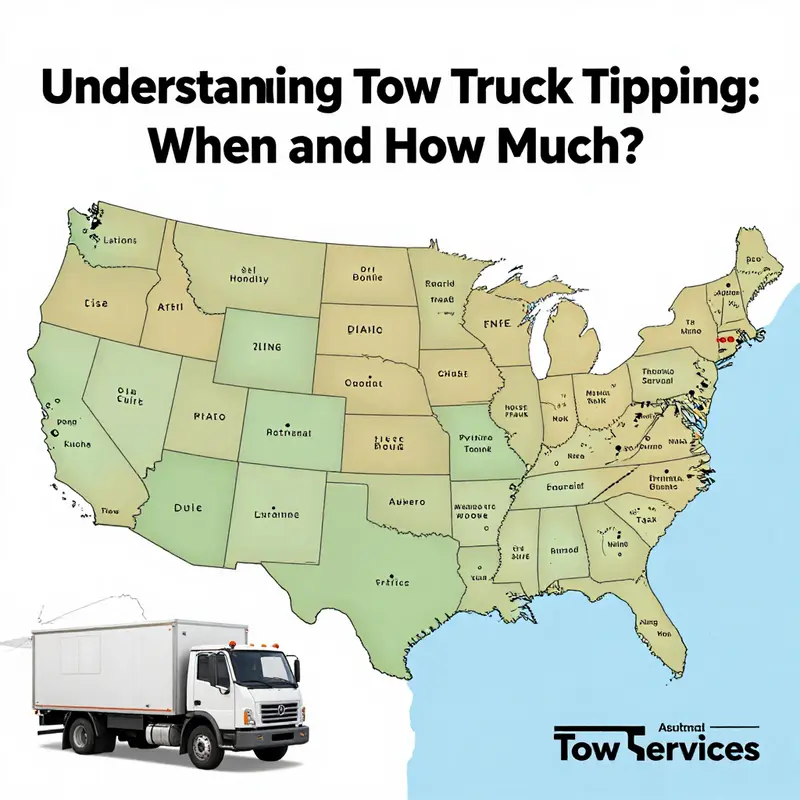
Tipping tow truck drivers sits at an odd crossroads of expectation and etiquette. It is not governed by a universal rule the way a restaurant gratuity is, yet the moment can feel charged with emotion. A driver arrives during a roadside crisis, calmly explains the steps being taken, and helps you navigate a stressful situation with clear communication and steady professionalism. In that moment, a reader might wonder: is a tip appropriate here? The honest answer is nuanced. It depends on where you are, which company employs the driver, and how the service was delivered. The regional texture of tipping culture matters as much as the service itself, because tipping is a social ritual that travels with local customs, wage structures, and consumer expectations. In short, there is no one-size-fits-all rule, but a thoughtful gesture—if it feels earned—can acknowledge good service without forcing a standard that isn’t there.
Across North America, tipping tow truck drivers is not typically expected or required. In many regions, towing fees are regulated or standardized, and drivers receive a wage that reflects the labor and risk of the job. In those places, an extra gratuity is often viewed as optional and situational rather than customary. Yet a small minority of encounters can shift the calculus. In more rural or less regulated pockets, where the pace of service can be slower and the road conditions harsher, customers may choose to offer a tip when a driver goes beyond routine expectations—when help arrives with remarkable speed during an emergency, when the driver communicates the plan clearly and calmly, or when they show patience under stress. If such a moment arises, the typical gesture remains modest: somewhere in the range of five to twenty dollars, depending on the severity of the situation and the level of extra effort. It is a rule of thumb rather than a mandate, and it is very much within the writer’s discretion to decide if the gesture feels warranted.
If you’re unsure about tipping practices in your locale, a practical approach is to check with the towing company’s policy or with your insurance provider. Policies can vary by region, and there are cases where firms explicitly discourage accepting tips. In other situations, the same firm may leave tipping entirely to customer discretion. The guiding principle here is respect: respect for the company’s policy, respect for the driver’s professional boundaries, and respect for your own budget and the situation at hand. When the crisis has passed and you’re back on solid ground, a quiet, straightforward decision—tip or no tip—should feel like a fair reflection of the service you received, not a calculated obligation.
The broader conversation about tipping etiquette in towing also intersects with consumer rights and fair business practices. The Better Business Bureau’s guidance on towing illustrates a pragmatic ethos: tipping is not a universal expectation, and fair pricing with transparent communication helps set reasonable customer expectations. If a driver has delivered exceptional service—arriving promptly, staying communicative, offering practical advice, and maintaining a steady, courteous demeanor under pressure—a small tip can be a meaningful way to acknowledge that effort. The emphasis is on the quality of service, not on a formal fee schedule. In this sense, tipping becomes a reflective practice—a moment to reward excellence while honoring the norms of the locale.
Regional variations often reflect broader economic and regulatory landscapes. In North America, for instance, the role of the tow operator has evolved with insurance practices, dispatch standards, and roadside assistance programs. Some drivers are paid a base wage plus overtime, while others work largely on commission or mileage-based compensation. When compensation structures are straightforward, there is less expectation for tips to supplement wages. In more competitive markets or in regions with lean regulatory oversight, the tipping impulse may be stronger, particularly for emergencies that feel “above and beyond.” The result is a mosaic: tipping becomes more common where the social script supports it and remains rare where the script emphasizes the transactional nature of the service.
Beyond the borders of the United States and Canada, international perspectives can offer a contrasting lens. In Japan and many parts of Western Europe, tipping is often not part of the service culture. Service workers in these regions are generally paid a living wage, and tipping can even cause embarrassment or be misinterpreted as a bribe. The social expectations in these places place the onus on fair wages rather than on gratuities as a reward for service. In such contexts, a driver might graciously decline a tip or accept it only if the customer insists in a discrete, culturally respectful way. The absence of a tipping norm here does not imply a lack of appreciation; instead, it reflects a different equilibrium between wages and customer gratitude.
Back in North America, regional norms still create a spectrum. The same emergency scenario can elicit very different responses in neighboring states or provinces, depending on local customs, the presence of professional associations, and the expectations of insurance networks. It is not unusual for a regional culture to prize courtesy over cash, to favor a verbal acknowledgment of assistance, or to rely on a tangible but modest token such as a beverage or a meal when the service is performed under trying conditions. The nuance matters: what feels like a meaningful thank-you in one place might feel misplaced in another if the underlying expectation is that the driver should be compensated through the company’s standard rates alone. In practice, the decision to tip often rests on a simple triad—timeliness, communication, and courtesy under pressure—and then on the local custom that governs how those elements are rewarded.
The practical approach to navigating this landscape is to begin with concrete questions before the driver begins work. If possible, ask about tipping policies when you call for service. If you speak with the dispatcher, you can politely inquire whether tips are accepted or discouraged by the company. If you are protected or guided by an insurer or roadside assistance program, confirm whether gratuities influence the claim or the cost recovery. This proactive step helps you avoid awkward moments and ensures you align with both policy and etiquette. If the service is rendered in a way that aligns with your values—clear instructions, professional handling of your vehicle, and a calm, respectful demeanor under stress—a discreet tip can feel appropriate, but it should never be assumed.
When the moment arrives, the form of the tip also matters. Cash remains the simplest and most universally accepted method; it signals a direct and immediate appreciation that respects the driver’s control over their own compensation. If a card payment is the sole option, a tip added to a receipt may be permissible, but only if the driver has indicated that this is acceptable. In some cases, drivers may decline tips in favor of maintaining professional boundaries, especially if company policy prohibits accepting gratuities. If you do tip, consider the context: a modest amount that acknowledges exemplary service without implying the expectation of ongoing gratuities from future calls. A thoughtful gesture is often more potent than the size of the tip itself.
For readers who want a local frame of reference, it can be valuable to explore how different communities articulate their gratitude. Local norms are not static; they shift with population, economic conditions, and the evolving landscape of roadside assistance. A quick way to gauge expectations is to consult a community blog or industry bulletin that reflects the day-to-day realities of nearby tow operators. For instance, readers can reference resources such as the Santa Maria Tow Truck Blog, which provides narratives and guidance from practitioners in the field. This kind of local lens helps translating broad regional tendencies into practical, on-the-ground behavior. Santa Maria Tow Truck Blog offers perspectives that, while not universal, illuminate the kinds of questions customers commonly ask and the manners in which operators navigate tipping conversations in real life.
Even with a general awareness of regional variations, the core message remains consistent: tipping tow truck drivers is an optional gesture that should be anchored in the quality of service and the norms of the locale. If a driver demonstrates exceptional professionalism, timely action, and clear, compassionate communication—especially in a tense roadside crisis—it is reasonable to consider a tip as a way to acknowledge that effort. If the service feels routine, or if a company’s policy clearly discourages tips, it is equally reasonable to refrain. The key is to align your choice with your own judgment, the circumstances at hand, and the expectations that govern your locality. In any case, the tipping decision should be framed by respect—for the driver, for the business, and for the broader social context that shapes how a tip is perceived.
As you move through this decision-making process, remember that regional variations are not a barrier to honoring good service. They are a map that helps you calibrate your response to the person who helps you, rather than an obstacle that demands a uniform ritual. For those who want to deepen their understanding of how tipping norms evolve in the broader service ecosystem, it can be instructive to explore the wider landscape of tipping etiquette in travel and service industries. Cross-regional comparisons reveal that tipping is as much about cultural expectations and professional standards as about money. The bottom line is pragmatic and humane: acknowledge exceptional service when it occurs, respect local policies, and recognize that a single gesture can carry different meanings depending on where you are.
External resource for broader context and regional nuances can be found in tipping etiquette guides that address a range of scenarios, including roadside and emergency services. This broader lens helps readers avoid missteps in unfamiliar environments and supports a more confident, considerate approach to tipping in diverse settings. For a concise overview of tipping etiquette across regions, see the external resource linked here: Tipping etiquette guide.
A Right Gesture on the Road: Understanding When to Tip Tow Truck Drivers

When the world narrows to a stretch of asphalt and a stalled vehicle, a tow truck becomes more than a machine with a hook and chain. It is a lifeline, a moving link between a stalled moment and the next practical step. In that tense space, the question of tipping often surfaces. Across the United States, tipping tow truck drivers is not an established or expected practice the way it is in many restaurants or hair salons. The industry does not operate on a universal gratuity standard, and the price you pay for a tow is typically the fee negotiated or quoted by the company for the service rendered. Yet, as with many gray areas in service culture, there is room for a discretionary gesture. If a driver delivers more than the bare minimum—calm communication, rapid assistance, careful handling of your vehicle, or help with tasks beyond the tow itself—a tip can be a meaningful way to acknowledge that extra effort. The key is to read the situation with clear eyes and to act in a way that respects both the driver and the company’s policies.
The practical landscape of towing fees is important to understand before you decide whether to tip. The charge you see on the bill often includes a base fee plus a per-mile rate, with additional charges for things like after-hours dispatch or special equipment. This structure means that gratuity, if offered, is separate from the standard payment for the service. The absence of a universal tipping norm does not remove the potential value of a thoughtful gesture; it simply places you in a position to weigh the specifics of the encounter rather than follow a rote custom. In many ways, the decision to tip becomes a quiet calculation about service quality and personal appreciation rather than a transactional necessity. If you feel the service met or exceeded your expectations, a tip can reinforce the positive behavior you observed during a stressful moment.
The guidance you find most useful often begins with a straightforward premise: tipping is optional, not obligatory. This distinction matters because it centers the decision on your experience rather than on social pressure. That said, the consumer landscape does recognize when a provider goes beyond the call of duty. When a tow truck driver arrives promptly in an emergency, communicates clearly about what they can and cannot do, and handles your vehicle with care, those details matter. The wheel of a tow is sometimes a lifeline in a multi-car incident, a nighttime breakdown, or a weather-impacted delay. In such contexts, a small gesture—commonly in the range of $10 to $20—can be a tangible sign of appreciation for competence and courtesy. It is not a mandate, but it is a courteous acknowledgment of a job well done under pressure. Even a modest tip in cash, a folded bill placed discreetly in the driver’s hand, can convey gratitude without complicating the payment process or the company’s billing structure.
There is also value in knowing when tipping might be inappropriate or discouraged. Some towing companies publish policies that they do not accept tips, or they may have insurance or contract considerations that limit gratuities. In these cases, attempting to tip can create awkwardness for both parties. If you suspect a policy exists, take a moment to confirm with the company rather than assuming; a quick phone call or a glance at the company’s website can save confusion at the roadside. The same consultative approach applies if you’re dealing with an insurer or an emergency roadside program. Some coverage arrangements, especially those tied to third-party services or specific contracts, may specify that gratuities are not expected or are inappropriate for drivers who operate under those terms. Since tolerance for tipping can vary by region and by employer, a brief inquiry before the driver arrives can prevent missteps and ensure that your appreciation is expressed in the form the company prefers.
What counts as exceptional service can be surprisingly specific even when tipping is not expected. Imagine arriving at the scene quickly, not just to complete a tow but to inspect for obvious safety concerns or to advise you on the best next steps. A driver who offers practical help beyond the tow—unlocking a stubborn door, providing a direct list of reputable local repair shops, or guiding you through the process of securing your vehicle at a safe location—demonstrates a level of service that deserves recognition. These acts, while not guaranteed, are the sorts of professional extras that can turn a nerve-wracking situation into a manageable one. A tip in such moments isn’t about buying loyalty; it’s about acknowledging specialization and the willingness to go above and beyond the basic requirements. It is also a gesture that can be given with discretion and respect for the driver’s boundaries and company policy.
There is a practical etiquette to consider in the moment. If you decide to offer a tip, the method matters as much as the amount. Handing cash directly to a driver tends to convey sincerity and immediacy, but it can also feel abrupt if the situation is disorderly or if the driver’s policy prohibits accepting tips on the spot. An alternative is to thank the driver verbally and then ask, politely, whether tipping is appropriate in their shop or company. Some drivers appreciate a tip left in an envelope with the company’s standard procedure for handling gratuities, while others prefer non-cash appreciation such as a written note or a positive online review that highlights the driver’s professionalism. The key is to avoid pressuring the driver or creating a sense of obligation. Gratitude should be offered as a choice rather than as a pressure tactic, and the timing should be considerate, not intrusive.
Even as you weigh tipping, remember that the most important form of appreciation is clear communication. If the driver has helped coordinate the next steps—arranging transportation to a repair facility, explaining what documentation is needed for the claim, or helping you understand the pricing structure—those are the moments when you are most justified in acknowledging the service. And if you’re unsure about the tipping norm in your area, reach out to the towing company directly before a distressing incident occurs. A simple inquiry can set expectations so that you are prepared to act quickly and respectfully when the time comes. This proactive approach has the practical benefit of reducing the ripple effects of any confusion on the roadside, letting you focus more on resolving the immediate problem than on protocol.
It can also be helpful to view tipping as part of a broader culture of courtesy that surrounds roadside assistance. The spirit of tipping, in contexts where it is accepted, often aligns with the broader ethos of recognizing specialized expertise and the labor of professionals who provide essential services under challenging conditions. The tow truck driver’s day may involve irregular hours, exposure to weather, and the pressure of coordinating quickly with dispatch, all while ensuring your safety and protecting your vehicle. A thoughtful gesture can serve as a small but meaningful reminder that their skill and patience are valued. In addition to a potential tip, you can reinforce positive behavior by offering a precise and constructive compliment about what the driver did well, sharing a brief note with the company, or posting a fair, detailed account in a public review. When done honestly and judiciously, these acts contribute to a constructive feedback loop that benefits both customers and service professionals.
The approach you take can also reflect a broader sense of consumer responsibility. If you have had nationwide or regional experiences with towing services, those experiences can inform your judgment about tipping in future encounters. It is reasonable to reflect on what made a particular interaction stand out: was the driver punctual and communicative, did they explain the options and costs transparently, did they handle the vehicle with care, and did they support you in making decisions that protected safety and property? Those reflections can guide not only your tipping decision but your overall evaluation of the service. It is a reminder that the value of professional roadside assistance extends beyond the metal frame of a tow truck. It lies in the careful balance of expertise, reliability, and human consideration that can make a difficult moment feel manageable rather than catastrophic.
For readers who want to explore broader guidance on towing etiquette and consumer rights, several reputable resources discuss fair practices in the towing industry. The Better Business Bureau and consumer advocacy outlets frequently address questions about service expectations, pricing transparency, and what constitutes fair treatment in roadside assistance. While tipping remains discretionary, staying informed about your rights and the norms within your region can prevent misunderstandings and ensure fair outcomes for both customers and service professionals. Keeping a line of communication open with the towing company about tipping expectations, payment arrangements, and post-service follow-up can also help you navigate future encounters with greater ease and confidence. A calm, informed approach is often the best toolkit when the hood is open, the engine is still idling, and the clock on the dashboard seems to accelerate.
As you consider the practicalities of tipping, it can be useful to anchor your decision in reliable guidance while balancing regional customs and personal discretion. The specific actions you take—whether you tip, how you tip, and when you tip—should reflect the quality of service you received, the policies of the company you used, and the context of the moment. When a driver arrives promptly, communicates clearly, and handles your vehicle with care, a small tip can be a straightforward, unobtrusive way to recognize effort. If, however, the driver is late, unhelpful, or careless, there is no obligation to tip, and your response may instead be to pursue feedback through the company or consider alternate arrangements for future incidents.
To keep the reader grounded in practicalities, it can be helpful to think about tipping as part of a chain of courteous actions rather than a standalone transaction. In that frame, the money becomes a symbol of appreciation for technical skill and professional demeanor under stress. It also becomes a data point in a larger conversation about how communities value essential services that operate behind the scenes. In the end, the decision to tip, and the way to do it, should feel like a natural, respectful extension of a reasonable, fair exchange of services. The goal is not to create extra friction but to honor the human effort that goes into stabilizing a difficult moment and to reinforce a standard of care that benefits everyone on the road.
For readers seeking a concise roadmap that reflects both personal judgment and practical constraints, a resource you may find helpful is the following professional perspective. Santamaria Tow Truck Blog offers discussion on towing etiquette, practical steps after a breakdown, and considerations for consumer rights in roadside services. This internal reference can serve as a handy touchstone when you want to align your expectations with the ethos of a local provider while navigating the nuances of tipping and payment. In the broader landscape, Consumer Reports provides a more expansive overview of towing services and consumer protection considerations, which can help ground decisions in a wider context of fair pricing and service standards. For more detailed guidance, see Consumer Reports on towing services: Consumer Reports on Towing Services.
Final thoughts
Understanding the nuances of tipping in the towing industry allows for a more informed and considerate decision when you find yourself in need of roadside assistance. While tipping tow truck drivers is not a requirement, recognizing exceptional service through a small gesture can foster goodwill and appreciation. Ultimately, whether or not to tip should depend on the service experience and personal comfort. Keeping local practices and individual merits in mind ensures a rewarding interaction for both parties involved.