
Choosing the right truck often hinges on one critical factor: towing capacity. Whether you’re a local driver needing a reliable workhorse, an auto repair shop managing multiple customer demands, or a property manager handling logistics, understanding towing capabilities is vital. Among today’s trucks, the 2025 Ford F-150 Lightning Extended Range leads the pack with its outstanding towing capacity of 10,000 pounds. This article dissects its advantages, compares it to heavy-duty alternatives, discusses how towing capacity impacts purchasing decisions, and highlights cutting-edge innovations shaping this vital aspect of trucks. Each section will guide you through the essentials to make an informed choice in your next truck purchase.
Tow Power Without Compromise: Reassessing Towing Capacity in the Electric Full-Size Pickup Era
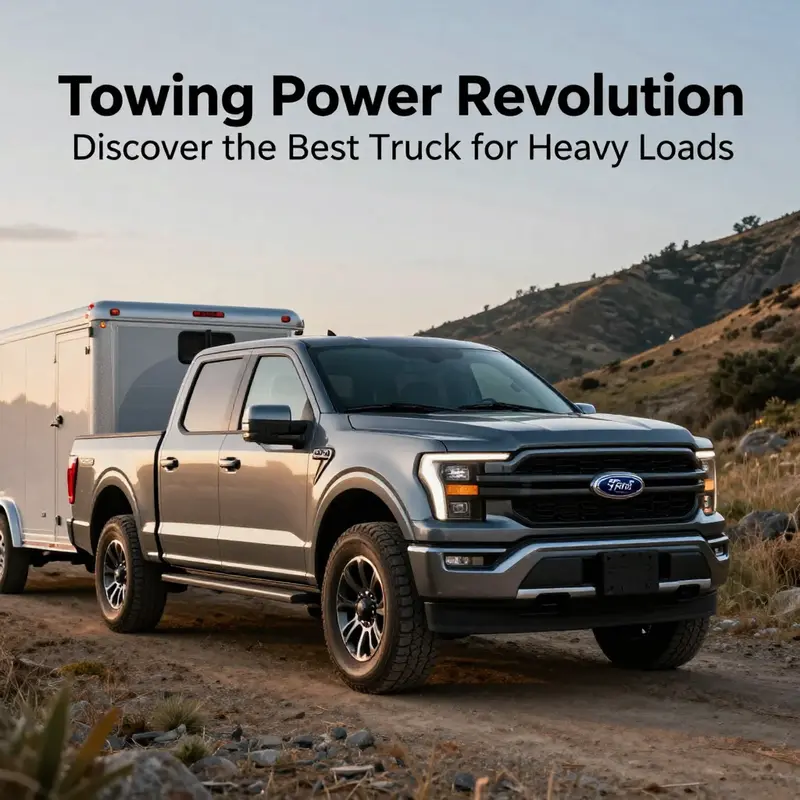
Towing capacity has long served as a shorthand for what a truck can move, but the equation is evolving fast as the market shifts toward electrification and smarter drivetrain philosophies. The conversation about the best towing capacity is no longer about a single peak number in isolation. It has become a multidimensional assessment that weighs raw capability, energy efficiency under load, and how a vehicle’s software and hardware work in concert to deliver a safe, predictable tow experience. In the latest demonstrations within the electric full-size truck segment, manufacturers have begun to publicly highlight very high towing figures, with the most ambitious specifications suggesting the capacity to move heavy trailers in the vicinity of fourteen thousand pounds under optimal, well-configured circumstances. These claims signal a new era where electric powertrains can offer substantial tow power, not merely by grunt but through a carefully engineered balance of torque delivery, traction control, and system intelligence. Yet numbers alone rarely tell the full story, especially when the rest of the towing ecosystem—payload, weight distribution, braking, tires, and route planning—comes into play. The real question becomes not just how much a truck can pull, but how gracefully it does so in the conditions most users actually encounter, whether on a job site, a long highway run, or a weekend haul that edges toward the practical limits of the vehicle’s design envelope.
The way towing ratings are defined matters as much as the numbers themselves. A published maximum is typically achieved under controlled testing with specific hitching arrangements, load balance, and environmental conditions. It represents a ceiling, not a guaranteed everyday performance figure. The rating is often contingent on the inclusion of a tow package, which can adjust suspension tuning, braking calibration, electronic stability control thresholds, and driveline response to optimize stability and control when a heavy trailer is attached. This is why two trucks that appear similar on a spec sheet might behave quite differently on the road once a sizeable trailer is attached and the vehicle is pushed into real-world work conditions. The distinction between a high-tow rating and a dependable, repeatable towing experience is central to choosing the right tool for the job. It is a reminder that the best option is rarely about chasing the upper limit in isolation but about matching capability to the actual tasks, route profiles, and schedule constraints that define everyday use.
Electric offerings in the full-size pickup class are redefining what the term “tow power” means in practice. Electric traction brings instantaneous torque to the equation, a characteristic that translates into confident staging for a heavy trailer at a standstill and a steadier pull as speed climbs. Rather than relying solely on engine displacement and peak horsepower, these trucks leverage a combination of dual-motor drive configurations and carefully tuned torque management to maximize traction when a load is present. This dynamic helps reduce wheel spin on slick pavement or uneven surfaces, a condition that can magnify the challenges of tow work. The result is a towing experience that can feel more controllable at the initial pull and more stable through the critical acceleration and merging phases. It is important to recognize, though, that high tow capability in this segment comes with a trade-off in energy consumption. Heavier tows sap battery capacity, which in turn affects range and charging strategy. The planning horizon expands beyond a simple stop-and-start routine; it becomes a logistics exercise that blends payload management, trailer weight, route density, and charging options along the way.
For many readers, the appeal hinges on a practical blend of numbers and reliability that keeps the workday moving. Among the big players in the electric category, the most aggressive towing claims are paired with infrastructure-ready features—advanced trailer braking integration, trailer sway control, and stable ride characteristics that help the driver feel connected to the road even when the trailer is pushing the limits of the truck’s chassis. The advances in software-enabled stability and drive-by-wire precision are not mere embellishments; they are essential to converting high load ratings into real-world performance that does not require constant micro-management by the operator. It is one thing to announce a sensational spec; it is another to deliver consistent, repeatable results under the stress of real conditions, including winding mountain passes, long hauls at highway speeds, or jobs that require frequent stops for securements and brake checks.
In the broader context, the highest ratings in the entire truck market still reside with heavy-duty gasoline and diesel platforms, where raw mass and frame strength have historically driven the ability to haul near-urban-class weights. The electric contenders, by contrast, are carving out a niche where they can outperform their peers within the electric segment while offering unique efficiencies and capabilities that older powertrains cannot replicate. This distinction matters for fleets and individual operators alike. An electric setup may not chase the absolute maximum weight in the same way a dedicated diesel rig might, but it often delivers the most practical combination of tow power, energy management, and user-friendly integration for frequent work uses. The practical takeaway is that buyers should frame the towing question in terms of the entire system: capacity rating, actual payload, driving dynamics, energy economy when towing, and the availability of charging or fill-in power options during longer trips.
The real-world implications extend beyond the scale of numbers. A high towing rating, to become truly valuable, must be supported by an architecture that can sustain performance across a full tow cycle. This includes sustained braking performance, heat management for the drivetrain and brakes, tire endurance, and the ability to maintain vehicle stability as the load shifts during turns and gusty crosswinds. The software side matters, too: advanced drive modes, predictive torque shaping, and proactive stability interventions can reduce the operator’s cognitive load. The result is a towing experience that feels more like a controlled consequence of thoughtful engineering than a test of brute strength alone. In practical terms, the best option for most users will be the one that offers a straightforward, repeatable, and safe tow experience under the kinds of conditions they encounter most often—whether that means a routine weeknight haul or a multi-day, high-mileage job that tests endurance as well as capability.
To ground these observations in lived experience, it helps to balance the data with the realities of road use. A high-rated capacity means little if the vehicle’s payload capacity is severely constrained, or if the trailer wheels are not matched to the truck’s braking and stabilization systems. The payload figure determines how much weight the truck can carry in its bed and cabin while leaving enough reserve for the tongue weight of the trailer. When payload approaches the limit, performance can become unpredictable, as suspension tuning and brake bias are stretched to their design boundaries. The towing rating, the payload, and the gross combined weight rating together sketch a three-dimensional portrait of what a truck can handle. Practically, this means evaluating the whole package: how much you haul, how far you drive with a trailer, and how often you will need to recharge on the road after towing significant loads. The forecast should consider not just the destination but the journey—the number of stops, the terrain, the weather, and the available charging opportunities along the way.
For readers who want to dive deeper into the field observations and practical considerations that accompany heavy towing, our resources offer a grounded perspective drawn from roadside experiences and professional operations. The Santa Maria Tow Truck Blog captures a range of real-world scenarios that illuminate how different trucks feel in practice when tasked with heavy tows, how drivers respond to challenging loads, and what signs point to a truck that is well-suited to frequent, heavy use. This kind of context can help translate a bold tow rating into a confident, repeatable workflow on the job site or on the highway. (Read more at the Santa Maria Tow Truck Blog.)
And while the internal discussions matter, the external specifications anchored in the manufacturer’s own documentation remain an essential reference point. For the most authoritative and up-to-date numbers, consult the official product pages and manuals from the automaker, which outline the exact conditions under which a given rating is valid, the optional equipment that may unlock higher capacity, and the caveats that accompany extreme use. A careful reading of those sources helps ensure that the plan for any heavy-tow assignment aligns with the vehicle’s designed capabilities and the safety requirements that accompany heavy-haul work. This is the disciplined way to approach the question: what truck has the best towing capacity is answered not by a single figure but by an informed synthesis of capability, energy strategy, and the reliability of the overall system.
For readers who want to explore further practical considerations and to see how these concepts play out in everyday operations, there are additional resources that discuss towing readiness, emergency responsiveness, and standardization in heavy-duty rescue contexts. A comprehensive overview of these issues can be found within our broader content library, including sections that address fleet standardization and the practicalities of emergency-readiness planning. In particular, the Santa Maria Tow Truck Blog offers a practical, hands-on perspective that complements the data-driven analysis presented here. Santa Maria Tow Truck Blog
In sum, the question of which truck has the best towing capacity is less about a single number and more about the alignment of power, control, and endurance with the demands of the job. The latest electric full-size pickups push the envelope within their segment by delivering substantial tow power alongside the kind of torque delivery and software-driven stability that makes heavy towing more approachable and predictable. They represent a meaningful step forward in how the industry thinks about load movement, battery energy management, and on-road reliability under stress. As the market continues to evolve, buyers will benefit from focusing on the interaction of ratings with real-world needs—considering payload, range, charging infrastructure, and the specific duty cycles common to their work. This approach ensures that the decision is grounded in practical outcomes rather than pure headline figures. The ongoing dialogue between capability and practicality is what will make the next generation of trucks truly capable, trusted, and ready to shoulder the tasks that define the modern towing landscape.
External reference for official specifications and current figures: https://www.ford.com/trucks/f-150-lightning/
Tow Capacity Without Compromise: Exploring the Heavy-Duty Giants Behind Maximum Towing Power
In the broader question of which truck has the best towing capacity, the deepest answer lies beyond the pickup and into the realm of heavy duty tractors. These machines are engineered to move weights that would challenge even multiple light duty pickups. In this chapter we move past consumer narratives and examine the design philosophy, structural decisions, and real world constraints that define maximum towing capacity in the heavy duty class. Here capacity is not a single figure but a function of chassis rigidity, torque delivery, drivetrain reliability, and thoughtful integration of axle tire and trailer systems. The result is a concise yet expansive view of how some of the heaviest towing platforms achieve load limits approaching fifty tons. To fleets and operators this is not mere bragging rights it is a baseline for planning maintenance and safety a baseline that informs how a vehicle should be matched to a given task and how that choice impacts everything from fuel strategy to route planning and after sales support. The central thread is simple to move extraordinary mass reliably every subsystem must contribute with purpose discipline and redundancy and the boundaries of what is possible continually shift with advances in materials powertrain technologies and control systems.\n\nHeavy duty towing hinges on a robust torsion stiff chassis that can cradle enormous forces without buckling or flexing under load. The frame design is typically a heavy welded ladder or trapezoidal structure that resists bending while keeping the axle attachments square and predictable. Operators depend on this stiffness not only for the feel of the steering and the truck s responsiveness but for the very stability of the trailer as it traverses irregular surfaces climbs hills or negotiates windy stretches. A strong frame also supports large high capacity suspensions that can control trailer bounce and roll dynamics. When a truck tows a 40 plus ton load even small chassis deflections become magnified at the hitch and can alter braking accuracy steering response and tire contact with the road. In this context the question of maximum towing capacity becomes an interplay between how the frame carries load and how the rest of the system is permitted to react to it without compromising control.\n\nTorque more than peak power is the currency of heavy duty towing. Large capacity platforms rely on engines engineered to deliver sustained usable torque at low to mid rpm ranges. The motive force must spawn consistent acceleration when the trailer is heavy and the road grade steep yet stay within temperatures and lubrication limits that keep the system from thermally fatiguing. This requires not only a high torque engine but also a drivetrain that can leverage that torque without sudden surges that destabilize the trailer or overwhelm the braking system. The torque curve is complemented by a transmission that presents the right gear ratios for controlled gradual loading of the tow bar. Shifts must be smooth and predictable so the operator can maintain momentum without hunting for power in the wrong range. In practice the most capable heavy duty setups pair a torque dense engine with a transmission that can hold a forward pace under load preserving momentum while enabling precise throttle control to modulate wheel slip and trailer sway.\n\nBeyond torque the drivetrain architecture and axle configurations determine how power is transmitted to the road. Multi axle rear suspensions including tandem or tridem arrangements distribute the load and improve traction on varying surfaces. The choice of axle gearing and the use of locking differentials or torque vectoring controls can dramatically affect how a heavy tow behaves under braking and cornering. When towing near the upper end of capacity the stability of the rig is as much a matter of how the axles and tires work together as it is about raw engine output. A feature set that includes stable towing modes predictive abs modulation and advanced traction control helps maintain drive line integrity and prevents the kind of wheel spin that compounds heat build up and accelerates tire wear. The result is not merely speed with a heavy trailer in tow but a sense of confidence that the truck will respond predictably to driver input even as the load and grade intensify.\n\nTire selection and tire engineering play a decisive role in the reliability of any heavy duty towing system. Large diameter tires with high load ratings distribute weight more evenly preserving traction and preventing rim failures under punitive road conditions. In the heaviest setups tire dimensions such as wide robust configurations become common with dimensions calibrated to resist sidewall damage maintain heat dissipation and keep the vehicle stable on uneven surfaces. The tires also influence braking performance higher mass requires a braking system that can deliver consistent retarding force without overheating. Worn or underinflated tires can quickly undermine a tow s safety margin so monitoring systems and pressure management become essential components of the overall capability. The tire choice is a direct reflection of the load s scale and the terrain on which it will be moved and it serves as a practical limiter or enabler for maximum capacity in real life.\n\nIn the most capable heavy duty tows a single figure belies the broader reality the 40 to 50 ton class plausibly represents the practical ceiling for standard highway operations with occasional ops that push toward the higher end under controlled conditions. These capacities are tied to a combination of engine torque gear ratios driveline robustness and trailer interface design. The trailer itself is not a passive component its own weight brake system and articulation require precise synchronization with the tow vehicle. The coupling hitch design and electronic braking communication all influence how smoothly the system can be controlled when decelerating a loaded trailer. The vehicle to trailer interface becomes a critical safety and performance boundary and technicians know that any misalignment improper hitching or defective brake control can transform an otherwise manageable pull into a dangerous situation. This is why training pre trip checks and operation discipline are essential in heavy duty towing.\n\nA practical lens on these capabilities rests on how fleet operators use high capacity trucks in ordinary contexts. The most capable platforms are rarely chosen for every task instead they are seen as a tool for specific needs where the payoff of payload and towing margin justifies the resource intensity. The decision hinges on route predictability the frequency of long hauls and the tolerance for operating costs associated with such heavy equipment. In this sense the value of maximum stated capacity is not a single bragging point but a signal that a platform can be deployed in demanding situations with a reasonable expectation of reliability. In daily practice fleets will balance the need for extreme towing with concerns over fuel economy maintenance intervals tire life and the availability of specialist support. The consequence is that a truck with the highest possible number on a spec sheet is not automatically the best choice for every operation rather it is the best choice for a subset of operations where the load and the route demand maximum capability coupled with strong after sales and spare parts networks that reduce downtime during critical jobs.\n\nTo connect these mechanical realities with the broader narrative of comparative analysis consider how a top tier heavy duty lineup aligns with the practical tasks faced by fleet managers and operators. In a market that values both reliability and raw capability the most capable platforms feature a carefully curated ecosystem. This includes not only the chassis engine and transmission but also the ancillary technologies that support heavy towing electronic stability controls trailer sway mitigation hill descent logic and dedicated towing modes are integrated with the aim of smoothing the transfer of force from truck to trailer. These systems reduce the likelihood of abrupt instability which in turn reduces the risk of brake fade and tire failure during extended downhill runs. In environments where long loaded hauls cross challenging terrain this integration becomes a performance differentiator making the difference between a task that is completed on schedule and one that ends in costly delays or safety incidents.\n\nThe practical takeaway for readers focused on the question of which truck has the best towing capacity is that the heavy duty segment defines the outer envelope of capability. The upper reaches of this envelope near fifty tons depend on a symbiosis of components rather than a single standout part. A frame a torque profile a transmission strategy an axle system and tires all contribute to the final performance envelope. The real world also reminds us that the maximum capacity figure is a controlled scenario not a blanket guarantee for every load and every road Substantial variables remain including the trailer s braking system the coupling method the weight distribution of the load and road grade Moreover the practical use of such capacity is mediated by maintenance quality and the reliability of peripheral systems As fleets evaluate their needs the conversation shifts toward how these heavy duty platforms can be standardized across operations to improve safety predictability and cross functional planning For those who operate multiple vehicle classes even the highest capacity machine gains more value when paired with robust training programs standardized maintenance protocols and clear escalation paths for emergencies The idea is not to chase the largest number but to ensure the fleet can reliably reach its planned destinations under the most challenging conditions.\n\nFor readers who want a concrete anchor to these principles think of a leading heavy duty tractor lineup that illustrates the scale and complexity involved in achieving near fifty tons of towing capacity These systems achieve their limits through an exacting combination of frame rigidity torque delivery drivetrain reliability axle geometry and tire engineering The resulting behavior smooth buildup of tow force linear acceleration under load and controlled deceleration when stopping reflect years of design optimization and field feedback In practice operators rely on training routine inspections and data driven maintenance to maintain the performance envelope The interplay of all these factors means that the maximum towing capacity is both a technical achievement and a management discipline a reminder that the strongest trucks are not simply oversized engines they are harmonized systems designed for the demands of heavy hauling\n\nFor those who want to explore the engineering behind these platforms in greater depth the official documentation from the leading European maker of heavy duty trucks offers extensive data on engine power ratings real world performance figures across the R G P series and guidelines for model selection based on fleet requirements and operational contexts See the Scania Heavy Duty Truck Product Line for a comprehensive overview of powertrains axles and chassis options that shape the towing capability of top tier heavy duty units You can also consult broader fleet operation resources to understand how standardization and emergency readiness influence towing performance in practice The link to a broader fleet standardization and emergency readiness resource can provide context on how large fleets plan and execute extreme towing tasks while maintaining safety and readiness.\n\nIn summation the heavy duty segment sets the upper bar for towing capacity and its value comes not only from a single element but from an ecosystem designed to sustain extreme loads The pathway from chassis through to trailer and back through to maintenance and operator training defines what it means to move heavy mass with confidence and control While consumer pickup trucks may capture headlines with impressive peak tow numbers in lab conditions the real stories of towing power and the safest most reliable performance reside in the heavy duty machinery that is purpose built for handling loads that would challenge lighter platforms As the market continues to evolve these systems will likely become more efficient more precise and more capable of meeting the diverse needs of logistics construction and remote operations where the combination of raw capacity and dependable execution can translate into real world advantage External references and official product line documentation will help practitioners track improvements and choose proportions that fit their operational realities ensuring that maximum capacity translates into maximum mission success. External reference link included
Tow Capacity as a Compass: How Heavy Hauls Shape the Modern Truck Buyer
Tow capacity is more than a number on a spec sheet; it is a practical signal about a truck’s utility, safety, and the lifestyle or work life it enables. For buyers who rely on trailers, equipment, or large loads, the towing rating can be a decisive factor. Yet the way people interpret that number has evolved as technology, design priorities, and regulatory considerations shift the balance between raw power and real-world usefulness. In the current market, a leading electric full-size pickup demonstrates how torque, efficiency, and clever engineering can redefine what “capable” feels like on the job site, on the road, and in the backyard. These shifts matter because towing decisions ripple through risk management, scheduling, and the total cost of ownership—factors that commercial buyers in particular weigh with insistence.
The most talked-about figure in the latest data is the maximum tow rating achievable by a premier electric option when equipped with an advanced towing package. In this configuration, the vehicle delivers roughly 10,000 pounds of towing capacity. That number is not just a blunt measure of pulling power; it is a reflection of how electric propulsion, with its instant torque and highly controllable delivery, translates into practical pulling ability. A dual-motor all-wheel-drive system provides the traction and stability necessary to move heavier loads smoothly, while a large, lockable front storage area and an integrated mobile generator system add utility beyond mere pulling force. This combination exemplifies a broader trend: buyers increasingly equate towing capability with versatility, not merely with the raw ability to yank a trailer from a standstill.
Yet the landscape remains diverse. Across the market, other heavy-duty options can post higher raw towing figures—up to approximately 12,500 pounds or even just under 13,000 pounds in certain configurations. Those higher numbers often come from traditional internal-combustion powertrains and specialized chassis tuning designed for sustained high-tow tasks, such as construction or fleet operations. The juxtaposition between the electric leader’s 10,000-pound mark and the sector’s upper extremes highlights a critical nuance: the best towing capacity depends on context. For some buyers, the electric option’s additional torque, regenerative capabilities, and on-site power generation may offset a lower peak tow rating by delivering more practical, reliable performance for typical loads and longer duty cycles. For others—where the load is consistently near the upper limit or where the work requires the allowances of a higher gross trailer weight—the higher-capacity models remain attractive, with their own strengths in braking stability, chassis robusticity, and long-haul performance.
The conversation around capacity must also acknowledge the scale of capabilities discussed in wider industry contexts. In some industrial applications, the capacity to handle extremely heavy tasks is described in terms that dwarf typical consumer towing. References to multi-ton or even hundreds of tons for specialized equipment underscore how the underlying physics of hauling—torque, traction, braking, and stability—scale differently when weight becomes enormous. Those industrial benchmarks illuminate the extremes and remind buyers that the towing rating on a consumer pickup is a carefully bounded specification designed for everyday life, not a limitless limit for every possible task. While such numbers may not translate directly into a household driveway or a construction site, they frame how engineers and manufacturers push the envelope in areas like frame rigidity, suspension tuning, and wheel-end strength. They also underscore why towing capacity remains a compelling differentiator in a crowded market, even as alternative metrics like payload, torque at low RPM, and drivetrain efficiency gain prominence.
Transmission choice and drivetrain architecture reveal another layer of nuance. Across segments, there are scenarios in which the configuration of the transmission or the selection between manual and automatic shifting can noticeably influence towing capacity. In some cases, an automatic transmission enables a notable bump in usable tow figures compared with a manual counterpart—an effect that arises from optimized shift patterns, torque handling, and cooling. The takeaway for buyers is practical: the transmission option you choose can tilt the odds in favor of smoother, safer, and more sustained towing performance. This is not merely academic; for tradespeople who operate in rolling schedules and on varied terrain, the reliability of a given gear ratio and the predictability of engine braking matter every day.
A broader view of the topic also ties towing capacity to safety metrics and licensing realities. The maximum weight a vehicle can tow is not just a marketing line; it interacts with legal classifications, insurance considerations, and vehicle handling requirements. Exceeding the rated capacity typically triggers safety risks and can lead to regulatory penalties and warranty concerns. For those who operate company fleets, there is a direct link between towing specifications and licensing categories. A truck that sits near the edge of a regulatory threshold for certain license classes may require more formal training, route planning, and additional braking—and, in some cases, can complicate the legal requirements for towing operations. This legal dimension reinforces why buyers should treat the stated capacity as a ceiling for planning rather than as a target for every job. The practical task is to map the loads in typical use, consider payload and tongue weight, and ensure that safety margins are built into the selection process.
The decision calculus around capacity also includes real-world constraints that go beyond the trailer hitch. Weight distribution, payload capacity, and tongue weight influence handling, braking, and stability. A truck with an impressive tow rating may still face compromises if its payload capacity or braking performance is not aligned with the expected duty cycle. In high-tow scenarios, braking performance, steering control, and suspension behavior under load become critical. Buyers should examine not only the peak tow figure but also the vehicle’s gross combined weight rating, payload limits, and the dynamics of how the truck behaves when loaded and in motion. The aim is harmony: a combination of torque, traction, braking, and chassis stiffness that yields predictable, repeatable performance across varied towing tasks, from city-to-city trips with a heavy trailer to rugged, off-road towing challenges where road surfaces change quickly.
For fleets and organizations that rely on standardized equipment, the choice becomes even more strategic. Consistency across a fleet reduces maintenance complexity, simplifies training, and lowers the risk of mismatched performance across vehicles. In this context, the guiding principle shifts from “maximum pull” to “predictable, reliable, standardized capability.” Resources that address fleet standardization and emergency readiness provide a framework for evaluating towing needs in light of broader operational requirements. fleet standardization and emergency readiness is a value-added touchpoint for managers who must balance the urgent demands of emergency response, routine service calls, and the long arc of fleet replacement cycles while maintaining a coherent equipment profile.
The market’s diversity means there is no single winner in the race for the best towing capacity. The right choice depends on how customers balance peak performance, everyday practicality, and long-term ownership costs. The 10,000-pound leader in the electric class illustrates a modern balance: it pairs strong torque and energy-dense propulsion with on-board versatility, enabling not just heavy towing but also a portable power source that can be used during outages or on remote sites. At the same time, the heavier-tow alternatives—absent the all-electric architecture—offer higher peak ratings that can be decisive for users who routinely haul the heaviest loads or who require more stringent margins for critical operations. The distinction between peak capacity and usable, dependable performance becomes essential in decision making. When buyers learn to interpret the rating as part of a system—engine, transmission, cooling, braking, frame, suspension, tires, and electronics—they gain a more accurate picture of what a truck can do day in and day out, not only under ideal testing conditions.
Another practical lens is how capacity translates into economics. Higher towing capacity often commands a premium, because the purchase involves more heavy-duty hardware, longer service lifespans, and more capable cooling and braking systems. Add-ons such as towing packages, upgraded suspensions, and enhanced electronic stability controls contribute to the total cost of ownership. For buyers who want to maximize value, a careful assessment of their actual needs—how frequently they tow, the typical trailer size and weight, the distance and terrain of typical trips, and the availability of secondary equipment—helps determine whether the premium for higher capacity yields a meaningful return. In many scenarios, purchasers discover that a well-muited balance between capacity, payload, and efficiency delivers more practical benefits than chasing the highest possible rating.
The question, then, becomes not simply which model has the greatest number, but which vehicle best aligns with a given set of tasks. The best fit harmonizes torque delivery, drivetrain efficiency, and vehicle dynamics with the user’s load profiles and driving conditions. It weighs the reality that a truck can approach its rating only if the trailer and hitch setup are appropriate, the load is properly distributed, and the operator adheres to safe towing practices. Buyers who approach the purchase with this holistic mindset—recognizing towing capacity as a crucial, but not solitary, determinant—tend to select trucks that serve as reliable tools rather than flashy statistics. The result is a fleet of pickups that perform consistently across jobs, seasons, and geographies, with a clear sense of how their towing capability integrates with day-to-day work.
For those who want a practical, action-ready approach to evaluating capacity, this means building a decision framework around typical loads, distances, and required downtime. It means considering how a truck’s powertrain behaves when pulling uphill, how quickly the brakes respond as trailers gain speed, and how a high-torque system maintains control in windy or uneven conditions. It also means acknowledging that the journey toward the best towing solution is iterative: as workloads evolve, so too may the best configuration. The market responds with enhancements in batteries, cooling, chassis design, and driver-assistance technologies that improve confidence under load and extend the life of the vehicle. In short, the best towing capacity for a given buyer is the capacity that consistently supports the job with safety, reliability, and efficiency at the fore.
External resource: https://www.motorauthority.com/news/ram-ups-towing-capacity-in-bid-to-outclass-larger-trucks-20260121
Tow Power Reimagined: How Tech Innovations Are Expanding Truck Towing Capacity
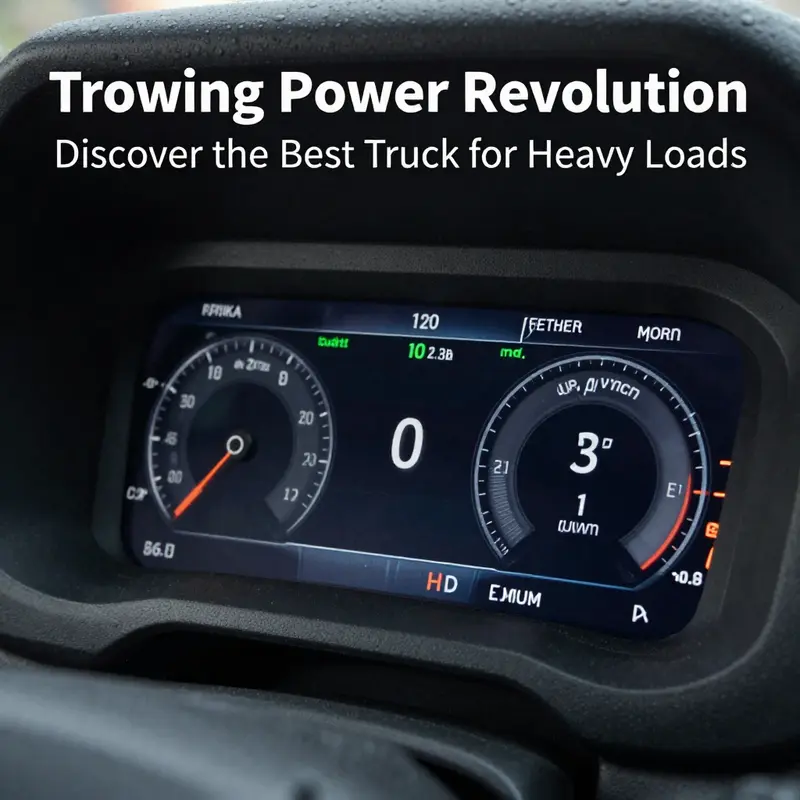
Towing capacity has long been a headline metric in the world of trucks, a number that signals the practical limit of what a vehicle can pull and for how long. Yet in the current landscape, that number is being reshaped by a cluster of technological innovations that extend far beyond simple horsepower. The most telling development is a new class of electric full size pickups that, when properly configured, can tow up to around 10,000 pounds. The power behind that capability does not rest on a single factor alone. It rests on a holistic blend of dual motor drive, advanced battery management, and intelligent energy distribution that together transform how heavy loads are moved down the road. The dual motor all wheel drive arrangement enables not only strong initial launch but steady, controlled torque delivery across the entire trailer engagement. With torque peaking high and predictable, drivers gain the confidence to maintain speed as grades rise or air resistance increases, knowing the system can hold the line without abrupt power swings. The vehicle’s energy system becomes a partner in the tow, not merely a power source at the rear axle. Equally important are the architectural choices that accompany this powertrain, among them a large lockable front storage area and an integrated mobile power source that can power a home during outages. These practical features expand the truck’s utility beyond the job site, turning towing into a task that fits into a broader emergency preparedness or off-grid workflow rather than a one dimensional performance metric. The result is a platform that confirms a broader truth about towing in the electric era: capacity is not a single emblem of strength but a composite of power, endurance, and resilience built into the vehicle’s design and its ecosystem.
Even as the electric option pushes the envelope, the market shows that traditional heavy duty machines still offer impressive peak capabilities. In the same field of comparison, heavy duty gasoline or diesel trucks push tow ratings well above 12,000 pounds and approach the neighborhood of 13,000 pounds for certain configurations. Those figures underscore a clear reality: when it comes to pure, maximum towing capacity, ICE trucks still hold an edge through raw mechanical leverage and proven long-range durability. The space between EV and ICE is not a widening chasm but a shrinking gap, bridged by innovations that address the core challenges of towing: energy efficiency under load, sustaining performance over time, and returning power to the battery through regeneration without compromising safety or reliability. The most consequential developments here are improvements in how the battery system manages energy during tow duties, how the drivetrain distributes torque for traction, how heat is removed from critical components, and how recovered energy is recycled back into the pack. Each piece matters because towing is an integrated operation. A trailer increases the vehicle’s rolling resistance, while a tow adds aerodynamic drag, both of which demand more energy than normal driving. The smarter the system, the less the towed task feels like a drag on performance and range.
Battery management systems have matured to the point where energy draw during towing can be tuned with greater precision. Rather than simply delivering maximum power until the battery voltage sags, modern systems negotiate a dynamic balance: they reserve energy for safe stopping, maintain a stable voltage for the drivetrain, and adapt to the grade and payload. In practice, that means the truck can maintain steady pulling power on a long grade without the driver having to throttle to stay within safe limits. The optimization happens behind the scenes, but its effect is tangible: more predictable acceleration, steadier speeds, and a more confident grip on the road even when the trailer is heavy and the road is less than ideal. It also means that the energy use of towing becomes more predictable, which in turn supports planning for fuel or electricity stops along the route. The story here is not about a single gadget but about a network of enhancements that allow the power reserve to be used more efficiently and with less waste.
The newest electric drivetrains push efficiency even further. Dual motor configurations are increasingly common in the segment, enabling not only strong rear drive thrust but optimized torque distribution between axles. With smart torque vectoring, the system can throttle power to the wheels with the most traction, reducing wheel spin and improving grip on slippery grades or uneven pavement. The heft of a trailer demands traction control that can adapt in real time, and the latest setups respond with firmness and quiet assurance. This traction edge is particularly valuable when towing heavier loads at highway speeds, where any loss of grip can quickly propagate into instability or require corrective steering input. The resulting drive feel is often described as composed and confident, a testament to the engineering behind these systems rather than to brute force alone.
Thermal regulation rounds out the trio of essentials for maintaining towing performance. Prolonged pulling loads heat up critical components, especially near the motor windings, power electronics, and battery cells. Innovative thermal management systems use smarter cooling loops, enhanced heat exchangers, and materials with superior heat rejection properties. When thermal limits are managed effectively, the system can sustain higher power demands longer without derating the performance or sacrificing component longevity. That is a meaningful advantage in real world towing where a single long hill or a stubborn headwind can otherwise trigger a drop in power or an increased energy penalty. The upshot is a tow that stays strong for longer, preserving momentum and reducing the need for stops to manage temperature.
Regenerative braking is another element that quietly changes the economics of towing. As trailers descend grades or slow traffic behind, energy is captured and rerouted back into the battery, offsetting some of the energy required to maintain speed. The equations behind this are straightforward, but the implications are practical: fewer interruptions to charging cycles, a longer operational window before a recharge is necessary, and a more forgiving dynamic in heavy towing scenarios where the driver can rely on a bit of energy recovery without compromising control. The result is a system that not only stops more efficiently but talks back with the energy ledger in a way that makes heavy towing feel less like a sting on range and more like a managed tradeoff between available energy and the required pull.
Together, these technologies illuminate a broader shift in how we evaluate towing capacity. The electric option is not simply a single metric of maximum weight. It is now a composite of peak capability, consistent performance under load, energy efficiency across the tow, and the broader value proposition that comes with integrated features. For instance, the ability to power a home during outages or to offer storage space that remains accessible from the cab adds a new dimension to the decision about what to tow and when. Tow ratings are no longer a standalone figure; they sit inside a system that includes energy management, drivetrain logic, thermal handling, and a portfolio of user benefits that extend beyond the trailer itself.
In comparative terms, these innovations bring electric trucks into the same conversation as the heavy ice powered machines that dominate the top end of the towing spectrum. While the maximum reported tow ratings may still tilt in favor of ICE trucks in certain configurations, the gap is narrowing once you consider the total cost of ownership and the operational flexibility that electric trucks offer. The market is shifting toward a practical intersection of capability, reliability, and resilience. An electric option may deliver the best balance for fleets that value steady, predictable performance under load, simplified energy planning, and the added utility of off grid or emergency power. For users whose tasks demand the absolute highest peak rating regardless of other factors, ICE trucks remain a compelling choice. In contrast, for those who want a capable tow with a suite of supportive technologies and a broader utility profile, the electric path becomes increasingly attractive.
This evolving landscape also invites a broader consideration for fleet management and operational readiness. In contexts where heavy duty towing is a routine requirement, fleets are looking at how technology can reduce downtime, improve predictability, and simplify maintenance. The integration of durable energy systems, efficient drivetrains, and robust thermal regulation aligns with standards of reliability that fleets rely on during emergencies or high-stress operations. In that light, the question what truck has the best towing capacity becomes layered: the best choice depends on whether the priority is raw towing weight, sustained performance, energy efficiency, or the added capabilities that come with modern technology. The trend points toward a future where the leading option is not defined solely by a single number, but by a cohesive set of capabilities that support towing as a practical, repeatable, and dependable operation.
For readers who want to explore how these capabilities connect to broader operations, consider looking into how standards and best practices are applied in heavy duty rescue and towing operations. For instance, standardization in heavy-duty rescue operations demonstrates how consistency, safety, and reliability are built into complex, high-stakes tasks such as moving large loads under challenging conditions. This alignment of technology and procedure helps ensure that the most capable trucks are complemented by clear, repeatable processes that keep operators safe and efficient. See https://santamariatowtruck.com/standardization-in-heavy-duty-rescue-operations/ for more on how such standards shape practical outcomes on the road.
Ultimately, the question of the best towing capacity invites a deeper look at how vehicles respond under load, how energy is managed across the tow, and how innovation translates into real world benefits. As the market continues to evolve, the conversation will likely hinge not only on the numbers printed in the spec sheet but on the experience of those who actually tow, the reliability of the energy system under stress, and the overall value proposition offered by advances that extend beyond raw weight to include resilience, adaptability, and practical utility.
For readers seeking a broader context on how electric towing is closing the gap with traditional ICE trucks, this article provides further insights into the ongoing evolution and its implications for commercial and industrial users: Electric vehicle towing: Closing the gap with ICE trucks.
Final thoughts
The quest for the best truck in terms of towing capacity ultimately leads to the 2025 Ford F-150 Lightning, which not only meets the highest standards for weight capabilities but also brings a suite of innovative features to enhance towing efficiency. As industry competitors continue to evolve, it remains essential for buyers, whether for commercial purposes or personal use, to understand the interplay between towing specifications and truck capability. Having a clear grasp of these aspects can elevate decision-making and ensure you choose a truck that suits your unique needs.