
Understanding whether you can ride with a tow truck driver is essential for drivers, auto professionals, and property managers alike. This guide delves into the evolving landscape of roadside assistance and towing services, particularly focusing on the role of modern apps like Fox-Tow that facilitate real-time communication and help. Each chapter will break down aspects such as the operational norms regarding riding with tow drivers, the legality of being a passenger in towing situations, safety issues to consider, and practical advice for those planning to accompany their vehicles during a tow. By addressing these factors, this article aims to equip readers with a comprehensive perspective on riding with tow truck drivers, ensuring informed decisions and enhanced safety during towing services.
Riding Along with a Tow Truck Driver: A Practical Guide to Roadside Ride-Alongs
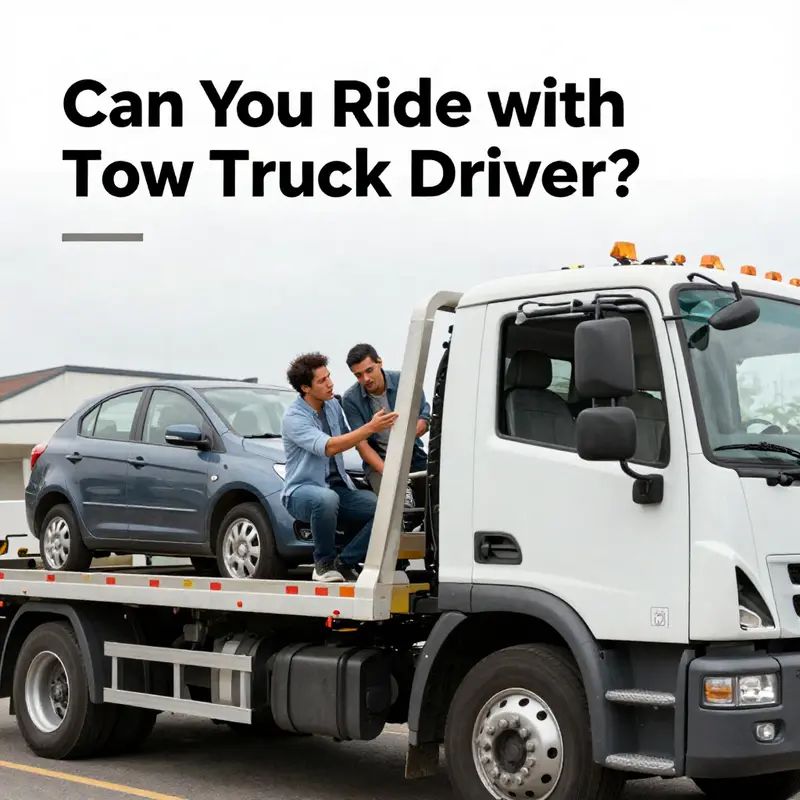
Riding along with a tow truck driver can be a practical choice in certain situations.
This guide outlines when it’s appropriate, how to prepare, and what to expect.
First, confirm the rider policy with the dispatcher before the tow begins. If riding is allowed, evaluate whether your presence adds safety or clarity to the transport; if not, plan to meet the tow at the destination.
When you ride, follow the driver’s directions, wear a seatbelt, and keep conversations concise to avoid distraction.
Bring identifying documents and proof of ownership if required, plus the shop contact details and a plan for where you will meet the vehicle at the destination.
Engage with real-time platform features like live status updates and in-app messaging, which provide an auditable trail for insurance or records.
The ride should be calm, cooperative, and respectful of the professional’s focus on safe driving and proper securing of the load.
Important scenarios: if the vehicle is drivable and safe to transport, riding may be straightforward; if the vehicle is not operable or requires disassembly or special handling, the policy may require meeting the tow at a designated drop-off.
In long-distance tows, rider presence can be more practical, while in busy urban environments the rules can be stricter. For impounded vehicles, local ordinances and paperwork will shape whether passengers are allowed.
Before the tow, ask about restrictions and steps to take if you want to accompany the transport.
In the cab, keep questions brief and related to the route, destination, or documentation.
After the tow, verify that the vehicle was arrived safely and that you have the necessary release paperwork.
By approaching riding as a professional, safety-first decision, you can reduce stress and keep the process transparent for both you and the driver.
For more guidance, consult platform terms of service and local regulations, and consider regional blogs or official roadside-assistance resources for practical tips.
Riding Shotgun on the Road to Recovery: Navigating Legality, Safety, and Realities of Traveling with a Tow Truck Driver
When a breakdown leaves you stranded by the roadside, the question of whether you can ride with the tow truck driver moves from curious hypothetical to practical concern in the span of a single phone call or app notification. The modern landscape of towing—shaped by professional crews, safety standards, and digital matchmaking platforms—has introduced a new layer of expectations about who rides in the cab, who stays put, and how much control a passenger should have over the recovery process. For many readers, this topic is less about a personal preference and more about a balance between safety, legality, and the peace of mind that comes from being involved in the journey from the roadside to the destination. The answer, as often as not, is: it depends on the situation, the operator, and the design of the vehicle itself. It also depends on whether the towing service is legitimate, licensed, and aligned with contemporary safety norms. The broader arc of this discussion follows a path from design constraints and regulatory realities to the practical advice that can keep you and your vehicle safer, even when time, pressure, and a looming deadline tempt you to press for an exception.
At the heart of the question is the reality that tow trucks are specialized machines. They are built for stability, control, and the careful handling of heavy loads, not for passenger comfort or extended journeys with non-essential occupants. The design priorities focus on the load, the winch, the stabilization equipment, and the crew’s ability to maneuver large, unwieldy vehicles on potentially uneven road surfaces. Seats and seat belts, if present at all in the cab, may be limited, and the interior may lack the crash protection features standard in passenger cars. This is not a casual observation about comfort; it is a safety-oriented acknowledgment that the cab of a tow truck serves a different purpose than a family sedan. When the operator is trying to recover a vehicle, secure it, and then transport it safely to a shop or impound lot, the driver’s attention and the vehicle’s stability require a focused, relatively distraction-free environment. Any passenger in the cab can alter weight distribution, obstruct controls, or become a distraction just when the driver needs to concentrate the most.
In legal terms, the question becomes even more nuanced. In many jurisdictions, including the Philippines, riding in the cab of a tow truck is permissible only when the vehicle has been designed to accommodate a passenger and when all occupants are properly secured. The body of law and safety guidance tends to emphasize that professional towing operations are restricted by design, not by intention, to ensure the operator can perform recoveries without compromising the vehicle’s integrity or the safety of others on the road. It is a matter of occupational safety standards that discourage unneeded passengers, especially if the cab lacks proper restraints or if the act of transporting a passenger creates a potential hazard during sudden movements or unpredictable road conditions. The practical reality, as observed by safety professionals and operators alike, is that this is rarely a routine practice in modern professional towing. Many companies have adopted strict policies that prohibit non-essential passengers from riding in the cab unless it is absolutely necessary and all safety measures can be satisfied.
This conservative posture reflects a broader shift in the industry toward minimizing distractions and keeping the driver’s attention anchored on the recovery task. The driver’s job is to secure the vehicle, maintain traction and control, and guide the tow rig safely to the next waypoint. Any deviation from this focus can raise the risk of an accident, especially when the tow truck is navigating tight turns, uneven shoulders, or highway speeds. Even with the best intentions, a passenger may unintentionally interfere with equipment, touch controls, or obscure essential safety features. In a field where milliseconds can influence outcomes, the cost of such interference is taken seriously by operators who manage fleets with standardized procedures and a culture of safety that prioritizes the task over passenger comfort.
Yet the scenario is not entirely binary. For legitimate, licensed tow services that use modern platforms—such as smartphone-based service apps—the question can sometimes tilt toward passenger inclusion. These platforms connect users with drivers who provide road assistance as a daily service, and in many cases, riders may accompany the driver during transport to the destination. The rationale is straightforward: you want to verify the vehicle’s condition, you may need to communicate directly with the driver about the route, or you prefer to be present when the vehicle is dropped off at a repair facility. The same principle can apply to long-distance tows or to situations where the customer plays a supervisory role or requires on-site confirmation that the vehicle is awaiting service at a particular location. In such cases, a rider can be accommodated with the caveat that the operator has the authority to enforce safety protocols and to refuse riding if the conditions do not meet their internal standards for passenger safety.
A crucial insight for anyone considering riding with a tow driver is to approach the matter with transparency and to ask questions in advance. If you are using an app-based service, read the provider’s policy on passengers in the cab. Some operators will explicitly state whether riders are allowed, under what conditions, and what safety precautions must be observed. If you are dealing with a traditional towing company, the best practice is to contact the dispatcher and confirm whether riding is permissible for your specific tow. The dispatcher can explain the company’s policy, the cab’s seating arrangements, and any safety requirements such as seat belts or child restraints, if applicable. In practice, you may discover that the policy is largely driven by the vehicle’s configuration and the nature of the tow you require. For instance, a long haul or a move between cities introduces a different risk calculus than a short tow from the roadside to a nearby shop.
From a practical standpoint, if you do ride along, you should approach the experience with a mindset of cooperation and caution. Keep your seat belt fastened if the cab offers one, and comply with the driver’s directions about where you can sit and how you should move during the drive. Respect the driver’s workspace and avoid touching equipment or controls unless explicitly asked. Avoid engaging in distracting conversations or attempting to direct the route in ways that could complicate the recovery or compromise safety features. The driver is responsible for the operation and safety of the tow rig; your role, when allowed, is to be a calm, observant passenger who can communicate concerns without interrupting the driver’s focus.
The question often returns to the reality of reliability and accountability. If you doubt the safety of riding in the cab, it is prudent to decline and instead arrange an alternate means of transport while your vehicle is being towed. Some customers opt to ride in a separate vehicle behind the tow truck to monitor the route and confirm the arrival time, while others choose to rely on the driver’s detailed communication about the progress and destination. The aim is not to circumvent responsibility but to preserve safety, insurance coverage, and the integrity of the towed vehicle. In situations where a driver must stay focused on the road and the recovery task, the safest stance is to limit occupancy in the cab and rely on the driver’s professional judgment about whether riding is appropriate at that moment.
There is also a practical, technology-driven layer to this conversation. The modern towing ecosystem includes apps and platforms that facilitate communication, tracking, and documentation. These tools can help you stay informed about the tow, the ETA, and the destination without needing to ride in the cab. Where riding would be possible, an app-based framework can provide clear instructions about where to meet, how to authorize the ride, and what documentation might be required at the destination. In many cases, the driver is eager to ensure you feel secure about the transport, and the app can serve as a bridge between customer expectations and professional safety standards. When you consider the total cost and risk, the safer, more reliable approach for most people is to coordinate from a distance or to ride only when the operator confirms it is permitted, safe, and properly supported by safety equipment in the cab.
To illustrate the broader context, it is worth noting how a typical professional tow operation handles related contingencies. Operators dedicated to emergency roadside assistance often emphasize fleet standardization and emergency readiness. The emphasis on standardization helps ensure that each vehicle in the fleet meets consistent safety and operational criteria, reducing the likelihood of unusual configurations that could complicate a ride-along scenario. A well-managed fleet will also have clear guidelines about when a passenger may accompany the driver and how to address special circumstances, such as a need to supervise a critical tow at a remote location or during a night shift. The underlying goal across these practices is to minimize risk while preserving the ability to deliver timely, transparent service. In that sense, the question of riding with a tow truck driver becomes a proxy for a larger conversation about safety culture, professional standards, and accountability in a service that sits at the intersection of mobility, mechanical risk, and human judgment.
For readers particularly concerned with policy and safety, it can be instructive to consult resources from operators who emphasize safety-first principles and fleet readiness. A company that prioritizes standardization in heavy-duty rescue operations, for instance, will typically publish guidelines on how crews manage crew seating, how to secure passengers when necessary, and how to brief customers on what to expect during the tow. The practical takeaway for you is to look for providers that articulate clear do’s and don’ts about riding in the cab, and to favor those that can demonstrate that their policies align with best practices in occupational safety. When you encounter a tow operator that welcomes riders without the necessary safety assurances, you should treat that as a red flag and seek alternatives that place safer operations at the forefront.
As you weigh the option to ride, it is helpful to tie your decision to a few concrete considerations. First, assess the tow’s purpose: is this a short hop to a nearby shop, or a long-distance transport to a repair facility? The longer the journey, the more there is at stake in maintaining a controlled, distraction-free environment. Second, evaluate the cab’s configuration and safety features. Does the vehicle have seat belts for all occupants? Are there clear instructions about where to sit and how to behave? Third, confirm the operator’s policy in advance. If a rider is not welcome, accept the limitation with grace and plan an alternative path that keeps you informed and in control of the timing. Fourth, recognize the role that digital platforms can play. Apps like the ones designed for daily road assistance can streamline the process, providing not just a ride but a transparent record of the tow and a channel for communication that protects both driver and customer.
In closing, the legality and practicality of riding with a tow truck driver rests on a spectrum rather than a single rule. It is shaped by vehicle design, operator policy, and the specific circumstances of the tow. The safest, most responsible approach is to treat riding as a conditional privilege, granted only when safety standards can be fully met, the vehicle is designed to accommodate a passenger, and the operator explicitly confirms that it is allowed. When those conditions are not met, the prudent course is to stay out of the cab and rely on the driver’s expertise, while you participate in the process through clear communication and, if available, digital tracking and updates. This approach aligns with the broader shift in professional towing toward safety-driven workflows, fleet readiness, and customer-centered service that respects both the need for speed and the imperative of safety. For readers who want to explore how fleets prepare for emergencies and standardize their operations, see more on fleet emergency response and standardized procedures in the linked resource that informs many of these best practices: https://santamariatowtruck.com/fleets-emergency-response/. While the exact rules vary by location and operator, the principle remains consistent: safety first, passenger involvement second, and always in alignment with professional standards and regulatory guidance.
If you would like to reference authoritative guidance on occupational safety in such settings, the Philippine Department of Labor and Employment offers guidelines relevant to workplace safety and vehicle operations that can provide additional clarity on this topic. You can review the official DOLE materials at https://www.dole.gov.ph to understand how safety standards shape everyday practice in roadside assistance, vehicle recovery, and related activities. In the end, your best shield as a client is clear communication, careful inquiry, and a readiness to adapt your expectations to the realities of the job, the capabilities of the equipment, and the commitment of the operator to keep everyone safe on the road.
Navigating Towing Hazards: Understanding When It’s Unwise to Ride with a Tow Truck Driver
When considering the question of whether you can ride with a tow truck driver, it is essential to grasp that while many legitimate situations allow for a passenger in the tow truck cab, there are critical circumstances when riding along can present significant safety hazards. The decision to ride with the driver should not be taken lightly, and understanding the various hazards associated with the ride is key to safeguarding yourself and ensuring a safe travel experience. Over the years, professionals in the towing industry have continuously stressed that, above all, your safety needs to be the primary consideration. In many cases, a legitimate and regulated towing service will adhere to rigorous safety standards. Yet, if any red flags appear, such as improperly secured loads or unsafe operational practices, it is often advisable not to ride along. This chapter explores in detail when riding with a tow truck driver may be unsafe, how different driving conditions and loading issues can compound risks, and what precautionary steps you might consider during these challenging situations.
A primary factor warranting caution is the issue of improperly secured loads. Tow trucks are tasked with transporting vehicles and, in certain instances, other heavy or oversized equipment. When a vehicle or load is not adequately secured, the potential for sudden shifts or dislodging becomes a major hazard. Even a brief jolt from road irregularities or a quick maneuver can lead to items separating from their moorings, resulting in injury to anyone in the cab. The importance of ensuring that a load has been fastened correctly cannot be overstated. Technicians should meticulously verify that all safety chains, straps, and braces are correctly positioned to prevent any unwarranted movement in transit. If you notice any unusual activity, rattling noises, or signs that the load might be off balance, it is advisable to request that you remain outside the vehicle rather than risk injury by riding along with a tow truck driver.
Another significant safety concern is driver impairment. Professional drivers are expected to be alert, well-rested, and able to perform their duties without distractions. However, human limitations and unforeseen circumstances mean that fatigue or lapse in concentration can sometimes occur. In particular, if the driver has been on the road for extended hours, or if there are indicators that they might be operating under the influence of alcohol or other substances, the risk to both the driver and any passenger increases dramatically. It is essential to pay attention to signs of drowsiness or erratic driving behavior. If you ever feel uneasy or observe that the driver’s reactions are delayed or compromised, the safest decision might be to decline riding in the cab and instead arrange alternative transportation. The key is to trust your instincts and understand that it is always better to err on the side of caution than to risk a dangerous situation when time-sensitive decisions have to be made on the fly.
Beyond the physical security of the load and the condition of the driver, the operational context itself can be fraught with hazards. Consider the scenario when a tow truck is involved in an emergency operation. Whether it is navigating a busy highway during rush hour, addressing a breakdown in heavy traffic, or handling unforeseen mechanical failures, emergency maneuvers can place both the driver and any riding passenger at risk. In such circumstances, a tow truck driver might need to engage dynamic, last-minute decisions that require rapid acceleration, abrupt braking, or sudden steering maneuvers. When a vehicle is in emergency mode, even a slight miscalculation can lead to accidents that may have severe repercussions. While experienced drivers are generally adept at handling these situations, the inherently unpredictable nature of emergency response means that riding along should be considered only when absolutely necessary and when you are confident in the driver’s capacity to manage the crisis safely.
The risks associated with towing become even more pronounced when the vehicle being towed is significantly heavier or larger than standard automobiles. Tow trucks often deal with oversized loads, including semi-trucks, construction vehicles, or even equipment used for industrial applications. In these cases, the dynamics of the towing process can change drastically. Large loads require specialized equipment and handling, and the physical forces at play can easily destabilize the tow truck if the weight distribution is not ideal. The inertia of heavy objects, combined with the momentum of a moving vehicle, may lead to sudden shifts that are hard to compensate for during transit. The possibility of rollover events cannot be dismissed when handling such large loads, and the potential outcomes include not only damage to physical property but also severe bodily harm to any passenger inside the cab. Even minor shifts can result in jarring movements that, in the worst-case scenario, could cause serious injuries. In such instances, it is advisable to remain outside the cab, unless there is a compelling reason that necessitates being present in order to oversee the situation upon arrival at the destination.
Another area that demands rigorous attention is when the vehicle being towed is already in a state of hazardous condition. Damaged vehicles, particularly those showing signs of structural instability, fuel leakage, or electrical faults, can pose an acute threat to the safety of all occupants. These hazards are not confined to the possibility of mechanical failure alone; the presence of hazardous substances, such as leaking fuel, introduces the risk of fire or explosion. In scenarios where the vehicle bears signs of fire damage, electrical arcing, or structural damage from previous accidents, the implications for the safety of the ride become even graver. For example, a compromised frame or exposed wires can contribute to accidental short circuits or lead to uncontrollable energy surges that might provoke further hazards during transport. It is crucial to assess the condition of the towed vehicle carefully, and if there is any hint of danger, the best course of action is to avoid riding along until professionals have addressed the underlying issues and recalibrated the load for safer transportation.
In situations that call for riding with a tow truck driver, a variety of precautions are advised to minimize risk. Before agreeing to be transported, it is important to engage in an open dialogue with the driver or service provider regarding the specifics of the tow. Ask clear questions about how the vehicle is secured, how long the journey might be, and the exact protocols they follow in emergency conditions. When dealing with modern towing services, a preliminary review of available safety guidelines is wise. Checking resources such as recent safety notices or official recommendations can provide additional peace of mind. For instance, certain organizations publish detailed safety protocols and operational guidelines that can be used as a benchmark for evaluating the soundness of any towing operation. Understanding these guidelines can help passengers decide whether the environment within the tow truck is safe enough to warrant riding along.
A further aspect to consider is the overall professionalism and regulatory compliance of the towing service. In many established services, including those that integrate advanced technology platforms for dispatch and tracking, systems are designed with passenger safety in mind. These platforms often include features for tracking the vehicle’s progress, real-time monitoring of driving behaviors, and even emergency response buttons that passengers can access if they feel unsafe during the ride. Nevertheless, while such features add a layer of reassurance, they do not completely eliminate the risks inherent in situations where significant safety compromises are present. When drivers are clearly operating within regulated environments and adhering to industry guidelines, the probability of encountering a dangerous situation drops considerably. Conversely, unlicensed or illicit towing operations raise the stakes dramatically. In such cases, the absence of regulatory oversight may lead to unsafe practices such as improper load securing, disregarded safety protocols, or even deliberate attempts to cut corners, all of which heighten the risks to passengers. In these contexts, it is imperative to be vigilant and consider alternative strategies rather than riding along with the truck.
It is also important to reflect on the fact that passenger safety is often enhanced when clear communication channels exist between the tow truck driver and the person in need of assistance. If you feel compelled to ride, ensure that you have the ability to voice your concerns during the ride. Effective communication can sometimes preempt potential dangers by allowing the driver to adjust the driving style or take preventive measures if any instability in the load or road conditions is detected. Moreover, being able to observe the driver’s focus can provide reassurance or justify your concerns. For example, if the driver seems distracted or displays patterns that may indicate stress or impairment, these are additional signals to consider disembarking or demanding alternative arrangements. The awareness and responsiveness of both the passenger and the driver are crucial in maintaining a safe environment. When safety becomes a shared responsibility, the likelihood of successfully avoiding hazardous situations increases considerably.
There is an inherent tension between the convenience offered by modern towing applications and the reality of physical safety. Various platforms have streamlined the process by allowing users to connect with professional drivers quickly and efficiently. While these apps often include rigorous security measures and customer service protocols, the onus to remain aware of the inherent dangers remains with the passenger. Some innovative solutions even offer the ability to share your real-time ride status with trusted contacts, providing an additional layer of safety oversight. However, technology cannot substitute for diligent personal judgment. When factors such as a compromised load, an impaired driver, or a hazardous operational scenario come into play, the technological interface can only offer limited answers. Ultimately, the decision must be based on your assessment of the situation and the potential risks associated with riding inside the tow truck.
In addition to personal vigilance, it is equally important to be informed about the signs that indicate an unsafe towing operation. These signs include visible damage to the towing equipment, unusual noises emanating from the tow truck during transit, or a heightened sense of urgency that might indicate that the driver is reacting to an unforeseen event. Websites dedicated to educating the public on towing safety, such as those that help you to spot illegal towing key signs, provide valuable insights into the operational standards that differentiate safe practices from hazardous ones. A well-informed passenger can recognize early indicators of trouble and act before the situation worsens.
Furthermore, consider that environmental conditions often contribute to increased risk levels during towing operations. Inclement weather, for instance, dramatically reduces traction and can exacerbate the instability of an improperly secured load. Rain, snow, or fog not only impair visibility but also the mechanical performance of both the towing vehicle and the towed equipment. The combination of adverse weather conditions and compromised load security can result in situations where even the most experienced driver may struggle to maintain control. In these contexts, riding with a tow truck driver does not seem like a prudent option. Instead, waiting until conditions improve or arranging a different method of transportation may be a significantly safer choice. The interplay between environmental factors and operational safety is a complex one, underlining the importance of a cautious, well-evaluated approach when it comes to riding with a tow truck driver.
Ultimately, the central theme of this discussion is that safety must never be compromised. It is essential to balance the convenience of riding along with the potential risks involved in the tow truck environment. Whether it is due to the physical dynamics of the load, the state of the driver, or the external context of emergency operations or hazardous conditions, each scenario demands a thoughtful approach and a willingness to forego convenience for safety. The decision to ride should be informed by firsthand observations, recent safety updates, and any available guidance on standard operating procedures related to towing. An awareness of both the benefits of riding along and the potential hazards puts you in a stronger position to make the best choice for your well-being.
It should also be noted that laws and regulatory frameworks governing towing services vary by jurisdiction. Some regions have stringent rules about when passengers are allowed to ride on a tow truck, while others may be more lax in their approach. It is advisable to familiarize yourself with the local guidelines wherever you reside or travel. In some areas, legal codes may even require the driver to secure a passenger seat or enforce strict limits on who can be in the cab during towing operations. By understanding the legal context and regulatory standards in your area, you can better evaluate the safety of riding with a tow truck driver in any given situation.
In summary, riding with a tow truck driver is a situation that involves numerous variables, each of which has the potential to affect your safety. Whether it is an improperly secured load, driver impairment, emergency operations requiring swift maneuvers, the challenges posed by heavy or unstable loads, or the inherent dangers of towing a vehicle in hazardous condition, the overall message is clear: when any one of these risk factors is present, it is wise to avoid riding along. Each of these potential issues calls for cautious evaluation and, when necessary, a decision based on personal safety over convenience. Whenever in doubt, it is preferable to step aside and allow the professional to handle the situation from the driver’s seat, while you seek alternate arrangements for safe travel.
For those interested in an even deeper dive into the topic of towing safety, there are several regulations and standardized practices laid out by reputable organizations that can serve as reliable resources. Being informed not only helps in immediate decision-making but also builds a framework for understanding the responsibilities associated with being a passenger in such scenarios. More comprehensive safety resources can be accessed through trusted guidelines that outline secure and responsible towing practices. Furthermore, it is imperative to remain proactive about safety and use every tool at your disposal to ensure that each towing encounter meets the highest standards of caution and professionalism.
For additional information on towing and vehicle safety guidelines, you might consider reviewing the detailed recommendations published by the National Highway Traffic Safety Administration (NHTSA) at their Towing Safety Guidelines page: https://www.nhtsa.gov/vehicle-safety/towing-and-securing-vehicles.
Navigating Safety and Communication: The Essential Guide to Riding Along with a Tow Truck Driver
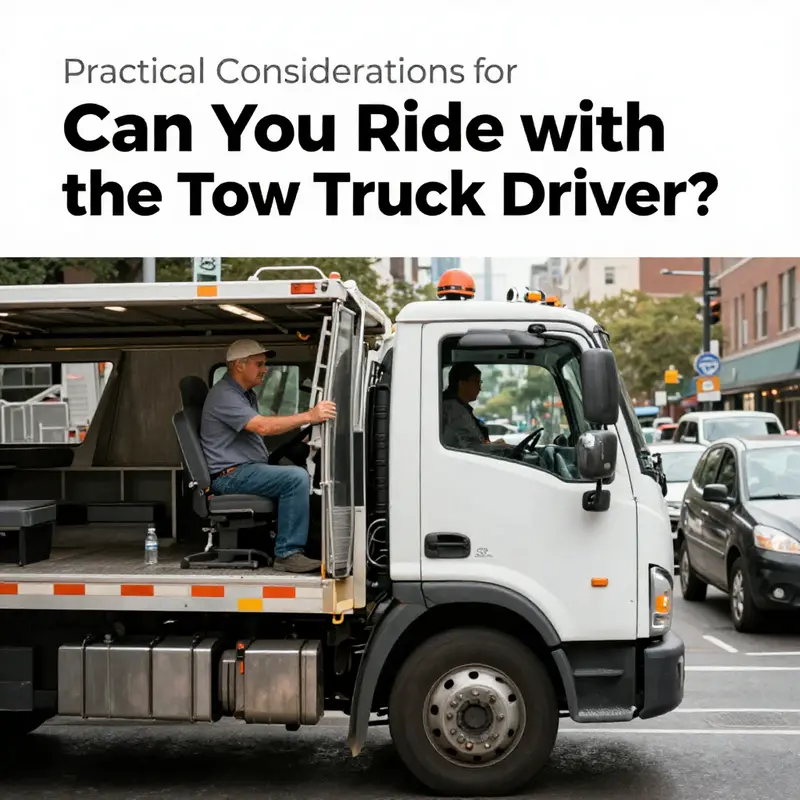
Riding along with a tow truck driver is more than just a matter of convenience—it is a partnership built on trust, clear communication, and a commitment to safety at every turn. When circumstances require a tow, whether it be for a routine recovery or a long-distance transportation challenge, the decision to accompany the driver is one that should be made after considering several important factors. Careful preparation, an understanding of operational protocols, and a respectful awareness of the inherent risks can transform what might initially seem like an unsettling experience into one that is reassuring and efficient.
Before setting out on a tow mission, it is critical to understand the role of the tow truck driver. This individual not only manages the logistical complexities of moving a vehicle but also becomes a guide for the passenger who is often worried about the welfare of their property. The responsibility for safely transporting both the vehicle and the person who may be riding along requires a level of professionalism and adherence to safety protocols that has been further developed in recent years. Traditionally, many towing services operated with little transparency, but the introduction of modern service platforms has increased accountability and provided customers with the option to accompany the driver. This option is particularly beneficial when one needs to monitor the condition of the vehicle, check that all personal belongings remain secure, or simply have the peace of mind that comes from being present during a potentially stressful situation.
It is imperative, however, that anyone riding with a tow truck driver understands the specific requirements and precautions that are essential for a safe journey. One of the foremost considerations is the need to wear a seatbelt at all times. Although it might seem like a minor detail, the simple act of fastening a seatbelt can prove vital in the event of sudden stops or unexpected sharp turns. Tow trucks are significantly larger than regular passenger vehicles, and their towing operations require different handling methods which include wide turns and extended braking distances. The larger size and weight of these vehicles mean that even routine maneuvers can subject passengers to abrupt and sometimes jarring movements. Therefore, ensuring that all safety belts are engaged is the first critical step in preparing for the experience.
In addition to the physical measures, being educated about the nature of the tow truck itself is equally important. Tow trucks often differ in design and operation from everyday cars, which can create unfamiliar sensations for passengers. Understanding that the truck may need to negotiate corners more slowly, or that it may require additional stopping distance due to its mass, can help set expectations for the ride. This knowledge not only eases anxiety, but it also fosters a cooperative mindset where the passenger is not merely a bystander but an informed participant. Being aware of how the vehicle operates allows passengers to remain calm even when sudden maneuvers become necessary, and it encourages a sense of shared responsibility between the driver and the accompanying individual.
Central to the entire process is communication. Clear and consistent dialogue between the passenger and the tow truck driver can mitigate many of the dangers associated with a towing operation. Before the journey begins, it is advisable to ask the driver about the planned route, estimated travel time, and any potential delays that may be foreseen because of traffic or weather conditions. Knowing what to expect during the drive contributes to a lower stress environment, and it also helps the passenger feel engaged rather than overwhelmed. Open communication allows the passenger to voice any concerns about the handling of the truck or the safety of the vehicle being towed. Furthermore, discussing details such as the method of load securing and the choice of route can preempt any misunderstandings that might arise during the tow.
Apart from verbal communication, maintaining focus and alertness during the ride is equally valuable. It is not uncommon for a passenger to feel tempted to rely solely on the driver’s expertise once the journey is underway. However, staying engaged is crucial. By remaining observant and attentive, the accompanying passenger can help monitor the situation, quickly spot any unusual occurrences, and even assist in minor aspects such as keeping an eye on an open door or loose items in the cab. This heightened state of vigilance not only provides an additional layer of safety but also fosters a sense of partnership between the driver and the passenger. It is this kind of mutual cooperation that often makes the difference between a smooth, successfully managed towing operation and one fraught with unnecessary risks.
The experience of riding with a tow truck driver does become particularly valuable in long-distance tows. When a journey extends over many miles, the chance for minor issues to escalate increases. Extended trips mean that there is more time for unexpected weather to develop, for road conditions to change, or for mechanical problems to arise. In such cases, being present in the cabin allows the vehicle owner to communicate real-time concerns and confirm that safety procedures are being adhered to throughout the journey. It also provides an opportunity for the passenger to offer immediate feedback, such as pointing out a detail observed on the vehicle or reminding the driver about a specific precaution if the situation shifts. The importance of this hands-on collaboration cannot be overstated, particularly when navigating conditions that require a calm and deliberate approach to risk management.
However, it is essential to recognize that the opportunity to ride along is not universal. In some contexts, such as when dealing with unlicensed operators or services known for unsafe practices, the risk far outweighs the benefit. Illegal or unauthorized towing operations often disregard basic safety protocols and may jeopardize the well-being of both the driver and the passenger. It is important to remain vigilant and informed about who is providing the service. For those seeking additional guidance and to ensure that they are not falling prey to dubious practices, resources that help one spot illegal towing key signs to know can be particularly useful. Such resources offer insights into what to look for and provide advice on how to differentiate between reputable and questionable tow services. Knowledge is the best defense against becoming involved in potentially hazardous situations, and verifying that one’s chosen operator operates within legal and ethical boundaries is not something to be taken lightly.
Modern technology has played a transformative role in the way towing services are delivered. Now, customers can often book the assistance they need through user-friendly mobile applications that streamline the process from request to resolution. These platforms not only facilitate quicker response times but also empower users with the information they need to track the tow truck in real time. This level of transparency helps to alleviate some of the anxieties associated with being transported in a large, unfamiliar vehicle. Technology ensures that the driver and passenger remain connected, allowing for continuous updates about the vehicle’s status, the progression of the tow, and any adjustments that might be needed during the journey. In this way, modern towing services have bolstered traditional practices by integrating advanced communication protocols and safety measures. Such innovations serve to underline the importance of an informed and active passenger during the towing process.
During the actual towing operation, passengers have a critical role to play—not only in observing the journey but also in maintaining a level of readiness to respond if necessary. Being alert does not mean that the passenger should try to take control away from the professional; rather, it involves a cooperative approach where both the driver and the passenger stay attuned to potential hazards. Deliberate focus on the ride can include avoiding distractions such as loud music or excessive phone usage. Instead, the passenger might choose to observe the environment outside the vehicle, noting if there are any unusual driving behaviors or any signs that could indicate an issue with load security. For instance, if an item within the truck seems loose or if the driver appears agitated by an unforeseen road condition, mentioning these observations could prompt immediate corrective action. This proactive attitude ensures that the journey proceeds smoothly and safely.
Unexpected changes can sometimes disrupt even the best-laid plans during a tow. Traffic congestion, sudden shifts in weather conditions, or an unexpected mechanical hiccup in the tow truck can all lead to deviations from the anticipated route. In these instances, the importance of flexibility and resilience comes to the forefront. A clear conversation between the passenger and the driver about how to adapt to these changes is vital. Rather than viewing such disruptions as failures, both parties can regard them as challenges that require teamwork and prompt decision-making. This collaborative spirit not only improves the odds of surmounting the obstacle but also deepens the trust between those involved in the towing process. Recognizing that circumstances can change internally and externally, the willingness to remain calm and adjust plans accordingly is a hallmark of a safe and responsible towing operation.
Beyond the mechanics of the tow itself, riding with a tow truck driver offers an opportunity for personal empowerment. For many, the act of accompanying the driver provides a sense of control over an otherwise disconcerting situation. By being present, a vehicle owner transforms from a passive observer into an active participant in the management of their own property. This engagement can alleviate anxiety, especially when the well-being of a prized vehicle is at stake. Knowing that one can witness firsthand the care with which the vehicle is handled can build confidence in the towing process. Furthermore, the interaction often breeds a mutual understanding between the driver and the passenger, creating an environment of respect and shared responsibility throughout the ordeal. In many cases, this sense of empowerment can translate into a more measured and composed reaction to any challenges that might arise during the journey.
Of course, riding along is not without its unique challenges. The unconventional seating arrangement typical in tow trucks, as well as the heightened awareness required to manage both personal and vehicular safety, can strain even the most prepared passenger. Discomfort may arise both physically, due to the different ergonomics, and mentally, from the heightened state of alertness necessary in this setting. To mitigate these challenges, it is wise to prepare both mentally and physically before embarking on the journey. Simple measures such as dressing in comfortable clothing, keeping emergency contact information on hand, and ensuring that any personal concerns are addressed well in advance can all contribute to a smoother experience. In such scenarios, the benefits of riding with the driver, such as immediate oversight and the opportunity for clarifying instructions, outweigh the inconveniences that might come with the experience.
Integrating best practices into one’s mindset is the final piece of the puzzle when it comes to riding safely with a tow truck driver. Being proactive in asking questions about the route or seeking clarification on how certain maneuvers will be handled contributes significantly to creating a secure environment. For example, if the tow truck has to take an unexpected detour or if the driver needs assistance with securing the load, a well-informed passenger is better positioned to provide the necessary support. This shared responsibility can extend to discussing speed, the optimal time for making stops, and even the possibility of refueling in a safe location if the journey is unexpectedly prolonged. With each interaction, the boundaries between driver and passenger blur, leading to a mutual sense of responsibility that enhances overall safety. It is in these moments that both parties can appreciate the value of clear communication and active participation, ultimately ensuring that the vehicle reaches its destination in optimal condition.
In contemplating whether to ride with a tow truck driver, one must weigh a host of factors that interlace safety, operational demands, and personal comfort. The experience is multifaceted, resting on a foundation of simple yet fundamental practices—fastening seatbelts, maintaining constant communication, and remaining alert throughout the journey. At its core, the decision to accompany the driver is not a mere luxury but a necessary aspect of a responsible approach to vehicle recovery. Every aspect of the journey, from the initial point of contact with the towing service to the final stages of the trip, requires thoughtful consideration. It is the careful combination of these factors that underpins the entire towing operation, lending an air of professionalism and dependability that can greatly reduce the stress associated with an emergency vehicle recovery.
While the prospect of riding with a tow truck driver may initially evoke feelings of discomfort or anxiety, the reality is that this practice has evolved into a critical element of modern towing procedures. With the advent of enhanced mobile apps and real-time tracking, riders can stay informed about every facet of the operation. This level of transparency not only builds trust but also ensures that any deviation from established protocols is immediately addressed. A proactive approach—anchored in clear communication and complemented by modern technology—empowers the passenger to be more than just a passenger. It transforms the entire tow into a collaborative effort where the safety and security of the vehicle are managed through shared vigilance and mutual respect.
Embracing such a collaborative model means recognizing that the benefits of riding with a tow truck driver far outweigh the risks, provided that the necessary safety measures are rigorously followed. From the digital connectivity that modern platforms provide to the timeless value of adhering to basic safety principles, every element of the process is designed to deliver a reliable and secure experience. It is this nuanced understanding that allows individuals to make informed choices, ensuring that their belongings are cared for with the utmost professionalism. In practice, embracing this partnership and engaging actively in the towing process not only reinforces individual safety but also contributes to the broader standards of operational excellence in vehicle recovery.
For those who may still harbor reservations about riding with a tow truck driver, it is important to remember that knowledge and preparation are the best tools in alleviating any apprehensions. By taking the time to understand the mechanics of tow trucks, the importance of following established safety protocols, and the value of maintaining an open line of communication, individuals can transform a potentially daunting experience into one of empowerment and assurance. Each aspect of the journey—from the moment the tow truck arrives to the final destination—can be viewed as an opportunity to engage with professionals who have honed their skills through years of experience. This collaborative mindset turns the tow truck ride into a shared endeavor where both driver and passenger work in tandem to navigate any obstacle that might arise on the road.
For further information on safe practices and guidelines directly related to vehicle towing operations, readers are encouraged to refer to the comprehensive safety recommendations available from the National Highway Traffic Safety Administration at NHTSA. By integrating the wisdom of seasoned professionals with the technological advancements of today’s mobile services, riding along with a tow truck driver can be both a safe and empowering experience.
Ultimately, riding with a tow truck driver is a journey that calls for preparedness, cooperation, and an unwavering commitment to safety. Through consistent practices such as buckling up, maintaining vigilant awareness of one’s environment, and communicating clearly with the driver, the experience can not only be managed effectively but can also foster a sense of personal involvement that brings a remarkable reassurance during stressful times. In an age where technology meets traditional service, being an active and informed participant in the towing process is a strategy that promotes both immediate safety and long-term satisfaction. Whether it is a routine recovery or a long-distance tow, the vital message remains the same: preparedness, clear communication, and mutual respect are the keys to navigating the road safely.
Through these measures, the experience of riding with a tow truck driver transforms from a moment of vulnerability into an affirming act of proactive safety management, ensuring that every journey is guided by knowledge, trust, and a shared commitment to excellence.
Final thoughts
Choosing to ride with a tow truck driver can enhance the experience of dealing with unexpected roadside situations, but it’s essential to be mindful of the circumstances. By understanding the insights shared in this article, drivers, property managers, and service providers can make informed decisions that prioritize safety and legality. As modern assistance apps continue to redefine how services are rendered, embracing this knowledge will enable better communication and ensure proper handling during towing operations. Always evaluate each situation, use modern resources wisely, and know your rights when on the road.