
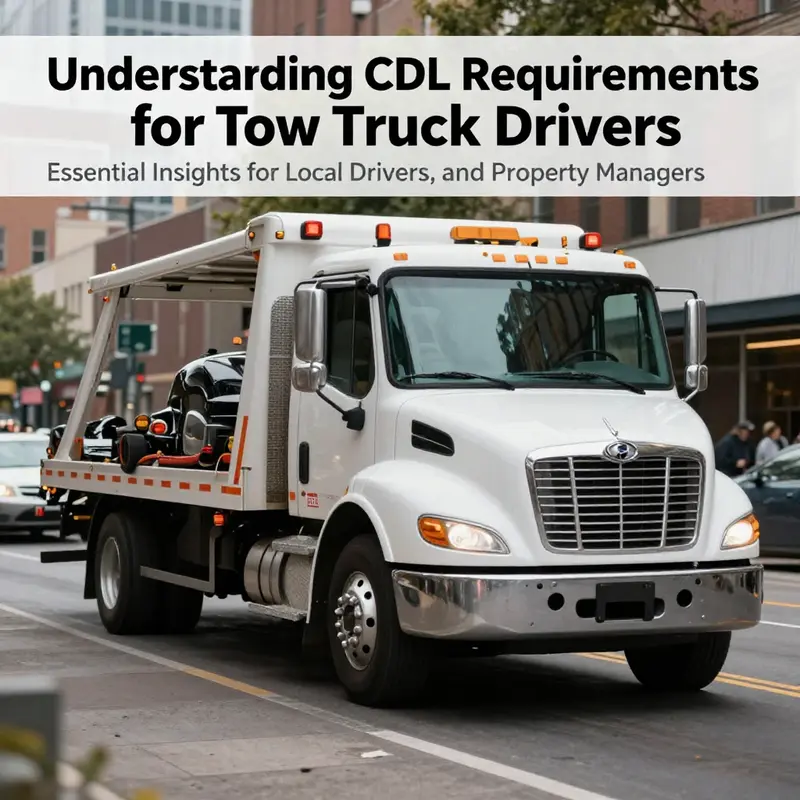
For those who navigate the roads frequently—whether as local drivers, auto repair professionals, or property managers—understanding the requirements to operate a tow truck is crucial. The necessity of a Commercial Driver’s License (CDL) for tow truck operations hinges on vehicle weight and its intended use. This knowledge ensures compliance with legal standards and enhances safety for drivers and the public alike. As we dive into this topic, we will unravel the intricacies of CDL requirements, the implications for towing operations, and how to navigate state regulations, ensuring that all stakeholders have a clear path to legal and safe towing practices.
Do I Need a CDL to Tow a Truck? A Closer Look at Licensing, Weight, and the Road Ahead
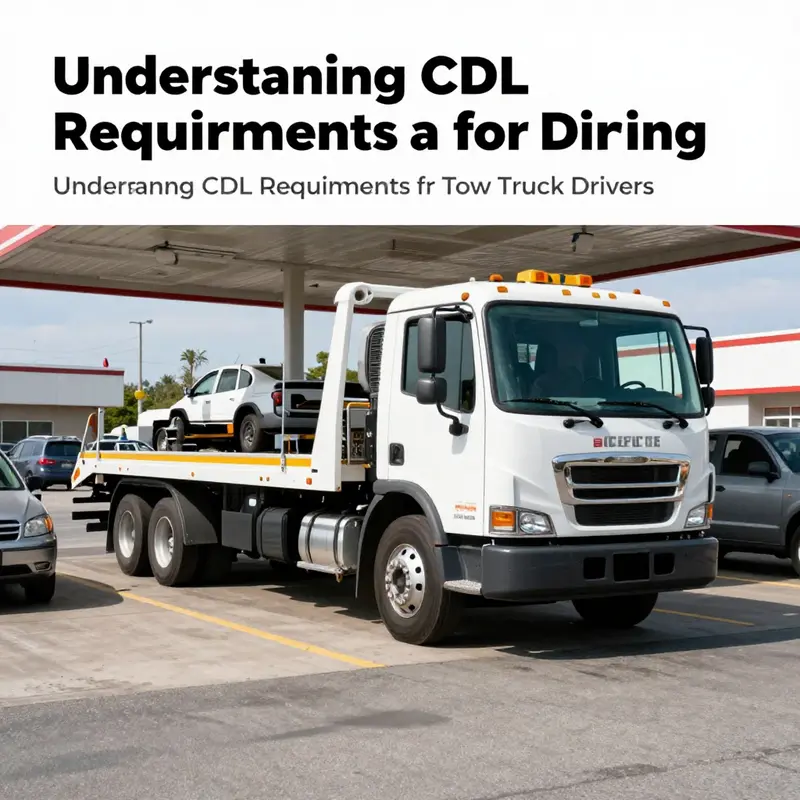
When a shop talk in a towing yard turns to the question of licensing, the truth is rarely as simple as a single line on a checklist. Do you need a CDL to drive a tow truck? The short answer is sometimes, often, but not always in the same way for every job. The longer answer rests on how heavy the vehicle is, how it operates, and what it might be carrying as it makes its rounds to roadside recoveries, fleet hoists, or emergency scenes. In the United States, the rules come from federal guidelines designed to keep commercial driving safe, predictable, and accountable. They are then adapted by states, sometimes with subtle variations, and they apply not only to the person behind the wheel but to the vehicle itself and the tasks it performs. For a tow operator, understanding these rules is not just about a license level. It is about the confidence to take an assignment, the ability to train other drivers, and the readiness to weather regulatory inspections without friction or delay.
At the heart of CDL requirements is the vehicle’s Gross Vehicle Weight Rating, or GVWR. This is a calculated figure that reflects the maximum weight the tow truck is designed to carry, including the vehicle’s own weight and the weight of any cargo, fuel, and equipment on board. When the GVWR sits at 26,001 pounds or more, the tow truck itself generally becomes a commercial motor vehicle under federal criteria, and a CDL becomes the default expectation for operation. It is a threshold that appears simple but has far-reaching consequences. For many towing operations, that threshold is crossed only when the truck is fully loaded or when the equipment used to recover or transport vehicles adds enough mass to push the total beyond the limit. Yet the threshold is not the sole determinant. The way the truck is built to haul, the presence of hazardous materials, and even the number of passengers carried can tilt the balance toward or away from requiring a CDL.
The weight-based rule is complemented by another practical yardstick: the combination of the tow truck and any towed vehicle. If a lighter tow truck pulls a heavier towed vehicle, the combined weight can exceed the 26,000-pound line even when the tow truck’s GVWR sits below it. That is a common scenario in the field: a midsize recovery vehicle dealing with a subcompact car, or a larger unit pulling a larger trailer. In such cases, a CDL may be necessary for the operation, not because the tow truck alone is over the threshold, but because the total load in motion crosses the critical boundary. This is a subtle but essential distinction for operators who routinely switch between light-duty recoveries, fleet towing, and heavier recovery missions. It also means that a driver who operates a small winching truck for routine on-scene work may unintentionally enter CDL territory if the job entails towing a vehicle that, in combination with the truck, pushes the total weight past the limit.
Beyond weight, hazardous materials introduce a separate, clear driver’s license requirement. If the tow operation involves transporting materials that require placarding due to their hazardous nature, a CDL becomes mandatory regardless of the vehicle’s GVWR. HazMat endorsements are a specific facet of CDL practice, and they carry their own set of tests and ongoing requirements, including background checks and security considerations. The logic is straightforward: when a tow truck is used to move dangerous goods, the potential risk to the public is higher, and the licensing system reflects that risk by imposing stricter qualifications for the driver and the vehicle. This same principle applies if the vehicle is designed to carry more than 15 passengers, including the driver. A tow truck configured as a passenger transport vehicle or used in operations that involve moving people in addition to hardware would also require appropriate CDL provisions.
Between the scale of weight and the nature of the load lies another practical rule: when a tow truck with a GVWR under 26,001 pounds is towing another vehicle, the combined gross weight can still trigger CDL requirements. This nuance often appears in the field when a light or medium-duty tow truck is tasked with moving a larger towed vehicle, such as a small commercial truck, a van, or a heavy SUV. If the sum of the tow truck’s weight plus the towed vehicle exceeds 26,000 pounds, the operator could be expected to hold a CDL appropriate to the configuration. The reality is that operators, fleet managers, and regulators often use the phrase “combined weight” to describe what the truck is actually doing on the road. The practical takeaway is this: do not assume that a vehicle under the weight threshold is automatically exempt from CDL rules if the mission will involve towing or if the trailer or towed load crosses the weight boundary when attached.
Endorsements are a further layer of specificity that can influence what license is required and for what tasks. The industry commonly encounters several endorsements when dealing with tow work, each keyed to a type of vehicle or operation. The N endorsement covers tank vehicles, a niche that might apply in some specialized recovery operations where the equipment or liquids are part of the tow process. The B endorsement, sometimes described in terms of smaller combinations, becomes relevant when the vehicle’s GVWR is under 26,001 pounds but it pulls a trailer with a GVWR over 10,000 pounds. This scenario is more common in heavy recovery setups where a smaller tow truck hauls a markedly heavier trailer or platform. The S endorsement, sometimes associated with straight trucks and certain recovery gear configurations, can come into play when the equipment on a tow unit includes heavy-duty winches or other specialized recovery apparatus. Each endorsement adds testing, qualification, and sometimes employer-supplied training requirements, emphasizing that endorsements are about safety and capability, not just paperwork.
It is essential to appreciate that licensing is not a universal monolith enforced identically across the United States. States implement federal guidelines while imbuing them with local flavor. Some jurisdictions may require a CDL for tow trucks even when the federal standard would allow operation without one, particularly if the service is classified as commercial towing or if the operator’s duties regularly involve transporting passengers, hazardous materials, or specialized equipment. This is where the practical value of checking your own state’s DMV comes into play. A driver who works across county lines or serves as part of a fleet that covers multiple jurisdictions must stay current on both the federal baseline and the state-specific rules. The DMV website is usually the best first stop for a precise determination. While federal guidance offers a framework, the exact license class, the needed endorsements, and any state-mandated tests or training can differ from one state to the next.
For many operators, the question is not only about what license they hold today but what license would be required for a typical week of work. A fleet that handles a wide range of incidents—from light vehicle recoveries to heavier, more complex extrications—will often opt for drivers with the appropriate CDL classification that covers the entire range of tasks the fleet performs. This approach minimizes the risk of noncompliance on the road and reduces the likelihood of last-minute licensing hurdles when a job requires a heavier configuration or a different endorsement. It also simplifies onboarding and training for new staff, because the licensing path becomes a clear, predictable part of the operator’s professional profile rather than a case-by-case calculation that can drift into gray areas.
The practical implications of these licensing rules extend to training, background checks, and ongoing compliance programs within a towing operation. In a world where safety and liability converge, a well-informed operator understands not only the letter of the law but the rationale behind it. The weight thresholds reflect the physics of stopping power, vehicle stability, and the risk that heavy loads pose to other drivers and to the tow crew itself. HazMat rules echo the reality that some materials require stricter handling, routing, and emergency response planning. Passenger limits tie into the broader responsibility of ensuring that everyone on the roadside—civilian motorists and crew members alike—faces the smallest possible risk in an unpredictable event. Endorsements, meanwhile, signal a measured commitment to competence, ensuring that a driver can manage specific configurations and specialized equipment safely.
A towing operation cannot thrive on assumptions about license levels. Instead, it should be grounded in a documented policy that coordinates with state regulations and with federal guidelines. This policy should clearly outline the license class required for each line of work, the endorsements that may be needed, and the procedures for verifying current credentials before a job begins. The policy should also address how drivers are trained for combinations that blur the line between standard tow work and heavier recovery operations. The goal is not merely compliance but reliability: a fleet that can deploy the right driver with the right license for every call, with the confidence that legal requirements have been met and safety standards are in place.
In thinking through these requirements, many operators find that a deeper dive into the broader ecosystem of standards in heavy-duty recovery can be helpful. For a deeper dive into how licensing interacts with high-impact recovery work, see Standardization in Heavy-Duty Rescue Operations. That resource helps illuminate the kinds of consistency and training that elevate safety and efficiency in demanding environments. It is not a substitute for the precise rules in your state, but it offers a practical frame for understanding how licensing, equipment, and procedures fit together in real-world tow operations. This interconnected view—weight, load, endorsements, state variation, and training—creates a robust foundation for any operator aiming to run a compliant, professional service.
In practice, the question of whether you need a CDL to drive a tow truck is answered by looking at three things in combination: the truck’s GVWR, the towed load, and the specific operations you perform. The weight threshold acts as the first gatekeeper, while the cargo or towed weight and the number of passengers act as supplementary gates. HazMat considerations and endorsements add further layers of gatekeeping that can change the required license class or introduction of specialized testing. The state rules complete the picture, ensuring that even if federal guidelines would allow a given operation, local regulations may impose stricter requirements. This layered approach to licensing is not a burden meant to slow the industry; it is a framework designed to protect drivers, other road users, and the people and property that tow operators rely on when every mile counts.
If you are forming a fleet, the licensing plan can become a cornerstone of your operating model. By designing job assignments around verified license classes and endorsements, you reduce the likelihood of last-minute payroll or dispatch disruptions caused by credential gaps. You also create a training path that aligns with the most common recovery scenarios your fleet sees, ensuring operators can step into the job with confidence instead of facing a scramble to obtain missing endorsements or to upgrade a license mid-life. This proactive approach extends to maintenance of records and the periodic revalidation of credentials, so drivers remain compliant as rules evolve and as individuals’ driving histories mature. A culture of clear licensing practice contributes to safer operations, more predictable response times, and a stronger reputation among customers and regulators alike.
For operators who work across jurisdictions or who want to be prepared for a broader range of assignments, the implications are also economic. Higher licensing levels may open more opportunities, enabling a fleet to bid on contracts that require heavier roadside interventions or more complex rescue operations. Conversely, the lack of appropriate licensing can limit a company’s scope, constrain the types of work it can perform, and lead to penalties in the event of an inspection. The financial considerations intersect with risk management: ensuring the right driver with the right license reduces the likelihood of accidents, insurance claims, and regulatory penalties. It also signals to customers a commitment to professionalism and safety—a signal that can translate into trust, repeat business, and a more resilient operation overall.
Ultimately, the licensing question is not a singular decision but a framework that aligns vehicle capabilities, job requirements, and regulatory expectations. It invites the operator to map the typical missions of the fleet, to evaluate the equipment and configurations in use, and to anticipate the kinds of loads that frequent the road. It invites the driver to pursue the education and testing that will make them not just compliant but capable in high-stakes environments. And it invites regulators and industry commentators to see a towing industry that prioritizes safety, clarity, and accountability as strongly as it prioritizes speed and efficiency on the highway. When viewed through this lens, the CDL decision becomes less about a single checkbox and more about a cohesive strategy for professional, safe, and scalable towing operations.
This integrated understanding helps explain why many practitioners do not view the CDL question as a binary choice but as part of a broader licensing strategy that supports the realities of the work. It also highlights why a careful review of the specific job profile, fleet capabilities, and state regulations is essential before an assignment is accepted or a driver is put behind the wheel. With the right licensing in place, tow operators can focus on what matters most during a recovery or transport: steady control, meticulous safety, and dependable service that keeps roads safer for everyone.
For readers seeking a concrete next step, start by confirming the GVWR of the tow truck you operate, then assess any planned or likely towed loads to determine the potential for a combined weight that would push you into CDL territory. If there is any possibility of HazMat, passengers beyond the driver, or vehicles that would necessitate an endorsement, plan for the appropriate CDL class and endorsements. Finally, check your state DMV for the precise requirements and any local nuances that could affect your licensing decision. A little upfront diligence pays dividends in compliance, safety, and the ability to respond effectively when every call matters.
Internal link reference: For a deeper look at how licensing aligns with standards in heavy-duty rescue operations, see Standardization in Heavy-Duty Rescue Operations.
External resource for official guidance: https://www.fmcsa.dot.gov/regulations/eligibility/cdl-requirements
CDL Considerations for Tow Trucks: When a Commercial Driver’s License Becomes Necessary
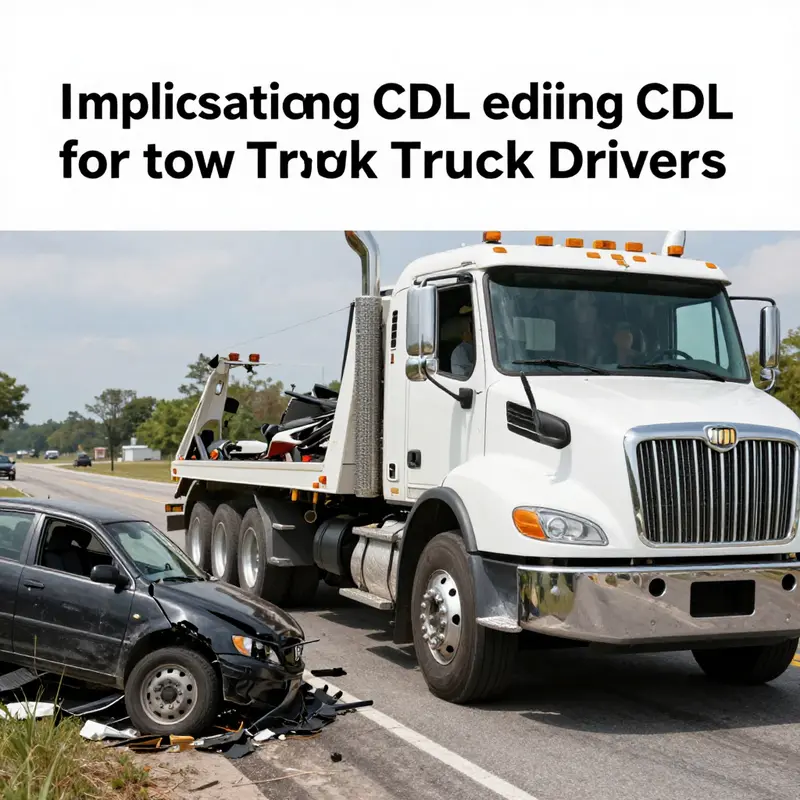
Tow operations sit at the intersection of hands-on skill and regulatory standards. Whether you need a CDL depends on the vehicle’s gross weight, the combination with any towed load, and how the vehicle is used in business operations. In many cases, towing with a vehicle that exceeds 26,001 pounds gross vehicle weight or involves hazardous materials triggers CDL requirements, with Class A, B, or C licenses and possible endorsements reflecting the work (towing, air brakes, hazardous materials, passenger transport, etc.). Regulations vary by state, so verify your local DMV rules for the exact class and endorsements that apply to your duties. A lighter, light-to-medium duty tow truck operating under a standard license may be permitted if it remains under weight thresholds and does not haul heavy loads. As the fleet grows toward heavier equipment or special tasks, CDL access expands and can unlock higher-value assignments, improved safety training requirements, and broader career opportunities. The practical takeaway is to assess the vehicle configuration and typical loads, pursue the appropriate training and medical certification, and stay compliant with hours-of-service, vehicle inspections, endorsements, and ongoing safety education. Ultimately, a CDL is not only a legal requirement in many cases but a credential that signals capability, reliability, and long-term career potential in towing and recovery.
Weighing the Rules: How State CDL and Tow-Truck Regulations Shape Your Right to Tow
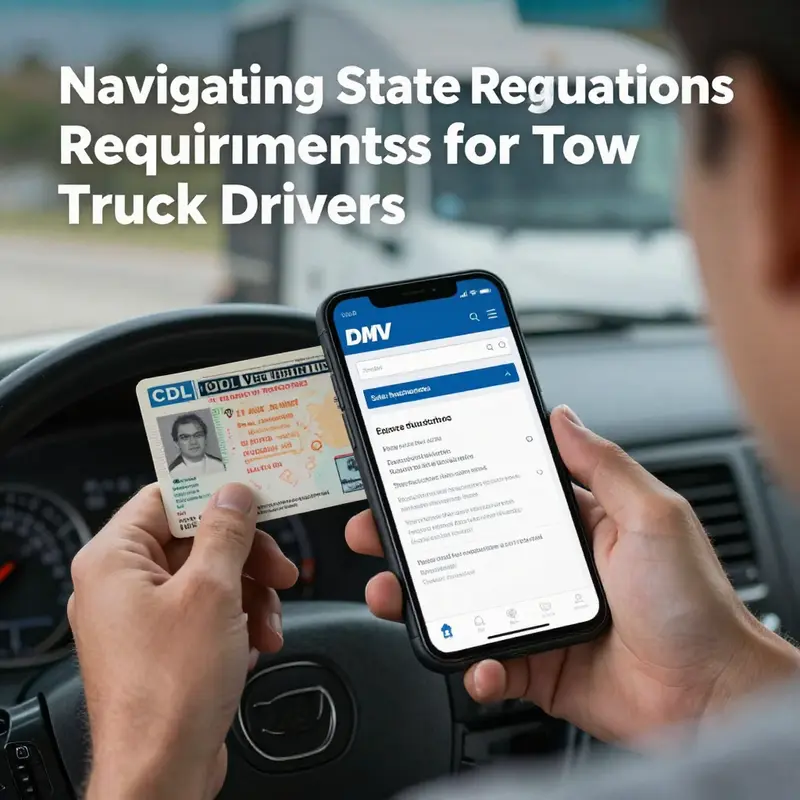
When you set out to tow a vehicle, the question of whether you need a commercial driver’s license (CDL) sits at the center of practical legality and everyday safety. The short answer is usually yes, but the nuance lies in weight, configuration, and the particular rules of the state where you operate. Tow trucks are not a monolith; they differ in how much they weigh when loaded, whether they pull a trailer, and whether they carry hazardous materials. All of these factors influence whether a CDL is required and, if so, which class applies. The interplay between federal baseline standards and state-specific regulations creates a spectrum of compliance that every operator must understand to stay on the right side of the law and, more importantly, to run a predictable and safe operation on the road.
At the federal level, the framework comes from the Federal Motor Carrier Safety Administration (FMCSA), which sets the core definitions for what constitutes a commercial motor vehicle (CMV) and the broad thresholds that trigger CDL qualification. The related office, the Federal Highway Administration (FHWA), provides the pavement and weight design context that informs these rules. In practice, the critical threshold many tow operators watch is the 26,001-pound line. If a tow truck, when fully loaded, exceeds that figure or is designed to transport hazardous materials, it falls under CDL requirements. This is not simply a matter of opinion or policy preference; it is how vehicles of that size and purpose are categorized for licensing, medical certification, and safety oversight.
Within that framework, the class of CDL matters. A Class A license is typically required if a tow truck is part of a combination vehicle with a trailer and the combined weight exceeds 26,000 pounds. A Class B license covers single vehicles with a GVWR over 26,000 pounds, including many tow trucks that stand alone without a heavy trailer. For vehicles that straddle traffic in a different way—such as smaller tow trucks that carry more than 15 passengers or those designed to transport hazardous materials—Class C may come into play, even if the gross weight hovers around or just under the standard truck thresholds. These general guidelines reflect the way authorities want to ensure that operators have the training, medical fitness, and driving skill to handle large, potentially dangerous vehicles under demanding conditions.
Yet the federal baseline is only part of the story. States adapt, refine, or even redefine aspects of these rules to fit local road conditions, bridge weights, and the particular risks associated with towing in their jurisdictions. What this means for a tow operator is that two drivers with the same vehicle might face different licensing requirements depending on where they operate. Some states treat tow trucks as emergency-response vehicles and grant temporary or location-specific exemptions during declared emergencies. Others apply stricter rules to limit maneuvering in urban corridors or to restrict heavy loads on certain bridges during peak hours. The presence or absence of exemptions can change the license you need, the endorsements you must hold, and the permits you must secure before pulling a vehicle from the roadside.
A practical way to approach this landscape is to start with the basics everyone should know. First, determine the towing vehicle’s GVWR—the official weight rating given by the manufacturer when the vehicle is fully loaded under typical operating conditions. If that weight crosses the 26,000-pound threshold, a Class B CDL is usually in your future. If you’re hauling a trailer, the combination can push you into Class A territory, depending on the total weight. If your operation involves passengers or hazardous materials, or if your vehicle is configured to accommodate such loads, Class C can be a factor. This framework is consistent across many states, but the exact lines—where they sit on the scale and which exemptions apply—are state-specific.
Second, remember that state rules cover more than the license itself. Vehicle size and weight limits are a core concern, and most states specify maximum dimensions: width, length, and height. Tow operators must know these limits because exceeding them triggers permit requirements and, sometimes, escort or route restrictions. It is common for states to enforce special oversize/overweight permits when heavy towing equipment or large towed loads push beyond standard limits. These permits are not mere formalities; they help protect bridges, road surfaces, and other road users by ensuring the operation has planned routes, proper signaling, and appropriate time windows for travel. The permit process itself can be straightforward in some regions and more involved in others, but it remains an essential gatekeeper of lawful operation.
Driving a tow truck with a CDL is not a blanket guarantee of freedom on every road. State authorities often pair licensing with continued driver training and endorsements. You may encounter state requirements for additional endorsements that align with the vehicle’s broad duties. For example, some jurisdictions might require endorsements related to tank vehicles or passenger transport, depending on how your tow truck is configured or how your business uses it. This is part of the broader recognition that towing often sits at the intersection of recovery, emergency response, and sometimes public safety. Even if your core task is to recover a disabled vehicle, the vehicle and the way you operate it could fall into a regulatory niche that demands extra qualifications.
What does this mean for someone who is evaluating whether to pursue a CDL for towing work? It means starting with precise, location-specific research. The federally issued designations provide a broad map, but the exact path—whether you need Class A, B, or C, whether you need certain endorsements, and whether you can operate under emergency exemptions without additional permits—depends on your state. The most reliable way to chart your route is to consult the official resources from your state’s Department of Motor Vehicles (DMV) or Department of Transportation (DOT). These agencies publish the rules that apply to vehicle weight, dimensions, permits, training, and endorsements. They also outline the process for licensing, testing, and maintaining qualifications, which can involve medical certifications, background checks, and periodic renewals.
As you navigate these rules, practical steps can help you stay compliant and prepared. Start with a precise assessment of the vehicle you intend to operate. Note the GVWR and, if applicable, the combined gross vehicle weight when paired with any trailers. If the vehicle sits near or above the 26,001-pound threshold, expect Class A or Class B licensing pathways to be relevant, depending on whether you work with a trailer. Next, map your typical routes and loads. If you regularly cross state lines or operate in regions with heavier truck traffic and older infrastructure, you may encounter stricter weight and dimension regimes or more frequent permit requirements. In such contexts, obtaining the correct CDL class and any necessary endorsements reduces the risk of fines, detentions, or delayed responses during roadside calls.
Another layer to consider is the operational reality of towing work. Tow operators frequently face dynamic work environments, from nighttime recoveries to scenes with limited space and high safety stakes. State regulations can factor in these realities by mandating certain training standards, safety protocols, and even equipment requirements for towing operations. Driver qualifications extend beyond the license itself. Medical fitness, vision standards, and periodic re-certification are common prerequisites. Some states also require ongoing training on topics such as vehicle recovery techniques, traffic control in work zones, and proper safety signaling to protect responders and victims alike. Adhering to these standards is not merely a legal obligation; it is a practical investment in reducing the risk of accidents and injuries on the road.
The interplay of federal baseline rules and state-specific adjustments creates a complex but navigable terrain. A practical mindset is to treat the process as a continuous cycle rather than a one-time hurdle. Verify your vehicle’s weight and configuration, confirm the correct CDL class and endorsements for the work you plan to perform, and stay current on any state changes that may affect licensing, permits, or operating restrictions. It is also wise to build a relationship with the licensing and enforcement community in your area. When uncertainties arise—such as a temporary restriction that affects a preferred route or a new interpretation of permit requirements—the people who administer the rules can provide clarity and help you adjust quickly. This proactive approach minimizes the risk of penalties and keeps you focused on efficient, safe towing operations.
In addition to licensing and permits, there is value in considering how your fleet is organized and how your daily operations align with best practices for preparedness. The legal framework is connected to the practical realities of dispatch, maintenance, and emergency readiness. A well-structured operation tends to stay within regulatory boundaries while delivering reliable response times and consistent service quality. For fleet managers and solo operators alike, investing in clear procedures for vehicle inspection, weight verification, load securement, and route planning can pay dividends in compliance and performance. When a dispatcher coordinates a tow, knowing the precise weight class and required endorsements of each unit helps in planning the most efficient, safe approach to each call.
To stay aligned with evolving regulations, keep a steady line of communication with official resources. If you need authoritative, up-to-date federal and state guidance on vehicle weight, dimensions, and CDL requirements, the FMCSA and FHWA portals are indispensable anchors for your due diligence. For those who want to explore fleet-readiness and standardization concepts as a broader context—how to structure operations, plan for emergencies, and maintain consistent safety practices—there is additional guidance and practical material available through focused resources. In particular, you can explore information and frameworks that help align daily towing operations with broader readiness objectives, which can streamline compliance and improve performance during high-pressure situations. For an overarching view of federal weight and CDL standards across states, you can consult: https://www.fhwa.dot.gov. This external resource provides the official baseline rules that underpin state regulations and CDL determinations, helping readers ground their awareness in the larger regulatory landscape.
For operators seeking a practical, location-specific starting point, the state DMV and DOT websites are the best first stop. They illuminate how the general CDL framework translates into local requirements, including any state-by-state nuances about weight thresholds, permit processes, and endorsements. An important part of this research is tracing how the state defines a tow truck and how it distinguishes between a vehicle engaged in commercial towing and other forms of roadside assistance. The definitions matter because they determine whether a given operation falls under ordinary license rules or under a specialized category that includes additional training, exemptions, or restrictions. Since some states may classify certain towing operations under the umbrella of emergency response, the rules can become more permissive in some contexts while more rigid in others. Understanding these distinctions helps you prepare a compliant operation from the outset and avoids costly missteps.
The broader takeaway is that the CDL decision for towing is not a single checkbox but a layered assessment that begins with weight and vehicle configuration and expands to include endorsements, permits, and regional enforcement practices. If your tow truck is consistently used to move heavy loads, or if your business model includes transporting multiple vehicles, you should anticipate pursuingClass A or Class B licensing pathways, and you should prep for any endorsements tied to the work. If your operation is more modest in scale or strictly involves non-hazmat loads with light duty, a Class B license may suffice, provided the vehicle’s GVWR and any attached equipment stay within the corresponding thresholds. And if your operation is unusually designed to carry passengers or hazardous materials, or if state rules have a specific provision for emergency response vehicles, you may need to pursue Class C in addition to your other licensing requirements. The key is to verify with your local authorities and to keep your documents and certifications current so you can respond quickly to calls without risking noncompliance.
In sum, the regulatory landscape for tow trucks and CDLs is not a static map but a living framework that reflects policy goals—safety, efficiency, and risk management on the nation’s roads. By starting with a precise understanding of vehicle weight, configuration, and intended use, you can determine the appropriate CDL class and endorsements. Then you can align your training, permits, and operational practices with state expectations. The result is not only legal compliance but a more reliable firefighting of breakdowns, a more predictable response during emergencies, and a smoother relationship with law enforcement and regulators who support the broader goal of safe, professional roadside assistance. If you want a compact touchpoint for fleet readiness and standardized procedures as you implement these licensing decisions, you can consult resources focused on fleet standardization and emergency readiness, which provide practical guidance on organizing and training teams for consistent, compliant performance fleet-standardization-emergency-readiness. This integrated approach helps ensure that licensing decisions align with the realities of the road and the expectations of the communities you serve, reinforcing the foundation for responsible, capable tow operations that meet the highest standards of safety and reliability.
External resource: https://www.fhwa.dot.gov
Final thoughts
The necessity of obtaining a Commercial Driver’s License to operate a tow truck is a critical aspect of ensuring legal and safe towing practices. By grasping the CDL requirements, understanding the implications for different operations, and navigating state regulations, local drivers, auto repair shops, dealerships, and property managers can effectively manage their responsibilities on the road. This knowledge empowers all stakeholders to prioritize safety, comply with the law, and make informed decisions that safeguard their operations and the community.